Results by title
13 books match the query 'Fact'
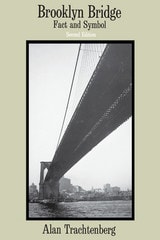
Brooklyn Bridge
Fact and SymbolAlan Trachtenberg
University of Chicago Press, 1979
Fourteen of Walker Evans's evocative photographs of Brooklyn Bridge, most of which have never been published, appear in this edition of Alan Trachenberg's Brooklyn Bridge: Fact and Symbol. In the new afterword Trachenberg explores the history of Hart Crane's The Bridge, especially the poem's integral relationship with the powerful photography of Evans.
"[Brooklyn Bridge] is familiar in so many movies, in so many stage sets and, as Mr. Trachtenberg shows in this brilliant . . . book, it is at least as much a symbol as a reality. . . . Mr. Trachtenberg is always exciting and illuminating."—Times Literary Supplement
"The book is a skillful and insightful synthesis of materials about Brooklyn Bridge from such diverse fields as history, engineering, literature and art. Essentially it asks the question of why Brooklyn Bridge achieved such great impact on the nineteenth century American imagination and why it has continued to have a significant impact on twentieth century art and literature. In addition to its exploration of the bridge's symbolic significance, which includes perceptive analyses of such particular works as Hart Crane's great poem cycle and the paintings of artists like Joseph Stella, the book also includes a solidly researched account of the conception, planning and construction of the bridge. Trachtenberg's account of the intellectual and cultural sources of the bridge is particularly fascinating in its demonstration of the convergence of many different philosophical and ideological currents of the time around this great engineering enterprise, illustrating as effectively as any discussion I know the complex interplay of ideas and material culture."—John G. Cawelti, University of Chicago
"Alan Trachtenberg's Brooklyn Bridge is a fascinating story, the philosophic genesis of the idea in Europe, John Roebling's heroic effort to translate it into masonry and steel, and the meanings that Americans attached to the physical object as an emblem of their aspirations."—Leo Marx, Amherst College, author of The Machine in the Garden
[more]
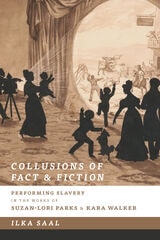
Collusions of Fact and Fiction
Performing Slavery in the Works of Suzan-Lori Parks and Kara WalkerSaal, Ilka
University of Iowa Press, 2021
Collusions of Fact and Fiction traces a generational shift in late twentieth-century African American cultural engagements with the history and legacies of transatlantic slavery. With a focus on works by playwright Suzan-Lori Parks and visual artist Kara Walker, the book explores how, in comparison to the first wave of neo-slave narratives of the 1970s and 1980s, artists of the 1990s and early 2000s tend to approach the past from the vantage point of a liberal entanglement of fact and fiction as well as a highly playful, often humorous, and sometimes irreverent signifying on entrenched motifs, iconographies, and historiographies.
Saal argues that the attempt to reconstruct or recuperate the experience of African Americans under slavery is no longer at stake in the works of artists growing up in the post–Civil Rights era. Instead, they lay bare the discursive dimension of our contemporary understanding of the past and address the continued impact of its various verbal and visual signs upon contemporary identities. In this manner, Parks and Walker stake out new possibilities for engaging the past and inhabiting the present and future.
Saal argues that the attempt to reconstruct or recuperate the experience of African Americans under slavery is no longer at stake in the works of artists growing up in the post–Civil Rights era. Instead, they lay bare the discursive dimension of our contemporary understanding of the past and address the continued impact of its various verbal and visual signs upon contemporary identities. In this manner, Parks and Walker stake out new possibilities for engaging the past and inhabiting the present and future.
[more]
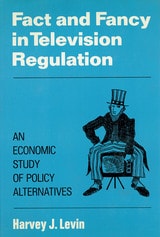
Fact and Fancy in Television Regulation
An Economic Study of Policy AlternativesHarvey J. Levin
Russell Sage Foundation, 1980
How diverse can, and should, TV programming be? And especially, in what precise ways does governmental regulation of TV affect (or fail to affect) the programs station owners produce—programs which, in the final analysis, shape in such large measure the values of Americans? It is to these timely and beguiling questions that Harvey Levin addresses his dispassionate assessment of the complex relationship between government and the TV industry. Analyzing data drawn from the history of the FCC's regulatory decisions, as well as from interviews with numerous government and industry officials, Professor Levin shows how the present form of restrictive governmental regulation almost always results in higher profits and rents for TV stations, with no concomitant increase in programming diversity. In addition, Professor Levin investigates various other aspects of the media market, from the particular kinds of crucial decisions that are made when, for example, a newspaper owns a TV station, to the kinds of problems that arise when commercial rents are taxed to fund public TV; from the brand of programming we are offered when a monopoly controls a given TV market to the nature of programming in a situation of steady and fair competition. Following a comprehensive assessment, the author makes a compelling case for diversification of station ownership, in order to be "safe rather than sorry." He also argues for the entry of new stations, more extensive support of public TV, and some form of quantitative program requirements—all of which will help bring about greater program diversity. Professor Levin's volume provides us with a fully documented and sharply focused analysis of the theories, policies, and problems of one of the most powerful and misunderstood of contemporary institutions.
[more]
Fact or Fluke?
A Critical Look at Statistical EvidenceRonald Meester
Amsterdam University Press, 2022
Statistics is more topical than ever. Numerous decisions depend on statistical considerations: just think of the Corona crisis or decisions about approving new drugs or other products. If researchers announce they have proved some fact using statistical tests, can we then always be sure that their claim is correct? How, and more importantly why, does statistics work? What can we expect from statistics and what not? 'Fact or Fluke?' is not a textbook that explains statistical tests to the reader; instead, it discusses what comes before those tests: the philosophy behind the statistics. Should one carry out tests, or are there other ways to look at statistics?
Ronald Meester and Klaas Slooten use a variety of examples – from court cases to theoretical physics – to present different views on statistics and provide arguments for what they think is the best point of view. This book is meant for anyone who is in some way concerned with, or interested in, statistical evidence: scientific researchers, students, teachers, mathematicians, philosophers, lawyers, managers, and no doubt many others.
Ronald Meester and Klaas Slooten use a variety of examples – from court cases to theoretical physics – to present different views on statistics and provide arguments for what they think is the best point of view. This book is meant for anyone who is in some way concerned with, or interested in, statistical evidence: scientific researchers, students, teachers, mathematicians, philosophers, lawyers, managers, and no doubt many others.
[more]
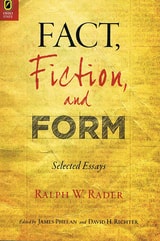
Fact, Fiction, and Form
Selected EssaysRalph W. Rader
The Ohio State University Press, 2011
Ralph W. Rader, along with Sheldon Sacks and Wayne Booth, was one of the three leading figures of the second generation of neo-Aristotelian critics. During his long career in the English Department at the University of California, Berkeley, Rader published scores of essays.
Fact, Fiction, and Form: Selected Essays, edited by James Phelan and David H. Richter, collects the most important of these essays, all of them written between the late 1960s and the late 1990s. These critical inquiries, which engage with a remarkable range of literary texts—Moll Flanders, Pamela, Tristram Shandy, “Tintern Abbey,” “My Last Duchess,” Barchester Towers, Lord Jim, Ulysses, and more—are a rich resource for anyone interested in criticism’s ongoing conversations about the following major issues: the concept of form, the genres of the lyric and the novel, the literary dimensions of literary history, the distinction between fiction and nonfiction, the evaluation of literary quality, and the testing of theories and of interpretations. Moreover, the essays collectively develop a distinctive, coherent, and compelling vision of literary form, purpose, and value. Rader’s vision is distinctive and coherent because it is based not on an underlying theory of language, power, history, or culture but rather on the idea that form is the means by which humans respond to fundamental aspects and conditions of their existence in the world. His vision is compelling because it includes a rigorous set of standards for adequate interpretation against which he invites his audience to measure his own readings.
[more]
Fiction, Fact and Future
The Essence of EU DemocracyJames Elles
Haus Publishing, 2019
Since its inception, the European Union has developed to become an open and transparent system which is democratically accountable to more than five hundred million European citizens. James Elles explains how the EU functions, emphasizing the emerging role of the European Parliament in the process. Elles reviews the history of Britain’s relationship with the EU and illustrates how a reluctance to consult the British people on multiple Treaty changes led to a lack of understanding about Brussels. Looking to the future, Elles assesses the global long-term trends that lie ahead to 2030 and underlines that closer European cooperation, for example on environmental and digital policies, will help them to be more easily resolved. As the next decade unfurls, the EU with President Macron at the forefront of the debate will progress and the European Parliament will continue to develop as a platform for the voice of the European people. From the disinterest of political leaders to the ambitions of emerging nations, Fiction, Fact and Future is not only a guide to why Britain failed to make the most of its EU membership, but also an optimistic message to a younger generation to help shape their future in the 21st century.
[more]

Frank Lloyd Wright's Larkin Building
Myth and FactJack Quinan
University of Chicago Press, 2006
Frank Lloyd Wright’s Larkin Building has become an icon of modern architecture. And the fact that it was demolished only forty-six years after its 1904 completion makes Jack Quinan’s study of the building—which housed a Buffalo, New York, soap company—all the more valuable.
Quinan’s history draws on engineering documents, personal accounts of the building, and other papers he acquired from the family of Darwin D. Martin, a Larkin executive who proposed commissioning Wright to design the company’s offices. With access to these rare sources, Quinan reveals how a young Wright landed the commission and traces the evolution of his cutting-edge plans. Quinan then takes Wright studies to a new level, examining the Larkin Building as a structure at the center of economic and personal relationships.
Illustrated with more than one hundred photographs, floor plans, maps, and diagrams, Frank Lloyd Wright’s Larkin Building provides a concise but complete record of how the building was conceived, built, evaluated, and finally demolished in what has been called a tragic loss for American architecture.
[more]

MATTERS OF FACT
READING NONFICTION OVER THE EDGEDANIEL W. LEHMAN
The Ohio State University Press, 1998
[more]
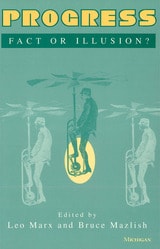
Progress
Fact or Illusion?Leo Marx and Bruce Mazlish, Editors
University of Michigan Press, 1996
Progress, perhaps the fundamental secular belief of modern Western society, has come under heavy fire recently because, after three centuries, advances in science and technology seem increasingly to bring problems in their wake: alienation, environmental degradation, the threat of nuclear destruction. The idea of progress is brought into question by postmodern critique, attacking the notion of science as truth. Yet no other meaningful organization of humankind's sense of time looms on the horizon. This volume seeks to reassess the meaning and prospects of the idea of progress. Looking toward the millennium, the volume seeks to evaluate the idea's worth both in theory--is it intellectually viable and defensible today?--and practice--even if theoretically defensible, is the idea undermined in actual life? Approaching these questions from the perspectives of science, anthropology, economics, religion, political philosophy, feminism, medicine, environmental studies, and the Third World, the contributors, all distinguished scholars, provide a unique and critical balance. Ultimately, the contributors find that progress is both a fact and an illusion: it does occur in certain areas, but it does not sweep all before it as its Enlightenment votaries thought it would. This foundational idea permeates discourse in the natural and social sciences as well as the humanities and will engage historians, students of the history of science and technology, sociologists, political scientists, philosophers, literary scholars, and art critics, as well as those interested in civilization in general. Contributors include: Jill Ker Conway, Zhiyuan Cui, Leon Eisenberg, Robert Heilbroner, Gerald Holton, Leo Marx, Bruce Mazlish, Ali A. Mazrui, Alan Ryan, John M. Staudenmaier, George W. Stocking, Jr., and Richard White. "A discerning reconsideration of the idea of 'progress' in a variety of carefully defined theoretical and empirical-historical contexts." --David Hollinger, University of California, Berkeley Leo Marx is Professor of American Cultural History, Emeritus, Massachusetts Institute of Technology. Bruce Mazlish is Professor of History, Massachusetts Institute of Technology.
[more]
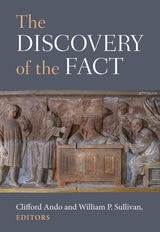
The Discovery of the Fact
Clifford Ando and William P. Sullivan, Editors
University of Michigan Press, 2020
The Discovery of the Fact draws on expertise from lawyers, historians of philosophy, and scholars of classical studies and ancient history, to take a very modern perspective on an underexplored but essential domain of ancient legal history. Everyone is familiar with courts as adjudicators of facts. But legal institutions also played an essential role in the emergence of the notion of the fact, and contributed in a vital way to commonplace understandings of what is knowable and what is not. These issues have a particular importance in ancient Greece and Rome, the first western societies in which state law and state institutions of dispute resolution visibly play a decisive role in ordinary social and economic relations. The Discovery of the Fact investigates, historically and comparatively, the relationships among the law, legal institutions, and the boundaries of knowledge in classical Greece and Rome. Societies wanted citizens to conform to the law, but how could this be insured? On what foundation did ancient courts and institutions base their decisions, and how did they represent the reasoning behind their decisions when announcing them? Slaves were owned like things, and yet they had minds that ancients conceded were essentially unknowable. What was to be done? And where has the boundary been drawn between questions of law and questions of fact when designing processes of dispute resolution?
[more]
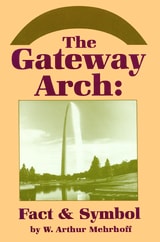
The Gateway Arch
Fact & SymbolW. Arthur Mehrhoff
University of Wisconsin Press, 1992
Like the nation that it symbolizes, the bold arch of the Jefferson National Expansion Memorial poses enormous contradictions. It is a simple, classical architectural form constructed with the most sophisticated modern engineering. It is a national historic site created by demolishing nearly forty blocks of historic riverfront buildings. It is the perfect place to examine critical, historic tensions in American culture.
[more]
The Legendary Detective
The Private Eye in Fact and FictionJohn Walton
University of Chicago Press, 2015
An in-depth study of private detective fiction within the context of popular culture.
“I’m in a business where people come to me with troubles. Big troubles, little troubles, but always troubles they don’t want to take to the cops.” That’s Raymond Chandler’s Philip Marlowe, succinctly setting out our image of the private eye. A no-nonsense loner, working on the margins of society, working in the darkness to shine a little light.
The reality is a little different—but no less fascinating. In The Legendary Detective, John Walton offers a sweeping history of the American private detective in reality and myth, from the earliest agencies to the hard-boiled heights of the 1930s and ’40s. Drawing on previously untapped archival accounts of actual detective work, Walton traces both the growth of major private detective agencies like Pinkerton, which became powerful bulwarks against social and labor unrest and the motley, unglamorous work of small-time operatives. He then goes on to show us how writers like Dashiell Hammett and editors of sensational pulp magazines like Black Mask embellished on actual experiences and fashioned an image of the PI as a compelling, even admirable, necessary evil, doing society’s dirty work while adhering to a self-imposed moral code. Scandals, public investigations, and regulations brought the boom years of private agencies to an end in the late 1930s, Walton explains, in the process fully cementing the shift from reality to fantasy.
Today, as the private detective has long since given way to security services and armed guards, the myth of the lone PI remains as potent as ever. No fan of crime fiction or American history will want to miss The Legendary Detective.
[more]
Thought, Fact, and Reference
The Origins and Ontology of Logical AtomismHerbert Hochberg
University of Minnesota Press, 1978
Thought, Fact, and Reference was first published in 1978.Against a background of criticism of alternative accounts, Professor Hochberg presents an analysis of thought, reference, and truth within the tradition of logical atomism. He analyzes G. E. Moore’s early attack on idealism and examines the influence of Moore on the development of Bertrand Russell’s and Ludwig Wittgenstein’s logical atomism. He traces an early divergence between Russell and Wittgenstein, on the one side, and Moore and Gottlob Frege on the other, into variants recently advocated by Wilfrid Sellars, Gustav Bergmann, and others. The work will be of interest to professional philosophers, graduate students in philosophy, and linguists with interests in philosophy.
[more]