Results by title
13 books match the query 'Foreign public opinion, British'
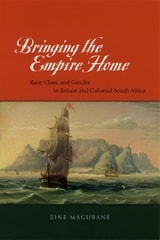
Bringing the Empire Home
Race, Class, and Gender in Britain and Colonial South AfricaZine Magubane
University of Chicago Press, 2003
Bringing the Empire Home tracks colonial images of blackness from South Africa to England and back again to answer questions such as these. Before the mid-1800s, black Africans were considered savage to the extent that their plight mirrored England's internal Others—women, the poor, and the Irish. By the 1900s, England's minority groups were being defined in relation to stereotypes of black South Africans. These stereotypes, in turn, were used to justify both new capitalist class and gender hierarchies in England and the subhuman treatment of blacks in South Africa. Bearing this in mind, Zine Magubane considers how marginalized groups in both countries responded to these racialized representations.
Revealing the often overlooked links among ideologies of race, class, and gender, Bringing the Empire Home demonstrates how much black Africans taught the English about what it meant to be white, poor, or female.
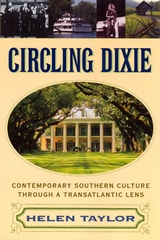
Circling Dixie
Contemporary Southern Culture through a Transatlantic LensHelen Taylor
Rutgers University Press, 2000
Taylor examines some of the South's most significant cultural exports in discussions that range across literature, music, film, television, theater, advertising, and tourism to focus on how and why Southern themes and icons have become so deeply embedded in British cultural life. The enduring legacy of Margaret Mitchell's Gone With the Wind can be seen today in the popularity of sequels, revisions, and reworkings of the novel. The conversation between these cultures is further explored in British responses to Alex Haley's Roots, the British theater's special affection for Tennessee Williams's plays, and the marketing of New Orleans as a preferred destination for European tourists. The transformation of Southern culture--itself a hybrid of the European, African, and American--as it circulates back across the Atlantic suggests not only new views of the history, racial politics, music and art of both Britain and the American South, but also an enhanced understanding of the dynamic flow of culture itself.
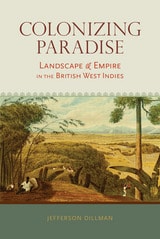
Colonizing Paradise
Landscape and Empire in the British West IndiesJefferson Dillman
University of Alabama Press, 2015
Explores how perceptions and depictions of the physical landscape both reflected and influenced the history of the British colonial Caribbean
In Colonizing Paradise, historian Jefferson Dillman charts the broad spectrum of sentiments that British citizens and travelers held regarding their colonial possessions in the West Indies. Myriad fine degrees of ambivalence separated extreme views of the region as an idyllic archipelago or a nest of Satanic entrapments. Dillman shows the manner in which these authentic or spontaneous depictions of the environment were shaped to form a narrative that undergirded Britain’s economic and political aims in the region.
Because British sentiments in the Caribbean located danger and evil not just in indigenous populations but in Spanish Catholics as well, Dillman’s work begins with the arrival of Spanish explorers and conquistadors. Colonizing Paradise spans the arrival of English ships and continues through the early nineteenth century and the colonial era. Dillman shows how colonial entrepreneurs, travelers, and settlers engaged in a disquieted dialogue with the landscape itself, a dialogue the examination of which sheds fresh light on the culture of the Anglophone colonial Caribbean.
Of particular note are the numerous mythical, metaphorical, and biblical lenses through which Caribbean landscapes were viewed, from early views of the Caribbean landscape as a New World paradise to later depictions of the landscape as a battleground between the forces of Christ and Satan. The ideal of an Edenic landscape persisted, but largely, Dillman argues, as one that needed to be wrested from the forces of darkness, principally through the work of colonization, planting, cataloguing, and a rational ordering of the environment.
Ultimately, although planters and their allies continued to promote pastoral and picturesque views of the Caribbean landscape, the goal of such narratives was to rationalize British rule as well as to mask and obscure emerging West Indian problems such as diseases, slavery, and rebellions. Colonizing Paradise offers much to readers interested in Caribbean, British, and colonial history.
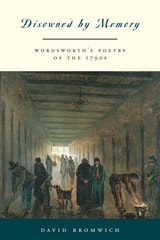
Disowned by Memory
Wordsworth's Poetry of the 1790sDavid Bromwich
University of Chicago Press, 1998
"This very Wordsworthian combination of apparently low subjects with extraordinary 'high argument' makes for very rewarding, though often challenging reading."—Kenneth R. Johnston, Washington Times
"Wordsworth emerges from this short and finely written book as even stranger than we had thought, and even more urgently our contemporary."—Grevel Lindop, Times Literary Supplement
"[Bromwich's] critical interpretations of the poetry itself offer readers unusual insights into Wordworth's life and work."—Library Journal
"An added benefit of this book is that it restores our faith that criticism can actually speak to our needs. Bromwich is a rigorous critic, but he is a general one whose insights are broadly applicable. It's an intellectual pleasure to rise to his complexities."—Vijay Seshadri, New York Times Book Review
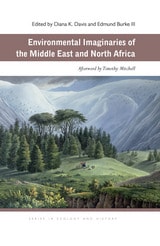
Environmental Imaginaries of the Middle East and North Africa
Diana K. Davis
Ohio University Press, 2011
The landscapes of the Middle East have captured our imaginations throughout history. Images of endless golden dunes, camel caravans, isolated desert oases, and rivers lined with palm trees have often framed written and visual representations of the region. Embedded in these portrayals is the common belief that the environment, in most places, has been deforested and desertified by centuries of misuse. It is precisely such orientalist environmental imaginaries, increasingly undermined by contemporary ecological data, that the eleven authors in this volume question. This is the first volume to critically examine culturally constructed views of the environmental history of the Middle East and suggest that they have often benefitted elites at the expense of the ecologies and the peoples of the region. The contributors expose many of the questionable policies and practices born of these environmental imaginaries and related histories that have been utilized in the region since the colonial period. They further reveal how power, in the form of development programs, notions of nationalism, and hydrological maps, for instance, relates to environmental knowledge production.
Contributors: Samer Alatout, Edmund Burke III, Shaul Cohen, Diana K. Davis, Jennifer L. Derr, Leila M. Harris, Alan Mikhail, Timothy Mitchell, Priya Satia, Jeannie Sowers, and George R. Trumbull IV
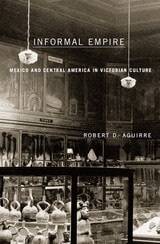
Informal Empire
Mexico And Central America In Victorian CultureRobert D. Aguirre
University of Minnesota Press, 2004
Behind the ancient artifacts exhibited in our museums lies a secret past—of travel, desire, the quest for knowledge, and even theft. Such is the case with the objects of Mesoamerican culture so avidly collected, cataloged, and displayed by the British in the nineteenth century. Informal Empire recaptures the history of those artifacts from Mexico and Central America that stirred Victorian interest—a history that reveals how such objects and the cultures they embodied were incorporated into British museum collections, panoramas, freak shows, adventure novels, and records of imperial administrators.
Robert D. Aguirre draws on a wealth of previously untapped historical information to show how the British colonial experience in Africa and the Near East gave rise to an “informal imperialism” in Mexico and Central America. Aguirre’s work helps us to understand what motivated the British to beg, borrow, buy, and steal from peripheral cultures they did not govern. With its original insights, Informal Empire points to a new way of thinking about British imperialism and, more generally, about the styles and forms of imperialism itself.
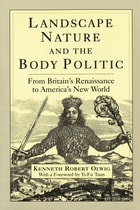
Landscape, Nature, and the Body Politic
From Britain's Renaissance to America's New WorldKenneth Robert Olwig
University of Wisconsin Press, 2002
Landscape, Nature, and the Body Politic explores the origins and lasting influences of two contesting but intertwined discourses that persist today when we use the words landscape, country, scenery, nature, national. In the first sense, the land is a physical and bounded body of terrain upon which the nation state is constructed (e.g., the purple mountain majesties above the fruited plain, from sea to shining sea). In the second, the country is constituted through its people and established through time and precedence (e.g., land where our fathers died, land of the Pilgrims’ pride). Kenneth Robert Olwig’s extended exploration of these discourses is a masterful work of scholarship both broad and deep, which opens up new avenues of thinking in the areas of geography, literature, theater, history, political science, law, and environmental studies.
Olwig tracks these ideas though Anglo-American history, starting with seventeenth-century conflicts between the Stuart kings and the English Parliament, and the Stuart dream of uniting Scotland with England and Wales into one nation on the island of Britain. He uses a royal production of a Ben Jonson masque, with stage sets by architect Inigo Jones, as a touchstone for exploring how the notion of "landscape" expands from artful stage scenery to a geopolitical ideal. Olwig pursues these contested concepts of the body politic from Europe to America and to global politics, illuminating a host of topics, from national parks and environmental planning to theories of polity and virulent nationalistic movements.
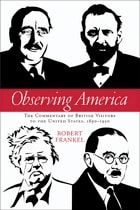
Observing America
The Commentary of British Visitors to the United States, 1890–1950Robert Frankel
University of Wisconsin Press, 2006
Robert Frankel examines the New World experiences of these commentators and the books they wrote about America. He also probes similar writings by other prominent observers from the British Isles, including Beatrice Webb, Rudyard Kipling, and George Bernard Shaw. The result is a book that offers keen insights into America’s national identity in a time of vast political and cultural change.

Politicizing Gender
Narrative Strategies in the Aftermath of the French RevolutionKadish, Doris Y
Rutgers University Press, 1991

Representing the French Revolution
Literature, Historiography, and ArtEdited by James A. W. Heffernan
Brandeis University Press, 1992
Strange Meetings
Anglo-German Literary Encounters from 1910 to 1960Peter Edgerly Firchow
Catholic University of America Press, 2008
The Eternal Paddy
Irish Identity and the British Press, 1798–1882Michael de Nie
University of Wisconsin Press, 2004
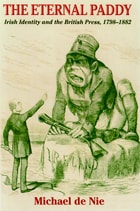
In The Eternal Paddy, Michael de Nie examines anti-Irish prejudice, Anglo-Irish relations, and the construction of Irish and British identities in nineteenth-century Britain. This book provides a new, more inclusive approach to the study of Irish identity as perceived by Britons and demonstrates that ideas of race were inextricably connected with class concerns and religious prejudice in popular views of both peoples. De Nie suggests that while traditional anti-Irish stereotypes were fundamental to British views of Ireland, equally important were a collection of sympathetic discourses and a self-awareness of British prejudice. In the pages of the British newspaper press, this dialogue created a deep ambivalence about the Irish people, an ambivalence that allowed most Britons to assume that the root of Ireland’s difficulties lay in its Irishness.
Drawing on more than ninety newspapers published in England, Scotland, and Wales, The Eternal Paddy offers the first major detailed analysis of British press coverage of Ireland over the course of the nineteenth century. This book traces the evolution of popular understandings and proposed solutions to the "Irish question," focusing particularly on the interrelationship between the press, the public, and the politicians. The work also engages with ongoing studies of imperialism and British identity, exploring the role of Catholic Ireland in British perceptions of their own identity and their empire.
Under Western Eyes
India from Milton to MacaulayBalachandra Rajan
Duke University Press, 1999
Rajan begins with the Portuguese poet Camões, whose poem celebrating Vasco da Gama’s passage to India becomes, according to its eighteenth-century English translator, the epic of those who would possess India. He closely examines Milton’s treatment of the Orient and Dryden’s Aureng-Zebe, the first English literary work on an Indian subject. Texts by Shelley, Southey, Mill, and Macaulay, among others, come under careful scrutiny, as does Hegel’s significant impact on English imperial discourse. Comparing the initial English representation of its actions in India (as a matter of commerce, not conquest) and its contemporaneous treatment of Ireland, Rajan exposes contradictions that shed new light on the English construction of a subaltern India.