Results by title

8 books match the query 'Functions'

cover of Australian TV News: New Forms, Functions, and Futures

Australian TV News

New Forms, Functions, and Futures

Stephen Harrington

Intellect Books, 2013

Australian TV News explores the important role of entertainment in Australian television news over the past decade. Through the use of textual analysis, industry interviews, and audience research, it argues that “infotainment” and satire are increasingly becoming significant methods of informing audiences about serious news issues. The work examines the changing relationships between television news, politics, and everyday people, finding that these often humorous programs are used by audiences as sources of political information and fact, and this book challenges traditional assumptions about what form TV news should take and what functions it ought to serve.

[more]
cover of Desire and Truth: Functions of Plot in Eighteenth-Century English Novels

Desire and Truth

Functions of Plot in Eighteenth-Century English Novels

Patricia Meyer Spacks

University of Chicago Press, 1990
Desire and Truth offers a major reassessment of the history of eighteenth-century fiction by showing how plot challenges or reinforces conventional categories of passion and rationality. Arguing that fiction creates and conveys its essential truths through plot, Patricia Meyer Spacks demonstrates that eighteenth-century fiction is both profoundly realistic and consistently daring.
[more]
cover of Functions of Victorian Culture at the Present Time

Functions of Victorian Culture at the Present Time

Christine L. Krueger

Ohio University Press, 2002

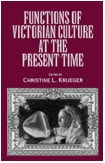
We are over a a century removed from Queen Victoria's death, yet the culture that bears her name is alive and well across the globe. Not only is Victorian culture the subject of lively critical debate; it draws widespread interest from popular audiences and consumers. Functions of Victorian Culture at the Present Time addresses the theme of the Victorians' continuing legacy and its effect on our own culture and perception of the world. The contributors' diverse topics include the persistent influence of Jack the Ripper on police procedures, the enormous success of the magazine Victoria and the lifestyle it promotes, and film, television, and theatrical adaptations of Victorian texts. Also addressed are appropriations of Oscar Wilde to market gay identity in contemporary advertising, and appeals to the Victorian empire in constructing the New Britain for the era of globalization. Functions of Victorian Culture at the Present Time encourages a critique of how these artifacts contribute to contemporary culture and confronts the challenges of disseminating the older culture in the new millennium. The contributors include Simon Joyce, Ronald R. Thomas, Miriam Bailin, Ellen Bayuk Rosenman, Jesse Matz, Sharon Aronofsky Weltman, Kathleen Lonsdale, Christine L. Krueger, Florence Boos, David Barndollar, Susan Schorn, and Sue Lonoff.
[more]
cover of Huckleberry Finn as Idol and Target: The Functions of Criticism in Our Time

Huckleberry Finn as Idol and Target

The Functions of Criticism in Our Time

Jonathan Arac

University of Wisconsin Press, 1997

If racially offensive epithets are banned on CNN air time and in the pages of USA Today, Jonathan Arac asks, shouldn’t a fair hearing be given to those who protest their use in an eighth-grade classroom? Placing Mark Twain’s comic masterpiece, Huckleberry Finn, in the context of long-standing American debates about race and culture, Jonathan Arac has written a work of scholarship in the service of citizenship.
     Huckleberry Finn, Arac points out, is America’s most beloved book, assigned in schools more than any other work because it is considered both the “quintessential American novel” and “an important weapon against racism.” But when some parents, students, and teachers have condemned the book’s repeated use of the word “nigger,” their protests have been vehemently and often snidely countered by cultural authorities, whether in the universities or in the New York Times and the Washington Post. The paradoxical result, Arac contends, is to reinforce racist structures in our society and to make a sacred text of an important book that deserves thoughtful reading and criticism. Arac does not want to ban Huckleberry Finn, but to provide a context for fairer, fuller, and better-informed debates.
     Arac shows how, as the Cold War began and the Civil Rights movement took hold, the American critics Lionel Trilling, Henry Nash Smith, and Leo Marx transformed the public image of Twain’s novel from a popular “boy’s book” to a central document of American culture. Huck’s feelings of brotherhood with the slave Jim, it was implied, represented all that was right and good in American culture and democracy. Drawing on writings by novelists, literary scholars, journalists, and historians, Arac revisits the era of the novel’s setting in the 1840s, the period in the 1880s when Twain wrote and published the book, and the post–World War II era, to refute many deeply entrenched assumptions about Huckleberry Finn and its place in cultural history, both nationally and globally. Encompassing discussion of Harriet Beecher Stowe, Frederick Douglass, Ralph Ellison, Archie Bunker, James Baldwin, Shelley Fisher Fishkin, and Mark Fuhrman, Arac’s book is trenchant, lucid, and timely.
[more]
cover of Sacrifice: Its Nature and Functions

Sacrifice

Its Nature and Functions

Henri Hubert and Marcel Mauss

University of Chicago Press, 1981

Marcel Mauss was the nephew and most distinguished pupil of Émile Durkheim, whose review L'Année sociologique he helped to found and edit. Henri Hubert was another member of the group of sociologists who developed under the influence of Durkheim.

The present book is one of the best-known essays pulbished in L'Année sociologique and has been regarded as a model for method and mode of interpretation. Its subject is at the very center of the comparative study of religion. The authors describe a basic sacrifice drawn from Indian sources and show what is fundamental and constant, comparing Indian and Hebrew practices in particular, then Greek and Roman, then additional practices from many eras and cultures.
[more]
cover of Teaching, Tasks, and Trust: Functions of the Public Executive

Teaching, Tasks, and Trust

Functions of the Public Executive

John Brehm

Russell Sage Foundation, 2008

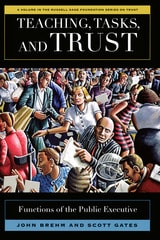
The mere word "bureaucracy" brings to mind images of endless lines, piles of paperwork, and frustrating battles over rules and red tape. But some bureaucracies are clearly more efficient and responsive than others. Why? In Teaching, Tasks, and Trust, distinguished political scientists John Brehm and Scott Gates show that a good part of the answer may be found in the roles that middle managers play in teaching and supporting the front-line employees who make a bureaucracy work. Brehm and Gates employ a range of sophisticated modeling and statistical methods in their analysis of employees in federal agencies, police departments, and social service centers. Looking directly at what front-line workers say about their supervisors, they find that employees who feel they have received adequate training have a clearer understanding of the agency's mission, which leads to improved efficiency within their departments. Quality training translates to trust – employees who feel supported and well-trained for the job are more likely to trust their supervisors than those who report being subject to constant monitoring and a strict hierarchy. Managers who "stand up" for employees—to media, government, and other agency officials—are particularly effective in cultivating the trust of their workers. And trust, the authors find, motivates superior job performance and commitment to the agency's mission. Employees who trust their supervisors report that they work harder, put in longer hours, and are less likely to break rules. The authors extend these findings to show that once supervisors grain trust, they enjoy greater latitude in influencing how employees allocate their time while working. Brehm and Gates show how these three executive roles are interrelated—training and protection for employees gives rise to trust, which provides supervisors with the leverage to stimulate improved performance among their workers. This new model—which frames supervisors as teachers and protectors instead of taskmasters—has widespread implications for training a new generation of leaders and creating more efficient organizations. Bureaucracies are notorious for inefficiency, but mid-level supervisors, who are often regarded as powerless, retain tremendous power to build a more productive workforce. Teaching, Tasks, and Trust provides a fascinating glimpse into a bureaucratic world operating below the radar of the public eye—a world we rarely see while waiting in line or filling out paperwork. A Volume in the Russell Sage Foundation Series on Trust
[more]
cover of The Alchemy of English: The Spread, Functions, and Models of Non-native Englishes

The Alchemy of English

The Spread, Functions, and Models of Non-native Englishes

Braj Kachru

University of Illinois Press, 1990

       "What emerges from Kachru's fine work is the potential demarcation
        of an entire field, rather than merely the fruitful exploration of a topic.
        . . . [Kachru] is to be congratulated for having taken us as far as he
        already has and for doing so in so stimulating and so productive a fashion."
        -- World Englishes
      "A potent addition to theoretical, sociolinguistic, attitudinal
        and methodological explorations vis-à-vis the spread and functions
        of, and innovations in, English from the viewpoint of a non-Western scholar."
        -- The Language Teacher
      
      Winner of the Joint First Prize, Duke of Edinburgh English Language
        Book Competition of the English-Speaking Union of the Commonwealth, 1987
     
 
[more]
cover of Torah: Functions, Meanings, and Diverse Manifestations in Early Judaism and Christianity

Torah

Functions, Meanings, and Diverse Manifestations in Early Judaism and Christianity

William M. Schniedewind

SBL Press, 2022

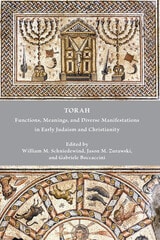
The present volume explores the ever-evolving understandings and diverse manifestations of the Hebrew notion of torah in early Jewish and Christian literature and the different roles torah played within those communities, whether in Judea or in the Hellenistic and early Roman diaspora. This collection of essays is purposefully wide-ranging, with contributors exploring and rethinking some of the most basic scholarly assumptions and preconceptions about the nature of torah in light of new critical approaches and methodologies. Contributors include Gabriele Boccaccini, Francis Borchardt, Calum Carmichael, Federico Dal Bo, Lutz Doering, Oliver Dyma, Paula Fredriksen, Robert G. Hall, Magnar Kartveit, Anne Kreps, David Lambert, Michael Legaspi, Jason A. Myers, Juan Carlos Ossandón Widow, Anders Klostergaard Petersen, Patrick Pouchelle, Jeremy Punt, Michael L. Satlow, Joachim Schaper, William Schniedewind, Elisa Uusimäki, Jacqueline Vayntrub, Jonathan Vroom, James W. Watts, Benjamin G. Wright III, and Jason M. Zurawski.

[more]