Results by title
13 books match the query 'Future life'
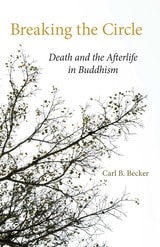
Breaking the Circle
Death and the Afterlife in BuddhismCarl B. Becker
Southern Illinois University Press, 1993
In this much-needed examination of Buddhist views of death and the afterlife, Carl B. Becker bridges the gap between books on death in the West and books on Buddhism in the East.
Other Western writers have addressed the mysteries surrounding death and the afterlife, but few have approached the topic from a Buddhist perspective. Here, Becker resolves questions that have troubled scholars since the beginning of Buddhism: How can Buddhism reconcile its belief in karma and rebirth with its denial of a permanent soul? What is reborn? And when, exactly, is the moment of death?
By systematically tracing Buddhism’s migration from India through China, Japan, and Tibet, Becker demonstrates how culture and environment affect Buddhist religious tradition.
In addition to discussing historical Buddhism, Becker shows how Buddhism resolves controversial current issues as well. In the face of modern medicine’s trend toward depersonalization, traditional Buddhist practices imbue the dying process with respect and dignity. At the same time, Buddhist tradition offers documented precedents for decision making in cases of suicide and euthanasia.
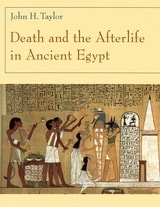
Death and the Afterlife in Ancient Egypt
John H. Taylor
University of Chicago Press, 2001
The author describes in detail the numerous provisions made for the dead and the intricate rituals carried out on their behalf. He considers embalming, coffins and sarcophagi, shabti figures, magic and ritual, and amulets and papyri, as well as the mummification of sacred animals, which were buried by the millions in vast labyrinthine catacombs.
The text also reflects recent developments in the interpretation of Egyptian burial practices, and incorporates the results of much new scientific research. Newly acquired information derives from a range of sophisticated applications, such as the use of noninvasive imaging techniques to look inside the wrappings of a mummy, and the chemical analysis of materials used in the embalming process. Authoritative, concise, and lucidly written, Death and the Afterlife in Ancient Egypt illuminates aspects of this complex, vibrant culture that still perplex us more than 3,000 years later.
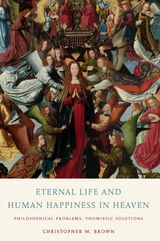
Eternal Life and Human Happiness in Heaven
Philosophical Problems, Thomistic SolutionsChristopher M. Brown
Catholic University of America Press, 2021
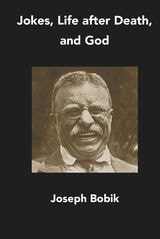
Jokes, Life after Death, and God
Joseph Bobik
St. Augustine's Press, 2020
This book devises a general and comprehensive, but brief, theory of jokes. The author begins with critiques of other writers’ views on the subject. 1) Ted Cohen thinks that such a theory is impossible. 2) Ronald Berk, on the other hand, provides just such a theory. And 3) John Morreall provides a general theory of laughter, which may include some things which can be used in a general theory of jokes. 4) Neil Schaeffer, too, provides a general theory of laughter, which makes a big point out of what he calls the “ludicrous context”; but he does include a chapter on jokes. 5) Christopher Wilson offers a general theory of jokes in which he focuses on form and content. And 6) Thomas Werge, in reflecting on the comic, suggests a general theory of jokes which identifies their matter, form, agents, purposes, and beyond these, the underlying shared relational context, which makes it possible for jokes to arise. 7) Bill Fuller’s message is that there is more funniness coming out of two or more heads than out of one, just as Socrates’ message was that there is more clarity coming out of two or more heads than out of one. 8) Umberto Eco feels that monks should laugh, just as ordinary people do; for laughter not only refreshes our seeking spirits, it also illuminates the truth we seek. 9) Simon Critchley, in his reflections on humor, notes that jokes bring on a kind of everyday anamnesis, that they are anti-story stories, that they are like prayers, that they are like philosophy; and that they require a certain underlying context, which is implicitly recognized by both teller and listener, and which renders possible the tension needed to make the punch line work. 10) Martha Wolfenstein, pursuing a psychological analysis of children’s humor, proposes that the underlying motive for telling jokes remains the same from childhood to adulthood, i.e., to transform painful and frustrating experiences so as to extract pleasure from them; and that the agent or productive cause of jokes is the repressing unconscious, as suggested by Freud.
As John Morreall has argued, neither the Superiority Theory (as in Plato, Aristotle and Hobbes), nor the Relief Theory (as in Spencer and Freud), nor the Incongruity Theory (as in Kant, Schopenhauer and Kierkegaard) appears to work as a general and comprehensive theory. Moreover, these writers talk more about humor and laughter than about jokes. To be sure, a joke is a type of humor. Thus, to say something about humor is to say something, though of a generic sort, about jokes. Similarly, to say something about the laughter caused by humor is to say something, though generic, about the laughter caused by jokes. Most of the authors considered in chapter one are concerned with jokes, and not only with humor as such. Section 11 of chapter one puts together, out of the combined contributions of these authors, what can be considered the beginnings of, some thoughts toward, a general and comprehensive theory of jokes. This task the author illustrates in a concrete way, by looking at individual jokes of different sorts; not, however, without inviting the reader to enjoy these jokes. The author looks particularly at Jewish jokes, Christian jokes, and Islamic jokes (jokes in three major religious traditions), jokes about philosophy and philosophers (philosophers ought to be able to laugh at themselves and at what they do), yo mama jokes (out of a healthy curiosity), Italian jokes and Slovak jokes, all of which makes for a clearer understanding of exactly what a joke is.
The analysis of general theory is then followed by some views on the morality of jokes and joke-telling, and an analysis of the connection between jokes and life after death, on the one hand, and God, on the other. Throughout the book Bobik offers innumerable examples to heighten our understanding and entertain us.
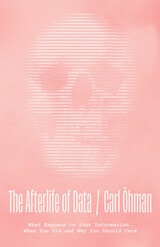
The Afterlife of Data
What Happens to Your Information When You Die and Why You Should CareCarl Öhman
University of Chicago Press, 2024
A short, thought-provoking book about what happens to our online identities after we die.
These days, so much of our lives takes place online—but what about our afterlives? Thanks to the digital trails that we leave behind, our identities can now be reconstructed after our death. In fact, AI technology is already enabling us to “interact” with the departed. Sooner than we think, the dead will outnumber the living on Facebook. In this thought-provoking book, Carl Öhman explores the increasingly urgent question of what we should do with all this data and whether our digital afterlives are really our own—and if not, who should have the right to decide what happens to our data.
The stakes could hardly be higher. In the next thirty years alone, about two billion people will die. Those of us who remain will inherit the digital remains of an entire generation of humanity—the first digital citizens. Whoever ends up controlling these archives will also effectively control future access to our collective digital past, and this power will have vast political consequences. The fate of our digital remains should be of concern to everyone—past, present, and future. Rising to these challenges, Öhman explains, will require a collective reshaping of our economic and technical systems to reflect more than just the monetary value of digital remains.
As we stand before a period of deep civilizational change, The Afterlife of Data will be an essential guide to understanding why and how we as a human race must gain control of our collective digital past—before it is too late.
The Ancient Egyptian Netherworld Books
John Coleman Darnell
SBL Press, 2018
The first, complete English translation of the ancient Egyptian Netherworld Books
The ancient Egyptian Netherworld Books, important compositions that decorated the New Kingdom royal tombs in the Valley of the Kings, present humanity's oldest surviving attempts to provide a scientific map of the unseen realms beyond the visible cosmos and contain imagery and annotations that represent ancient Egyptian speculation (essentially philosophical and theological) about the events of the solar journey through the twelve hours of the night. The Netherworld Books describe one of the central mysteries of Egyptian religious belief—the union of the solar god Re with the underworldly god Osiris—and provide information on aspects of Egyptian theology and cosmography not present in the now more widely read Book of the Dead. Numerous illustrations provide overview images and individual scenes from each Netherworld Book, emphasizing the unity of text and image within the compositions. The major texts translated include the Book of Adoring Re in the West (the Litany of Re), the Book of the Hidden Chamber (Amduat), the Book of Gates, the Book of Caverns, the Books of the Creation of the Solar Disk, and the Books of the Solar-Osirian Unity.
Features:
- Accessible presentations of the main concepts of the Netherworld Books and the chief features of each text
- Notes and commentary address major theological themes within the texts as well as lexicographic and/or grammatical issues
- An overview of later uses of these compositions during the first millennium BCE
The Ancient Egyptian Pyramid Texts
James P. Allen
SBL Press, 2005
The Ancient Egyptian Pyramid Texts, Second Edition
James P. Allen
SBL Press, 2015
Completely revised and updated
James P. Allen provides a translation of the oldest corpus of ancient Egyptian religious texts from the six royal pyramids of the Fifth and Sixth Dynasties (ca. 2350–2150 BCE). Allen’s revisions take into account recent advances in the understanding of Egyptian grammar.
Features:
- Sequential translations based on all available sources, including texts newly discovered in the last decade
- Texts numbered according to the most widely used numbering system with new numbers from the latest 2013 concordance
- Translations reflect the primarily atemporal verbal system of Old Egyptian, which conveys the timeless quality that the text’s authors understood the texts to have
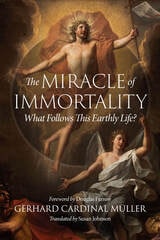
The Miracle of Immortality
What Follows This Earthly Life?Gerhard Cardinal Muller
Catholic University of America Press, 2026
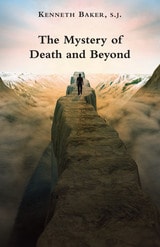
The Mystery of Death and Beyond
Kenneth Baker, S.J.
St. Augustine's Press, 2016
Man is unlike all other animals, because he has a soul endowed with intelligence and free will. Because man’s soul is spiritual, it is immortal. Death is the separation of that soul from the body; the body decays and returns to the dust from which it was taken, but the soul continues to live and is in the hands of God. But what happens to the soul after death? There are two possibilities—heaven or hell. We know from divine revelation and from the infallible teaching of the Church that the soul after death goes immediately to heaven (perhaps first for a time to purgatory to be totally cleansed and sanctified), or immediately to hell, a state or place of eternal misery.
The next life is a life without time—it is a perpetual now, with no before and after. It has a beginning but not end. It is also unchangeable, that is, souls in heaven are there forever and they cannot lose it; souls in hell are there forever and they can never be freed from it.
This is a very serious and certain reality for each one of us. The most important thing we will ever do is to die, and to die in the state of God’s grace so that we are his friends and will be admitted to his presence, which is what is meant by heaven. Therefore we must prepare ourselves to die in the grace of God, which is our ticket to heaven. We do that by doing God’s will for us, which means to keep his commandments, especially to love God above all things and practice love of neighbor.
This short book will help people think about their death and how important it is for their permanent happiness. It will help them to arrange their life in such a way that they will live it as God wants them to live it and so ultimately obtain eternal life with God because: “no eye has seen, nor ear heard, nor the heart of man conceived, what God has prepared for those who love him” (1 Cor. 2:9).
The Specter and the Speculative
Afterlives and Archives in the African DiasporaMae G. Henderson
Rutgers University Press, 2024
Three Spiritualist Novels
Elizabeth Stuart Phelps
University of Illinois Press, 2000
Articulating an alternative to conservative church doctrine, Phelps assured her readers--many of them women bereft of their loved ones by the Civil War--that Spiritualist ideas about the afterlife were not fundamentally at odds with Scripture. Like the protagonist of The Gates Ajar, these readers wanted to believe "something actual, something pleasant" about the world to come, not "glittering generalities" about a "dreadful Heaven" where their loved ones were too busy singing and worshiping to have any thought of those left behind.
All three of the novels collected here--The Gates Ajar (1868), Beyond the Gates (1883), and The Gates Between (1887)--describe heaven as a perfected version of earthly life and the afterlife as a chance to make up for opportunities squandered on Earth. A grieving sister finds consolation in the Spiritualist idea of a continued connection with her beloved brother; a dying woman finds her soulmate in the afterlife; an erring husband makes amends across the line between the living and the dead.
Tremendously popular in Phelps's lifetime, these novels offer a way of reconciling human beings to earthly loss and sorrow, assuring readers of an afterlife both restorative and compensatory. They also provide an intriguing look at a phenomenon that preoccupied nineteenth-century America and continues to fascinate us in the twenty-first century.
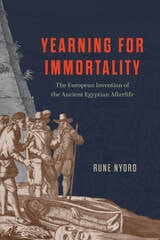
Yearning for Immortality
The European Invention of the Ancient Egyptian AfterlifeRune Nyord
University of Chicago Press, 2025
Many of us are familiar with the ancient Egyptians’ obsession with immortality and the great efforts they made to secure the quality of their afterlife. But, as Rune Nyord shows, even today, our understanding of the Egyptian afterlife has been formulated to a striking extent in Christian terms. Nyord argues that this is no accident, but rather the result of a long history of Europeans systematically retelling the religion of ancient Egypt to fit the framework of Christianity. The idea of ancient Egyptians believing in postmortem judgment with rewards and punishments in the afterlife was developed during the early modern period through biased interpretations that were construed without any detailed knowledge of ancient Egyptian religion, hieroglyphs, and sources.
As a growing number of Egyptian images and texts became available through the nineteenth century, these materials tended to be incorporated into existing narratives rather than being used to question them. Against this historical background, Nyord argues that we need to return to the indigenous sources and shake off the Christian expectations that continue to shape scholarly and popular thinking about the ancient Egyptian afterlife.