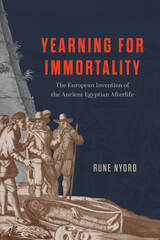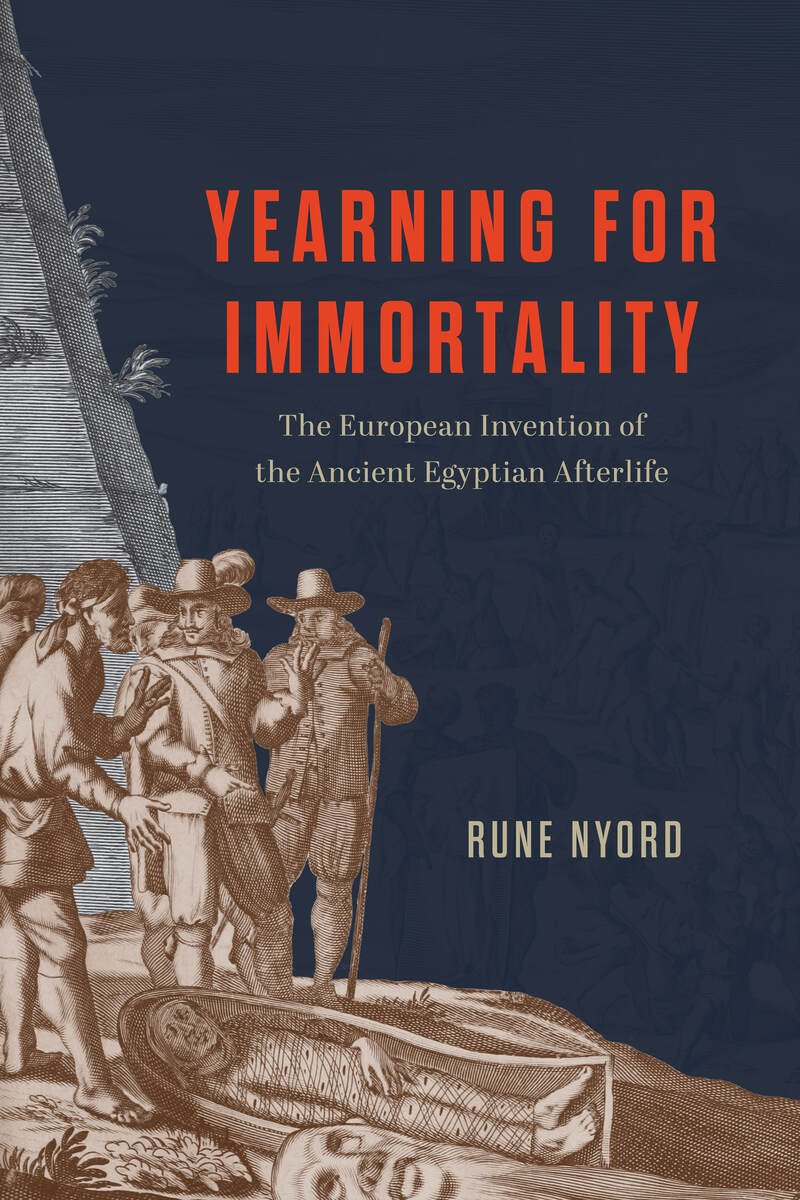
Yearning for Immortality: The European Invention of the Ancient Egyptian Afterlife
University of Chicago Press, 2025
Cloth: 978-0-226-83823-6 | Paper: 978-0-226-83825-0 | eISBN: 978-0-226-83824-3 (all)
Library of Congress Classification BL2450.F83N96 2025
Dewey Decimal Classification 224.207
Cloth: 978-0-226-83823-6 | Paper: 978-0-226-83825-0 | eISBN: 978-0-226-83824-3 (all)
Library of Congress Classification BL2450.F83N96 2025
Dewey Decimal Classification 224.207
ABOUT THIS BOOK | AUTHOR BIOGRAPHY | REVIEWS | TOC | REQUEST ACCESSIBLE FILE
ABOUT THIS BOOK
How our understanding of the ancient Egyptian afterlife was shaped by Christianity.
Many of us are familiar with the ancient Egyptians’ obsession with immortality and the great efforts they made to secure the quality of their afterlife. But, as Rune Nyord shows, even today, our understanding of the Egyptian afterlife has been formulated to a striking extent in Christian terms. Nyord argues that this is no accident, but rather the result of a long history of Europeans systematically retelling the religion of ancient Egypt to fit the framework of Christianity. The idea of ancient Egyptians believing in postmortem judgment with rewards and punishments in the afterlife was developed during the early modern period through biased interpretations that were construed without any detailed knowledge of ancient Egyptian religion, hieroglyphs, and sources.
As a growing number of Egyptian images and texts became available through the nineteenth century, these materials tended to be incorporated into existing narratives rather than being used to question them. Against this historical background, Nyord argues that we need to return to the indigenous sources and shake off the Christian expectations that continue to shape scholarly and popular thinking about the ancient Egyptian afterlife.
See other books on: Christianity and other religions | Egypt | Egyptian | Egyptology | Future life
See other titles from University of Chicago Press