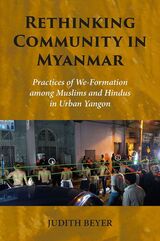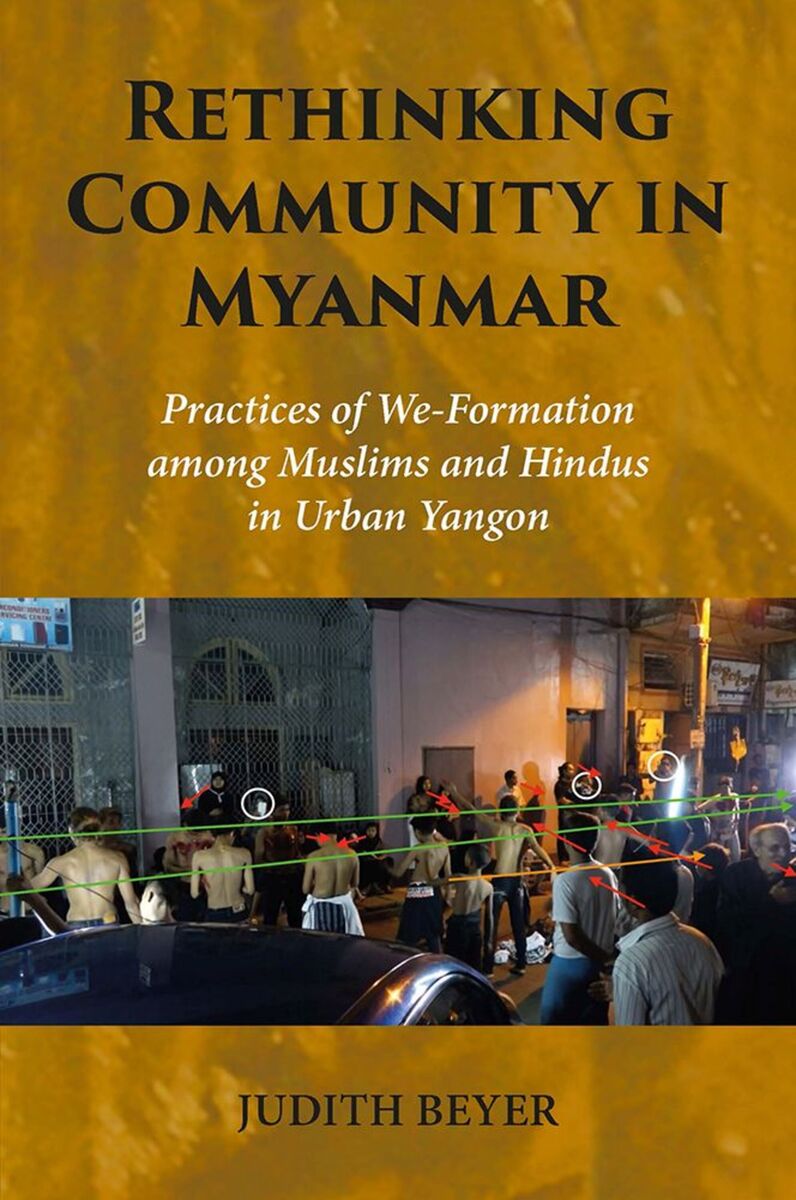
Rethinking Community in Myanmar: Practices of We-Formation among Muslims and Hindus in Urban Yangon
National University of Singapore Press, 2023
Cloth: 978-87-7694-326-4 | Paper: 978-87-7694-327-1
Library of Congress Classification BL2051.B49 2023
See other books on: Burma | Communities | Hinduism | Practices | Religious life and customs
See other titles from National University of Singapore Press
Cloth: 978-87-7694-326-4 | Paper: 978-87-7694-327-1
Library of Congress Classification BL2051.B49 2023
ABOUT THIS BOOK | AUTHOR BIOGRAPHY | REVIEWS
ABOUT THIS BOOK
Striking new insights into understanding community in Myanmar In this first anthropological study of Muslim and Hindu lives in urban Myanmar today, Beyer develops the concept of ‘we-formation’ to demonstrate that individuals are always more than members of wider groups. ‘We-formation’ complements her rich political, legal and historical analysis of ‘community’, a term used by Beyer’s interlocutors themselves, even as it reinforces ethno-religious stereotypes and their own minority status. The book also offers an interpretation of the dynamics of resistance to the attempted military coup of 2021.
See other books on: Burma | Communities | Hinduism | Practices | Religious life and customs
See other titles from National University of Singapore Press