Results by title
35 books match the query 'Genetics'
A Cultural History of Heredity
Staffan Müller-Wille and Hans-Jörg Rheinberger
University of Chicago Press, 2012
It was only around 1800 that heredity began to enter debates among physicians, breeders, and naturalists. Soon thereafter it evolved into one of the most fundamental concepts of biology. Here Staffan Müller-Wille and Hans-Jörg Rheinberger offer a succinct cultural history of the scientific concept of heredity. They outline the dramatic changes the idea has undergone since the early modern period and describe the political and technological developments that brought about these changes.
Müller-Wille and Rheinberger begin with an account of premodern theories of generation, showing that these were concerned with the procreation of individuals rather than with hereditary transmission. The authors reveal that when hereditarian thinking first emerged, it did so in a variety of cultural domains, such as politics and law, medicine, natural history, breeding, and anthropology. Müller-Wille and Rheinberger then track theories of heredity from the late nineteenth century—when leading biologists considered it in light of growing societal concerns with race and eugenics—through the rise of classical and molecular genetics in the twentieth century, to today, as researchers apply sophisticated information technologies to understand heredity. What readers come to see from this exquisite history is why it took such a long time for heredity to become a prominent concept in the life sciences and why it gained such overwhelming importance in those sciences and the broader culture over the last two centuries.

All God's Mistakes
Genetic Counseling in a Pediatric HospitalCharles L. Bosk
University of Chicago Press, 1992
Biology and Ideology from Descartes to Dawkins
Edited by Denis R. Alexander and Ronald L. Numbers
University of Chicago Press, 2010
Over the course of human history, the sciences, and biology in particular, have often been manipulated to cause immense human suffering. For example, biology has been used to justify eugenic programs, forced sterilization, human experimentation, and death camps—all in an attempt to support notions of racial superiority. By investigating the past, the contributors to Biology and Ideology from Descartes to Dawkins hope to better prepare us to discern ideological abuse of science when it occurs in the future.
Denis R. Alexander and Ronald L. Numbers bring together fourteen experts to examine the varied ways science has been used and abused for nonscientific purposes from the fifteenth century to the present day. Featuring an essay on eugenics from Edward J. Larson and an examination of the progress of evolution by Michael J. Ruse, Biology and Ideology examines uses both benign and sinister, ultimately reminding us that ideological extrapolation continues today. An accessible survey, this collection will enlighten historians of science, their students, practicing scientists, and anyone interested in the relationship between science and culture.

Building the New Man
Eugenics, Racial Science and Genetics in Twentieth-Century ItalyFrancesco Cassata
Central European University Press, 2011
Contested Reproduction
Genetic Technologies, Religion, and Public DebateJohn H. Evans
University of Chicago Press, 2010
Scientific breakthroughs have led us to a point where soon we will be able to make specific choices about the genetic makeup of our offspring. In fact, this reality has arrived—and it is only a matter of time before the technology becomes widespread.
Much like past arguments about stem-cell research, the coming debate over these reproductive genetic technologies (RGTs) will be both political and, for many people, religious. In order to understand how the debate will play out in the United States, John H. Evans conducted the first in-depth study of the claims made about RGTs by religious people from across the political spectrum, and Contested Reproduction is the stimulating result.
Some of the opinions Evans documents are familiar, but others—such as the idea that certain genetic conditions produce a “meaningful suffering” that is, ultimately, desirable—provide a fascinating glimpse of religious reactions to cutting-edge science. Not surprisingly, Evans discovers that for many people opinion on the issue closely relates to their feelings about abortion, but he also finds a shared moral language that offers a way around the unproductive polarization of the abortion debate and other culture-war concerns. Admirably evenhanded, Contested Reproduction is a prescient, profound look into the future of a hot-button issue.

Creating a Physical Biology
The Three-Man Paper and Early Molecular BiologyEdited by Phillip R. Sloan and Brandon Fogel
University of Chicago Press, 2011
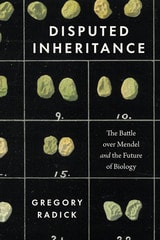
Disputed Inheritance
The Battle over Mendel and the Future of BiologyGregory Radick
University of Chicago Press, 2023
In 1900, almost no one had heard of Gregor Mendel. Ten years later, he was famous as the father of a new science of heredity—genetics. Even today, Mendelian ideas serve as a standard point of entry for learning about genes. The message students receive is plain: the twenty-first century owes an enlightened understanding of how biological inheritance really works to the persistence of an intellectual inheritance that traces back to Mendel’s garden.
Disputed Inheritance turns that message on its head. As Gregory Radick shows, Mendelian ideas became foundational not because they match reality—little in nature behaves like Mendel’s peas—but because, in England in the early years of the twentieth century, a ferocious debate ended as it did. On one side was the Cambridge biologist William Bateson, who, in Mendel’s name, wanted biology and society reorganized around the recognition that heredity is destiny. On the other side was the Oxford biologist W. F. R. Weldon, who, admiring Mendel's discoveries in a limited way, thought Bateson's "Mendelism" represented a backward step, since it pushed growing knowledge of the modifying role of environments, internal and external, to the margins. Weldon's untimely death in 1906, before he could finish a book setting out his alternative vision, is, Radick suggests, what sealed the Mendelian victory.
Bringing together extensive archival research with searching analyses of the nature of science and history, Disputed Inheritance challenges the way we think about genetics and its possibilities, past, present, and future.
Evolution and the Genetics of Populations, Volume 1
Genetic and Biometric FoundationsSewall Wright
University of Chicago Press, 1968
Evolution and the Genetics of Populations, Volume 2
Theory of Gene FrequenciesSewall Wright
University of Chicago Press, 1969
Evolution and the Genetics of Populations, Volume 3
Experimental Results and Evolutionary DeductionsSewall Wright
University of Chicago Press, 1977
Evolution and the Genetics of Populations, Volume 4
Variability Within and Among Natural PopulationsSewall Wright
University of Chicago Press, 1978
Genes in Development
Re-reading the Molecular ParadigmEva M. Neumann-Held and Christoph Rehmann-Sutter, eds.
Duke University Press, 2006
Contributors discuss alternatives to the programmatic view of dna, including the developmental systems approach, methodical culturalism, the molecular process concept of the gene, the hermeneutic theory of description, and process structuralist biology. None of the approaches cast doubt on the notion that dna is tremendously important to biological life on earth; rather, contributors examine different ideas of how dna should be represented, evaluated, and explained. Just as ideas about genetic codes have reached far beyond the realm of science, the reconceptualizations of genetic theory in this volume have broad implications for ethics, philosophy, and the social sciences.
Contributors. Thomas Bürglin, Brian C. Goodwin, James Griesemer, Paul Griffiths, Jesper Hoffmeyer, Evelyn Fox Keller, Gerd B. Müller, Eva M. Neumann-Held, Stuart A. Newman, Susan Oyama, Christoph Rehmann-Sutter, Sahotra Sarkar, Jackie Leach Scully, Gerry Webster, Ulrich Wolf

Genetic Afterlives
Black Jewish Indigeneity in South AfricaNoah Tamarkin
Duke University Press, 2020
Genetic Perspectives in Biology and Medicine
Edward Garber
University of Chicago Press, 1985
Genetics and the Social Behaviour of the Dog
John Paul Scott and John L. Fuller
University of Chicago Press, 1974
Scott and Fuller’s classic study of dog behavior gathers into one volume the authoritative information that came from their twenty years of research at the Jackson Laboratory. Central to their book is the role heredity plays in the development of behavior. Giving puppies an environment designed on the principles of a well-run school, Scott and Fuller tested five breeds representing the major dog groups and carried out a Mendelian experiment with two of the most different breeds: the basenji and the cocker spaniel.
They found that heredity affects almost every trait tested; that sex affects aggressiveness and the dominance order, but not trainability and problem-solving; that emotional traits profoundly influence performance; that, although breeds differ widely in emotional and motivational characteristics, none shows distinct superiority in problem solving; and that detailed statistical analyses indicate a highly complex pathway between primary gene action and its final effect on behavior.
Included is important information on:
• rearing methods
• the origin and history of dog breeds
• basic behavior patterns
• the physiological and behavioral development of puppies
Genetics and the Unsettled Past
The Collision of DNA, Race, and HistoryWailoo, Keith
Rutgers University Press, 2012
Our genetic markers have come to be regarded as portals to the past. Analysis of these markers is increasingly used to tell the story of human migration; to investigate and judge issues of social membership and kinship; to rewrite history and collective memory; to right past wrongs and to arbitrate legal claims and human rights controversies; and to open new thinking about health and well-being. At the same time, in many societies genetic evidence is being called upon to perform a kind of racially charged cultural work: to repair the racial past and to transform scholarly and popular opinion about the “nature” of identity in the present.
Genetics and the Unsettled Past considers the alignment of genetic science with commercial genealogy, with legal and forensic developments, and with pharmaceutical innovation to examine how these trends lend renewed authority to biological understandings of race and history.
This unique collection brings together scholars from a wide range of disciplines—biology, history, cultural studies, law, medicine, anthropology, ethnic studies, sociology—to explore the emerging and often contested connections among race, DNA, and history. Written for a general audience, the book’s essays touch upon a variety of topics, including the rise and implications of DNA in genealogy, law, and other fields; the cultural and political uses and misuses of genetic information; the way in which DNA testing is reshaping understandings of group identity for French Canadians, Native Americans, South Africans, and many others within and across cultural and national boundaries; and the sweeping implications of genetics for society today.
Genetics, Disability, and Deafness
John Vickrey Van Cleve
Gallaudet University Press, 2004
Pulitzer Prize-winning author Louis Menand begins this wide-ranging volume with an essay that extols diversity and warns of the dangers of modifying the human genome. Nora Groce reviews the ways that societies have defined disability and creates an interpretive framework for discussing the relationship between culture and disability.
In essays devoted to historical perspective, Brian H. Greenwald comments upon the real “toll” taken by A. G. Bell’s insistence upon oralism, while Joseph J. Murray weighs the nineteenth-century debate over whether deaf-deaf marriages should be encouraged. John S. Schuchman’s chilling account of deafness and eugenics in the Nazi era adds wrenching reinforcement to the impetus to include disabled people in genetics debates.
Mark Willis offers an intensely personal reflection on the complexities of genetic alteration, addressing both his heart condition and his blindness in surprisingly different ways. Anna Middleton extends Willis’s concepts in her discussion of couples currently considering the use of genetic knowledge and technology to select for or against a gene that causes deafness.
In the part on the science of genetics, Orit Dagan, Karen B. Avraham, Kathleen S. Arnos, and Arti Pandya clarify the choices presented by genetic engineering, and geneticist Walter E. Nance emphasizes the importance of science in offering individuals knowledge from which they can fashion their own decisions. In the concluding section, Christopher Krentz raises moral questions about the ever-continuing search for human perfection, and Michael Bérubé argues that disability should be considered democratically to ensure full participation of disabled people in all decisions that might affect them.
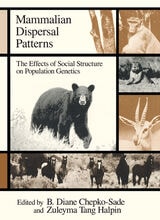
Mammalian Dispersal Patterns
The Effects of Social Structure on Population GeneticsEdited by B. Diane Chepko-Sade and Zuleyma Tang Halpin
University of Chicago Press, 1987
Theoretical work in population genetics indicates that such social factors as skewed sex ratios, restrictive mating patterns, and delayed age of first reproduction will lower the reproductive variability of a population by reducing the number of genotypes passed from one generation to the next. Field studies have shown that many mammalian species do exhibit many such social characteristics. Among horses, elephant seals, and a number of primates, the majority of females are inseminated by only a fraction of the males. In pacts of wolves and mongooses, usually only the highest-ranking male and female breed in a given season. Although socially restricted mating tends to lower genetic variability in isolated populations, it actually tends to increase genetic variability in subdivided populations with low rates of migration between subunits. Among some species there is little dispersal and thus little gene flow between subpopulations; other species travel far afield before mating.
The contributors to this volume examine actual data from populations of mammals, the way patterns of dispersal correlate with the genetic structure of individuals and populations, and mathematical models of population structure. This interdisciplinary approach has an important bearing on work in conservation of both wildlife and zoo populations, for it shows that the home range and the population size needed to maintain genetic variability can differ greatly from one species to the next. The volume also offers a fruitful model for future research.
Mapping "Race"
Critical Approaches to Health Disparities ResearchGómez, Laura E
Rutgers University Press, 2013
Contributors: John A. Garcia, Arline T. Geronimus, Laura E. Gómez, Joseph L. Graves Jr., Janet E. Helms, Derek Kenji Iwamoto, Jonathan Kahn, Jay S. Kaufman, Mai M. Kindaichi, Simon J. Craddock Lee, Nancy López, Ethan H. Mereish, Matthew Miller, Gabriel R. Sanchez, Aliya Saperstein, R. Burciaga Valdez, Vicki D. Ybarra
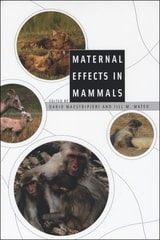
Maternal Effects in Mammals
Edited by Dario Maestripieri and Jill M. Mateo
University of Chicago Press, 2009
Evolutionary maternal effects occur whenever a mother’s phenotypic traits directly affect her offspring’s phenotype, independent of the offspring’s genotype. Some of the phenotypic traits that result in maternal effects have a genetic basis, whereas others are environmentally determined. For example, the size of a litter produced by a mammalian mother—a trait with a strong genetic basis—can affect the growth rate of her offspring, while a mother’s dominance rank—an environmentally determined trait—can affect the dominance rank of her offspring.
The first volume published on the subject in more than a decade, Maternal Effects in Mammals reflects advances in genomic, ecological, and behavioral research, as well new understandings of the evolutionary interplay between mothers and their offspring. Dario Maestripieri and Jill M. Mateo bring together a learned group of contributors to synthesize the vast literature on a range of species, highlight evolutionary processes that were previously overlooked, and propose new avenues of research. Maternal Effects in Mammals will serve as the most comprehensive compendium on and stimulus for interdisciplinary treatments of mammalian maternal effects.
Mobilizing Mutations
Human Genetics in the Age of Patient AdvocacyDaniel Navon
University of Chicago Press, 2019
Drawing on a wealth of fieldwork and historical material, Navon presents a sociological account of the ways genetic mutations have been mobilized and transformed in the sixty years since it became possible to see abnormal human genomes, providing a new vista onto the myriad ways contemporary genetic testing can transform people’s lives.
Taking us inside these shifting worlds of research and advocacy over the last half century, Navon reveals the ways in which knowledge about genetic mutations can redefine what it means to be ill, different, and ultimately, human.
Model Behavior
Animal Experiments, Complexity, and the Genetics of Psychiatric DisordersNicole C. Nelson
University of Chicago Press, 2018
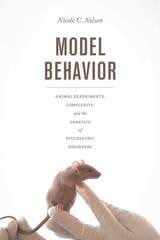
Behavior genetics is a particularly challenging field for making a clear-cut case that mouse experiments work, because researchers believe that both the phenomena they are studying and the animal models they are using are complex. These assumptions of complexity change the nature of what laboratory work produces. Whereas historical and ethnographic studies traditionally portray the laboratory as a place where scientists control, simplify, and stabilize nature in the service of producing durable facts, the laboratory that emerges from Nelson’s extensive interviews and fieldwork is a place where stable findings are always just out of reach. The ongoing work of managing precarious experimental systems means that researchers learn as much—if not more—about the impact of the environment on behavior as they do about genetics. Model Behavior offers a compelling portrait of life in a twenty-first-century laboratory, where partial, provisional answers to complex scientific questions are increasingly the norm.
Ordinary Genomes
Science, Citizenship, and Genetic IdentitiesKaren-Sue Taussig
Duke University Press, 2009

Ordinary Medicine
Extraordinary Treatments, Longer Lives, and Where to Draw the LineSharon R. Kaufman
Duke University Press, 2015
Radium and the Secret of Life
Luis A. Campos
University of Chicago Press, 2015
From the creation of half-living microbes in the test tube to charting the earliest histories of genetic engineering, Radium and the Secret of Life highlights previously unknown interconnections between the history of the early radioactive sciences and the sciences of heredity. Equating the transmutation of radium with the biological transmutation of living species, biologists saw in metabolism and mutation properties that reminded them of the new element. These initially provocative metaphoric links between radium and life proved remarkably productive and ultimately led to key biological insights into the origin of life, the nature of heredity, and the structure of the gene. Radium and the Secret of Life recovers a forgotten history of the connections between radioactivity and the life sciences that existed long before the dawn of molecular biology.

Saving Babies?
The Consequences of Newborn Genetic ScreeningStefan Timmermans and Mara Buchbinder
University of Chicago Press, 2012
Sewall Wright and Evolutionary Biology
William B. Provine
University of Chicago Press, 1986
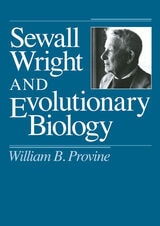
"In Sewall Wright and Evolutionary Biology . . . Provine has produced an intellectual biography which serves to chart in considerable detail both the life and work of one man and the history of evolutionary theory in the middle half of this century. Provine is admirably suited to his task. . . . The resulting book is clearly a labour of love which will be of great interest to those who have a mature interest in the history of evolutionary theory."-John Durant, ;ITimes Higher Education Supplement;X

Shattering
Food, Politics, and the Loss of Genetic DiversityCary Fowler and Pat Mooney
University of Arizona Press, 1990
Large-scale agriculture has come to favor uniformity in food crops. More than 7,000 U.S. apple varieties once grew in American orchards; 6,000 of them are no longer available. Every broccoli variety offered through seed catalogs in 1900 has now disappeared. As the international genetics supply industry absorbs seed companies—with nearly one thousand takeovers since 1970—this trend toward uniformity seems likely to continue; and as third world agriculture is brought in line with international business interests, the gene pools of humanity's most basic foods are threatened.
The consequences are more than culinary. Without the genetic diversity from which farmers traditionally breed for resistance to diseases, crops are more susceptible to the spread of pestilence. Tragedies like the Irish Potato Famine may be thought of today as ancient history; yet the U.S. corn blight of 1970 shows that technologically based agribusiness is a breeding ground for disaster.
Shattering reviews the development of genetic diversity over 10,000 years of human agriculture, then exposes its loss in our lifetime at the hands of political and economic forces. The possibility of crisis is real; this book shows that it may not be too late to avert it.
Styles of Scientific Thought
The German Genetics Community, 1900-1933Jonathan Harwood
University of Chicago Press, 1992
The first book-length treatment of genetics in Germany, Styles of Scientific Thought demonstrates the influence of culture on science by comparing the American with the German scientific traditions. Harwood examines the structure of academic and research institutions, the educational backgrounds of geneticists, and cultural traditions, among many factors, to explain why the American approach was much more narrowly focussed than the German.
This tremendously rich book fills a gap between histories of the physical sciences in the Weimar Republic and other works on the humanities and the arts during the intellectually innovative 1920s, and it will interest European historians, as well as sociologists and philosophers of science.
The DNA Mystique
The Gene as a Cultural IconDorothy Nelkin and M. Susan Lindee
University of Michigan Press, 2004
With a new introduction and conclusion, this edition will continue to be an engaging, accessible, and provocative text for the sociology, anthropology, and bioethics classroom, as well as stimulating reading for those generally interested in science and culture.
The Gene
From Genetics to PostgenomicsHans-Jörg Rheinberger and Staffan Müller-Wille
University of Chicago Press, 2018
The time could not be better, therefore, for Hans-Jörg Rheinberger and Staffan Müller-Wille's magisterial history of the concept of the gene. Though the gene has long been the central organizing theme of biology, both conceptually and as an object of study, Rheinberger and Müller-Wille conclude that we have never even had a universally accepted, stable definition of it. Rather, the concept has been in continual flux—a state that, they contend, is typical of historically important and productive scientific concepts. It is that very openness to change and manipulation, the authors argue, that made it so useful: its very mutability enabled it to be useful while the technologies and approaches used to study and theorize about it changed dramatically.
The Genealogical Science
The Search for Jewish Origins and the Politics of EpistemologyNadia Abu El-Haj
University of Chicago Press, 2012
The Language of Genetics
An IntroductionDenis R. Alexander
Templeton Press, 2011
The Language of Genetics: An Introduction is the seventh title published in the Templeton Science and Religion Series, in which scientists from a wide range of fields distill their experience and knowledge into brief tours of their respective specialties. In this volume, Dr. Denis R. Alexander offers readers a basic toolkit of information, explanations, and ideas that can help us grasp something of the fascination and the challenge of the language of genetics.
Alexander surveys the big picture, covering such topics as the birth of the field; DNA: what it is, how it works, and how it was discovered; our genetic history; the role of genes in diseases, epigenetics, and genetic engineering. The book assumes the reader has little scientific background, least of all in genetics, and approaches these issues in a very accessible way, free of specialized or overly technical jargon. In the last chapter, Dr. Alexander explores some of the big questions raised by genetics: what are its implications for notions of human value and uniqueness? Is evolution consistent with religious belief? If we believe in a God of love, then how come the evolutionary process, utterly dependent upon the language of genetics, is so wasteful and involves so much pain and suffering? How far should we go in manipulating the human genome? Does genetics subvert the idea that life has some ultimate meaning and purpose?
Genetics is a rapidly advancing field; it seems new discoveries make headlines every other week. The Language of Genetics is intended to give the general reader the knowledge he or she needs to assess and understand the next big story
in genetics.
The Poetics of DNA
Judith Roof
University of Minnesota Press, 2007
How has DNA come to be seen as a cosmic truth, representative of all life, potential for all cures, repository for all identity, and end to all stories? In The Poetics of DNA, Judith Roof examines the rise of this powerful symbol and the implications of its ascendancy for the ways we think—about ourselves, about one another, and about the universe.
Descriptions of DNA, Roof argues, have distorted ideas and transformed nucleic acid into the answer to all questions of life. This hyperbolized notion of DNA, inevitably confused or conflated with the “gene,” has become a vector through which older ways of thinking can merge with the new, advancing long-discredited and insidious ideas about such things as eugenics and racial selection and influencing contemporary debates, particularly the popular press obsession with the “gay gene.” Through metaphors of DNA, she contends, racist and homophobic ideology is masked as progressive science.
Grappling with twentieth-century intellectual movements as well as contemporary societal anxieties, The Poetics of DNA reveals how descriptions of DNA and genes typify a larger set of epistemological battles that play out not only through the assumptions associated with DNA but also through less evident methods of magical thinking, reductionism, and pseudoscience.
For the first time, Roof exposes the ideology and cultural consequences of DNA and gene metaphors to uncover how, ultimately, they are paradigms used to recreate prejudices.
Judith Roof is professor of English and film studies at Michigan State University. She is the author of several books, including All about Thelma and Eve: Sidekicks and Third Wheels.
What Are Stem Cells?
Definitions at the Intersection of Science and PoliticsJohn Lynch
University of Alabama Press, 2011