Results by title
16 books match the query 'Goldhammer, Arthur'

Between Church and State
The Lives of Four French Prelates in the Late Middle AgesBernard Guenée
University of Chicago Press, 1990
Guenée chooses as his frame the momentous period from the height of Saint Louis's reign in the mid-thirteenth century to the beginning of the Italian wars two hundred years later. During this time of schism in the church, of war between nascent states, and of treachery among princes, Bernard Gui (1261-1331), Gilles Le Muisit (1272-1353), Pierre D'Ailly (1351-1420), and Thomas Basin (1412-1490) all rose from modest circumstances to the dignity of office. Guenée shows us how these prelates used their talent, ambition, patrons, zeal, and experience to juggle the competing demands of obedience to church and state; to overcome competition from an upcoming new generation; and to cope with plague, war, and violence. Free of jargon yet steeped in learning, Between Church and State reveals the career patterns and politics of an era while forging a new model for points of departure in historical scholarship.
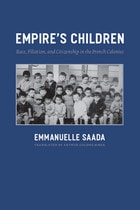
Empire's Children
Race, Filiation, and Citizenship in the French ColoniesEmmanuelle Saada
University of Chicago Press, 2012
Europe’s imperial projects were often predicated on a series of legal and scientific distinctions that were frequently challenged by the reality of social and sexual interactions between the colonized and the colonizers.When Emmanuelle Saada discovered a 1928 decree defining the status of persons of mixed parentage born in French Indochina—the métis—she found not only a remarkable artifact of colonial rule, but a legal bombshell that introduced race into French law for the first time. The decree was the culmination of a decades-long effort to resolve the “métis question”: the educational, social, and civil issues surrounding the mixed population. Operating at the intersection of history, anthropology, and law, Empire’s Children reveals the unacknowledged but central role of race in the definition of French nationality.
Through extensive archival work in both France and Vietnam, and a close reading of primary and secondary material from the Pacific islands and sub-Saharan and North Africa, Saada has created in Empire’s Children an original and compelling perspective on colonialism, law, race, and culture from the end of the nineteenth century until decolonization.
History Continues
Georges Duby
University of Chicago Press, 1994
Since its beginning in the 1940s, Duby's career has been rich and varied, encompassing economic history, social history, the history of mentalites, art history, microhistory, urban history, the history of women and sexuality, and, most recently, the Church's influence on feudal society. In retracing this singular career path, Duby candidly remembers his life's most formative influences, including the legendary historians Marc Bloch and Lucien Febvre, the Annales School so closely associated with them, and the College de France.
Duby also offers insights about the proper methods of gathering and using archival data and on constructing penetrating interpretations of the documents. Indeed, his discussion of how he chose his subjects, collected his materials, developed the arguments, erected the scaffolding and constructed his theses offers the best introduction to the craft available to aspiring historians.
Candid and charming, this book is both a memoir of one of this century's great scholars and a history of the French historical school since the mid-twentieth century. It will be required reading for anyone interested in the French academic milieu, medieval history, French history, or the recording of history in general.
Georges Duby, a member of the Academie francaise, for many years held the distinguished chair in medieval history at the College de France. His numerous books include The Age of Cathedrals; The Knight, the Lady, and the Priest; Love and Marriage in the Middle Ages; and The Three Orders—all published by the University of Chicago Press.

How New York Stole the Idea of Modern Art
Serge Guilbaut
University of Chicago Press, 1985
Jean-Jacques Rousseau
Transparency and ObstructionJean Starobinski
University of Chicago Press, 1988

Montaigne in Motion
Jean Starobinski
University of Chicago Press, 1985
Educated in the humanities and trained in psychiatry, Jean Starobinski is a central figure in the Geneva School of criticism. His classic work, Montaigne in Motion, is a subtly conceived and elegantly written study of the Essais of Montaigne, whose deceptively plainspoken meditations have entranced readers and stimulated philosophers since their first publication in 1580 and 1595.
Here Starobinski offers a decidedly postmodern reading of Montaigne. In chapters dealing with the themes of public and private life, friendship, death, the body, and love, Starobinski reveals much that will remind us that Montaigne’s thought is as apropos to our time as it was to his own.
“The most important contribution to Montaigne studies since Friedrich’s work . . . . [It] will be the critical framework in which scholars will discuss Montaigne in the years to come.”—Choice
“Starobinski brings Montaigne to life by treating him as our contemporary and asking him modern questions.”—Hudson Review

Saint-Simon and the Court of Louis XIV
Emmanuel Le Roy Ladurie
University of Chicago Press, 2001
Saint-Simon and the Court of Louis XIV, expertly translated by Arthur Goldhammer, is a historical essay about court life, built with the wide range of tools Ladurie so expertly employs: ethnography, history, literary criticism, and historiography. Ladurie recreates a world in which man is most definitely born unequal, a world circumscribed entirely by purity of bloodline, which nonetheless directly preceded the birth of democratic thought and political action. Locked into a virtual caste system, courtiers formed within their ranks cabals, factions, and groups bonded by common ideological principles in order to survive the political order of the court. Thus Saint-Simon and the Court of Louis XIV is not only about Saint-Simon's place in this constellation but also the constellation itself and how understanding it forces us to a reevaluation of political life in France during the Old Regime.
Including a biographical sketch of Saint-Simon and more than 30 illustrations of court life and its members, Saint-Simon and the Court of Louis XIV will delight those interested in French history as well as instruct those interested in political history.

The Arabs
Maxime Rodinson
University of Chicago Press, 1981
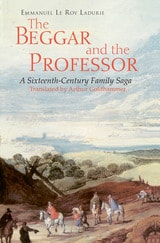
The Beggar and the Professor
A Sixteenth-Century Family SagaEmmanuel Le Roy Ladurie
University of Chicago Press, 1997
"Le Roy Ladurie paints a remarkably contemporary picture of life in the sixteenth century. . . . It's a good story, told with a deft narrative touch."—Michael S. Kimmel, The Nation
"Le Roy Ladurie is a master of the representative detail and uses the Platters' lives as a means to see a whole century 'through a glass, darkly'."—The Independent
"Le Roy Ladurie has not only thoroughly sketched out the Platters' particular brand of gusto, he has also made it seem a defining characteristic of the sixteenth century."—The New Republic
"All [of] the drama and pathos of a Disney film."—Emily Eakin, Lingua Franca

The Birth of Purgatory
Jacques Le Goff
University of Chicago Press, 1984
The Institutions of France under the Absolute Monarchy, 1598-1789, Volume 2
The Origins of State and SocietyRoland Mousnier
University of Chicago Press, 1984
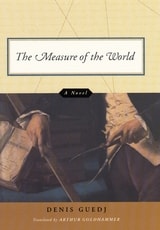
The Measure of the World
A NovelDenis Guedj
University of Chicago Press, 2001
The Measure of the World by Denis Guedj tells the story of this strange and wonderful effort. Not a traditional history of science, the book is a novelistic account of the measurement project that relies heavily on archival sources. A more "traditional" history could not possibly describe how a sober scientific enterprise could turn into a journey filled with adventures and experiences so bizarre as to be hardly credible. In the tumultuous days of revolutionary and postrevolutionary France, Méchain and Delambre were objects of suspicion as they traveled through the provinces, climbing steeples and deploying strange instrumentsthey were detained as spies, taken for charlatans or fleeing royalists, and arrested for debt. Their perilous labors lasted until 1799, when the meter was formally established.
Arthur Goldhammer's crisp translation of this wonderful novel retains the flavor of the original, and an appendix explaining Guedj's use of historical materials is included. A vivid re-creation of a fascinating and troubling period in history juxtaposed with the achievement of a complicated scientific undertaking, The Measure of the World is a marvelous book-not science fiction, but fiction about science.
Denis Guedj is the author of La évolution des savants and L'Empire des nombres, among other books. La Mesure du monde was awarded the Prix d'Institut in 1989. Arthur Goldhammer is an award-winning translator who has translated works by Emmanuel Le Roy Ladurie, Jacques Le Goff, and Jean Starobinski.
The Medieval Imagination
Jacques Le Goff
University of Chicago Press, 1988
"Le Goff is one of the most distinguished of the French medieval historians of his generation . . . he has exercised immense influence."—Maurice Keen, New York Review of Books
"The whole book turns on a fascinating blend of the brutally materialistic and the generously imaginative."—Tom Shippey, London Review of Books
"The richness, imaginativeness and sheer learning of Le Goff's work . . . demand to be experienced."—M. T. Clanchy, Times Literary Supplement
The Sociology of the State
Bertrand Badie and Pierre Birnbaum
University of Chicago Press, 1983
The book opens with a review of the principal evolutionary theories concerning the origin of the institution proposed by such thinkers as Marx, Durkheim, and Weber. Rejecting these views, the authors set forward and defend their thesis that the state was an "invention" rather than a necessary consequence of any other process. Once invented, the state was disseminated outside its Western European birthplace either through imposition or imitation. The study concludes with concrete analyses of the differences in actual state institutions in France, Prussia, Great Britain, the United States, and Switzerland.
The Three Orders
Feudal Society ImaginedGeorges Duby
University of Chicago Press, 1980
Time, Work, and Culture in the Middle Ages
Jacques Le Goff
University of Chicago Press, 1980