Results by title
23 books match the query 'Great War'
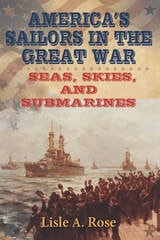
America's Sailors in the Great War
Seas, Skies, and SubmarinesLisle A. Rose
University of Missouri Press, 2017
Honorable Mention, 2016 Lyman Awards, presented by the North American Society for Oceanic History
This book is a thrillingly-written story of naval planes, boats, and submarines during World War I.
When the U.S. entered World War I in April 1917, America’s sailors were immediately forced to engage in the utterly new realm of anti-submarine warfare waged on, below and above the seas by a variety of small ships and the new technology of airpower. The U.S. Navy substantially contributed to the safe trans-Atlantic passage of a two million man Army that decisively turned the tide of battle on the Western Front even as its battleship division helped the Royal Navy dominate the North Sea. Thoroughly professionalized, the Navy of 1917–18 laid the foundations for victory at sea twenty-five years later.
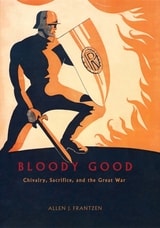
Bloody Good
Chivalry, Sacrifice, and the Great WarAllen J. Frantzen
University of Chicago Press, 2003
Here for the first time, Allen J. Frantzen traces these chivalric ideals from the Great War back to their origins in the Middle Ages and shows how they resulted in highly influential models of behavior for men in combat. Drawing on a wide selection of literature and images from the medieval period, along with photographs, memorials, postcards, war posters, and film from both sides of the front, Frantzen shows how such media shaped a chivalric ideal of male sacrifice based on the Passion of Jesus Christ. He demonstrates, for instance, how the wounded body of Christ became the inspiration for heroic male suffering in battle. For some men, the Crucifixion inspired a culture of revenge, one in which Christ's bleeding wounds were venerated as badges of valor and honor. For others, Christ's sacrifice inspired action more in line with his teachings—a daring stay of hands or reason not to visit death upon one's enemies.
Lavishly illustrated and eloquently written, Bloody Good will be must reading for anyone interested in World War I and the influence of Christian ideas on modern life.
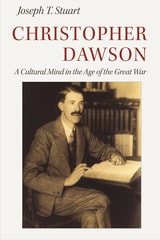
Christopher Dawson
A Cultural Mind in the Age of the Great WarJoseph T. Stuart
Catholic University of America Press, 2022
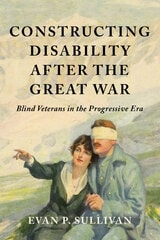
Constructing Disability after the Great War
Blind Veterans in the Progressive EraEvan P. Sullivan
University of Illinois Press, 2024

Dismembering the Male
Men's Bodies, Britain, and the Great WarJoanna Bourke
University of Chicago Press, 1996
Each chapter explores a different facet of the war and masculinity in depth. Joanna Bourke discovers that those who were dismembered and disabled by the war were not viewed as passive or weak, like their civilian counterparts, but were the focus of much government and public sentiment. Those suffering from disease were viewed differently, often finding themselves accused of malingering.
Joanna Bourke argues convincingly that military experiences led to a greater sharing of gender identities between men of different classes and ages. Dismembering the Male concludes that ultimately, attempts to reconstruct a new type of masculinity failed as the threat of another war, and with it the sacrifice of a new generation of men, intensified.

Faithful to Our Tasks
Arkansas's Women and the Great WarElizabeth Griffin Hill
Butler Center for Arkansas Studies, 2017
The United States was a vital, if brief, participant in World War I—spending only eighteen months fighting in “the Great War.” But that short span marked an era of tremendous change for women as they moved out of the Victorian nineteenth century and came into their own as social activists during the early years of the twentieth century.
Faithful to Our Tasks provides the context for women’s actions and reactions during the war. It incorporates the mitigating factors and experiences of American women in general and compares Arkansas women’s Progressive Era actions with those of other southern women. The contextual underpinnings provide a rich tapestry as we attempt to understand our grandmothers and great-grandmothers’ responses to wartime needs.
Primary records of the World War I era, accessed in archives in central Arkansas, reveal that the state’s organized women were suddenly faced with a devastating world war for which they were expected to make a significant contribution of time and effort. “Club women” were already tackling myriad problems to be found in abundance within a poor, rural state as they worked for better schools, a centralized education system, children’s well-being, and improved medical care.
Under wartime conditions, their contributions were magnified as the women followed a barrage of directions from Washington, DC, within a disconcerting display of micromanagement by the federal government. The important takeaway, however, is that the Great War created a scenario in which Arkansas’s organized women—as well as women throughout the nation—would step forward and excel as men and governments stood up and took notice. After the war, these same organized women won the right to vote.
For All We Have and Are
Regina and the Experience of the Great WarJames M. Pitsula
University of Manitoba Press, 2008
From Downing Street to the Trenches
First-hand Accounts from the Great War, 1914-1916Mike Webb
Bodleian Library Publishing, 2014
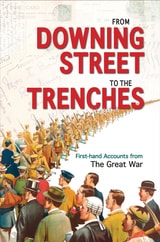
From Downing Street to the Trenches gathers eyewitness accounts and photographs that vividly convey this lived experience. The letters of Prime Minister H. H. Asquith show the strain of wartime leadership and shed light on his later downfall, while letters home from the young Harold Macmillan are suffused with his experiences in the trenches and mark the beginning of his road to Downing Street. Although it was forbidden to record cabinet discussions, Secretary of State Lewis Harcourt’s unauthorized diary provides a window into the government of the time, complete with character sketches of some of the leading figures, including Winston Churchill. In addition to political figures, the book draws on many local records, including the diary of an Essex rector, written to record the impact of the war on his community and parish.
Filled with fear and sorrow but also suffused with hope for the future, the accounts collected here paint a highly personal and immediate picture of the war as it was happening to real people of the time.

Herbert Hoover
Great War And Its AftermathLawrence E. Gelfand
University of Iowa Press, 1979
Little Italy in the Great War
Philadelphia's Italians on the Battlefield and Home FrontRichard N. Juliani
Temple University Press, 2020
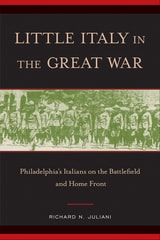
The Great War challenged all who were touched by it. Italian immigrants, torn between their country of origin and country of relocation, confronted political allegiances that forced them to consider the meaning and relevance of Americanization. In his engrossing study, Little Italy in the Great War, Richard Juliani focuses on Philadelphia’s Italian community to understand how this vibrant immigrant population reacted to the war as they were adjusting to life in an American city that was ambivalent toward them.
Juliani explores the impact of the Great War on many immigrant soldiers who were called to duty as reservists and returned to Italy, while other draftees served in the U.S. Army on the Western Front. He also studies the impact of journalists and newspapers reporting the war in English and Italian, and reactions from civilians who defended the nation in industrial and civic roles on the home front.
Within the broader context of the American experience, Little Italy in the Great War examines how the war affected the identity and cohesion of Italians as a population still passing through the assimilation process.
Panthéon De La Guerre
Reconfiguring a Panorama of the Great WarMark Levitch
University of Missouri Press, 2006
Patriotism is a Catholic Virtue
Irish-American Catholics, The American Church and the Coming of the Great WarThomas J. Rowland
Catholic University of America Press, 2023
Shamrock Battalion in the Great War
Martin J. Hogan, Edited & Intro by James J. Cooke
University of Missouri Press, 2007
When Martin Hogan began training on a vacant lot to be a soldier, he had no idea that he was about to become part of one of the most famed fighting units of World War I. But soon he and other citizen soldiers from the Irish neighborhoods of New York City were locked in deadly combat with the German army.
Hogan’s book records his recollections of the 165th Infantry in World War I, a regiment in the famed Rainbow Division. Company K of the Third or Shamrock Battalion had a part in every fight, and those who survived had more wound stripes than did the soldiers of any other company in the American Expeditionary Forces. Few soldiers saw as much of the war in eighteen months as did young Martin Hogan, and in this stirring account he tells of his experiences with graphic power, humility, and humor.
Hogan depicts World War I at its most human level, with memories of combat in the trenches and on blood-soaked battlefields at St. Mihiel and in the Argonne Forest. His account tells us much about how unprepared for service the United States really was, with the National Guard woefully undersupplied and seriously undertrained. His experiences as a gassed, then wounded, soldier also show the reader a side of war that was far from glorious—in a time before penicillin, when the dangers of gangrene ran high—and his memoir conveys rare insight about conditions in American military hospitals where he found care.
This insider view of the frontline experience during the Great War, complete with well-known figures such as Chaplain Father Francis Duffy and Colonel “Wild Bill” Donovan, attests that the Rainbow Division “epitomized the best of the best spirit in the world—the American spirit.”
James Cooke’s new introduction to this edition places that renowned division in historical context. Now that other part-time American soldiers are facing new challenges abroad, Hogan’s account also attests that the National Guard, citizen soldiers who bore the brunt of much decisive fighting, measured up to the highest standards of professional fighting men.
The Games of July
Explaining the Great WarFrank C. Zagare
University of Michigan Press, 2011
"Frank C. Zagare combines a deep command of historical scholarship and the sophisticated skills of an applied game theorist to develop and test a theory of why deterrence failed, catastrophically, in July 1914. . . . Zagare concludes with sage advice on how to avoid even more cataclysmic breakdowns in a nuclear world."
---Steven J. Brams, New York University
"Zagare's deft study of the origins of the First World War using his perfect deterrence theory uncovers new insights into that signal event and shows the value of formal theory applied to historical events. A must-read for those interested in security studies."
---James D. Morrow, University of Michigan
"Through an exemplary combination of formal theory, careful qualitative analysis, and lucid prose, The Games of July delivers important and interesting answers to key questions concerning the international political causes of World War I. Its well-formed narratives and its sustained engagement with leading works in IR and diplomatic history . . . make it a rewarding read for security scholars in general and a useful teaching tool for international security courses."
---Timothy W. Crawford, Boston College
Taking advantage of recent advances in game theory and the latest historiography, Frank C. Zagare offers a new, provocative interpretation of the events that led to the outbreak of World War I. He analyzes key events from Bismarck's surprising decision in 1879 to enter into a strategic alliance with Austria-Hungary to the escalation that culminated in a full-scale global war. Zagare concludes that, while the war was most certainly unintended, it was in no sense accidental or inevitable.
The Games of July serves not only as an analytical narrative but also as a work of theoretical assessment. Standard realist and liberal explanations of the Great War are evaluated along with a collection of game-theoretic models known as perfect deterrence theory.
Frank C. Zagare is UB Distinguished Professor of Political Science at the State University of New York at Buffalo.
Cover illustration: Satirical Italian postcard from World War I. Used with permission from The University of North Carolina at Chapel Hill Libraries.
The Great War in the Air
Military Aviation from 1909 to 1921John H. Morrow, Jr.
University of Alabama Press, 2009
"For the general reader as well as the specialist, Morrow's history of the development and significance of airpower during WWI will be considered definitive. He compares the military, technological, and industrial aspects of the air services of the major powers--France, Germany, England, Italy, Austria-Hungary, and the United States--and reveals how, by means of superior production (particularly French engine manufacture), the Allies prevailed in the air war."--Publishers Weekly
"Morrow's encyclopedic examination of aviation's part in World War I concentrates on aircraft engine and airframe production, but the emotional content of contemporary accounts rises to the surface to put a human face on the brutal use of an infant technology. . . . a serious yet readable history of this vital part of the conflict, meant for any reader."--Library Journal
"A comprehensive study of the totality of the air war in its military, political, industrial, and cultural aspects distinguish this book from other treatments of military aviation during this period. . . . Morrow's efforts have yielded new insights into the evolution of military aviation and corrected previous oversights. The author's attention to developments in production and logistics, as well as events at the front, provide the most complete understanding of the development of air power and its role in the Great War."--American Historical Review
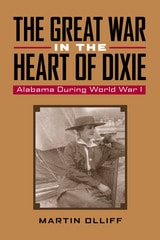
The Great War in the Heart of Dixie
Alabama During World War IMartin T. Olliff
University of Alabama Press, 2008
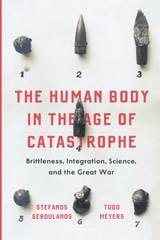
The Human Body in the Age of Catastrophe
Brittleness, Integration, Science, and the Great WarStefanos Geroulanos and Todd Meyers
University of Chicago Press, 2018
In The Human Body in the Age of Catastrophe, Stefanos Geroulanos and Todd Meyers uncover a fascinating story of how medical scientists came to conceptualize the body as an integrated yet brittle whole. Responding to the harrowing experience of the Great War, the medical community sought conceptual frameworks to understand bodily shock, brain injury, and the vast differences in patient responses they occasioned. Geroulanos and Meyers carefully trace how this emerging constellation of ideas became essential for thinking about integration, individuality, fragility, and collapse far beyond medicine: in fields as diverse as anthropology, political economy, psychoanalysis, and cybernetics.
Moving effortlessly between the history of medicine and intellectual history, The Human Body in the Age of Catastrophe is an intriguing look into the conceptual underpinnings of the world the Great War ushered in.
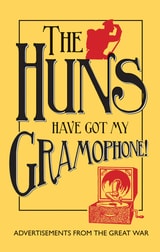
The Huns Have Got my Gramophone!
Advertisements from the Great WarAmanda Jane Doran and Andrew McCarthy
Bodleian Library Publishing, 2014
Ladies! Learn to Drive! Your Country Needs Women Drivers!
Do you drink German water?
When Britain declared war on Germany in 1914, industrious companies wasted no time in seizing the commercial opportunities presented by the conflict. Without TV or radio, newspapers provided one of the few ways in which the British public could get reliable news of the war. To cater to their rising readerships, advertising emerged as the new science of sales, growing increasingly sophisticated throughout the war years in both visual presentation and psychological appeal.
The Huns Have Got my Gramophone! collects some of the most compelling and cleverly worded original advertisements created between 1914 and 1918. Many of the advertisements are aimed at women, from fearless guard dogs promising protection while husbands are away to soaps and skin creams for “beauty on duty.” Others use the power of patriotism to push new products for men, including “officers’ waterproof trench coats,” and one young officer writing in the Times attests to the coats’ superior weather resistance by boldly asserting that he’d leave his sword behind before he left his Burberry. Together, the advertisements collected in the book reveal how advertisers sought to create new markets for products that took into account social change throughout the course of the conflict.
Featuring a range of products, from clothing, cigarettes, and invalid carriages to motorcycles and portable Decca phonographs—the “ideal gramophone for active service”—the book offers a new and unexpected source of historical information and an intimate glimpse of a nation at war.
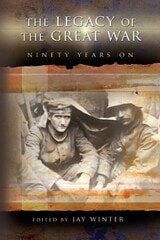
The Legacy of the Great War
Ninety Years OnEdited by Jay Winter
University of Missouri Press, 2009
In late 2007 and early 2008, world-renowned historians gathered in Kansas City for a series of public forums on World War I. Each of the five events focused on a particular topic and featured spirited dialogue between its prominent participants.
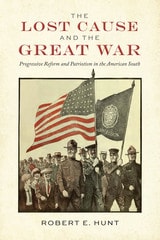
The Lost Cause and the Great War
Progressive Reform and Patriotism in the American SouthRobert E. Hunt
University of Alabama Press, 2025
How Tennessee reformers reconciled Southern heritage with rising nationalism, weaving the Lost Cause into the fabric of American progress and identity.
The Lost Cause and the Great War tells the stories of central Tennessee Progressive-era reformers to illustrate the fascinating broader issue of how Southerners steeped in Lost Cause Civil War mythologies simultaneously developed patriotic American fervor. Focusing on Luke Lea, a prominent politician and American army officer who attempted to capture Kaiser Wilhelm II during World War I, the book reveals the intricate interplay between three competing ideas: attachment to the memory of the Confederacy, intense American nationalism, and advocacy for progressive reforms.
Hunt shows that Lea and his contemporaries sought either to harmonize these competing loyalties or to compartmentalize them to use when needed. Through insightful accounts of Tennessee’s 1928 presidential campaign, the American Legion’s response to cuts to veteran benefits in 1933, and the redefinition of America’s global role post–World War II, Hunt shows how these reformers achieved a balance that held until the Civil Rights movement disrupted this delicate consensus.
Hunt’s rich account reveals how Lea and others like him wove national patriotism and Southern collective memory into a cohesive narrative that supported their broader Progressive goals. The book offers much to readers interested in Southern history, the Gilded Age, Prohibition, World War I, World War II, and the beginnings of the Civil Rights movement. It provides vivid examples of how collective memory and narratives shape social and political movements. General readers will discover how white Southerners who remained devoted to vindicating the Confederacy nonetheless became fervent supporters of America's growing nationalism in the early twentieth century.
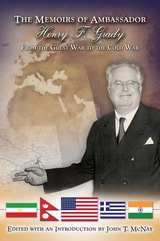
The Memoirs of Ambassador Henry F. Grady
From the Great War to the Cold WarEdited & Intro by John T. McNay
University of Missouri Press, 2009
When Henry Grady died in 1957, one obituary called him “America’s top diplomatic soldier” for a critical period of the Cold War, and over a long career he was deeply involved in events that changed our role in the world. Even so, this self-described “soft” cold warrior has been largely overlooked by historians. His memoirs, left to languish with his other papers, are now published for the first time, offering new insight into the origins and implementation of American trade and development policies—and into the tumult that was the Cold War.
A specialist in international economic policy, Grady helped create the system of reciprocal trade established under FDR during the depression. Progressing in his career through his abilities rather than through political connections, he was sent to India during World War II to spark its production for the war effort, then to Italy to help jump-start its economy once German forces were driven out. After the war, he was the first American ambassador to an independent India, then served as ambassador to Greece and Iran—where he was embroiled in the oil industry crisis that eventually led to the CIA’s overthrow of Prime Minister Mohammad Mossadegh.
Grady’s memoirs are an intriguing and informative account of early Cold War diplomacy in significant and turbulent regions of the Third World, embellished by his thoughts about the changing nature of American economic policies and his role as a representative of that system abroad. It offers new perspectives on the crisis in Iran in the early 1950s, where Grady was especially critical of Secretary of State Dean Acheson’s support for the remnants of British imperialism in Iran—and paid for his criticism with his job. Editor John McNay’s introduction and comments shed light on Grady’s thinking and his role in the policy-making process.
More than a chronicle of a wide-ranging career—one that reflects the emergence of the United States as the world’s leading economic power—Grady’s memoirs are a trenchant critique of U.S. foreign policy in the first half of the twentieth century. They provide modern readers an opportunity to reconsider the conflict between realism and idealism in foreign relations during the Cold War years.
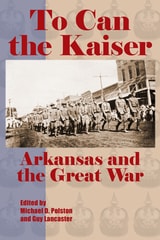
To Can the Kaiser
Arkansas and the Great WarMichael D. Polston
Butler Center for Arkansas Studies, 2015
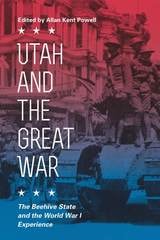
Utah and the Great War
The Beehive State and the World War I ExperienceEdited by Allan Kent Powell
University of Utah Press, 2016
Copublished with the Utah State Historical Society. Affiliated with the Utah Division of State History, Utah Department of Heritage & Arts.
In time for the centennial of the United States’s entry into World War I, this collection of seventeen essays explores the war experience in Utah through multiple perspectives, from those of soldiers, nurses and ambulance drivers who experienced the horror of the conflict firsthand to those on the home front who were transformed by the war. Citizens supported the war financially, through service on councils of defense, with victory gardens, and by other means. Some of Utah’s Native Americans and at least one Episcopal bishop resisted the war. The terrible 1918–1919 flu pandemic impacted Utah and killed more victims around the world than those who died on the battlefields. There was a Red Scare and fight over United States participation in a League of Nations. These topics and more are explored, helping us understand the nature and complexity of the conflict and its impact on Utahns.