Results by title
14 books match the query 'Hate crimes'
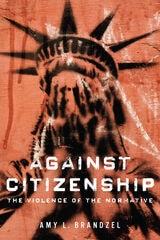
Against Citizenship
The Violence of the NormativeAmy L. Brandzel
University of Illinois Press, 2016
Brandzel's focus on three legal case studies--same-sex marriage law, hate crime legislation, and Native Hawaiian sovereignty and racialization--exposes how citizenship confounds and obscures the mutual processes of settler colonialism, racism, sexism, and heterosexism. In this way, Brandzel argues that citizenship requires anti-intersectionality, that is, strategies that deny the mutuality and contingency of race, class, gender, sexuality, and nation--and how, oftentimes, progressive left activists and scholars follow suit.
Against Citizenship is an impassioned plea for a queer, decolonial, anti-racist coalitional stance against the systemized human de/valuing and anti-intersectionalities of citizenship.
From Hate to Hallows
Reframing Black Church ArsonTodne Thomas
Duke University Press, 2026
Hate Crime
The Global Politics of PolarizationEdited by Robert J. Kelly and Jess Maghan
Southern Illinois University Press, 1998
These twelve previously unpublished essays explore the international phenomenon of hate crime, examining the socio-psychological dynamics of these crimes and the settings in which they occur, the relationships between offenders and their victims, the emotional states of the participants, and the legal and law enforcement responses to these crimes.
The essays address religious, racial, ethnic, and sexual crimes in the United States, Latin America, Africa, Europe, and the Middle East. The essayists provide historical reviews of the problems and the ways local authorities understand and cope with the dilemmas as well as prognoses about the persistence of hate crime and the measures that can be taken to control and contain it.
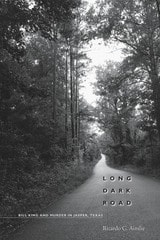
Long Dark Road
Bill King and Murder in Jasper, TexasBy Ricardo C. Ainslie
University of Texas Press, 2004
On a long dark road in deep East Texas, James Byrd Jr. was dragged to his death behind a pickup truck one summer night in 1998. The brutal modern-day lynching stunned people across America and left everyone at a loss to explain how such a heinous crime could possibly happen in our more racially enlightened times. Many eventually found an answer in the fact that two of the three men convicted of the murder had ties to the white supremacist Confederate Knights of America. In the ex-convict ringleader, Bill King, whose body was covered in racist and satanic tattoos, people saw the ultimate monster, someone so inhuman that his crime could be easily explained as the act of a racist psychopath. Few, if any, asked or cared what long dark road of life experiences had turned Bill King into someone capable of committing such a crime.
In this gripping account of the murder and its aftermath, Ricardo Ainslie builds an unprecedented psychological profile of Bill King that provides the fullest possible explanation of how a man who was not raised in a racist family, who had African American friends in childhood, could end up on death row for viciously killing a black man. Ainslie draws on exclusive in-prison interviews with King, as well as with Shawn Berry (another of the perpetrators), King's father, Jasper residents, and law enforcement and judicial officials, to lay bare the psychological and social forces—as well as mere chance—that converged in a murder on that June night. Ainslie delves into the whole of King's life to discover how his unstable family relationships and emotional vulnerability made him especially susceptible to the white supremacist ideology he adopted while in jail for lesser crimes.
With its depth of insight, Long Dark Road not only answers the question of why such a racially motivated murder happened in our time, but it also offers a frightening, cautionary tale of the urgent need to intervene in troubled young lives and to reform our violent, racist-breeding prisons. As Ainslie chillingly concludes, far from being an inhuman monster whom we can simply dismiss, "Bill King may be more like the rest of us than we care to believe."
Making Hate A Crime
From Social Movement to Law EnforcementValerie Jenness
Russell Sage Foundation, 2001
Our Fight Has Just Begun
Hate Crimes and Justice in Native AmericaCheryl Redhorse Bennett
University of Arizona Press, 2022
Illuminating largely untold stories of hate crimes committed against Native Americans in the Four Corners region of the United States, this work places these stories within a larger history, connecting historical violence in the United States to present-day hate crimes. Bennett contends that hate crimes committed against Native Americans have persisted as an extension of an “Indian hating” ideology that has existed since colonization, exposing how the justice system has failed Native American victims and families.
While this book looks deeply at multiple generations of unnecessary and ongoing pain and violence, it also recognizes that this is a time of uncertainty and hope. The movement to abolish racial injustice and racially motivated violence has gained fierce momentum. Our Fight Has Just Begun shows that racism, hate speech, and hate crimes are ever present and offers recommendations for racial justice.
Race In The Hood
Conflict and Violence among Urban YouthHoward Pinderhughes
University of Minnesota Press, 1997
A compelling study of the origins of racial conflict and violence in America.
“We’ll just be hanging out, partying. And somebody will say, ‘Hey, let’s go on a mission.’ That’s when you go looking for people who don’t belong in the neighborhood, and you beat ’em up. Sometimes we go out lookin’ for blacks to jump. Sometimes we look for anybody who ain’t supposed to be there.” —Sal, Avenue T Boys
Why are racial conflict and violence among the most enduring problems in American society? Why do some youths express racism violently while others develop tolerance and respect for those who are different? What can we as a society do to foster open-mindedness among children and teenagers? Seeking answers to these questions, Howard Pinderhughes spent two years talking to and studying three groups of New York City adolescents: the predominantly Italian American Avenue T Boys from the Bensonhurst section of Brooklyn; a group of African American teenagers from Schomberg Plaza in East Harlem; and a group of Albanian American youth from Pelham Park in the Bronx. Through the voices of these young people, Pinderhughes examines how racial attitudes and identities develop in communities and are then expressed as either tolerance, resulting in territorial cooperation, or hatred, resulting in racial conflict. Race in the Hood draws a picture of young people who grew up in similar class circumstances, facing remarkably similar problems and issues, with one significant difference in their lives-their race or ethnicity. Pinderhughes argues that the key to success in developing racial tolerance lies in the transformation of racialized grassroots ideologies through community and school-based multicultural education. A sophisticated and nuanced study of race relations in New York City, Race in the Hood points to areas of concern and directions for change in all of our communities.
Scapegoats of September 11th
Hate Crimes & State Crimes in the War on TerrorWelch, Michael
Rutgers University Press, 2006
The altered American landscape, however, includes more than security measures and ID cards. The country's desperate quest for security is visible in many less obvious, yet more insidious ways. In Scapegoats of September 11th, criminologist Michael Welch argues that the "war on terror" is a political charade that delivers illusory comfort, stokes fear, and produces scapegoats used as emotional relief. Regrettably, much of the outrage that resulted from 9/11 has been targeted at those not involved in the attacks on the Pentagon or the Twin Towers. As this book explains, those people have become the scapegoats of September 11th. Welch takes on the uneasy task of sorting out the various manifestations of displaced aggression, most notably the hate crimes and state crimes that have become embarrassing hallmarks both at home and abroad.
Drawing on topics such as ethnic profiling, the Abu Ghraib scandal, Guantanamo Bay, and the controversial Patriot Act, Welch looks at the significance of knowledge, language, and emotion in a post-9/11 world. In the face of popular and political cheerleading in the war on terror, this book presents a careful and sober assessment, reminding us that sound counterterrorism policies must rise above, rather than participate in, the propagation of bigotry and victimization.
Silent Victims
Hate Crimes Against Native AmericansBarbara Perry
University of Arizona Press, 2008
Silent Victims is a unique contribution to the literature on hate crime. Because most extant literature treats hate crimes—even racial violence—rather generically, this work breaks new ground with its findings. For this book, Perry interviewed nearly 300 Native Americans and gathered additional data in three geographic areas: the Four Corners region of the U.S. Southwest, the Great Lakes, and the Northern Plains. In all of these locales, she found that bias-related crime oppresses and segregates Native Americans.
Perry is well aware of the history of colonization in North America and its attendant racial violence. She argues that the legacy of violence today can be traced directly to the genocidal practices of early settlers, and she adds valuable insights into the ways in which “Indians” have been constructed as the Other by the prevailing culture. Perry’s interviews with Native Americans recount instances of appalling treatment, often at the hands of law enforcement officials. In her conclusion, Perry draws from her research and interviews to suggest ways in which Native Americans can be empowered to defend themselves against all forms of racist victimization.
Speech Acts and the First Amendment
Franklyn S. Haiman. Foreword by Abner J. Mikva
Southern Illinois University Press, 1993
What can a democratic society reasonably do about the perplexing problems of racial intolerance, sexual harassment, incitements to violence, and invasions of privacy? Is it possible to preserve the constitutional ideal of free expression while protecting the community from those who would trample on the rights of others?
Franklyn S. Haiman critically examines the reasoning behind recent efforts to prohibit certain forms of speech and explores the possible consequences to democracy of such moves.
Speech act theory, well known to scholars of rhetoric, communication, and language, underlies this emerging trend in judicial and legislative thinking. The idea that "words are deeds," first articulated in language philosophy by Wittgenstein and elaborated by J. L. Austin and John Searle, is being invoked by some members of the legal community to target objectionable speech. For example, speech codes on some college campuses prohibit racist, sexist, and homophobic expression, and attempts have been made through local laws to classify pornography as a form of sex discrimination. By defining certain kinds of arguably immoral symbolic behavior such as hate speech, obscenity, or portrayals of violence as acts rather than as pure speech, speech act advocates make it easier to argue that such conduct should be subject to social control through the law.
Unlike totalitarian or theocratic societies that see no difference between their concept of morality and the law, however, a democracy must make a distinction between what it regards as immoral and what it makes illegal. Haiman maintains that in the realm of symbolic behavior the line between them should be drawn as closely as possible to expression that results in the most serious, direct, immediate, and physical harm to others. Thus, he joins with former Supreme Court Justice Louis Brandeis in concluding that, absent an emergency, more speech, not enforced silence, should be the aim of a free society.
The End of American Lynching
Ashraf H. A. Rushdy
Rutgers University Press, 2012
The End of American Lynching questions how we think about the dynamics of lynching, what lynchings mean to the society in which they occur, how lynching is defined, and the circumstances that lead to lynching. Ashraf H. A. Rushdy looks at three lynchings over the course of the twentieth century—one in Coatesville, Pennsylvania, in 1911, one in Marion, Indiana, in 1930, and one in Jasper, Texas, in 1998—to see how Americans developed two distinct ways of thinking and talking about this act before and after the 1930s.
One way takes seriously the legal and moral concept of complicity as a way to understand the dynamics of a lynching; this way of thinking can give us new perceptions into the meaning of mobs and the lynching photographs in which we find them. Another way, which developed in the 1940s and continues to influence us today, uses a strategy of denial to claim that lynchings have ended. Rushdy examines how the denial of lynching emerged and developed, providing insight into how and why we talk about lynching the way we do at the dawn of the twenty-first century. In doing so, he forces us to confront our responsibilities as American citizens and as human beings.
Tough on Hate?
The Cultural Politics of Hate CrimesLewis, Clara S
Rutgers University Press, 2013
Why do we know every gory crime scene detail about such victims as Matthew Shepard and James Byrd Jr. and yet almost nothing about the vast majority of other hate crime victims? Now that federal anti-hate-crimes laws have been passed, why has the number of these crimes not declined significantly? To answer such questions, Clara S. Lewis challenges us to reconsider our understanding of hate crimes. In doing so, she raises startling issues about the trajectory of civil and minority rights.
Tough on Hate is the first book to examine the cultural politics of hate crimes both within and beyond the law. Drawing on a wide range of sources—including personal interviews, unarchived documents, television news broadcasts, legislative debates, and presidential speeches—the book calls attention to a disturbing irony: the sympathetic attention paid to certain shocking hate crime murders further legitimizes an already pervasive unwillingness to act on the urgent civil rights issues of our time. Worse still, it reveals the widespread acceptance of ideas about difference, tolerance, and crime that work against future progress on behalf of historically marginalized communities.
Until Justice Rolls Down
The Birmingham Church Bombing CaseFrank Sikora
University of Alabama Press, 2005
This book tells the story of one grim Sunday in September 1963 when an intentionally planted cache of dynamite ripped through the walls of the Sixteenth Street Baptist Church and ended the dreams and the lives of four young black girls. Their deaths spurred the Kennedy administration to send an army of FBI agents to Alabama and led directly to the passage of the Civil Rights Act. When the Justice Department was unable to bring anyone to trial for this heinous crime, a young Alabama attorney general named Bill Baxley began his own investigation to find the perpetrators. In 1977, 14 years after the bombing, Baxley brought one Klansman to trial and, in a courtroom only blocks from the bombed church (now a memorial to the victims), persuaded a jury to return a guilty verdict. More than 20 years later two other perpetrators were tried for the bombing, found guilty, and remanded to prison.
Frank Sikora has used the court records, FBI reports, oral interviews, and newspaper accounts to weave a story of spellbinding proportions. A reporter by profession, Sikora tells this story compellingly, explaining why the civil rights movement had to be successful and how Birmingham had to change.
Violence against Queer People
Race, Class, Gender, and the Persistence of Anti-LGBT DiscriminationMeyer, Doug
Rutgers University Press, 2015
Selected as one of “The Best of the Best from the University Presses: Books You Should Know About” at the 2016 ALA Annual Conference
Violence against lesbians and gay men has increasingly captured media and scholarly attention. But these reports tend to focus on one segment of the LGBT community—white, middle class men—and largely ignore that part of the community that arguably suffers a larger share of the violence—racial minorities, the poor, and women. In Violence against Queer People, sociologist Doug Meyer offers the first investigation of anti-queer violence that focuses on the role played by race, class, and gender.
Drawing on interviews with forty-seven victims of violence, Meyer shows that LGBT people encounter significantly different forms of violence—and perceive that violence quite differently—based on their race, class, and gender. His research highlights the extent to which other forms of discrimination—including racism and sexism—shape LGBT people’s experience of abuse. He reports, for instance, that lesbian and transgender women often described violent incidents in which a sexual or a misogynistic component was introduced, and that LGBT people of color sometimes weren’t sure if anti-queer violence was based solely on their sexuality or whether racism or sexism had also played a role. Meyer observes that given the many differences in how anti-queer violence is experienced, the present media focus on white, middle-class victims greatly oversimplifies and distorts the nature of anti-queer violence. In fact, attempts to reduce anti-queer violence that ignore race, class, and gender run the risk of helping only the most privileged gay subjects.
Many feel that the struggle for gay rights has largely been accomplished and the tide of history has swung in favor of LGBT equality. Violence against Queer People, on the contrary, argues that the lives of many LGBT people—particularly the most vulnerable—have improved very little, if at all, over the past thirty years.