Results by title
767 books match the query 'Hispanic & Latino Studies' and 46 start with a

A Cuban in Mayberry
Looking Back at America's HometownBy Gustavo Perez Firmat
University of Texas Press, 2014
Half a century after viewers first watched a father and son walking to the local fishing hole, whistling a simple, yet unforgettable, tune, The Andy Griffith Show remains one of the most popular sitcoms in the history of American television. Tens of millions of viewers have seen the show either in its original run, its ongoing reruns, on DVD, or on the internet. Websites devoted to the show abound, hundreds of fan clubs bring enthusiasts together, and a plethora of books and Mayberry-themed merchandise have celebrated all things Mayberry. A small cottage industry has even developed around the teachings of the show’s episodes. But why does a sitcom from the 1960s set in the rural South still evoke such devotion in people today?
In A Cuban in Mayberry, acclaimed author Gustavo Pérez Firmat revisits America’s hometown to discover the source of its enduring appeal. He approaches the show from a unique perspective—that of an exile who has never experienced the rootedness that Andy and his fellow Mayberrians take for granted, as folks who have never strayed from home or lived among strangers. As Pérez Firmat weaves his personal recollections of exile from Cuba with an analysis of the show, he makes a convincing case that the intimacy between person and place depicted in TAGS is the secret of its lasting relevance, even as he reveals the surprising ways in which the series also reflects the racial, generational, and political turbulence of the 1960s.
A Dictionary of New Mexico and Southern Colorado Spanish
Revised and Expanded EditionRubén Cobos
Museum of New Mexico Press, 2011
Ruben Cobos spent a decade working on the revised and expanded edition of the dictionary, published in 2003. The Dictionary of New Mexico and Southern Colorado Spanish has assumed its place as the most authoritative reference on the archaic dialect of Spanish spoken in this region.
A Good Reputation
How Residents Fight for an American BarrioElizabeth Korver-Glenn and Sarah Mayorga
University of Chicago Press, 2024
Neighborhoods have the power to form significant parts of our worlds and identities. A neighborhood’s reputation, however, doesn’t always match up to how residents see themselves or wish to be seen. The distance between residents’ desires and their environment can profoundly shape neighborhood life.
In A Good Reputation, sociologists Elizabeth Korver-Glenn and Sarah Mayorga delve into the development and transformation of the reputation of Northside, a predominantly Latinx barrio in Houston. Drawing on two years of ethnographic research and in-depth interviews with residents, developers, and other neighborhood stakeholders, the authors show that people’s perceptions of their neighborhoods are essential to understanding urban inequality and poverty. Korver-Glenn and Mayorga’s empirically detailed account of disputes over neighborhood reputation helps readers understand the complexity of high-poverty urban neighborhoods, demonstrating that gentrification is a more complicated and irregular process than existing accounts of urban inequality would suggest. Offering insightful theoretical analysis and compelling narrative threads from understudied communities, A Good Reputation will yield insights for scholars of race and ethnicity, urban planning, and beyond.
A History of Hispanic Theatre in the United States
Origins to 1940By Nicolás Kanellos
University of Texas Press, 1990
Hispanic theatre flourished in the United States from the mid-nineteenth century until the beginning of the Second World War—a fact that few theatre historians know. A History of Hispanic Theatre in the United States: Origins to 1940 is the very first study of this rich tradition, filled with details about plays, authors, artists, companies, houses, directors, and theatrical circuits.
Sixteen years of research in public and private archives in the United States, Mexico, Spain, and Puerto Rico inform this study. In addition, Kanellos located former performers and playwrights, forgotten scripts, and old photographs to bring the life and vitality of live theatre to his text. He organizes the book around the cities where Hispanic theatre was particularly active, including Los Angeles, San Antonio, New York, and Tampa, as well as cities on the touring circuit, such as Laredo, El Paso, Tucson, and San Francisco.
Kanellos charts the major achievements of Hispanic theatre in each city—playwriting in Los Angeles, vaudeville and tent theatre in San Antonio, Cuban/Spanish theatre in Tampa, and pan-Hispanism in New York—as well as the individual careers of several actors, writers, and directors. And he uncovers many gaps in the record—reminders that despite its popularity, Hispanic theatre was often undervalued and unrecorded.
A Journey Around Our America
A Memoir on Cycling, Immigration, and the Latinoization of the U.S.By Louis G. Mendoza
University of Texas Press, 2012
Immigration and the growing Latino population of the United States have become such contentious issues that it can be hard to have a civil conversation about how Latinoization is changing the face of America. So in the summer of 2007, Louis Mendoza set out to do just that. Starting from Santa Cruz, California, he bicycled 8,500 miles around the entire perimeter of the country, talking to people in large cities and small towns about their experiences either as immigrants or as residents who have welcomed—or not—Latino immigrants into their communities. He presented their enlightening, sometimes surprising, firsthand accounts in Conversations Across Our America: Talking About Immigration and the Latinoization of the United States.
Now, in A Journey Around Our America, Mendoza offers his own account of the visceral, emotional, intellectual, and spiritual dimensions of traveling the country in search of a deeper, broader understanding of what it means to be Latino in the United States in the twenty-first century. With a blend of first- and second-person narratives, blog entries, poetry, and excerpts from conversations he had along the way, Mendoza presents his own aspirations for and critique of social relations, political ruminations, personal experiences, and emotional vulnerability alongside the stories of people from all walks of life, including students, activists, manual laborers, and intellectuals. His conversations and his experiences as a Latino on the road reveal the multilayered complexity of Latino life today as no academic study or newspaper report ever could.

A Kiss across the Ocean
Transatlantic Intimacies of British Post-Punk and US LatinidadRichard T. Rodríguez
Duke University Press, 2022

A Love Letter to This Bridge Called My Back
Edited by gloria j. wilson, Joni B. Acuff, and Amelia M. Kraehe
University of Arizona Press, 2022
In A Love Letter, creators illuminate, question, and respond to current politics, progressive struggles, transformations, acts of resistance, and solidarity, while also offering readers a space for renewal and healing. The central theme of the original Bridge is honored, exposing the lived realities of women of color at the intersections of race, class, gender, ethnicity, and sexuality, advancing those early conversations on what it means to be Third World feminist conscious.
A Love Letter recognizes the challenges faced by women of color in a twenty-first-century world of climate and economic crises, increasing gun violence, and ever-changing social media constructs for women of color. It also retains the clarion call Bridge set in motion, as Moraga wrote: “A theory in the flesh means one where the physical realities of our lives—our skin color, the land or concrete we grew up on, our sexual longing—all fuse to create a politic born of necessity.”
A Mexican State of Mind
New York City and the New Borderlands of CultureMelissa Castillo-Garsow
Rutgers University Press, 2020
A Place to Be
Brazilian, Guatemalan, and Mexican Immigrants in Florida's New DestinationsEdited by Philip J. Williams, Timothy J. Steigenga, and Manuel A. Vásquez
Rutgers University Press, 2009
Contributors to this volume include Patricia Fortuny Loret de Mola, Carol Girón Solórzano, Silvia Irene Palma, Lúcia Ribeiro, Mirian Solfs Lizama, José Claúdio Souza Alves, Timothy J. Steigenga, Manuel A. Vásquez, and Philip J. Williams.

A Promising Problem
The New Chicana/o HistoryEdited by Carlos Kevin Blanton
University of Texas Press, 2016
Chicana/o history has reached an intriguing juncture. While academic and intellectual studies are embracing new, highly nuanced perspectives on race, class, gender, education, identity, and community, the field itself continues to be viewed as a battleground, subject to attacks from outside academia by those who claim that the discipline promotes racial hatred and anti-Americanism. Against a backdrop of deportations and voter suppression targeting Latinos, A Promising Problem presents the optimistic voices of scholars who call for sophisticated solutions while embracing transnationalism and the reality of multiple, overlapping identities.
Showcasing a variety of new directions, this anthology spans topics such as growth and reassessment in Chicana/o history manifested in a disruption of nationalism and geographic essentialism, the impact of legal history, interracial relations and the experiences of Latino subpopulations in the US South, race and the politics of religious history, transborder feminism in the early twentieth century, and aspirations for a field that increasingly demonstrates the relational dynamics of cultural production. As they reflect on the state of their field, the contributors offer significant insights into sociology, psychology, anthropology, political science, education, and literature, while tracing the history of activism throughout the last century and debating the very concepts of “Chicano” and “Chicano history.” Although the political landscape is fraught with closed-off rhetoric, A Promising Problem encourages diversity of thought and opens the possibilities of historical imagination.
A Quiet Victory for Latino Rights
FDR and the Controversy Over "Whiteness"Patrick D. Lukens
University of Arizona Press, 2012
In 1935 a federal court judge handed down a ruling that could have been disastrous for Mexicans, Mexican Americans, and all Latinos in the United States. However, in an unprecedented move, the Roosevelt administration wielded the power of "administrative law" to neutralize the decision and thereby dealt a severe blow to the nativist movement. A Quiet Victory for Latino Rights recounts this important but little-known story.
To the dismay of some nativist groups, the Immigration Act of 1924, which limited the number of immigrants who could be admitted annually, did not apply to immigrants from Latin America. In response to nativist legal maneuverings, the 1935 decision said that the act could be applied to Mexican immigrants. That decision, which ruled that the Mexican petitioners were not "free white person[s]," might have paved the road to segregation for all Latinos.
The League of United Latin American Citizens (LULAC), founded in 1929, had worked to sensitize the Roosevelt administration to the tenuous position of Latinos in the United States. Advised by LULAC, the Mexican government, and the US State Department, the administration used its authority under administrative law to have all Mexican immigrants—and Mexican Americans—classified as "white." It implemented the policy when the federal judiciary "acquiesced" to the New Deal, which in effect prevented further rulings.
In recounting this story, complete with colorful characters and unlikely bedfellows, Patrick D. Lukens adds a significant chapter to the racial history of the United States.
A Shared Future
Faith-Based Organizing for Racial Equity and Ethical DemocracyRichard L. Wood and Brad R. Fulton
University of Chicago Press, 2015
In A Shared Future, Richard L. Wood and Brad R. Fulton draw on a new national study of community organizing coalitions and in-depth interviews of key leaders in this field to show how faith-based organizing is creatively navigating the competing aspirations of America’s universalist and multiculturalist democratic ideals, even as it confronts three demons bedeviling American politics: economic inequality, federal policy paralysis, and racial inequity. With a broad view of the entire field and a distinct empirical focus on the PICO National Network, Wood and Fulton’s analysis illuminates the tensions, struggles, and deep rewards that come with pursuing racial equity within a social change organization and in society. Ultimately, A Shared Future offers a vision for how we might build a future that embodies the ethical democracy of the best American dreams.
An interview of the authors on the subject of faith leaders organizing for justice (Peace Talks Radio, copyright Good Radio Shows, Inc.) can be heard at this link: https://beta.prx.org/stories/190030
A Xicana Codex of Changing Consciousness
Writings, 2000-2010Cherríe L. Moraga
Duke University Press, 2011
Thirty years after the publication of Anzaldúa and Moraga’s collection This Bridge Called My Back, a landmark of women-of-color feminism, Moraga’s literary and political praxis remains motivated by and intertwined with indigenous spirituality and her identity as Chicana lesbian. Yet aspects of her thinking have changed over time. A Xicana Codex of Changing Consciousness reveals key transformations in Moraga’s thought; the breadth, rigor, and philosophical depth of her work; her views on contemporary debates about citizenship, immigration, and gay marriage; and her deepening involvement in transnational feminist and indigenous activism. It is a major statement from one of our most important public intellectuals.
Abject Performances
Aesthetic Strategies in Latino Cultural ProductionLeticia Alvarado
Duke University Press, 2018

Abstract Barrios
The Crises of Latinx Visibility in CitiesJohana Londoño
Duke University Press, 2020
Academic Profiling
Latinos, Asian Americans, and the Achievement GapGilda L. Ochoa
University of Minnesota Press, 2013
Today the achievement gap is hotly debated among pundits, politicians, and educators. In particular this conversation often focuses on the two fastest-growing demographic groups in the United States: Asian Americans and Latinos. In Academic Profiling, Gilda L. Ochoa addresses this so-called gap by going directly to the source. At one California public high school where the controversy is lived every day, Ochoa turns to the students, teachers, and parents to learn about the very real disparities—in opportunity, status, treatment, and assumptions—that lead to more than just gaps in achievement.
In candid and at times heart-wrenching detail, the students tell stories of encouragement and neglect on their paths to graduation. Separated by unequal middle schools and curriculum tracking, they are divided by race, class, and gender. While those channeled into an International Baccalaureate Program boast about Socratic classes and stress-release sessions, students left out of such programs commonly describe uninspired teaching and inaccessible counseling. Students unequally labeled encounter differential policing and assumptions based on their abilities—disparities compounded by the growth in the private tutoring industry that favors the already economically privileged.
Despite the entrenched inequality in today’s schools, Academic Profiling finds hope in the many ways students and teachers are affirming identities, creating alternative spaces, and fostering critical consciousness. When Ochoa shares the results of her research with the high school, we see the new possibilities—and limits—of change.
Activist Leaders of San José
En sus propias vocesJosie Méndez-Negrete
University of Arizona Press, 2020
Sociologist and activist Josie Méndez-Negrete has returned to her hometown to document and record the stories of those who made contributions to the cultural and civic life of San José. Through interview excerpts, biographical and historical information, and analysis, Méndez-Negrete shows the contributions of this singular community throughout the twentieth century and the diversity of motivations across the generations.
Activists share with Méndez-Negrete how they became conscious about their communities and how they became involved in grassroots organizing, protest, and social action. Spanning generations, we hear about the motivations of activists in the 1930s to the end of the twentieth century. We hear firsthand stories of victories and struggles, successes and failures from those who participated.
Activist Leaders of San José narrates how parents—both mothers and fathers—were inspired to work for the rights of their people. Workers’ and education rights were at the core, but they also took on the elimination of at-large elections to open city politics, labor rights, domestic abuse, and health care. This book is an important record of the contributions of San José in improving conditions for the Mexican American community.
Additive Schooling in Subtractive Times
Bilingual Education and Dominican Immigrant Youth in the HeightsLesley Bartlett
Vanderbilt University Press, 2011
After offering a history of the school's formation, the authors detail the ways in which federal No Child Left Behind policies, New York State accountability measures, and New York City's educational reforms under Mayor Michael Bloomberg complicated the school's efforts. The book then describes the dynamic bilingual pedagogical approach adopted within the school to help students develop academic Spanish and English. Focusing on the lives of twenty immigrant youth, Bartlett and Garcia also show that, although the school achieves high completion rates, the graduating students nevertheless face difficult postsecondary educational and work environments that too often consign them to the ranks of the working poor.
Aesthetics of Displacement
Movement, Archives, and Performance in Contemporary ColombiaMelissa Blanco Borelli
University of Michigan Press, 2026
Aesthetics of Displacement centers the embodied aesthetic practices of Afro-Colombian people and their experiences, asking readers to reassess Colombian national history, legacies of colonialism and racism, politics of memory, and the inheritances of violence related to the Colombian armed conflict. Through a theoretical frame of destierro or “displacement” and an examination of the Afro-Colombian philosophy vivir sabroso or “to live harmoniously,” Aesthetics of Displacement focuses on how theatre-makers, choreographers, filmmakers, activist groups, and photojournalists create an embodied Colombian perspective informed by decolonial practices and thinking that rely on movement as a strategy for existence and that counter European hegemonic aesthetics as the major foundations of taste and value. This approach not only enhances our understanding of contemporary Colombian culture, but also highlights the importance of performance as a means of resistance and identity formation.

Aesthetics of Excess
The Art and Politics of Black and Latina EmbodimentJillian Hernandez
Duke University Press, 2020
Affective Intellectuals and the Space of Catastrophe in the Americas
Judith Sierra-Rivera
The Ohio State University Press, 2018
Pursuing this argument, Sierra-Rivera examines print, radio, and web materials by authors whose emotional discourses have also had a measurable impact on the formation of communities that demand their full political inclusion in society. This book therefore fills a significant gap in the study of the relationship between materiality (space and bodies), emotions, and the political imagination. Affective Intellectuals demonstrates that writers and intellectuals themselves are vital in reshaping their communities and fighting for social justice in the Hemispheric Americas.
After the Coup
An Ethnographic Reframing of Guatemala 1954Edited by Timothy J. Smith and Abigail E. Adams
University of Illinois Press, 2011
Recent research and the release of newly declassified U.S. government documents underscore the importance of reading Guatemala's current history through the lens of 1954. Scholars and researchers who have worked in Guatemala from the 1940s to the present articulate how the coup fits into ethnographic representations of Guatemala. Highlighting the voices of individuals with whom they have lived and worked, the contributors also offer an unmatched understanding of how the events preceding and following the coup played out on the ground.
Contributors are Abigail E. Adams, Richard N. Adams, David Carey Jr., Christa Little-Siebold, Judith M. Maxwell, Victor D. Montejo, June C. Nash, and Timothy J. Smith.
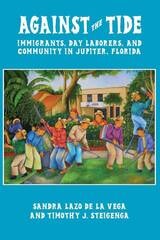
Against the Tide
Immigrants, Day Laborers, and Community in Jupiter, FloridaSandra Lazo de la Vega and Timothy J. Steigenga
University of Wisconsin Press, 2013
At the beginning of the twenty-first century, Jupiter was in the throes of immigration debates. A decade earlier, this small town had experienced an influx of migrants from Mexico and Guatemala. Immigrants seeking work gathered daily on one of the city’s main streets, creating an ad-hoc, open-air labor market that generated complaints and health and human safety concerns. What began as a local debate rapidly escalated as Jupiter’s situation was thrust into the media spotlight and attracted the attention of state and national anti-immigrant groups. But then something unexpected happened: immigrants, neighborhood residents, university faculty and students, and town representatives joined together to mediate community tensions and successfully moved the informal labor market to the new El Sol Neighborhood Resource Center.
Timothy J. Steigenga, who helped found the center, and Lazo de la Vega, who organized students in support of its mission, describe how El Sol engaged the residents of Jupiter in a two-way process of immigrant integration and helped build trust on both sides. By examining one city’s search for a positive public policy solution, Against the Tide offers valuable practical lessons for other communities confronting similar challenges.
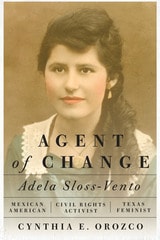
Agent of Change
Adela Sloss-Vento, Mexican American Civil Rights Activist and Texas FeministBy Cynthia E. Orozco
University of Texas Press, 2020
Liz Carpenter Award for Research in the History of Women, Texas State Historical Association
The essayist Adela Sloss-Vento (1901–1998) was a powerhouse of activism in South Texas’s Lower Rio Grande Valley throughout the Mexican American civil rights movement beginning in 1920 and the subsequent Chicano movement of the 1960s and 1970s. At last presenting the full story of Sloss-Vento’s achievements, Agent of Change revives a forgotten history of a major female Latina leader.
Bringing to light the economic and political transformations that swept through South Texas in the 1920s as ranching declined and agribusiness proliferated, Cynthia E. Orozco situates Sloss-Vento’s early years within the context of the Jim Crow/Juan Crow era. Recounting Sloss-Vento’s rise to prominence as a public intellectual, Orozco highlights a partnership with Alonso S. Perales, the principal founder of the League of United Latin American Citizens. Agent of Change explores such contradictions as Sloss-Vento’s tolerance of LULAC’s gender-segregated chapters, even though the activist was an outspoken critic of male privilege in the home and a decidedly progressive wife and mother. Inspiring and illuminating, this is a complete portrait of a savvy, brazen critic who demanded reform on both sides of the US-Mexico border.
Almost Home
A Brazilian American's Reflections on Faith, Culture, and ImmigrationH. B. Cavalcanti
University of Wisconsin Press, 2012
Due to both his family background and the prevalence of U.S. media in Latin America, Cavalcanti already felt immersed in U.S. culture before arriving in Kentucky in 1981 to complete graduate studies. At that time, opportunities for advancement in the United States exceeded those in Brazil, and in an era of military dictatorships throughout much of Latin America, Cavalcanti sought in the United States a nation of laws. In this memoir, he reflects on the dynamics of acculturation, immigrant parenting, interactions with native-born U.S. citizens, and the costs involved in rejecting his country of birth for an adopted nation. He also touches on many of the factors that contribute to migration in both the “sending” and “receiving” countries and explores the contemporary phenomenon of accelerated immigration.
With its blend of personal anecdotes and scholarly information, Almost Home addresses both individual and policy-related issues to provide a moving portrait of the impact of migration on those who, like Cavalcanti, confront both the wonder and the disorientation inherent in the immigrant experience.
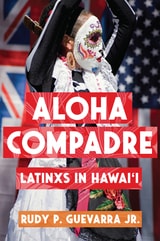
Aloha Compadre
Latinxs in Hawai'iRudy P. Guevarra
Rutgers University Press, 2023
Aloha Compadre: Latinxs in Hawaiʻi is the first book to examine the collective history and contemporary experiences of the Latinx population of Hawaiʻi. This study reveals that contrary to popular discourse, Latinx migration to Hawaiʻi is not a recent event. In the national memory of the United States, for example, the Latinx population of Hawaiʻi is often portrayed as recent arrivals and not as long-term historical communities with a presence that precedes the formation of statehood itself. Historically speaking, Latinxs have been voyaging to the Hawaiian Islands for over one hundred and ninety years. From the early 1830s to the present, they continue to help shape Hawaiʻi’s history, yet their contributions are often overlooked. Latinxs have been a part of the cultural landscape of Hawaiʻi prior to annexation, territorial status, and statehood in 1959. Aloha Compadre also explores the expanding boundaries of Latinx migration beyond the western hemisphere and into Oceania.
Ambientes
New Queer Latino WritingLázaro Lima and Felice Picano
University of Wisconsin Press, 2011
As the U.S. Latino population grows rapidly, and as the LGBTQ Latino community becomes more visible and a more crucial part of our literary and artistic heritage, there is an increasing demand for literature that successfully highlights these diverse lives. Edited by Lázaro Lima and Felice Picano, Ambientes is a revolutionary collection of fiction featuring stories by established authors as well as emerging voices that present a collective portrait of gay, lesbian, bisexual, and transgender experience in America today. With a preface by Picano and an introduction by Lima that sets the stage for understanding Latino literary and cultural history, this is the first anthology to cross cultural and regional borders by offering a wide variety of urban, rural, East Coast, West Coast, and midwestern perspectives on Latina and Latino queers from different walks of life. Stories range from sensual pieces to comical romances and from inner-city dramas fueled by street language to portraits of gay domesticity, making this a much-needed collection for many different kinds of readers. The stories in this collection reflect a vibrant and creative community and redefine received notions of “gay” and “lesbian.”
Finalist, Over the Rainbow selection, American Library Association
Finalist, LGBT Anthology, Lambda Literary Awards
Best Special Interest Books, selected by the American Association of School Librarians
Ambivalent Journey
U.S. Migration and Economic Mobility in North-Central MexicoRichard C. Jones
University of Arizona Press, 1995
Jones's study focuses on the ways in which U.S. migration affects the lives of families in these two subregions. Migrants from Zacatecas have traditionally come from rural areas and have gone to California and Illinois. Migrants from Coahuila, on the other hand, usually come from urban areas and have almost exclusively preferred locations in nearby Texas. The different motivations of both groups for migrating, and the different economic and social effects upon their home areas realized by migrating, form the core of this book. The comparison also lends the book its uniqueness, since no other study has made such an in-depth comparison of two areas.
Jones addresses the basic dichotomy of structuralists (who maintain that dependency and disinvestment are the rule for families and communities in sending areas) and functionalists (who believe that autonomy and reinvestment are the case of migrants and their families in home regions). Jones finds that much of the primary literature is based on uneven and largely outdated data that leans heavily on two sending states, Jalisco and Michoacan. His fresh analysis shows that communities and regions of Mexico, rather than families only, account for differing migration patterns and differing social and economic results of these patterns.
Jones's study will be of value not only to scholars and practitioners working in the field of Mexican migration, but also, for its innovative methodology, to anthropologists, sociologists, political scientists, and historians whose interests include human migration patterns in any part of the world
American Conversations
Ellen Bigler
Temple University Press, 1999
The impassioned debate that erupted between long-time white ethnic residents and more recently arrived Puerto Rican citizens in the de-industrialized city the author calls "Arnhem" was initially sparked by one school board member's disparaging comments about Latinos. The conflict led to an investigation by the attempts to implement multicultural reforms in the city's schools. American Conversations follows the ensuing conflict, looks at the history of racial formation in the United States, and considers the specific economic and labor histories of the groups comprising the community in opposition. Including interviews with students, teachers, parents, and community leaders, as well as her own observations of exchanges among them inside and outside the classroom, Bigler's book explores the social positions, diverging constructions of history, and polarized understandings of contemporary racial/ethnic dynamics in Arnhem. Through her retelling of one community's crisis, Bigler illuminates the nature of racial politics in the United States and how both sides in the debate over multicultural education struggle to find a common language.
American Conversations will appeal to anyone invested in education and multiculturalism in the United States as well as those interested in anthropology, sociology, racial and ethnic studies, educational institutions, migration and settlement, the effects of industrial restructuring, and broad issues of community formation and conflict.
American Magnitude
Hemispheric Vision and Public Feeling in the United StatesChrista J. Olson
The Ohio State University Press, 2021
Winner, 2023 Rhetoric Society of America Book Award
Winner, 2022 Marie Hochmuth Nichols Award from the National Communication Association
At a moment in US politics when racially motivated nationalism, shifting relations with Latin America, and anxiety over national futures intertwine, understanding the long history of American preoccupation with magnitude and how it underpins national identity is vitally important. In American Magnitude, Christa J. Olson tracks the visual history of US appeals to grandeur, import, and consequence (megethos), focusing on images that use the wider Americas to establish US character. Her sources—including lithographs from the US-Mexican War, pre–Civil War paintings of the Andes, photo essays of Machu Picchu, and WWII-era films promoting hemispheric unity—span from 1845 to 1950 but resonate into the present.
Olson demonstrates how those crafting the appeals that feed the US national imaginary—artists, scientists, journalists, diplomats, and others—have invited US audiences to view Latin America as a foil for the greatness of their own nation and encouraged white US publics in particular to see themselves as especially American among Americans. She reveals how each instance of visual rhetoric relies upon the eyes of others to instantiate its magnitude—and falters as some viewers look askance instead. The result is the possibility of a post-magnitude United States: neither great nor failed, but modest, partial, and imperfect.
American Value
Migrants, Money, and Meaning in El Salvador and the United StatesDavid Pedersen
University of Chicago Press, 2012
Amigas y Amantes
Sexually Nonconforming Latinas Negotiate FamilyAcosta, Katie L
Rutgers University Press, 2013
2014 Choice Outstanding Academic Title
Amigas y Amantes (Friends and Lovers) explores the experiences of sexually nonconforming Latinas in the creation and maintenance of families. It is based on forty-two in-depth ethnographic interviews with women who identify as lesbian, bisexual, or queer (LBQ). Additionally, it draws from fourteen months of participant observation at LBQ Latina events that Katie L. Acosta conducted in 2007 and 2008 in a major northeast city. With this data, Acosta examines how LBQ Latinas manage loving relationships with the families who raised them, and with their partners, their children, and their friends.
Acosta investigates how sexually nonconforming Latinas negotiate cultural expectations, combat compulsory heterosexuality, and reconcile tensions with their families. She offers a new way of thinking about the emotion work involved in everyday lives, which highlights the informal, sometimes invisible, labor required in preserving family ties. Acosta contends that the work LBQ Latinas take on to preserve connections with biological families, lovers, and children results in a unique way of doing family.
Paying particular attention to the negotiations that LBQ Latinas undertake in an effort to maintain familial order, Amigas y Amantes explores how they understand femininity, how they negotiate their religious faiths, how they face the unique challenges of being in interracial/interethnic relationships, and how they raise their children while integrating their families of origin.
Américo Paredes
Culture and CritiqueBy José E. Limón
University of Texas Press, 2012
Several biographies of Américo Paredes have been published over the last decade, yet they generally overlook the paradoxical nature of his life’s work. Embarking on an in-depth, critical exploration of the significant body of work produced by Paredes, José E. Limón (one of Paredes’s students and now himself one of the world’s leading scholars in Mexican American studies) puts the spotlight on Paredes as a scholar/citizen who bridged multiple arenas of Mexican American cultural life during a time of intense social change and cultural renaissance.
Serving as a counterpoint to hagiographic commentaries, Américo Paredes challenges and corrects prevailing readings by contemporary critics of Paredes’s Asian period and of such works as the novel George Washington Gómez, illuminating new facets in Paredes’s role as a folklorist and public intellectual. Limón also explores how the field of cultural studies has drifted away from folklore, or “the poetics of everyday life,” while he examines the traits of Mexican American expressive culture. He also investigates the scholarly paradigm of ethnography itself, a stimulating inquiry that enhances readings of Paredes’s best-known study, “With His Pistol in His Hand,” and other works. Underscoring Paredes’s place in folklore and Mexican American literary production, the book questions the shifting reception of Paredes throughout his academic career, ultimately providing a deep hermeneutics of widely varied work. Offering new conceptions, interpretations, and perspectives, Américo Paredes gives this pivotal literary figure and his legacy the critical analysis they deserve.

An Autohistoria of Friendship with Gloria E. Anzaldúa
Three Soul Companions at the CrossroadsDavid Hatfield Sparks and Randy P. Conner
University of Illinois Press, 2027
Beginning their story in a large Noe Valley flat, Sparks and Conner trace how a collective of artists and activists shaped a shared life across lines of race, gender, and sexuality while forging a community linked through prejudice, illness, and loss. The authors mix personal stories with history and cultural memory. They also discuss Anzaldúa’s idea of spiritual mestizaje, a practice for healing and growth that joins Indigenous, African, Latino, European, and Queer traditions. Their idea of El Mundo Zurdo imagines an inclusive world that values diversity and the power of difference to create connections among human beings.
Merging spirituality with activism, An Autohistoria of Friendship with Gloria E. Anzaldúa shares a vision of a more just and caring future.
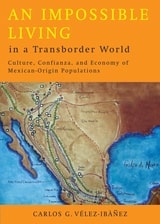
An Impossible Living in a Transborder World
Culture, Confianza, and Economy of Mexican-Origin PopulationsCarlos G. Vélez-Ibáñez
University of Arizona Press, 2010
Central to the ROSCA is the cultural concept of mutual trust, or confianza. This is the cultural glue that holds the reciprocal relationship together. As Vélez-Ibáñez explains, confianza “shapes the expectations for relationships within broad networks of interpersonal links, in which intimacies, favors, goods, services, emotion, power, or information are exchanged.” In a border region where migration, class movement, economic changes, and institutional inaccessibility produce a great deal of uncertainty, Mexican-origin populations rely on confianza and ROSCAs to maintain a sense of security in daily life. How do transborder people adapt these common practices to meet the demands of a global economy? That is precisely what Vélez-Ibáñez investigates.
An Island Called Home
Returning to Jewish CubaRuth Behar, Photographs by Humberto Mayol
Rutgers University Press, 2007
Yiddish-speaking Jews thought Cuba was supposed to be a mere layover on the journey to the United States when they arrived in the island country in the 1920s. They even called it “Hotel Cuba.” But then the years passed, and the many Jews who came there from Turkey, Poland, and war-torn Europe stayed in Cuba. The beloved island ceased to be a hotel, and Cuba eventually became “home.” But after Fidel Castro came to power in 1959, the majority of the Jews opposed his communist regime and left in a mass exodus. Though they remade their lives in the United States, they mourned the loss of the Jewish community they had built on the island.
As a child of five, Ruth Behar was caught up in the Jewish exodus from Cuba. Growing up in the United States, she wondered about the Jews who stayed behind. Who were they and why had they stayed? What traces were left of the Jewish presence, of the cemeteries, synagogues, and Torahs? Who was taking care of this legacy? What Jewish memories had managed to survive the years of revolutionary atheism?
An Island Called Home is the story of Behar’s journey back to the island to find answers to these questions. Unlike the exotic image projected by the American media, Behar uncovers a side of Cuban Jews that is poignant and personal. Her moving vignettes of the individuals she meets are coupled with the sensitive photographs of Havana-based photographer Humberto Mayol, who traveled with her.
Together, Behar’s poetic and compassionate prose and Mayol’s shadowy and riveting photographs create an unforgettable portrait of a community that many have seen though few have understood. This book is the first to show both the vitality and the heartbreak that lie behind the project of keeping alive the flame of Jewish memory in Cuba.
Reader Guide (http://rutgerspress.rutgers.
An Uncertain Cure
Living with Leprosy in BrazilWhite, Cassandra
Rutgers University Press, 2008
In An Uncertain Cure, Cassandra White goes deep into the shantytowns of Rio de Janeiro to give a riveting account of the contemporary leprosy experience among poor and working class Brazilians. In this ethnographic treatment of leprosy sufferers, White exposes the web of historical, socioeconomic, religious, and political forces that complicate the path to wellness and perpetuate high rates of infection. Drawing on nearly ten years of research, White shows how anthropological research can contribute to more effective treatment of chronic infectious diseases around the world.
Animal Myths and Metaphors in South America
URTON
University of Utah Press, 1985
The contributors to this anthology have not limited themselves to the notion that clans and moieties are the only sources and objects of metaphorical comparisons between humans and animals. They suggest a shift in perspective that has metaphorical comparisons generated by conceived similarities and differences between animals and particular types of human beings. Some examples of this include macaw fledglings as adolescents; pumas as fully initiated men, and foxes as young married men. With this shift of emphasis, a significantly different analytic focus in the study of human-animal relations is produced.
Another Aesthetics Is Possible
Arts of Rebellion in the Fourth World WarJennifer Ponce de León
Duke University Press, 2021
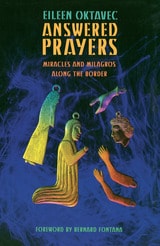
Answered Prayers
Miracles and Milagros along the BorderEileen Oktavec
University of Arizona Press, 1995
In Answered Prayers, the Mexicans, Mexican Americans, Tohono O'odham, and Yaquis who practice this tradition share their stories of unwavering faith and divine intervention. Anthropologist and photographer Eileen Oktavec has spent more than two decades documenting this fascinating tradition in the Arizona-Mexico borderlands. Quoting extensive interviews, she explains the beliefs of the people who perform this ancient folk ritual and the many rules guiding this practice. She also describes the many places where milagros are offered—from the elaborate Mexican baroque Mission San Xavier near Tucson, Arizona, to tiny household shrines and hospitals on both sides of the border. Oktavec also explains how milagros are made, where they are bought, and how they are used in jewelry, sculpture, and art.
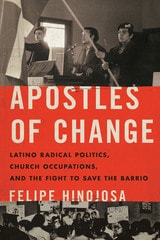
Apostles of Change
Latino Radical Politics, Church Occupations, and the Fight to Save the BarrioBy Felipe Hinojosa
University of Texas Press, 2021
2021 Finalist Raul Yzaguirre Best Political/Current Affairs Book, International Latino Book Awards
Winner of the Texas Association of Chicanos in Higher Education Inaugural Book Award
Unraveling the intertwined histories of Latino radicalism and religion in urban America, this book examines how Latino activists transformed churches into staging grounds for protest against urban renewal and displacement.
In the late 1960s, the American city found itself in steep decline. An urban crisis fueled by federal policy wreaked destruction and displacement on poor and working-class families. The urban drama included religious institutions, themselves undergoing fundamental change, that debated whether to stay in the city or move to the suburbs. Against the backdrop of the Black and Brown Power movements, which challenged economic inequality and white supremacy, young Latino radicals began occupying churches and disrupting services to compel church communities to join their protests against urban renewal, poverty, police brutality, and racism.
Apostles of Change tells the story of these occupations and establishes their context within the urban crisis; relates the tensions they created; and articulates the activists' bold, new vision for the church and the world. Through case studies from Chicago, Los Angeles, New York City, and Houston, Felipe Hinojosa reveals how Latino freedom movements frequently crossed boundaries between faith and politics and argues that understanding the history of these radical politics is essential to understanding the dynamic changes in Latino religious groups from the late 1960s to the early 1980s.
Archiving Mexican Masculinities in Diaspora
Nicole M. Guidotti-Hernández
Duke University Press, 2021
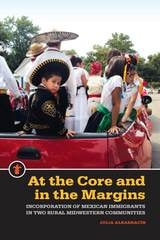
At the Core and in the Margins
Incorporation of Mexican Immigrants in Two Rural Midwestern CommunitiesJulia Albarracín
Michigan State University Press, 2016
Based on 260 surveys and 47 in-depth interviews, this study combines quantitative and qualitative research to explore the level and characteristics of immigrant incorporation in Beardstown and Monmouth. It assesses the advancement of immigrants in the immigration/ residency/citizenship process, the immigrants’ level of cultural integration (via language, their connectedness with other members of society, and their relationships with neighbors), the degree and characteristics of discrimination against immigrants in these two towns, and the extent to which immigrants participate in different social and political activities and trust government institutions.
Immigrants in new destinations are likely to be poorer, to be less educated, and to have weaker English-language skills than immigrants in traditional destinations. Studying how this population negotiates the obstacles to and opportunities for incorporation is crucial.
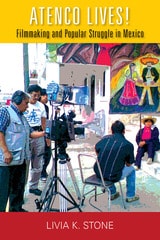
Atenco Lives!
Filmmaking and Popular Struggle in MexicoLivia K. Stone
Vanderbilt University Press, 2019
Stone highlights the importance of how the circulation of the physical videos, and not just their content, promotes the social movement. More broadly she shows how videographers perform their activism, navigating the tensions between neoliberal personhood or ego and an ethos of compañerismo that privileges community. Grounded in the lived experiences of Atenco's activists and allied filmmakers, Atenco Lives! documents the making and circulating of films as an ethical and political practice purposefully used to transform human relationships.

Autobiography of My Hungers
Rigoberto González
University of Wisconsin Press, 2019
Bill Whitehead Award for Lifetime Literary Achievement, Publishing Triangle
“Told in a series of revealing vignettes and poems, González’s Autobiography of my Hungers turns moments of need and want into revelations of truth and self-awareness, creating the portrait of an artist that is complex if not entirely complete.”—El Paso Times
“Through his provocative vignettes, González communicates a lifetime of struggle for affirmation and self-acceptance.”—Make/Shift
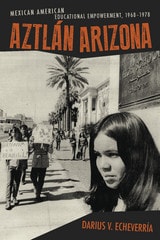
Aztlán Arizona
Mexican American Educational Empowerment, 1968–1978Darius V. Echeverría
University of Arizona Press, 2014
The word Aztlán, originally meaning the legendary ancestral home of the Nahua peoples of Mesoamerica, was adopted as a symbol of independence by Chicano/a activists during the movement of the 1960s and 1970s. In an era when poverty, prejudice, and considerable oppositional forces blighted the lives of roughly one-fifth of Arizonans, the author argues that understanding those societal realities is essential to defining the rise and power of the Chicano Movement.
The book illustrates how Mexican American communities fostered a togetherness that ultimately modified larger Arizona society by revamping the educational history of the region. The concluding chapter outlines key Mexican American individuals and organizations that became politically active in order to address Chicano educational concerns. This Chicano unity, reflected in student, parent, and community leadership organizations, helped break barriers, dispel the Mexican American inferiority concept, and create educational change that benefited all Arizonans.
No other scholar has examined the emergence of Chicano Movement politics and its related school reform efforts in Arizona. Echeverría’s thorough research, rich in scope and interpretation, is coupled with detailed and exact endnotes. The book helps readers understand the issues surrounding the Chicano Movement educational reform and ethnic identity. Equally important, the author shows how residual effects of these dynamics are still pertinent today in places such as Tucson.