Results by title
24 books match the query 'Horror & Supernatural'
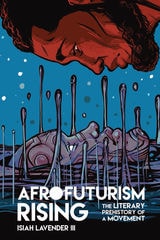
Afrofuturism Rising
The Literary Prehistory of a MovementIsiah Lavender III
The Ohio State University Press, 2019
By engaging with authors as diverse as Phillis Wheatley, David Walker, Frederick Douglass, Harriet Ann Jacobs, Samuel R. Delany Jr., Pauline Hopkins, Zora Neale Hurston, and Richard Wright, Afrofuturism Rising extends existing scholarly conversations about who creates and what is created via science fiction. Through a trans-historical rereading of texts by these authors as science fiction, Lavender highlights the ways black experience in America has always been an experience of spatial and temporal dislocation akin to science fiction. Compelling and ambitious in scope, Afrofuturism Rising redefines both science fiction and literature as a whole.
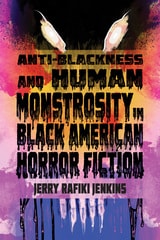
Anti-Blackness and Human Monstrosity in Black American Horror Fiction
Jerry Rafiki Jenkins
The Ohio State University Press, 2024
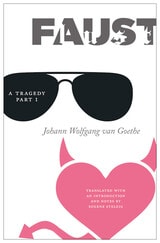
Faust
A Tragedy, Part IEugene Stelzig
Bucknell University Press, 2019
Published by Bucknell University Press. Distributed worldwide by Rutgers University Press.
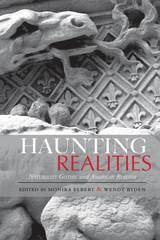
Haunting Realities
Naturalist Gothic and American RealismEdited by Monika Elbert and Wendy Ryden
University of Alabama Press, 2017
An innovative collection of essays examining the sometimes paradoxical alignment of Realism and Naturalism with the Gothic in American literature to highlight their shared qualities
Following the golden age of British Gothic in the late eighteenth century, the American Gothic’s pinnacle is often recognized as having taken place during the decades of American Romanticism. However, Haunting Realities explores the period of American Realism—the end of the nineteenth century—to discover evidence of fertile ground for another age of Gothic proliferation.
At first glance, “Naturalist Gothic” seems to be a contradiction in terms. While the Gothic is known for its sensational effects, with its emphasis on horror and the supernatural, the doctrines of late nineteenth-century Naturalism attempted to move away from the aesthetics of sentimentality and stressed sobering, mechanistic views of reality steeped in scientific thought and the determinism of market values and biology. Nonetheless, what binds Gothicism and Naturalism together is a vision of shared pessimism and the perception of a fearful, lingering presence that ominously haunts an impending modernity. Indeed, it seems that in many Naturalist works reality is so horrific that it can only be depicted through Gothic tropes that prefigure the alienation and despair of modernism.
In recent years, research on the Gothic has flourished, yet there has been no extensive study of the links between the Gothic and Naturalism, particularly those which stem from the early American Realist tradition. Haunting Realities is a timely volume that addresses this gap and is an important addition to scholarly work on both the Gothic and Naturalism in the American literary tradition.
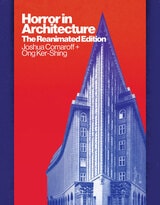
Horror in Architecture
The Reanimated EditionJoshua Comaroff
University of Minnesota Press, 2024
A new edition of this extensive visual analysis of horror tropes and their architectural analogues
Horror in Architecture presents an unflinching look at how horror genre tropes manifest in the built environment. Spanning the realms of art, design, literature, and film, this newly revised and expanded edition compiles examples from all areas of popular culture to form a visual anthology of the architectural uncanny.
Rooted in the Romantic and Gothic treatment of horror as a serious aesthetic category, Horror in Architecture establishes incisive links between contemporary horror media and its parallel traits found in various architectural designs. Through chapters dedicated to distorted and monstrous buildings, abandoned spaces, extremes of scale, and other structural peculiarities, and featuring new essays on insurgent natures, blobs, and architectural puppets, this volume brings together diverse architectural anomalies and shows how their unsettling effects deepen our fascination with the unreal.
Intended for both horror fans and students of visual culture, Horror in Architecture turns a unique lens on the relationship between the human body and the artificial landscapes it inhabits. Extensively illustrated with photographs, film stills, and diagrams, this book retrieves horror from the cultural fringes and demonstrates how its attributes permeate the modern condition and the material world.
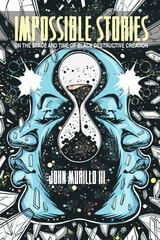
Impossible Stories
On the Space and Time of Black Destructive CreationJohn Murillo III
The Ohio State University Press, 2021
Taking as his lens the fragment—fragmented bodies, fragments of memories, fragments of texts—Murillo theorizes new directions for Black identity and cultural production. Combining a critical engagement of physics and metaphysics with innovative readings of Gayl Jones’s Corregidora, Octavia Butler’s Kindred, Toni Morrison’s Beloved, Kiese Laymon’s Long Division, Dionne Brand’s A Map to the Door of No Return, and Paul Beatty’s The Sellout, he offers new ways to think about anti-Black racism and practice Black creativity. Ultimately, in his equally creative and analytical responses to depictions of Black people left out of history and barred from spaces, Murillo argues that through Afro-pessimism, Black people can fight the anti-Black cosmos.
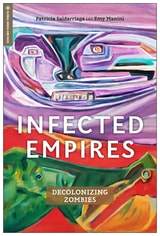
Infected Empires
Decolonizing ZombiesPatricia Saldarriaga
Rutgers University Press, 2022
Studying films from around the world, including Latin America, Asia, Africa, the US, and Europe, Infected Empires presents a vision of a global zombie that points toward a posthuman and feminist future.
Given the current moment—polarized populations, increasing climate fears, and decline of supranational institutions in favor of a rising tide of nationalisms—it is easy to understand the proliferation of apocalyptic and dystopian elements in popular culture. Infected Empires examines one of the most popular figures in contemporary apocalyptic film: the zombie. This harbinger of apocalypse reveals bloody truths about the human condition, the wounds of history, and methods of contending with them.
Infected Empires considers parallels in the zombie genre to historical and current events on different political, theological and philosophical levels, and proposes that the zombie can be read as a figure of decolonization and an allegory of resistance to oppressive structures that racialize, marginalize, disable, and dispose of bodies.
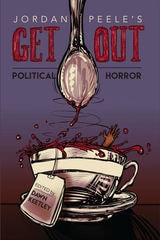
Jordan Peele's Get Out
Political HorrorEdited by Dawn Keetley
The Ohio State University Press, 2020
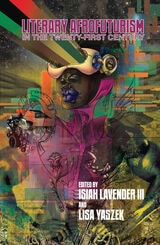
Literary Afrofuturism in the Twenty-First Century
Edited by Isiah Lavender III and Lisa Yaszek
The Ohio State University Press, 2020
In Literary Afrofuturism in the Twenty-First Century, eminent contributors pay tribute to Afrofuturism as a powerful and evolving aesthetic practice that communicates the experience of science, technology, and race across centuries, continents, and cultures. While Ryan Coogler and Janelle Monáe may have helped bring the genre into contemporary pop consciousness, it in fact extends back to the writing of eighteenth-century poet Phyllis Wheatley and has continued in the work of Samuel R. Delany, Octavia E. Butler, N. K. Jemisin, and many others. In examining this heritage, contributors in this volume question generic boundaries, recover lost artists and introduce new ones, and explore how the meteoric rise of a new, pan-African speculative literary tradition may or may not connect with Afrofuturism.
Additionally, the editors have marshaled some of today’s most exciting writers for a roundtable discussion of the genre: Bill Campbell, Minister Faust, Nalo Hopkinson, N. K. Jemisin, Chinelo Onwualu, Nisi Shawl, and Nick Wood. Pioneering author and editor Sheree R. Thomas limns how black women have led new developments in contemporary Afrofuturism, and artist Stacey Robinson’s illustrations orient readers to the spirited themes of this enduring and consequential literary tradition.
Monster Theory Returns
Jeffrey Jerome Cohen
University of Minnesota Press, 2027
Exploring monsters as critical guides to understanding what it means to be human in a perilous world
Thirty years after the publication of Jeffrey Jerome Cohen’s groundbreaking Monster Theory, the field it helped create has grown into a dynamic and influential area of interdisciplinary scholarship. Monster Theory Returns gathers twenty-six original essays exploring an extraordinary range of monstrous figures, from demons and vampires to microbes and emerging posthuman forms, illuminating urgent questions of belonging, political violence, environmental change, and the boundaries of the human itself.
Combining historical depth with a global perspective, these lively essays show that monsters are far more than figures of fear. They are powerful cultural tools for thinking through crises in a perilous and rapidly changing world.
Contributors: U. Melissa Anyiwo, U of Scranton; Benjamin Ash, Arizona State U; Stephen T. Asma, Columbia College, Chicago; Michael M. Chemers, U of California, Santa Cruz; Eli Cumings, Columbia U; Rebecca Duncan, Linnaeus U; Michael Dylan Foster, U of California, Davis; Renée Fox, U of California, Santa Cruz; Kaja Franck, U of Hertfordshire; Rosemarie Garland-Thomson, Emory U; Brandon R. Grafius, Ecumenical Theological Seminary; Anya Heise-von der Lippe, U of Tübingen; Mary Kate Hurley, Ohio U; Anson Koch-Rein, U of North Carolina; Agnieszka Kotwasińska, U of Warsaw; Riva Lehrer; Sherry C.M. Lindquist, Western Illinois U; Iyad Malouf, Tel Aviv U; Asa Simon Mittman, California State U, Chico; Kirsten Møllegaard, U of Hawai‘i at Hilo; Alan S. Montroso, U of Maryland; David Robinson; Margrit Shildrick, Stockholm U; Jeffrey Andrew Weinstock, Central Michigan U; Emily Zarka, Arizona State U
Retail e-book files for this title are screen-reader friendly with images accompanied by short alt text and/or extended descriptions.
Monster Theory
Reading CultureJeffrey Jerome Cohen
University of Minnesota Press, 1996
In viewing the monstrous body as a metaphor for the cultural body, the contributors to Monster Theory consider beasts, demons, freaks, and fiends as symbolic expressions of cultural unease that pervade a society and shape its collective behavior. Through a historical sampling of monsters, these essays argue that our fascination for the monstrous testifies to our continued desire to explore difference and prohibition.
Contributors: Mary Baine Campbell, Brandeis U; David L. Clark, McMaster U; Frank Grady, U of Missouri, St. Louis; David A. Hedrich Hirsch, U of Illinois; Lawrence D. Kritzman, Dartmouth College; Kathleen Perry Long, Cornell U; Stephen Pender; Allison Pingree, Harvard U; Anne Lake Prescott, Barnard College; John O'Neill, York U; William Sayers, George Washington U; Michael Uebel, U of Virginia; Ruth Waterhouse.
Monstrous Youth
Transgressing the Boundaries of Childhood in the United StatesSara Austin
The Ohio State University Press, 2022
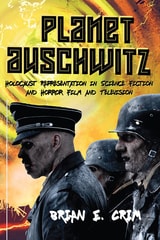
Planet Auschwitz
Holocaust Representation in Science Fiction and Horror Film and TelevisionBrian E. Crim
Rutgers University Press, 2020
Planet Auschwitz website (https://planetauschwitz.com)
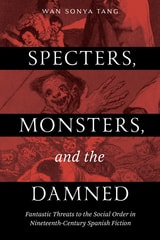
Specters, Monsters, and the Damned
Fantastic Threats to the Social Order in Nineteenth-Century Spanish FictionWan Sonya Tang
Vanderbilt University Press, 2024
Tang offers innovative readings of eleven fantastic short stories and one novella as they first appeared, some serialized and others illustrated, in Spanish periodicals from the late 1800s and early 1900s. Drawing on original archival research, she demonstrates how these stories—in which the everyday is suddenly and inexplicably disrupted by the supernatural—often employ gothic imagery (specifically that of the specter, the monster, and the curse) to depict as threatening those who deviate from cultural norms in terms of class, gender, and race. Tang argues, however, that these unsettling, open‑ended narratives likewise allow readers to question how and why certain designated groups are privileged by society. She contends that the fantastic depiction of reality as unstable in these works ultimately facilitates an interrogation of those values that are accepted as natural by the reigning social order, gesturing toward the inhumanity not of the marginalized, but of the dominant group.
The Horror Theory Reader
Jeffrey Andrew Weinstock
University of Minnesota Press, 2026
A comprehensive guide to the timeless, paradoxical appeal of horror
Why do we enjoy horror? The emotional responses the genre provokes—fear, dread, and disgust—are ones we typically seek to avoid, so what is the appeal of narratives and artistic representations that seek to scare, startle, shock, and repulse? In The Horror Theory Reader, Jeffrey Andrew Weinstock assembles theorizations of the genre’s appeal from antiquity to the present day to explore the “paradox of horror” that has for millennia preoccupied theorists and consumers alike.
Beginning with an introduction situating the history of horror in the context of moral panics, this carefully curated volume then is organized into three sections that introduce early attempts to explain horror’s fascination; present perspectives from horror writers, filmmakers, and scholars; and offer nuanced considerations of horror’s intersections with disability, queerness, race, and gender. Featuring classic commentaries on the genre by H. P. Lovecraft, Alfred Hitchcock, and Stephen King alongside incisive essays by philosophers, literary and film scholars, cultural critics, and others, The Horror Theory Reader is indispensable for scholars and will be of interest to anyone curious about our paradoxical enjoyment of appalling and fearsome things.
Contributions by: Joseph Addison; Aristotle; Anna Letitia Barbauld; Dani Bethea; Edmund Burke; Noël Carroll, CUNY Graduate Center; Brigid Cherry; Mathias Clasen, Aarhus U; Douglas E. Cowan, Renison U College; Meghan Downes, Monash U; Berys Gaut, U of St. Andrews; Julian Hanich, U of Groningen; Sheri-Marie Harrison, U of Missouri; Matt Hills, U of Huddersfield; Alfred Hitchcock; David Hume; Mark Jancovich, U of East Anglia; Stephen King; Petra Kuppers, U of Michigan; H. P. Lovecraft; G. Neil Martin, Regent’s U London; John Morreall, College of William and Mary; Monika Negra; Nina Nesseth; Anne Radcliffe; Fredrich Schiller; Walter Scott; Tim Snelson, U of East Anglia; Christopher St. John Sprigg; Susan Stryker, U of Arizona; S. Trimble, U of Toronto; Kendall Walton, U of Michigan; Linda Williams, UC Berkeley; Robin Wood.
Retail e-book files for this title are screen-reader friendly with images accompanied by short alt text and/or extended descriptions.
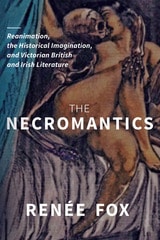
The Necromantics
Reanimation, the Historical Imagination, and Victorian British and Irish LiteratureRenée Fox
The Ohio State University Press, 2023
Winner, 2025 Sonya Rudikoff Award for the best first book in Victorian Studies
Honorable Mention, 2023 North American Victorian Studies Association First Book Prize
Honorable Mention, American Council for Irish Studies Donald Murphy Prize for Distinguished First Book
The Necromantics dwells on the literal afterlives of history. Reading the reanimated corpses—monstrous, metaphorical, and occasionally electrified—that Mary Shelley, Robert Browning, Charles Dickens, W. B. Yeats, Bram Stoker, and others bring to life, Renée Fox argues that these undead figures embody the present’s desire to remake the past in its own image. Fox positions “necromantic literature” at a nineteenth-century intersection between sentimental historiography, medical electricity, imperial gothic monsters, and the Irish Literary Revival, contending that these unghostly bodies resist critical assumptions about the always-haunting power of history.
By considering Irish Revival texts within the broader scope of nineteenth-century necromantic works, The Necromantics challenges Victorian studies’ tendency to merge Irish and English national traditions into a single British whole, as well as Irish studies’ postcolonial efforts to cordon off a distinct Irish canon. Fox thus forges new connections between conflicting political, formal, and historical traditions. In doing so, she proposes necromantic literature as a model for a contemporary reparative reading practice that can reanimate nineteenth-century texts with new aesthetic affinities, demonstrating that any effective act of reading will always be an effort of reanimation.
The Paradox of Blackness in African American Vampire Fiction
Jerry Rafiki Jenkins
The Ohio State University Press, 2019
The Politics of Ecology
Land, Life, and Law in Medieval BritainEdited by Randy P. Schiff and Joseph Taylor
The Ohio State University Press, 2016
This volume, edited by Randy P. Schiff and Joseph Taylor, presents a diverse and stimulating group of interconnected essays that respond to these questions by infusing biopolitical material and theory into ecocentric studies of medieval life. The Politics of Ecology: Land, Life, and Law in Medieval Britain pursues the political power of sovereign law as it disciplines and manages various forms of natural life, and discloses the literary biopolitics played out in texts that work out the fraught interactions of life and law, in all its forms. Contributors to this volume explore such issues as legal networks and death, Arthurian bare life, Chaucerian medical biopolitics, the biopolitics of fur, ecologies of sainthood, arboreal political theology, conservation and political ecology, and geographical melancholy.
Bringing together both established and rising critical voices, The Politics of Ecology creates a place for cutting-edge medievalist ecocriticism focused on the intersections of land, life, and law in medieval English, French, and Latin literature.
Transmedia Adaptation in the Nineteenth Century
Lissette Lopez Szwydky
The Ohio State University Press, 2020
In Transmedia Adaptation in the Nineteenth Century, Lissette Lopez Szwydky convincingly historicizes the practice of adaptation, drawing on multiple disciplines to illustrate narrative mobility across time, culture, and geography. Case studies from stage plays, literature, painting, illustration, chapbooks, and toy theaters position adaptation as a central force in literary history that ensures continued cultural relevance, accessibility, and survival. The history of these forms helps to inform and put into context our contemporary obsessions with popular media. Finally, in upending a traditional understanding of canon by arguing that adaptation creates canon and not the other way around, Szwydky provides crucial bridges between nineteenth-century literary scholarship, adaptation studies, and media studies, thus identifying new stakes for all.
Transmedia Creatures
Frankenstein’s AfterlivesSaggini, Francesca
Bucknell University Press, 2018
Published by Bucknell University Press. Distributed worldwide by Rutgers University Press.
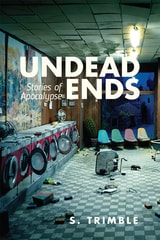
Undead Ends
Stories of ApocalypseS. Trimble
Rutgers University Press, 2019
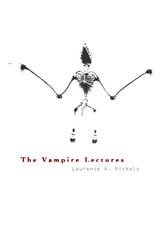
Vampire Lectures
Laurence A. Rickels
University of Minnesota Press, 1999
A wild and wide-ranging “psycho-history” of the vampire.
A wild and wide-ranging “psycho-history” of the vampire.
Bela Lugosi may-as the eighties gothic rock band Bauhaus sang-be dead, but the vampire lives on. A nightmarish figure dwelling somewhere between genuine terror and high camp, a morbid repository for the psychic projections of diverse cultures, an endlessly recyclable mass-media icon, the vampire is an enduring object of fascination, fear, ridicule, and reverence. In The Vampire Lectures, Laurence A. Rickels sifts through the rich mythology of vampirism, from medieval folklore to Marilyn Manson, to explore the profound and unconscious appeal of the undead.Based on the course Rickels has taught at the University of California, Santa Barbara, for several years (a course that is itself a cult phenomenon on campus), The Vampire Lectures reflects Rickels’s unique lecture style and provides a lively history of vampirism in legend, literature, and film. Rickels unearths a trove that includes eyewitness accounts of vampire attacks; burial rituals and sexual taboos devised to keep vampirism at bay; Hungarian countess Elisabeth Bathory’s use of girls’ blood in her sadistic beauty regimen; Bram Stoker’s Dracula, with its turn-of-the-century media technologies; F. W. Murnau’s haunting Nosferatu; and crude, though intense, straight-to-video horror films such as Subspecies. He makes intuitive, often unexpected connections among these sometimes wildly disparate sources.More than a compilation of vampire lore, however, The Vampire Lectures makes an original and intellectually rigorous contribution to literary and psychoanalytic theory, identifying the subconscious meanings, complex symbolism, and philosophical arguments-particularly those of Marx, Freud, and Nietzsche-embedded in vampirism and gothic literature.ISBN 0-8166-3391-6 Cloth £34.50 $49.95xxISBN 0-8166-3392-4 Paper £14.00 $19.95376 Pages 5 7/8 x 9 SeptemberTranslation inquiries: University of Minnesota Press
You Are a Ghost
Katherine Guinness
University of Minnesota Press, 2027
A ghost story where you are the ghost
What if the ghost haunting the present is you? In You Are a Ghost, Katherine Guinness offers a provocative new theory of “negative hauntology,” arguing that ghostliness is not a metaphor but the defining condition of life under late capitalism. Through compelling readings of films such as The Sixth Sense, Ghost, Beetlejuice, and The Others, alongside television, immersive performance, and contemporary art about platform surveillance and automated intelligence, Guinness reveals how today’s culture reflects a world where futurity, agency, and even humanity have already been lost.
Yet, rather than ending in nihilism, You Are a Ghost imagines a new form of collective consciousness grounded in our shared condition. Bold, accessible, and deeply original, this book rethinks social death, capitalism, and political solidarity, offering readers a new way to understand contemporary culture—and how to haunt it.
Retail e-book files for this title are screen-reader friendly.
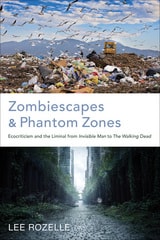
Zombiescapes and Phantom Zones
Ecocriticism and the Liminal from "Invisible Man" to "The Walking Dead"Lee Rozelle
University of Alabama Press, 2016
A Critical Journey Through Zombie Worlds and Ecological Thought.
In Zombiescapes and Phantom Zones: Ecocriticism and the Liminal from “Invisible Man” to “The Walking Dead,” Lee Rozelle chronicles the weirdest, ugliest, and most mixed-up characters to appear on the literary scene since World War II—creatures intimately linked to damaged habitats that rise from the muck, not to destroy or rule the world, but to save it. The book asks what happens to these landscapes after the madness, havoc, and destruction. What monsters and magic surface then?
Rozelle argues that zombiescapes and phantom zones depicted in the book become catalysts for environmental reanimation and sources of hope. Liminality offers exciting and useful new ways to conceptualize places that have historically proven troublesome, unwieldy, or hard to define. Zombiescapes can reduce the effects of pollution, promote environmental justice, lessen economic disparity, and localize food production. The grotesques that ooze and crawl from these passages challenge readers to consider new ways to re-inhabit broken lands at a time when energy efficiency, fracking, climate change, the Pacific trade agreement, local food production, and sustainability shape the intellectual landscape.
Rozelle focuses on literary works from 1950 to 2015—the zombiescapes and monsterscapes of post–World War II literature—that portray in troubling and often devastating ways the “brownfields” that have been divested of much of their biodiversity and ecological viability. However, he also highlights how these literary works suggest a new life and new potential for such environments. With an unlikely focus on places of ruination and an application of interdisciplinary, transnational approaches to a range of fields and texts, Rozelle advances the notion that places of distortion might become a nexus where revelation and advocacy are possible again.
Zombiescapes and Phantom Zones has much to offer to various fields of scholarship, including literary studies, ecocriticism, and environmental studies. Research, academic, and undergraduate audiences will be captivated by Rozelle’s lively prose and unique anthropological, ecocritical, and literary analyses.