Results by title
40 books match the query 'Horror films'
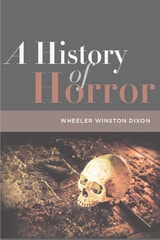
A History of Horror
Wheeler Winston Dixon
Rutgers University Press, 2010
Arranged by decades, with outliers and franchise films overlapping some years, this one-stop sourcebook unearths the historical origins of characters such as Dracula, Frankenstein, and the Wolfman and their various incarnations in film from the silent era to comedic sequels. A History of Horror explores how the horror film fits into the Hollywood studio system and how its enormous success in American and European culture expanded globally over time.
Dixon examines key periods in the horror film-in which the basic precepts of the genre were established, then banished into conveniently reliable and malleable forms, and then, after collapsing into parody, rose again and again to create new levels of intensity and menace. A History of Horror, supported by rare stills from classic films, brings over fifty timeless horror films into frightfully clear focus, zooms in on today's top horror Web sites, and champions the stars, directors, and subgenres that make the horror film so exciting and popular with contemporary audiences.
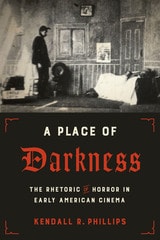
A Place of Darkness
The Rhetoric of Horror in Early American CinemaBy Kendall R. Phillips
University of Texas Press, 2018
Horror is one of the most enduringly popular genres in cinema. The term “horror film” was coined in 1931 between the premiere of Dracula and the release of Frankenstein, but monsters, ghosts, demons, and supernatural and horrific themes have been popular with American audiences since the emergence of novelty kinematographic attractions in the late 1890s. A Place of Darkness illuminates the prehistory of the horror genre by tracing the way horrific elements and stories were portrayed in films prior to the introduction of the term “horror film.”
Using a rhetorical approach that examines not only early films but also the promotional materials for them and critical responses to them, Kendall R. Phillips argues that the portrayal of horrific elements was enmeshed in broader social tensions around the emergence of American identity and, in turn, American cinema. He shows how early cinema linked monsters, ghosts, witches, and magicians with Old World superstitions and beliefs, in contrast to an American way of thinking that was pragmatic, reasonable, scientific, and progressive. Throughout the teens and twenties, Phillips finds, supernatural elements were almost always explained away as some hysterical mistake, humorous prank, or nefarious plot. The Great Depression of the 1930s, however, constituted a substantial upheaval in the system of American certainty and opened a space for the reemergence of Old World gothic within American popular discourse in the form of the horror genre, which has terrified and thrilled fans ever since.
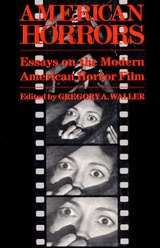
American Horrors
Essays on the Modern American Horror FilmEdited by Gregory A. Waller
University of Illinois Press, 1988
In this collection of twelve essays, Gregory Waller balances detailed studies of both popular films (Night of the Living Dead, The Exorcist, and Halloween) and particularly problematic films (Don't Look Now and Eyes of Laura Mars) with discussions of such central thematic preoccupations as the genre's representation of violence and female victims, its reflexivity and playfulness, and its ongoing redefinition of the monstrous and the normal.
In addition, American Horrors includes a filmography of movies and telefilms and an annotated bibliography of books and articles about horror since 1968.
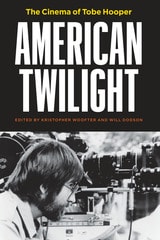
American Twilight
The Cinema of Tobe HooperBy Kristopher Woofter and Will Dodson
University of Texas Press, 2021
A master of gritty horror, Tobe Hooper captured on-screen an America in constant crisis and upended myths of prosperity to reveal the country’s internal decay.
Tobe Hooper's productions, which often trespassed upon the safety of the family unit, cast a critical eye toward an America in crisis. Often dismissed by scholars and critics as a one-hit wonder thanks to his 1974 horror classic The Texas Chain Saw Massacre, Hooper nevertheless was instrumental in the development of a robust and deeply political horror genre from the 1960s until his death in 2017. In American Twilight, the authors assert that the director was an auteur whose works featured complex monsters and disrupted America’s sacrosanct perceptions of prosperity and domestic security.
American Twilight focuses on the skepticism toward American institutions and media and the articulation of uncanny spaces so integral to Hooper’s vast array of feature and documentary films, made-for-television movies, television episodes, and music videos. From Egg Shells (1969) to Poltergeist (1982), Djinn (2013), and even Billy Idol’s music video for “Dancing with Myself” (1985), Tobe Hooper provided a singular directorial vision that investigated masculine anxiety and subverted the idea of American exceptionalism.
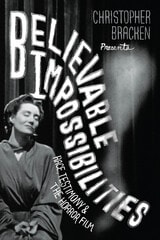
Believable Impossibilities
Race, Testimony, and the Horror FilmChristopher Bracken
University of Chicago Press, 2026
A gripping exploration of belief in the impossible through horror film, informed by philosophy, history, and anthropology.
What if aliens crash-landed at an old mine? What if you discovered your spouse is protecting you from witchcraft? What if you received messages from the dead? You wouldn’t believe it, of course—but you might investigate. As Christopher Bracken shows through this gripping exploration of the horror film, this is the first step toward believing the impossible.
In Believable Impossibilities, Bracken examines the genre in which we are most frequently called on to believe something seemingly impossible has unsettled our ordinary lives—the horror story. Whether on the page or on screen, horror draws us into narratives in which a community of nonbelievers are suddenly confronted with the challenge of believing in events and experiences that radically break with expectation. As Bracken argues, questions of belief often intersect with issues of race and Indigeneity because, historically, belief in the impossible has been racially coded as a trait of “primitive” thought. Drawing on philosophy, anthropology, and psychoanalysis, Bracken explores the fictional spaces in which the paranormal and supernatural challenge and defy our social bonds.
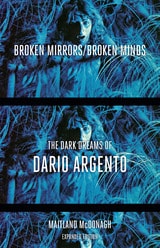
Broken Mirrors/Broken Minds
The Dark Dreams of Dario ArgentoMaitland McDonagh
University of Minnesota Press, 2010
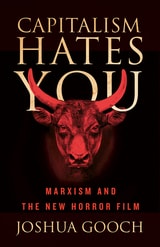
Capitalism Hates You
Marxism and the New Horror FilmJoshua Gooch
University of Minnesota Press, 2025
What contemporary horror films teach us about the cruelties of capitalist society
Capitalism Hates You uses the horror film genre as a tool to diagnose and expose the hostile conditions of life under capitalism. Through incisive critical analyses of popular films such as Get Out, Drag Me to Hell, Hereditary, The Babadook, and many others, Joshua Gooch draws connections between Marxist theory and contemporary narratives of psychological unease.
Gooch highlights the work of women, trans, and nonwhite filmmakers to show how the remarkable diversity of twenty-first-century horror cinema can provide an expansive catalog of capitalism’s varying forms of oppression. Studying films that interrogate such urgent topics as gentrification, climate change, and reproductive labor, he demonstrates how contemporary horror films give affective shape to the negative undercurrents of our present socioeconomic system.
Capitalism Hates You argues that these films and their material conditions can deepen our understanding of essential concepts in contemporary Marxism, from the theory of value and changing forms of commodification to the labor of social reproduction, the abolition of the family, and the necessity of ecosocialism. Synthesizing various strands of Marxist thought, Gooch sheds light on the growing field of socially conscious horror films, examining how they pinpoint and exaggerate latent feelings of dread and discomfort to reflect the ills of society.
Retail e-book files for this title are screen-reader friendly with images accompanied by short alt text and/or extended descriptions.
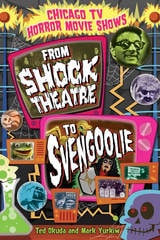
Chicago TV Horror Movie Shows
From Shock Theatre to SvengoolieTed Okuda and Mark Yurkiw
Southern Illinois University Press, 2007
Cutting Edge
Art-Horror and the Horrific Avant-gardeJoan Hawkins
University of Minnesota Press, 2000
Explores what horror movies tell us about issues of taste.
Even before Jean-Luc Godard and other members of the French New Wave championed Hollywood B movies, aesthetes and cineasts relished the raw emotions of genre films. This contradiction has been particularly true of horror cinema, in which the same images and themes found in exploitation and splatter movies are also found in avant-garde and experimental films, blurring boundaries of taste and calling into question traditional distinctions between high and low culture.
In Cutting Edge, Joan Hawkins offers an original and provocative discussion of taste, trash aesthetics, and avant-garde culture of the 1960s and 1970s to reveal horror’s subversiveness as a genre. In her treatment of what she terms "art-horror" films, Hawkins examines home viewing, video collection catalogs, and fanzines for insights into what draws audiences to transgressive films. Cutting Edge provides the first extended political critique of Yoko Ono’s rarely seen Rape and shows how a film such as Franju’s Eyes without a Face can work simultaneously as an art, political, and splatter film. The rediscovery of Tod Browning’s Freaks as an art film, the "eurotrash" cinema of Jess Franco, camp cults like the one around Maria Montez, and the "cross-over" reception of Andy Warhol’s Frankenstein are all studied for what they reveal about cultural hierarchies. Looking at the low aspects of high culture and the high aspects of low culture, Hawkins scrutinizes the privilege habitually accorded "high" art-a tendency, she argues, that lets highbrow culture off the hook and removes it from the kinds of ethical and critical social discussions that have plagued horror and porn. Full of unexpected insights, Cutting Edge calls for a rethinking of high/low distinctions-and a reassigning of labels at the video store.
Dark Carnival
The Secret World of Tod Browning, Hollywood’s Master of the MacabreDavid J. Skal
University of Minnesota Press, 2025
The definitive biography of Hollywood horror legend Tod Browning—now revised and expanded with new material
One of the most original and unsettling filmmakers of all time, Tod Browning (1880–1962) began his career buried alive in a carnival sideshow and saw his Hollywood reputation crash with the box office disaster–turned–cult classic Freaks. Penetrating the secret world of “the Edgar Allan Poe of the cinema,” Dark Carnival excavates the story of this complicated, fiercely private man. In this newly revised and expanded edition of their biography first published in 1995, David J. Skal and Elias Savada researched Browning’s recently unearthed scrapbooks and photography archives to add further nuance and depth to their previous portrait of this enigmatic artist.
Skal and Savada chronicle Browning’s turn-of-the-century flight from an eccentric Louisville family into the realm of carnivals and vaudeville, his disastrous first marriage, his rapid climb to riches in the burgeoning silent film industry, and the alcoholism that would plague him throughout his life. They offer a close look at Browning’s legendary collaborations with Lon Chaney and Bela Lugosi as well as the studio politics that brought his remarkable run to an inglorious conclusion. With a revised prologue, epilogue, filmography, and new text and illustrations throughout, Dark Carnival is an unparalleled account of a singular filmmaker and an illuminating depiction of the evolution of horror and the early film industry.
Dark Directions
Romero, Craven, Carpenter, and the Modern Horror FilmKendall R. Phillips
Southern Illinois University Press, 2012
A Nightmare on Elm Street. Halloween. Night of the Living Dead. These films have been indelibly stamped on moviegoers’ psyches and are now considered seminal works of horror. Guiding readers along the twisted paths between audience, auteur, and cultural history, author Kendall R. Phillips reveals the macabre visions of these films’ directors in Dark Directions: Romero, Craven, Carpenter, and the Modern Horror Film.
Phillips begins by analyzing the works of George Romero, focusing on how the body is used cinematically to reflect the duality between society and chaos, concluding that the unconstrained bodies of the Living Dead films act as a critical intervention into social norms. Phillips then explores the shadowy worlds of director Wes Craven. In his study of the films The Serpent and the Rainbow, Deadly Friend, Swamp Thing, Red Eye, and Shocker, Phillips reveals Craven’s vision of technology as inherently dangerous in its ability to cross the gossamer thresholds of the gothic. Finally, the volume traverses the desolate frontiers of iconic director John Carpenter. Through an exploration of such works as Halloween, The Fog, and In the Mouth of Madness, Phillips delves into the director’s representations of boundaries—and the haunting consequences for those who cross them.
The first volume ever to address these three artists together, Dark Directions is a spine-tingling and thought-provoking study of the horror genre. In analyzing the individual works of Romero, Craven, and Carpenter, Phillips illuminates some of the darkest minds in horror cinema.
Dark Scenes from Damaged Earth
The Gothic AnthropoceneJustin D. Edwards
University of Minnesota Press, 2022
An urgent volume of essays engages the Gothic to advance important perspectives on our geological era
What can the Gothic teach us about our current geological era? More than just spooky, moonlit castles and morbid graveyards, the Gothic represents a vibrant, emergent perspective on the Anthropocene. In this volume, more than a dozen scholars move beyond longstanding perspectives on the Anthropocene—such as science fiction and apocalyptic narratives—to show that the Gothic offers a unique (and dark) interpretation of events like climate change, diminished ecosystems, and mass extinction.
Embracing pop cultural phenomena like True Detective, Jaws, and Twin Peaks, as well as topics from the New Weird and prehistoric shark fiction to ruin porn and the “monstroscene,” Dark Scenes from Damaged Earth demonstrates the continuing vitality of the Gothic while opening important new paths of inquiry. These essays map a genealogy of the Gothic while providing fresh perspectives on the ongoing climate chaos, the North/South divide, issues of racialization, dark ecology, questions surrounding environmental justice, and much more.
Contributors: Fred Botting, Kingston U; Timothy Clark, U of Durham; Rebecca Duncan, Linnaeus U; Michael Fuchs, U of Oldenburg, Germany; Esthie Hugo, U of Warwick; Dawn Keetley, Lehigh U; Laura R. Kremmel, South Dakota School of Mines and Technology; Timothy Morton, Rice U; Barry Murnane, U of Oxford; Jennifer Schell, U of Alaska Fairbanks; Lisa M. Vetere, Monmouth U; Sara Wasson, Lancaster U; Jeffrey Andrew Weinstock, Central Michigan U.
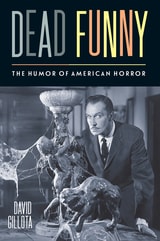
Dead Funny
The Humor of American HorrorDavid Gillota
Rutgers University Press, 2023
Dead Funny locates humor as a key element in the American horror film, one that is not merely used for extraneous “comic relief” moments but often serves to underscore major themes, intensify suspense, and disorient viewers. Each chapter focuses on a different comic style or device, from the use of funny monsters and scary clowns in movies like A Nightmare on Elm Street to the physical humor and slapstick in movies ranging from The Evil Dead to Final Destination. Along the way, humor scholar David Gillota explores how horror films employ parody, satire, and camp to comment on gender, sexuality, and racial politics. Covering everything from the grotesque body in Freaks to the comedy of awkwardness in Midsommar, this book shows how integral humor has been to the development of the American horror film over the past century.
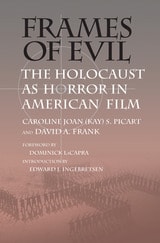
Frames of Evil
The Holocaust as Horror in American FilmCaroline J. S. Picart, and David A. Frank. Foreword by Dominick LaCapra. Introduction by Edward J. Ingebretsen
Southern Illinois University Press, 2006
Challenging the classic horror frame in American film
American filmmakers appropriate the “look” of horror in Holocaust films and often use Nazis and Holocaust imagery to explain evil in the world, say authors Caroline Joan (Kay) S. Picart and David A. Frank. In Frames of Evil: The Holocaust as Horror in American Film, Picart and Frank challenge this classic horror frame—the narrative and visual borders used to demarcate monsters and the monstrous. After examining the way in which directors and producers of the most influential American Holocaust movies default to this Gothic frame, they propose that multiple frames are needed to account for evil and genocide.
Using Schindler’s List, The Silence of the Lambs, and Apt Pupil as case studies, the authors provide substantive and critical analyses of these films that transcend the classic horror interpretation. For example, Schindler’s List, say Picart and Frank, has the appearance of a historical docudrama but actually employs the visual rhetoric and narrative devices of the Hollywood horror film. The authors argue that evil has a face: Nazism, which is configured as quintessentially innate, and supernaturally crafty.
Frames of Evil, which is augmented by thirty-six film and publicity stills, also explores the commercial exploitation of suffering in film and offers constructive ways of critically evaluating this exploitation. The authors suggest that audiences will recognize their participation in much larger narrative formulas that place a premium on monstrosity and elide the role of modernity in depriving millions of their lives and dignity, often framing the suffering of others in a manner that allows for merely “documentary” enjoyment.
Ghouls, Gimmicks, and Gold
Horror Films and the American Movie Business, 1953–1968Kevin Heffernan
Duke University Press, 2004
Heffernan argues that major cultural and economic shifts in the production and reception of horror films began at the time of the 3-d film cycle of 1953–54 and ended with the 1968 adoption of the Motion Picture Association of America’s ratings system and the subsequent development of the adult horror movie—epitomized by Rosemary’s Baby. He describes how this period presented a number of daunting challenges for movie exhibitors: the high costs of technological upgrade, competition with television, declining movie attendance, and a diminishing number of annual releases from the major movie studios. He explains that the production and distribution branches of the movie industry responded to these trends by cultivating a youth audience, co-producing features with the film industries of Europe and Asia, selling films to television, and intensifying representations of sex and violence. Shining through Ghouls, Gimmicks, and Gold is the delight of the true horror movie buff, the fan thrilled to find The Brain that Wouldn’t Die on television at 3 am.
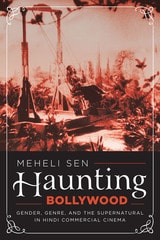
Haunting Bollywood
Gender, Genre, and the Supernatural in Hindi Commercial CinemaBy Meheli Sen
University of Texas Press, 2017
Haunting Bollywood is a pioneering, interdisciplinary inquiry into the supernatural in Hindi cinema that draws from literary criticism, postcolonial studies, queer theory, history, and cultural studies. Hindi commercial cinema has been invested in the supernatural since its earliest days, but only a small segment of these films have been adequately explored in scholarly work; this book addresses this gap by focusing on some of Hindi cinema’s least explored genres.
From Gothic ghost films of the 1950s to snake films of the 1970s and 1980s to today’s globally influenced zombie and vampire films, Meheli Sen delves into what the supernatural is and the varied modalities through which it raises questions of film form, history, modernity, and gender in South Asian public cultures. Arguing that the supernatural is dispersed among multiple genres and constantly in conversation with global cinematic forms, she demonstrates that it is an especially malleable impulse that routinely pushes Hindi film into new formal and stylistic territories. Sen also argues that gender is a particularly accommodating stage on which the supernatural rehearses its most basic compulsions; thus, the interface between gender and genre provides an exceptionally productive lens into Hindi cinema’s negotiation of the modern and the global. Haunting Bollywood reveals that the supernatural’s unruly energies continually resist containment, even as they partake of and sometimes subvert Hindi cinema’s most enduring pleasures, from songs and stars to myth and melodrama.
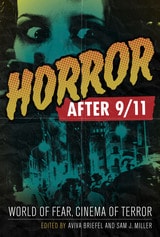
Horror after 9/11
World of Fear, Cinema of TerrorEdited by Aviva Briefel and Sam J. Miller
University of Texas Press, 2011
Horror films have exploded in popularity since the tragic events of September 11, 2001, many of them breaking box-office records and generating broad public discourse. These films have attracted A-list talent and earned award nods, while at the same time becoming darker, more disturbing, and increasingly apocalyptic. Why has horror suddenly become more popular, and what does this say about us? What do specific horror films and trends convey about American society in the wake of events so horrific that many pundits initially predicted the death of the genre? How could American audiences, after tasting real horror, want to consume images of violence on screen?
Horror after 9/11 represents the first major exploration of the horror genre through the lens of 9/11 and the subsequent transformation of American and global society. Films discussed include the Twilight saga; the Saw series; Hostel; Cloverfield; 28 Days Later; remakes of The Texas Chainsaw Massacre, Dawn of the Dead, and The Hills Have Eyes; and many more. The contributors analyze recent trends in the horror genre, including the rise of 'torture porn,' the big-budget remakes of classic horror films, the reinvention of traditional monsters such as vampires and zombies, and a new awareness of visual technologies as sites of horror in themselves. The essays examine the allegorical role that the horror film has held in the last ten years, and the ways that it has been translating and reinterpreting the discourses and images of terror into its own cinematic language.
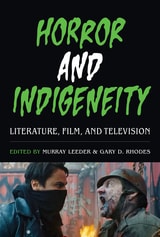
Horror and Indigeneity
Literature, Film, and TelevisionEdited by Murray Leeder and Gary D. Rhodes
University of Texas Press, 2026
A collection of essays about Indigeneity and horror in cinema, literature, and beyond.
How did Indigeneity come to be horrifying? Think of the “Indian burial ground” trope, a staple of 1970s horror cinema, not to mention decades of Western films and fictions that made “savage Indians” the face of fear in popular culture. Can horror do something else in the hands of Indigenous people? Creators such as Eden Robinson and Jeff Barnaby have self-consciously turned to horror to tell new kinds of stories, stories that question who is a monster and what constitutes the monstrous.
Horror and Indigeneity explores representations of Indigenous people in settler horror texts and in the growing corpus of horror by Indigenous writers and filmmakers. Widely spanning time periods and media, the contributors to this edited volume address themes such as cannibalism, eco-horror, historical trauma, and contemporary antiracism as they relate to classical horror cinema and recent works such as The Dead Can’t Dance, Lovecraft Country, and Stephen Graham Jones’s The Only Good Indians. Also featuring interviews with Jones and director T. J. Cuthand, Horror and Indigeneity rethinks the terror of the Other in potent and provocactive terms.
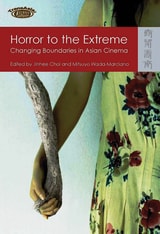
Horror to the Extreme
Changing Boundaries in Asian CinemaEdited by Jinhee Choi and Mitsuyo Wada-Marciano
Hong Kong University Press, 2009
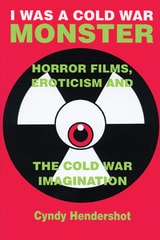
I Was a Cold War Monster
Horror Films, Eroticism, and the Cold War ImaginationCyndy Hendershot
University of Wisconsin Press, 2001

International Horror Film Directors
Global FearEdited by Danny Shipka and Ralph Beliveau
Intellect Books, 2016
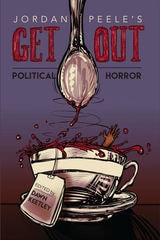
Jordan Peele's Get Out
Political HorrorEdited by Dawn Keetley
The Ohio State University Press, 2020
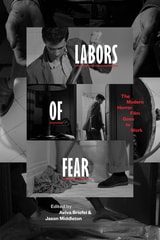
Labors of Fear
The Modern Horror Film Goes to WorkEdited by Aviva Briefel and Jason Middleton
University of Texas Press, 2023
2024 Best Edited Collection, Midwest Popular Culture Association / Midwest American Culture Association (MPCA/ACA)
How work and capitalism inspire horror in modern film.
American ideals position work as a source of pride, opportunity, and meaning. Yet the ravages of labor are constant grist for horror films. Going back decades to the mad scientists of classic cinema, the menial motel job that prepares Norman Bates for his crimes in Psycho, and the unemployed slaughterhouse workers of The Texas Chain Saw Massacre, horror movies have made the case that work is not so much a point of pride as a source of monstrosity.
Editors Aviva Briefel and Jason Middleton assemble the first study of horror’s critique of labor. In the 1970s and 1980s, films such as The Shining and Dawn of the Dead responded to deindustrialization, automation, globalization, and rising numbers of women in the workforce. Labors of Fear explores these critical issues and extends them in discussions of recent works such as The Autopsy of Jane Doe, Midsommar, Survival of the Dead, It Follows, Get Out, and Us. Covering films ranging from the 1970s onward, these essays address novel and newly recognized modes and conditions of labor: reproductive labor, emotion work and emotional labor, social media and self-branding, intellectual labor, service work, precarity, and underemployment. In its singular way, horror continues to make spine-tingling sense of what is most destructive in the wider sociopolitical context of US capitalism.
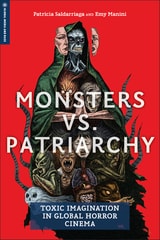
Monsters vs. Patriarchy
Toxic Imagination in Global Horror CinemaPatricia Saldarriaga
Rutgers University Press, 2025
Monsters vs. Patriarchy examines female monstrosity as it appears in horror films from around the world and considers specific political, scientific, and historical contexts to better understand how we construct and reconstruct monstrosity, using an intersectional approach to examine the imposition of gender and racial hierarchies that support national power structures. The authors contend that monstrous female cinematic subjects, including ghosts, witches, cannibals, and posthuman beings, are becoming empowered, using the tools of their monstrification to smash the colonial, white supremacist, and misogynist structures that created them.
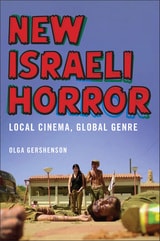
New Israeli Horror
Local Cinema, Global GenreOlga Gershenson
Rutgers University Press, 2024
Before 2010, there were no Israeli horror films. Then distinctly Israeli serial killers, zombies, vampires, and ghosts invaded local screens. The next decade saw a blossoming of the genre by young Israeli filmmakers. New Israeli Horror is the first book to tell their story. Through in-depth analysis, engaging storytelling, and interviews with the filmmakers, Olga Gershenson explores their films from inception to reception. She shows how these films challenge traditional representations of Israel and its people, while also appealing to audiences around the world.
Gershenson introduces an innovative conceptual framework of adaptation, which explains how filmmakers adapt global genre tropes to local reality. It illuminates the ways in which Israeli horror borrows and diverges from its international models. New Israeli Horror offers an exciting and original contribution to our understanding of both Israeli cinema and the horror genre.
A companion website to this book is available at https://websites.umass.edu/newisraelihorror/
Book trailer: https://youtu.be/oVJsD0QCORw (https://youtu.be/oVJsD0QCORw)
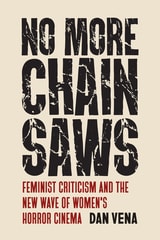
No More Chainsaws
Feminist Criticism and the New Wave of Women's Horror CinemaDan Vena
Rutgers University Press, 2026
“Welcome to the Golden Age of Women-Directed Horror.” Over the last fifteen years, there has been a sustained global influx of women artists working in mainstream and independent horror cinemas earning notable public and industry acclaim. As a result, now, for the first time in horror history, there is also a concentrated corpus of films that explicitly address topics of identity, sexuality, trauma, and monstrosity from women’s perspectives. No More Chainsaws offers an in-depth analysis of some of the earliest and underrated releases within this New Wave of women’s horror cinema: Catherine Hardwicke’s Twilight (2008), Karyn Kusama’s Jennifer’s Body (2009), Jennifer and Sylvia Soska’s American Mary (2012), and Kimberly Peirce’s Carrie (2013). No More Chainsaws articulates the ways in which these contemporary films attempt to liberate horror from an overdetermining gendered lexicon of violence and terror.
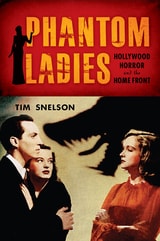
Phantom Ladies
Hollywood Horror and the Home FrontSnelson, Tim
Rutgers University Press, 2014
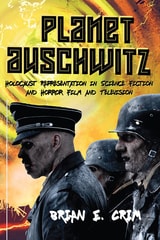
Planet Auschwitz
Holocaust Representation in Science Fiction and Horror Film and TelevisionBrian E. Crim
Rutgers University Press, 2020
Planet Auschwitz website (https://planetauschwitz.com)
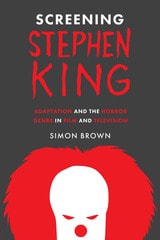
Screening Stephen King
Adaptation and the Horror Genre in Film and TelevisionBy Simon Brown
University of Texas Press, 2018
Since the 1970s, the name Stephen King has been synonymous with horror. His vast number of books has spawned a similar number of feature films and TV shows, and together they offer a rich opportunity to consider how one writer’s work has been adapted over a long period within a single genre and across a variety of media—and what that can tell us about King, about adaptation, and about film and TV horror. Starting from the premise that King has transcended ideas of authorship to become his own literary, cinematic, and televisual brand, Screening Stephen King explores the impact and legacy of over forty years of King film and television adaptations.
Simon Brown first examines the reasons for King’s literary success and then, starting with Brian De Palma’s Carrie, explores how King’s themes and style have been adapted for the big and small screens. He looks at mainstream multiplex horror adaptations from Cujo to Cell, low-budget DVD horror films such as The Mangler and Children of the Corn franchises, non-horror films, including Stand by Me and The Shawshank Redemption, and TV works from Salem’s Lot to Under the Dome. Through this discussion, Brown identifies what a Stephen King film or series is or has been, how these works have influenced film and TV horror, and what these influences reveal about the shifting preoccupations and industrial contexts of the post-1960s horror genre in film and TV.
Screening the Gothic
By Lisa Hopkins
University of Texas Press, 2005
Filmmakers have long been drawn to the Gothic with its eerie settings and promise of horror lurking beneath the surface. Moreover, the Gothic allows filmmakers to hold a mirror up to their own age and reveal society's deepest fears. Franco Zeffirelli's Jane Eyre, Francis Ford Coppola's Bram Stoker's Dracula, and Kenneth Branagh's Hamlet are just a few examples of film adaptations of literary Gothic texts. In this ground-breaking study, Lisa Hopkins explores how the Gothic has been deployed in these and other contemporary films and comes to some surprising conclusions. For instance, in a brilliant chapter on films geared to children, Hopkins finds that horror resides not in the trolls, wizards, and goblins that abound in Harry Potter, but in the heart of the family.
Screening the Gothic offers a radical new way of understanding the relationship between film and the Gothic as it surveys a wide range of films, many of which have received scant critical attention. Its central claim is that, paradoxically, those texts whose affiliations with the Gothic were the clearest became the least Gothic when filmed. Thus, Hopkins surprises readers by revealing Gothic elements in films such as Sense and Sensibility and Mansfield Park, as well as exploring more obviously Gothic films like The Mummy and The Fellowship of the Ring. Written in an accessible and engaging manner, Screening the Gothic will be of interest to film lovers as well as students and scholars.
Skin Shows
Gothic Horror and the Technology of MonstersJack Halberstam
Duke University Press, 1995
Deploying feminist and queer approaches to the monstrous body, Halberstam views the Gothic as a broad-based cultural phenomenon that supports and sustains the economic, social, and sexual hierarchies of the time. She resists familiar psychoanalytic critiques and cautions against any interpretive attempt to reduce the affective power of the monstrous to a single factor. The nineteenth-century monster is shown, for example, as configuring otherness as an amalgam of race, class, gender, and sexuality. Invoking Foucault, Halberstam describes the history of monsters in terms of its shifting relation to the body and its representations. As a result, her readings of familiar texts are radically new. She locates psychoanalysis itself within the gothic tradition and sees sexuality as a beast created in nineteenth century literature. Excessive interpretability, Halberstam argues, whether in film, literature, or in the culture at large, is the actual hallmark of monstrosity.
The Animal Within
Masculinity and the GothicCyndy Hendershot
University of Michigan Press, 1998
The book's keen critical insight, meticulous close readings and cross-cultural comparisons interrogate the historically situated function of masculinity in texts and films that range across the two-hundred year history of the Gothic. Matthew Lewis's The Monk is compared to Philip Kaufman's Invasion of the Body Snatchers to reveal the "hauntedness" of the male body. Hawthorne's short story "The Birthmark" is juxtaposed with J. S. Le Fanu's "Green Tea" to ground the fantastic qualities of the scientific imagination. Conrad's Heart of Darkness converses with Jean Rhys's Wide Sargasso Sea about the nature of imperialism. And Jane Campion's film The Piano is figured as an imaginative foray into new forms of masculinity. Utilizing the insights of Lacanian theory, Hendershot demonstrates how the Gothic realm of ghosts, demons, and hidden passages continues to suggest alternative realities to claustrophobic cultural imaginations.
"Masculinity and the Gothic combines solid literary critical insight and close readings in a detailed and lively survey of various manifestations of the gothic within British and American cultural traditions, and admirably explores the connections between various cultural discourses. It will make a fine complement to the numerous recent publications of issues of femininity in the gothic." --Sharon Willis, University of Rochester
Cyndy Hendershot is Assistant Professor of English, Arkansas State University.
The Biology of Horror
Gothic Literature and FilmJack Morgan
Southern Illinois University Press, 2002
Unearthing the fearful flesh and sinful skins at the heart of gothic horror, Jack Morgan rends the genre’s biological core from its oft-discussed psychological elements and argues for a more transhistorical conception of the gothic, one negatively related to comedy. The Biology of Horror: Gothic Literature and Film dissects popular examples from the gothic literary and cinematic canon, exposing the inverted comic paradigm within each text.
Morgan’s study begins with an extensive treatment of comedy as theoretically conceived by Suzanne Langer, C. L. Barber, and Mikhail Bakhtin. Then, Morgan analyzes the physical and mythological nature of horror in inverted comic terms, identifying a biologically grounded mythos of horror. Motifs such as sinister loci, languishment, masquerade, and subversion of sensual perception are contextualized here as embedded in an organic reality, resonating with biological motives and consequences. Morgan also devotes a chapter to the migration of the gothic tradition into American horror, emphasizing the body as horror’s essential place in American gothic.
The bulk of Morgan’s study is applied to popular gothic literature and films ranging from high gothic classics like Matthew Lewis’s The Monk, Ann Radcliffe’s The Mysteries of Udolpho, Charles Maturin’s Melmoth the Wanderer, and Mary Shelley’s Frankenstein, to later literary works such as Poe’s macabre tales, Melville’s “Benito Cereno,” J.S. Le Fanu’s Uncle Silas, H.P. Lovecraft’s “The Shadow over Innsmouth,” Shirley Jackson’s The Haunting of Hillhouse, Stephen King’s Salem’s Lot, and Clive Barker’s The Damnation Game. Considered films include Nosferatu, Invasion of the Body Snatchers, Friday the 13th, Halloween, Night of the Living Dead, Angel Heart, The Stand, and The Shining.
Morganconcludes his physical examination of the Gothic reality with a consideration born of Julia Kristeva’s theoretical rubric which addresses horror’s existential and cultural significance, its lasting fascination, and its uncanny positive—and often therapeutic—direction in literature and film.
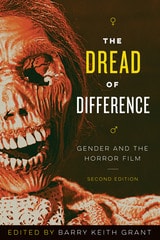
The Dread of Difference
Gender and the Horror FilmEdited by Barry Keith Grant
University of Texas Press, 2015
“The Dread of Difference is a classic. Few film studies texts have been so widely read and so influential. It’s rarely on the shelf at my university library, so continuously does it circulate. Now this new edition expands the already comprehensive coverage of gender in the horror film with new essays on recent developments such as the Hostel series and torture porn. Informative and enlightening, this updated classic is an essential reference for fans and students of horror movies.”—Stephen Prince, editor of The Horror Film and author of Digital Visual Effects in Cinema: The Seduction of Reality
“An impressive array of distinguished scholars . . . gazes deeply into the darkness and then forms a Dionysian chorus reaffirming that sexuality and the monstrous are indeed mated in many horror films.”—Choice
“An extremely useful introduction to recent thinking about gender issues within this genre.”—Film Theory
The Horror Film
Prince, Stephen
Rutgers University Press, 2004
Part One features essays on the silent and classical Hollywood eras. Part Two covers the postWorld War II era and discusses the historical, aesthetic, and psychological characteristics of contemporary horror films. In contrast to horror during the classical Hollywood period, contemporary horror features more graphic and prolonged visualizations of disturbing and horrific imagery, as well as other distinguishing characteristics. Princes introduction provides an overview of the genre, contextualizing the readings that follow.
Stephen Prince is professor of communications at Virginia Tech. He has written many film books, including Classical Film Violence: Designing and Regulating Brutality in Hollywood Cinema, 19301968, and has edited Screening Violence, also in the Depth of Field Series.
The Modern British Horror Film
Gerrard, Steven
Rutgers University Press, 2017
Tracking the revitalization of the British horror film industry over the past two decades, media expert Steven Gerrard also investigates why audiences have flocked to these movies. To answer that question, he focuses on three major trends: “hoodie horror” movies responding to fears about Britain’s urban youth culture; “great outdoors” films where Britain’s forests, caves, and coasts comprise a terrifying psychogeography; and psychological horror movies in which the monster already lurks within us.
Offering in-depth analysis of numerous films, including The Descent, Outpost, and The Woman in Black, this book takes readers on a lively tour of the genre’s highlights, while provocatively exploring how these films reflect viewers’ gravest fears about the state of the nation. Whether you are a horror buff, an Anglophile, or an Anglophobe, The Modern British Horror Film is sure to be a thrilling read.
Torture Porn in the Wake of 9/11
Horror, Exploitation, and the Cinema of SensationAaron Michael Kerner
Rutgers University Press, 2015
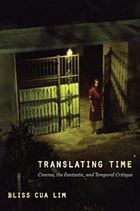
Translating Time
Cinema, the Fantastic, and Temporal CritiqueBliss Cua Lim
Duke University Press, 2009
In Translating Time, Bliss Cua Lim argues that fantastic cinema depicts the coexistence of other modes of being alongside and within the modern present, disclosing multiple “immiscible temporalities” that strain against the modern concept of homogeneous time. In this wide-ranging study—encompassing Asian American video (On Cannibalism), ghost films from the New Cinema movements of Hong Kong and the Philippines (Rouge, Itim, Haplos), Hollywood remakes of Asian horror films (Ju-on, The Grudge, A Tale of Two Sisters) and a Filipino horror film cycle on monstrous viscera suckers (Aswang)—Lim conceptualizes the fantastic as a form of temporal translation. The fantastic translates supernatural agency in secular terms while also exposing an untranslatable remainder, thereby undermining the fantasy of a singular national time and emphasizing shifting temporalities of transnational reception.
Lim interweaves scholarship on visuality with postcolonial historiography. She draws on Henri Bergson’s understanding of cinema as both implicated in homogeneous time and central to its critique, as well as on postcolonial thought linking the ideology of progress to imperialist expansion. At stake in this project are more ethical forms of understanding time that refuse to domesticate difference as anachronism. While supernaturalism is often disparaged as a vestige of primitive or superstitious thought, Lim suggests an alternative interpretation of the fantastic as a mode of resistance to the ascendancy of homogeneous time and a starting-point for more ethical temporal imaginings.
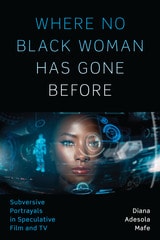
Where No Black Woman Has Gone Before
Subversive Portrayals in Speculative Film and TVBy Diana Adesola Mafe
University of Texas Press, 2018
When Lieutenant Uhura took her place on the bridge of the Starship Enterprise on Star Trek, the actress Nichelle Nichols went where no African American woman had ever gone before. Yet several decades passed before many other black women began playing significant roles in speculative (i.e., science fiction, fantasy, and horror) film and television—a troubling omission, given that these genres offer significant opportunities for reinventing social constructs such as race, gender, and class. Challenging cinema’s history of stereotyping or erasing black women on-screen, Where No Black Woman Has Gone Before showcases twenty-first-century examples that portray them as central figures of action and agency.
Writing for fans as well as scholars, Diana Adesola Mafe looks at representations of black womanhood and girlhood in American and British speculative film and television, including 28 Days Later, AVP: Alien vs. Predator, Children of Men, Beasts of the Southern Wild, Firefly, and Doctor Who: Series 3. Each of these has a subversive black female character in its main cast, and Mafe draws on critical race, postcolonial, and gender theories to explore each film and show, placing the black female characters at the center of the analysis and demonstrating their agency. The first full study of black female characters in speculative film and television, Where No Black Woman Has Gone Before shows why heroines such as Lex in AVP and Zoë in Firefly are inspiring a generation of fans, just as Uhura did.
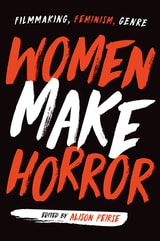
Women Make Horror
Filmmaking, Feminism, GenreAlison Peirse
Rutgers University Press, 2020
Winner of the the 2021 Best Edited Collection Award from BAFTSS
Winner of the 2021 British Fantasy Award in Best Non-Fiction
Finalist for the 2020 Bram Stoker Award® for Superior Achievement in Non-Fiction
Runner-Up for Book of the Year in the 19th Annual Rondo Halton Classic Horror Awards
“But women were never out there making horror films, that’s why they are not written about – you can’t include what doesn’t exist.”
“Women are just not that interested in making horror films.”
This is what you get when you are a woman working in horror, whether as a writer, academic, festival programmer, or filmmaker. These assumptions are based on decades of flawed scholarly, critical, and industrial thinking about the genre. Women Make Horror sets right these misconceptions. Women have always made horror. They have always been an audience for the genre, and today, as this book reveals, women academics, critics, and filmmakers alike remain committed to a film genre that offers almost unlimited opportunities for exploring and deconstructing social and cultural constructions of gender, femininity, sexuality, and the body.
Women Make Horror explores narrative and experimental cinema; short, anthology, and feature filmmaking; and offers case studies of North American, Latin American, European, East Asian, and Australian filmmakers, films, and festivals. With this book we can transform how we think about women filmmakers and genre.