Results by title

17 books match the query 'Human experimentation in medicine'
cover of Behind Closed Doors: IRBs and the Making of Ethical Research

Behind Closed Doors

IRBs and the Making of Ethical Research

Laura Stark

University of Chicago Press, 2011
Although the subject of federally mandated Institutional Review Boards (IRBs) has been extensively debated, we actually do not know much about what takes place when they convene. The story of how IRBs work today is a story about their past as well as their present, and Behind Closed Doors is the first book to meld firsthand observations of IRB meetings with the history of how rules for the treatment of human subjects were formalized in the United States in the decades after World War II.
 
Drawing on extensive archival sources, Laura Stark reconstructs the daily lives of scientists, lawyers, administrators, and research subjects working—and “warring”—on the campus of the National Institutes of Health, where they first wrote the rules for the treatment of human subjects. Stark argues that the model of group deliberation that gradually crystallized during this period reflected contemporary legal and medical conceptions of what it meant to be human, what political rights human subjects deserved, and which stakeholders were best suited to decide. She then explains how the historical contingencies that shaped rules for the treatment of human subjects in the postwar era guide decision making today—within hospitals, universities, health departments, and other institutions in the United States and across the globe. Meticulously researched and gracefully argued, Behind Closed Doors will be essential reading for sociologists and historians of science and medicine, as well as policy makers and IRB administrators.
[more]
cover of Catastrophic Diseases: Who Decides What?

Catastrophic Diseases

Who Decides What?

Jay Katz

Russell Sage Foundation, 1975

People do not choose to suffer from catastrophic illnesses, but considerable human choice is involved in the ways in which the participants in the process treat and conduct research on these diseases. Catastrophic Diseases draws a powerful and humane portrait of the patients who suffer from these illnesses as well as of the physician-investigators who treat them, and describes the major pressures, conflicts, and decisions which confront all of them. By integrating a discussion of "facts" and "values," the authors highlight the forces which affect new developments in medicine—such as kidney and heart transplants—and the controversial issues they generate. Katz and Capron explore these issues through the use of dual conceptual perspectives. Their study first examines and evaluates the authority which should be vested in each of the chief participants in the catastrophic disease process—the physician-investigator, the patient-subject and his relatives, the professionals, and the state. Challenging questions are raised concerning medical education, informed consent, and professional responsibility. The authors next explore how the roles and capacities of the participants vary not only according to the basic issues they face but also according to the point in decision-making at which these issues arise. The process of investigating and treating catastrophic diseases, the authors believe, can thus usefully be divided into three decision-making stages—the formulation of policy, the administration of research and therapy, and the review of the decisions and their consequences. In conclusion, Katz and Capron demonstrate the need for a variety of individuals and groups with diverse values to be involved in decision-making in a manner which will not unnecessarily impede the scientific investigation of these diseases.
[more]
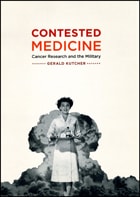
cover of Contested Medicine: Cancer Research and the Military

Contested Medicine

Cancer Research and the Military

Gerald Kutcher

University of Chicago Press, 2009

In the 1960s University of Cincinnati radiologist Eugene Saenger infamously conducted human experiments on patients with advanced cancer to examine how total body radiation could treat the disease. But, under contract with the Department of Defense, Saenger also used those same patients as proxies for soldiers to answer questions about combat effectiveness on a nuclear battlefield.
 

Using the Saenger case as a means to reconsider cold war medical trials, Contested Medicine examines the inherent tensions at the heart of clinical studies of the time. Emphasizing the deeply intertwined and mutually supportive relationship between cancer therapy with radiation and military medicine, Gerald Kutcher explores post–World War II cancer trials, the efforts of the government to manage clinical ethics, and the important role of military investigations in the development of an effective treatment for childhood leukemia. Whereas most histories of human experimentation judge research such as Saenger’s against idealized practices, Contested Medicine eschews such an approach and considers why Saenger’s peers and later critics had so much difficulty reaching an unambiguous ethical assessment. Kutcher’s engaging investigation offers an approach to clinical ethics and research imperatives that lays bare many of the conflicts and tensions of the postwar period.

[more]
cover of Ethics by Committee: A History of Reasoning Together about Medicine, Science, Society, and the State

Ethics by Committee

A History of Reasoning Together about Medicine, Science, Society, and the State

Noortje Jacobs

University of Chicago Press, 2022

How liberal democracies in the late twentieth century have sought to resolve public concerns over charged issues in medicine and science.

Ethics boards have become obligatory passage points in today’s medical science, and we forget how novel they really are. The use of humans in experiments is an age-old practice that records show goes back to at least the third century BC, and it has been popular as a practice since the early modern period. Yet in most countries around the world, hardly any formal checks and balances existed to govern the communal oversight of experiments involving human subjects until at least the 1960s. Ethics by Committee traces the rise of ethics boards for human experimentation in the second half of the twentieth century. 

Using the Netherlands as a case study, historian Noortje Jacobs shows how the authority of physicians to make decisions about clinical research in this period gave way in most developed nations to formal mechanisms of communal decision-making that served to regiment the behavior of individual researchers. This historically unprecedented change in scientific governance came out of the growing international wariness of medical research in the decades after World War II and was meant to solidify a new way of reasoning together in liberal democracies about medicine and science. But what reasoning together meant, and who was invited to participate, changed drastically over time. In detailing this history, Jacobs shows that research ethics committees were originally intended not only to make human experimentation more ethical but also to raise its epistemic quality and intensify the use of new clinical research methods. By examining complex negotiations over the appropriate governance of human subjects research, Ethics by Committee is an important contribution to our understanding of the randomized controlled trial and the history of research ethics and bioethics more generally.
[more]
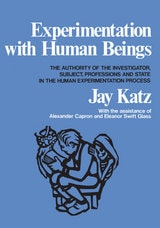
cover of Experimentation with Human Beings: The Authority of the Investigator, Subject, Professions, and State in the Human Experimentation Process

Experimentation with Human Beings

The Authority of the Investigator, Subject, Professions, and State in the Human Experimentation Process

Jay Katz

Russell Sage Foundation, 1972

In recent years, increasing concern has been voiced about the nature and extent of human experimentation and its impact on the investigator, subject, science, and society. This casebook represents the first attempt to provide comprehensive materials for studying the human experimentation process. Through case studies from medicine, biology, psychology, sociology, and law—as well as evaluative materials from many other disciplines—Dr. Katz examines the problems raised by human experimentation from the vantage points of each of its major participants—investigator, subject, professions, and state. He analyzes what kinds of authority should be delegated to these participants in the formulation, administration, and review of the human experimentation process. Alternative proposals, from allowing investigators a completely free hand to imposing centralized governmental control, are examined from both theoretical and practical perspectives. The conceptual framework of Experimentation with Human Beings is designed to facilitate not only the analysis of such concepts as "harm," "benefit," and "informed consent," but also the exploration of the problems raised by man's quest for knowledge and mastery, his willingness to risk human life, and his readiness to delegate authority to professionals and rely on their judgment.
[more]
cover of Inclusion: The Politics of Difference in Medical Research

Inclusion

The Politics of Difference in Medical Research

Steven Epstein

University of Chicago Press, 2007

With Inclusion, Steven Epstein argues that strategies to achieve diversity in medical research mask deeper problems, ones that might require a different approach and different solutions.

Formal concern with this issue, Epstein shows, is a fairly recent phenomenon. Until the mid-1980s, scientists often studied groups of white, middle-aged men—and assumed that conclusions drawn from studying them would apply to the rest of the population. But struggles involving advocacy groups, experts, and Congress led to reforms that forced researchers to diversify the population from which they drew for clinical research. While the prominence of these inclusive practices has offered hope to traditionally underserved groups, Epstein argues that it has drawn attention away from the tremendous inequalities in health that are rooted not in biology but in society.

“Epstein’s use of theory to demonstrate how public policies in the health profession are shaped makes this book relevant for many academic disciplines. . . . Highly recommended.”—Choice

“A masterful comprehensive overview of a wide terrain.”—Troy Duster, Biosocieties
[more]
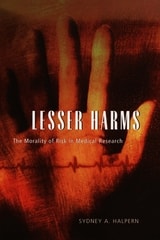
cover of Lesser Harms: The Morality of Risk in Medical Research

Lesser Harms

The Morality of Risk in Medical Research

Sydney A. Halpern

University of Chicago Press, 2004

Research physicians face intractable dilemmas when they consider introducing new medical procedures. Innovations carry the promise of preventing or curing life-threatening diseases, but they can also lead to injury or even death. How have clinical scientists made high-stakes decisions about undertaking human tests of new medical treatments? In Lesser Harms, Sydney Halpern explores this issue as she examines vaccine trials in America during the early and mid-twentieth century.

Today's scientists follow federal guidelines for research on human subjects developed during the 1960s and 1970s. But long before these government regulations, medical investigators observed informal rules when conducting human research. They insisted that the dangers of natural disease should outweigh the risks of a medical intervention, and they struggled to accurately assess the relative hazards. Halpern explores this logic of risk in immunization controversies extending as far back as the eighteenth century. Then, focusing on the period between 1930 and 1960, she shows how research physicians and their sponsors debated the moral quandaries involved in moving vaccine use from the laboratory to the clinic.

This probing work vividly describes the efforts of clinical investigators to balance the benefits and dangers of untested vaccines, to respond to popular sentiment about medical hazards, and to strategically present risk laden research to sponsors and the public.

“Concise and extremely well-written. . . . A fascinating synthesis of sociology, history, and institutional theory.”—Samuel C. Blackman, Journal of the American Medical Association

[more]
cover of Materia Medica: Black Women, White Doctors, and Spectacular Gynecology

Materia Medica

Black Women, White Doctors, and Spectacular Gynecology

Nicole N. Ivy

Duke University Press, 2026
In 1840, a young doctor named James Marion Sims established the surgery practice in Montgomery, Alabama at which he and his mentee, Nathan Bozeman, developed the field of gynecology through experimentation on black enslaved women. In Materia Medica, Nicole N. Ivy investigates how the bodies of the enslaved provided a physical terrain upon and through which white male fantasies of mastery, practice, and perfection could be played out. Through an interdisciplinary methodology that brings feminist historiography, critical race theory, visual culture studies, and literary studies to bear on the history of transatlantic slavery and medicine, Ivy places Sims’s and Bozeman’s clinic in the context of the flourishing antebellum slave market and demonstrates how black women were made to move as both currency and commodity through the circuit of medical knowledge production. Spanning nineteenth-century medical manuals to twenty-first-century creative works, Materia Medica ultimately considers what the memorials to Sims and the enslaved women he examined tells us about the challenges of representing difficult histories and reflects on artistic possibilities for historical reckoning.
[more]
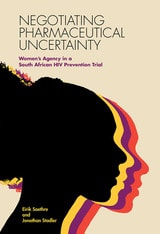
cover of Negotiating Pharmaceutical Uncertainty: Women's Agency in a South African HIV Prevention Trial

Negotiating Pharmaceutical Uncertainty

Women's Agency in a South African HIV Prevention Trial

Eirik Saethre

Vanderbilt University Press, 2017

Telling the story of a clinical trial testing an innovative gel designed to prevent women from contracting HIV, Negotiating Pharmaceutical Uncertainty provides new insight into the complex and contradictory relationship between medical researchers and their subjects. Although clinical trials attempt to control and monitor participants' bodies, Saethre and Stadler argue that the inherent uncertainty of medical testing can create unanticipated opportunities for women to exercise control over their health, sexuality, and social relationships. Combining a critical analysis of the social production of biomedical knowledge and technologies with a detailed ethnography of the lives of female South African trial participants, this book brings to light issues of economic exclusion, racial disparity, and spiritual insecurity in Johannesburg's townships. Built on a series of tales ranging from strategy sessions at the National Institutes of Health to witchcraft accusations against the trial, Negotiating Pharmaceutical Uncertainty illuminates the everyday social lives of clinical trials.

As embedded anthropologists, Saethre and Stadler provide a unique and nuanced perspective of the reality of a clinical trial that is often hidden from view.
[more]
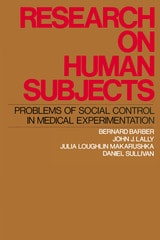
cover of Research on Human Subjects: Problems of Social Control in Medical Experimentation

Research on Human Subjects

Problems of Social Control in Medical Experimentation

Bernard Barber

Russell Sage Foundation, 1973

How are human subjects treated in biomedical research? What are the expressed standards and self-reported behavior of biomedical researchers in regard to what has sometimes been called their "animal of necessity"? What are some of the determinants of the "strict" and "permissive" patterns which describe the standards and behavior of biomedical researchers? These are the important questions asked and answered in Research on Human Subjects. It is a book based on four years of intensive research. Two studies were completed, one on a nationally representative sample of biomedical research institutions, a second on a sample of 350 researchers who actually use human subjects. In their chapters on "the dilemma of science and therapy," the authors look at the tension between the values of humane therapy and discovery in science. They show that the significant minority of researchers who are "permissive" on the issues of informed consent and a favorable risk-benefit ratio are more likely to be those who are "relative failures" in pursuing the science value. Research on Human Subjects also documents the inadequate training that biomedical researchers get in the ethics of research on human subjects not only in medical schools but in their postgraduate training as well. The medical schools pay relatively more attention to the scientific training of their students than they do to the ethical training that should be its essential complement. The local peer review groups that screen research on human subjects in the institutions where it is carried on are another central focus of attention of the research and analysis reported in this book. The peer review groups do a fairly good job but, the authors show, there are various conditions of their relative efficacy which are not met by review groups in many important research institutions. The medical school review groups, for example, have not been outstanding performers with respect to the several conditions of relative efficacy. In the concluding chapter, the authors discuss the general problem of the social responsibilities of powerful professions and make very specific suggestions for policy change and reform for the biomedical research profession and its use of human subjects.
[more]
cover of The Great Starvation Experiment: Ancel Keys and the Men Who Starved for Science

The Great Starvation Experiment

Ancel Keys and the Men Who Starved for Science

Todd Tucker

University of Minnesota Press, 2007

“The Great Starvation Experiment is wide-ranging, weaving progress in the war into the day-to-day suffering of the hungry volunteers.” —Saint Paul Pioneer Press

“Fascinating . . .” —Minneapolis Star Tribune

Near the end of World War II, thirty-six conscientious objectors volunteered to be systematically starved for renowned scientist Ancel Keys’s study at the University of Minnesota in the basement of Memorial Stadium. Aimed to benefit relief efforts in war-ravaged Europe and Asia, the study sought the best way to rehabilitate starving citizens. Tucker captures a lost moment in American history—a time when stanch idealism and a deep willingness to sacrifice trumped even basic human needs.

“Tucker provides a fascinating and moving history of the experiment, centering on the lives and experiences of the volunteers and the formidable obstacles they overcame. Tucker tells the story with verve and economy. . . . Keys, his experiment and his 36 starving men form a compelling combination.” —Publishers Weekly

Todd Tucker is the author of several books, including Notre Dame vs. the Klan: How the Fighting Irish Defeated the Ku Klux Klan (2004). He served on the legendary Navy submarine USS Alabama before moving to Valparaiso, Indiana.

[more]
cover of The Normals: A People’s History of Modern America in Five Human Experiments

The Normals

A People’s History of Modern America in Five Human Experiments

Laura Stark

University of Chicago Press, 2027

How healthy control subjects in clinical research transformed the practice and labor of science, as told by the Normals themselves.

In the 1950s, the National Institutes of Health were in search of a large, replenishing stream of healthy people to participate in clinical studies. To establish legal sources of test subjects, the NIH signed unprecedented contracts with American colleges, church organizations, and other government agencies, and in the process gave rise to a new type of test subject: the “normal patient.” Thousands of them eventually moved into the NIH Clinical Center to live in hospital rooms, eat food prepared in a metabolic kitchen, and follow—or flout—the rules.

The Normals is a groundbreaking account of the NIH Normal Volunteer Patient Program, which has lasted into the twenty-first century. This program harnessed outside organizations in all areas of postwar American life—colleges and universities, labor unions, civic groups, federal prisons, and churches—to recruit research subjects for human experiments. Drawing on thousands of pages of unearthed government documents, oral histories, and personal materials shared by the patients themselves (collected in a new archive), Laura Stark follows five experiments and the people involved, delving into their biographies, their time at the Clinical Center, and the thorny problem of determining who counts as “normal.” The “Normals” were not passive objects of study, Stark shows, but active research participants who collaborated with scientists, maintained the laboratories where they served, informed official ethics policies, and bargained to meet their needs.

By taking seriously the pillow fights and the first kisses, the bible clubs and the movie nights that animated the Clinical Center as much as the medical experiments, The Normals brings to life a surprising true story of the origins of our present-day system of human experiment, one that at once explores what it means to work, to serve, to volunteer.

[more]
cover of The Origins of Bioethics: Remembering When Medicine Went Wrong

The Origins of Bioethics

Remembering When Medicine Went Wrong

John A. Lynch

Michigan State University Press, 2019

The Origins of Bioethics argues that what we remember from the history of medicine and how we remember it are consequential for the identities of doctors, researchers, and patients in the present day. Remembering when medicine went wrong calls people to account for the injustices inflicted on vulnerable communities across the twentieth century in the name of medicine, but the very groups empowered to create memorials to these events often have a vested interest in minimizing their culpability for them. Sometimes these groups bury this past and forget events when medical research harmed those it was supposed to help. The call to bioethical memory then conflicts with a desire for “minimal remembrance” on the part of institutions and governments. The Origins of Bioethics charts this tension between bioethical memory and minimal remembrance across three cases—the Tuskegee Syphilis Study, the Willowbrook Hepatitis Study, and the Cincinnati Whole Body Radiation Study—that highlight the shift from robust bioethical memory to minimal remembrance to forgetting.
[more]
cover of The Pet Thief

The Pet Thief

Kassten Alonso

University of Alabama Press, 2013

The Pet Thief is a dystopian fable of science, rebellion, humankind’s inhumanity, and the struggle for identity and survival in a post-human world.
 
When scientists, the government, and venture capitalists conspire to hybridize humans with animals—cats, specifically—for organ harvesting, drug testing, and military applications, the experiment is an irredeemable failure, producing human-like beings with uncanny abilities who are nonetheless fundamentally defective.
 
Oboy and his mentor/tormentor Freda are two wayward hybrids, “cat people,” who have escaped with others to the depths of a rundown European city being leveled for reconstruction. They are members of a street gang led by an ominous leader called Swan.
 
Oboy is unable to think or speak except in mimicry, but he is a physical savant, which serves Freda’s mission. Enraged at what has been done to her, Freda wants to “rescue” every pet she can. When Oboy returns with a human baby after his first solo outing, their world and the truths of their existence come unraveled.
[more]
cover of The Professional Guinea Pig: Big Pharma and the Risky World of Human Subjects

The Professional Guinea Pig

Big Pharma and the Risky World of Human Subjects

Roberto Abadie

Duke University Press, 2010

The Professional Guinea Pig documents the emergence of the professional research subject in Phase I clinical trials testing the safety of drugs in development. Until the mid-1970s Phase I trials were conducted on prisoners. After that practice was outlawed, the pharmaceutical industry needed a replacement population and began to aggressively recruit healthy, paid subjects, some of whom came to depend on the income, earning their living by continuously taking part in these trials. Drawing on ethnographic research among self-identified “professional guinea pigs” in Philadelphia, Roberto Abadie examines their experiences and views on the conduct of the trials and the risks they assume by participating. Some of the research subjects he met had taken part in more than eighty Phase I trials. While the professional guinea pigs tended to believe that most clinical trials pose only a moderate health risk, Abadie contends that the hazards presented by continuous participation, such as exposure to potentially dangerous drug interactions, are discounted or ignored by research subjects in need of money. The risks to professional guinea pigs are also disregarded by the pharmaceutical industry, which has become dependent on the routine participation of experienced research subjects. Arguing that financial incentives compromise the ethical imperative for informed consent to be freely given by clinical-trials subjects, Abadie confirms the need to reform policies regulating the participation of paid subjects in Phase I clinical trials.
[more]
cover of The Treatment: The Story of Those Who Died in the Cincinnati Radiation Tests

The Treatment

The Story of Those Who Died in the Cincinnati Radiation Tests

Martha Stephens

Duke University Press, 2002

The Treatment is the story of one tragedy of medical research that stretched over eleven years and affected the lives of hundreds of people in an Ohio city. Thirty years ago the author, then an assistant professor of English, acquired a large set of little-known medical papers at her university. These documents told a grotesque story. Cancer patients coming to the public hospital on her campus were being swept into secret experiments for the U.S. military; they were being irradiated over their whole bodies as if they were soldiers in nuclear war. Of the ninety women and men exposed to this treatment, twenty-one died within a month of their radiations.
Martha Stephens’s report on these deaths led to the halting of the tests, but local papers did not print her charges, and for many years people in Cincinnati had no way of knowing that lethal experiments had taken place there. In 1994 other military tests were brought to light, and a yellowed copy of Stephens’s original report was delivered to a television newsroom. In Ohio, major publicity ensued—at long last—and reached around the world. Stephens uncovered the names of the victims, and a legal action was filed against thirteen researchers and their institutions. A federal judge compared the deeds of the doctors to the medical crimes of the Nazis during World War II and refused to dismiss the researchers from the suit. After many bitter disputes in court, they agreed to settle the case with the families of those they had afflicted. In 1999 a memorial plaque was raised in a yard of the hospital.
Who were these doctors and why had they done as they did? Who were the people whose lives they took? Who was the reporter who could not forget the story, the young attorney who first developed the case, the judge who issued the historic ruling against the doctors? This is Stephens’s moving account of all that transpired in these lives and her own during this epic battle between medicine and human rights.
[more]
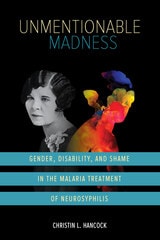
cover of Unmentionable Madness: Gender, Disability, and Shame in the Malaria Treatment of Neurosyphilis

Unmentionable Madness

Gender, Disability, and Shame in the Malaria Treatment of Neurosyphilis

Christin L. Hancock

University of Illinois Press, 2025

In 1930, neurosyphilis struck an unsuspecting Mabel Smith. Doctors at the Central State Hospital for the Insane in Indianapolis turned to malaria therapy--a radical treatment that relied on the belief that infection with malaria might save Smith’s life by attacking the bacterium that causes syphilis.

Christin L. Hancock looks through the lens of feminist disability to examine the popular but ethically suspect treatment and its consequences. As Hancock shows, the treatment’s purported success rate relied on the disabled minds and bodies of people incarcerated in mental hospitals. The backgrounds and identities of these patients reflected and perpetuated attitudes around poverty, gender, race, and disability while betraying authorities’ desire to protect the public from women and men perceived as abnormal, sexually tainted, and unworthy of community life.

Paying special attention to the patients’ voices and experiences, Unmentionable Madness offers a disability history that confronts the ethics of experimentation.

[more]