Results by title
43 books match the query 'Identity politics'

A Leftist Ontology
Beyond Relativism and Identity PoliticsCarsten Strathausen
University of Minnesota Press, 2009
A new ontology for a globalized world
Rich with analyses of concepts from deconstruction, systems theory, and post-Marxism, with critiques of fundamentalist thought and the war on terror, this volume argues for developing a philosophy of being in order to overcome the quandary of postmodern relativism. Undergirding the contributions are the premises that ontology is a vital concept for philosophy today, that an acceptable leftist ontology must avoid the kind of identity politics that has dominated recent cultural studies, and that a new ontology must be situated within global capitalism.
A Leftist Ontology offers a timely intervention in political philosophy, featuring some of the leading voices of our time.Contributors: Bruno Bosteels, Cornell U; Christopher Breu, Illinois State U; Nicholas Brown, U of Illinois at Chicago; Sorin Radu Cucu, Manhattan College; George Edmondson, Dartmouth College; Eva Geulen, U of Bonn; Philip Goldstein, U of Delaware; Klaus Mladek, Dartmouth College; Alberto Moreiras, U of Aberdeen; Jeffrey T. Nealon, Pennsylvania State U; William Rasch, Indiana U; Ben Robinson, Indiana U; Imre Szeman, McMaster U; Roland Vegso, U of Tennessee, Knoxville.
Adventures in Shondaland
Identity Politics and the Power of RepresentationGriffin, Rachel Alicia
Rutgers University Press, 2018
Shonda Rhimes is one of the most powerful players in contemporary American network television. Beginning with her break-out hit series Grey’s Anatomy, she has successfully debuted Private Practice, Scandal, How to Get Away with Murder, The Catch, For The People, and Station 19. Rhimes’s work is attentive to identity politics, “post-” identity politics, power, and representation, addressing innumerable societal issues. Rhimes intentionally addresses these issues with diverse characters and story lines that center, for example, on interracial friendships and relationships, LGBTIQ relationships and parenting, the impact of disability on familial and work dynamics, and complex representations of womanhood. This volume serves as a means to theorize Rhimes’s contributions and influence by inspiring provocative conversations about television as a deeply politicized institution and exploring how Rhimes fits into the implications of twenty-first century television.

Alterity Politics
Ethics and Performative SubjectivityJeffrey T. Nealon
Duke University Press, 1998
While discussing the work of others who have refused to thematize difference in terms of the possibility or impossibility of sameness—Levinas, Butler, Derrida, Foucault, Deleuze, Guattari, Zizek, Jameson, Heidegger, Bakhtin—Nealon argues that ethics is constituted as inexorable affirmative response to different identities, not through an inability to understand or totalize the other. Alterity Politics combines this theoretical itinerary with crucial discussions of specific and diverse sites of literary and cultural production—the work of William S. Burroughs, Amiri Baraka, Andy Warhol, Ishmael Reed, Rush Limbaugh, and Vincent Van Gogh—along with analyses of the social formation of subjects as found in identity politics, and in multicultural and whiteness studies. In the process, Nealon takes on a wide variety of issues including white male anger, the ethical questions raised by drug addiction, the nature of literary meaning, and the concept of “becoming-black.”
In seeking to build an ethical structure around poststructuralist discourse and to revitalize the applied use of theoretical concepts to notions of performative identity, Alterity Politics marks a decisive intervention in literary theory, cultural studies, twentieth-century philosophy, and performance studies.

American Jewish Identity Politics
Deborah Dash Moore, editor
University of Michigan Press, 2009
"Displays the full range of informed, thoughtful opinion on the place of Jews in the American politics of identity."
---David A. Hollinger, Preston Hotchkis Professor of American History, University of California, Berkeley
"A fascinating anthology whose essays crystallize the most salient features of American Jewish life in the second half of the twentieth century."
---Beth S. Wenger, Katz Family Associate Professor of American Jewish History and Director of the Jewish Studies Program, University of Pennsylvania
"A wonderful collection of important essays, indispensable for understanding the searing conflicts over faith, familial, and political commitments marking American Jewry's journey through the paradoxes of the post-Holocaust era."
---Michael E. Staub, Professor of English, Baruch College, CUNY, and author of Torn at the Roots: The Crisis of Jewish Liberalism in Postwar America
"This provocative anthology offers fascinating essays on Jewish culture, politics, religion, feminism, and much more. It is a must-read for all those interested in the intersection of Jewish life and identity politics in the modern period."
---Joyce Antler, Samuel Lane Professor of American Jewish History and Culture, Brandeis University
"This collection of essays invites the reader to engage with some of the best writing and thinking about American Jewish life by some of the finest scholars in the field. Deborah Moore's introduction offers an important framework to understand not only the essays, but the academic and political contexts in which they are rooted."
---Riv-Ellen Prell, Professor and Chair, American Studies, University of Minnesota, and editor of Women Remaking American Judaism

Apocalypse Man
The Death Drive and the Rhetoric of White Masculine VictimhoodCasey Ryan Kelly
The Ohio State University Press, 2020
Exemplified by President Donald J. Trump’s slogan “Make American Great Again,” white masculinity has become increasingly organized around melancholic attachments to an imagined past when white men were still atop the social hierarchy. How and why are white men increasingly identifying as victims of social, economic, and political change? Casey Ryan Kelly’s Apocalypse Man seeks to answer this question by examining textual and performative examples of white male rhetoric—as found among online misogynist and incel communities, survivalists and “doomsday preppers,” gender-motivated mass shooters, gun activists, and political demagogues. Using sources ranging from reality television and Reddit manifestos to gun culture and political rallies, Kelly ultimately argues that death, victimhood, and fatalism have come to underwrite the constitution of contemporary white masculinity.

Beyond Lift Every Voice and Sing
The Culture of Uplift, Identity, and Politics in Black Musical TheaterPaula Marie Seniors
The Ohio State University Press, 2009

Body Language
Sisters in Shape, Black Women's Fitness, and Feminist Identity PoliticsKimberly J. Lau
Temple University Press, 2011
In her evocative ethnographic study, Body Language, Kimberly Lau traces the multiple ways in which the success of an innovative fitness program illuminates what identity means to its Black female clientele and how their group interaction provides a new perspective on feminist theories of identity politics—especially regarding the significance of identity to political activism and social change.
Sisters in Shape, Inc., Fitness Consultants (SIS), a Philadelphia company, promotes balance in physical, mental, and spiritual health. Its program goes beyond workouts, as it educates and motivates women to make health and fitness a priority. Discussing the obstacles at home and the importance of the group's solidarity to their ability to stay focused on their goals, the women speak to the ways in which their commitment to reshaping their bodies is a commitment to an alternative future.
Body Language shows how the group's explorations of black women's identity open new possibilities for identity-based claims to recognition, justice, and social change.
Born This Way
Science, Citizenship, and Inequality in the American LGBTQ+ MovementJoanna Wuest
University of Chicago Press, 2023
The story of how a biologically driven understanding of gender and sexuality became central to US LGBTQ+ political and legal advocacy.
Across protests and courtrooms, LGBTQ+ advocates argue that sexual and gender identities are innate. Oppositely, conservatives incite panic over “groomers” and a contagious “gender ideology” that corrupts susceptible children. Yet, as this debate rages on, the history of what first compelled the hunt for homosexuality’s biological origin story may hold answers for the queer rights movement’s future.
Born This Way tells the story of how a biologically based understanding of gender and sexuality became central to LGBTQ+ advocacy. Starting in the 1950s, activists sought out mental health experts to combat the pathologizing of homosexuality. As Joanna Wuest shows, these relationships were forged in subsequent decades alongside two broader, concurrent developments: the rise of an interest-group model of rights advocacy and an explosion of biogenetic and bio-based psychological research. The result is essential reading to fully understand LGBTQ+ activism today and how clashes over science remain crucial to equal rights struggles.

Cornerstones of Peace
Jewish Identity Politics and Democratic TheoryBrettschneider, Marla
Rutgers University Press, 1996
Throughout the seventies, the idea of being “pro-Israel” was traditionally equated with support for the Israeli government and was central to an understanding of American Jewish identity. It was so central, argues Marla Brettschneider, that even committed activists who took issue with such a monolithic stance were silenced by mainstream Jewish organizations. But during the 1980s, a change took place. An explosion of new Jewish groups intent on challenging the dominant definition of the pro-Israel attitude transformed an increasingly closed Jewish community into one more democratic and inclusive.
In Cornerstones of Peace, Marla Brettschneider skillfully combines a lucid review of contemporary Liberal political theory and its understanding of the role of groups in the political process, a sophisticated analysis of Hobbesian philosophy, and a rich history of “alternative” Jewish activist groups like Breira and Americans for Peace Now (APN) to ask: What can we learn about identity and democratic theory from the changes that have taken place in the Jewish community? Through an insightful exploration of how small, activist groups have reclaimed pro-Israel identity politics as a collective multilayered process, Brettschneider adds her voice to the growing number of political theorists envisioning a pro-diversity alternative to Liberal political thought. She theorizes about a new democratic theory, showing theorists and activists how to envision and enact more vibrant, inclusive democratic politics.
Cultural Pluralism, Identity Politics, and the Law
Austin Sarat and Thomas R. Kearns, Editors
University of Michigan Press, 2001
Decency and Difference
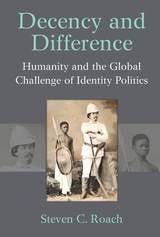
Humanity and the Global Challenge of Identity PoliticsSteven C. Roach
University of Michigan Press, 2019
Decency remains one of the most prevalent yet least understood terms in today’s political discourse. In evoking respect, kindness, courage, integrity, reason, and tolerance, it has long expressed an unquestioned duty and belief in promoting and protecting the dignity of all persons. Today this unquestioned belief is in crisis. Tribalism and identity politics have both hindered and threatened its moral stability and efficacy. Still, many continue to undertheorize its political character by isolating it from the effects of identity politics. Decency and Difference argues that decency is a primary source of the political tension that has long shaped the struggles for power, identity, and justice in the global arena. It distinguishes among basic, conservative, and liberal strands of decency to critically examine the many conflicting and competing applications of decency in global politics. Together these different strands reflect a long and uneven evolution from the British and American empires to a global network of justice. This powerful book exposes the gaps of decency and the disparate ways it is practiced, thus addressing the global challenge of configuring a diverse political ethic of decency.

Discrimination in Modern Japan
Case Studies in Identity PoliticsJ. Mark Ramseyer
University of Chicago Press, 2023
In this book, J. Mark Ramseyer, a noted authority on Japan looks at discrimination against groups in Japanese society, focusing on the Korean, Okinawan, and Burakumin groups. Ramseyer asks why they experience discrimination in Japan, an unusually homogeneous society. Is it because of some prejudice on the part of the majority that prevents their integration into mainstream Japanese society? Or is it because some of the dynamics within the group create incentives for the group to stay together and to be on the fringes of society?
Ramseyer argues that the real explanation is the latter, and each of these three groups has been victimized by its own leadership. Precisely because the groups are dysfunctional, members of the group cannot control members who would appoint themselves group leaders. The result has been the capture of leadership positions by people who manipulate the group to their own private advantage and to the detriment of the group as a whole.
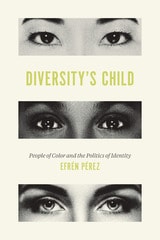
Diversity's Child
People of Color and the Politics of IdentityEfrén O. Pérez
University of Chicago Press, 2021
For decades now, pundits and political scientists have been pointing to a major demographic change that’s underway in the United States. Demographers project that whites will become a minority of the US population and that minority groups will jointly comprise a majority before 2050.
Diversity’s Child appraises the political ramifications of this change. Efrén O. Pérez deftly argues that America’s changing demographics are forging a new identity for many as people of color—that unifies the political outlook of assorted minority groups. Drawing on opinion surveys of multiple minority groups, social science experiments with minority adults, content analyses of newspapers and congressional archives, and in-depth interviews with minority individuals, Pérez makes two key points. First, a person of color's identity does exist, and we can reliably measure it, as well as distinguish it from other identities that minorities hold. Second, across a wide swath of circumstances, identifying as a person of color profoundly shapes how minorities view themselves and their political system. Diversity’s Child is a vital and engaging look at America’s identity politics as well as at how people of color think about racial disparities and how politics can best solve them.

Divide & Conquer
Race, Gangs, Identity, and ConflictRobert D. Weide
Temple University Press, 2022
Hyper-criminalization and the normalization of violence was an integral aspect of Robert Weide’s formative years growing up in Los Angeles in the 1980s and 1990s, where Sureño, Crip, and Blood gangs maintained a precarious coexistence, often punctuated by racialized gang violence. His insider status informs Divide & Conquer, which considers how the capitalist economy, the race concept, and nationalist ideology have made gang members the instruments of their own oppression, resulting in racialized sectarian conflicts spanning generations between African American and Latino gangs in Los Angeles and California’s prisons.
While gang members may fail to appreciate the deeper historical and conceptual foundations of these conflicts, they rarely credit naked bigotry as the root cause. As Weide asserts, they divide themselves according to inherited groupist identities, thereby turning them against one another in protracted blood feuds across gang lines and racial lines.
Weide explores both the historical foundations and the conceptual and cultural boundaries and biases that divide gang members across racial lines, detailing case studies of specific racialized gang conflicts between Sureño, Crip, and Blood gangs. Weide employs mixed-methods research, having spent nearly a decade on ethnographic fieldwork and conducted over one hundred formal interviews with gang members and gang enforcement officers concerning taboo subjects like prison and gang politics, and transracial gang membership.
Divide & Conquer concludes with encouraging developments in recent years, as gang members themselves, on their own volition, have intervened to build solidarity and bring racialized gang conflicts between them to an end.
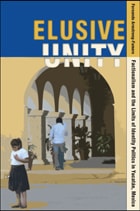
Elusive Unity
Factionalism and the Limits of Identity Politics in Yucatán, MexicoFernando Armstrong-Fumero
University Press of Colorado, 2013
The rural inhabitants of this region have had some of their most important dealings with their nation’s government as self-identified “peasants” and “Maya.” Using ethnography, oral history, and archival research, Armstrong-Fumero shows how the same body of narrative tropes has defined the local experience of twentieth-century agrarianism and twenty-first-century multiculturalism.
Through these recycled narratives, contemporary multicultural politics have also inherited some ambiguities that were built into its agrarian predecessor. Specifically, local experiences of peasant and indigenous politics are shaped by tensions between the vernacular language of identity and the intense factionalism that often defines the social organization of rural communities. This significant contribution will be of interest to historians, anthropologists, and political scientists studying Latin America and the Maya.
Facing the Center
Toward an Identity Politics of One-to-One MentoringHarry C. Denny
Utah State University Press, 2010
The face of the writing center, be it mainstream or marginal, majority or miority, orthodox or subversive, always has implications for teaching and learning. Facing the Center will extend current research in writing center theory to bring it in touch with theories now common in cultural studies curricula. Denny takes up issues of power, agency, language, and meaning, and pushes his readers to ask how they themselves, or the centers in which they work, might be perpetuating cultures that undermine inclusive, progressive education.
Fractured
Race, Class, Gender and the Hatred of Identity PoliticsMichael
Pluto Press, 2022
Identity politics has smeared political discourse for over a decade. The right uses it to lament the loss of free speech, while many on the left bemoan that it will be the end of class politics. It has been used to dismiss movements such as Black Lives Matter and brought seemingly progressive people into the path of fascism. It has armed the march of the transphobes.
In Fractured, the authors move away from the identity politics debate. Instead of crudely categorizing race, gender, and sexuality as 'identities', or forcing them under the heading of 'diversity', they argue that the interconnectedness of these groupings has always been inseparable from the history of class struggle under British and American capitalism.
Through an appraisal of pivotal historical moments in Britain and the US, and a sharp look at contemporary debates, the authors tame the frenzied culture war, offering a refreshing and reasoned way to understand how class struggle is formed and creating the possibilities for new forms of solidarity in an increasingly fractured world.

From Politics to the Pews
How Partisanship and the Political Environment Shape Religious IdentityMichele F. Margolis
University of Chicago Press, 2018
Michele F. Margolis offers a bold challenge to the conventional wisdom, arguing that the relationship between religion and politics is far from a one-way street that starts in the church and ends at the ballot box. Margolis contends that political identity has a profound effect on social identity, including religion. Whether a person chooses to identify as religious and the extent of their involvement in a religious community are, in part, a response to political surroundings. In today’s climate of political polarization, partisan actors also help reinforce the relationship between religion and politics, as Democratic and Republican elites stake out divergent positions on moral issues and use religious faith to varying degrees when reaching out to voters.
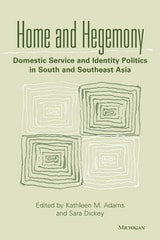
Home and Hegemony
Domestic Service and Identity Politics in South and Southeast AsiaKathleen M. Adams and Sara Dickey, Editors
University of Michigan Press, 2000
This pathbreaking collection builds on recent examinations of identity in the postcolonial states of South and Southeast Asia by investigating the ways in which domestic workers and their employers come to know and depict one another and themselves through their interactions inside and outside of the home. This setting provides a particularly apt arena for examining the daily negotiations of power and hegemony.
Contributors to the volume, all anthropologists, provide rich ethnographic analyses that avoid a narrow focus on either workers or employers. Rather, they examine systems of power through specific topics that range from the notion of "nurture for sale" to the roles of morality and humor in the negotiation of hierarchy and the dilemmas faced by foreign employers who find themselves in life-and-death dependence on their servants.
With its provocative theoretical and ethnographic contributions to current debates, this collection will be of interest to scholars in Asian studies, women's studies, anthropology, sociology, and cultural studies.
Kathleen M. Adams is Associate Professor of Anthropology, Loyola University of Chicago. Sara Dickey is Associate Professor of Anthropology, Bowdoin College.

I Wanna Be Me
Rock Music And The Politics Of IdentityTheodore Gracyk
Temple University Press, 2001
Gracyk sees rock as a mass art, open-ended and open to diverse (but not unlimited) interpretations. Recordings reach millions, drawing people together in communities of listeners who respond viscerally to its sound and intellectually to its messages. As an art form that proclaims its emotional authenticity and resistance to convention, rock music constitutes part of the cultural apparatus from which individuals mold personal and political identities. Going to the heart of this relationship between the music's role in its performers' and fans' self-construction, Gracyk probes questions of gender and appropriation. How can a feminist be a Stones fan or a straight man enjoy the Indigo Girls? Does borrowing music that carries a "racial identity" always add up to exploitation, a charge leveled at Paul Simon's Graceland?
Ranging through forty years of rock history and offering a trove of anecdotes and examples, I Wanna Be Me, like Gracyk's earlier book, "should be cherished, and read, by rockers everywhere" (Salon).
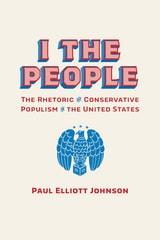
I the People
The Rhetoric of Conservative Populism in the United StatesPaul Elliott Johnson
University of Alabama Press, 2022
WINNER OF THE NATIONAL COMMUNICATION ASSOCIATION'S 2023 HOCHMUTH-NICHOLS AWARD
A definitive rhetorical history of conservative populism, exposing how identity, victimhood, and populist appeals have shaped—and constrained—modern American conservatism.
I The People: The Rhetoric of Conservative Populism in the United States examines a variety of texts—ranging from speeches and campaign advertisements to news reports and political pamphlets—to outline the populist character of conservatism in the United States. Paul Elliott Johnson focuses on key inflection points in the development of populist conservatism, including its manifestation in the racially charged presidential election of 1964, its consolidation at the height of Ronald Reagan’s reelection campaign in 1984, and its character in successive moments that saw its fortunes wax and wane, including 1994, the Obama era, and the rise of Donald J. Trump. theorizing conservative populism as a rhetorical form, Johnson advances scholarship about populism away from a binary ideological framework while offering a useful lens for contextualizing scholarship on American conservatism. I The People emphasizes that the populist roots of conservative hegemony exercise a powerful constraining force on conservative intellectuals, whose power to shape and control the movement to which they belong is circumscribed by the form of its public-facing appeals.
The study also reframes scholarly understandings of the conservative tradition’s seeming multiplicity, especially the tendency to suggest an abiding conservative unease regarding capitalism, showing how racist hostility underwrote a compromise with an increasingly economized understanding of humanity. Johnson also contests the narrative that conservatives learned to practice identity politics from social progressives. From the beginning, conservatism’s public vernacular was a white and masculine identity politics reliant on a rhetoric of victimhood, whether critiquing the liberal Cold War consensus or President Barack Obama.
Identity Politics of Difference
The Mixed-Race American Indian ExperienceMichelle Montgomery
University Press of Colorado, 2021
In Identity Politics of Difference, author Michelle R. Montgomery uses a multidisciplinary approach to examine questions of identity construction and multiracialism through the experiences of mixed-race Native American students at a tribal school in New Mexico. She explores the multiple ways in which these students navigate, experience, and understand their racial status and how this status affects their educational success and social interactions.
Montgomery contextualizes students’ representations of their racial identity choices through the compounded race politics of blood quantum and stereotypes of physical features, showing how varying degrees of "Indianness" are determined by peer groups. Based on in-depth interviews with nine students who identify as mixed-race (Native American–White, Native American–Black, and Native American–Hispanic), Montgomery challenges us to scrutinize how the category of “mixed-race” bears different meanings for those who fall under it based on their outward perceptions, including their ability to "pass" as one race or another.
Identity Politics of Difference includes an arsenal of policy implications for advancing equity and social justice in tribal colleges and beyond and actively engages readers to reflect on how they have experienced the identity politics of race throughout their own lives. The book will be a valuable resource to scholars, policy makers, teachers, and school administrators, as well as to students and their families.

Identity Politics on the Israeli Screen
By Yosefa Loshitzky
University of Texas Press, 2002
2002 — A Choice Outstanding Academic Book
The struggle to forge a collective national identity at the expense of competing plural identities has preoccupied Israeli society since the founding of the state of Israel. In this book, Yosefa Loshitzky explores how major Israeli films of the 1980s and 1990s have contributed significantly to the process of identity formation by reflecting, projecting, and constructing debates around Israeli national identity.
Loshitzky focuses on three major foundational sites of the struggle over Israeli identity: the Holocaust, the question of the Orient, and the so-called (in an ironic historical twist of the "Jewish question") Palestinian question. The films she discusses raise fundamental questions about the identity of Jewish Holocaust survivors and their children (the "second generation"), Jewish immigrants from Muslim countries or Mizrahim (particularly the second generation of Israeli Mizrahim), and Palestinians. Recognizing that victimhood marks all the identities represented in the films under discussion, Loshitzky does not treat each identity group as a separate and coherent entity, but rather attempts to see the conflation, interplay, and conflict among them.
Identity Politics
Lesbian Feminism and the Limits of CommunityShane Phelan
Temple University Press, 1991
"Lesbian feminism began and has fueled itself with the rejection of liberalism.... In this rejection, lesbian feminists were not alone. They were joined by the New Left, by many blacks in the civil rights movement, by male academic theorists.... What all these groups shared was an intense awareness of the ways in which liberalism fails to account for the social reality of the world, through a reliance upon law and legal structure to define membership, through individualism, through its basis in a particular conception of rationality."
In tracing how lesbian feminism came to be defined in uneasy relationships with the Women’s Movement and gay rights groups, Shane Phelan explores the tension between liberal ideals of individual rights and tolerance and communitarian ideals of solidarity. The debate over lesbian sado-masochism—an expression of individual choice or pornographic, anti-feminist behavior?—is considered as a test case.
Phelan addresses the problems faced by "the woman-identified woman" in a liberal society that presumes heterosexuality as the biological, psychological, and moral standard. Often silenced by laws defining their sexual behavior as criminal and censured by a medical establishment that persists in defining homosexuality as perversion, lesbians, like blacks and other groups, have fought to have the same rights as others in their communities and even in their own homes. Lesbian feminists have also sought to define themselves as a community that would be distinctly different, a community that would disavow the traditional American obsession with individual advancement in the world as it is.
In this controversial study of political philosophy and the women’s movement, Phelan argues that "the failure to date to produce a satisfying theory and program for lesbian action is reflective of the failure of modern political thinking to produce a compelling, nonsuspect alternative to liberalism."
In the series Women in the Political Economy, edited by Ronnie J. Steinberg.
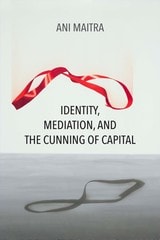
Identity, Mediation, and the Cunning of Capital
Ani Maitra
Northwestern University Press, 2020
Maitra’s archive is transnational and multimodal. Moving from anticolonial polemics to psychoanalysis to diasporic experimental literature to postcolonial feminist and queer media, he lays bare the cunning by which capitalism produces and fragments identity through an intermedial “aesthetic dissonance” with the commodity form. Maitra’s novel contribution to theories of identity and to the concept of mediation will interest a wide range of scholars in media studies, critical race and postcolonial studies, and critical aesthetics.
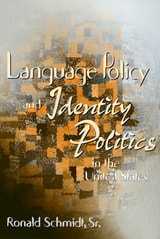
Language Policy & Identity In The U.S.
Ronald Schmidt, Sr.
Temple University Press, 2000
This book lays out the two approaches to language policy -- linguistic assimilation and linguistic pluralism -- in clear and accessible terms. Filled with examples and narratives, it provides a readable overview of the U.S. "culture wars" and explains why the conflict has just now emerged as a major issue in the United States.
Professor Schmidt examines bilingual education in the public schools, "linguistic access" rights to public services, and the designation of English as the United States' "official" language. He illuminates the conflict by describing the comparative, theoretical, and social contexts for the debate. The source of the disagreement, he maintains, is not a disagreement over language per se but over identity and the consequences of identity for individuals, ethnic groups, and the country as a whole. Who are "the American people"? Are we one national group into which newcomers must assimilate? Or are we composed of many cultural communities, each of which is a unique but integral part of the national fabric? This fundamental point is what underlies the specific disputes over language policy. This way of looking at identity politics, as Professor Schmidt shows, calls into question the dichotomy between "material interest" politics and "symbolic" politics in relation to group identities.
Not limited to describing the nature and context of the language debate, Language Policy and Identity Politics in the United States reaches the conclusion that a policy of linguistic pluralism, coupled with an immigrant settlement policy and egalitarian economic reforms, will best meet the aims of justice and the common good. Only by attacking both the symbolic and material effects of racialization will the United States be able to attain the goals of social equality and national harmony.

Language Shift among the Navajos
Identity Politics and Cultural ContinuityDeborah House
University of Arizona Press, 2002
Language Shift among the Navajos provides a close look at the ideological factors that intervene between the desire of the Navajos to maintain their language as an important aspect of their culture and their actual linguistic practice. Based on more than ten years of fieldwork within a Navajo institution and community, it points to ideologies held by Navajo people about their unequal relationship with the dominant American society as a primary factor in the erosion of traditional language use. House suggests that the Navajos employ their own paradigm—Sa’ah Naagháí Bik’eh Hózhóón—to learn both Western language and culture and their own without denigrating either perspective. By building on the traditional Navajo belief in harmony and balance, she advocates that those who value the language should use and teach it not just in school but also in the home, in the ceremonial hogans, and among those who cherish their heritage. Now is the time when language choices and behavior will influence whether the Navajo language lives or dies. House's book carries important lessons for anyone concerned with cultural continuity. It is a wake-up call for educators, youth, politicians, or family and community members who value Native language and culture. It remains to be seen in what language that call will be answered.

Making the Radical University
Identity and Politics on the American College Campus, 1966–1991Elizabeth M. Kalbfleisch
University of Massachusetts Press, 2024
In the 1960s, professors, students, and activists on the political Left viewed college curricula as useful sites for political transformation. They coordinated efforts to alter general education requirements at the college level to foster change in American thought, with greater openness toward people who had previously been excluded, including women, people of color, the poor and working classes, people with disabilities, and members of the LGBTQ community. Their work reshaped American culture and politics, while prompting a significant backlash from conservatives attempting to, in their view, protect classical education from modern encroachment.
Elizabeth M. Kalbfleisch details how American universities became a battleground for identity politics from the 1960s through the 1980s. Focusing on two case studies at Stanford University and the University of Texas at Austin, Making the Radical University examines how curricular changes led to polarizing discussions nationwide around academic standards and identity politics, including the so-called canon wars. Today, these debates have only become more politically charged, complex, and barbed.
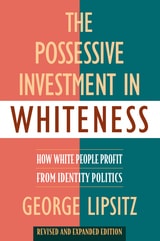
Possessive Investment In Whiteness
George Lipsitz
Temple University Press, 1998
Lipsitz's ultimate point is not to condemn all white people as racists but to challenge everyone to begin a principled examination of personal actions and political commitments. Exposing the system of unfairness is not enough. People of all groups -- but especially white people because they benefit from that system -- have to work toward eradicating the rewards of whiteness.
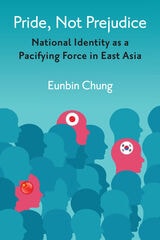
Pride, Not Prejudice
National Identity as a Pacifying Force in East AsiaEunbin Chung
University of Michigan Press, 2022
As shown by China’s relationship to Japan, and Japan’s relationship to South Korea, even growing regional economic interdependencies are not enough to overcome bitter memories grounded in earlier wars, invasions, and periods of colonial domination. Although efforts to ease historical animosity have been made, few have proven to be successful in Northeast Asia. In previous research scholars anticipated an improvement in relations through thick economic interdependence or increased societal contact. In economic terms, however, Japan and China already trade heavily: Japan has emerged as China’s largest trading partner and China as second largest to Japan. Societal contact is already intense, as millions of Chinese, Koreans, and Japanese visit one another’s countries annually as students, tourists, and on business trips. But these developments have not alleviated international distrust and negative perception, or resolved disagreement on what constitutes “adequate reparation” regarding the countries’ painful history.
Noticing clashes of strong nationalisms around the world in areas like Northeast Asia, numerous studies have suggested that more peaceful relations are likely only if countries submerge or paper over existing national identities by promoting universalism. Pride, Not Prejudice argues, to the contrary, that affirmation of national identities may be a more effective way to build international cooperation. If each national population reflects on the values of their national identity, trust and positive perception can increase between countries. This idea is consistent with the theoretical foundation that those who have a clear, secure, and content sense of self, in turn, can be more open, evenhanded, and less defensive toward others. In addition, this reduced defensiveness also enhances guilt admission by past “inflictors” of conflict and colonialism. Eunbin Chung borrows the social psychological theory of self-affirmation and applies it to an international context to argue that affirmation of a national identity, or reflecting on what it means to be part of one’s country, can increase trust, guilt recognition, and positive perception between countries.

Primal Screams
How the Sexual Revolution Created Identity PoliticsEberstadt, Mary
Templeton Press, 2021
Who am I? The question today haunts every society in the Western world.
Legions of people—especially the young—have become unmoored from a firm sense of self. To compensate, they join the ranks of ideological tribes spawned by identity politics and react with frenzy against any perceived threat to their group.
As identitarians track and expose the ideologically impure, other citizens face the consequences of their rancor: a litany of “isms” run amok across all levels of cultural life, the free marketplace of ideas muted by agendas shouted through megaphones, and a spirit of general goodwill warped into a state of perpetual outrage.
How did we get here? Why have we divided against one another so bitterly? In Primal Screams, acclaimed cultural critic Mary Eberstadt presents the most provocative and original theory to come along in recent years. The rise of identity politics, she argues, is a direct result of the fallout of the sexual revolution, especially the collapse and shrinkage of the family.
As Eberstadt illustrates, humans have forged their identities within the kinship structure from time immemorial. The extended family, in a real sense, is the first tribe and teacher. But with its unprecedented decline across various measures, generations of people have been set adrift and can no longer answer the question Who am I? concerning primordial ties. Desperate for solidarity and connection, they claim membership in politicized groups whose displays of frantic irrationalism amount to primal screams for familial and communal loss.
Written in her impeccable style and with empathy rarely encountered in today’s divisive discourse, Eberstadt’s theory holds immense explanatory power that no serious citizen can afford to ignore. The book concludes with three incisive essays by Rod Dreher, Mark Lilla, and Peter Thiel, each sharing their perspective on the author’s formidable argument.
Radicalizing Men
Fascist Desires, Great Replacement Propaganda, and Political ViolenceJessica Johnson
Duke University Press, 2026
Resistance in the Era of Nationalisms
Performing Identities in Taiwan and Hong KongHsin-I Cheng
Michigan State University Press, 2023
The Color of Family
History, Race, and the Politics of AncestryMichael O'Malley
University of Chicago Press, 2024
A zealous eugenicist ran Virginia’s Bureau of Vital Statistics in the first half of the twentieth century, misusing his position to reclassify people he suspected of hiding their “true” race. But in addition to being blinded by his prejudices, he and his predecessors were operating more by instinct than by science. Their whole dubious enterprise was subject not just to changing concepts of race but outright error, propagated across generations.
This is how Michael O’Malley, a descendant of a Philadelphia Irish American family, came to have “colored” ancestors in Virginia. In The Color of Family, O’Malley teases out the various changes made to citizens’ names and relationships over the years, and how they affected families as they navigated what it meant to be “white,” “colored,” “mixed race,” and more. In the process, he delves into the interplay of genealogy and history, exploring how the documents that establish identity came about, and how private companies like Ancestry.com increasingly supplant state and federal authorities—and not for the better.
Combining the history of O’Malley’s own family with the broader history of racial classification, The Color of Family is an accessible and lively look at the ever-shifting and often poisoned racial dynamics of the United States.
The Politics of Authenticity
First-Personal Truths and Democratic ClaimsNina Hagel
University of Chicago Press, 2026
A qualified defense of authenticity claims in contemporary politics.
On both the Left and Right, we see a range of political claims cast in terms of authenticity, from transgender persons seeking recognition of who they truly are to religious business owners requesting exemptions from antidiscrimination laws. For claimants, what is often at stake is an inner self that would be harmed if changed or concealed. At the same time, many scholars are skeptical of authenticity claims, with some worrying that they are too nebulous and inward-looking and others fearing that they contain too much anti-democratic potential. There is also the added difficulty of determining when and on what grounds to accept a claim of authenticity.
Nina Hagel argues that while invoking authenticity has serious risks, it remains a crucial democratic resource. Through an engagement with canonical and contemporary political theorists, and an analysis of current political struggles centering on authenticity, Hagel advances a defense of authenticity’s democratic potential, alongside a practice for interpreting and invoking such claims. While one might assume that this perspective clashes with the post-modern view that there is no true self outside of politics and history, Hagel puts forward a non-essentialist understanding of authenticity that emphasizes subject formation and emancipation. Hagel argues that authenticity claims best support democracy when they collectively steward, rather than overcome, the social powers that shape our identities. We ignore authenticity claims at our peril, since the objects of such claims are the norms and practices that make us who we are.
The Possessive Investment in Whiteness
How White People Profit from Identity PoliticsGeorge Lipsitz
Temple University Press, 2018
George Lipsitz’s classic book The Possessive Investment in Whiteness argues that public policy and private prejudice work together to create a possessive investment in whiteness that is responsible for the racialized hierarchies of our society. Whiteness has a cash value: it accounts for advantages that come to individuals through profits made from housing secured in discriminatory markets, through the unequal educational opportunities available to children of different races, through insider networks that channel employment opportunities to the friends and relatives of those who have profited most from past and present discrimination, and especially through intergenerational transfers of inherited wealth that pass on the spoils of discrimination to succeeding generations. White Americans are encouraged to invest in whiteness, to remain true to an identity that provides them with structured advantages.
In this twentieth anniversary edition, Lipsitz provides a new introduction and updated statistics; as well as analyses of the enduring importance of Hurricane Katrina; the nature of anti-immigrant mobilizations; police assaults on Black women, the killings of Trayvon Martin, Michael Brown, and Freddie Gray; the legacy of Obama and the emergence of Trump; the Charleston Massacre and other hate crimes; and the ways in which white fear, white fragility, and white failure have become drivers of a new ethno-nationalism.
As vital as it was upon its original publication, the twentieth anniversary edition of The Possessive Investment in Whiteness is an unflinching but necessary look at white supremacy.
The Possessive Investment in Whiteness
How White People Profit from Identity Politics, Revised and Expanded EditionGeorge Lipsitz
Temple University Press, 2006
The Promise of Youth Anti-Citizenship
Race and Revolt in EducationKevin L. Clay
University of Minnesota Press, 2024
When inclusion into the fold of citizenship is conditioned by a social group’s conceit to ritual violence, humiliation, and exploitation, what can anti-citizenship offer us?
The Promise of Youth Anti-citizenship argues that Black youth and youth of color have been cast as anti-citizens, disenfranchised from the social, political, and economic mainstream of American life. Instead of asking youth to conform to a larger societal structure undergirded by racial capitalism and antiblackness, the volume’s contributors propose that the collective practice of anti-citizenship opens up a liberatory space for youth to challenge the social order.
The chapters cover an array of topics, including Black youth in the charter school experiment in post-Katrina New Orleans; racial capitalism, the queering of ethnicity, and the 1980s Salvadoran migration to South Central Los Angeles; the notion of decolonizing classrooms through Palestinian liberation narratives; and more. Through a range of methodological approaches and conceptual interventions, this collection illuminates how youth negotiate and exercise anti-citizenship as forms of either resistance or refusal in response to coercive patriotism, cultural imperialism, and predatory capitalism.
Contributors: Karlyn Adams-Wiggins, Portland State U; Ariana Brazier; Julio Cammarota, U of Arizona; Michael Davis, U of Wisconsin–Madison; Damaris C. Dunn, U of Georgia; Diana Gamez, U of California, Irvine; Rachel F. Gómez, Virginia Commonwealth U; Luma Hasan; Gabriel Rodriguez, Iowa State U; Christopher R. Rogers, U of Pennsylvania; Damien M. Sojoyner, U of California, Irvine.
The Rise of Populist Nationalism
Social Resentments and Capturing the Constitution in HungaryBalázs Majtényi
Central European University Press, 2020
The Taiwan Voter
Christopher H. Achen and T. Y. Wang, Editors
University of Michigan Press, 2017
Taiwan’s electoral politics draws international scholarly interest because of the prominent role of ethnic and national identification. While in most countries the many tangled strands of competing identities are daunting for scholarly analysis, in Taiwan the cleavages are powerful and limited in number, so the logic of interrelationships among issues, partisanship, and identity are particularly clear. The Taiwan Voter unites experts to investigate the ways in which social identities, policy views, and partisan preferences intersect and influence each other. These novel findings have wide applicability to other countries, and will be of interest to a broad range of social scientists interested in identity politics.
Transformation Now!
Toward a Post-Oppositional Politics of ChangeAnaLouise Keating
University of Illinois Press, 2013
Universal Citizenship
Latina/o Studies at the Limits of IdentityBy R. Andrés Guzmán
University of Texas Press, 2019
Recently, many critics have questioned the idea of universal citizenship by pointing to the racial, class, and gendered exclusions on which the notion of universality rests. Rather than jettison the idea of universal citizenship, however, R. Andrés Guzmán builds on these critiques to reaffirm it especially within the fields of Latina/o and ethnic studies. Beyond conceptualizing citizenship as an outcome of recognition and admittance by the nation-state—in a negotiation for the right to have rights—he asserts that, insofar as universal citizenship entails a forceful entrance into the political from the latter’s foundational exclusions, it emerges at the limits of legality and illegality via a process that exceeds identitarian capture.
Drawing on Lacanian psychoanalysis and philosopher Alain Badiou’s notion of “generic politics,” Guzmán advances his argument through close analyses of various literary, cultural, and legal texts that foreground contention over the limits of political belonging. These include the French Revolution, responses to Arizona’s H.B. 2281, the 2006 immigrant rights protests in the United States, the writings of Oscar “Zeta” Acosta, Frantz Fanon’s account of Algeria’s anticolonial struggle, and more. In each case, Guzmán traces the advent of the “citizen” as a collective subject made up of anyone who seeks to radically transform the organizational coordinates of the place in which she or he lives.
Vulnerability in Resistance
Judith Butler, Zeynep Gambetti, and Leticia Sabsay, editors
Duke University Press, 2016