Results by title
13 books match the query 'Immunology'
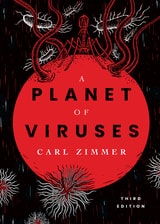
A Planet of Viruses
Third EditionCarl Zimmer
University of Chicago Press, 2021
Fully revised and updated, with new illustrations and a new chapter about coronaviruses and the spread of Covid-19, this third edition of Carl Zimmer’s A Planet of Viruses pulls back the veil on this hidden world. It presents the latest research on how viruses hold sway over our lives and our biosphere, how viruses helped give rise to the first life-forms, how viruses are producing new diseases, how we can harness viruses for our own ends, and how viruses will continue to control our fate as long as life endures.

Anthony Cerami
A Life in Translational MedicineConrad Keating
Rutgers University Press, 2021
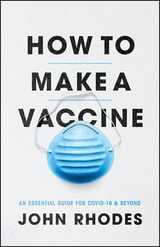
How to Make a Vaccine
An Essential Guide for COVID-19 and BeyondJohn Rhodes
University of Chicago Press, 2021
As the COVID-19 pandemic has affected every corner of the world, changing our relationship to our communities, to our jobs, and to each other, the most pressing question has been—when will it end? Researchers around the globe are urgently trying to answer this question by racing to test and distribute a vaccine that could end the greatest public health threat of our time. In How to Make a Vaccine, an expert who has firsthand experience developing vaccines tells an optimistic story of how three hundred years of vaccine discovery and a century and a half of immunology research have come together at this powerful moment—and will lead to multiple COVID-19 vaccines.
Dr. John Rhodes draws on his experience as an immunologist, including working alongside a young Anthony Fauci, to unravel the mystery of how vaccines are designed, tested, and produced at scale for global deployment. Concise and accessible, this book describes in everyday language how the immune system evolved to combat infection, how viruses responded by evolving ways to evade our defenses, and how vaccines do their work. That history, and the pace of current research developments, make Rhodes hopeful that multiple vaccines will protect us. Today the complex workings of the immune system are well understood. The tools needed by biomedical scientists stand ready to be used, and more than 160 vaccine candidates have already been produced. But defeating COVID-19 won’t be the end of the story: Rhodes describes how discoveries today are also empowering scientists to combat future threats to global health, including a recent breakthrough in the development of genetic vaccines, which have never before been used in humans.
As the world prepares for a vaccine, Rhodes offers a current and informative look at the science and strategies that deliver solutions to the crisis.

In Search of "Aryan Blood"
Serology in Interwar and National Socialist GermanyRachel E. Boaz
Central European University Press, 2012
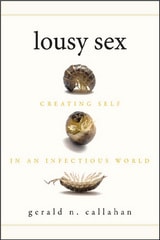
Lousy Sex
Gerald N. Callahan
University Press of Colorado, 2013
In his stories about where we came from and who we are, Callahan uses autobiographical episodes to illustrate his scientific points. Through stories about the sex lives of wood lice, the biological advantages of eating dirt, the question of immortality, the relationship between syphilis and the musical genius of Beethoven, and more, this book creates another way, a chimeric way, of seeing ourselves. The general reader with an interest in science will find Lousy Sex fascinating.
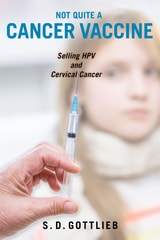
Not Quite a Cancer Vaccine
Selling HPV and Cervical CancerS.D. Gottlieb
Rutgers University Press, 2018
Prior to its market debut, Gardasil seemed to offer female empowerment, touting protection against HPV and its potential for cervical cancer. Gottlieb questions the marketing pitch’s vaunted promise and asks why vaccine marketing unnecessarily gendered the vaccine’s utility, undermining Gardasil’s benefit for men and women alike. This book demonstrates why in the ten years since Gardasil’s U.S. launch its low rates of public acceptance have their origins in the early days of the vaccine dissemination. Not Quite a Cancer Vaccine addresses the on-going expansion in U.S. healthcare of patients-as-consumers and the ubiquitous, and sometimes insidious, health marketing of large pharma.
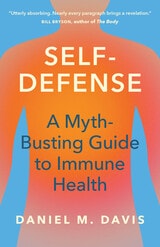
Self-Defense
A Myth-Busting Guide to Immune HealthDaniel M. Davis
University of Chicago Press, 2025
A world-renowned scientist offers a much-needed analysis of what it takes to have good immune health—helping readers navigate what can really help, what is a complete myth, and why.
Does orange juice help ward off colds? And how does our age affect our ability to recover from one? When it comes to immunity, are we really what we eat? Or how much we eat? We are surrounded by big questions and big claims about enhancing our immune systems, so how do we tell the fiction from the facts? And, ultimately, what can we do to reduce our chances of getting sick?
World-leading immunologist Daniel M. Davis offers answers in this authoritative, highly accessible, myth-busting guide to the effects of stress, age, exercise, weight, nutrition, sleep, vaccines, and mental health on our immune health. Taking us to the cutting edge of immunology research and explaining both what we know and how we know it, Self-Defense helps readers spot phony claims and make informed choices. Davis shows us that everyone’s immune system is entirely unique, and that’s why we should be wary of one-size-fits-all “cures.” We learn how exercise, for example, has all sorts of different, even opposing, short- and long-term effects on our immune health. And while our gut microbes are vitally important, it’s unlikely that yogurt drinks can really boost your immune system to stop you getting ill.
An eye-opening window into some of the astonishing possibilities for the future, when it comes to distinguishing bogus and beneficial health claims about everything from vitamin D to inflammation and cancer therapies, Davis’s book may be your best self-defense.
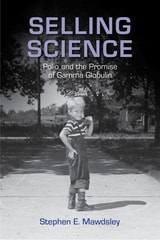
Selling Science
Polio and the Promise of Gamma GlobulinMawdsley, Stephen E
Rutgers University Press, 2016
Drawing on oral history interviews, medical journals, newspapers, meeting minutes, and private institutional records, Selling Science sheds light on the ethics of scientific conduct, and on the power of marketing to shape public opinion about medical experimentation.
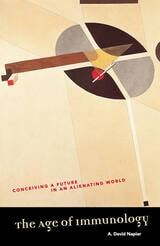
The Age of Immunology
Conceiving a Future in an Alienating WorldA. David Napier
University of Chicago Press, 2003
To illustrate these destructive consequences, Napier likens the current craze for embracing diversity and the use of politically correct speech to a cultural potluck to which we each bring different dishes, but at which no one can eat unless they abide by the same rules. Similarly, loaning money to developing nations serves as a tool both to make the peoples in those nations more like us and to maintain them in the nonthreatening status of distant dependents. To break free of the resulting downward spiral of homogenization and self-focus, Napier suggests that we instead adopt a new defining concept based on embryology, in which development and self-growth take place through a process of incorporation and transformation. In this effort he suggests that we have much to learn from non-Western peoples, such as the Balinese, whose ritual practices require them to take on the considerable risk of injecting into their selves the potential dangers of otherness—and in so doing ultimately strengthen themselves as well as their society.
The Age of Immunology, with its combination of philosophy, history, and cultural inquiry, will be seen as a manifesto for a new age and a new way of thinking about the world and our place in it.
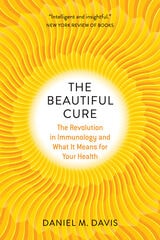
The Beautiful Cure
The Revolution in Immunology and What It Means for Your HealthDaniel M. Davis
University of Chicago Press, 2018
The immune system holds the key to human health. In The Beautiful Cure, leading immunologist Daniel M. Davis describes how the scientific quest to understand how the immune system works—and how it is affected by stress, sleep, age, and our state of mind—is now unlocking a revolutionary new approach to medicine and well-being.
The body’s ability to fight disease and heal itself is one of the great mysteries and marvels of nature. But in recent years, painstaking research has resulted in major advances in our grasp of this breathtakingly beautiful inner world: a vast and intricate network of specialist cells, regulatory proteins, and dedicated genes that are continually protecting our bodies. Far more powerful than any medicine ever invented, the immune system plays a crucial role in our daily lives. We have found ways to harness these natural defenses to create breakthrough drugs and so-called immunotherapies that help us fight cancer, diabetes, arthritis, and many age-related diseases, and we are starting to understand whether activities such as mindfulness might play a role in enhancing our physical resilience.
Written by a researcher at the forefront of this adventure, The Beautiful Cure tells a dramatic story of scientific detective work and discovery, of puzzles solved and mysteries that linger, of lives sacrificed and saved. With expertise and eloquence, Davis introduces us to this revelatory new understanding of the human body and what it takes to be healthy.

The Triumph of Uncertainty
Science and Self in the Postmodern AgeAlfred I. Tauber
Central European University Press, 2022
Tauber, a leading figure in history and philosophy of science, offers a unique autobiographical overview of how science as a discipline of thought has been characterized by philosophers and historians over the past century. He frames his account through science’s – and his own personal – quest for explanatory certainty.
During the 20th century, that goal was displaced by the probabilistic epistemologies required to characterize complex systems, whether in physics, biology, economics, or the social sciences. This “triumph of uncertainty” is the inevitable outcome of irreducible chance and indeterminate causality. And beyond these epistemological limits, the interpretative faculties of the individual scientist (what Michael Polanyi called the “personal” and the “tacit”) invariably affects how data are understood. Whereas positivism had claimed radical objectivity, post-positivists have identified how a web of non-epistemic values and social forces profoundly influence the production of knowledge.
Tauber presents a case study of these claims by showing how immunology has incorporated extra-curricular social elements in its theoretical development and how these in turn have influenced interpretive problems swirling around biological identity, individuality, and cognition. The correspondence between contemporary immunology and cultural notions of selfhood are strong and striking. Just as uncertainty haunts science, so too does it hover over current constructions of personal identity, self knowledge, and moral agency. Across the chasm of uncertainty, science and selfhood speak.
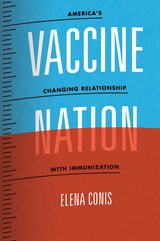
Vaccine Nation
America's Changing Relationship with ImmunizationElena Conis
University of Chicago Press, 2014
Vaccine Nation opens in the 1960s, when government scientists—triumphant following successes combating polio and smallpox—considered how the country might deploy new vaccines against what they called the “milder” diseases, including measles, mumps, and rubella. In the years that followed, Conis reveals, vaccines fundamentally changed how medical professionals, policy administrators, and ordinary Americans came to perceive the diseases they were designed to prevent. She brings this history up to the present with an insightful look at the past decade’s controversy over the implementation of the Gardasil vaccine for HPV, which sparked extensive debate because of its focus on adolescent girls and young women. Through this and other examples, Conis demonstrates how the acceptance of vaccines and vaccination policies has been as contingent on political and social concerns as on scientific findings.
By setting the complex story of American vaccination within the country’s broader history, Vaccine Nation goes beyond the simple story of the triumph of science over disease and provides a new and perceptive account of the role of politics and social forces in medicine.
Vaccine Nation
America's Changing Relationship with ImmunizationElena Conis
University of Chicago Press, 2014
With employers offering free flu shots and pharmacies expanding into one-stop shops to prevent everything from shingles to tetanus, vaccines are ubiquitous in contemporary life. The past fifty years have witnessed an enormous upsurge in vaccines and immunization in the United States: American children now receive more vaccines than any previous generation, and laws requiring their immunization against a litany of diseases are standard. Yet, while vaccination rates have soared and cases of preventable infections have plummeted, an increasingly vocal cross section of Americans have questioned the safety and necessity of vaccines. In Vaccine Nation, Elena Conis explores this complicated history and its consequences for personal and public health.
Vaccine Nation opens in the 1960s, when government scientists—triumphant following successes combating polio and smallpox—considered how the country might deploy new vaccines against what they called the “milder” diseases, including measles, mumps, and rubella. In the years that followed, Conis reveals, vaccines fundamentally changed how medical professionals, policy administrators, and ordinary Americans came to perceive the diseases they were designed to prevent. She brings this history up to the present with an insightful look at the past decade’s controversy over the implementation of the Gardasil vaccine for HPV, which sparked extensive debate because of its focus on adolescent girls and young women. Through this and other examples, Conis demonstrates how the acceptance of vaccines and vaccination policies has been as contingent on political and social concerns as on scientific findings.
By setting the complex story of American vaccination within the country’s broader history, Vaccine Nation goes beyond the simple story of the triumph of science over disease and provides a new and perceptive account of the role of politics and social forces in medicine.