Results by title
48 books match the query 'Impact'
A History of the Crusades, Volume V
The Impact of the Crusades on the Near EastSeries Edited by Kenneth M. Setton, Volume Edited by Zacour and Hazard
University of Wisconsin Press, 1985
A History of the Crusades, Volume VI
The Impact of the Crusades on EuropeSeries Edited by Kenneth M. Setton, Volume Edited by Hazard and Zacour
University of Wisconsin Press, 1990
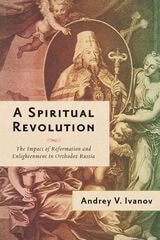
A Spiritual Revolution
The Impact of Reformation and Enlightenment in Orthodox Russia, 1700–1825Andrey V. Ivanov
University of Wisconsin Press, 2023
Embedded with lively portrayals of historical actors and vivid descriptions of political details, A Spiritual Revolution is the first large-scale effort to fully identify exactly how Western progressive thought influenced the Russian Church. These new ideas played a foundational role in the emergence of the country as a modernizing empire and the rise of the Church hierarchy as a forward-looking agency of institutional and societal change. Ivanov addresses this important debate in the scholarship on European history, firmly placing Orthodoxy within the much wider European and global continuum of religious change.
Accomplishing NAGPRA
Perspectives on the Intent, Impact, and Future of the Native American Graves Protection and Repatriation ActSangita Chari and Jaime M. N. Lavallee
Oregon State University Press, 2013
NAGPRA requires museums and federal agencies to return requested Native American cultural items to lineal descendants, culturally affiliated Indian tribes, and Native Hawai’ian organizations. Since the 1990 passage of the act, museums and federal agencies have made more than one million cultural items—and the remains of nearly forty thousand Native Americans—available for repatriation.
Drawing on case studies, personal reflections, historical documents, and statistics, the volume examines NAGPRA and its grassroots, practical application throughout the United States.? Accomplishing NAGPRA will appeal to professionals and academics with an interest in cultural resource management, Indian and human rights law, Indigenous studies, social justice movements, and public policy.
Accountability-Based Reforms
The Impact on Deaf and Hard of Hearing StudentsStephanie W. Cawthon
Gallaudet University Press, 2011
For years, school reform efforts targeted either students in regular education or those with special needs, but not both. As a result of the No Child Left Behind legislation (NCLB) and its focus on accountability, administrators established policies that would integrate the needs of students who previously were served under separate frameworks. Using the NCLB structure as a starting point, Stephanie W. Cawthon’s new book Accountability-Based Reforms: The Impact on Deaf and Hard of Hearing Students discusses key assumptions behind accountability reforms. She specifically examines how elements of these reforms affect students who are deaf or hard of hearing, their teachers, and their families.
Cawthon begins by providing a brief introduction to the deaf education context, offering detailed information on student demographics, settings, and academic outcomes for deaf students. She then outlines the evolution of accountability-based education reforms, following with a chapter on content standards, assessment accommodations, accountability as sanctions, and students with disabilities. The remaining chapters in Accountability-Based Reforms closely examine educational professionals, accountability, and students who are deaf or hard of hearing; school choice policies and parents; and deaf education and measures of success. Each chapter presents an overview of an important component of accountability reform, available research, and how it has been implemented in the United States. These chapters also offer recommendations for future action by educators, parents, researchers, and education policymakers.
All the King’s Horses
Essays on the Impact of Looting and the Illicit Antiquities Trade on Our Knowledge of the PastPaula K. Lazrus
University Press of Colorado, 2012

Behind the Bamboo Hedge
The Impact of the Homeland Politics in the Parisian Vietnamese CommunityGisele L. Bousquet
University of Michigan Press, 1991

Birth and Fortune
The Impact of Numbers on Personal WelfareRichard A. Easterlin
University of Chicago Press, 1987
"[Easterlin] has made clear, I think unambiguously, that the baby-boom generation is economically underprivileged merely because of its size. And in showing this, he demonstrates that population size can be as restrictive as a factor as sex, race, or class on equality of opportunity in the U.S."—Jeffrey Madrick, Business Week
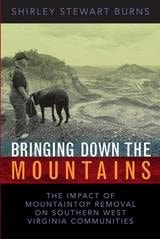
Bringing Down the Mountains
The Impact of Mountainttop Removal on Southern West Virginia CommunitiesShirley Stewart Burns
West Virginia University Press, 2007
Coal is West Virginia’s bread and butter. For more than a century, West Virginia has answered the energy call of the nation—and the world—by mining and exporting its coal. In 2004, West Virginia’s coal industry provided almost forty thousand jobs directly related to coal, and it contributed $3.5 billion to the state’s gross annual product. And in the same year, West Virginia led the nation in coal exports, shipping over 50 million tons of coal to twenty-three countries. Coal has made millionaires of some and paupers of many. For generations of honest, hard-working West Virginians, coal has put food on tables, built homes, and sent students to college. But coal has also maimed, debilitated, and killed.
Bringing Down the Mountains provides insight into how mountaintop removal has affected the people and the land of southern West Virginia. It examines the mechanization of the mining industry and the power relationships between coal interests, politicians, and the average citizen. Shirley Stewart Burns holds a BS in news-editorial journalism, a master’s degree in social work, and a PhD in history with an Appalachian focus, from West Virginia University. A native of Wyoming County in the southern West Virginia coalfields and the daughter of an underground coal miner, she has a passionate interest in the communities, environment, and histories of the southern West Virginia coalfields. She lives in Charleston, West Virginia.
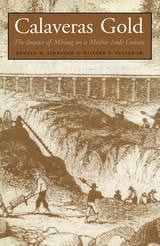
Calaveras Gold
The Impact Of Mining On A Mother Lode CountyRonald H. Limbaugh
University of Nevada Press, 2003
California’s Calaveras County—made famous by Mark Twain and his celebrated Jumping Frog—is the focus of this comprehensive study of Mother Lode mining. Most histories of the California Mother Lode have focused on the mines around the American and Yuba Rivers. However, the “Southern Mines”—those centered around Calaveras County in the central Sierra—were also important in the development of California’s mineral wealth. Calaveras Gold offers a detailed and meticulously researched history of mining and its economic impact in this region from the first discoveries in the 1840s until the present. Mining in Calaveras County covered the full spectrum of technology from the earliest placer efforts through drift and hydraulic mining to advanced hard-rock industrial mining. Subsidiary industries such as agriculture, transportation, lumbering, and water supply, as well as a complex social and political structure, developed around the mines. The authors examine the roles of race, gender, and class in this frontier society; the generation and distribution of capital; and the impact of the mines on the development of political and cultural institutions. They also look at the impact of mining on the Native American population, the realities of day-to-day life in the mining camps, the development of agriculture and commerce, the occurrence of crime and violence, and the cosmopolitan nature of the population. Calaveras County mining continued well into the twentieth century, and the authors examine the ways that mining practices changed as the ores were depleted and how the communities evolved from mining camps into permanent towns with new economic foundations and directions. Mining is no longer the basis of Calaveras’s economy, but memories of the great days of the Mother Lode still attract tourists who bring a new form of wealth to the region.
Challenged Sovereignty
The Impact of Drugs, Crime, Terrorism, and Cyber Threats in the CaribbeanIvelaw Lloyd Griffith
University of Illinois Press, 2024
Informed and up to date, Challenged Sovereignty explains the effects of today’s globalized problems on the contemporary Caribbean.
Cold War Broadcasting
Impact on the Soviet Union and Eastern EuropeR. Eugene Parta
Central European University Press, 2010
Constitutional Deliberation in Congress
The Impact of Judicial Review in a Separated SystemJ. Mitchell Pickerill
Duke University Press, 2004
Pickerill combines legislative histories, extensive empirical findings, and interviews with current and former members of Congress, congressional staff, and others. He examines data related to all of the federal legislation struck down by the Supreme Court from the beginning of the Warren Court in 1953 through the 1996–97 term of the Rehnquist Court. By looking at the legislative histories of Congressional acts that invoked the Commerce Clause and presented Tenth Amendment conflicts—such as the Child Labor Act (1916), the Civil Rights Act (1965), the Gun-Free School Zones Act (1990), and the Brady Bill (1994)—Pickerill illuminates how Congressional deliberation over newly proposed legislation is shaped by the possibility of judicial review. The Court’s invalidation of the Gun-Free School Zones Act in its 1995 ruling United States v. Lopez signaled an increased judicial activism regarding issues of federalism. Pickerill examines that case and compares congressional debate over constitutional issues in key pieces of legislation that preceded and followed it: the Violence Against Women Act of 1994 and the Hate Crimes Prevention Act of 1997. He shows that Congressional attention to federalism increased in the 1990s along with the Court’s greater scrutiny.
Critical Data Storytelling for Libraries
Crafting Ethical Narratives for Advocacy and ImpactKate McDowell
American Library Association, 2025
- the dynamic interrelationships between storyteller, audience, and story which lie at the heart of storytelling;
- ways to mesh library data collection processes with long-term storytelling potential, prioritizing interaction over transaction;
- three time-honored and effective narrative strategies for organizing the informational and emotional content of library data stories, easily adaptable for any situation;
- approaches for emphasizing inclusivity and justice to ensure that library advocates can tell stories that challenge stereotypes, promote equity, and align their efforts with broader ethical and social goals;
- audience attitudes as challenges and opportunities for library data communication; and
- strategies for maintaining open and transparent public communication in the face of rampant misinformation and active disinformation campaigns.
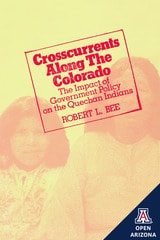
Crosscurrents Along the Colorado
The Impact of Government Policy on the Quechan IndiansRobert L. Bee
University of Arizona Press, 1981
This intriguing book, original published in 1981, considers the Quechans as a case history of the frequent discrepancy between benevolently phrased national intention and exploitative local action. The story of their changing life is traced through the anti-poverty programs of the 1960s and '70s—showing how the implementation of these programs was affected by features of community life that had evolved over preceding decades—and culminates in the Quechans’ forging a self-sustaining though fragile economy despite their status as Federal wards.
This book is more than a product of archival research. Author Robert Bee attended Quechan public gatherings, canvassed the community, and conducted intensive interviews over a thirteen-year period to attain an intimate understanding of this people’s perseverance in the face of age-old frustration. In presenting their story, Bee focuses on the behavior and actions of individuals thrust into key decision-making roles to provide more than just abstract analysis. What emerges is not only a unique ethnohistorical approach to economic development, but a model history of a modern tribe.
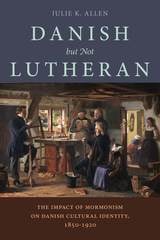
Danish, But Not Lutheran
The Impact of Mormonism on Danish Cultural Identity, 1850–1920Julie K. Allen
University of Utah Press, 2017
The Danish-Mormon migration to Utah in the nineteenth century was, relative to population size, one of the largest European religious out-migrations in history. Hundreds of thousands of Americans can trace their ancestry to Danish Mormons, but few know about the social and cultural ramifications of their ancestors’ conversion to Mormonism. This book tells that exciting and complex story for the first time.
In 1849, after nearly a thousand years of state- controlled religion, Denmark’s first democratic constitution granted religious freedom. One year later, the arrival of three Mormon missionaries in Denmark and their rapid success at winning converts to their faith caused a crisis in Danish society over the existential question: "How could someone be Danish but not Lutheran?" Over the next half-century nearly thirty thousand Danes joined the LDS Church, more than eighteen thousand of whom emigrated to join their fellow Mormons in Utah. This volume explores the range of Danish public reactions to Mormonism over a seventy-year period—from theological concerns articulated by Søren and Peter Christian Kierkegaard in the 1850s to fear-mongering about polygamy and white slavery in silent films of the 1910s and 1920s—and looks at the personal histories of converts.
Honorable Mention for Best International Book from the Mormon History Association.
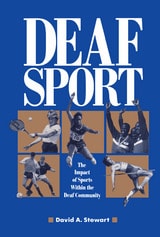
Deaf Sport
The Impact of Sports within the Deaf CommunityDavid A. Stewart
Gallaudet University Press, 1991
Deaf Sport describes the full ramifications of athletics for Deaf people, from the meaning of individual participation to the cultural bonding resulting from their organization. Deaf Sport profiles noted deaf sports figures and the differences particular to Deaf sports, such as the use of sign language for score keeping, officiating, and other communication.
This important book analyzes the governing and business aspects of Deaf sport, both local deaf groups and the American Athletic Association of the Deaf and the World Games for the Deaf. It shows the positive psychological and educational impact of Deaf sport, and how it serves to socialize further the geographically dispersed members of the Deaf community.

Dynamics, Geometry, Number Theory
The Impact of Margulis on Modern MathematicsEdited by David Fisher, Dmitry Kleinbock, and Gregory Soifer
University of Chicago Press, 2022
This edited collection highlights the foundations and evolution of research by widely influential Fields Medalist Gregory Margulis. Margulis is unusual in the degree to which his solutions to particular problems have opened new vistas of mathematics; his ideas were central, for example, to developments that led to the recent Fields Medals of Elon Lindenstrauss and Maryam Mirzhakhani. Dynamics, Geometry, Number Theory introduces these areas, their development, their use in current research, and the connections between them. Divided into four broad sections—“Arithmeticity, Superrigidity, Normal Subgroups”; “Discrete Subgroups”; “Expanders, Representations, Spectral Theory”; and “Homogeneous Dynamics”—the chapters have all been written by the foremost experts on each topic with a view to making them accessible both to graduate students and to experts in other parts of mathematics. This was no simple feat: Margulis’s work stands out in part because of its depth, but also because it brings together ideas from different areas of mathematics. Few can be experts in all of these fields, and this diversity of ideas can make it challenging to enter Margulis’s area of research. Dynamics, Geometry, Number Theory provides one remedy to that challenge.
Essays in Ottoman and Turkish History, 1774-1923
The Impact of the WestBy Roderic H. Davison
University of Texas Press, 1990
The effect of Western influence on the later Ottoman Empire and on the development of the modern Turkish nation-state links these twelve essays by a prominent American scholar. Roderic Davison draws from his extensive knowledge of Western diplomatic history and Turkish history to describe a period in which the actions of the Great Powers, incipient and rising nationalisms, and Westernizing reforms shaped the destiny of the Ottoman Empire and the creation of the new Turkish Republic.
Eleven of the essays were previously published in widely scattered journals and multi-authored volumes. The first of these provides a general survey of Turkish and Ottoman history, from early Turkish times to the end of the Empire. The following essays continue chronologically from 1774, detailing some of the changes in the nineteenth-century Empire. Several themes recur. One is the impact of Western ideas and institutions and the resistance to that influence by some elements in the Empire. Another concerns the diplomatic pressure exerted by the Great Powers of Europe on the Empire, which amounted at times to direct intervention in Ottoman domestic affairs. Taken together, the essays portray a confluence of civilizations as well as a clash of cultures.
Professor Davison has written an interpretive introduction that sets out the historical trends running throughout the book. In addition, he includes a previously unpublished article on the advent of the electric telegraph in the Ottoman Empire to show how the adoption of a Western technological advance could affect many areas of life.
Of particular interest to students of Ottoman and Middle East history, these essays will also be valuable for everyone concerned with modernization in developing nations. Davison's interpretations and keen methodological sense also shed new light on several aspects of European diplomatic history.

Ethno Music Gatherings
Pedagogy Experience, ImpactEdited by Lee Higgins and Sarah Jane Gibson
Intellect Books, 2024
This book presents key findings from a four-year project that sought to understand Ethno, an organized residential folk, world, and traditional music program for young people ranging in age from eighteen to thirty. First held in Sweden in 1990, Ethno now hosts gatherings in more than forty countries. The authors examine the complexity of an Ethno music experience with three focuses: pedagogy and professional development, participant experience, and impact beyond the gathering.
Drawing on data from participant observations, interviews, social media analysis, onsite and video observations, surveys, and questionnaires, the authors ask critical questions concerning Ethno’s history, ethos, pedagogy, and philosophical ideals. Considering its history and current practices, the following themes are explored: non-formal music making, personal authenticity, holistic praxis, musical possible selves, intercultural music exchange, sustainability, social media engagement, song sharing, and future practices. As a collection of integrated thought, the book’s purpose is to illuminate new understandings of what Ethno does and in so doing present synergies and divergencies with the wider field of music education.
Immigrants and Welfare
The Impact of Welfare Reform on America's NewcomersMichael E. Fix
Russell Sage Foundation, 2009
Impact of Migration on Poland
EU Mobility and Social ChangeAnne White, Izabela Grabowska, Pawel Kaczmarczyk, and Krystyna Slany
University College London, 2018
The Impact of Migration on Poland offers a new approach for understanding how migration affects sending countries and provides a wide-ranging analysis of how Poland has changed, and continues to change, since accession to the European Union in 2004. The authors explore an array of social trends and their causes before using in-depth interview data to illustrate how migration contributes to those causes. They address fundamental questions about whether and how Polish society is becoming more equal and more cosmopolitan, arguing that for particular segments of society migration does make a difference. While the book focuses mainly on those who have stayed in Poland, and their contacts with Poles in other countries, it also analyzes Polish society abroad, a concept that is a far more accurate description than “community” in countries such as the UK.
Inside Appellate Courts
The Impact of Court Organization on Judicial Decision Making in the United States Courts of AppealsJonathan Matthew Cohen
University of Michigan Press, 2002
Memory and the Impact of Political Transformation in Public Space
Daniel J. Walkowitz and Lisa Maya Knauer, eds.
Duke University Press, 2004
This collection expands the scope of what is considered public history by pointing to silences and absences that are as telling as museums and memorials. Contributors remind us that for every monument that is erected, others—including one celebrating Sri Lanka’s independence and another honoring the Unknown Russian Soldier of World War II—remain on the drawing board. While some sites seem woefully underserved by a lack of public memorials—as do post–Pinochet Chile and post–civil war El Salvador—others run the risk of diluting meaning through overexposure, as may be happening with Israel’s Masada. Essayists examine public history as it is conveyed not only in marble and stone but also through cityscapes and performances such as popular songs and parades.
Contributors
James Carter
John Czaplicka
Kanishka Goonewardena
Lisa Maya Knauer
Anna Krylova
Teresa Meade
Bill Nasson
Mary Nolan
Cynthia Paces
Andrew Ross
Daniel Seltz
T. M. Scruggs
Irina Carlota Silber
Daniel J. Walkowitz
Yael Zerubavel
Militant Zionism in America
The Rise and Impact of the Jabotinsky Movement in the United States, 1926-1948Rafael Medoff
University of Alabama Press, 2006
This in-depth look at a controversial faction of American Zionism fills
a void in the story of American Zionism--and in the story of American Judaism.
This book recounts the fascinating and little-known story
of the militant American Zionists who lobbied Congress, rallied American
public opinion, and influenced British-American relations in their campaign
for Jewish statehood in the 1930s and 1940s. Although these activists have
been dismissed as fanatics who fragmented the American Zionist movement,
Rafael Medoff reveals that the faction--which included an Academy Award-winning
screenwriter and several future members of the Israeli parliament--was
more influential than has been previously acknowledged.
These militants stirred America's conscience by placing
controversial newspaper ads, lobbying conservative as well as liberal members
of Congress, and staging dramatic protest rallies. Through these tactics,
Medoff shows, they attracted a wave of support from an extraordinary cross-section
of leading Americans, including comedians Harpo Marx and Carl Reiner, actors
Vincent Price, Marlon Brando, and Jane Wyatt, musician Leonard Bernstein,
and rising young politicians Jacob Javits and Hubert Humphrey. Medoff also
describes the shadowy underground division that smuggled weapons to the
Holy Land in caskets, naming and interviewing for the first time members
of this gunrunning network.
Based on years of archival research and interviews and
written in a compelling style, Militant Zionism in America documents
events that reshaped the American Jewish community, influenced American
foreign policy, and contributed to one of the most extraordinary events
of modern history: the creation of the State of Israel.
Rafael Medoff is a Visiting Scholar at the State University of New York -- Purchase College.
Mothering from the Field
The Impact of Motherhood on Site-Based ResearchEdited by Bahiyyah Miallah Muhammad and Mélanie-Angela Neuilly
Rutgers University Press, 2019
Mothering from the Field offers both a mosaic of perspectives from current women scientists’ experiences of conducting field research across a variety of sub-disciplines while raising children, and an analytical framework to understand how we can redefine methodological and theoretical contributions based on mothers’ experiences in order not just to promote healthier, more inclusive, nurturing, and supportive environments in physical, life, and social sciences, but also to revolutionize how we conceptualize research.

Penetration & Protest in Tanzania
Impact Of World Economy On The Pare, 1860-1960Isaria N. Kimambo
Ohio University Press, 1990
The originality of this study of rural transformation stems from the way in which Professor Kimambo has used the oral tradition to reveal the history of the impact of the world economy in northeastern Tanzania. First under the pressures of commodity trade, and later under German and British imperialism, the peasant producers of this region were forced into participation in capitalist production.
These partial changes destroyed the Pare’s balanced subsistence structure. But throughout the colonial period they were frustrated in their efforts to transform themselves fully into capitalist producers. These struggles finally led to open revolt in 1947 and it was three years before the protest ended. Between 1947 and 1960 the colonial government tried to reverse the effects of the revolt without providing the kind of transformation desired by the peasants.
This study illustrates vividly the difference between the intentions of capital and those of the colonized peasantry. The intentions of the two sides seemed to be incompatible. While imperialism would allow for the limited participation that would maximize profits for metropolitan capital, the peasants were struggling for freedom to transform themselves into capitalist producers.
Quantifying the Impact of Technical Barriers to Trade
Can It Be Done?Keith E. Maskus and John S. Wilson, Editors
University of Michigan Press, 2001
Rethinking Class Size
The Complex Story of Impact on Teaching and LearningPeter Blatchford and Anthony Russell
University College London, 2020
Drawing on twenty years of systematic classroom observations, surveys of practitioners, detailed case studies, and extensive reviews of research, Peter Blatchford and Anthony Russell contend that common ways of researching the impact of class size are limited and sometimes misguided. While class size may have no direct effect on pupil outcomes, it can have a significant impact on interconnections within classroom processes. In describing these connections, the book opens up the everyday world of the classroom and shows that the influence of class size is felt everywhere.
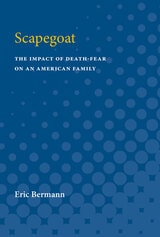
Scapegoat
The Impact of Death-Fear on an American FamilyEric Bermann
University of Michigan Press, 1973
Roscoe A. was eight years old when psychologist Eric Bermann first met him and his family. In kindergarten, Roscoe was considered highly creative, but his teachers also evaluated him as a potentially dangerous and destructive child capable of uncontrolled aggression toward other children. His parents denied the report. To them, Roscoe was a quiet, well-behaved boy.
In the second grade, over the objections and confusion of his parents, Roscoe was finally removed from public school and admitted to a day treatment facility where he could receive psychotherapy. Progress was minimal. After a year of effort, there was still no agreement on "Roscoe's problems." Mental health professionals despaired. They deemed his parents "unworkable" and labeled them "deniers" of their son's destructive behaviors. In turn, the parents blamed the professionals for therapeutic incompetencies and failure to help Roscoe, who, after all, "was never a problem at home."
The only alternative to terminating the therapeutic effort was to obtain new data and fresh insights into the dilemma. It was at this point that Dr. Bermann, a clinical researcher embarked on the study of family interaction, was consulted. He immediately arranged to visit them at home, where he could observe their interactions in situ. He hoped that, with them, he might shed some light on the discrepancy between reports of Roscoe's behavior.
Dr. Bermann visited the family and recorded his observations regularly and in detail throughout the next year. His analysis of these observations has resulted in this startling book--a research account that is both stunning in the originality of its method and searing in its documentation of an American family in crisis.
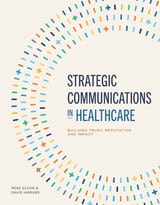
Strategic Communications in Healthcare
Building Trust, Reputation, and ImpactEdited by Rose Glenn and David Jarrard
Michigan Publishing Services, 2027
Strategic Communications in Healthcare: Building Trust, Reputation and Impact is a landmark textbook that combines innovative approaches to communication with the enduring principles that drive effectiveness, influence, and results. Drawing on the real-world expertise of nationally recognized leaders Rose Glenn and David Jarrard—along with a who’s who of senior healthcare communicators and educators—this hands-on guide brings together trust-building, messaging, crisis response, culture, brand, patient experience, research, measurement, AI, and more foundational elements into a cohesive framework for students and professionals alike.

The Impact of Aristotelianism on Modern Philosophy
Riccardo Pozzo
Catholic University of America Press, 2019
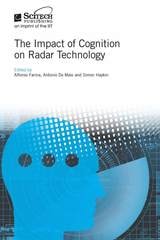
The Impact of Cognition on Radar Technology
Alfonso Farina
The Institution of Engineering and Technology, 2018
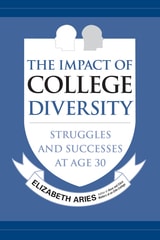
The Impact of College Diversity
Struggles and Successes at Age 30Elizabeth Aries
Temple University Press, 2023
The Impact of College Diversity details how exposure to diversity in college helped shape Black and white graduates process issues of economic and racial privilege and inequality at age 30. She investigates how college diversity experiences also facilitate the attainment of upward social mobility in lower-income students and the role that mobility played in their relationships with family and friends in their home communities. Aries further examines how interactions with peers of another race and class influenced development of citizenship skills and civic engagement, as well as Black students’ ability to cope with the challenges they faced in the professional world.
Aries concludes her study with a discussion of why elite colleges have been beneficial in promoting upward mobility in lower-income students, and the importance of achieving equity and inclusion in making diversity initiatives successful.
The Impact of Global Warming on Texas
Second editionEdited by Jurgen Schmandt, Gerald R. North, and Judith Clarkson
University of Texas Press, 2011
When The Impact of Global Warming on Texas was first published in 1995, it discussed climate change as a likely future phenomenon, predicted by scientific studies. This entirely rewritten second edition presents evidence that early climate change impacts can now be observed and identifies the threats climate change will pose to Texas through the year 2050. It also offers the hopeful message that corrective action, if taken now, can avert unmanageable consequences.
The book begins with a discussion of climate science and modeling and the information that can be derived from these sources for Texas. The authors follow this with an analysis of actual climate trends in the various Texas climate regions, including a predicted rise in temperatures of 5.4 degrees F (plus or minus 1.8 F) by the end of the century. This could lead to less rainfall and higher evaporation, especially in regions that are already dry. Other important effects include possible changes in El Niño (climate variability) patterns and hurricane behaviors. Taking into account projected population growth, subsequent chapters explore likely trends with respect to water availability, coastal impacts, and biodiversity.
The authors then look at the issues from a policy perspective, focusing on Texas's importance to the national economy as an energy producer, particularly of oil and gas. They recommend that Texas develop its own climate change policy to serve the goals of reducing greenhouse gas emissions, increasing energy independence, ensuring regional security, and improving management of water, air, land, and wildlife.
The Impact of International Trade on Wages
Edited by Robert C. Feenstra
University of Chicago Press, 2000
This collection brings together innovative new ideas and data sources in order to provide more satisfying alternatives to the trade versus technology debate and to assess directly the specific impact of international trade on U.S. wages. This timely volume offers a thorough appraisal of the wage distribution predicament, examining the continued effects of technology and globalization on the labor market.

The Impact of Populism on the Party System
The Experience of European Democracies (2000–2020)Edited by Jirí Kocián, Michal Kubát, and Martin Mejstrík
Karolinum Press, 2026
Analyzes the influence of populism on the development and transformation of parties and party systems in seven European countries between 2000 and 2020.
The Impact of Populism on the Party System: The Experience of European Democracies (2000–2020) analyzes the influence of populism on the development and transformation of parties and party systems in Hungary, Poland, Greece, Germany, Spain, Czechia, and France in the first two decades of the twenty-first century. In individual case studies, the international team of authors asks to what extent the rise of populist parties witnessed during the period in question caused increased polarization and ideological distance between parties in a given country, and whether this polarization led to a transformation in party system. Moderate party systems can be transformed into polarized party systems under the influence of populism, with a high degree of polarization affecting the functioning of the entire democratic regime. In extreme cases, the very democratic essence of European political regimes may be threatened.
The Impact of Touch in Dance Movement Psychotherapy
A Body–Mind Centering ApproachKaty Dymoke
Intellect Books, 2021
In this book, dance movement psychotherapist Katy Dymoke presents an in-depth case study of work with a client with a profound learning disability. The research stems from a postdoctoral thesis sponsored by the United Kingdom’s National Health Service, where Dymoke was employed at the time of the clinical outcomes relayed in this work. The volume includes transcripts of the session content; descriptions of how incidents of touch were initiated and undertaken within the process; subsequent categorizations of the incidents of touch as self-directed, passive, or reciprocal; and commentary and discussion of the therapeutic process. As we see, the incidents of touch contribute to the client’s process of mental distress, trauma, lack of capacity, and more. Finally, Dymoke includes sections on the ethical issues of this work in the NHS, on doing research with such a client group, and on the theoretical models that emerged.
The Impact of Trade and Domestic Policy Reforms in India
A CGE Modeling ApproachRajesh Chadha, Alan V. Deardorff, Sanjib Pohit, and Robert M. Stern
University of Michigan Press, 1998
The Impact of the Civil War and Reconstruction on Arkansas
Persistence in the Midst of RuinCarl H. Moneyhon
University of Arkansas Press, 2002

The Impact of the War on the Schools of Red Wing
Nelson Bossing
University of Minnesota Press, 1945
The Positive Mind
Its Development and Impact on Modernity and PostmodernityEvaldas Nekrašas
Central European University Press, 2016
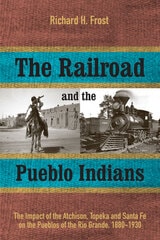
The Railroad and the Pueblo Indians
The Impact of the Atchison, Topeka and Santa Fe on the Pueblos of the Rio Grande, 1880-1930Richard H. Frost
University of Utah Press, 2015
The Pueblo communities responded variously, though mostly conservatively to sustain their traditional communities. This book spotlights two very different responses. Santo Domingo's reaction was hostile, but Laguna chose accommodation. These reactions reveal previously overlooked aspects of these pueblos’ histories that provide compelling reasons behind their varying responses. The book also analyzes the self-contradictory nature of Pueblo constitutional law from 1876 to 1913 and describes conflicted Bureau of Indian Affairs treatment of the Pueblos in the late nineteenth and early twentieth centuries. Each in turn had fateful consequences.

They Sang for Horses
The Impact of the Horse on Navajo and Apache FolkloreLaVerne Harrell Clark
University Press of Colorado, 2001
No Native American groups placed more emphasis on the horse in their lives than did the Navajo and Apache of the Southwest. They Sang for Horses, first published in 1966 and now considered a classic, remains the only comprehensive treatment of the profound mystical influence that the horse has exerted for more than 300 years.
In this completely redesigned and expanded edition, LaVerne Harrell Clark examines how storytellers, singers, medicine men, and painters created the animal's evolving symbolic significance by adapting existing folklore and cultural symbols. Exploring the horse's importance in ceremonies, songs, prayers, customs, and beliefs, she investigates the period of the horse's most pronounced cultural impact on the Navajo and the Apache, starting from the time of its acquisition from the Spanish in the seventeenth century and continuing to the mid-1960s, when the pickup truck began to replace it as the favored means of transportation. In addition, she presents a look at how Navajos and Apaches today continue to redefine the horse's important role in their spiritual as well as material lives.
This classic work is a must for historians, readers interested in Native American folklore and mythology, and anyone who has ever been captivated by the magic and romance of the horse.

Tracing the Impact of First-Year Writing
Identity, Process, and Transfer at a Public UniversityLaura Wilder
Utah State University Press, 2024
In contrast to previous longitudinal studies of college writers undertaken at institutions with high prestige and resources, Tracing the Impact of First-Year Writing explores the role of writing at a regional public university and documents how students’ experiences with writing can be highly divergent across the curriculum and unequal across campuses. Additionally, this book includes the voices of students who do not identify as capable writers and have strongly negative emotional reactions to writing and writing instruction and adds empirical support to innovative calls in the field to transform the first-year writing course into one that inspires students to reflectively consider writing itself.

Transit Communities and Impact of Migration
Hungary, 2017-2020Beatrix Futak-Campbell
Central European University Press, 0
The impact of the passage of war refugees on the lives and minds of local residents and officials is the subject of this study. Between 2017 and 2020, Beatrix Futak-Campbell conducted interviews with over fifty people who live and work near the Hungarian-Serbian border. This area was exposed to the unprecedented stream of refugees, most of them seeking safety from the Syrian civil war. The Hungarian government’s hostility to migrants has been widely criticized, and news coverage has tended to reiterate unhelpful characterisations of Hungarian citizens as being anti-migrant, anti-Muslim and racist.
The situation is, however, more nuanced. There is a substantial difference between the border police, local communities, and organizations, on the one hand, and national politicians and the international media perception of the refugee ‘crisis’, on the other. Those living and working with migrants at the border were caught between the domestic political situation, the plight of the refugees and the international support the latter receive, and the exigencies of their own livelihoods. This book explores these communities and their own security concerns.
War and Rights
The Impact of War on Political and Civil RightsDavid L. Rousseau
University of Michigan Press, 2021
Warfare in Europe contributed to the development of the modern state. In response to external conflict, state leaders raised armies and defended borders. The centralization of power, the development of bureaucracies, and the integration of economies all maximized revenue to support war. But how does a persistent external threat affect the development of a strong state? The “Garrison State” hypothesis argues that states that face a severe security threat will become autocracies. Conversely, the “Extraction School,” argues that warfare indirectly promotes the development of democratic institutions.
Execution of large-scale war requires the mobilization of resource and usually reluctant populations. In most cases, leaders must extend economic or political rights in exchange for resolving the crisis. Large-scale warfare thus expands political participation in the long run. The authors use empirical statistical modeling to show that war decreases rights in the short term, but the longer and bigger a war gets, the rights of the citizenry expand with the conflict. The authors test this argument through historical case studies—Imperial Russia, Austro-Hungarian Dual Monarchy, African Americans in World War I and II, and the Tirailleurs Senegalese in World War I—through the use of large-N statistical studies—Europe 1900–50 and Global 1893–2011—and survey data. The results identify when, where, and how war can lead to the expansion of political rights.
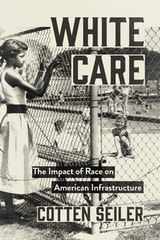
White Care
The Impact of Race on American InfrastructureCotten Seiler
University of Chicago Press, 2026
Infrastructure delivers to its users a range of benefits, from health, safety, and sanitation to mobility, energy, and education. It is, as Cotten Seiler argues, how modern states show care for their populations. White Care recounts the rise and fall of public infrastructure in the United States, unearthing its origins as an investment in those Americans deemed most highly evolved, showing the political stakes of its desegregation, and accounting for its current state of dilapidation.
From the late nineteenth century through much of the twentieth, government investments in physical (“hard”) and social (“soft”) infrastructure constituted a regime of care that Seiler calls “custodial liberalism.” This regime achieved legitimacy with the New Deal, which conferred upon white citizens a bounty of life-enhancing public works. But custodial liberalism began to unravel in the postwar decades, as Americans of color gained access to public schools, housing, swimming pools, parks, and other sites from which they had long been excluded. As the infrastructural commons were desegregated, white Americans withdrew from the social compact that had empowered them and turned toward neoliberalism, with its program of austerity and privatization. This racialized renunciation has deprived everyone—including themselves—of a cleaner, greener, healthier, safer, more affordable, and more functional environment.