Results by title
27 books match the query 'Improvisation'
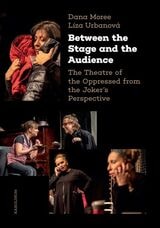
Between the Stage and the Audience
The Theatre of the Oppressed from the Joker’s PerspectiveDana Moree and Líza Urbanová
Karolinum Press, 2025
What is the theater of the oppressed—the theatrical forms arising in the 1970s that blur the line between performer and spectator? What is its method? How is the performance created and who are its non-actors and non-audiences? These and other questions are answered in Between the Stage and the Audience from the perspective of a “joker,” a guide of theater groups and a presenter of theater performances. This role works both with the group that prepares the theater performance and with the audience itself.
This book is structured according to the joker's dual roles. Descriptions of the various stages of the creation of a performance are interspersed with interviews with theater practitioners as well as specific examples from realized performances. In the second part of the book, six jokers who actively use the method of theater of the oppressed share their experiences and unique adaptations of these theatrical innovations in the Czech context.
Contingent Encounters
Improvisation in Music and Everyday LifeDan DiPiero
University of Michigan Press, 2022
Funnier
A New Theory for the Practice of ComedyAnne Libera
Northwestern University Press, 2026
A roadmap for understanding and creating comedy from the visionary Second City comedy director
Great comedy can feel ineffable—and unlearnable. Debunking the myth that “either you are funny, or you aren’t,” Libera breaks the magic of comedy down into an innovative theory and practical toolkit. Developed over the course of thirty years as a director for The Second City and professor of comedy studies in their training center, Libera’s approach is effective across stand-up, sketch, film, and television comedy, as evidenced by her powerhouse students: Amy Poehler, Kristen Schaal, Steven Yeun, and many more of your favorites.
This book starts with a way to think about comedy and then guides you through concrete strategies for making your work smarter, richer, funnier. Libera covers everything from generating material to revising and performing to fostering social connection through comedy. In the book’s final section, Libera draws from her personal life to make a profound case for why future comedy writers should consider the ethics of their art and their responsibility to their fellow human beings in the audience. Readers won’t just be funnier because of this book—they’ll be better people.
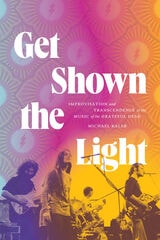
Get Shown the Light
Improvisation and Transcendence in the Music of the Grateful DeadMichael Kaler
Duke University Press, 2023
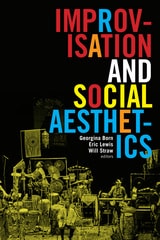
Improvisation and Social Aesthetics
Georgina Born, Eric Lewis, and Will Straw, editors
Duke University Press, 2017
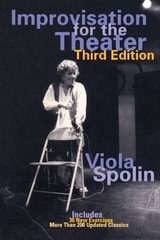
Improvisation for the Theater
A Handbook of Teaching and Directing TechniquesViola Spolin
Northwestern University Press, 1999
The thoroughly revised third edition of the bible of improvisational theater.
Viola Spolin's improvisational techniques changed the very nature and practice of modern theater. The first two editions of Improvisation for the Theater sold more than 100,000 copies and inspired actors, directors, teachers, and writers in theater, television, film. These techniques have also influenced the fields of education, mental health, social work, and psychology.
The revised edition features:
- 30 new exercises, including introductions (Slow/Fast/Normal; Extended Sound; Mirror Speech; Unrelated Conversation)
- More than 200 updated classic exercises
- new section of traditional theater games for warm-up use
- “Paul Sills' Sayings of Viola Spolin”
- New glossary of side-coaching phrases, with definitions of their meaning and value
- Alphabetical list of all games and exercises

Insubordinate Spaces
Improvisation and Accompaniment for Social JusticeBarbara Tomlinson
Temple University Press, 2019
Insubordinate spaces are places of possibility, products of acts of accompaniment and improvisation that deepen capacities for democratic social change. Barbara Tomlinson and George Lipsitz’s Insubordinate Spaces explores the challenges facing people committed to social justice in an era when social institutions have increasingly been reconfigured to conform to the imperatives of a market society.
In their book, the authors argue that education, the arts, and activism are key terrains of political and ideological conflict. They explore and analyze exemplary projects responding to current social justice issues and crises, from the Idle No More movement launched by Indigenous people in Canada to the performance art of Chingo Bling, Fandango convenings, the installation art of Ramiro Gomez, and the mass protests proclaiming “Black Lives Matter" in Ferguson, MO. Tomlinson and Lipsitz draw on key concepts from struggles to advance ideas about reciprocal recognition and co-creation as components in the construction of new egalitarian and democratic social relations, practices, and institutions.
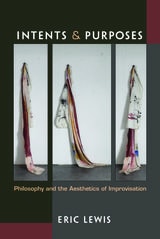
Intents and Purposes
Philosophy and the Aesthetics of ImprovisationEric Lewis
University of Michigan Press, 2019
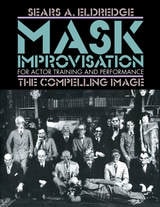
Mask Improvisation for Actor Training and Performance
The Compelling ImageSears Eldredge
Northwestern University Press, 1996
Featuring dozens of improvisational exercises in the innovative spirit of Viola Spolin, and supplemented with practical appendices on mask design and construction, forms and checklists, and other classroom materials, this book is an invaluable tool for teacher and student alike, as well as compelling reading for anyone interested in acquiring a deeper understanding of masks as agents of transformation, creativity, and performance.
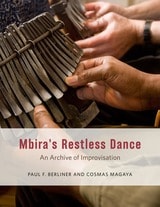
Mbira's Restless Dance
An Archive of ImprovisationPaul F. Berliner and Cosmas Magaya
University of Chicago Press, 2020
Mbira’s Restless Dance is written to be played. This two-volume, spiral-bound set features musical transcriptions of thirty-nine compositions and variations, annotated with the master player’s advice on technique and performance, his notes and observations, and commentary by Berliner. Enhanced with extensive website audiovisuals, Mbira’s Restless Dance is in effect a series of masterclasses with Magaya, suitable for experienced mbira players and those learning the fundamentals.
Together with Berliner's The Art of Mbira, in which he provides an indispensable historical and cultural guide to mbira in a changing world, Mbira's Restless Dance breaks new ground in the depth and specificity of its exploration of an African musical tradition, and in the entwining of the authors’ collaborative voices. It is a testament to the powerful relationship between music and social life—and the rewards of lifelong musical study, performance, and friendship.
Negotiated Moments
Improvisation, Sound, and SubjectivityGillian Siddall and Ellen Waterman, editors
Duke University Press, 2016
Contributors. George Blake, David Borgo, Judith Butler, Rebecca Caines, Louise Campbell, Illa Carrillo Rodríguez, Berenice Corti, Andrew Raffo Dewar, Nina Eidsheim, Tomie Hahn, Jaclyn Heyen, Christine Sun Kim, Catherine Lee, Andra McCartney, Tracy McMullen, Kevin McNeilly, Leaf Miller, Jovana Milovic, François Mouillot, Pauline Oliveros, Jason Robinson, Neil Rolnick, Simon Rose, Gillian Siddall, Julie Dawn Smith, Jesse Stewart, Clara Tomaz, Sherrie Tucker, Lindsay Vogt, Zachary Wallmark, Ellen Waterman, David Whalen, Pete Williams, Deborah Wong, Mandy-Suzanne Wong
Playing for Keeps
Improvisation in the AftermathDaniel Fischlin and Eric Porter
Duke University Press, 2020
Contributors. Randy DuBurke, Rana El Kadi, Kevin Fellezs, Daniel Fischlin, Kate Galloway, Reem Abdul Hadi, Vijay Iyer, Mark Lomanno, Moshe Morad, Eric Porter, Sara Ramshaw, Matana Roberts, Darci Sprengel, Paul Stapleton, Odeh Turjman, Stephanie Vos
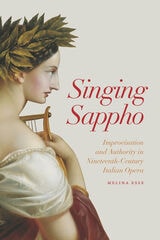
Singing Sappho
Improvisation and Authority in Nineteenth-Century Italian OperaMelina Esse
University of Chicago Press, 2021
Situating Writing Processes
Physicality, Improvisation, and the Teaching of WritingHannah Rule
University Press of Colorado, 2020
Sound Changes
Improvisation and Transcultural DifferenceDaniel Fischlin and Eric Porter, Editors
University of Michigan Press, 2021
Sound Changes responds to a need in improvisation studies for more work that addresses the diversity of global improvisatory practices and argues that by beginning to understand the particular, material experiences of sonic realities that are different from our own, we can address the host of other factors that are imparted or sublimated in performance. These factors range from the intimate affect associated with a particular performer’s capacity to generate a distinctive “voicing,” or the addition of an unexpected sonic intervention only possible with one particular configuration of players in a specific space and time. Through a series of case studies drawn from Africa, Asia, the Americas, and Oceania, Sound Changes offers readers an introduction to a range of musical expressions across the globe in which improvisation plays a key role and the book demonstrates that improvisation is a vital site for the production of emergent social relationships and meanings. As it does this work, Sound Changes situates the increasingly transcultural dimensions of improvised music in relation to emergent networks and technologies, changing patterns of migration and immigration, shifts in the political economy of music, and other social, cultural, and economic factors.
Improvisation studies is a recently developed, but growing, interdisciplinary field of study. The discipline—which has only truly come into focus in the early part of the twenty-first century—has been building a lexicon of key terms and developing assumptions about core practices. Yet, the full breadth of improvisatory practices has remained a vexed, if not impossibly ambitious, subject of study. This volume offers a step forward in the movement away from critical tendencies that tend to homogenize and reduce practices and vocabularies in the name of the familiar.
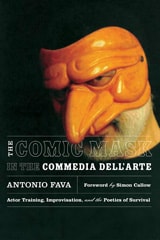
The Comic Mask in the Commedia dell'Arte
Actor Training, Improvisation, and the Poetics of SurvivalAntonio Fava
Northwestern University Press, 2007
Nobody says Shakespeare is dead, Antonio Fava tells us, but Commedia, they say, is dead. Why? Because clearly, he goes on, we have Shakespeare's texts, but nobody knows what to do with the improvisation that is the basis of the Commedia dell'Arte, despite massive documentation. This book by Fava, one of the few living master teachers of Commedia dell'Arte, is the first aesthetic and methodological study of the traditional Italian theater form--the first to describe, in a precise and practical way, what Commedia is and what it should be.
The mask--as object, symbol, character, theatrical practice, even spectacle itself--is the central metaphor around which Fava builds his discussion of structure, themes, characters, and methods. Drawing on twenty years of research conducted through his work as performer, director, mask maker, and scholar, he offers extensive practical, philosophical, and technical guidelines to performing the stock characters of Commedia, observing its structure, extracting its poetics, exploring its themes, and using the mask. A densely layered text combining historical fact, personal experience, philosophical speculation, and passionate opinion, and including copious illustrations--period drawings, prints, and color photographs of leather Commedia masks made by Fava himself--The Comic Mask in the Commedia dell'Arte is a rich work of singular insight into one of the world's most venerable forms of theater.
The Culture of Spontaneity
Improvisation and the Arts in Postwar AmericaDaniel Belgrad
University of Chicago Press, 1998
"A compelling narrative, putting living flesh on shorthand intuitions that connect North Beach to Black Mountain College, Fenollosa to Pollock, Jackson Lears's No Place of Grace to Todd Gitlin's The Sixties."—Joel Smith, Boston Review
"An invaluable introduction to postwar modernism across the arts."—Thomas Augst, Boston Book Review
"Belgrad's extensive probing of the artists and movements with their profound sociological roots is timely as well as comprehensive....A major contribution for serious scholars."—Choice
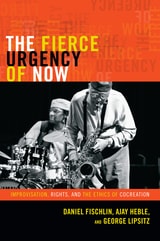
The Fierce Urgency of Now
Improvisation, Rights, and the Ethics of CocreationDaniel Fischlin, Ajay Heble, and George Lipsitz
Duke University Press, 2013
Improvisation is the creation and development of new, unexpected, and productive cocreative relations among people. It cultivates the capacity to discern elements of possibility, potential, hope, and promise where none are readily apparent. Improvisers work with the tools they have in the arenas that are open to them. Proceeding without a written score or script, they collaborate to envision and enact something new, to enrich their experience in the world by acting on it and changing it. By analyzing the dynamics of particular artistic improvisations, mostly by contemporary American jazz musicians, the authors reveal improvisation as a viable and urgently needed model for social change. In the process, they rethink politics, music, and the connections between them.

The Lived Experience of Improvisation
In Music, Learning and LifeSimon Rose
Intellect Books, 2017
The Lived Experience of Improvisation draws on an analysis of interviews with highly regarded improvisers, including Roscoe Mitchell, Pauline Oliveros, and George Lewis. Simon Rose also exploits his own experience as a musician and teacher, making a compelling case for bringing back improvisation from the margins. He argues that improvisation is a pervasive aspect of being human and that it should be at the heart of our teaching and understanding of the world.
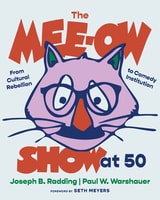
The Mee-Ow Show at 50
From Cultural Rebellion to Comedy InstitutionJoseph B. Radding and Paul W. Warshauer
Northwestern University Press, 2025
The fifty-year history of the Mee-Ow Show at Northwestern University and its influence on contemporary comedy
In the fall of 1973, two students at Northwestern University resolved to create something on stage that was wholly their own. Soon, they would be joined by a cohort of performers, musicians, and staff, and the resulting production would go on to launch the careers of scores of entertainment professionals, including some of the most well-known and awarded names in comedy today. This book is not only an account of the rebellious fifty-year history of the Mee-Ow Show, now the longest-running student sketch comedy and improv show in the country, but also its far-reaching influence. The storied group’s alumni include such household names as Craig Bierko, Ana Gasteyer, Julia Louis-Dreyfus, John Cameron Mitchell, Dermot Mulroney, Seth Meyers, and Kristen Schaal.
Based on more than a hundred new interviews with group members, presenting their words alongside never-before-published photographs and ephemera, The Mee-Ow Show at 50 provides a chronicle of the last half-century of the American undergraduate experience—and reveals how, from New York to Los Angeles, contemporary comedy can trace its roots to an upstart student production in Evanston, Illinois.
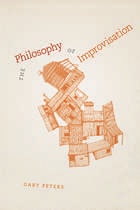
The Philosophy of Improvisation
Gary Peters
University of Chicago Press, 2009
Improvisation is usually either lionized as an ecstatic experience of being in the moment or disparaged as the thoughtless recycling of clichés. Eschewing both of these orthodoxies, The Philosophy of Improvisation ranges across the arts—from music to theater, dance to comedy—and considers the improvised dimension of philosophy itself in order to elaborate an innovative concept of improvisation.
Gary Peters turns to many of the major thinkers within continental philosophy—including Heidegger, Nietzsche, Adorno, Kant, Benjamin, and Deleuze—offering readings of their reflections on improvisation and exploring improvisational elements within their thinking. Peters’s wry, humorous style offers an antidote to the frequently overheated celebration of freedom and community that characterizes most writing on the subject. Expanding the field of what counts as improvisation, The Philosophy of Improvisation will be welcomed by anyone striving to comprehend the creative process.
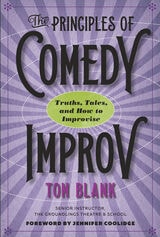
The Principles of Comedy Improv
Truths, Tales, and How to ImproviseTom Blank
University of Iowa Press, 2023
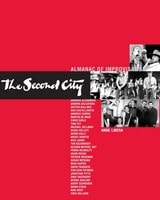
The Second City Almanac of Improvisation
Anne Libera and Second City, Inc.
Northwestern University Press, 2004
The Second City Almanac of Improvisation - like the theatre itself - is a collection of diverse ideas, viewpoints, and memories, written by a vast array of teachers, actors, and directors who all got their start at the legendary comedy theatre. Fred Willard recalls his introduction to The Second City style in the mid-Sixties; Tim Kazurinsky gives a hilarious visual demonstration on the art of object work; "Saturday Night Live" star Tina Fey talks about re-improvising material as a mode of writing revue comedy; noted director Mick Napier takes on the thorny debate between long-form improvisation and short-form improvisation. Anne Libera guides the reader through each essay by providing a road map for understanding how The Second City method of improv-based comedy has become the industry standard.
Mike Nichols, Elaine May, Alan Arkin, Joan Rivers, Robert Klein, Peter Boyle, Harold Ramis, John Belushi, Dan Aykroyd, Bill Murray, John Candy, Martin Short, Gilda Radner, George Wendt, Jim Belushi, Bonnie Hunt, Mike Myers, Ryan Stiles, Rachel Dratch, Nia Vardalos - no other theatre can boast an alumni list of this magnitude. The Second City Almanac of Improvisation provides practical instruction, personal details, and inspiration to both improvisers and their fans.
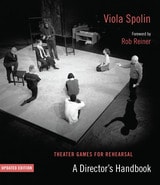
Theater Games for Rehearsal
A Director's Handbook, Updated EditionViola Spolin with a foreword by Rob Reiner
Northwestern University Press, 2010
An updated edition of a key reference text by “the high priestess of improvisational theater”
A major force in the development of American theater, Viola Spolin devised pedagogical techniques that have influenced and inspired legions of actors, improvisers, and directors. Theater Games for Rehearsal: A Director's Handbook, first published in 1985, is a practical application of Spolin's famous method that guides directors and their companies step-by-step through all phases of the rehearsal period.
In Theater Games for Rehearsal, Spolin shows in easy-to-follow detail how her techniques can be used for a variety of theater needs, from selecting performance material, casting, and building a harmonious company to warming up actors, creating stage space, and overcoming opening-night jitters. This new edition, edited by Carol Bleackley Sills, incorporates Spolin's wished-for updates: four important exercises have been added, and instructions presenting her improvisational approach have been clarified throughout. Sidecoaching instructions and game evaluations are boxed and highlighted for on-the-spot reading by the director during rehearsal.
With these additions and improvements, Theater Games for Rehearsal: A Director's Handbook brings Spolin's ideas to a new generation with greater accessibility and excitement. Featuring a new foreword by renowned film director Rob Reiner, the updated edition is mandatory for any theater bookshelf.
Theater Games for the Classroom
A Teacher's HandbookViola Spolin
Northwestern University Press, 1986
The most comprehensive theater instruction guide for all types of students
This best-selling book by Viola Spolin offers the most comprehensive theater instruction for all types of students, from small children to young adults. It includes over 130 theater games, plus exercises and instructional strategies. First developed by Spolin, the originator of modern improvisational theater techniques, these games have been tried and tested for over fifty years.
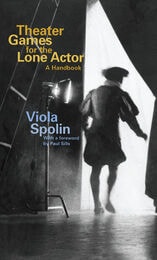
Theater Games for the Lone Actor
A HandbookViola Spolin
Northwestern University Press, 2001
Spolin's improvisational techniques changed the nature and practice of modern theater. Her work has inspired actors, directors, teachers, and writers in theater, television, and film. Her techniques have also influenced the fields of education, mental health, social work, and psychology.
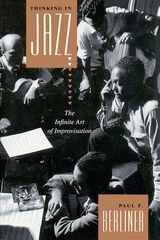
Thinking in Jazz
The Infinite Art of ImprovisationPaul F. Berliner
University of Chicago Press, 1994
The product of more than fifteen years of immersion in the jazz world, Thinking in Jazz combines participant observation with detailed musicological analysis, the author's experience as a jazz trumpeter, interpretations of published material by scholars and performers, and, above all, original data from interviews with more than fifty professional musicians: bassists George Duvivier and Rufus Reid; drummers Max Roach, Ronald Shannon Jackson, and Akira Tana; guitarist Emily Remler; pianists Tommy Flanagan and Barry Harris; saxophonists Lou Donaldson, Lee Konitz, and James Moody; trombonist Curtis Fuller; trumpeters Doc Cheatham, Art Farmer, Wynton Marsalis, and Red Rodney; vocalists Carmen Lundy and Vea Williams; and others. Together, the interviews provide insight into the production of jazz by great artists like Betty Carter, Miles Davis, Dizzy Gillespie, Coleman Hawkins, and Charlie Parker.
Thinking in Jazz overflows with musical examples from the 1920s to the present, including original transcriptions (keyed to commercial recordings) of collective improvisations by Miles Davis's and John Coltrane's groups. These transcriptions provide additional insight into the structure and creativity of jazz improvisation and represent a remarkable resource for jazz musicians as well as students and educators.
Berliner explores the alternative ways—aural, visual, kinetic, verbal, emotional, theoretical, associative—in which these performers conceptualize their music and describes the delicate interplay of soloist and ensemble in collective improvisation. Berliner's skillful integration of data concerning musical development, the rigorous practice and thought artists devote to jazz outside of performance, and the complexities of composing in the moment leads to a new understanding of jazz improvisation as a language, an aesthetic, and a tradition. This unprecedented journey to the heart of the jazz tradition will fascinate and enlighten musicians, musicologists, and jazz fans alike.