Results by title
29 books match the query 'Indian pottery'
A Universal Theory of Pottery Production
Irving Rouse, Attributes, Modes, and EthnographyRichard A. Krause
University of Alabama Press, 2016
Krause posits that the careful study of an archaeological site’s ceramics can be used to formulate a step-and-stage theory of pottery production for the area. Krause’s work suggests that by comparing the results of inquiries conducted at different sites and for different times, archaeologists may be able to create a general ethnographic theory of pottery production.
Krause demonstrates this process through a comprehensive analysis of potsherds from the highly stratified Puerto Rican site of Paso del Indio. He first provides a comprehensive explanation of the archaeological concepts of attribute, mode, feature, association, site, analysis, and classification. Using these seven concepts, he categorizes the production and decorative techniques in the Paso del Indio site. Krause then applies the concept of “focal form vessels” to the site’s largest fragments to test his step-and-stage theory of production against the evidence they provide. Finally, he assigns the ceramics at Paso del Indio to previously discussed potting traditions.
Unlike other books on the subject that use statistical methods to frame basic archaeological concepts, Krause approaches these topics from the perspective of epistemology and the explicatory practices of empirical science. In A Universal Theory of Pottery Production Krause offers much of interest to North American, Caribbean, and South American archaeologists interested in the manufacture, decoration, and classification of prehistoric pottery, as well as for archaeologists interested in archaeological theory.
A World Engraved
Archaeology of the Swift Creek CultureEdited by Mark Williams and Daniel T. Elliott
University of Alabama Press, 1998
This major summary of the current state of archaeological research on the Swift Creek culture is the first comprehensive collection ever published concerning the Swift Creek people.
The Swift Creek people, centered in Georgia and surrounding states from A.D. 100 to 700, are best known from their pottery, which was decorated before firing with beautiful paddle-stamped designs--some of the most intricate and fascinating in the world.
Comprehensive in scope, this volume details the discovery of this culture, summarizes what is known about it at the present time, and shows how continued improvements in the collection and analysis of archaeological data are advancing our knowledge of this extinct society.
Although they know nothing of Swift Creek language and little about its society, archaeologists have collected valuable information about the
economic strategies of Swift Creek inhabitants. What archaeologists know best, however, is that the Swift Creek people were some of the best wood carvers the world has seen, and their pottery will stand as their lasting legacy for all time. This book presents and preserves their legacy.
Andean Expressions
Art and Archaeology of the Recuay CultureGeorge F. Lau
University of Iowa Press, 2011
Archaeological Survey in the Lower Mississippi Alluvial Valley, 1940–1947
Philip Phillips, James A. Ford, and James B. Griffin; edited and with a new introduction by Stephen Williams
University of Alabama Press, 2003
A Dan Josselyn Memorial Publication
The Lower Mississippi Survey was initiated in 1939 as a joint undertaking of three institutions: the School of Geology at Louisiana State University, the Museum of Anthropology at the University of Michigan, and the Peabody Museum at Harvard. Fieldwork began in 1940 but was halted during the war years. When fieldwork resumed in 1946, James Ford had joined the American Museum of Natural History, which assumed co-sponsorship from LSU. The purpose of the Lower Mississippi Survey (LMS)—a term used to identify both the fieldwork and the resultant volume—was to investigate the northern two-thirds of the alluvial valley of the lower Mississippi River, roughly from the mouth of the Ohio River to Vicksburg. This area covers about 350 miles and had been long regarded as one of the principal hot spots in eastern North American archaeology.
Phillips, Ford, and Griffin surveyed over 12,000 square miles, identified 382 archaeological sites, and analyzed over 350,000 potsherds in order to define ceramic typologies and establish a number of cultural periods. The commitment of these scholars to developing a coherent understanding of the archaeology of the area, as well as their mutual respect for one another, enabled the publication of what is now commonly considered the bible of southeastern archaeology. Originally published in 1951 as volume 25 of the Papers of the Peabody Museum of American Archaeology and Ethnology, this work has been long out of print.
Because Stephen Williams served for 35 years as director of the LMS at Harvard, succeeding Phillips, and was closely associated with the authors during their lifetimes, his new introduction offers a broad overview of the work’s influence and value, placing it in a contemporary context.
Archaeology of the Moundville Chiefdom
Edited by Vernon James Knight Jr. and Vincas P. Steponaitis, with a foreword by Chistopher S. Peebles
University of Alabama Press, 2007
Built on a flat terrace overlooking the Black Warrior River in Alabama, the Moundville ceremonial center was at its height a densely occupied town of approximately 1,000 residents, with at least 29 earthen mounds surrounding a central plaza. Today Moundville is not only one of the largest and best-preserved Mississippian sites in the United States but also one of the most intensively studied. This volume brings together nine Moundville specialists who trace the site’s evolution and eventual decline.
Art and Archaeology of Challuabamba, Ecuador
By Terence Grieder
University of Texas Press, 2009
Challuabamba (chī-wa-bamba)—now a developing suburb of Cuenca, the principal city in the southern highlands of Ecuador—has been known for a century as an ancient site that produced exceptionally fine pottery in great quantities. Suspecting that Challuabamban ceramics might provide a link between earlier, preceramic culture and later, highly developed Formative period art, Terence Grieder led an archaeological investigation of the site between 1995 and 2001. In this book, he and the team of art historians and archaeologists who excavated at Challuabamba present their findings, which establish the community's importance as a center in a network of trade and artistic influence that extended to the Amazon River basin and the Pacific Coast.
Art and Archaeology of Challuabamba, Ecuador presents an extensive analysis of ceramics dating to 2100-1100 BC, along with descriptions of stamps and seals, stone and shell artifacts, burials and their offerings, human remains, and zooarchaeology. Grieder and his coauthors demonstrate that the pottery of Challuabamba fills a gap between early and late Formative styles and also has a definite connection with later highland styles in Peru. They draw on all the material remains to reconstruct the first clear picture of Challuabamba's prehistory, including agriculture and health, interregional contacts and exchange, red-banded incised ware and ceramic production, and shamanism and cosmology.
Because southern Ecuador has received relatively little archaeological study, Art and Archaeology of Challuabamba, Ecuador offers important baseline data for what promises to be a key sector of the prehistoric Andean region.
Broken K Pueblo
Prehistoric Social Organization in the American SouthwestJames N. Hill
University of Arizona Press, 1970
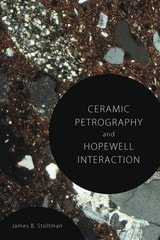
Ceramic Petrography and Hopewell Interaction
James B. Stoltman
University of Alabama Press, 2015
Petrography is the microscopic examination of thin sections of pottery to determine their precise mineralogical composition. In this groundbreaking work, James B. Stoltman applies quantitative as well as qualitative methods to the petrography of Native American ceramics. As explained in Ceramic Petrography and Hopewell Interaction, by adapting refinements to the technique of petrography, Stoltman offers a powerful new set of tools that enables fact-based and rigorous identification of the composition and sources of pottery.
Stoltman’s subject is the cultural interaction among the Hopewell Interaction Sphere societies of the Ohio Valley region and contemporary peoples of the Southeast. Inferring social and commercial relationships between disparate communities by determining whether objects found in one settlement originated there or elsewhere is a foundational technique of archaeology. The technique, however, rests on the informed but necessarily imperfect visual inspection of objects by archaeologists. Petrography greatly amplifies archaeologists’ ability to determine objects’ provenance with greater precision and less guesswork.
Using petrography to study a vast quantity of pottery samples sourced from Hopewell communities, Stoltman is able for the first time to establish which items are local, which are local but atypical, and which originated elsewhere. Another exciting possibility with petrography is to further determine the home source of objects that came from afar. Thus, combining traditional qualitative techniques with a wealth of new quantitative data, Ceramic Petrography and Hopewell Interaction offers a map of social and trade relationships among communities within and beyond the Hopewell Interaction Sphere with much greater precision and confidence than in the past.
Ceramic Petrography and Hopewell Interaction provides a clear and concise explanation of petrographic methods, Stoltman’s findings about Hopewell and southeastern ceramics in various sites, and the fascinating discovery that visits to Hopewell centers by southeastern Native Americans were not only for trade purposes but more for such purposes as pilgrimages, vision- and power-questing, healing, and the acquisition of knowledge.
Ceramic Sequence in Colima
Capacha, an Early PhaseIsabel Kelly
University of Arizona Press, 1980
Early Formative Pottery of the Valley of Oaxaca
Kent V. Flannery and Joyce Marcus with technical ceramic analysis by William O. Payne
University of Michigan Press, 1994
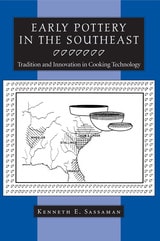
Early Pottery in the Southeast
Tradition and Innovation in Cooking TechnologyKenneth E. Sassaman
University of Alabama Press, 1993
A Dan Josselyn Memorial Publication
Among southeastern Indians pottery was an innovation that enhanced the economic value of native foods and the efficiency of food preparation. But even though pottery was available in the Southeast as early as 4,500 years ago, it took nearly two millenia before it was widely used. Why would an innovation of such economic value take so long to be adopted?
The answer lies in the social and political contexts of traditional cooking technology. Sassaman's book questions the value of using technological traits alone to mark temporal and spatial boundaries of prehistoric cultures and shows how social process shapes the prehistoric archaeological record.

Early Pottery
Technology, Function, Style, and Interaction in the Lower SoutheastEdited by Rebecca Saunders and Christopher T. Hays
University of Alabama Press, 2004
A synthesis of research on earthenware technologies of the Late Archaic Period in the southeastern U.S.
Information on social groups and boundaries, and on interaction between groups, burgeons when pottery appears on the social landscape of the Southeast in the Late Archaic period (ca. 5000-3000 years ago). This volume provides a broad, comparative review of current data from "first potteries" of the Atlantic and Gulf coastal plains and in the lower Mississippi River Valley, and it presents research that expands our understanding of how pottery functioned in its earliest manifestations in this region.
Included are discussions of Orange pottery in peninsular Florida, Stallings pottery in Georgia, Elliot's Point fiber-tempered pottery in the Florida panhandle, and the various pottery types found in excavations over the years at the Poverty Point site in northeastern Louisiana. The data and discussions demonstrate that there was much more interaction, and at an earlier date, than is often credited to Late Archaic societies. Indeed, extensive trade in pottery throughout the region occurs as early as 1500 B.C.
These and other findings make this book indispensable to those involved in research into the origin and development of pottery in general and its unique history in the Southeast in particular.
Excavation at San José Mogote 1
The Household ArchaeologyKent V. Flannery and Joyce Marcus with a multidimensional scaling of houses by Robert G. Reynolds
University of Michigan Press, 2005
Excavations at San José Mogote 2
The Cognitive ArchaeologyKent V. Flannery and Joyce Marcus with contributions by Chris L. Moser, Ronald Spores, Dudley M. Varner, Judith Francis Zeitlin, and Robert N. Zeitlin
University of Michigan Press, 2005
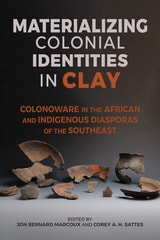
Materializing Colonial Identities in Clay
Colonoware in the African and Indigenous Diasporas of the SoutheastEdited by Jon Bernard Marcoux and Corey A. H. Sattes
University of Alabama Press, 2024
An interdisciplinary excavation of colonoware as a material archive of African, Indigenous, and colonial entanglements across the early American South.
In Materializing Colonial Identities in Clay, Jon Bernard Marcoux, Corey A. H. Sattes, and contributors examine colonoware to explore the active roles that African Americans and Indigenous people played in constructing southern colonial culture and part of their shared history with Europeans.
Colonoware was most likely produced by African and Indigenous potters and used by all colonial groups for cooking, serving, and storing food. It formed the foundation of colonial foodways in many settlements across the southeastern United States. Even so, compared with other ceramics from this period, less has been understood about its production and use because of the lack of documentation. This collection of essays fills this gap with valuable, recent archaeological data from which much may be surmised about the interaction among Europeans, Indigenous, and Africans, especially within the contexts of the African and Indigenous slave trade and plantation systems.
The chapters represent the full range of colonoware research: from the beginning to the end of its production, from urban to rural contexts, and from its intraregional variation in the Lowcountry to the broad patterns of colonialism across the early American Southeast. The book summarizes current approaches in colonoware research and how these may bridge the gaps between broader colonial American studies, Indigenous studies, and African Diaspora studies.
A concluding discussion contextualizes the chapters through the perspectives of intersectionality and Black feminist theory, drawing attention to the gendered and racialized meanings embodied in colonoware, and considering how colonialism and slavery have shaped these cultural dimensions and archaeologists’ study of them.
Meetings at the Margins
Prehistoric Cultural Interactions in the Intermountain WestDavid Rhode
University of Utah Press, 2012
Environmental conditions clearly influenced the cultural development of societies in the Intermountain West, but how did interactions with neighbors living along the region’s borders affect a society’s growth and advancement, its cultural integrity, and its long-term survival? Relationships among different societies are, of course, crucial to the spread of information, innovation, and belief systems; to the maintenance of exchange and mating networks; and to the forging of ethnic identity. In these ways and others, intergroup relationships can be as strong a force in shaping a society’s identity and future as are local social and economic dynamics.
Meetings at the Margins focuses on the ways in which different societies in the Intermountain West profoundly influenced each other’s histories throughout the more than fourteen millennia of prehistoric occupation. Historically, inhabitants of this region frequently interacted with more than forty different groups—neighbors who spoke some two dozen different languages and maintained diverse economies. The contributors to this volume demonstrate that in the prehistoric Intermountain West, as elsewhere throughout the world, intergroup interactions were pivotal for the dynamic processes of cultural cohesion, differentiation, and change, and they affirm the value of a long-term, large-scale view of prehistory.
Patarata Pottery
Classic Period Ceramics of the South-Central Gulf Coast, Veracruz, MexicoBarbara L. Stark
University of Arizona Press, 1989
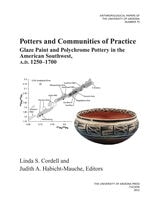
Potters and Communities of Practice
Glaze Paint and Polychrome Pottery in the American Southwest, AD 1250 to 1700Edited by Linda S. Cordell and Judith A. Habicht-Mauche
University of Arizona Press, 2012
The peoples of the American Southwest during the 13th through the 17th centuries witnessed dramatic changes in settlement size, exchange relationships, ideology, social organization, and migrations that included those of the first European settlers. Concomitant with these world-shaking events, communities of potters began producing new kinds of wares—particularly polychrome and glaze-paint decorated pottery—that entailed new technologies and new materials. The contributors to this volume present results of their collaborative research into the production and distribution of these new wares, including cutting-edge chemical and petrographic analyses. They use the insights gained to reflect on the changing nature of communities of potters as they participated in the dynamic social conditions of their world.
Pottery Economics in Mesoamerica
Edited by Christopher A. Pool and George J. Bey III
University of Arizona Press, 2008
Nine chapters written by some of the most well known and respected scholars in the field offer readers an in-depth look at key advances from the past fifteen years. These scholars examine ethnoarchaeological studies and the Preclassic/Formative, Classic, and Postclassic periods and cover geographic areas from eastern to central Mesoamerica. In a series of case studies, contributors address a range of new and developing theories and methods for inferring the technological, organizational, and social dimensions of pottery economics, and draw on a range of sociopolitical examples. Specific topics include the impacts and costs of innovations, the role of the producer in technological choices, the outcomes when errors in vessel formation are tolerated or rectified, the often undocumented multiple lives and uses of ceramic pieces, and the difficulties associated with locating and documenting ceramic production areas in tropical lowlands.
A compelling collection that clearly integrates and synthesizes a wide array of data, this book is the definitive text on pottery economics in Mesoamerica and an important contribution to the fields of anthropology, archaeology, ancient history, and the economics of pre-industrial societies.
CONTENTS
Acknowledgments
1 . Conceptual Issues in Mesoamerican Pottery Economics
Christopher A. Pool and George J. Bey III
2 . An Ethnoarchaeological Perspective on Local Ceramic Production and Distribution in the Maya Highlands
Michael Deal
3 . Why Was the Potter’s Wheel Rejected? Social Choice and Technological Change in Ticul, Yucatán, Mexico
Dean E. Arnold, Jill Huttar Wilson, and Alvaro L. Nieves
4 . Ceramic Production at La Joya, Veracruz: Early Formative Techno Logics and Error Loads
Philip J. Arnold III
5 . Blanco Levantado: A New World Amphora
George J. Bey III
6 . Pottery Production and Distribution in the Gulf Lowlands of Mesoamerica
Barbara L. Stark
7 . Household Production and the Regional Economy in Ancient Oaxaca: Classic Period Perspectives from Hilltop El Palmillo and Valley-Floor Ejutla
Gary M. Feinman and Linda M. Nicholas
8 . Pottery Production and Exchange in the Petexbatun Polity, Petén, Guatemala
Antonia E. Foias and Ronald L. Bishop
9 . Aztec Otumba, AD 1200--1600: Patterns of the Production, Distribution, and Consumption of Ceramic Products
Thomas H. Charlton, Cynthia L. Otis Charlton, Deborah L. Nichols, and Hector Neff
References Cited
About the Contributors
Index
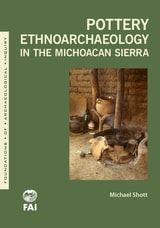
Pottery Ethnoarchaeology in the Michoacán Sierra
Michael J. Shott
University of Utah Press, 2018
Over a five-year period Shott inventoried the household pottery of about twenty-five homes in five towns in Michoacán, Mexico, recording age and types of use. He also looked at a subsample on a monthly basis over two years to estimate the magnitude of early vessel failure that would go unnoticed in an annual census. His analysis of about 900 vessels clearly shows that context does not explain use life, but vessel size does. Bigger pots last longer. Consulting other ethnoarchaeological sources for comparison and cross-cultural perspectives, Shott shows that his results can be applied to other archaeological datasets for determining numbers of original whole vessels as well as site occupation span.
Pottery and People
James Skibo
University of Utah Press, 1998
This volume emphasizes the complex interactions between ceramic containers and people in past and present contexts.
Pottery, once it appears in the archaeological record, is one of the most routinely recovered artifacts. It is made frequently, broken often, and comes in endless varieties according to economic and social requirements. Moreover, even in shreds ceramics can last almost forever, providing important clues about past human behavior.
The contributors to this volume, all leaders in ceramic research, probe the relationship between humans and ceramics. Here they offer new discoveries obtained through traditional lines of inquiry, demonstrate methodological breakthroughs, and expose innovative new areas for research. Among the topics covered in this volume are the age at which children begin learning pottery making; the origins of pottery in the Southwest U.S., Mesoamerica, and Greece; vessel production and standardization; vessel size and food consumption patterns; the relationship between pottery style and meaning; and the role pottery and other material culture plays in communication.
Pottery and People provides a cross-section of the state of the art, emphasizing the complete interactions between ceramic containers and people in past and present contexts. This is a milestone volume useful to anyone interested in the connections between pots and people.

Pottery of the Great Basin and Adjacent Areas
UUAP 111Suzanne Griset
University of Utah Press, 1986
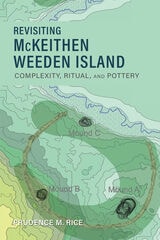
Revisiting McKeithen Weeden Island
Complexity, Ritual, and PotteryPrudence M. Rice
University of Alabama Press, 2024
Reassesses the ancient Indigenous McKeithen site in northern Florida in light of new data, analyses, and theories
Revisiting McKeithen Weeden Island further illuminates an Indigenous Late Woodland (ca. AD 200–900) mound-and-village community in northern Florida that was first excavated in the late 1970s. Since then, some artifacts received additional analyses, and the topic of prechiefdom societies has been broadly reconsidered in anthropology and archaeology. These developments allow new perspectives on McKeithen’s history and significance.
Prudence M. Rice, a Mayanist who began her career at the University of Florida, revisits what is known about McKeithen and recontextualizes the 1970s excavations. Weeden Island and McKeithen are best known through mortuary mounds and mortuary ritual, mainly involving unusual pottery bird effigies. Rice discusses current theoretical trends in studies of ritual and belief systems and their relation to mound-building at McKeithen in early stages of developing societal complexity.
Revisiting McKeithen Weeden Island serves as a masterful example of an esteemed archaeologist advancing the field through rethought and updated interpretations of the site and its significance, primarily through its pottery. Rice’s case study ultimately also fosters understanding of later Mississippian society and other civilizations around the world at this time period. Archaeologists, anthropologists, and social historians as well as students and avocational readers will welcome Rice’s insight.
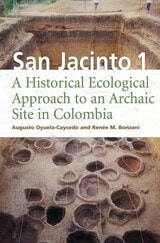
San Jacinto 1
A Historical Ecological Approach to an Archaic Site in ColombiaAugusto Oyuela-Caycedo and Renee M. Bonzani
University of Alabama Press, 2005
A significant work of neotropical archaeology presenting evidence of early hunter-gatherers who produced fiber-tempered ceramics.
Few topics in the development of humans have prompted as much interest and debate as those of the origins of pottery and agriculture. The first appearance of pottery in any area of the world is heralded as a new stage in the progress of humans toward a more complex arrangement of thought and society. Cultures are defined and separated by the occurrence of pottery types, and the association of pottery with mobility and agriculture continues to drive research in anthropology. For these reasons, the discovery of the earliest fiber-tempered pottery in the New World and carbonized remains identified as maize kernels is exciting.
San Jacinto 1 is the archaeological site located in the savanna region of the north coast of Colombia, South America, where excavations by led by the authors have revealed evidence of mobile hunter-gatherers who made pottery and who collected and processed plants from 6000 to 5000 B.P. The site is believed to show an early human adaptation to the tropics in the context of significant environmental changes that were taking place at the time.
This volume presents the data gathered and the interpretations made during excavation and analysis of the San Jacinto 1 site. By examining the social activities of a human population in a highly seasonal environment, it adds greatly to our contemporary understanding of the historical ecology of the tropics. Study of the artifacts excavated at the site allows a window into the early processes of food production in the New World. Finally, the data reveals that the origins of ceramic technology in the tropics were tied to a reduction in mobility and an increase in territoriality and are widely applicable to similar studies of sedentism and agriculture worldwide.
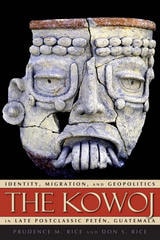
The Kowoj
Identity, Migration, and Geopolitics in Late Postclassic Petén, GuatemalaPrudence M. Rice
University Press of Colorado, 2009
Chapters in The Kowoj address the question "Who are the Kowoj?" from varied viewpoints: archaeological, archival, linguistic, ethnographic, and bioarchaeological. Using data drawn primarily from the peninsular site of Zacpetén, the authors illuminate Kowoj history, ritual components of their self-expressed identity, and their archaeological identification. These data support the Kowoj claim of migration from Mayapán in Yucatán, where they were probably affiliated with the Xiw, in opposition to the Itza. These enmities extended into Petén, culminating in civil warfare by the time of final Spanish conquest in 1697.
The first volume to consider Postclassic Petén from broadly integrative anthropological, archaeological, and historical perspectives, The Kowoj is an important addition to the literature on late Maya culture and history in the southern lowlands. It will be of particular interest to archaeologists, historians, ethnohistorians, art historians, and epigraphers.
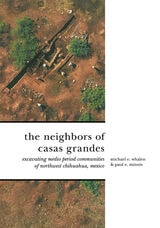
The Neighbors of Casas Grandes
Medio Period Communities of Northwestern ChihuahuaMichael E. Whalen and Paul E. Minnis
University of Arizona Press, 2009
This volume provides a fascinating and detailed look into the culture of the Casas Grandes area, involving not just the research of the architecture and artifacts left behind but also the ecology of the area. The authors’ research reveals the complex relationship Casas Grandes had with its neighbors, varying from very direct contact with some communities to more indirect links with others. Important internal influences on the area’s development come to light and population sizes throughout the period demonstrate the absorption of the surrounding populations into Casas Grandes as it reached the peak of its power in the region.
New discoveries suggest the need to revise the previously held beliefs about the age of Casas Grandes and the dates of its rise to power. This ancient civilization may have developed as early as 1180 AD. Such breakthroughs provide fresh insight about not only Casas Grandes but the nearby settlements as well. The Neighbors of Casas Grandes is an important and vital piece of primary field research for all those interested in the Southwest’s archaelogy and history. Its contribution to the knowledge of the Casas Grandes region is monumental in helping us better understand the society that once flourished there.
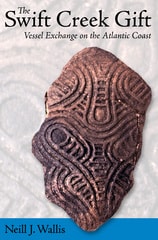
The Swift Creek Gift
Vessel Exchange on the Atlantic CoastNeill J. Wallis
University of Alabama Press, 2011
A unique dataset for studying past social interactions comes from Swift Creek Complicated Stamped pottery that linked sites throughout much of the Eastern Woodlands but that was primarily distributed over the lower Southeast. Although connections have been demonstrated, their significance has remained enigmatic. How and why were apparently utilitarian vessels, or the wooden tools used to make them, distributed widely across the landscape?
This book assesses Woodland Period interactions using technofunctional, mineralogical, and chemical data derived from Swift Creek Complicated Stamped sherds whose provenience is fully documented from both mortuary mounds and village middens along the Atlantic coast. Together, these data demonstrate formal and functional differences between mortuary and village assemblages along with the nearly exclusive occurrence of foreign-made cooking pots in mortuary contexts. The Swift Creek Gift provides insight into the unique workings of gift exchanges to transform seemingly mundane materials like cooking pots into powerful tools of commemoration, affiliation, and ownership.
Western Ceramic Traditions
Prehistoric and Historic Native American Ceramics of the Western U.S.Edited by Suzanne Griset
University of Utah Press, 2021
This volume is dedicated to studies of plainwares—the undecorated ceramics that make up the majority of prehistoric ceramic assemblages worldwide. Early analyses of ceramics focused on changes in decorative design elements to establish chronologies and cultural associations. With the development of archaeometric techniques that allow direct dating of potsherds and identification of their elemental composition and residues, plainwares now provide a new source of information about the timing, manufacture, distribution, and use of ceramics.
This book investigates plainwares from the far west, stretching into the Great Basin and the northwestern and southwestern edges of Arizona. Contributors use and explain recent analytical methods, including neutron activation, electron microprobe analysis, and thin-section optical mineralogy. They examine native ceramic traditions and how they were influenced by the Spanish mission system, and they consider the pros and cons of past approaches to ware typology, presenting a vision of how plainware analysis can be improved by ignoring the traditional “typological” approach of early ceramicists working with decorated wares.
This work provides a much-needed update to plainware studies, with new hypotheses and data that will help set the stage for future research.
Woodland Potters and Archaeological Ceramics of the North Carolina Coast
Joseph M. Herbert
University of Alabama Press, 2009
The first comprehensive study of the meaning of pottery as a social activity in coastal North Carolina.
Pottery types, composed of specific sets of attributes, have long been defined for various periods and areas of the Atlantic coast, but their relationships and meanings have not been explicitly examined. In exploring these relationships for the North Carolina coast, this work examines the manner in which pottery traits cross-cut taxonomic types, tests the proposition that communities of practice existed at several scales, and questions the fundamental notion of ceramic types as ethnic markers.
Ethnoarchaeological case studies provide a means of assessing the mechanics of how social structure and gender roles may have affected the transmission of pottery-making techniques and how socio-cultural boundaries are reflected in the distribution of ceramic traditions. Another very valuable source of information about past practices is replication experimentation, which provides a means of understanding the practical techniques that lie behind the observable traits, thereby improving our understanding of how certain techniques may have influenced the transmission of traits from one potter to another. Both methods are employed in this study to interpret the meaning of pottery as an indicator of social activity on the North Carolina coast.