Results by title
32 books match the query 'Insurgency'
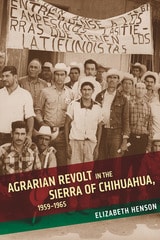
Agrarian Revolt in the Sierra of Chihuahua, 1959–1965
Elizabeth Henson
University of Arizona Press, 2019
Thousands of students joined the campesino protests in long-distance marches, land invasions, and direct actions that transcended political parties and marked the participants’ emergence as political subjects. The Popular Guerrilla Group (GPG) took shape from sporadic armed conflicts in the sierra. Early victories in the field encouraged the GPG to pursue more ambitious targets, and on September 23, 1965, armed farmers, agricultural workers, students, and teachers attacked an army base in Madera, Chihuahua. This bold move had deadly consequences.
With a sympathetic yet critical eye, historian Elizabeth Henson argues that the assault undermined and divided the movement that had been in its cradle, sacrificing the most militant, audacious, and serious of a generation at a time when such sacrifices were more frequently observed. Henson shows how local history merged with national tensions over one-party rule, the unrealized promises of the Mexican Revolution, and international ideologies.
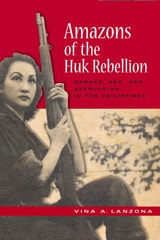
Amazons of the Huk Rebellion
Gender, Sex, and Revolution in the PhilippinesVina A. Lanzona
University of Wisconsin Press, 2009
Drawing on interviews with over one hundred veterans of the movement, Vina A. Lanzona explores the Huk rebellion from the intimate and collective experiences of its female participants, demonstrating how their presence, and the complex questions of gender, family, and sexuality they provoked, ultimately shaped the nature of the revolutionary struggle.
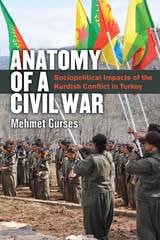
Anatomy of a Civil War
Sociopolitical Impacts of the Kurdish Conflict in TurkeyMehmet Gurses
University of Michigan Press, 2018

Beyond Left and Right
Insurgency and the EstablishmentDavid A. Horowitz
University of Illinois Press, 1997
Beyond Left and Right is a sweeping overview of political insurgency in the United States from the 1880s to the present. It is at once a stunning synthesis, drawing on a large number of scholarly works, and an ambitious and original piece of research. The book ranges over diverse individuals and groups that have attacked the established order, from the left and the right, from the Populists of the 1890s to Ross Perot and the religious right of our times, dealing along the way with non-interventionists, Klans, monetary radicals, McCarthyites, Birchers, and Reaganites, among many others.
Buyers Beware
Insurgency and Consumption in Caribbean Popular CulturePatricia Joan Saunders
Rutgers University Press, 2022
Citizens’ Media against Armed Conflict
Disrupting Violence in ColombiaClemencia Rodríguez
University of Minnesota Press, 2011
For two years, Clemencia Rodríguez did fieldwork in regions of Colombia where leftist guerillas, right-wing paramilitary groups, the army, and drug traffickers made their presence felt in the lives of unarmed civilians. Here, Rodríguez tells the story of the ways in which people living in the shadow of these armed intruders use community radio, television, video, digital photography, and the Internet to shield their communities from armed violence’s negative impacts.
Citizens’ media are most effective, Rodríguez posits, when they understand communication as performance rather than simply as persuasion or the transmission of information. Grassroots media that are deeply embedded in the communities they serve and responsive to local needs strengthen the ability of community members to productively react to violent incursions. Rodríguez demonstrates how citizens’ media privilege aspects of community life not hijacked by violence, providing people with the tools and the platform to forge lives for themselves and their families that are not entirely colonized by armed conflict and its effects.
Ultimately, Rodríguez shows that unarmed civilian communities that have been cornered by armed conflict can use community media to repair torn social fabrics, reconstruct eroded bonds, reclaim public spaces, resolve conflict, and sow the seeds of peace and stability.
Fighting to Learn
Popular Education and Guerilla War in El SalvadorHammond, John L
Rutgers University Press, 1998
Popular education played a vital role in the twelve-year guerrilla war against the Salvadoran government. Fighting to Learn is a study of its pedagogy and politics. Inspired by Paulo Freire's literacy work in Brazil in the 1950s, popular education brought literacy to poor rural communities abandoned by the official education system and to peasant combatants in the guerrilla army. Those who had little education taught those who had none. Popular education taught people skills, raised the morale that sustained them in unequal combat, and stimulated the creation of an organizational network to hold them together.
Hammond interviewed more than 100 Salvadoran students and teachers for this book. He recounts their experiences in their own words, vividly conveying how they coped with the hardships of war and organized civilian communities politically to support a guerrilla insurgency. Fighting to Learn tells how poorly educated peasants overcame their sense of inferiority to discover that they could teach each other and work together in a common struggle.
First examining the Christian base communities through which popular education came to El Salvador, Hammond then discusses how guerrilla combatants, political prisoners, and refugees learned. He shows that education was both a pedagogical and a political practice: he discusses the training of completely inexperienced teachers, the linking of basic literacy skills with politics, and the organizing of communities. Fighting to Learn offers both a detailed account of an historical moment and a broad theoretical discussion of the relationship between education, community organizing, and the political process.
Forest Brothers
The Account of an Anti-Soviet Lithuanian Freedom Fighter, 1944–1948Translated and with an Introduction by Laima Vincė
Central European University Press, 2009
From Two Republics to One Divided
Contradictions of Postcolonial Nationmaking in Andean PeruMark Thurner
Duke University Press, 2001
Working within an innovative and panoramic historical and linguistic framework, Thurner examines the paradoxes of a resurgent Andean peasant republicanism during the mid-1800s and provides a critical revision of the meaning of republican Peru’s bloodiest peasant insurgency, the Atusparia Uprising of 1885. Displacing ahistorical and nationalist readings of Inka or Andean continuity, and undermining the long-held notion that the colonial legacy is the dominant historical force shaping contemporary Andean reality, Thurner suggests that in Peru, the postcolonial legacy of Latin America’s nation-founding nineteenth century transfigured, and ultimately reinvented, the colonial legacy in its own image.
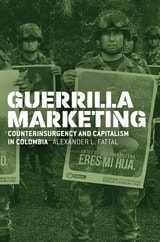
Guerrilla Marketing
Counterinsurgency and Capitalism in ColombiaAlexander L. Fattal
University of Chicago Press, 2018
Full of rich, unforgettable ethnographic stories, Guerrilla Marketing is a stunning and troubling analysis of the mediation of global conflict.
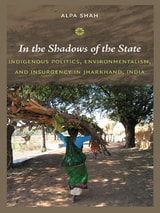
In the Shadows of the State
Indigenous Politics, Environmentalism, and Insurgency in Jharkhand, IndiaAlpa Shah
Duke University Press, 2010
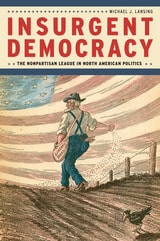
Insurgent Democracy
The Nonpartisan League in North American PoliticsMichael J. Lansing
University of Chicago Press, 2015
Michael J. Lansing aims to change that. Insurgent Democracy offers a new look at the Nonpartisan League and a new way to understand its rise and fall in the United States and Canada. Lansing argues that, rather than a spasm of populist rage that inevitably burned itself out, the story of the League is in fact an instructive example of how popular movements can create lasting change. Depicting the League as a transnational response to economic inequity, Lansing not only resurrects its story of citizen activism, but also allows us to see its potential to inform contemporary movements.

Insurgent Politics in the Lone Star State
Remembering the Antiwar Movement in Austin, Texas, 1967–1973Martin J. Murray
University of North Texas Press, 2025
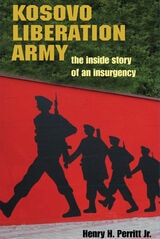
Kosovo Liberation Army
The Inside Story of an InsurgencyHenry H. Perritt Jr.
University of Illinois Press, 2008
The military intervention by NATO in Kosovo was portrayed in American media as a necessary step to prevent the Serbian armed forces from repeating the ethnic cleansing that had so deeply damaged the former Yugoslavia. Serbia trained its military on Kosovo because of an ongoing armed struggle by ethnic Albanians to wrest independence from Serbia. Warfare in the Balkans seemed to threaten the stability of Europe, as well as the peace and security of Kosovars, and yet armed resistance seemed to offer the only possibility of future stability. Leading the struggle against Serbia was the Kosovo Liberation Army, also known as the KLA.
Kosovo Liberation Army: The Inside Story of an Insurgency provides a historical background for the KLA and describes its activities up to and including the NATO intervention. Henry H. Perritt Jr. offers firsthand insight into the motives and organization of a popular insurgency, detailing the strategies of recruitment, training, and financing that made the KLA one of the most successful insurgencies of the post-cold war era. This volume also tells the personal stories of young people who took up guns in response to repeated humiliation by "foreign occupiers," as they perceived the Serb police and intelligence personnel. Perritt illuminates the factors that led to the KLA's success, including its convergence with political developments in eastern Europe, its campaign for popular support both at home and abroad, and its participation in international negotiations and a peace settlement that helped pave the long road from war to peace.
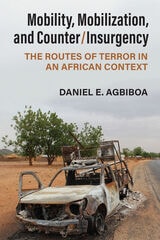
Mobility, Mobilization, and Counter/Insurgency
The Routes of Terror in an African ContextDaniel E. Agbiboa
University of Michigan Press, 2022
In Mobility, Mobilization, and Counter/Insurgency, Daniel Agbiboa takes African insurgencies back to their routes by providing a transdisciplinary perspective on the centrality of mobility to the strategies of insurgents, state security forces, and civilian populations caught in conflict. Drawing on one of the world’s deadliest insurgencies, the Boko Haram insurgency in northeast Nigeria and the Lake Chad region, this well-crafted and richly nuanced intervention offers fresh insights into how violent extremist organizations exploit forms of local immobility and border porosity to mobilize new recruits, how the state’s “war on terror” mobilizes against so-called subversive mobilities, and how civilian populations in transit are treated as could-be terrorists and subjected to extortion and state-sanctioned violence en route. The multiple and intersecting flows analyzed here upend Eurocentric representations of movement in Africa as one-sided, anarchic, and dangerous. Instead, this book underscores the contradictions of mobility in conflict zones as simultaneously a resource and a burden. Intellectually rigorous yet clear, engaging, and accessible, Mobility, Mobilization, and Counter/Insurgency is a seminal contribution that lays bare the neglected linkages between conflict and mobility.
Motherless Tongues
The Insurgency of Language amid Wars of TranslationVicente L. Rafael
Duke University Press, 2016

On Internal War
American and Soviet Approaches to Third World Clients and InsurgentsWilliam E. Odom
Duke University Press, 1992
On Internal War reviews the contrasting theory and practice in Soviet and American approaches to their competition in the Third World and relates them to indigenous causes of internal wars. Odom also integrates the military dimensions of insurgencies with external influences and internal politics. Drawing on political development theory, he underscores the sources of instability in Third World states that make insurgencies more likely and offers ways to assess the prospects for democracy in specific cases.
The centerpiece of the study is a practical application of the author’s analysis to three case studies—El Salvador, Guatemala, and the Philippines—and a regional assessment of the Middle East. Odom provides no panaceas but suggests that more promising strategies can be devised.
People's Wars in China, Malaya, and Vietnam
Marc Opper
University of Michigan Press, 2020
People’s Wars in China, Malaya, and Vietnam explains why some insurgencies collapse after a military defeat while under other circumstances insurgents are able to maintain influence, rebuild strength, and ultimately defeat the government. The author argues that ultimate victory in civil wars rests on the size of the coalition of social groups established by each side during the conflict. When insurgents establish broad social coalitions (relative to the incumbent), their movement will persist even when military defeats lead to loss of control of territory because they enjoy the support of the civilian population and civilians will not defect to the incumbent. By contrast, when insurgents establish narrow coalitions, civilian compliance is solely a product of coercion. Where insurgents implement such governing strategies, battlefield defeats translate into political defeats and bring about a collapse of the insurgency because civilians defect to the incumbent. The empirical chapters of the book consist of six case studies of the most consequential insurgencies of the 20th century including that led by the Chinese Communist Party from 1927 to 1949, the Malayan Emergency (1948–1960), and the Vietnam War (1960–1975). People’s Wars breaks new ground in systematically analyzing and comparing these three canonical cases of insurgency. The case studies of China and Malaya make use of Chinese-language archival sources, many of which have never before been used and provide an unprecedented level of detail into the workings of successful and unsuccessful insurgencies. The book adopts an interdisciplinary approach and will be of interest to both political scientists and historians.
Power and Protest in the Countryside
Studies of Rural Unrest in Asia, Europe, and Latin AmericaRobert P. Weller and Scott Guggenheim
Duke University Press, 1993
Reassembling the UAW
Insurgency, Contention, and the Struggle for Unionism in the American SouthAbe Walker
Temple University Press, 2026
Abe Walker chronicles the organizing campaign from its origin in 2014 to the union’s breakthrough victory in 2024, illustrating what went wrong—and what went right—along the way. Walker provides a systematic analysis of the strategic challenges and tactical shifts, showing the patterns that persisted across three election cycles while highlighting their differences, from global-level alliances to local labor issues.
Reassembling the UAW also demonstrates how rebel rank-and-file workers ousted the old-guard leadership and transformed the UAW into a militant union to achieve results. Ultimately, Walker offers valuable lessons for organizational strategy, the power of collective action, and the future of the labor movement.
Redeeming a People
The Critical Role of Historical Examination in Moving Cultural and Moral TrajectoriesDarius Gray
Utah State University Press, 2020
The Arrington Lecture series, established by one of the twentieth-century West's most distinguished historians, Leonard Arrington, has become a leading forum for prominent historians to address topics related to Mormon history. Utah State University hosts the Leonard J. Arrington Mormon History Lecture Series through the Merrill-Cazier Library Special Collections and Archives department.

Revolutionary Social Change in Colombia
The Origin and Direction of the FARC-EPJames J. Brittain
Pluto Press, 2010
This book presents an insider's account of Columbia's internal conflict. At the forefront are the Revolutionary Armed Forces of Colombia-People's Army (FARC-EP).
Although they are one of the most powerful military forces in Latin American history, little is known about the FARC-EP. James J. Brittain explains where and why this political military movement came into existence and assesses whether the methods employed by the insurgency have the potential to free those marginalised in Colombia.
As democratic socialism develops in Venezuela and Bolivia, Brittain's fascinating study assesses the relevance of armed struggle to 21st century Latin American politics. This is an essential title for those wishing to develop a full understanding of the continent.
By evaluating the FARC-EP's actions, ideological construction, and their theoretical placement, the book gauges how this guerrilla movement relates to revolutionary theory and practice and through what tangible mechanisms, if any, they are creating a new Colombia.
Riot and Rebellion in Mexico
The Making of a Race War ParadigmAna Sabau
University of Texas Press, 2022
2023 Best Book in the Humanities, Latin American Studies Association Mexico Section
Challenging conventional narratives of Mexican history, this book establishes race-making as a central instrument for the repression of social upheaval in nineteenth-century Mexico rather than a relic of the colonial-era caste system.
Many scholars assert that Mexico’s complex racial hierarchy, inherited from Spanish colonialism, became obsolete by the turn of the nineteenth century as class-based distinctions became more prominent and a largely mestizo population emerged. But the residues of the colonial caste system did not simply dissolve after Mexico gained independence. Rather, Ana Sabau argues, ever-present fears of racial uprising among elites and authorities led to persistent governmental techniques and ideologies designed to separate and control people based on their perceived racial status, as well as to the implementation of projects for development in fringe areas of the country.
Riot and Rebellion in Mexico traces this race-based narrative through three historical flashpoints: the Bajío riots, the Haitian Revolution, and the Yucatán’s caste war. Sabau shows how rebellions were treated as racially motivated events rather than political acts and how the racialization of popular and indigenous sectors coincided with the construction of “whiteness” in Mexico. Drawing on diverse primary sources, Sabau demonstrates how the race war paradigm was mobilized in foreign and domestic affairs and reveals the foundations of a racial state and racially stratified society that persist today.
Secrecy and Insurgency
Socialities and Knowledge Practices in GuatemalaSilvia Posocco
University of Alabama Press, 2014
Drawing on a broad field of contemporary theory, Silvia Posocco’s Secrecy and Insurgency presents a vivid ethnographic account of secrecy as both sociality and a set of knowledge practices. Informed by multi-sited anthropological fieldwork among displaced communities with experiences of militancy in the guerrilla organization Fuerzas Armadas Rebeldes, the book traces the contours of dispersed and intermittent guerrilla social relations, unraveling the gendered dimensions of guerrilla socialities and subjectivities in a local context marked by violence and rapid social change.
The chapters chart shifting regimes of governance in the northern departamento of Petén; the inception of violence and insurgency; guerrilla practices of naming and secret relations; moral orders based on sameness and sharing; and forms of relatedness, embodiment, and subjectivity among the combatants. The volume develops new critical idioms for grappling with partiality, perspective, and incompleteness in ethnography and contributes to new thinking on the anthropology of Guatemala.
Secrecy and Insurgency will be of interest to social and cultural anthropologists, human geographers, and scholars in Latin American studies, human rights, women’s studies, and gender studies.
Shining and Other Paths
War and Society in Peru, 1980-1995Steve J. Stern, ed.
Duke University Press, 1998
The contributors—a team of Peruvian and U.S. historians, social scientists, and human rights activists—explore the origins, social dynamics, and long-term consequences of the effort by Shining Path to effect an armed communist revolution. The book begins by interpreting Shining Path’s emergence and decision for war as one logical culmination, among several competing culminations, of trends in oppositional politics and social movements. It then traces the experiences of peasants and refugees to demonstrate how human struggle and resilience came together in grassroots determination to defeat Shining Path, and explores the unsuccessful efforts of urban shantytown dwellers, as well as rural and urban activists, to build a “third path” to social justice. Integral to this discussion is an examination of women’s activism and consciousness during the years of the crisis. Finally, this book analyzes the often paradoxical and unintended legacies of this tumultuous period for social and human rights movements, and for presidential and military leadership in Peru.
Extensive field research, broad historical vision, and strong editorial coordination enable the authors to write a coherent and deeply humanistic account, one that draws out the inner tragedies, ambiguities, and conflicts of the war.
Providing historically grounded explication of the conflicts that reshaped contemporary Peru, Shining and Other Paths will be widely read by Latin Americanists, historians, anthropologists, gender theorists, sociologists, political scientists, and human rights activists.
Contributors. Jo-Marie Burt, Marisol de la Cadena, Isabel Coral Cordero, Carlos Iván Degregori, Iván Hinojosa, Carlos Basombrío Iglesias, Florencia E. Mallon, Nelson Manrique, Hortensia Muñoz, Enrique Obando, Patricia Oliart, Ponciano del Pino H., José Luis Rénique, Orin Starn, Steve J. Stern
The Basque Insurgents
ETA, 1952–1980Robert P. Clark
University of Wisconsin Press, 1984
Blamed, at first, by the Spanish government for the recent Madrid train bombings, ETA (Euzkadi ta Askatasuna), the Basque nationalist organization, has been perhaps the most violent insurgent group on the European continent. Yet little is known about it outside of Spain. This book, now back in print, offers a full analytical study of ETA.
The End of the Future
Trauma, Memory, and Reconciliation in Peruvian AmazoniaBartholomew Dean
Vanderbilt University Press, 2023
To give context to the causes and consequences of the MRTA's presence in the lower and central Huallaga, this book relies on the written works and testimony of Sístero García Torres, an MRTA rebel commander; the government's Truth and Reconciliation Commission; MRTA propaganda; media accounts; and critical historical texts. Besides exposing Huallaga Valley human rights abuses, the book's contribution to political anthropology is consequential for its insistence that reconciliation is by no means equivalent to local, Indigenous notions of "justice" or customary forms of dispute resolution. Without deliberately addressing the diverse socio-cultural contours defining overlapping epistemologies of justice, freedom, and communal well-being, enduring reconciliation will likely remain elusive.
The Habsburg Garrison Complex in Trebinje
A Lost WorldCathie Carmichael
Central European University Press, 2024
Following the imposition of Habsburg rule on Ottoman Bosnia in 1878, a new garrison was constructed in the old citadel of Trebinje. By using a micro-historical approach, this innovative book tells the story of the garrison in times of peace and war, describing the way in which the Austro-Hungarian administration rapidly transformed Trebinje into a tree-lined city dominated by the army.
Yet, the Habsburg "civilizing mission," marked by the building of hospitals, schools, roads, and railways was accompanied by ruthless violence against those who resisted the new foreign occupiers, especially after 1914. The tragic violence is described in the book alongside accounts of daily life. By personalizing historical events, the narrative reveals the perspective of people who found themselves in Trebinje and its garrison complex: the ordinary soldier, the condemned “insurgent,” the career officer, the cook, the shepherdess, the hotelier, or the journalist—all willing or unwilling participants in an extra-European style colonial project in the heart of Europe.
The Last Colonial Massacre
Latin America in the Cold WarGreg Grandin
University of Chicago Press, 2004
Using Guatemala as a case study, Greg Grandin argues that the Cold War in Latin America was a struggle not between American liberalism and Soviet Communism but between two visions of democracy. The main effect of United States intervention in Latin America, Grandin shows, was not the containment of Communism but the elimination of home-grown concepts of social democracy.
Through unprecedented archival research and gripping personal testimonies, Grandin uncovers the hidden history of the Latin American Cold War: of hidebound reactionaries intent on holding on to their own power and privilege; of Mayan Marxists, blending indigenous notions of justice with universal ideas of freedom and equality; and of a United States supporting new styles of state terror throughout the continent. Drawing from declassified U.S. documents, Grandin exposes Washington's involvement in the 1966 secret execution of more than thirty Guatemalan leftists, which, he argues, prefigured the later wave of disappearances in Chile and Argentina.
Impassioned but judicious, The Last Colonial Massacre is history of the highest order—a work that will dramatically recast our understanding of Latin American politics and the triumphal role of the United States in the Cold War and beyond.
The Last Colonial Massacre
Latin America in the Cold War, Updated EditionGreg Grandin
University of Chicago Press, 2011
After decades of bloodshed and political terror, many lament the rise of the left in Latin America. Since the triumph of Castro, politicians and historians have accused the left there of rejecting democracy, embracing communist totalitarianism, and prompting both revolutionary violence and a right-wing backlash. Through unprecedented archival research and gripping personal testimonies, Greg Grandin powerfully challenges these views in this classic work. In doing so, he uncovers the hidden history of the Latin American Cold War: of hidebound reactionaries holding on to their power and privilege; of Mayan Marxists blending indigenous notions of justice with universal ideas of equality; and of a United States supporting new styles of state terror throughout the region.
With Guatemala as his case study, Grandin argues that the Latin American Cold War was a struggle not between political liberalism and Soviet communism but two visions of democracy—one vibrant and egalitarian, the other tepid and unequal—and that the conflict’s main effect was to eliminate homegrown notions of social democracy. Updated with a new preface by the author and an interview with Naomi Klein, The Last Colonial Massacre is history of the highest order—a work that will dramatically recast our understanding of Latin American politics and the role of the United States in the Cold War and beyond.
“This work admirably explains the process in which hopes of democracy were brutally repressed in Guatemala and its people experienced a civil war lasting for half a century.”—International History Review
“A richly detailed, humane, and passionately subversive portrait of inspiring reformers tragically redefined by the Cold War as enemies of the state.”—Journal of American History
The Rain Gods' Rebellion
The Cultural Basis of a Nahua InsurgencyJames M. Taggart
University Press of Colorado, 2019
The Rain Gods’ Rebellion examines Nahua oral narratives to illuminate the cultural basis of the 1977–1984 rebellion against the local Hispanic elite in Huitzilan de Serdán, Mexico. Drawing from forty years of fieldwork in the region, James M. Taggart traces the sociopolitical role of Nahua rain gods—who took both human and divine forms—back hundreds of years and sheds new light on the connections between social experiences and the Nahua understanding of water and weather in stories. As Taggart shows, Nahua tales of the rain gods’ rebellion anticipated the actual 1977 land invasion in Huitzilan, in which some 200–300 Nahua were killed.
The Rain Gods’ Rebellion reveals how local culture evolves from the expression of unrest to organized insurgency and then into collective memory. Taggart records a tradition of storytelling in which Nahuas radicalized themselves through recounting the rain gods’ stories—stories of the gods organizing and striking with bolts of lightning the companion spirits of autocratic local leaders who worked closely with mestizos. The tales are part of a tradition of resisting the friars’ efforts to convert the Nahuas, Totonacs, Otomi, and Tepehua to Christianity and inspiring nativistic movements against invading settlers.Providing a rare longitudinal look at the cultural basis of this grassroots insurgency, The Rain Gods’ Rebellion offers rare insight into the significance of oral history in forming Nahua collective memory and, by extension, culture. It will be of significance to scholars of Indigenous studies, anthropology, oral history, and violence studies, as well as linguistic anthropologists and sociolinguists.
We Alone Will Rule
Native Andean Politics in the Age of InsurgencySinclair Thomson
University of Wisconsin Press, 2003