Results by title
30 books match the query 'Integration'
Agents of Integration
Understanding Transfer as a Rhetorical ActRebecca S. Nowacek
Southern Illinois University Press, 2011
While many studies of transfer are longitudinal, with data collected over several years, Nowacek’s is synchronous, a rich cross-section of the writing and classroom discussions produced by a team-taught learning community—three professors and eighteen students enrolled in a one-semester general education interdisciplinary humanities seminar that consisted of three linked courses in history, literature, and religious studies. With extensive field notes, carefully selected student and teacher self-reports in the form of interviews and focus groups, and thorough examinations of recorded classroom discussions, student papers with professor comments, and student notebooks, Nowacek presents a nuanced and engaging analysis that outlines how transfer is not simply a cognitive act but a rhetorical one that involves both seeing connections and presenting them to the instructors who are institutionally positioned to recognize and value them.
Considering the challenges facing instructors teaching for transfer and the transfer of writing-related knowledge, Nowacek develops and outlines a new theoretical framework and methodological model of transfer and illustrates the practical implications through case studies and other classroom examples. She proposes transfer is best understood as an act of recontextualization, and she builds on this premise throughout the book by drawing from previous work in cognitive psychology, activity theory, and rhetorical genre theory, as well as her own analyses of student work.
This focused examination complements existing longitudinal studies and will help readers better understand not only the opportunities and challenges confronting students as they work to become agents of integration but also the challenges facing instructors as they seek to support that student work.
All International Politics Is Local
The Diffusion of Conflict, Integration, and DemocratizationKristian Skrede Gleditsch
University of Michigan Press, 2002
How does regional interdependence influence the prospects for conflict, integration, and democratization? Some researchers look at the international system at large and disregard the enormous regional variations. Others take the concept of sovereignty literally and treat each nation-state as fully independent. Kristian Skrede Gleditsch looks at disparate zones in the international system to see how conflict, integration, and democracy have clustered over time and space. He argues that the most interesting aspects of international politics are regional rather than fully global or exclusively national. Differences in the local context of interaction influence states' international behavior as well as their domestic attributes.
In All International Politics Is Local, Gleditsch clarifies that isolating the domestic processes within countries cannot account for the observed variation in distribution of political democracy over time and space, and that the likelihood of transitions is strongly related to changes in neighboring countries and the prior history of the regional context. Finally, he demonstrates how spatial and statistical techniques can be used to address regional interdependence among actors and its implications.
Kristian Skrede Gleditsch is Assistant Professor of Political Science at the University of California, San Diego.

Anarchy, Order and Integration
How to Manage InterdependenceHarvey Starr
University of Michigan Press, 2000
Classic Maya Polities of the Southern Lowlands
Integration, Interaction, DissolutionDamien B. Marken
University Press of Colorado, 2015
Classic Maya Polities of the Southern Lowlands investigates Maya political and social structure in the southern lowlands, assessing, comparing, and interpreting the wide variation in Classic period Maya polity and city composition, development, and integration. Traditionally, discussions of Classic Maya political organization have been dominated by the debate over whether Maya polities were centralized or decentralized. With new, largely unpublished data from several recent archaeological projects, this book examines the premises, strengths, and weaknesses of these two perspectives before moving beyond this long-standing debate and into different territory.
The volume examines the articulations of the various social and spatial components of Maya polity—the relationships, strategies, and practices that bound households, communities, institutions, and dynasties into enduring (or short-lived) political entities. By emphasizing the internal negotiation of polity, the contributions provide an important foundation for a more holistic understanding of how political organization functioned in the Classic period.
Contributors include Francisco Estrada Belli, James L. Fitzsimmons, Sarah E. Jackson, Caleb Kestle, Brigitte Kovacevich, Allan Maca, Damien B. Marken, James Meierhoff, Timothy Murtha, Cynthia Robin, Alexandre Tokovinine, and Andrew Wyatt.

Energy Harvesting Solutions for Implantable Medical Devices
Design, integration, and application of self-powered biomedical implantsJinwei Zhao
The Institution of Engineering and Technology, 2025

Energy Storage at Different Voltage Levels
Technology, integration, and market aspectsAhmed F. Zobaa
The Institution of Engineering and Technology, 2018

Financial Deregulation and Integration in East Asia
Edited by Takatoshi Ito and Anne O. Krueger
University of Chicago Press, 1996
In these thirteen essays, American and Asian scholars analyze the effects of financial deregulation and integration on East Asian markets. Topics covered include the roles of the United States and Japan in trading with Asian countries, macroeconomic policy implications of export-led growth in Korea and Taiwan, the effects of foreign direct investment in China, and the impact of financial liberalization in Japan, Korea, and Singapore.
Demonstrating the complexity of financial deregulation and the challenges it poses for policy makers, this volume provides an excellent picture of the overall status of East Asian financial markets for scholars in international finance and Asian economic development.

Finns in the United States
A History of Settlement, Dissent, and IntegrationAuvo Kostiainen
Michigan State University Press, 2014

Floating PV and Integration with Hydropower
Foundations, principles and design, Volume 1Ngo Dang Luu
The Institution of Engineering and Technology, 2026
Floating PV and Integration with Hydropower
Hybrid integration, control and advanced technologies, Volume 2Ngo Dang Luu
The Institution of Engineering and Technology, 2026

From Integration to Inclusion
A History of Special Education in the 20th CenturyMargret A. Winzer
Gallaudet University Press, 2009
Since Margret A. Winzer wrote her landmark work The History of Special Education, much has transpired in this field, which she again has captured in a remarkable display of scholarship. Winzer’s new study From Integration to Inclusion: A History of Special Education in the 20th Century focuses chiefly on the significant events of the twentieth and early twenty-first centuries in the United States and Canada. Its key dynamics consist of a retrospective overview of the paradigms that emerged from and shaped special education; a critical assessment of past progress and reform, including failures and disappointments; and an analysis of the theoretical diversity within the discipline.
In this stand-alone volume, Winzer juxtaposes the historical study of disability and of special schooling and service provision with reference to broader social systems, protocols, and practices. She documents how prevailing emotional and intellectual climates influence disability and schooling, and also takes into account the social, political, and ideological factors that affect educational theory and practice. Winzer recognizes that reform has been the Zeitgeist of the history of special education. Crucial problems such as defining exceptional conditions and separating them from one another were formulated in contexts organized along moral, theological, legislative, medical, and social dimensions. Many of these reforms failed for various reasons, which Winzer thoroughly explains in her study. Most of these reforms evolved from the long and honorable pedigree that the field of special education has possessed since its earliest antecedents, now admirably brought up to date by this outstanding work.
From Interrogation to Integration
Centering Social Justice in Special Collections, Archives, and PreservationKim Hoffman
Assoc of College & Research Libraries, 2025
From Interrogation to Integration: Centering Social Justice in Special Collections, Archives, and Preservation collects case studies, research projects, lesson plans, stories, practical strategies, color illustrations, and accessible, low-cost solutions from authors who have grappled directly with the legacy of harm present in their own institutions. The volume is organized into five themes:
- Research
- Description
- Preservation and Access
- Outreach
- Instruction
Grid-Forming Converters in Modern Power Systems
Modeling, control and integrationGhazala Shafique
The Institution of Engineering and Technology, 2027

Human Nature
Reflections on the Integration of Psychology and ChristianityMalcolm Jeeves
Templeton Press, 2006
College and university professors have been demanding that this book, out of print for several years, be made available again, as it is unique in its field. This new edition, which includes a new preface and guidance to current literature, offers a balanced study of the implications of scientific developments in psychology and neuroscience for traditional Christian beliefs.
Malcolm Jeeves, former editor-in-chief of Neuropsychologia, a leading international scientific journal in behavioral and cognitive neuroscience, explores the intersection of science and faith in defining what it means to be human. He reports on recent scientific research on consciousness and the link between mind, brain, and behavior. He examines issues such as determinism by indicating the possible relevance of chaos theory to enduring concerns about freedom and responsibility. He looks at similarities and differences between human nature and animal nature. He reexamines traditional dualist views of soul and body in the light of contemporary research on mind and brain and argues for a wholistic model. This leads to addressing questions such as: does spiritual awareness depend on the intactness of our brains or does spirituality stand apart from our biological substrate?
Jeeves' insightful analysis of the ways recent findings in psychology relate to certain Christian beliefs about people expands the global science religion dialogue.
Integration and Disintegration in NATO
Processes of Alliance Cohesion and Prospects for Atlantic CommunityFrancis A. Beer
The Ohio State University Press, 1969
Francis A. Beer’s classic study of NATO, first published in 1969 at the critical time of French withdrawal, focuses on processes of Atlantic alliance cohesion and implications for cross-Atlantic relationships. At the present time, as NATO faces existential threats in the form of fresh attacks and skepticism, Beer’s foundational analysis remains essential. He surveys five key areas of alliance activity: political consultation, military forces, armaments, infrastructure, and science. Across each, he identifies a recurring pattern: nationalism, self-interest, and state-level dominance repeatedly constrain and often work against collective action, even in areas where technical logic might otherwise unify coalition members.
Significant support for cooperation, Beer argues, can emerge during periods of international crisis, when member states are pressed to set aside individual concerns for common security. International crises are challenging but need not be destructive. To the contrary, crises provide opportunities for creative institutional leadership. As the book shows, a well-articulated ideology, connected to variable coalitions in different issue areas, can bring members together to maintain and build collective political-military institutions.
Interests and Integration
Market Liberalization, Public Opinion, and European UnionMatthew J. Gabel
University of Michigan Press, 1998

Internationalizing a School of Education
Integration and Infusion in PracticeJohn Schwille
Michigan State University Press, 2016

Konduru
Structure and Integration in a South Indian VillagePaul G. Hiebert
University of Minnesota Press, 1971
Konduru was first published in 1971. Minnesota Archive Editions uses digital technology to make long-unavailable books once again accessible, and are published unaltered from the original University of Minnesota Press editions.
This is a detailed anthropological description and analysis of life in Konduru, a village in the central part of southern India about one hundred miles south of Hyderabad. The study is based on field work done by Professor Hiebert over a period of several years when he lived in the village, spoke its language, Telugu, and became closely acquainted with the people and their culture.
After sketching the geographic and historical setting of the village, Professor Hiebert describes and discusses the social structure, including the societal categories, the various castes, the social groups including family, patrilineage, associations, and communities, and hamlets, villages, and towns in the region. There are chapters on status and power, networks of interpersonal relationships, panchayats (the system of justice), and rituals. Finally, the author discusses changes which are taking place in the society and culture of Konduru and presents his conclusions. He points out that this study of Konduru illustrates the importance of the village within the social order but at the same time demonstrates that the village cannot be understood apart from the other social groups in which its members are involved and interrelated, and that these relationships are neither static nor simple. But, as he concludes, the village is, for the individual, the concrete expression of his society.
The book is illustrated with photographs, maps, and drawings. E. Adamson Hoebel, Regents' professor of anthropology at the University of Minnesota, writes a foreword.

Managing Ethnic Diversity after 9/11
Integration, Security, and Civil Liberties in Transatlantic PerspectiveChebel d'Appollonia, Ariane
Rutgers University Press, 2010
Managing Ethnic Diversity after 9/11 compares these two strategies and considers that both may have engendered greater radicalization--and a greater chance of home-grown terrorism. Essays address how transatlantic countries, including the United Kingdom, the United States, France, Germany, Spain, Italy, and the Netherlands have integrated ethnic minorities, especially Arabs and Muslims, since 9/11. Discussing the "securitization of integration," contributors argue that the neglect of civil integration has challenged the rights of these minorities and has made greater security more remote.

Mobility and Integration in Urban Argentina
Córdoba in the Liberal EraBy Mark D. Szuchman
University of Texas Press, 1981
Between the 1870s, when the great influx of European immigrants began, and the start of World War I, Argentina underwent a radical alteration of its social composition and patterns of economic productivity. Mark Szuchman, in this groundbreaking study, examines the occupational, residential, educational, and economic patterns of mobility of some four thousand men, women, and children who resided in Córdoba, Argentina's most important interior city, during this changeful era.
Through several kinds of samples, Szuchman provides a widely encompassing social picture of Córdoba, describing, among others, the unskilled laborer, the immigrant bachelor in search of roots and identity, the merchant seeking or giving credit, and the member of the elite, blind to some of the realities around him. The challenge that the pursuit of security entailed for most people and the failure of so many to persist successfully form a large part of that picture.
The author has made ample use of quantitative techniques, but secondary materials are also utilized to provide social perspectives that round out and humanize the quantitative data. The use of record linkage as the essential research method makes this work the first book on Argentina to follow similar and very successful research methodologies employed by U.S. historians.
No Apocalypse, No Integration
Modernism and Postmodernism in Latin AmericaMartín Hopenhayn
Duke University Press, 2001
What form does the crisis of modernity take in Latin America when societies are politically demobilized and there is no revolutionary agenda in sight? How does postmodern criticism reflect on enlightenment and utopia in a region marked by incomplete modernization, new waves of privatization, great masses of excluded peoples, and profound sociocultural heterogeneity? In No Apocalypse, No Integration Martín Hopenhayn examines the social and philosophical implications of the triumph of neoliberalism and the collapse of leftist and state-sponsored social planning in Latin America.
With the failure of utopian movements that promised social change, the rupture of the link between the production of knowledge and practical intervention, and the defeat of modernization and development policy established after World War II, Latin American intellectuals and militants have been left at an impasse without a vital program of action. Hopenhayn analyzes these crises from a theoretical perspective and calls upon Latin American intellectuals to reevaluate their objects of study, their political reality, and their society’s cultural production, as well as to seek within their own history the elements for a new collective discourse. Challenging the notion that strict adherence to a single paradigm of action can rescue intellectual and cultural movements, Hopenhayn advocates a course of epistemological pluralism, arguing that such an approach values respect for difference and for cultural and theoretical diversity and heterodoxy.
This essay collection will appeal to readers of sociology, public policy, philosophy, cultural theory, and Latin American history and culture, as well as to those with an interest in Latin America’s current transition.

Power Grids with Renewable Energy
Storage, integration and digitalizationAbdelhay A. Sallam
The Institution of Engineering and Technology, 2021
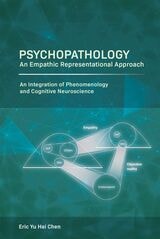
Psychopathology
An Empathic Representational Approach; An Integration of Phenomenology and Cognitive NeuroscienceEric Yu Hai Chen
Hong Kong University Press, 2024
Psychopathology: An Empathic Representational Approach retraces the foundations of classical phenomenological psychopathology and integrates them with modern ideas drawn from anthropology, cognitive neuroscience, computational science, and evolutionary biology to synthesize a comprehensive framework and provide fresh insights. It explores key issues in clinical psychopathology coherently and systematically, illustrates advanced topics in an accessible manner using clinical case examples, metaphors, and clarifying diagrams, and directly links advanced conceptual frameworks with pragmatic skills in the clinical dialogue process.
This volume is aimed at a broad audience of mental health professionals, researchers, and students in psychiatry, psychology, and social work. Its interdisciplinary treatment of the subject will also interest biologists, anthropologists, cognitive psychologists, neuroscientists, and philosophers.

Slaves, Spices and Ivory in Zanzibar
Integration of an East African Commercial Empire into the World Economy, 1770–1873Abdul Sheriff
Ohio University Press, 1987
The rise of Zanzibar was based on two major economic transformations. Firstly slaves became used for producing cloves and grains for export. Previously the slaves themselves were exported.
Secondly, there was an increased international demand for luxuries such as ivory. At the same time the price of imported manufactured gods was falling. Zanzibar took advantage of its strategic position to trade as far as the Great Lakes.
However this very economic success increasingly subordinated Zanzibar to Britain, with its anti-slavery crusade and its control over the Indian merchant class.
Professor Sheriff analyses the early stages of the underdevelopment of East Africa and provides a corrective to the dominance of political and diplomatic factors in the history of the area.

The Borders of Integration
Polish Migrants in Germany and the United States, 1870–1924Brian McCook
Ohio University Press, 2011
The issues of immigration and integration are at the forefront of contemporary politics. Yet debates over foreign workers and the desirability of their incorporation into European and American societies too often are discussed without a sense of history. McCook’s examination questions static assumptions about race and white immigrant assimilation a hundred years ago, highlighting how the Polish immigrant experience is relevant to present-day immigration debates on both sides of the Atlantic. Further, his research shows the complexity of attitudes toward immigration in Germany and the United States, challenging historical myths surrounding German national identity and the American “melting pot.”
In a comparative study of Polish migrants who settled in the Ruhr Valley and northeastern Pennsylvania, McCook shows that in both regions, Poles become active citizens within their host societies through engagement in social conflict within the public sphere to defend their ethnic, class, gender, and religious interests. While adapting to the Ruhr and northeastern Pennsylvania, Poles simultaneously retained strong bonds with Poland, through remittances, the exchange of letters, newspapers, and frequent return migration. In this analysis of migration in a globalizing world, McCook highlights the multifaceted ways in which immigrants integrate into society, focusing in particular on how Poles created and utilized transnational spaces to mobilize and attain authentic and more permanent identities grounded in newer broadly conceived notions of citizenship.
The Chief Concern of Medicine
The Integration of the Medical Humanities and Narrative Knowledge into Medical PracticesRonald Schleifer and Jerry B. Vannatta
University of Michigan Press, 2013

The History of Special Education
From Isolation to IntegrationMargret A. Winzer
Gallaudet University Press, 1993

The Immigrant Threat
The Integration of Old and New Migrants in Western Europe since 1850Leo Lucassen
University of Illinois Press, 2005
Leo Lucassen tackles the question of whether the integration process of these recent immigrants will fundamentally differ in the long run (over multiple generations) from the experiences of similar immigrant groups in the past. For comparison, Lucassen focuses on "large and problematic groups" from Western Europe's past (the Irish in the United Kingdom, the Poles in Germany, and the Italians in France) and demonstrates a number of structural similarities in the way migrants and their descendants integrated into these nation states. Lucassen emphasizes that the geographic sources of the "threat" have changed and that contemporaries tend to overemphasize the threat of each successive wave of immigrants, in part because the successfully incorporated immigrants of the past have become invisible in national histories.
The Paradoxes of Integration
Race, Neighborhood, and Civic Life in Multiethnic AmericaJ. Eric Oliver
University of Chicago Press, 2010
The United States is rapidly changing from a country monochromatically divided between black and white into a multiethnic society. The Paradoxes of Integration helps us to understand America’s racial future by revealing the complex relationships among integration, racial attitudes, and neighborhood life.
J. Eric Oliver demonstrates that the effects of integration differ tremendously, depending on which geographical level one is examining. Living among people of other races in a larger metropolitan area corresponds with greater racial intolerance, particularly for America’s white majority. But when whites, blacks, Latinos, and Asian Americans actually live in integrated neighborhoods, they feel less racial resentment. Paradoxically, this racial tolerance is usually also accompanied by feeling less connected to their community; it is no longer "theirs." Basing its findings on our most advanced means of gauging the impact of social environments on racial attitudes, The Paradoxes of Integration sensitively explores the benefits and at times, heavily borne, costs of integration.

Yazoo
Integration in a Deep-Southern TownWillie Morris
University of Arkansas Press, 2012