Results by title
41 books match the query 'International economic relations'
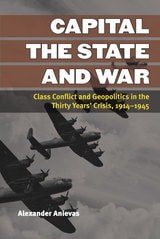
Capital, the State, and War
Class Conflict and Geopolitics in the Thirty Years' Crisis, 1914-1945Alexander Anievas
University of Michigan Press, 2014
The history of the modern social sciences can be seen as a series of attempts to confront the challenges of social disorder and revolution wrought by the international expansion of capitalist social relations. Alexander Anievas focuses on one particularly significant aspect of this story: the intersocietal or geosocial origins of the two world wars, and, more broadly, the confluence of factors behind the Thirty Years’ Crisis between 1914 and 1945.
Anievas presents the Thirty Years’ Crisis as a result of the development of global capitalism with all its destabilizing social and geopolitical consequences, particularly the intertwined and co-constitutive nature of imperial rivalries, social revolutions, and anti-colonial struggles. Building on the theory of uneven and combined development, he unites geopolitical and sociological explanations into a single framework, thereby circumventing the analytical stalemate between primacy of domestic politics and primacy of foreign policy approaches.
Challenges to Globalization
Analyzing the EconomicsEdited by Robert E. Baldwin and L. Alan Winters
University of Chicago Press, 2004
Challenges to Globalization evaluates the arguments of pro-globalists and anti-globalists regarding issues such as globalization's relationship to democracy, its impact on the environment and on labor markets including the brain drain, sweat shop labor, wage levels, and changes in production processes, and the associated expansion of trade and its effects on prices. Baldwin, Winters, and the contributors to this volume look at multinational firms, foreign investment, and mergers and acquisitions and present surprising findings that often run counter to the claim that multinational firms primarily seek countries with low wage labor. The book closes with papers on financial opening and on the relationship between international economic policies and national economic growth rates.
Chaos and Governance in the Modern World System
Giovanni Arrighi
University of Minnesota Press, 1999
Conflict, Security, Foreign Policy, and International Political Economy
Past Paths and Future Directions in International StudiesMichael Brecher and Frank P. Harvey, editors
University of Michigan Press, 2009
No study of international relations is complete without consideration of foreign policy processes and an understanding of state security, conflict in global politics, and the relationship between the world economy and international behavior. Conflict, Security, Foreign Policy, and International Political Economy: Past Paths and Future Directions in International Studies consists of twelve original essays that point out the strengths and weaknesses of current approaches in these research areas as well as suggest agendas for future research.
See table of contents and excerpts.
Frank P. Harvey is Professor of Political Science and Director of the Centre for Foreign Policy Studies at Dalhousie University.
Michael Brecher is the R.B. Angus Professor of Political Science at McGill University and past president of the International Studies Association.
Millennial Reflections on International StudiesThis volume is part of the Millennial Reflections on International Studies project in which forty-five prominent scholars engage in self-critical, state-of-the-art reflection on international studies to stimulate debates about successes and failures and to address the larger questions of progress in the discipline.
Other paperbacks from this project:
Realism and Institutionalism in International Studies
Evaluating Methodology
Critical Perspectives in International Studies
The full collection of essays is available in the handbook Millennial Reflections on International Studies.
Coping with Crisis
Government Reactions to the Great RecessionNancy Bermeo
Russell Sage Foundation, 2013

Delivering on Promises
The Domestic Politics of Compliance in International CourtsLauren J. Peritz
University of Chicago Press, 2022
When do international institutions effectively promote economic cooperation among countries and help them resolve conflict? Although the international system lacks any central governing authority, states have created rules, particularly around international economic relations, and empowered international tribunals to enforce those rules. Just how successful are these institutions? In Delivering on Promises Lauren J. Peritz demonstrates that these international courts do indeed deliver results—but they are only effective under certain conditions.
As Peritz shows, states are less likely to comply with international rules and international court decisions when domestic industries have the political ability to obstruct compliance in particular cases. The author evaluates the argument with an extensive empirical analysis that traces the domestic politics of compliance with the decisions of two international economic courts: the World Trade Organization’s dispute settlement mechanism and the Court of Justice of the European Union. At a time when international agreements are under attack, this book sheds light on the complex relationship between domestic politics and international economic cooperation, offering detailed evidence that international economic courts are effective at promoting interstate cooperation.
Development and Crisis of the Welfare State
Parties and Policies in Global MarketsEvelyne Huber and John D. Stephens
University of Chicago Press, 2001
Building on their previous research, Huber and Stephens show how high wages and generous welfare states are still possible in an age of globalization and trade competition.

Fishing a Borderless Sea
Environmental Territorialism in the North Atlantic, 1818-1910Brian J. Payne
Michigan State University Press, 2010
Over the centuries, processing and distribution of products from land and sea has stimulated the growth of a global economy. In the broad sweep of world history, it may be hard to imagine a place for the meager little herring baitfish. Yet, as Brian Payne adeptly recounts, the baitfish trade was hotly contested in the Anglo-American world throughout the nineteenth century. Politicians called for wars, navies were dispatched with guns at the ready, vessels were seized at sea, and violence erupted at sea.
Yet, the battle over baitfish was not simply a diplomatic or political affair. Fishermen from hundreds of villages along the coastline of Atlantic Canada and New England played essential roles in the construction of legal authority that granted or denied access to these profitable bait fisheries.
Fishing a Borderless Sea illustrates how everyday laborers created a complex system of environmental stewardship that enabled them to control the local resources while also allowing them access into the larger global economy.

Global Governance in Question
Empire, Class and the New Common Sense in Managing North-South RelationsSusanne Soederberg
Pluto Press, 2006
William I. Robinson, University of California-Santa Barbara
"[An] acute and revealing examination of the economic difficulties facing the American empire."
Ronnie D. Lipschutz, Professor of Politics, University of California, Santa Cruz
"Indispensable for students of international polical economy and a must for political activists." Professor Elmar Altvater, Department of Political Science, Free University, Berlin
Like many buzzwords, 'global governance' is as poorly understood as it is popular. In contrast to most mainstream accounts, this book examines global economic governance as an integral moment of contemporary capitalism -- presenting a critical insight into its real nature and the interests that it serves.
This book begins by asking what has not been discussed in the mainstream debates and why. Drawing on a Marxist perspective, Soederberg explores neglected issues including transnational debt and the increasingly coercive nature of US aid to so-called Œfailed states'. Soederberg argues that mainstream understandings fail to engage with the wider contradictions that characterise global capitalism. In consequence, there is no explanation of the changing nature of American empire and capitalist power in the world. Furthermore, Soederberg argues that global governance acts to normalise and legitimise increasingly austere forms of capitalist expansion, which may be regarded as a deepening and broadening of neoliberalism.
Susanne Soederberg is a Canada Research Chair in Global Political Economy and Associate Professor in International Development Studies at Queen's University, Kingston, Canada. She is author of The Politics of the New International Financial Architecture: Reimposing Neoliberal Domination in the Global South (Zed, 2005).
Globalization and Its Discontents
The Rise of Postmodern SocialismsEdited by Roger Burbach, Boris Kagarlitsky, and Orlando Nunez
Pluto Press, 1997
Globalization and Poverty
Edited by Ann Harrison
University of Chicago Press, 2007
Over the past two decades, the percentage of the world’s population living on less than a dollar a day has been cut in half. How much of that improvement is because of—or in spite of—globalization? While anti-globalization activists mount loud critiques and the media report breathlessly on globalization’s perils and promises, economists have largely remained silent, in part because of an entrenched institutional divide between those who study poverty and those who study trade and finance.
Globalization and Poverty bridges that gap, bringing together experts on both international trade and poverty to provide a detailed view of the effects of globalization on the poor in developing nations, answering such questions as: Do lower import tariffs improve the lives of the poor? Has increased financial integration led to more or less poverty? How have the poor fared during various currency crises? Does food aid hurt or help the poor?
Poverty, the contributors show here, has been used as a popular and convenient catchphrase by parties on both sides of the globalization debate to further their respective arguments. Globalization and Poverty provides the more nuanced understanding necessary to move that debate beyond the slogans.
Globalization in Historical Perspective
Edited by Michael D. Bordo, Alan M. Taylor, and Jeffrey G. Williamson
University of Chicago Press, 2003
This volume collects eleven papers doing exactly that and more. The first group of essays explores how the process of globalization can be measured in terms of the long-term integration of different markets-from the markets for goods and commodities to those for labor and capital, and from the sixteenth century to the present. The second set of contributions places this knowledge in a wider context, examining some of the trends and questions that have emerged as markets converge and diverge: the roles of technology and geography are both considered, along with the controversial issues of globalization's effects on inequality and social justice and the roles of political institutions in responding to them. The final group of essays addresses the international financial systems that play such a large part in guiding the process of globalization, considering the influence of exchange rate regimes, financial development, financial crises, and the architecture of the international financial system itself.
This volume reveals a much larger picture of the process of globalization, one that stretches from the establishment of a global economic system during the nineteenth century through the disruptions of two world wars and the Great Depression into the present day. The keen analysis, insight, and wisdom in this volume will have something to offer a wide range of readers interested in this important issue.
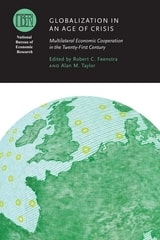
Globalization in an Age of Crisis
Multilateral Economic Cooperation in the Twenty-First CenturyEdited by Robert C. Feenstra and Alan M. Taylor
University of Chicago Press, 2013
Prompted by these questions, Robert C. Feenstra and Alan M. Taylor have brought together top researchers with policy makers and practitioners whose contributions consider the ways in which the global economic order might address the challenges of globalization that have arisen over the last two decades and that have been intensified by the recent crisis. Chapters in this volume consider the critical linkages between issues, including exchange rates, global imbalances, and financial regulation, and plumb the political and economic outcomes of past policies for what they might tell us about the future of the global economic cooperation.
International Aspects of Fiscal Policies
Edited by Jacob A. Frenkel
University of Chicago Press, 1988
The studies analyze national fiscal policies within the context of the international economic order. Malcolm D. Knight and Paul R. Masson use an empirical model to show that fiscal changes in recent years in the United States, West Germany, and Japan have caused major disturbances in net savings and investment flows. Linda S. Kole uses a two-country simulation model to examine the effects of a large nation's expansion on exchange rates, interest rates, and the balance of payments. In other studies, Warwick J. McKibbin and Jeffrey D. Sachs discuss the influences of different currency regimes on the international transmission of inflation; Kent P. Kimbrough analyzes the interaction between optimal tax policies and international trade; Sweder van Wijnbergen investigates the interrelation of fiscal policies, trade intervention, and world interest rates; and Willem H. Buiter uses an analytical model to look at fiscal interdependence and optimal policy design. David Backus, Michael Devereux, and Douglas Purvis develop a theoretical model to investigate effects of different fiscal policies in an open economy. Alan C. Stockman looks at the influence of policy anticipation in the private sector, while Lawrence H. Summers shows the effects of differential tax policy on international competitiveness.

International Development Policies
Perspectives for Industrial CountriesSidney Dell
Duke University Press, 1991
Tracing the fundamental changes of the last forty years in international development policies toward the Third World, Dell details the transformation from a policy of collective responsibility on the part of the international community to the current status, in which the commitment of governments of industrial countries to Third World development is greatly diluted. He examines the growing conflicts in world trade and analyzes the failure of the international economic community to develop a long-run strategy for dealing with the world debt crisis.
Other topics addressed include the future of the international monetary system, the viability of small countries, strategies for development of basic needs, and the prospects for foreign private investment.
International Economic Cooperation
Edited by Martin Feldstein
University of Chicago Press, 1988

International Economic Relations
Commission of Inquiry into National Policy in International Economic Relations
University of Minnesota Press, 1934
International Economic Relations was first published in 1934. Minnesota Archive Editions uses digital technology to make long-unavailable books once again accessible, and are published unaltered from the original University of Minnesota Press editions.
International Economic Transactions
Issues in Measurement and Empirical ResearchEdited by Peter Hooper and J. David Richardson
University of Chicago Press, 1991
Questioning the quality of current data and analytical procedures, this ambitious volume proposes innovative research designs and methods for data enhancement, and offers new data on trade prices and service transactions for future studies. Leading researchers address the measurement of international trade flows and prices, including the debate over measurement of computer prices and national productivity; compare international levels of manufacturing output; and assess the extent to which the United States has fallen into debt to the rest of the world.
International Policy Coordination and Exchange Rate Fluctuations
Edited by William H. Branson, Jacob A. Frenkel, and Morris Goldstein
University of Chicago Press, 1990
In these papers and comments, prominent international economists consider past and present interpretations of the meaning of international policy coordination; conditions necessary for coordination to be beneficial both to the direct participants and the global economy; influential factors for the quantitative impact of coordination; obstacles to coordination; the most—and least—effective methods of coordination; and future directions of the coordination process, including processes associated with greater fixity of exchange rates.
These studies will be readily accessible to policymakers, while offering sophisticated analyses to interested scholars of the global economy.
Leading Questions
How Hegemony Affects the International Political EconomyRobert Pahre
University of Michigan Press, 1999

New York, Chicago, Los Angeles
America’s Global CitiesJanet Abu-Lughod
University of Minnesota Press, 2001
Politics, Markets, and Grand Strategy
Foreign Economic Policies as Strategic InstrumentsLars S. Skalnes
University of Michigan Press, 2000
Skålnes explains changes in foreign economic policy in terms of shifting strategic assessments regarding the importance of military support from allies. When states need military support from their allies to meet threats to their security, they will adopt discriminatory foreign economic policies in an attempt to strengthen alliance relations. When states can go it alone without military support, by contrast, they will not pursue foreign economic policies that discriminate in favor of either allies or other countries. Discriminatory policies, Skalnes argues, are important strategic instruments for several reasons. First, they can be used to tie countries to a military alliance. Second, they are useful as signals of intention. Third, discriminatory policies may strengthen an ally militarily by increasing the economic resources available for military purposes.
Skålnes provides detailed accounts of the grand strategies of Germany (1879-1914), France (1887-1914), Great Britain (1919-1939), and the United States (1945-1967).
Politics, Markets, and Grand Strategy will be important reading for scholars and students in the fields of national security studies, international political economy, and economic history, and to economists working on problems associated with foreign investment and trade generally and customs union theory and discriminatory trade agreements specifically.
Lars S. Skålnes is Associate Professor of Political Science, University of Oregon.
Power Ties
Economic Interdependence, Balancing, and WarPaul A. Papayoanou
University of Michigan Press, 1999
Quiet Pioneering
Robert M. Stern and His International Economic LegacyKeith E. Maskus, Peter M. Hooper, Edward E. Leamer, and J. David Richardson, Editors
University of Michigan Press, 1997
Regionalism versus Multilateral Trade Arrangements
Edited by Takatoshi Ito and Anne O. Krueger
University of Chicago Press, 1997
Reluctant Partners
A History of Multilateral Trade Cooperation, 1850-2000Andrew G. Brown
University of Michigan Press, 2003
Rethinking the Financial Crisis
Alan S. Blinder
Russell Sage Foundation, 2013

The Art of Economic Persuasion
Positive Incentives and German Economic DiplomacyPatricia A. Davis
University of Michigan Press, 2000
The Challenge of Hegemony
Grand Strategy, Trade, and Domestic PoliticsSteven E. Lobell
University of Michigan Press, 2005
"His conceptually rigorous and tightly reasoned study . . . reminds us that power is never value neutral but organizes commercial systems in liberal or imperial terms."
---Perspectives on Politics
"Lobell's book is tightly written, nicely argued and thoroughly researched to a fault. He seems to delight in historical detail. The complexity of his approach is refreshing."
---International Affairs
"The Challenge of Hegemony is a pleasure to read. It is both theoretically sophisticated and empirically rich."
---International Studies Review
"The Challenge of Hegemony offers a compelling reinterpretation of key historical cases and provides wise guidance as to how the United States should wield its power today."
--Charles A. Kupchan, Council on Foreign Relations
"Lobell demonstrates clearly how the international environment confronting great powers interacts with their domestic political coalitions to produce different grand strategies. Through a masterful sweep of history, Lobell shows us the alternative trajectories before the United States today."
--David A. Lake, University of California, San Diego

The Cultures of Globalization
Fredric Jameson and Masao Miyoshi, eds.
Duke University Press, 1998
Discussing overlapping themes of transnational consequence, the contributors to this volume describe how the global character of technology, communication networks, consumer culture, intellectual discourse, the arts, and mass entertainment have all been affected by recent worldwide trends. Appropriate to such diversity of material, the authors approach their topics from a variety of theoretical perspectives, including those of linguistics, sociology, economics, anthropology, and the law. Essays examine such topics as free trade, capitalism, the North and South, Eurocentrism, language migration, art and cinema, social fragmentation, sovereignty and nationhood, higher education, environmental justice, wealth and poverty, transnational corporations, and global culture. Bridging the spheres of economic, political, and cultural inquiry, The Cultures of Globalization offers crucial insights into many of the most significant changes occurring in today’s world.
Contributors. Noam Chomsky, Ioan Davies, Manthia Diawara, Enrique Dussel, David Harvey, Sherif Hetata, Fredric Jameson, Geeta Kapur, Liu Kang, Joan Martinez-Alier, Masao Miyoshi, Walter D. Mignolo, Alberto Moreiras, Paik Nak-chung, Leslie Sklair, Subramani, Barbara Trent
The Global Political Economy of Israel
Jonathan Nitzan and Shimshon Bichler
Pluto Press, 2002
Over the past century, Israel has been transformed from an agricultural colony, to a welfare-warfare state, to a globally integrated "market economy" characterised by great income disparities. What lies behind this transformation? In order to understand capitalist development, argue Bichler and Nitzan, we need to break the artificial separation between "economics" and "politics", and think of accumulation itself as "capitalisation of power". Applying this concept to Israel, they reveal the big picture that never makes it to the news. Diverse processes – such as regional conflicts and energy crises, ruling class formation and dominant ideology, militarism and dependency, inflation and recession, the politics of high-technology and the transnationalisation of ownership – are all woven into a single story. The result is a fascinating account of one of the world’s most volatile regions.
The Gloss of Harmony
The Politics of Policy-Making in Multilateral OrganisationsBirgit Muller
Pluto Press, 2013
The Gloss of Harmony focuses on agencies of the United Nations, examining the paradox of entrusting relatively powerless and underfunded organisations with the responsibility of tackling some of the essential problems of our time. The book shows how international organisations shape the world in often unexpected and unpredictable ways.
The authors of this collection look not only at the official objectives and unintended consequences of international governance but also at how international organisations involve collective and individual actors in policy making, absorb critique, attempt to neutralise political conflict and create new political fields with local actors and national governments.
The Gloss of Harmony identifies the micro-social processes and complexities within multilateral organisations which have, up to now, been largely invisible. This book will have wide appeal not only to students and academics in anthropology, business studies and sociology but also to all practitioners concerned with international governance.

The Great Depression
An International Disaster of Perverse Economic PoliciesThomas E. Hall and J. David Ferguson
University of Michigan Press, 1998
The Liberal Illusion
Does Trade Promote Peace?Katherine Barbieri
University of Michigan Press, 2005
--Nils Petter Gleditsch, Journal of Peace Research
"Barbieri builds on a solid foundation of work on trade and conflict and specifies the conditions under which trade reduces and increases conflict. . . . The bottom line is that this is an important book in the study of trade and conflict because of its comprehensive approach."
--Kathy L. Powers, Perspectives on Politics
"Barbieri's analysis reveals the fundamental and intellectual weaknesses of the various arguments on this topic. [A] solid and timely contribution to the literature"
--Choice
The Liberal Illusion sheds light on an increasingly important question in international relations scholarship and the domain of policy making-whether international trade promotes peace. By examining a broad range of theories about trade's impact on interstate relations and undertaking a set of empirical analyses of the trade-conflict puzzle, Katherine Barbieri provides a comprehensive assessment of the liberal view that trade promotes peace. Barbieri's stunning conclusions depart from conventional wisdom in international relations. Consequently, The Liberal Illusion serves as an important counterargument and a warning call to policymakers who rely upon trade-based strategies to promote peace, strategies that appear to offer little hope of achieving their goals.
The Political Economy of Regional Peacemaking
Edited by Steven E. Lobell and Norrin M. Ripsman
University of Michigan Press, 2016
The chapters that follow are grouped in three sections, corresponding to the three stages of peacemaking: reduction or management of regional conflict; peacemaking or progress toward a peace treaty; and maintenance of bilateral peace and the regionalization of the peace settlement. In each chapter, the contributors consider the five key questions from a variety of methodological, historical, cultural, and empirical perspectives, drawing data from the Pacific, the Middle East, Europe, Asia, and Latin America. The conclusion expands on several themes found in the chapters and proposes an agenda for future research.
The Poverty of Capitalism
Economic Meltdown and the Struggle for What Comes NextJohn Hilary
Pluto Press, 2013
Capitalist growth is widely heralded as the only answer to the crisis still sweeping the global economy. Yet the era of corporate globalisation has been defined by unprecedented levels of inequality and environmental degradation. A return to capitalist growth threatens to exacerbate these problems, not solve them.
In The Poverty of Capitalism, John Hilary reveals the true face of transnational capital in its insatiable drive for expansion and accumulation. He exposes the myth of ‘corporate social responsibility’ (CSR), and highlights key areas of conflict over natural resources, labour rights and food sovereignty.
Hilary also describes the growing popular resistance to corporate power, as well as the new social movements seeking to develop alternatives to capitalism itself. This book will be essential reading for all those concerned with global justice, human rights and equity in the world order.
The Strategy of Sanctions
From Antiquity to the 21st CenturyEdited by S.C.M. Paine and Anand Toprani
University of Michigan Press, 2026
In recent decades, sanctions have become the preferred tool for the nonviolent coercion of other nations. The US government employs sanctions and embargoes to pressure not only enemies but sometimes even its friends. Despite their ubiquity, the debate over their efficacy continues. Measuring their success is controversial since many sanctions are economic, while the desired outcomes are political. Under what circumstances can sanctions or embargoes deliver their intended policy objectives at an acceptable cost? How can they best be integrated with other available instruments of national power?
The Strategy of Sanctions uses case studies from antiquity to the present to evaluate the strategic utility of sanctions and embargoes. The authors utilize a blended approach combining earlier definitions of sanctions, concepts from teaching of strategy, as well as terms of their own creation. They apply a common framework for teaching strategy, which disaggregates operational-level from strategic-level goals, and goals from strategies. By examining sanctions in different eras and contexts, the book highlights the circumstances that are most conducive to their efficacy.
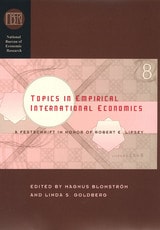
Topics in Empirical International Economics
A Festschrift in Honor of Robert E. LipseyEdited by Magnus Blomström and Linda S. Goldberg
University of Chicago Press, 2001
Value Wars
The Global Market Versus the Life EconomyJohn McMurtry
Pluto Press, 2002
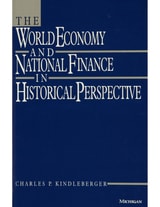
World Economy and National Finance in Historical Perspective
Charles P. Kindleberger
University of Michigan Press, 1995

You Alone Are Dancing
Brenda Flanagan
University of Michigan Press, 1996