Results by title
15 books match the query 'Intertextuality'
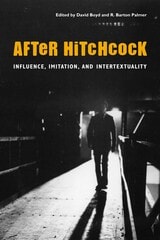
After Hitchcock
Influence, Imitation, and IntertextualityEdited by David Boyd and R. Barton Palmer
University of Texas Press, 2006
Alfred Hitchcock is arguably the most famous director to have ever made a film. Almost single-handedly he turned the suspense thriller into one of the most popular film genres of all time, while his Psycho updated the horror film and inspired two generations of directors to imitate and adapt this most Hitchcockian of movies. Yet while much scholarly and popular attention has focused on the director's oeuvre, until now there has been no extensive study of how Alfred Hitchcock's films and methods have affected and transformed the history of the film medium.
In this book, thirteen original essays by leading film scholars reveal the richness and variety of Alfred Hitchcock's legacy as they trace his shaping influence on particular films, filmmakers, genres, and even on film criticism. Some essays concentrate on films that imitate Hitchcock in diverse ways, including the movies of Brian de Palma and thrillers such as True Lies, The Silence of the Lambs, and Dead Again. Other essays look at genres that have been influenced by Hitchcock's work, including the 1970s paranoid thriller, the Italian giallo film, and the post-Psycho horror film. The remaining essays investigate developments within film culture and academic film study, including the enthusiasm of French New Wave filmmakers for Hitchcock's work, his influence on the filmic representation of violence in the post-studio Hollywood era, and the ways in which his films have become central texts for film theorists.

Cultural Difference and the Literary Text
Pluralism and the Limits of Authenticity in North American LiteratureWinfried Siemerling
University of Iowa Press, 1997
This dynamic, open-minded collection of essays responds to the issues raised by Werner Sollors when he argues against the rigidity of cultural pluralism, against the ethnic group-by-group segregation of American literature. Instead he calls for an openly transethinic recognition of cross-cultural interplays and connections among all so-called groups and their canons. In enthusiastic response to such issues, the contributors explore a variety of approaches to pluralism, multiculturalism, group identity, and the problematics of authenticity in literary texts and criticism both historically and currently.
The scholars in this civil, persuasive volume are at home in an international world that crosses linguistic, cultural, and national boundaries. They thus transcend the customary restrictions of earlier, relatively isolationist scholarship to form new, nonpolemical links among cultural identities. This relationship between oral modes of communal identity and writing in tribal cultures joins an examination of Houston Baker's discursive strategies. A consideration of ethnic humor in the writings of Zora Neale Hurston and Jerre Mangione and a discussion of Jean Toomer's racial persona offer striking contextualizations. Two contributors study discursive constructions of mestizaje in Chicano/a texts, followed by essays on cultural difference in Faulkner's Light in August and Roth's Call It Sleep.Finally, Werner Sollers's essay extends the interactions among all these energetic, nonjudgmental dialogues.

Early Stevens
The Nietzschean IntertextB. J. Leggett
Duke University Press, 1992
Concentrating on poems published between 1915 and 1935—but moving occasionally into later poems, as well as letters and essays—B. J. Leggett draws together texts of Stevens and Nietzsche to produce new and surprising readings of the poet's early work. This intertextual critique reveals previously undisclosed ideologies operating at the margins of Stevens's work, enabling Leggett to read aspects of the poetry that have until now been unreadable. Leggett's analysis demonstrates that the Nietzschean presence in Stevens brings with it certain assumptions that need to be made explicit if the form of the poetry is to be understood.
Though many critics have discussed the concept of intertextuality, few have attempted a truly intertextual reading of a particular poet. Early Stevens not only develops an exemplary model of such a reading; it also provides crucial insights into Stevens's notions of femininity, virility, and poetry and elucidates the notions of art, untruth, fiction, and interpretation in both Stevens and Nietzsche.
Edith Wharton in Context
Essays on IntertextualityAdeline R. Tintner
University of Alabama Press, 1999
Tintner provides a detailed analysis of the complex interplay between Wharton and James—how they influenced each other and how some of their writings operate as homages or personal jokes. So deeply was James in Wharton’s confidence, Tintner argues, that he provided her with source models for a number of her characters. In addition, Wharton found in his fiction structures for her own, especially for The Age of Innocence.
Tintner also brings her considerable knowledge of art history to bear in her study of art allusions in Wharton’s work. Wharton’s response both to the Italian painters active before Raphael and to the English Pre-Raphaelites of a generation before her own is analyzed here in three essays. These pieces demonstrate Wharton’s sensibility to changes in art tastes and collecting, the inheritance of Rossetti’s revolutionary paintings in the unfinished novel, The Buccaneers, and the importance of home in The Glimpses of the Moon, as demonstrated by Wharton’s use of Tiepolo’s fresco in the church of Scalzi.
Tintner concludes by considering Wharton’s literary legacy and who Wharton has figured in the imaginations of recent writers, including Richard Howard, Louis Auchincloss, and Cathleen Schine. Tintner finds some part of Wharton’s personality or work evoked in a number of contemporary works and argues that this presence signals the beginning of an increasing influence.
Formation and Intertextuality in Isaiah 24-27
J. Todd Hibbard
SBL Press, 2013
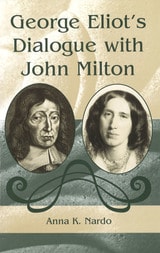
George Eliot's Dialogue with John Milton
Anna K. Nardo
University of Missouri Press, 2003
Influence and Intertextuality in Literary History
John B. Clayton
University of Wisconsin Press, 1991
This important collection explores and clarifies two of the most contested ideas in literary theory today, influence and intertextuality. The study of influence tends to center on major authors and canonical works, identifying prior documents as “sources” or “contexts” for a given author. Intertextuality, on the other hand, is a concept unconcerned with authors as individuals; it treats all texts as part of a network of discourse that includes culture, history, and social practices as well as other literary works. In thirteen essays drawing on the entire spectrum of English and American literary history, this volume considers the relationship between these two terms—their rivalry, their kinship, their range of uses.
Debates about these two concepts have been crucial to the “new historicism” and the resurgence of interest in literary history. The essays in this volume employ a refreshing array of examples from that history—poetry of the Renaissance and the twentieth century, novels of the eighteenth through twentieth centuries, Old English texts, and postmodernist productions that have served as recurrent “intertexts” for contemporary theory. The contributors treat such currently vital questions as the role of the author, canon formation, gender, causality, and the social dimension of texts. They illuminate old assumptions and new ideas about agency that lie behind notions of influence, and they examine models of an anonymous textual field that lie behind notions of intertextuality.
The volume takes much of its character from its own intertextual origin as a group project of the English faculty at the University of Wisconsin–Madison. Though diverse in their academic interests, concerns, and experience, the contributors particpated in an ongoing intellectual exchange that is a model of how new scholarship can arise from dialogue.
Interruptions
The Fragmentary Aesthetic in Modern LiteratureGerald L. Bruns
University of Alabama Press, 2018
A history of fragmentary—or interrupted—writing in avant-garde poetry and prose by a renowned literary critic.
In Interruptions: The Fragmentary Aesthetic in Modern Literature, Gerald L. Bruns explores the effects of parataxis, or fragmentary writing as a device in modern literature. Bruns focuses on texts that refuse to follow the traditional logic of sequential narrative. He explores numerous examples of self-interrupting composition, starting with Friedrich Schlegel's inaugural theory and practice of the fragment as an assertion of the autonomy of words, and their freedom from rule-governed hierarchies.
Bruns opens the book with a short history of the fragment as a distinctive feature of literary modernism in works from Gertrude Stein to Paul Celan to present-day authors. The study progresses to the later work of Maurice Blanchot and Samuel Beckett, and argues, controversially, that Blanchot's writings on the fragment during the 1950s and early 1960s helped to inspire Beckett’s turn toward paratactic prose.
The study also extends to works of poetry, examining the radically paratactic arrangements of two contemporary British poets, J. H. Prynne and John Wilkinson, focusing chiefly on their most recent, and arguably most abstruse, works. Bruns also offers a close study of the poetry and poetics of Charles Bernstein.
Interruptions concludes with two chapters about James Joyce. First, Bruns tackles the language of Finnegans Wake, namely the break-up of words themselves, its reassembly into puns, neologisms, nonsense, and even random strings of letters. Second, Bruns highlights the experience of mirrors in Joyce’s fiction, particularly in Dubliners, Portrait of the Artist as a Young Man, and Ulysses, where mirrored reflections invariably serve as interruptions, discontinuities, or metaphorical displacements and proliferations of self-identity.

Intertextual Encounters in American Fiction, Film, and Popular Culture
Michael Dunne
University of Wisconsin Press, 2001

Intertextuality and the 24-Hour News Cycle
A Day in the Rhetorical Life of Colin Powell's U.N. AddressJohn Oddo
Michigan State University Press, 2014
Reading Virgil and His Texts
Studies in IntertextualityRichard F. Thomas
University of Michigan Press, 2000
The articles and notes included in this volume have been selected for their diachronic aspect in addition to the synchronic status they had in their original context. Dealing with the intricate ways in which Virgil, and in the introductory chapter his predecessor Catullus, manipulated and appropriated their inherited Greek and Roman literary tradition, this book presents a coherent profile, through these detailed studies, of the mechanics of one of the most dynamic periods in the literary history of any culture.
Richard Thomas--one of the most important voices in Latin literary studies today--shows little anxiety about objections to authorial intentionality. Throughout there is a working assumption that intertextual connections can be established and, further, that functions and purposes, even intended ones, may be inferred from those connections.
This book will be of interest to scholars and students of Greek and Latin literature but will also be of great value to students of medieval, Renaissance, and early modern vernacular literatures, most of whose poets see themselves as closely connected to Virgil.
Richard F. Thomas is Professor of Greek and Latin, Harvard University.
Social Semiotics As Praxis
Text, Social Meaning Making, and Nabokov’s AdaPaul J. Thibault
University of Minnesota Press, 1991
In Social Semiotics as Praxis, Paul J. Thibault rescues semiotics from terminal formalism by recognizing that the object of a semiotic inquiry is necessarily the way in which human beings, individually and collectively, make sense of their lives. Focusing on Vladimir Nabokov’s Ada, he develops a conception of social semiotics that is a form of both social action and political praxis.
Thibault’s principal intellectual sources are, among others, Bakhtin, Volosinov, Derrida, Foucault, Gramsci, Habermas, and Halliday. Thibault combines the work of Halliday in particular with is own theories of semiotics to explore the dynamics of quoting and reporting speech and to develop a critique of the categories of “self” and “representation.” Thibault accounts for the meaningful relationships constructed among texts and elaborates on the two main themes of relational levels in texts and the dynamics of contextualization to give voice to a unifying discourse for talking about social meaning making.
The Pipes of Pan
Intertextuality and Literary Filiation in the Pastoral Tradition from Theocritus to MiltonThomas K. Hubbard
University of Michigan Press, 1999
Pastoral poetry highlights the didactic relationship of older and younger shepherds, whether as rivals or as patron and successor. As such it is an ideal form for young poets' self-representation vis-à-vis their elders, whose work they simultaneously appropriated and transformed, even as the elder poets were represented in the new texts. This influence is reenacted in every generation: Theocritus vs. his Alexandrian forebears, Vergil vs. Theocritus, Calpurnius vs. Vergil, Nemesianus vs. Vergil and Calpurnius, Petrarch vs. Vergil, Boccaccio vs. Petrarch, Spenser vs. Vergil, along with Chaucer and Milton vs. Spenser.
The Pipes of Pan combines multiple strands of contemporary intertextual theory with reception aesthetics and Harold Bloom's theory of intersubjective conflict between generations of poets. It also provides one of the first systematic studies of intertextual and intersubjective dynamics within a whole genre.
This work will be of interest to classicists, students of literary theory, comparative literature, medieval and Renaissance literature, Italian humanism, and English literature of the sixteenth and seventeenth centuries. All texts are translated.
Thomas Hubbard is Associate Professor of Classics, University of Texas at Austin.
The Pop Palimpsest
Intertextuality in Recorded Popular MusicLori Burns and Serge Lacasse, Editors
University of Michigan Press, 2018

The Story of Stone
Intertextuality, Ancient Chinese Stone Lore, and the Stone Symbolism in <i>Dream of the Red Chamber</i>, <i>Water Margin</i>, and <i>The Journey to the West</i>Jing Wang
Duke University Press, 1992
Bringing together Chinese myth, religion, folklore, art, and literature, this book is the first in any language to amass the sources of stone myth and stone lore in Chinese culture. Uniting classical Chinese studies with contemporary Western theoretical concerns, Wang examines these stone narratives by analyzing intertextuality within Chinese traditions. She offers revelatory interpretations to long-standing critical issues, such as the paradoxical character of the monkey in The Journey to the West, the circularity of narrative logic in The Dream of the Red Chamber, and the structural necessity of the stone tablet in Water Margin.
By both challenging and incorporating traditional sinological scholarship, Wang’s The Story of Stone reveals the ideological ramifications of these three literary works on Chinese cultural history and makes the past relevant to contemporary intellectual discourse. Specialists in Chinese literature and culture, comparative literature, literary theory, and religious studies will find much of interest in this outstanding work, which is sure to become a standard reference on the subject.