Results by title
46 books match the query 'Iraq War, 2003-2011'

7/7
The London Bombings, Islam and the Iraq WarMilan Rai
Pluto Press, 2006
This is the book Tony Blair doesn't want you to read about 7/7.
In February 2003, Tony Blair was warned by British intelligence that the invasion of Iraq would 'heighten' the risk of terrorism in Britain.
In July 2005, al-Qaeda struck in the heart of London. Despite the British Government's increasingly desperate attempts at denial, polls show that an overwhelming majority of people in Britain are convinced that there is a connection between the London bombings and the war on Iraq. A majority of Britons fault Tony Blair himself.
Using secret government documents declassified since the bombings, and leaks from British intelligence, Milan Rai exposes official deceit at the highest levels, and establishes the crucial role of British foreign policy in generating a home-grown version of al-Qaeda. Rai shows how an official report drawn up by the Home Office and Foreign Office in early 2004 identified 'foreign policy' - and the war in Iraq in particular - as a major cause of alienation among young British Muslims.
Examining the backgrounds of the 7/7 bombers, Milan Rai demonstrates that Islam is not to blame. Most importantly, the book shows us how to make sure that this never happens again -- and offers brief obituaries for the 52 people who lost their lives that day.
A 'Toxic Genre'
The Iraq War FilmsMartin Barker
Pluto Press, 2011
Over the last five years, a cycle of films has emerged addressing the ongoing Iraq conflict. Some became well-known and one of them, The Hurt Locker, won a string of Oscars. But many others disappeared into obscurity. What is it about these films that led Variety to dub them a 'toxic genre'?
Martin Barker analyses the production and reception of these recent Iraq war films. Among the issues he examines are the borrowing of soldiers’ YouTube styles of self-representation to generate an ‘authentic’ Iraq experience, and how they take refuge in ‘apolitical’ post-traumatic stress disorder. Barker also looks afresh at some classic issues in film theory: the problems of accounting for film ‘failures’, the shaping role of production systems, the significance of genre-naming and the impact of that 'toxic' label.
A 'Toxic Genre' is fascinating reading for film studies students and anyone interested in cinema's portrayal of modern warfare.
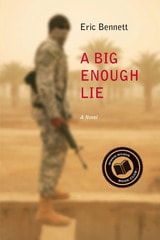
A Big Enough Lie
A NovelEric Bennett
Northwestern University Press, 2015
Awaiting a TV talk show appearance, John Townley is quaking with dread. He has published a best-selling memoir about the Iraq War, a page-turner climaxing in atrocity. In a green room beyond the soundstage, he braces himself to confront the charismatic soldier at the violent heart of it. But John has never actually seen the man before—nor served in Iraq, nor the military. Even so, and despite the deception, he knows his fabricated memoir contains stunning truths.
By turns comic, suspenseful, bitingly satirical, and emotionally potent, A Big Enough Lie pits personal mistruths against national ones of life-and-death consequence. Tracking a writer from the wilds of Florida to New York cubicles to Midwestern workshops to the mindscapes of Baghdad—and from love to heartbreak to solitary celebrity—Bennett’s novel probes our endlessly frustrated desire to grab hold of something (or somebody) true.
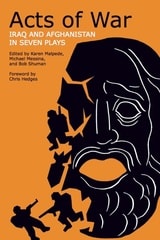
Acts of War
Iraq and Afghanistan in Seven PlaysKaren Malpede
Northwestern University Press, 2011
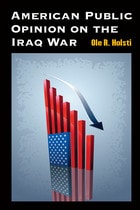
American Public Opinion on the Iraq War
Ole R. Holsti
University of Michigan Press, 2011
"A substantial contribution to understanding the role of public opinion and the news media during the Iraq War. Equally impressive, it effectively puts the domestic context of U.S. policy in historical perspective, making the book useful to historians as well as to political scientists."
---Ralph B. Levering, Davidson College
"American Public Opinion on the Iraq War sets out to chart against a detailed account of the war a nuanced assessment of how public opinion on the conflict evolved, the partisan differences that emerged, how the issue affected other areas of foreign policy opinion, and the limits of public opinion on policy. It succeeds at all of this, and it does so in a manner that is at once informative, inherently interesting, and exceptionally easy to read."
---Randolph M. Siverson, University of California, Davis
Ole R. Holsti explores the extent to which changes in public opinion reflected the vigorous public relations efforts of the Bush administration to gain support for the war and the partisanship marking debates over policies toward Iraq. Holsti investigates the ways in which the Iraq experience has led substantial numbers of Americans to reconsider their nation's proper international role, and he assesses the impact that public opinion has had on policymakers. Significantly, Holsti places his findings in a broader context to address the role of public opinion and of the media in democratic governance.
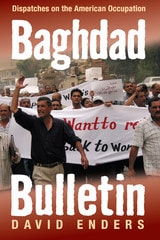
Baghdad Bulletin
Dispatches on the American OccupationDavid Enders
University of Michigan Press, 2009
-Joe Sacco, author of Safe Area Gorazde
"Baghdad Bulletin takes us where mainstream news accounts do not go. Disrupting the easy clichés that dominate U.S. journalism, Enders blows away the media fog of war. The result is a book that challenges Americans to see through double speak and reconsider the warfare being conducted in their names."
-Norman Solomon, author of War Made Easy: How Presidents and Pundits Keep Spinning Us to Death
"Journalism at its finest and on a shoestring to boot. David Enders shows that courage and honesty can outshine big-budget mainstream media. Wry but self-critical, Baghdad Bulletin tells a story that a few of us experienced but every journalist, nay every citizen, should read."
-Pratap Chatterjee, Managing Editor and Project Director, CorpWatch
"Young and tenacious, Dave Enders went, saw, and wrote it down. Here it is-a well-informed and detailed tale of Iraq's decline under American rule. Baghdad Bulletin offers tragic politics, wacky people, and keen insights about what really matters on the ground in Iraq."
-Christian Parenti
"I wrote my first piece for Baghdad Bulletin after visiting the mass graves at Al-Hilla in 2003. The Baghdad Bulletin was essential reading in the first few months after the end of the war. I handed that particular copy to Prime Minister Tony Blair. I am only sorry that I cannot read it anymore. David Enders and his team were brave, enterprising, and idealistic."
-Rt. Hon. Ann Clwyd, member of the British Parliament
Baghdad Bulletin is a street-level account of the war and turbulent postwar period as seen through the eyes of the young independent journalist David Enders. The book recounts Enders's story of his decision to go to Iraq, where he opened the only English-language newspaper completely written, printed, and distributed there during the war.
Young, courageous, and anti-authoritarian, Enders is the first reporter to cover the war as experienced by ordinary Iraqis. Deprived of the press credentials that gave his embedded colleagues access to press conferences and officially sanitized information, Enders tells the story of a different war, outside the Green Zone. It is a story in which the struggle of everyday life is interspersed with moments of sheer terror and bizarre absurdity: wired American troops train their guns on terrified civilians; Iraqi musicians prepare a recital for Coalition officials who never show; traveling clowns wreak havoc in a Baghdad police station.
Orphans and intellectuals, activists and insurgents: Baghdad Bulletin depicts the unseen complexity of Iraqi society and gives us a powerful glimpse of a new kind of warfare, one that coexists with-and sometimes tragically veers into-the everyday rhythms of life.
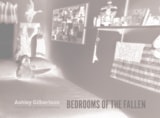
Bedrooms of the Fallen
Ashley Gilbertson
University of Chicago Press, 2014
The book’s wide-format black-and-white images depict the bedrooms of forty fallen soldiers—the equivalent of a single platoon—from the United States, Canada, and several European nations. Left intact by families of the deceased, the bedrooms are a heartbreaking reminder of lives cut short: we see high school diplomas and pictures from prom, sports medals and souvenirs, and markers of the idealism that carried them to war, like images of the Twin Towers and Osama Bin Laden. A moving essay by Gilbertson describes his encounters with the families who preserve these private memorials to their loved ones, and shares what he has learned from them about war and loss.
Bedrooms of the Fallen is a masterpiece of documentary photography, and an unforgettable reckoning with the human cost of war.
Bordering on War
A Social and Political History of KhuzestanShaherzad Ahmadi
University of Texas Press, 2024
A study of transnational identity, migration, and state loyalties told through the social and political history of Iran’s Khuzestan province.
In 1980, Saddam Hussein’s Ba‘athist forces invaded Khuzestan, one of the oldest and richest provinces in Iran, triggering the Iran-Iraq War. Shaherzad Ahmadi’s Bordering on War examines the social history of Khuzestan and sheds light on how border dwellers, provincial leaders, and migrants in the region shaped Iran and Iraq's history before, during, and after the war.
Drawing from a rich collection of Persian- and Arabic-language archival sources—rarely used by western scholars due to restrictions in Iran—Ahmadi’s research focuses on Arab Iranians and argues that Iranian border dwellers and migrants formed local, non-national loyalties, thereby eschewing bureaucratic pressures to confine loyalties to a single nation-state. The transnational character and ethnically diverse composition of Khuzestan, especially in the oil-rich towns on the southwestern border, led many, including Iraq’s Ba‘ath Party, to question the national belonging of Arab Iranians. Bordering on War contributes to a wider discussion about the ability of individuals and communities to exert agency through migration, trade, education, and other activities.
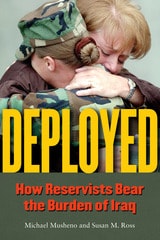
Deployed
How Reservists Bear the Burden of IraqMichael Musheno and Susan M. Ross
University of Michigan Press, 2008
"Deployed is an important and deeply moving book. Here, in this story, the heroic tradition of the American citizen-soldier lives on."
---Andrew J. Bacevich, Professor, Boston University, and author of The New American Militarism: How Americans Are Seduced by War
"Whatever your feelings about Iraq, Deployed is an important and compelling work that illuminates the real human cost of the war, and gives voice to those compelled to fight it."
---Ken Wells, Senior Editor, Condé Nast Portfolio
"Currently, there are few to no books dealing with the sociology of Iraq, and even fewer have empirical data on the experiences of American soldiers. More important, this work provides a strong and needed voice for soldiers---their words are compelling, rich, and moving."
---Morten Ender, Professor of Sociology, United States Military Academy at West Point
"This is a unique book that weaves historical, ethnographic, and organizational approaches for a study of Iraq-War military reservists. . . . the authors' findings challenge the pervading wisdom on reservists' motivations for service; the chemistry between family, reserve duty, and relations with regular military; and the effect that service in Iraq had on them."
---Jerry Lembcke, Associate Professor of Sociology, Holy Cross College
What is it like to be one of the citizen-soldiers summoned to duty in Iraq and Afghanistan? The events of 9/11 were a call to arms for many reservists, as shock, anger, and fear propelled large numbers to volunteer for the opportunity to serve their country in the Middle East. Even the most patriotic, however, had not expected that the wars would last so long or that the Army Reserve would supply so much of the manpower.
Using the soldiers' own voices, Deployed draws upon the life stories of members of an Army Reserve MP Company, who were called to extraordinary service after September 11. The book explores how and why they joined the Army Reserve, how they dealt with the seismic changes in their lives during and after deployment, the evolution of their relationships inside and outside their military unit, and their perspectives on the U.S. Army.
Musheno and Ross uncover five pathways that led these citizens to join the reserves, showing how basic needs and cultural idioms combined to stimulate enlistments. Whatever path led to enlistment, the authors find that citizen-soldiers fall into three distinct categories: adaptive reservists who adjust quickly to the huge changes in their lives abroad and at home, struggling reservists whose troubles are more a product of homegrown circumstances than experiences specific to serving in a war zone, and reservists who are dismissive of military life while they live it and oppose the war even as they fight it. Perhaps most important, Deployed challenges the prevailing stereotype of returning soldiers as war-damaged citizens.
Jacket photograph: AP Photo/Hutchinson News, Travis Morisse.
Desert Mementos
Stories of Iraq and NevadaCaleb S. Cage
University of Nevada Press, 2017
Cage captures similarities in the respective desert landscapes of both Iraq and Nevada, but it is not just a study in contrasting landscapes. The inter-connected stories explore similarities and differences in human needs from the perspectives of vastly different cultures. Specifically, the stories deftly capture the overlap in the respective desert landscapes of each region, the contrasting cultures and worldviews, and the common need for hope. Taken together, the stories represent the arc of a year-long deployment by young soldiers. Cage’s stories are bound together by the soldier’s searing experiences in the desert, bookended by leaving and returning home to Nevada, which in many ways can be just as disorienting as patrolling the Iraq desert.
Empire's Law
The American Imperial Project and the 'War to Remake the World'Edited by Amy Bartholomew
Pluto Press, 2006
Jean L. Cohen Professor of Political Science, Columbia University
"This remarkable collection of essays illuminates -- more fully than any other volume -- the world order costs of the Iraq War, especially the radical denial of the relevance of international law in the US's pursuit of global empire. To understand this overarching geopolitical challenge of the early 21st century, citizens the world over should treat Empire's Law as required reading."
Richard A. Falk, Albert G. Milbank Professor of International Law and Practice Emeritus, Princeton University and currently Visiting Professor of Global and International Studies, University of California, Santa Barbara
"Right now there can't be enough discussion of America's role in world politics ... This is a much-needed collection from leading scholars."
Neil Stammers, Senior Lecturer in the Department of International Relations and Politics, University of Sussex
What is the legacy of the war in Iraq? Can democracy and human rights really be imposed "by fire and sword"? This book brings together some of the world's most outstanding theorists in the debate over empire and international law. They provide a uniquely lucid account of the relationship between American imperialism, the use and abuse of "humanitarian intervention", and its legal implications. Empire's Law is ideal for students who want a comprehensive critical introduction to the impact that the doctrine of pre-emptive war has had on our capacity to protect human rights and promote global justice.
Leading contributors including Leo Panitch, Sam Gindin, Jurgen Habermas, Ulrich Preuss, Andrew Arato, Samir Amin, Reg Whitaker, Denis Halliday and Hans von Sponeck tackle a broad range of issues. Covering everything from the role of Europe and the UN, to people's tribunals, to broader theoretical accounts of the contradictions of war and human rights, the contributors offer new and innovative ways of examining the problems that we face. It is essential reading for all students who want a systematic framework for understanding the long-term consequences of imperialism.
Amy Bartholomew is an Associate Professor in the Department of Law at Carleton University.
Erasing Iraq
The Human Costs of CarnageMichael Otterman, Richard Hil, Paul Wilson, and Dahr Jamail
Pluto Press, 2010
For nearly two decades, the US and its allies have prosecuted war and aggression in Iraq. Erasing Iraq shows in unparalleled detail the devastating human cost of the war in Iraq.
Western governments and the mainstream media continue to ignore or play down the human costs of the war on Iraqi citizens This has allowed them to present their role as the benign guardians of Iraqi interests. The authors deconstruct this narrative by presenting a portrait of the total carnage in Iraq today. From Iraqi refugees in Syria, Jordan and the West, to civilians left behind, and other witnesses, this the story of the war told by those who experienced it firsthand.
Frustrated Empire
US Foreign Policy, 9/11 to IraqDavid Ryan
Pluto Press, 2007
Gender Is a Weapon
Liberalism, Difference, and US CounterinsurgencyElizabeth Mesok
University of Michigan Press, 2026
Following the end of the draft in 1973, the US military increasingly offered women the opportunity to transform their lives—to obtain an education, receive healthcare, provide for their families, and prove their worth to the nation. By the time the US invaded Iraq and Afghanistan at the turn of the twenty-first century, the labor of women—and Black women in particular—was critical to the military’s ability to simultaneously wage two wars. Within the context of counterinsurgencies fought amid civilian populations, the US military discovered the value of women’s gender difference as a weapon of war.
Through ethnographic and archival research with women soldiers and Marines, as well as military and government officials, Gender Is a Weapon contextualizes women’s service in Iraq and Afghanistan against the promises of liberal inclusion unfolding throughout the late twentieth and early twenty-first century. Centered on narratives of Black and Indigenous women, women of color, immigrant women, and queer women, the book analyzes the transformations of martial citizenship; the racialized language of cultural difference in the US’s revitalized counterinsurgency doctrine; the gendered performances of women in combat and civilian engagement missions; and ultimately, the irreparable injuries of body and mind with which these women returned home. The epilogue discusses the recent dismantling of DEI in the military and US government more broadly, reflecting on what we can learn from the violent history of military liberal inclusion to help us better understand our contemporary moment. By carefully attending to both the discursive construction and performative enactment of gender in militarized and securitized contexts, the book advances theoretical frames for studying gender in state militaries, militarism, and late liberalism.
Generation Vet
Composition, Student Veterans, and the Post-9/11 UniversitySue Doe
Utah State University Press, 2014
Institutions of higher education are experiencing the largest influx of enrolled veterans since World War II, and these student veterans are transforming post-secondary classroom dynamics. While many campus divisions like admissions and student services are actively moving to accommodate the rise in this demographic, little research about this population and their educational needs is available, and academic departments have been slower to adjust. In Generation Vet, fifteen chapters offer well-researched, pedagogically savvy recommendations for curricular and programmatic responses to student veterans for English and writing studies departments.
In work with veterans in writing-intensive courses and community contexts, questions of citizenship, disability, activism, community-campus relationships, and retention come to the fore. Moreover, writing-intensive courses can be sites of significant cultural exchanges—even clashes—as veterans bring military values, rhetorical traditions, and communication styles that may challenge the values, beliefs, and assumptions of traditional college students and faculty.
This classroom-oriented text addresses a wide range of issues concerning veterans, pedagogy, rhetoric, and writing program administration. Written by diverse scholar-teachers and written in diverse genres, the essays in this collection promise to enhance our understanding of student veterans, composition pedagogy and administration, and the post-9/11 university.
Ghost Riders of Baghdad
Soldiers, Civilians, and the Myth of the SurgeDaniel A. Sjursen
University Press of New England, 2015
Going to War in Iraq
When Citizens and the Press MatterStanley Feldman, Leonie Huddy, and George E. Marcus
University of Chicago Press, 2015
Drawing on the most comprehensive survey of public reactions to the war, Stanley Feldman, Leonie Huddy, and George E. Marcus revisit this critical period and come back with a very different story. Polling data from that critical period shows that the Bush administration’s carefully orchestrated campaign not only failed to raise Republican support for the war but, surprisingly, led Democrats and political independents to increasingly oppose the war at odds with most prominent Democratic leaders. More importantly, the research shows that what constitutes the news matters. People who read the newspaper were more likely to reject the claims coming out of Washington because they were exposed to the sort of high-quality investigative journalism still being written at traditional newspapers. That was not the case for those who got their news from television. Making a case for the crucial role of a press that lives up to the best norms and practices of print journalism, the book lays bare what is at stake for the functioning of democracy—especially in times of crisis—as newspapers increasingly become an endangered species.
Good Medicine, Hard Times
Memoir of a Combat Physician in IraqEdward P. Horvath, MD
The Ohio State University Press, 2022
In Time of War
Understanding American Public Opinion from World War II to IraqAdam J. Berinsky
University of Chicago Press, 2009
From World War II to the war in Iraq, periods of international conflict seem like unique moments in U.S. political history—but when it comes to public opinion, they are not. To make this groundbreaking revelation, In Time of War explodes conventional wisdom about American reactions to World War II, as well as the more recent conflicts in Korea, Vietnam, the Gulf, Afghanistan, and Iraq. Adam Berinsky argues that public response to these crises has been shaped less by their defining characteristics—such as what they cost in lives and resources—than by the same political interests and group affiliations that influence our ideas about domestic issues.
With the help of World War II–era survey data that had gone virtually untouched for the past sixty years, Berinsky begins by disproving the myth of “the good war” that Americans all fell in line to support after the Japanese bombed Pearl Harbor. The attack, he reveals, did not significantly alter public opinion but merely punctuated interventionist sentiment that had already risen in response to the ways that political leaders at home had framed the fighting abroad. Weaving his findings into the first general theory of the factors that shape American wartime opinion, Berinsky also sheds new light on our reactions to other crises. He shows, for example, that our attitudes toward restricted civil liberties during Vietnam and after 9/11 stemmed from the same kinds of judgments we make during times of peace.
With Iraq and Afghanistan now competing for attention with urgent issues within the United States, In Time of War offers a timely reminder of the full extent to which foreign and domestic politics profoundly influence—and ultimately illuminate—each other.
Iraq | Perspectives
Benjamin Lowy
Duke University Press, 2011
The Center for Documentary Studies / Honickman First Book Prize in Photography
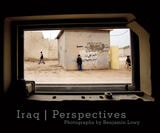
Benjamin Lowy’s powerful and arresting color photographs, taken over a six-year period through Humvee windows and military-issue night vision goggles, capture the desolation of a war-ravaged Iraq as well as the tension and anxiety of both U.S. soldiers and Iraqi civilians. To photograph on the streets unprotected was impossible for Lowy, so he made images that illuminate this difficulty by shooting photographs through the windows and goggles meant to help him, and soldiers, to see. In doing so he provides us with a new way of looking at the war—an entirely different framework for regarding and thinking about the everyday activities of Iraqis in a devastated landscape and the movements of soldiers on patrol, as well as the alarm and apprehension of nighttime raids.
“Iraq was a land of blast walls and barbed wire fences. I made my first image of a concrete blast wall through the window of my armored car. These pictures show a fragment of Iraqi daily life taken by a transient passenger in a Humvee; yet they are a window to a world where work, play, tension, grief, survival, and everything in between are as familiar as the events of our own lives. . . . [In] the ‘Nightvision’ images . . . as soldiers weave through the houses and bedrooms of civilians during nighttime military raids, they encounter the faces of their suspects as well as bystanders, many of whom are parents protecting their children. . . . I hope that these images provide the viewer with momentary illumination of the fear and desperation that is war.”—Benjamin Lowy
Israel and the Clash of Civilisations
Iraq, Iran and the Plan to Remake the Middle EastJonathan Cook
Pluto Press, 2008
Journalist Jonathan Cook explores Israel’s key role in persuading the Bush administration to invade Iraq, as part of a plan to remake the Middle East, and their joint determination to isolate Iran and prevent it from acquiring nuclear weapons that might rival Israel’s own.
This concise and clearly argued book makes the case that Israel's desire to be the sole regional power in the Middle East neatly chimed with Bush’s objectives in the “war on terror”.
Examining a host of related issues, from the ethnic cleansing of Palestinians to the role of Big Oil and the demonisation of the Arab world, Cook argues that the current chaos in the Middle East is the objective of the Bush administration – a policy that is equally beneficial to Israel.
Making the World Safe for Capitalism
How Iraq Threatened the US Economic Empire and had to be DestroyedChristopher Doran
Pluto Press, 2012
The Iraq war defined the first decade of the twenty-first century – leading to mass protests and raising profound questions about domestic politics and the use of military force. Yet most explanations of the war have a narrow focus either on political personalities or oil.
Christopher Doran provides a unique perspective, arguing that the drive to war came from the threat Iraq might pose to American economic hegemony if the UN sanctions regime was ended. Doran argues that this hegemony is rooted in third world debt and corporate market access. It was protection of these arrangements that motivated US action, not Iraq’s alleged weapons of mass destruction or a simplistic desire to seize its oil.
This book will provide new insights on the war which still casts a shadow over global politics, and will have wide appeal to all those concerned about the Middle East, world peace and global development.
Mass Deception
Moral Panic and the U.S. War on IraqScott A. Bonn
Rutgers University Press, 2010
Mass Deception argues that the George W. Bush administration manufactured public support for the war on Iraq. Scott A. Bonn introduces a unique, integrated, and interdisciplinary theory called "critical communication" to explain how and why political elites and the news media periodically create public panics that benefit both parties. Using quantitative analysis of public opinion polls and presidential rhetoric pre- and post-9/11 in the news media, Bonn applies the moral panic concept to the Iraq war. He critiques the war and occupation of Iraq as violations of domestic and international law. Finally, Mass Deception connects propaganda and distortion efforts by the Bush administration to more general theories of elite deviance and state crime.
Operation Homecoming
Iraq, Afghanistan, and the Home Front, in the Words of U.S. Troops and Their Families, Updated Editionedited by Andrew Carroll
University of Chicago Press, 2008
“One of the chanted mantras of our time is, ‘But I support the troops.’ Terrific. Now read Operation Homecoming to find out who they are, what they think, feel, want, have learned, won and lost in Iraq and Afghanistan.”—Daniel Henninger, Wall Street Journal
“This anthology is the honest voice of war. . . . In the end, they are all one voice, a voice we must hear, and must not forget.”—Jeff Shaara
“These voices are stirring, chilling, and unforgettable.”—Bobbie Ann Mason
“[Captures] what journalists cannot, no matter how close they get—firsthand accounts from the warriors and the families they leave behind.”—Chicago Tribune
Our Grief Is Not a Cry for War
The Movement to Stop the War on TerrorJeremy Varon
University of Chicago Press, 2025
Just after 9/11, President George W. Bush climbed the rubble where the World Trade Center had stood. Surrounded by shouts of anger, he said, “The people who knocked these buildings down will hear all of us soon!” With these words, Bush ushered in the War on Terror. Quickly, a global protest movement mobilized against it, reshaping the political, moral, and media landscape.
Jeremy Varon’s Our Grief Is Not a Cry for War is the definitive history of that movement. Millions of Americans participated in thousands of acts of protest, from demonstrations to civil disobedience to peace encampments in Iraq. On February 15, 2003, up to 30 million people worldwide took to the streets in the largest protest in human history. But this enormous outcry was not enough to stop the US invasion of Iraq. Varon explores the limits to the movement’s power but also shows how it worked to make opposition to the Iraq War a part of public debate, hastening its end and limiting the broader War on Terror. In the book, you’ll meet the families of the 9/11 victims, Iraq War veterans, and Gold Star families who spoke out against war.
Written with a lively and revelatory voice, Our Grief Is Not a Cry for War illuminates the passion of the peace movement, the mark it made, and the enduring legacies of the War on Terror.
Perpetual War
Cosmopolitanism from the Viewpoint of ViolenceBruce Robbins
Duke University Press, 2012
Under these conditions, cosmopolitanism in the traditional sense—primary loyalty to the good of humanity as a whole, even if it conflicts with loyalty to the interests of one's own nation—becomes a necessary resource in the struggle against military aggression. To what extent does the "new" cosmopolitanism also include or support this "old" cosmopolitanism? In an attempt to answer this question, Robbins engages with such thinkers as Noam Chomsky, Edward Said, Anthony Appiah, Immanuel Wallerstein, Louis Menand, W. G. Sebald, and Slavoj Zizek. The paradoxes of detachment and belonging they embody, he argues, can help define the tasks of American intellectuals in an era when the first duty of the cosmopolitan is to resist the military aggression perpetrated by his or her own country.
Post-Ethical Society
The Iraq War, Abu Ghraib, and the Moral Failure of the SecularDouglas V. Porpora, Alexander G. Nikolaev, Julia Hagemann May, and Alexander Jenkins
University of Chicago Press, 2013
In this singular examination of the American discourse over war and torture, Douglas V. Porpora, Alexander Nikolaev, Julia Hagemann May, and Alexander Jenkins investigate the opinion pages of American newspapers, television commentary, and online discussion groups to offer the first empirical study of the national conversation about the 2003 invasion of Iraq and the revelations of prisoner abuse at Abu Ghraib a year later. Post-Ethical Society is not just another shot fired in the ongoing culture war between conservatives and liberals, but a pensive and ethically engaged reflection of America’s feelings about itself and our actions as a nation. And while many writers and commentators have opined about our moral place in the world, the vast amount of empirical data amassed in Post-Ethical Society sets it apart—and makes its findings that much more damning.
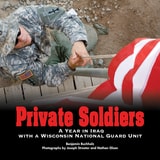
Private Soldiers
A Year in Iraq with a Wisconsin National Guard UnitBenjamin Buchholz
Wisconsin Historical Society Press, 2007
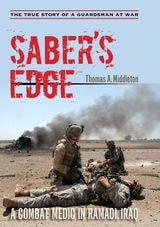
Saber’s Edge
A Combat Medic in Ramadi, IraqThomas A. Middleton
University Press of New England, 2010

Severance Songs
Joshua Corey
Tupelo Press, 2011
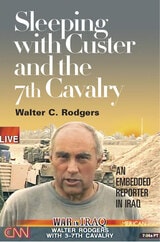
Sleeping with Custer and the 7th Cavalry
An Embedded Reporter in IraqWalter C. Rodgers
Southern Illinois University Press, 2005
An essential document of the first American war of the new century
Under a full opalescent moon in the spring of 2003, CNN correspondent Walter C. Rodgers and three colleagues climbed into an unarmored Humvee loaded with satellite transmission equipment and fell into column formation with the MIAI Abrams battle tanks and Bradley fighting vehicles of Apache Troop, Third Squadron, of the storied 7th Cavalry and crossed the Line of Departure between Kuwait and Iraq. Sleeping with Custer and the 7th Cavalry: An Embedded Reporter in Iraq is Rodgers’s account of the fight from the Kuwaiti border to the Iraqi capital of Baghdad.
Rodgers was embedded with the “tip of the tip of the spear,” the armored reconnaissance unit tasked with clearing the way for the invasion of Iraq. For the next three weeks Rodgers—a seasoned combat correspondent who has covered armed conflicts in the West Bank, along the “Green Line” in Lebanon, and in Sarajevo, Azerbaijan, and Afghanistan—was a first-person witness to the opening campaign of the most significant war America has embarked upon since Vietnam.
Rodgers and his journalistic colleagues in Operation Iraqi Freedom became pioneers in the process of embedding, the placing of journalists who can transmit video reports in real time under combat conditions with no censoring authority to block their reporting. During this journey into war, Rodgers and his crew embraced the dangers, the numbing fatigue, and the moments of stark fear of the young armored cavalrymen they lived with twenty-four hours each day, an experience that created for them the lifelong bond that only soldiers serving together under fire share.
Rodgers also details his return visit to Iraq a year later, reflecting on the nature of war and sharing his personal feelings about a conflict that has claimed the lives of over fifteen hundred American men and women. The volume is illustrated with photographs taken during the invasion by Jeff Barwise, the CNN engineer who accompanied Rodgers.
Soft Weapons
Autobiography in TransitGillian Whitlock
University of Chicago Press, 2007
Azar Nafisi’s Reading Lolita in Tehran,Marjane Satrapi’s comics, and “Baghdad Blogger” Salam Pax’s Internet diary are just a few examples of the new face of autobiography in an age of migration, globalization, and terror. But while autobiography and other genres of life writing can help us attend to people whose experiences are frequently unseen and unheard, life narratives can also be easily co-opted into propaganda. In Soft Weapons, Gillian Whitlock explores the dynamism and ubiquity of contemporary life writing about the Middle East and shows how these works have been packaged, promoted, and enlisted in Western controversies.
Considering recent autoethnographies of Afghan women, refugee testimony from Middle Eastern war zones, Jean Sasson’s bestsellers about the lives of Arab women, Norma Khouri’s fraudulent memoir Honor Lost, personal accounts by journalists reporting the war in Iraq, Satrapi’s Persepolis, Nafisi’s book, and Pax’s blog, Whitlock explores the contradictions and ambiguities in the rapid commodification of life memoirs. Drawing from the fields of literary and cultural studies, Soft Weapons will be essential reading for scholars of life writing and those interested in the exchange of literary culture between Islam and the West.
Success and Failure in Limited War
Information and Strategy in the Korean, Vietnam, Persian Gulf, and Iraq WarsSpencer D. Bakich
University of Chicago Press, 2014
Traditional assessments of wartime strategy focus on the relationship between the military and civilians, but Bakich argues that we must take into account the information flow patterns among top policy makers and all national security organizations. By examining the fate of American military and diplomatic strategy in four limited wars, Bakich demonstrates how not only the availability and quality of information, but also the ways in which information is gathered, managed, analyzed, and used, shape a state’s ability to wield power effectively in dynamic and complex international systems.
Utilizing a range of primary and secondary source materials, Success and Failure in Limited War makes a timely case for the power of information in war, with crucial implications for international relations theory and statecraft.
Tell Me Lies
Propaganda and Media Distortion in the Attack on IraqEdited by David Miller
Pluto Press, 2003
Did the US and UK governments lie about weapons of mass destruction to promote an attack on Iraq?
Did the media hold them to account or act as cheerleaders for war?
Tell me Lies reveals the systematic propaganda used by both the US and UK governments to convince us of the 'threat' from Iraq. It shows how we were deliberately misled into a war that has resulted in a humanitarian disaster in Iraq and threatens to create further instability and resentment of the US and UK throughout the Middle East.
Written by some of the world's leading journalists and commentators, it's a scathing indictment of the role of the mainstream media in legitimising government actions and undermining dissent. Critics, activists and journalists from both sides of the Atlantic explore alternatives such as the internet and Al Jazeera and provide analysis and guidance on resisting the media war.
Contributors include John Pilger, Noam Chomsky, Robert Fisk, Edward Herman, Mark Thomas, Mark Steel, Phillip Knightley, Tim Llewelyn (BBC Middle East Correspondent), Abdul Hadi Jiad (Iraqi journalist sacked by the BBC before the war), David Cromwell and David Edwards (Media Lens), Mark Curtis, John Stauber and Sheldon Rampton (PR Watch, and co-authors of Weapons of Mass Deception and Toxic Sludge is Good For You), Pat Holland, Norman Solomon (columnist and director of the Institute for Public Accuracy), Nancy Snow (California State University, Fullerton, author of Propaganda Inc. and Information War), Doug Kellner (UCLA), Julian Petley, Yvonne Ridley (Aljazeera.net and author of In the Hands of the Taliban), Tim Gopsill (Campaign for Press and Broadcasting Freedom), Faisal Bodi (UK Guardian, Aljazeera.net), Alistair Alexander (Stop the War Coalition), Greg Philo (Glasgow University Media Group), Steve Dorrill, Andy Rowell, Granville Williams and cartoonists Steve Bell, Steve Caplin and Polyp.
The Betrayal of Dissent
Beyond Orwell, Hitchens and the New American CenturyScott Lucas
Pluto Press, 2004
political writer, and the standard-bearer of honesty and decency for the honourable 'Left'. In this controversial polemic, Scott Lucas argues that the exaltation of Orwell, far from upholding dissent against the State, has sought to quash such opposition. Indeed, Orwell has become the icon of those who, in the pose of the contrarian, try to silence public opposition to US and U K foreign policy in the 'War on Terror'.
Lucas's lively and readable critique of public intellectuals including Christopher Hitchens, Michael Walzer, David Aaronovitch, and Johann Hari – who have all invoked Orwellian honesty and decency to shut down dissent – will appeal to anyone disillusioned with the wars in Afghanistan and Iraq.
Lucas contends that these leading journalists and commentators have used Orwell to justify their own political transition from radicals to upholders of the establishment. All of them play influential roles in supporting the UK and US governments' charge that opponents of war -- and those who question the motives behind American foreign policy and its implementation -- should be condemned as 'appeasers of mass murder'.
This controversial book shows how Orwell has been used since 9/11 to justify, in the guise of independent thought, the suppression of dissent. We must rescue ourselves from Orwell and from those who take on his guise so, as Lucas puts it, our ‘silencing is… vital to a "manufacture of consent" for the wars which are supposedly being fought in our name and for our good’.
The Defense of Jisr al-Doreaa
With E. D. Swinton's "The Defence of Duffer's Drift"Michael L. Burgoyne and Albert J. Marckwardt
University of Chicago Press, 2009
Following the invasion of Iraq in 2003 the U.S. military found itself in a battle with a lethal and adaptive insurgency, where the divisions between enemy and ally were ambiguous at best, and working with the local population was essential for day-to-day survival. From the lessons they learned during multiple tours of duty in Iraq, two American veterans have penned The Defense of Jisr al-Doreaa, an instructional parable of counterinsurgency that addresses the myriad of difficulties associated with war in the postmodern era.
In this tactical primer based on the military classic The Defence of Duffer’s Drift, a young officer deployed for the first time in Iraq receives ground-level lessons about urban combat, communications technology, and high-powered weaponry in an environment where policy meets reality. Over the course of six dreams, the inexperienced soldier fights the same battle again and again, learning each time—the hard way—which false assumptions and misconceptions he needs to discard in order to help his men avoid being killed or captured. As the protagonist struggles with his missions and grapples with the consequences of his mistakes, he develops a keen understanding of counterinsurgency fundamentals and the potential pitfalls of working with the native population.
Accompanied here by the original novella that inspired it, The Defense of Jisr al-Doreaa offers an invaluable resource for cadets and junior military leaders seeking to master counterinsurgency warfare—as well as general readers seeking a deeper understanding of the wars in Iraq and Afghanistan. Just as its predecessor has been a hallmark of military instruction, The Defense of Jisr al-Doreaa will draw the road map for counterinsurgency in the postmodern world.
Visit a website for the book here: www.defenseofJAD.com
The Hero and the Victim
Narratives of Criminality in Iraq War FictionGregory Brazeal
Lever Press, 2024
The emphasis on soldier criminality in Iraq War fiction can be partly explained by the rise of moral cosmopolitanism and its blurring of the traditional conceptual lines between war and crime. The anti-war literature of the twentieth century often presented fallen soldiers on both sides equally as victims and viewed the distinction between heroes and villains as part of the illusion that battlefield experience strips away. Written in the long shadow of Nuremberg, Iraq War fiction grapples with the possibility that the soldiers on one’s own side may not be the heroes in the story, or even the victims, but participants in a wrong, and perhaps even complicit in crimes. The Hero and the Victim contributes to the ongoing, public reexamination of American traditions by confronting a topic that has, up to now, been largely untouched: the moral celebration of military service.
The Hero and the Victim explores the theme of soldier criminality through close readings of several works by American authors, including Kevin Powers’s The Yellow Birds, Phil Klay’s Redeployment, Helen Benedict’s Sand Queen, Chris Kyle’s American Sniper, and Roy Scranton’s War Porn. This volume will be an essential text for students of American literature, historians of war culture, and any scholar interested in representations of the Iraq War.
The Last Deployment
How a Gay, Hammer-Swinging Twentysomething Survived a Year in IraqBronson Lemer
University of Wisconsin Press, 2011
In 2003, after serving five and a half years as a carpenter in a North Dakota National Guard engineer unit, Bronson Lemer was ready to leave the military behind. But six months short of completing his commitment to the army, Lemer was deployed on a yearlong tour of duty to Iraq. Leaving college life behind in the Midwest, he yearns for a lost love and quietly dreams of a future as an openly gay man outside the military. He discovers that his father’s lifelong example of silent strength has taught him much about being a man, and these lessons help him survive in a war zone and to conceal his sexuality, as he is required to do by the U.S. military.
Finalist, Minnesota Book Awards
Finalist, Over the Rainbow Selection, American Library Association
Amazon Top Ten 10 Gay & Lesbian Books of 2011
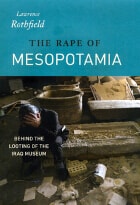
The Rape of Mesopotamia
Behind the Looting of the Iraq MuseumLawrence Rothfield
University of Chicago Press, 2009
On April 10, 2003, as the world watched a statue of Saddam Hussein come crashing down in the heart of Baghdad, a mob of looters attacked the Iraq National Museum. Despite the presence of an American tank unit, the pillaging went unchecked, and more than 15,000 artifacts—some of the oldest evidence of human culture—disappeared into the shadowy worldwide market in illicit antiquities. In the five years since that day, the losses have only mounted, with gangs digging up roughly half a million artifacts that had previously been unexcavated; the loss to our shared human heritage is incalculable.
With The Rape of Mesopotamia, Lawrence Rothfield answers the complicated question of how this wholesale thievery was allowed to occur. Drawing on extensive interviews with soldiers, bureaucrats, war planners, archaeologists, and collectors, Rothfield reconstructs the planning failures—originating at the highest levels of the U.S. government—that led to the invading forces’ utter indifference to the protection of Iraq’s cultural heritage from looters. Widespread incompetence and miscommunication on the part of the Pentagon, unchecked by the disappointingly weak advocacy efforts of worldwide preservation advocates, enabled a tragedy that continues even today, despite widespread public outrage.
Bringing his story up to the present, Rothfield argues forcefully that the international community has yet to learn the lessons of Iraq—and that what happened there is liable to be repeated in future conflicts. A powerful, infuriating chronicle of the disastrous conjunction of military adventure and cultural destruction, The Rape of Mesopotamia is essential reading for all concerned with the future of our past.
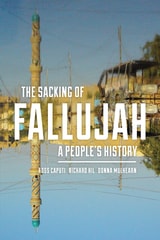
The Sacking of Fallujah
A People's HistoryRoss Caputi
University of Massachusetts Press, 2019
The Iraqi city of Fallujah has become an epicenter of geopolitical conflict, where foreign powers and non-state actors have repeatedly waged war in residential neighborhoods with staggering humanitarian consequences. The Sacking of Fallujah is the first comprehensive study of the three recent sieges of this city, including those by the United States in 2004 and the Iraqi-led operation to defeat ISIS in 2016.
Unlike dominant military accounts that focus on American soldiers and U.S. leaders and perpetuate the myth that the United States “liberated” the city, this book argues that Fallujah was destroyed by coalition forces, leaving public health crises, political destabilization, and mass civilian casualties in their wake. This meticulously researched account cuts through the propaganda to uncover the lived experiences of Fallujans under siege and occupation, and contextualizes these events within a broader history of U.S. policy in the Middle East. Relying on testimony from Iraqi civilians, the work of independent journalists, and documentation from human rights organizations, Ross Caputi, Richard Hil, and Donna Mulhearn place the experiences of Fallujah's residents at the center of this city's recent history.
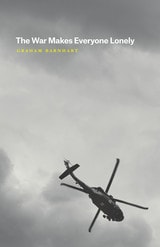
The War Makes Everyone Lonely
Graham Barnhart
University of Chicago Press, 2019
Evoking the landscapes and surroundings of war, as well as its effects on both US military service members and civilians in war-stricken countries, The War Makes Everyone Lonely is a challenging, nuanced look at the ways American violence is exported, enacted, and obscured by a writer poised to take his place in the long tradition of warrior-poets.

The World Says No to War
Demonstrations against the War on IraqStefaan Walgrave
University of Minnesota Press, 2010
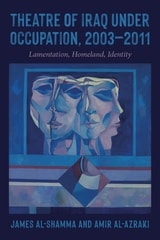
Theatre of Iraq Under Occupation, 2003-2011
Lamentation, Homeland, IdentityJames Al-Shamma
University of Iowa Press, 2025
However, in 2003, the United States invasion of Iraq propelled Iraqi theatre in an altogether different direction. Global media published photographs documenting the torture of Iraqi detainees by American soldiers and sectarian violence broke out, as Shiʿa and Sunni militias struggled for power. Theatre of Iraq Under Occupation examines the occupation’s impact on Iraqi theatre as eliciting lamentation over loss of homeland and identity, and as an assault on the Iraqi character itself. The first volume in English dedicated solely to theatre in Iraq, James Al-Shamma and Amir Al-Azraki’s insights don’t just offer a significant contribution to cultural studies, they bridge foreign policy and art in real time.
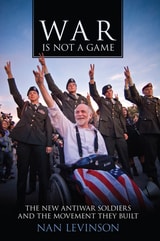
War Is Not a Game
The New Antiwar Soldiers and the Movement They BuiltLevinson, Nan
Rutgers University Press, 2016
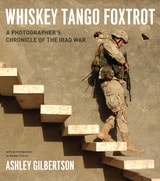
Whiskey Tango Foxtrot
A Photographer's Chronicle of the Iraq WarAshley Gilbertson
University of Chicago Press, 2007
Whiskey Tango Foxtrot gathers the best of Gilbertson’s photographs, chronicling America’s early battles in Iraq, the initial occupation of Baghdad, the insurgency that erupted shortly afterward, the dramatic battle to overtake Falluja, and ultimately, the country’s first national elections. No Western photojournalist has done as much sustained work in occupied Iraq as Gilbertson, and this wide-ranging treatment of the war from the viewpoint of a photographer is the first of its kind. Accompanying each section of the book is a personal account of Gilbertson’s experiences covering the conflict. Throughout, he conveys the exhilaration and terror of photographing war, as well as the challenges of photojournalism in our age of embedded reporting. But ultimately, and just as importantly, Whiskey Tango Foxtrot tells the story of Gilbertson’s own journey from hard-drinking bravado to the grave realism of a scarred survivor. Here he struggles with guilt over the death of a marine escort, tells candidly of his own experience with post-traumatic stress, and grapples with the reality that Iraq—despite the sacrifice in Iraqi and American lives—has descended into a civil war with no end in sight.
A searing account of the American experience in Iraq, Whiskey Tango Foxtrot is sure to become one of the classic war photography books of our time.
Why War?
The Cultural Logic of Iraq, the Gulf War, and SuezPhilip Smith
University of Chicago Press, 2005
Comprised of case studies of the War in Iraq, the Gulf War, and the Suez Crisis, Why War? decodes the cultural logic of the narratives that justify military action. Each nation, Smith argues, makes use of binary codes—good and evil, sacred and profane, rational and irrational, to name a few. These codes, in the hands of political leaders, activists, and the media, are deployed within four different types of narratives—mundane, tragic, romantic, or apocalyptic. With this cultural system, Smith is able to radically recast our "war stories" and show how nations can have vastly different understandings of crises as each identifies the relevant protagonists and antagonists, objects of struggle, and threats and dangers.
The large-scale sacrifice of human lives necessary in modern war, according to Smith, requires an apocalyptic vision of world events. In the case of the War in Iraq, for example, he argues that the United States and Britain replicated a narrative of impending global doom from the Gulf War. But in their apocalyptic account they mistakenly made the now seemingly toothless Saddam Hussein once again a symbol of evil by writing him into the story alongside al Qaeda, resulting in the war's contestation in the United States, Britain, and abroad.
Offering an innovative approach to understanding how major wars are packaged, sold, and understood, Why War? will be applauded by anyone with an interest in military history, political science, cultural studies, and communication.