Results by title
11 books match the query 'Islamic fundamentalism'
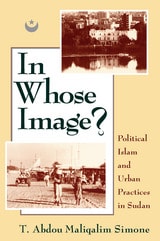
In Whose Image?
Political Islam and Urban Practices in SudanT. Abdou Maliqalim Simone
University of Chicago Press, 1994
Drawing a detailed portrait of political fundamentalism during the 1985-89 period of democratic rule in the Sudan, Simone shows how the Shari‘a Movement attempted to shape a viable social order by linking religious integrity and economic development, where religious practice was to dominate all aspects of society and individuals' daily lives. However, because Sudanese society is remarkably diverse ethnically and religiously, this often led to conflict, fragmentation, and violence in the name of Islam.
Simone's own Islamic background leads him to deplore the violence and the devastating psychological, economic, and cultural consequences of one form of Islamic radicalism, while holding to hope that a viable form of this inherently political religion can in fact be applied. As a counterpoint, he ends with a discussion of South Africa's Call of Islam, which seeks political unity through a more tolerant interpretation of Islam.
As an introduction to religious discourse in Africa, this book will be widely read by students and scholars throughout African Studies, Religious Studies, Anthropology, and Political Science.
Islamic Modernism, Nationalism, and Fundamentalism
Episode and DiscourseMansoor Moaddel
University of Chicago Press, 2005
An ambitious comparative historical analysis of ideological production in the Islamic world from the mid-1800s to the present, Mansoor Moaddel's Islamic Modernism, Nationalism, and Fundamentalism provides a unique perspective for understanding the social conditions of these discourses. Moaddel characterizes these movements in terms of a sequence of cultural episodes characterized by ideological debates and religious disputations, each ending with a revolution or military coup. Understanding how the leaders of these movements formulated their discourses is, for Moaddel, the key to understanding Middle Eastern history. This premise allows him to unlock for readers the historical process that started with Islamic modernism and ended with fundamentalism.

Islamic State
Rewriting HistoryMichael Griffin
Pluto Press, 2015
Now, as Islamic State (also known as ISIS) is moving to take over broad swathes of territory throughout the Middle East, Griffin is back once again, ready to offer nuanced insight, analysis, history, and context for readers looking to understand this new and frightening threat.
An experienced journalist, Griffin tells the story of the development of the Islamic State in his usual fast-paced, narrative driven style, helping us to understand the long roots of the Islamic State in Iraq, their quiet involvement in the Arab Spring, and their rapid rise amid the chaos generated by the Syrian war. He clearly and carefully presents the interlocking web of influence, arms, and money from Saudi Arabia, Qatar, Turkey, and Iraq that have fuelled the rise of Islamic State, and highlights the importance of the uprising against Assad in Syria and the West’s relative inability to influence or support it. Ultimately, Griffin offers a portrait of a complicated, multivalent movement, one with roots in numerous real or perceived grievances and historical mistakes and one with the potential to foment unrest and violence throughout the Middle East for some time to come.
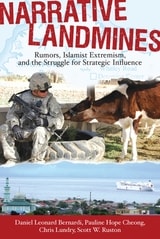
Narrative Landmines
Rumors, Islamist Extremism, and the Struggle for Strategic InfluenceBernardi, Daniel Leonard
Rutgers University Press, 2012
Islamic extremism is the dominant security concern of many contemporary governments, spanning the industrialized West to the developing world. Narrative Landmines explores how rumors fit into and extend narrative systems and ideologies, particularly in the context of terrorism, counter-terrorism, and extremist insurgencies. Its concern is to foster a more sophisticated understanding of how oral and digital cultures work alongside economic, diplomatic, and cultural factors that influence the struggles between states and non-state actors in the proverbial battle of hearts and minds. Beyond face-to-face communication, the authors also address the role of new and social media in the creation and spread of rumors.
As narrative forms, rumors are suitable to a wide range of political expression, from citizens, insurgents, and governments alike, and in places as distinct as Singapore, Iraq, and Indonesia—the case studies presented for analysis. The authors make a compelling argument for understanding rumors in these contexts as “narrative IEDs,” low-cost, low-tech weapons that can successfully counter such elaborate and expansive government initiatives as outreach campaigns or strategic communication efforts. While not exactly the same as the advanced technological systems or Improvised Explosive Devices to which they are metaphorically related, narrative IEDs nevertheless operate as weapons that can aid the extremist cause.
Resistance
The Essence of the Islamist RevolutionAlastair Crooke
Pluto Press, 2009
This book traces the essence of the Islamist Revolution from its origins in Egypt, through Najaf, Lebanon, Iran and the Iranian Revolution to today. Alastair Crooke presents a compelling account of the ideas and energy which are mobilising the Islamic world.
Crooke argues that the West faces a mass mobilisation against the US-led Western project. The roots of this conflict are described in terms of religious themes that extend back over 500 years. They represent clashing systems of thinking and values. Islamists have a vision for the future of their own societies which would entail radical change from Western norms. Resistance is presented as the means to force Western behaviour to change and to expose the essential differences between the two modes of thinking.
This is a rigourous account that traces the threads of revolution of various movements, including the influence of 'political Shi'ism' and the Iranian Revolution and its impact on Hezbollah and Hamas.
Slave of Allah
Zacarias Moussaoui Vs the USAKatherine C. Donahue
Pluto Press, 2007
The book begins with his arrest and moves to the courtroom, telling the tale of Moussaoui's struggle with his defense lawyers and raising questions about his ability to be "represented" given his national and personal identity. Donahue explores his background in France as the son of Moroccan immigrants and follows him to London, Afghanistan, and Malaysia as he joins the growing fraternity of an Islam without borders. He acquires an extra-national identity in which his loyalty is no longer constituted by his national identity, but by his allegiance to fundamental Islam.
Suspect Communities
Anti-Muslim Racism and the Domestic War on TerrorNicole Nguyen
University of Minnesota Press, 2019
The first major qualitative study of “countering violent extremism” in key U.S. cities
Suspect Communities is a powerful reassessment of the U.S. government’s “countering violent extremism” (CVE) program that has arisen in major cities across the United States since 2011. Drawing on an interpretive qualitative study, it examines how the concept behind CVEaimed at combating homegrown terrorism by engaging Muslim community members, teachers, and religious leaders in monitoring and reporting on young peoplehas been operationalized through the everyday work of CVE actors, from high-level national security workers to local community members, with significant penalties for the communities themselves.
Nicole Nguyen argues that studying CVE provides insight into how the drive to bring liberal reforms to contemporary security regimes through “community-driven” and “ideologically ecumenical” programming has in fact further institutionalized anti-Muslim racism in the United States. She forcefully contends that the U.S. security state has designed CVE to legitimize and shore up support for the very institutions that historically have criminalized, demonized, and dehumanized communities of color, while appearing to learn from and attenuate past practices of coercive policing, racial profiling, and political exclusion.
By undertaking this analysis, Suspect Communities offers a vital window into the inner workings of the U.S. security state and the devastating impact of CVE on local communities.
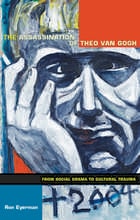
The Assassination of Theo van Gogh
From Social Drama to Cultural TraumaRon Eyerman
Duke University Press, 2008
Eyerman utilizes theories of social drama and cultural trauma to evaluate the reactions to and effects of the murder. A social drama is triggered by a public transgression of taken-for-granted norms; one that threatens the collective identity of a society may develop into a cultural trauma. Eyerman contends that the assassination of Theo van Gogh quickly became a cultural trauma because it resonated powerfully with the postwar psyche of the Netherlands. As part of his analysis of the murder and reactions to it, he discusses significant aspects of twentieth-century Dutch history, including the country’s treatment of Jews during the German occupation, the loss of its colonies in the wake of World War II, its recruitment of immigrant workers, and the failure of Dutch troops to protect Muslims in Srebrenica in 1995.
The Contemporary Arab Reader on Political Islam
Edited by Ibrahim M. Abu-Rabi' and Tere Vaden
Pluto Press, 2010
The Contemporary Arab Reader on Political Islam brings together the writings of highly influential figures in the field of Islamism in the contemporary Arab world, many of whose writings have never been available before in English.
Addressing the key issues such as human rights, civil society, secularism, globalisation and ummah, and the impact of the West on the modern Arab world, this is the perfect starting point for students and academics looking to understand 'Political Islam' in contemporary Arab and Muslim societies.
The contributors include such important Islamist thinkers and activists as Abdullah Azzam, central to the spread of Islamism in Afghanistan, Sayyid Muhammad Hussain Fadlallah, a major Shiite figure in contemporary Lebanon and Ahmad Bin Yousuf, a political advisor to Akram Haniyya in Gaza.
The Idols of ISIS
From Assyria to the InternetAaron Tugendhaft
University of Chicago Press, 2020
Beginning with the Islamic State’s claim that the smashed objects were idols of the “age of ignorance,” Aaron Tugendhaft questions whether there can be any political life without idolatry. He then explores the various roles Mesopotamian sculpture has played in European imperial competition, the development of artistic modernism, and the formation of Iraqi national identity, showing how this history reverberates in the choice of the Mosul Museum as performance stage. Finally, he compares the Islamic State’s production of images to the ways in which images circulated in ancient Assyria and asks how digitization has transformed politics in the age of social media. An elegant and accessibly written introduction to the complexities of such events, The Idols of ISIS is ideal for students and readers seeking a richer cultural perspective than the media usually provides.
Unruly Souls
The Digital Activism of Muslim and Christian FeministsKristin M. Peterson
Rutgers University Press, 2022