Results by title
26 books match the query 'Islands'
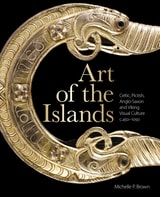
Art of the Islands
Celtic, Pictish, Anglo-Saxon and Viking Visual Culture, c. 450-1050Michelle P. Brown
Bodleian Library Publishing, 2015
Michelle P. Brown remedies this oversight, presenting an extensively illustrated art historical overview of this formative period in the region’s history. Describing the interactions between the region’s inhabitants, she also explores the formation of national and regional identities. Brown ranges across works as diverse as the Book of Kells, the Tara Brooch, the Aberlemno Stone, the Lindisfarne Gospels, the Alfred Jewel, and the Benedictional of St. Ethelwold, showing how their complex imagery can be best interpreted. She also considers the impact of the art of this period upon the history of art in general, exploring how it has influenced many movements since, from the Carolingian Renaissance and the Romanesque style to the nineteenth-century Arts and Crafts movement.
Design with Nature on Cape Cod and the Islands
Jack Ahern
University of Massachusetts Press, 2022
Design with Nature on Cape Cod and the Islands seeks to reverse this damaging trend by offering landscape professionals, local officials, and homeowners a sustainable approach to landscape design based on the ecoregion’s native plants and plant communities. Presenting detailed discussions of Cape Cod’s natural history, Jack Ahern focuses on the principal plant communities that define its landscape character and that are well adapted to local soils and growing conditions, including climate change. The book also includes strategies for ecological planting design and a portfolio of photographs of active ecologically designed landscapes.
Devils & Islands
PoemsTurner Cassity
Ohio University Press, 2007
As he approaches eighty, Turner Cassity may finally be out of control. His hatchet has never fallen more lethally, meaning if you have the stomach for him he is more enjoyable than ever. Under the blade come Martha Graham, Johann Sebastian Bach, musicologists, tree huggers, Frank Gehry, folk music, folk art of all times and all places, folk… . There are, however, his unpredictable sympathies: Edith Wilson, skyscrapers, Pontius Pilate, Pilate’s legionnaires. He obviously has a soft spot for Pop Culture, although he cannot avoid seeingit de haut en bas.
As usual, he is all over the place geographically. One feels he would slash his wrists before he would write a poem about any city on the traditional Grand Tour. Manaus, Campeche, Trieste, Budapest (as destroyed by Godzilla)—these are his places. He has a disturbing willingness to write on both sides of an issue, resembling in this Bernard Shaw. You have to read very carefully to see whether he tips his hand.
One looks forward to Mr. Cassity’s posthumous poems, when he is beyond the reach of libel. For now, at least, we have Devils & Islands.
Dreaming and Historical Consciousness in Island Greece
Charles Stewart
University of Chicago Press, 2017
Charles Stewart tells the story of the inhabitants of Kóronos, on the Greek island of Naxos, who, in the 1830s, began experiencing dreams in which the Virgin Mary instructed them to search for buried Christian icons nearby and build a church to house the ones they found. Miraculously, they dug and found several icons and human remains, and at night the ancient owners of them would speak to them in dreams. The inhabitants built the church and in the years since have experienced further waves of dreams and startling prophesies that shaped their understanding of the past and future and often put them at odds with state authorities. Today, Kóronos is the site of one of the largest annual pilgrimages in the Mediterranean. Telling this fascinating story, Stewart draws on his long-term fieldwork and original historical sources to explore dreaming as a mediator of historical change, while widening the understanding of historical consciousness and history itself.
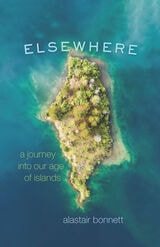
Elsewhere
A Journey into Our Age of IslandsAlastair Bonnett
University of Chicago Press, 2020
There are millions of islands on our planet. New islands are being built at an unprecedented rate, for tourism and territorial ambition. Many are also disappearing, besieged by rising sea levels. The story of our world’s islands is one of the great dramas of our time, and it is playing out around the planet—islands are sprouting or being submerged everywhere from the South China Sea to the Atlantic. Elsewhere is the story of this strange and mesmerizing planetary spectacle.
In this book, explorer and geographer Alastair Bonnett takes us on a thought-provoking tour of the world’s most fascinating islands. He traveled the globe to provide a firsthand look at numerous islands, sketching a vivid likeness of each one he visited. From a “crannog,” an ancient artificial island in a Scottish loch, to the militarized artificial islands China is building; from the disappearing islands that remain the home of native Central Americans to the ritzy new islands of Dubai; from Hong Kong to the Isles of Scilly—all have compelling stories to tell. As we journey around the world with Bonnett, he addresses urgent contemporary issues such as climate change, economic inequality, and the changing balance of world power as reflected in the fates of islands. Along the way, we also learn about the many ways islands rise and fall, the long and little-known history of human island-building and the prospect that the inland hills and valleys will one day be archipelagos.
Featuring Bonnett’s charming hand-drawn maps and 33 full-color photos, Elsewhere is a captivating travel book for any armchair adventurer.
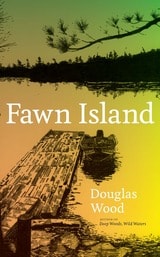
Fawn Island
Douglas Wood
University of Minnesota Press, 2018
Fawn Island is a place where crows serve as alarm clocks, white-throated sparrows leave the tracks of their songs upon the evening hush, and chickadees help a woodsman learn to whistle. The island is also a jumping-off place for journeys large and small, earthly and spiritual-to nearby Mallard Island, Gull Island, or Bald Rock, by sea kayak into the wild recesses of sprawling Voyageurs National Park, or on a midnight paddle in which the paddler can reach the silent wilderness of the stars themselves. In his latest book, best-selling author Douglas Wood guides the reader on a deep journey into the heart of the North Woods.
For Wood, Fawn Island is not merely a charming wilderness hideaway; it is the entry to realms of thought and meaning as well. From its pine-clad shores he probes for insights into the nature of neighborliness and independence, of community and solitude. Out of an ancient Ojibwe legend comes an exploration of personal loss and life after death. Wood questions the notion of being a “force of nature” and the concept of the passage of time in the context of seemingly eternal trees, lakes, rock ledges, and stars. From beneath the ascending trunks of pines comes an inquiry into the principles of optimism and, finally, a personal response to the eternal question: Is the universe a friendly place?
Embedded in the text like roots of the island’s pines is Wood’s gentle, self-effacing humor and the author’s own original pen-and-ink drawings that superbly evoke the poetry and mystery of this “small bit of rock and tree,” this “lucky place” in the wilderness.
Islands On The Plains
Ecological, Social, and Ritual Use of LandscapesEdited by Marcel Kornfeld and Alan J. Osborn
University of Utah Press, 2003
Scattered throughout the Great Plains are many isolated areas of varying size and ecology, quite distinct from the surrounding grasslands. Such spaces can be uplands like the Black Hills, low hills like the Nebraska Sand Hills, or linear areas such as shallow river valleys and deeply incised canyons. While the notion of “islands” is not a new one among ecologists, its application in Plains archaeology is.
The contributors to this volume seek to illustrate the different ways that the spatial, structural, and temporal nature of islands conditioned the behavior and adaptation of past Plains peoples. This as a first step toward a more detailed analysis of habitat variation and its effects on Plains cultural dynamics and evolution. Although the emphasis is on ecology, several chapters also address social and ideological islands in the form of sacred sites and special hunting grounds.

Islands and Empires
Western Impact on the Pacific and East AsiaErnest S. Dodge
University of Minnesota Press, 1978
Islands and Empires was first published in 1976. Minnesota Archive Editions uses digital technology to make long-unavailable books once again accessible, and are published unaltered from the original University of Minnesota Press editions.
This is the first one-volume account of the massive impact of Western civilization on the Pacific Islands and the Far East, principally China and Japan. The effects on the two areas were very different since, in the case of the islands, contact was with peoples who were still in the Stone Age, while in the Far East Westerners came up against sophisticated civilizations more ancient and mature than their own. Because of these differences, the book is divided into two sections, the first dealing with the Pacific Islands and the second with the East Asian mainland. Reverse influences—those of the Eastern cultures on the West—are also discussed.
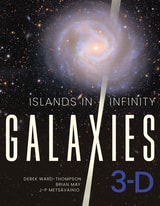
Islands in Infinity
Galaxies 3-DDerek Ward-Thompson, Brian May, and J-P Metsävainio
University of Arizona Press, 2026
This groundbreaking book brings the cosmos to life like never before. Featuring more than two hundred stunning color photographs from the world’s leading observatories and eighty detailed diagrams, this large-format book offers a mesmerizing journey through the formation, nature, evolution, and classification of galaxies.
Highlights include:
• A look at the universe in three dimensions with Brian May’s patented 3-D viewer,
• Accessible science, offering a non-mathematical review of modern cosmology and astronomy
• An exploration of the chaotic beauty of colliding and merging galaxies,
• A reference section on historical galaxy catalogues, plus a comprehensive index.
Authored by renowned astrophysicist Derek Ward-Thompson and the world’s most famous astronomer Dr Brian May, with ground-breaking stereos by J-P Metsävainio, Islands of Infinity is a must-have for anyone fascinated by the night sky.
Co-published with London Stereoscopic Company. The University of Arizona Press is pleased to offer this title in North America.
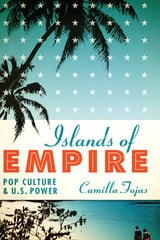
Islands of Empire
Pop Culture and U.S. PowerBy Camilla Fojas
University of Texas Press, 2014
Camilla Fojas explores a broad range of popular culture media—film, television, journalism, advertisements, travel writing, and literature—with an eye toward how the United States as an empire imagined its own military and economic projects. Impressive in its scope, Islands of Empire looks to Cuba, Guam, Hawai‘i, Puerto Rico, and the Philippines, asking how popular narratives about these island outposts expressed the attitudes of the continent throughout the twentieth century. Through deep textual readings of Bataan, Victory at Sea, They Were Expendable, and Back to Bataan (Philippines); No Man Is an Island and Max Havoc: Curse of the Dragon (Guam); Cuba, Havana, and Dirty Dancing: Havana Nights (Cuba); Blue Hawaii, Gidget Goes Hawaiian, and Paradise, Hawaiian Style (Hawai‘i); and West Side Story, Fame, and El Cantante (Puerto Rico), Fojas demonstrates how popular texts are inseparable from U.S. imperialist ideology.
Drawing on an impressive array of archival evidence to provide historical context, Islands of Empire reveals the role of popular culture in creating and maintaining U.S. imperialism. Fojas’s textual readings deftly move from location to location, exploring each island’s relationship to the United States and its complementary role in popular culture. Tracing each outpost’s varied and even contradictory political status, Fojas demonstrates that these works of popular culture mirror each location’s shifting alignment to the U.S. empire, from coveted object to possession to enemy state.
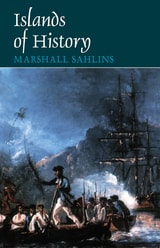
Islands of History
Marshall Sahlins
University of Chicago Press, 1985
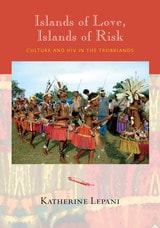
Islands of Love, Islands of Risk
Culture and HIV in the TrobriandsKatherine Lepani
Vanderbilt University Press, 2012
Written by an anthropologist who has direct ties to the Trobriands through marriage and who has been involved in Papua New Guinea's national response to the HIV epidemic since the mid-1990s, Islands of Love, Islands of Risk is an unusual insider ethnography. Katherine Lepani describes in vivid detail the cultural practices of regeneration, from the traditional dance called Wosimwaya to the elaborate exchanges that are part of the mortuary feasts called sagali. Focusing on the sexual freedom of young people, the author reveals the social value of sexual practice. By bringing cultural context and lived experience to the fore, the book addresses the failure of standardized public health programs to bridge the persistent gap between HIV awareness and prevention. The book offers insights on the interplay between global and local understandings of gender, sexuality, and disease and suggests the possibility of viewing sexuality in terms other than risk.
Islands of Love, Islands of Risk illustrates the contribution of ethnographic research methodology in facilitating dialogue between different ways of knowing. As a contemporary perspective on Malinowski's classic accounts of Trobriand sexuality, the book reaffirms the Trobriands' central place in the study of anthropology.
This book is the recipient of the annual Norman L. and Roselea J. Goldberg Prize for the best project in the area of medicine.
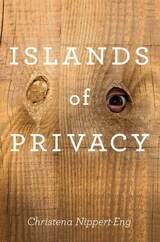
Islands of Privacy
Christena E. Nippert-Eng
University of Chicago Press, 2010
Everyone worries about privacy these days. As corporations and governments devise increasingly sophisticated data gathering tools and joining Facebook verges on obligatory, concerns over the use and abuse of personal information are undeniable. But the way privacy functions on the virtual frontier of the Internet is only a subset of the fascinating ways we work to achieve it throughout our everyday lives. In Islands of Privacy, Christena Nippert-Eng pries open the blinds, giving us an intimate view into the full range of ordinary people’s sometimes extraordinary efforts to preserve the border between themselves and the rest of the world.
Packed with stories that are funny and sad, familiar and strange, Islands of Privacy tours the myriad arenas where privacy battles are fought, lost, and won. Nippert-Eng explores how we manage our secrets, our phone calls and e-mail, the perimeters of our homes, and our interactions with neighbors. She discovers that everybody practices the art of selectively concealing and disclosing information on a daily basis. This important balancing act governs a wide range of behaviors, from deciding whether to give our bosses our cell phone numbers to choosing what we carry in our wallets or purses. Violations of privacy and anxiety about how we grant it to each other also come under Nippert-Eng’s microscope as she crafts a compelling argument that successfully managing privacy is critical for successfully maintaining our relationships with each other and our selves.
Roaming from the beach to the bank and from the bathroom to the bus, Nippert-Eng’s keenly observed and vividly told book gives us the skinny on how we defend our shrinking islands of privacy in the vast ocean of accessibility that surrounds us.
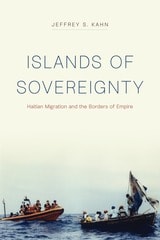
Islands of Sovereignty
Haitian Migration and the Borders of EmpireJeffrey S. Kahn
University of Chicago Press, 2018
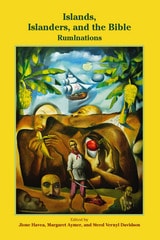
Islands, Islanders, and the Bible
RumInationsJione Havea
SBL Press, 2015
Explore theories, readings and interpretations from island perspectives
In this collection the authors focus on contextual, cultural, and postcolonial criticisms. This work seeks to move beyond simply reacting to, rejecting, or recasting biblical interpretations that misunderstand or mischaracterize island space. Instead it serves as an entry point to thinking biblically through the island. The contributors are Margaret Aymer, Randall C. Bailey, Roland Boer, Steed Vernyl Davidson, Jione Havea, Hisako Kinukawa, Grant Macaskill, Mosese Ma'ilo, J. Richard Middleton, Althea Spencer Miller, Aliou C. Niang, Andrew Mein, Daniel Smith-Christopher, Nasili Vaka'uta, and Elaine M. Wainwright.
Features:
- Sixteen essays by islanders rooted in Asia, America, the Caribbean, Europe, and Oceania
- Essays that invite a conversation on how being islanders and islandedness condition the way islanders read biblical texts
- Three sections of articles, two of which engage the first
Isolated Islands in Medieval Nature, Culture and Mind
Gerhard Jaritz
Central European University Press, 2011
The volume contains selected papers from an international workshop in 2005, at the Hungarian Academy in Rome. They aim at investigating the registers of fifteenth-century supplications to the Apostolic Penitentiary of the Holy See and to analyze the multiplicity of issues in which a context of the local needs of Western Christians and the central power of the Pope had been occurring.
The contributions make clear that local and individual factors and practice of Christian faith and religion must not be seen as separated from the global power of the Roman curia. The latter’s influence could become directly important for any individual in any local space, also … et usque ad ultimum terrae (Acts 1:8), in the utmost peripheries of the Christian world. The assistance by the Apostolic Penitentiary was indispensable in a large variety of cases. The occupation with such cases happened in the local and regional space as well as in the globalized centre of the Holy See.
Ladies & Gentleman, The Original Music
Of The Hebrew Alphabet And Weekend In MustarraCurt Leviant
University of Wisconsin Press, 2002
"Ladies and Gentlemen, the Original Music of the Hebrew Alphabet" is set in Budapest during the Communist era. The story focuses on the tenuous seesaw between Dr. Isaac Gantz, a musicologist, and engineer Ferdinand Friedman, a Holocaust survivor who believes that he possesses one of the greatest manuscripts of the ages, a Rosetta Stone of Judaica. Friedman is willing to share it—but there is a "but." In pursuing this prize, Gantz enters a world of strange human relationships filled with doubts and surprises. A vibrant cast of characters adds dimension to this gripping story in which Jewish folklore, music, and history coalesce.
"Weekend in Mustara" unfolds on the fictional island of Mustara in southern Europe, a mountainous, totalitarian country that tolerates Judaism. Its few Jews cling to their heritage, embodied in their beautiful but sparsely attended synagogue and their museum, where a great memorial book is inscribed with the names of all Mustara Jews martyred during World War II. A scholar of medieval Hebrew manuscripts comes to the island, searching for traces of Yehuda Halevi, the great Hebrew poet of the Spanish Golden Age. He is soon enmeshed among elusive personalities and tangled loyalties, but only when he finds himself displaced in time—in a kind of theater of the absurd—are the purposes of his journey finally realized.
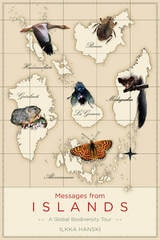
Messages from Islands
A Global Biodiversity TourIlkka Hanski
University of Chicago Press, 2016
Beginning each chapter on a particular island, Hanski dives into reflections on his own field studies before going on to pursue a variety of ecological questions, including: What is the biodiversity crisis? What are extinction thresholds and extinction debts? What can the biodiversity hypothesis tell us about rapidly increasing allergies, asthma, and other chronic inflammatory disorders? The world’s largest island, Greenland, for instance, is the starting point for a journey into the benefits that humankind acquires from biodiversity, including the staggering biodiversity of microbes in the ecosystems that are closest to us—the ecosystems in our guts, in our respiratory tracts, and under our skin. Conceptually oriented but grounded in an adventurous personal narrative, Messages from Islands is a landmark work that lifts the natural mysteries of islands from the sea, bringing to light the thrilling complexities and connections of ecosystems worldwide.
On Desert Shores
Archaeology and History of the Western Midriff Islands in the Gulf of CaliforniaThomas Bowen
University of Utah Press, 2022
Bowen draws on a wide range of sources, including the first archaeological field work ever conducted on the islands, written accounts dating back to the sixteenth century, oral histories of native people, contemporary interviews, and his own firsthand experiences. Among those cast in the islands’ historical drama are the Seri (Comcaac) people of Sonora, the extinct Cochimís of Baja California, Spanish explorers, Jesuit missionaries, pearl fishers, egg collectors, guano miners, hydrographers, cartographers, small-scale Mexican fishermen, recreational anglers, writers, photographers, ecotourists, shipwreck victims, and, most importantly, scientists. The final chapter documents the impact of this human activity on the islands’ ecosystems and examines conservation efforts now underway. Compelling and richly illustrated, this broadly based work provides a unique picture of these extraordinary islands.
Phantom Islands
In Search of Mythical LandsDirk Liesemer
Haus Publishing, 2018
Beautifully illustrated with colored maps and charts, Phantom Islands shows the cunning of imposters and frauds, the earnestness of explorers searching for knowledge, and the pleasure that can be found in our willingness to deceive and to be deceived.
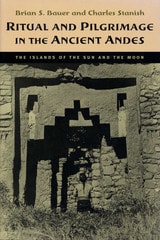
Ritual and Pilgrimage in the Ancient Andes
The Islands of the Sun and the MoonBy Brian S. Bauer and Charles Stanish
University of Texas Press, 2001
The Islands of the Sun and the Moon in Bolivia's Lake Titicaca were two of the most sacred locations in the Inca empire. A pan-Andean belief held that they marked the origin place of the Sun and the Moon, and pilgrims from across the Inca realm made ritual journeys to the sacred shrines there. In this book, Brian Bauer and Charles Stanish explore the extent to which this use of the islands as a pilgrimage center during Inca times was founded on and developed from earlier religious traditions of the Lake Titicaca region.
Drawing on a systematic archaeological survey and test excavations in the islands, as well as data from historical texts and ethnography, the authors document a succession of complex polities in the islands from 2000 BC to the time of European contact in the 1530s AD. They uncover significant evidence of pre-Inca ritual use of the islands, which raises the compelling possibility that the religious significance of the islands is of great antiquity. The authors also use these data to address broader anthropological questions on the role of pilgrimage centers in the development of pre-modern states.
The Islands
A. Alberts
University of Massachusetts Press, 1983
The Tempest
William Shakespeare
Arizona Center for Medieval and Renaissance Studies, 2021
Cavander’s translation of The Tempest, which premiered at the Alabama Shakespeare Festival in 2017, was written as part of the Play On! Shakespeare project, an ambitious undertaking from the Oregon Shakespeare Festival that commissioned new translations of 39 Shakespeare plays. These translations present the Bard’s work in language accessible to modern audiences while never losing the beauty of Shakespeare’s verse. Enlisting the talents of a diverse group of contemporary playwrights, screenwriters, and dramaturges from diverse backgrounds, this project reenvisions Shakespeare for the twenty-first century. These volumes make these works available for the first time in print—a new First Folio for a new era.
Transatlantic Topographies
Islands, Highlands, JunglesIleana Rodriguez
University of Minnesota Press, 2004
Explores the construction of the Americas by and through European eyes
Transatlantic Topographies was first published in 2004. Minnesota Archive Editions uses digital technology to make long-unavailable books once again accessible, and are published unaltered from the original University of Minnesota Press editions.
Transatlantic Topographies studies the representation of American space during the initial confrontation between Europeans and Amerindians and during the eighteenth, nineteenth, and twentieth centuries. Starting from topographical descriptions of land, islands, highlands, and jungles, Ileana Rodríguez shows how existing systems of knowledge broke down with the discovery of the Americas and had to be reinvented through the interpretation of signs, the accumulation of evidence, material exchange, and, finally, through the learning, teaching, and “kidnapping” of language. Proceeding from the period of exploration to the modern creation of a “twentieth-century frontier,” Rodríguez charts the path that led from island paradise to jungle chaos, from representations of natural beauty to the racialization of the islands. Drawing attention to cross-cultural miscommunication and the riddles of meaning and message it produces, Transatlantic Topographies develops a highly nuanced understanding of the evolving forces of imperialism as they gave way to postcolonialism and then to transnationalism—and newly re-inscribed notions of imperial economic practices.
Twelfth Night
William Shakespeare
Arizona Center for Medieval and Renaissance Studies, 2023
Shakespeare’s Twelfth Night centers on power and love. One of the most perennially produced of Shakespeare’s comedies, it talks about shipwrecked twins, gender-bending romance, and a bumper crop of fools, from the wise to the ridiculous. Modernizing the language of the play, Alison Carey’s translation revives the joy of this comedy, taking the archaic humor and renewing it for a contemporary audience.
This translation of Twelfth Night was written as part of the Oregon Shakespeare Festival’s Play On! project, which commissioned new translations of thirty-nine Shakespeare plays. These translations present the work of “The Bard” in language accessible to modern audiences while never losing the beauty of Shakespeare’s verse. Enlisting the talents of a diverse group of contemporary playwrights, screenwriters, and dramaturges from diverse backgrounds, this project reenvisions Shakespeare for the twenty-first century. These volumes make these works available for the first time in print—a new First Folio for a new era.
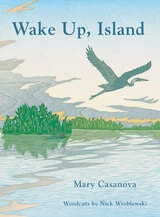
Wake Up, Island
Mary Casanova
University of Minnesota Press, 2016
Wake up, little one, a soft voice beckons, the world around you is already stirring. As Wake Up, Island gently rouses the sleepy child, it summons a world of nature coming to life on a summer island in the magical North Woods. Sunlit fingers touch the shores, pine trees stretch their limbs, and lichen warms on ancient rock. Doe and fawn rise from their grass bed and pearls of dew bead a spider’s finely woven web. Mallards skim the water’s surface. Ravens perch and gargle greetings, chickadees call dee, dee, dee, and a heron swoops—minnows flee! The moose and her calf wade, munching on plants. The red squirrel chatters. The black bear lazily scratches her back against a tree.
Conjuring the morning life around a cabin fragrant with berry pancakes, this timeless book wakens the child in every reader to the wonders of nature that greet every new day in the charmed world of a northern woodland island.