Results by title
30 books match the query 'Jerusalem'
"Like the Hajis of Meccah and Jerusalem"
Orientalism and the Mormon ExperienceRichard Francaviglia
Utah State University Press, 2012
The series, established by one of the twentieth-century West's most distinguished historians, Leonard Arrington, has become a leading forum for prominent historians to address topics related to Mormon history. The first lecturer was Arrington himself. He was followed by Richard Lyman Bushman, Richard E. Bennett, Howard R. Lamar, Claudia L. Bushman, Kenneth W. Godfrey, Jan Shipps, Donald Worster, Laurel Thatcher Ulrich, and F. Ross Peterson. Utah State University hosts the Leonard J. Arrington Mormon History Lecture Series. The University Libraries' Special Collections and Archives houses the Arrington collection. The state's land grant university began collecting records very early, and in the 1960s became a major depository for Utah and Mormon records. Leonard and his wife Grace joined the USU faculty and family in 1946, and the Arringtons and their colleagues worked to collect original diaries, journals, letters, and photographs.
Although trained as an economist at the University of North Carolina, Arrington became a Mormon historian of international repute. Working with numerous colleagues, the Twin Falls, Idaho, native produced the classic Great Basin Kingdom: An Economic History of the Latter-day Saints in 1958. Utilizing available collections at USU, Arrington embarked on a prolific publishing and editing career. He and his close ally, Dr. S. George Ellsworth helped organize the Western History Association, and they created the Western Historical Quarterly as the scholarly voice of the WHA. While serving with Ellsworth as editor of the new journal, Arr ington also helped both the Mormon History Association and the independent journal Dialogue get established.
A Historical Archaeology of Jerusalem
Bronze and Iron AgesYuval Gadot
SBL Press, 2026

A Young Palestinian's Diary, 1941–1945
The Life of Sami 'AmrTranslated, annotated, and with an introduction by Kimberly Katz
University of Texas Press, 2009
Writing in his late teens and early twenties, Sāmī ‘Amr gave his diary an apt subtitle: The Battle of Life, encapsulating both the political climate of Palestine in the waning years of the British Mandate as well as the contrasting joys and troubles of family life. Now translated from the Arabic, Sāmī's diary represents a rare artifact of turbulent change in the Middle East.
Written over four years, these ruminations of a young man from Hebron brim with revelations about daily life against a backdrop of tremendous transition. Describing the public and the private, the modern and the traditional, Sāmī muses on relationships, his station in life, and other universal experiences while sharing numerous details about a pivotal moment in Palestine's modern history. Making these never-before-published reflections available in translation, Kimberly Katz also provides illuminating context for Sāmī's words, laying out biographical details of Sāmī, who kept his diary private for close to sixty years. One of a limited number of Palestinian diaries available to English-language readers, the diary of Sāmī ‘Amr bridges significant chasms in our understanding of Middle Eastern, and particularly Palestinian, history.
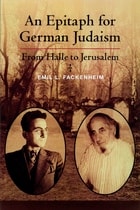
An Epitaph for German Judaism
From Halle to JerusalemEmil Fackenheim
University of Wisconsin Press, 2007
“An ‘epoch-making’ autobiography.”—Arnold Ages, Jewish Tribune
Athens and Jerusalem
Lev Shestov
Ohio University Press, 2016
For more than two thousand years, philosophers and theologians have wrestled with the irreconcilable opposition between Greek rationality (Athens) and biblical revelation (Jerusalem). In Athens and Jersusalem, Lev Shestov—an inspiration for the French existentialists and the foremost interlocutor of Edmund Husserl, Martin Heidegger, and Martin Buber during the interwar years—makes the gripping confrontation between these symbolic poles of ancient wisdom his philosophical testament, an argumentative and stylistic tour de force.
Although the Russian-born Shestov is little known in the Anglophone world today, his writings influenced many twentieth-century European thinkers, such as Albert Camus, D. H. Lawrence, Thomas Mann, Czesław Miłosz, and Joseph Brodsky. Athens and Jerusalem is Shestov’s final, groundbreaking work on the philosophy of religion from an existential perspective. This new, annotated edition of Bernard Martin’s classic translation adds references to the cited works as well as glosses of passages from the original Greek, Latin, German, and French. Athens and Jerusalem is Shestov at his most profound and most eloquent and is the clearest expression of his thought that shaped the evolution of continental philosophy and European literature in the twentieth century.
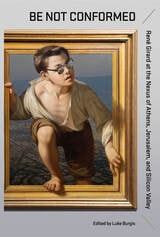
Be Not Conformed
Rene Girard at the Nexus of Athens, Jerusalem, and Silicon ValleyLuke Burgis
Catholic University of America Press, 2026
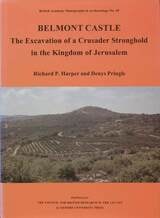
Belmont Castle
The Excavation of a Crusader Stronghold in the Kingdom of JerusalemRichard Harper
Council for British Research in the Levant, 2000
Library of Congress subject headings for this publication:
Belmont Castle Site (West Bank)
Excavations (Archaeology) -- West Bank.
West Bank -- Antiquities.
Jerusalem -- History -- Latin Kingdom, 1099-1244.