Results by title
356 books match the query 'Jewish Studies' and 28 start with a
A Holocaust Controversy
The Treblinka Affair in Postwar FranceSamuel Moyn
Brandeis University Press, 2005
A House Divided
Orthodoxy and Schism in Nineteenth-Century Central European JewryJacob Katz
University Press of New England, 2005
A Hundred Acres of America
The Geography of Jewish American Literary HistoryHoberman, Michael
Rutgers University Press, 2019
Jewish writers have long had a sense of place in the United States, and interpretations of American geography have appeared in Jewish American literature from the colonial era forward. But troublingly, scholarship on Jewish American literary history often limits itself to an immigrant model, situating the Jewish American literary canon firmly and inescapably among the immigrant authors and early environments of the early twentieth century. In A Hundred Acres of America, Michael Hoberman combines literary history and geography to restore Jewish American writers to their roles as critical members of the American literary landscape from the 1850s to the present, and to argue that Jewish history, American literary history, and the inhabitation of American geography are, and always have been, contiguous entities.
A Jewish Ceremony for Newborn Girls
The Torah’s Covenant AffirmedSharon R. Siegel
Brandeis University Press, 2014
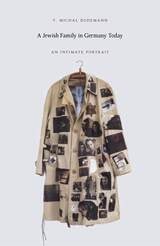
A Jewish Family in Germany Today
An Intimate PortraitY. Michal Bodemann
Duke University Press, 2005
Among the Kalman cousins are an art gallery owner, a body builder, a radio personality, a former chief financial officer of a prominent U.S. bank, and a sculptor. They discuss Zionism, anti-Semitism, what it means to root for the German soccer team, Schindler’s List, money, success, marriage and intermarriage, and family history. They reveal their different levels of engagement with Judaism and involvement with local Jewish communities. Kalman is a pseudonym, and their anonymity allows the family members to talk with passion and candor about their relationships and their lives as Jews.
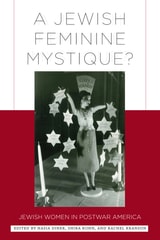
A Jewish Feminine Mystique?
Jewish Women in Postwar AmericaEdited by Hasia R. Diner, Shira Kohn, and Rachel Kranson
Rutgers University Press, 2010
As workers with or without pay, social justice activists, community builders, entertainers, and businesswomen, most Jewish women championed responsibilities outside their homes. Jewishness played a role in shaping their choices, shattering Friedan's assumptions about how middle-class women lived in the postwar years. Focusing on ordinary Jewish women as well as prominent figures such as Judy Holliday, Jennie Grossinger, and Herman Wouk's fictional Marjorie Morningstar, leading scholars explore the wide canvas upon which American Jewish women made their mark after the Second World War.
A Jewish Kapo in Auschwitz
History, Memory, and the Politics of SurvivalTuvia Friling
Brandeis University Press, 2014
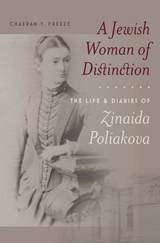
A Jewish Woman of Distinction
The Life and Diaries of Zinaida PoliakovaChaeRan Y. Freeze
Brandeis University Press, 2019
For more than seventy-five years, Poliakova kept detailed diaries of her world, giving us a rare look into the exclusive world of Jewish elites in Moscow and St. Petersburg. These rare documents reveal how Jews successfully integrated into Russian aristocratic society through their intimate friendships and patronage of the arts and philanthropy. And they did it all without converting—in fact, while staunchly demonstrating their Jewishness.
Poliakova’s life was marked by her dual identity as a Russian and a Jew. She cultivated aristocratic sensibilities and lived an extraordinarily lifestyle, and yet she was limited by the confessional laws of the empire and religious laws that governed her household. She brought her Russian tastes, habits, and sociability to France following her marriage to Reuben Gubbay (the grandson of Sir Albert Abdullah Sassoon). And she had to face the loss of almost all her family members and friends during the Holocaust.
Women’s voices are often lost in the sweep of history, and so A Jewish Women of Distinction is an exceptional, much-needed collection. These newly discovered primary sources will change the way we understand the full breadth of the Russian Jewish experience.
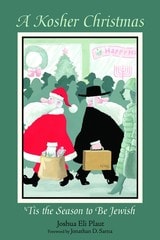
A Kosher Christmas
'Tis the Season to be JewishJoshua Eli Plaut
Rutgers University Press, 2012
Christmas is not everybody’s favorite holiday. Historically, Jews in America, whether participating in or refraining from recognizing Christmas, have devised a multitude of unique strategies to respond to the holiday season. Their response is a mixed one: do we participate, try to ignore the holiday entirely, or create our own traditions and make the season an enjoyable time? This book, the first on the subject of Jews and Christmas in the United States, portrays how Jews are shaping the public and private character of Christmas by transforming December into a joyous holiday season belonging to all Americans.
Creative and innovative in approaching the holiday season, these responses range from composing America’s most beloved Christmas songs, transforming Hanukkah into the Jewish Christmas, creating a national Jewish tradition of patronizing Chinese restaurants and comedy shows on Christmas Eve, volunteering at shelters and soup kitchens on Christmas Day, dressing up as Santa Claus to spread good cheer, campaigning to institute Hanukkah postal stamps, and blending holiday traditions into an interfaith hybrid celebration called “Chrismukkah” or creating a secularized holiday such as Festivus.
Through these venerated traditions and alternative Christmastime rituals, Jews publicly assert and proudly proclaim their Jewish and American identities to fashion a universally shared message of joy and hope for the holiday season.
See also: http://www.akosherchristmas.org
A People Divided
Judaism in Contemporary AmericaJack Wertheimer
Brandeis University Press, 1997
A Pragmatic Alliance
Jewish-Lithuanian political cooperation at the beginning of the 20th centuryVladas Sirutavicius
Central European University Press, 2011
A Season of Singing
Creating Feminist Jewish Music in the United StatesSarah M. Ross
Brandeis University Press, 2016
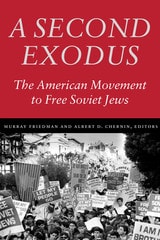
A Second Exodus
The American Movement to Free Soviet JewsEdited by Murray Friedman and Albert D. Chernin
Brandeis University Press, 1999
Absinthe
World Literature in Translation: Volume 29: Translating Jewish MultilingualismMarina Mayorski
Michigan Publishing Services, 2023
Absinthe 29: Translating Jewish Multilingualism showcases the variety of languages and genres in which modern Jewish writers have expressed themselves. Spanning short stories, essays, poetry, and selections from novels, the selection of literary works featured in this issue of Absinthe cuts across distinctions between European and non-European literary traditions and addresses diverse themes, including social class, gender, immigration, religious traditions, love and marriage, and the act of writing itself.
Rather than consider disparate Jewish languages and histories in isolation, we bring them into conversation within an open-ended framework that explores Jewish multilingualism in the modern world. The multilingual narrative of Jewish modernity told through them, in seven languages, spans from the 1880s to the 2020s.
Its wide geographical distribution ranges from Tel Aviv to São Paulo through Buenos Aires, Istanbul, Thessaloniki, Livorno, Warsaw, Prague, and Chicago. Each text and context exhibits different aspects of the Jewish encounter with the conditions of modern society, exemplifying the ways in which Jewish writing engages and negotiates different cultures and traditions.
The new volume of Absinthe foregrounds the multilingual legacy of Jewish migration and diasporic life that has become ubiquitous in modern Jewish writing, and it is evident in the enriching and disruptive presence of multiple languages and literary traditions in each of these texts. The title of this volume, Translating Jewish Multilingualism, refers both to the English translations of these texts and to the processes of translation, mediation, and hybridization encapsulated in the works themselves.
Alternatives to Assimilation
The Response of Reform Judaism to American Culture, 1840–1930Alan Silverstein
Brandeis University Press, 1995
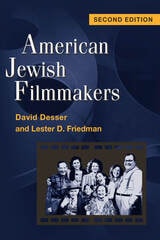
American Jewish Filmmakers
David Desser and Lester D. Friedman
University of Illinois Press, 2003
The effects of the Holocaust linger, both in gripping dramatic form (Mazursky's Enemies, a Love Story) and in black comedy (Brooks's The Producers). In his trilogy consisting of Serpico, Prince of the City, and Q&A, Lumet focuses on the failure of society's institutions to deliver social justice. Woody Allen portrays urban life and family relationships (Manhattan and Hannah and Her Sisters), sometimes with a nostalgic twist (Radio Days).
This edition concludes with a newly written discussion of the careers of other prominent Jewish filmmakers such as Steven Spielberg, Barry Levinson, Brian Singer, and Darren Aronofsky.
American Jewish History
A Primary Source ReaderEdited by Gary Phillip Zola and Marc Dollinger
Brandeis University Press, 2014
American Naturalism and the Jews
Garland, Norris, Dreiser, Wharton, and CatherDonald Pizer
University of Illinois Press, 2007
American Reform Judaism
An IntroductionDana Evan Kaplan
Rutgers University Press, 2003
The only comprehensive and up-to-date look at Reform Judaism, this book analyzes the forces currently challenging the Reform movement, now the largest Jewish denomination in the United States.
To distinguish itself from Orthodox and Conservative Judaism, the Reform movement tries to be an egalitarian, open, and innovative version of the faith true to the spirit of the tradition but nonetheless fully compatible with modern secular life. Promoting itself in this way, Reform Judaism has been tremendously successful in recruiting a variety of people—intermarried families, feminists, gays and lesbians, and interracial families among others—who resist more traditional forms of worship.
As an unintended result of this success, the movement now struggles with an identity crisis brought on by its liberal theology, which teaches that each Jew is free to practice Judaism more or less as he or she pleases. In the absence of the authority that comes from a theology based on a commanding, all-powerful God, can Reform Judaism continue to thrive? Can it be broadly inclusive and still be uniquely and authentically Jewish?
Taking this question as his point of departure, Dana Evan Kaplan provides a broad overview of the American Reform movement and its history, theology, and politics. He then takes a hard look at the challenges the movement faces as it attempts to reinvent itself in the new millennium. In so doing, Kaplan gives the reader a sense of where Reform Judaism has come from, where it stands on the major issues, and where it may be going.
Addressing the issues that have confronted the movement—including the ordination of women, acceptance of homosexuality, the problem of assimilation, the question of rabbinic officiation at intermarriages, the struggle for acceptance in Israel, and Jewish education and others—Kaplan sheds light on the connection between Reform ideology and cultural realities. He unflinchingly, yet optimistically, assesses the movement’s future and cautions that stormy weather may be ahead.
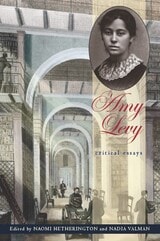
Amy Levy
Critical EssaysNaomi Hetherington
Ohio University Press, 2010
Amy Levy has risen to prominence in recent years as one of the most innovative and perplexing writers of her generation. Embraced by feminist scholars for her radical experimentation with queer poetic voice and her witty journalistic pieces on female independence, she remains controversial for her representations of London Jewry that draw unmistakably on contemporary antisemitic discourse.
Amy Levy: Critical Essays brings together scholars working in the fields of Victorian cultural history, women’s poetry and fiction, and the history of Anglo-Jewry. The essays trace the social, intellectual, and political contexts of Levy’s writing and its contemporary reception. Working from close analyses of Levy’s texts, the collection aims to rethink her engagement with Jewish identity, to consider her literary and political identifications, to assess her representations of modern consumer society and popular culture, and to place her life and work within late-Victorian cultural debate.
This book is essential reading for undergraduate and postgraduate students offering both a comprehensive literature review of scholarship-to-date and a range of new critical perspectives.
Contributors:
Susan David Bernstein,University of Wisconsin-Madison
Gail Cunningham,Kingston University
Elizabeth F. Evans,Pennslyvania State University–DuBois
Emma Francis,Warwick University
Alex Goody,Oxford Brookes University
T. D. Olverson,University of Newcastle upon Tyne
Lyssa Randolph,University of Wales, Newport
Meri-Jane Rochelson,Florida International University
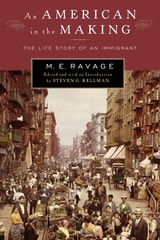
An American in the Making
The Life Story of an ImmigrantKellman, Steven G
Rutgers University Press, 2009
Steven G. Kellman brings Ravage's story to life again in this new edition, providing a brief biography and introduction that place the memoir within historical and literary contexts. An American in the Making contributes to a broader understanding of the global notion of "America" and remains timely, especially in an era when massive immigration, now from Latin America and Asia, challenges ideas of national identity.
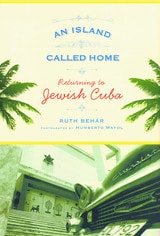
An Island Called Home
Returning to Jewish CubaRuth Behar, Photographs by Humberto Mayol
Rutgers University Press, 2007
Yiddish-speaking Jews thought Cuba was supposed to be a mere layover on the journey to the United States when they arrived in the island country in the 1920s. They even called it “Hotel Cuba.” But then the years passed, and the many Jews who came there from Turkey, Poland, and war-torn Europe stayed in Cuba. The beloved island ceased to be a hotel, and Cuba eventually became “home.” But after Fidel Castro came to power in 1959, the majority of the Jews opposed his communist regime and left in a mass exodus. Though they remade their lives in the United States, they mourned the loss of the Jewish community they had built on the island.
As a child of five, Ruth Behar was caught up in the Jewish exodus from Cuba. Growing up in the United States, she wondered about the Jews who stayed behind. Who were they and why had they stayed? What traces were left of the Jewish presence, of the cemeteries, synagogues, and Torahs? Who was taking care of this legacy? What Jewish memories had managed to survive the years of revolutionary atheism?
An Island Called Home is the story of Behar’s journey back to the island to find answers to these questions. Unlike the exotic image projected by the American media, Behar uncovers a side of Cuban Jews that is poignant and personal. Her moving vignettes of the individuals she meets are coupled with the sensitive photographs of Havana-based photographer Humberto Mayol, who traveled with her.
Together, Behar’s poetic and compassionate prose and Mayol’s shadowy and riveting photographs create an unforgettable portrait of a community that many have seen though few have understood. This book is the first to show both the vitality and the heartbreak that lie behind the project of keeping alive the flame of Jewish memory in Cuba.
Reader Guide (http://rutgerspress.rutgers.
Anti-Heimat Cinema
The Jewish Invention of the German LandscapeOfer Ashkenazi
University of Michigan Press, 2020
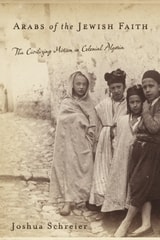
Arabs of the Jewish Faith
The Civilizing Mission in Colonial AlgeriaSchreier, Joshua
Rutgers University Press, 2010
Architecture of Memory
Exploring (Post-) Jewish Spaces in Eastern EuropeNatalia Romik
University College London, 2025
Using archival, architectural, and artistic methods, Architecture of Memory investigates the spectral architecture of former shtetls, predominantly Jewish towns in Central and Eastern Europe before World War II. Through architectural designs, art, and theoretical discussions mapping the historical legacy and present condition of shtetls, author Natalia Romik explores themes of architectural disappearance, urban remembrance, and functional change amid social upheaval. Romik’s unique design research of synagogue ruins, burial grounds, former ritual baths, and other “difficult heritage” contributes to discussions about the protection of Jewish heritage in places where there is no longer any Jewish population.
Are We One?
Jewish Identity in the United States and IsraelAuerbach, Jerold S
Rutgers University Press, 2001
What binds together Jews of Israel and the United States? Amid the hope and frustration generated by the Middle East peace process, the meaning of Jewish statehood is more vigorously contested than ever before. A secular democratic Israel, responsive to Western liberal values, is prepared to make peace with the Palestinians by sacrificing its own historic homeland. But a covenantal Israel, which draws its Jewish identity from divine promise and the biblical narrative, refuses to surrender to modern imperatives. As the very nature of Jewish statehood has become ever more polarized, American Jewish life has been profoundly affected by this fateful Zionist contradiction.
In Are We One? Jerold S. Auerbach presents a surprising new interpretation of this contemporary Jewish dilemma. The modern Jewish impulse to embrace Western values, he writes, exacts a terrible price. He offers a critical reassessment of Zionism, a challenging analysis of the sources of the identification of American Jews with Israel—and a gloomy prognosis of the future of Jewish life, both in Israel and the United States.
In a ringing indictment that is sure to spark controversy, he states that the eagerness of secular Israelis to import American culture reflects their sweeping rejection of Jewish and Zionist values. Indeed, the diminishing number of Israelis who actually remain faithful to Jewish religious and historical imperatives are denigrated as fundamentalist zealots by Israeli and American Jews alike. Present-day Israel now exhibits such Jewish self-loathing, he states, that it has depleted its own ability to inspire world Jewry.
In a groundbreaking book that draws upon original historical analysis and extensive personal experience in Israel, Auerbach invites readers to consider the debilitating consequences of an adulterated Jewish identity in Israel and in the United States for the very future of Judaism.
Argentina and the Jews
A History of Jewish ImmigrationHaim Avni
University of Alabama Press, 1991
Traces the shifting patterns of Jewish immigration and Argentine immigration policy.
Argentina is home to the largest Jewish community in the Hispanic world, the second largest in the Western hemisphere. During successive political and social regimes, Argentina alternately barred Jews from entering the country and recruited them to immigrate, persecuted Jews as heretics or worse and welcomed them as productive settlers, restricted Jews by law and invested them with the fullest rights of citizenship. This volume traces the shifting patterns of Jewish immigration and Argentine immigration policy, both as manifestations of cultural and historical processes and as forces shaping the emergence of a large and energetic Jewish community.
Within Argentina, many Jews followed traditional immigration strategies by consolidating communities and institutions in Buenos Aires and other cities. But many others settled on the land, in agricultural colonies sponsored by Baron Maurice de Hirsch’s Jewish Colonization Association, a group with far-reaching impact that is examined closely in this book. The Israeli kibbutz movement drew strength from the Argentine farming colonies, when beginning in 1949 groups of Argentine Jews immigrated to Israel to found kibbutzes. Eventually, in the face of political and economic upheavals with anti-Semitic undercurrents, almost 40,000 Jews left Argentina for Israel. A country of absorption became a country of exodus, and Zionism became a central focus of Argentine Jewry, interlocking families and fates separated by oceans and continents.
Authentically Jewish
Identity, Culture, and the Struggle for RecognitionStuart Z. Charmé
Rutgers University Press, 2022
Author Stuart Z. Charmé explores how debates over authenticity and struggles for recognition are a key to understanding a wide range of controversies between Orthodox and liberal Jews, Zionist and diaspora Jews, white Jews and Jews of color, as well as the status of intermarried and messianic Jews, and the impact of Jewish genetics. In addition, it discusses how and when various cultural practices and traditions such as klezmer music, Israeli folk dance, Jewish yoga and meditation, and others are recognized as authentically Jewish, or not.