Results by title
37 books match the query 'Joyce, James'

A Ghost in Trieste
Joseph Cary
University of Chicago Press, 1993
Here is the crossroads of East and West. A port held in turn by the Romans, the Venetians, the Austrians, the Germans, the Slavs, and finally the Italians, Trieste is the capital of nowhere, fertile source of a unique literary florescence before the First World War. At times an exile home and an exiled city. "I cannot claim to have walked across it all,:" wrote Saba, the poet of Trieste in 1910 of the city Cary crosses and recrosses, seeking the poetry of the place that inspired its literary giants. Trieste's cultural and historical riches, its geographical splendor of hills and sea and mysterious presence unfold in a series of stories, monologues and literary juxtapositions that reveal the city's charms as well as its seductive hold on the writer's imagination. Throughout, literary and immediate impressions alike are elaborated in paintings and maps, and in handsome line drawings by Nicholas Read.
This "clownish and adolescent Parsifal," this Trieste of the "prickly grace," this place "impaled in my heart like a permanent point," this symbol of the Adriatic, this "city made of books" — here the book remakes the city. The Trieste of allusions magically becomes a city of palpable allure, of warmth and trying contradictions and gritty beauty. Part travel diary, part guide book, part literary history, A Ghost in Trieste is a brilliant introduction to an extraordinary time and place. In Joseph Cary, Trieste has found a new poet, and readers, a remarkably captivating companion and guide.

Citizen Critics
Literary Public SpheresRosa A. Eberly
University of Illinois Press, 2000
The condition of our public discussions about literary and cultural works has much to say about the state of our democracy. Classrooms, newspapers, magazines, Internet forums, and many other places grant citizens a place to hold public discourses—and claim a voice on national artistic matters.
Rosa A. Eberly looks at four censorship controversies where professionals asserted their authority to deny citizen critics a voice—and effectively removed discussion of literature from the public sphere. Eberly compares the outrage sparked by the publication of James Joyce's Ulysses and Henry Miller's Tropic of Cancer with the relative quiescence that greeted the much more violent and sexually explicit content of Bret Easton Ellis's American Psycho and Andrea Dworkin's Mercy. Through a close reading of letters to the editor, reviews, media coverage, and court cases, Eberly shows how literary critics and legal experts defused censorship debates—and undercut the authority of citizen critics—by shifting the focus from content to aesthetics and from social values to publicity.
Comic Faith
The Great Tradition from Austen to JoyceRobert M. Polhemus
University of Chicago Press, 1980

Conspicuous Bodies
Provincial Belief and the Making of Joyce and RushdieJean Kane
The Ohio State University Press, 2014
Conspicuous Bodies presents Joyce as a founder and Rushdie as an inheritor of a distinctive discourse of belief about the importance of physical bodies and knowledge in religious practice. In doing so, it moves the reception of Joyce and Rushdie away from what previous critics have emphasized—away from questions of aesthetics and from a narrow understanding of belief—and instead questions the assumption that belief should be segregated from matters of physicality and knowledge. Kane reintroduces the concept of spiritual embodiment in order to expand our understanding of what counts as spiritual agency in non-western and minority literatures.
First Love
The Affections of Modern FictionMaria DiBattista
University of Chicago Press, 1991
DiBattista argues that modernity reinvented First Love as a myth of creative initiative, as its characteristic response to a pervasive sense of historical belatedness. Anxious that its own creations can never be more than diminished forms of mightier originals, modernity idolizes First Love as the beginning that can never be repeated. First Love hence epitomizes the dream of a new self-incarnation. From Turgenev's First Love to the formative works of Virginia Woolf, Gertrude Stein, E. M. Forster, and Vladimir Nabokov, First Love confirms the birth of an artistic vocation. For modern men and women intent on becoming the original authors of their own lives, First Love becomes paradigmatic of those life-altering moments that transform the undifferentiated sequence of days into a fateful narrative.
DiBattista focuses on the enunciation of First Love in the fiction of Thomas Hardy, D. H. Lawrence, James Joyce, and Samuel Beckett. In reading their works, DiBattista dramatically revises the accepted view of irony as the dominant tone of modernism. First Love constitutes, she shows, a new apprehension of the world characterized not by the frigid distances of irony but by a belief in the creative individual who may begin the world anew, as if for the first time.
How Joyce Wrote Finnegans Wake
A Chapter-by-Chapter Genetic GuideEdited by Luca Crispi and Sarn Slote
University of Wisconsin Press, 2008
The introduction by Luca Crispi, Sam Slote, and Dirk Van Hulle offers a chronology of the composition of Finnegans Wake, an archival survey of the manuscripts, and an introduction to genetic criticism. Then, the volume provides a chapter-by-chapter interpretation of Finnegans Wake from a variety of perspectives, probing the book as a work in progress. The fruit of more than two decades’ worth of Wakean genetic studies, this book is the essential starting point for all future studies of Joyce’s most complex and fascinating work.
Idling the Engine
Linguistic sSkepticism in and around Cortázar, Kafka, and JoyceE. Joseph Sharkey
Catholic University of America Press, 2006
James Joyce and the Irish Revolution
The Easter Rising as Modern EventLuke Gibbons
University of Chicago Press, 2023
When revolutionaries seized Dublin during the 1916 Easter Rising, they looked back to unrequited pasts to point the way toward radical futures—transforming the Celtic Twilight into the electric light of modern Dublin in James Joyce’s Ulysses. For Luke Gibbons, the short-lived rebellion converted the Irish renaissance into the beginning of a global decolonial movement. James Joyce and the Irish Revolution maps connections between modernists and radicals, tracing not only Joyce’s projection of Ireland onto the world stage, but also how revolutionary leaders like Ernie O’Malley turned to Ulysses to make sense of their shattered worlds. Coinciding with the centenary of both Ulysses and Irish independence, this book challenges received narratives about the rebellion and the novel that left Ireland changed, changed utterly.
James Joyce and the Philosophers at Finnegans Wake
Donald Phillip Verene
Northwestern University Press, 2016
Joyce and the Two Irelands
By Willard Potts
University of Texas Press, 2001
Uniting Catholic Ireland and Protestant Ireland was a central idea of the "Irish Revival," a literary and cultural manifestation of Irish nationalism that began in the 1890s and continued into the early twentieth century. Yet many of the Revival's Protestant leaders, including W. B. Yeats, Lady Gregory, and John Synge, failed to address the profound cultural differences that made uniting the two Irelands so problematic, while Catholic leaders of the Revival, particularly the journalist D. P. Moran, turned the movement into a struggle for greater Catholic power.
This book fully explores James Joyce's complex response to the Irish Revival and his extensive treatment of the relationship between the "two Irelands" in his letters, essays, book reviews, and fiction up to Finnegans Wake. Willard Potts skillfully demonstrates that, despite his pretense of being an aloof onlooker, Joyce was very much a part of the Revival. He shows how deeply Joyce was steeped in his whole Catholic culture and how, regardless of the harsh way he treats the Catholic characters in his works, he almost always portrays them as superior to any Protestants with whom they appear. This research recovers the historical and cultural roots of a writer who is too often studied in isolation from the Irish world that formed him.
Joyce's Book of Memory
The Mnemotechnic of UlyssesJohn S. Rickard
Duke University Press, 1999
Offering a detailed reading of Joyce and his methods of writing, Rickard investigates the uses of memory in Ulysses and analyzes its role in the formation of personal identity. The importance of forgetting and repression, and the deadliness of nostalgia and habit in Joyce’s paralyzed Dublin are also revealed. Noting the power of spontaneous, involuntary recollection, Rickard locates Joyce’s mnemotechnic within its historical and philosophical contexts. As he examines how Joyce responded to competing intellectual paradigms, Rickard explores Ulysses’ connection to medieval, modern, and (what would become) postmodern worldviews, as well as its display of tensions between notions of subjective and universal memory. Finally, Joyce’s Book of Memory illustrates how Joyce distilled subjectivity, history, and cultural identity into a text that offers a panoramic view of the modern period.
This book will interest students and scholars of Joyce, as well as others engaged in the study of modern and postmodern literature.
Joyce's Book of the Dark
Finnegans WakeJohn Bishop
University of Wisconsin Press, 1993
“Joyce’s Book of the Dark gives us such a blend of exciting intelligence and impressive erudition that it will surely become established as one of the most fascinating and readable Finnegans Wake studies now available.”—Margot Norris, James Joyce Literary Supplement
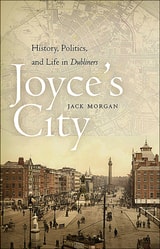
Joyce's City
History, Politics, and Life in DUBLINERSJack Morgan
University of Missouri Press, 2014
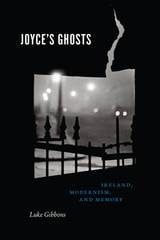
Joyce's Ghosts
Ireland, Modernism, and MemoryLuke Gibbons
University of Chicago Press, 2015
In Joyce’s Ghosts, Luke Gibbons mounts a powerful argument that this view is mistaken: Joyce’s Irishness is intrinsic to his modernism, informing his most distinctive literary experiments. Ireland, Gibbons shows, is not just a source of subject matter or content for Joyce, but of form itself. Joyce’s stylistic innovations can be traced at least as much to the tragedies of Irish history as to the shock of European modernity, as he explores the incomplete project of inner life under colonialism. Joyce’s language, Gibbons reveals, is haunted by ghosts, less concerned with the stream of consciousness than with a vernacular interior dialogue, the “shout in the street,” that gives room to outside voices and shadowy presences, the disruptions of a late colonial culture in crisis.
Showing us how memory under modernism breaks free of the nightmare of history, and how in doing so it gives birth to new forms, Gibbons forces us to think anew about Joyce’s achievement and its foundations.
Joyce's Web
The Social Unraveling of ModernismBy Margot Norris
University of Texas Press, 1992
James Joyce has long been viewed as a literary modernist who helped define and uphold modernism's fundamental concepts of the artist as martyr to bourgeois sensibilities and of an idealistic faith in artistic freedom. In this revolutionary work, however, Margot Norris proposes that Joyce's art actually critiques these modernist tenets by revealing an awareness of the artist's connections to and constraints within bourgeois society.
In sections organized around three mythologized and aestheticized figures in Joyce's works—artist, woman, and child—Norris' readings "unravel the web" of Joyce's early and late stories, novels, and experimental texts. She shows how Joyce's texts employ multiple mechanisms to expose their own distortions, silences, and lies and reveal connections between art and politics, and art and society.
This ambitious new reading not only repositions Joyce within contemporary debates about the ideological assumptions behind modernism and postmodernism, but also urges reconsideration of the phenomenon of modernism itself. It will be of interest and importance to all literary scholars.
Joyce, Bakhtin, and the Literary Tradition
Toward a Comparative Cultural PoeticsM. Keith Booker
University of Michigan Press, 1997
Joyce, Chaos, and Complexity
Thomas Jackson Rice
University of Illinois Press, 1997
Placing Joyce in his cultural context, Rice first traces the influence of Euclidean and non-Euclidean geometries on Dubliners and A Portrait of the Artist as a Young Man. He then demonstrates that, when later innovations in science transformed entire worldviews, Joyce recognized conventional literary modes of representation as offering only arbitrary constructions of this reality. Joyce responded in Ulysses by experimenting with perspective, embedding design, and affirming the existence of reality. Rice contends that Ulysses presages the multiple tensions of chaos theory; likewise, chaos theory can serve as a model for understanding Ulysses. In Finnegans Wake Joyce consummates his vision and anticipates the theories of complexity science through a dynamic approximation of reality.
Joyce/Foucault
Sexual ConfessionsWolfgang Streit
University of Michigan Press, 2004
Joyce/Foucault: Sexual Confessions examines instances of sexual confession in works of James Joyce, with a special emphasis on Portrait of the Artist as a Young Man and Ulysses. Using Michel Foucault's historical analysis of Western sexuality as its theoretical underpinning, the book foregrounds the role of the Jesuit order in the spread of a confessional force, and finds this influence inscribed into Joyce's major texts. Wolfgang Streit goes on to argue that the tension between the texts' erotic passages and Joyce's criticism of even his own sexual writing energizes Joyce's narratives-and enables Joyce to develop the radical skepticism of power revealed in his work.
Wolfgang Streit is Lecturer, Ludwig Maximilians University, Munich.
Nationalism, Colonialism, and Literature
Terry Eagleton
University of Minnesota Press, 1990
The three essays constituting this volume were originally published as individual pamphlets by the Field Day Theatre Company, in Derry, Northern Ireland. Each deals with the question of nationalism and the role of cultural production as a force in understanding and analyzing the aftermath of colonization. The authors’ diverse perspectives are demonstrated by the essays’ respective titles: Eagleton, Nationalism: Irony and Commitment; Jameson, Modernism and Imperialism; and Said, Yeats and Decolonization. The essays have implication beyond their immediate topics, bearing upon questions of feminism, decolonization, and modernism to illuminate problems that belong to other groups and regions.
Odyssey of the Psyche
Jungian Patterns in Joyce's UlyssesJean Kimball
Southern Illinois University Press, 1997
The result of the interaction between Bloom and Dedalus, Kimball argues as a central tenet in her unique reading of Ulysses, is the gradual development of a relationship between the two protagonists that parallels C. G. Jung’s descriptions of the encounter between the Ego and the Shadow in that stage of his theoretical individuation process called "the realization of the shadow." These parallels form a unifying strand of meaning that runs throughout this multidimensional novel and is supported by the text and contexts of Ulysses.
Kimball has provided the first comprehensive study of the relationship between Jungian psychology and Joyce’s Ulysses. Bucking critical trends, she focuses on Stephen rather than Bloom. She also notes certain parallels—synchronicities—in the lives of both Jung and Joyce, not because the men influenced one another but because they speculated about personality at the same historical time. Finally, noting that both Jung and Joyce came from strong Christian backgrounds, she asserts that the doubleness of the human personality fundamental to Christian theology is carried over into Jung’s psychology and Joyce’s fiction.
Our Joyce
From Outcast to IconBy Joseph Kelly
University of Texas Press, 1997
James Joyce began his literary career as an Irishman writing to protest the deplorable conditions of his native country. Today, he is an icon in a field known as "Joyce studies." Our Joyce explores this amazing transformation of a literary reputation, offering a frank look into how and for whose benefit literary reputations are constructed.
Joseph Kelly looks at five defining moments in Joyce's reputation. Before 1914, when Joyce was most in control of his own reputation, he considered himself an Irish writer speaking to the Dublin middle classes. When T. S. Eliot and Ezra Pound began promoting Joyce in 1914, however, they initiated a cult of genius that transformed Joyce into a prototype of the "egoist," a writer talking only to other writers.
This view served the purposes of Morris Ernst in the 1930s, when he defended Ulysses against obscenity charges by arguing that geniuses were incapable of obscenity and that they wrote only for elite readers. That view of Joyce solidified in Richard Ellmann's award-winning 1950s biography, which portrayed Joyce as a self-centered genius who cared little for his readers and less for the world at war around him. The biography, in turn, led to Joyce's canonization by the academy, where a "Joyce industry" now flourishes within English departments.
Proust, Mann, Joyce in the Modernist Context, Second Edition
Gerald Gillespie
Catholic University of America Press, 2010
Quare Joyce
Joseph Valente, Editor
University of Michigan Press, 2000
Textual Awareness
A Genetic Study of Late Manuscripts by Joyce, Proust, and MannDirk Van Hulle
University of Michigan Press, 2004
A key issue in both textual criticism and the so-called crisis of the novel is the tension between the finished and the unfinished. After a theoretical examination of the relationship between genetic and textual criticism, Dirk Van Hulle uses the three case studies to show how?at each stage in the writing process?the text still had the potential of becoming something entirely different; how and why these geneses proceeded the way they did; how Joyce, Proust, and Mann allowed contingencies to shape their work; how these authors recycled the words of their critics in order to inoculate their works against them; how they shaped an intertextual dimension through the processing of source texts and reading notes; and how text continually generated more text.
Van Hulle's exploration of process sheds new light on the remarkable fact that so many modernist authors protected their manuscripts, implying both the authors' urge to grasp everything and their awareness of the dangers of their encyclopedic projects. Textual Awareness offers new insights into the artificiality of the artifact?the novel?that are relevant to the study of literary modernism in general and the study of James Joyce, Marcel Proust, and Thomas Mann in particular.
Dirk Van Hulle is Assistant Professor of English and German Literature, University of Antwerp.
The French Joyce
Geert Lernout
University of Michigan Press, 1992
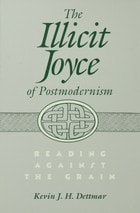
The Illicit Joyce of Postmodernism
Reading Against the GrainKevin Dettmar
University of Wisconsin Press, 1996
For nearly three quarters of a century, the modernist way of reading has been the only way of reading James Joyce—useful, yes, and powerful but, like all frameworks, limited. This book takes a leap across those limits into postmodernism, where the pleasures and possibilities of an unsuspected Joyce are yet to be found.
Kevin J. H. Dettmar begins by articulating a stylistics of postmodernism drawn from the key texts of Roland Barthes, Mikhail Bakhtin, and Jean-François Lyotard. Read within this framework, Dubliners emerges from behind its modernist facade as the earliest product of Joyce’s proto-postmodernist sensibility. Dettmar exposes these stories as tales of mystery, not mastery, despite the modernist earmarks of plentiful symbols, allusions, and epiphanies. Ulysses, too, has been inadequately served by modernist critics. Where they have emphasized the work’s ingenious Homeric structure, Dettmar focuses instead upon its seams, those points at which the narrative willfully, joyfully overflows its self-imposed bounds. Finally, he reads A Portrait of the Artist and Finnegans Wake as less playful, less daring texts—the first constrained by the precious, would-be poet at its center, the last marking a surprising retreat from the constantly evolving, vertiginous experience of Ulysses.
In short, The Illicit Joyce of Postmodernism explores what happens when the extra-literary pronouncements of Eliot, Pound, and Joyce, as well as Joyce’s early critics, are set aside and a new, “unauthorized” Joyce is allowed to appear. This postmodern Joyce, more willful and less easily compartmentalized, stands as a counterpoint to the modernist Joyce who has perhaps become too familiar.
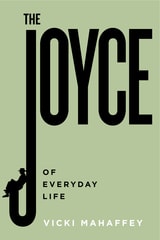
The Joyce of Everyday Life
Vicki Mahaffey
Bucknell University Press, 2024
Winner of the American Conference on Irish Studies’ Robert Rhodes Prize for Books on Literature
Part of James Joyce’s genius was his ability to find the poetry in everyday life. For Joyce, even a simple object like a table becomes magical, “a board that was of the birchwood of Finlandy and it was upheld by four dwarfmen of that country but they durst not move more for enchantment.” How might we learn to regain some of the childlike play with language and sense of delight in the ordinary that come so naturally to Joyce?
The Joyce of Everyday Life teaches us how to interpret seemingly mundane objects and encounters with openness and active curiosity in order to attain greater self-understanding and a fuller appreciation of others. Through a close examination of Joyce's joyous, musical prose, this book shows how language provides us with the means to revitalize daily experience and social interactions across a huge, diverse, and everchanging world.
Acclaimed Joyce scholar Vicki Mahaffey demonstrates how his writing might prompt us to engage in a different kind of reading, treating words and fiction as tools for expanding the boundaries of the self with humor and feeling. A book for everyone who loves language, The Joyce of Everyday Life is a lyrical romp through quotidian existence.

The Senses of Nonsense
Alison Rieke
University of Iowa Press, 1992

The Subaltern Ulysses
Enda Duffy
University of Minnesota Press, 1994
The Subaltern Ulysses was first published in 1994. Minnesota Archive Editions uses digital technology to make long-unavailable books once again accessible, and are published unaltered from the original University of Minnesota Press editions.
How might an IRA bomb and James Joyce's Ulysses have anything in common? Could this masterpiece of modernism, written at the violent moment of Ireland's national emergence, actually be the first postcolonial novel? Exploring the relation of Ulysses to the colony in which it is set, and to the nation being born as the book was written, Enda Duffy uncovers a postcolonial modernism and in so doing traces another unsuspected strain within the one-time critical monolith. In the years between 1914 and 1921, as Joyce was composing his text, Ireland became the first colony of the British Empire to gain its independence in this century after a violent anticolonial war. Duffy juxtaposes Ulysses with documents and photographs from the archives of both empire and insurgency, as well as with recent postcolonial literary texts, to analyze the political unconscious of subversive strategies, twists on class and gender, that render patriarchal colonialist culture unfamiliar.
Ulysses, Duffy argues, is actually a guerrilla text, and here he shows how Joyce's novel pinpoints colonial regimes of surveillance, mocks imperial stereotypes of the "native," exposes nationalism and other chauvinistic ideologies of "imagined community" as throwbacks to the colonial ethos, and proposes versions of a postcolonial subject. A significant intervention in the massive "Joyce industry" founded on the rhetoric and aesthetics of high modernism, Duffy's insights show us not only Ulysses, but also the origins of postcolonial textuality, in a startling new way.Enda Duffy is assistant professor of English at the University of California at Santa Barbara.
The Subject of Modernism
Narrative Alterations in the Fiction of Eliot, Conrad, Woolf, and JoyceTony E. Jackson
University of Michigan Press, 1994
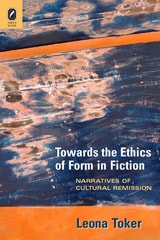
Towards the Ethics of Form in Fiction
Narratives of Cultural RemissionLeona Toker
The Ohio State University Press, 2010
Toker is especially interested in cultural remissions such as the carnivalesque—that is, the inverting of standard cultural hierarchies or the blurring of boundaries between normally separated social groups, actors and audiences, self and other. She argues that cultural remissions have the potential not simply to provide a break from the determinacies of our quotidian existence but also to return us to that existence with some alteration of our perceptions, beliefs, and values. Toker contends that the ethical consequences of reading fiction result from features of its aesthetics, particularly what she calls, following the semiotician Louis Hjemslev, “the form of the content”—the patterns arising from the artistic deployment of narrative details. In addition to addressing the carnivalesque discourse of Bakhtin as well as the theory of oppositionality developed by de Certeau and Chambers, she puts theory into practice through detailed analyses of canonical texts by Fielding, Sterne, Austen, Hawthorne, Dickens, Conrad, Joyce, and other writers.
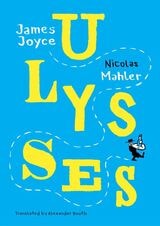
Ulysses
Mahler after JoyceNicolas Mahler
Seagull Books, 2022
Dublin, 16 June 1904: through a day in the life of the advertising agent Leopold Bloom and the sensations of the ordinary, James Joyce created a maximal book from a minimum of matter. Ulysses, the most important novel of modernity, is a defining book of the twentieth century. Joyce’s creation—also spectacularly innovative in form—inspired Nicolas Mahler to attempt a literary retelling that is not a mere illustration or adaption of the novel but an independent and equally as inventive work. Using comics, Mahler transforms the various literary techniques of the original. He assembles his images with humorous and philosophical verve, quoting and rambling along in the spirit of Joyce.
With this graphic interpretation of the modern classic, which also constitutes a homage to the golden era of the newspaper comic strip, Ulysses can be newly discovered in a delightfully unexpected form.
Ulysses
The Mechanics of MeaningDavid Hayman
University of Wisconsin Press, 1982

Universal Grammar and Narrative Form
David Herman
Duke University Press, 1995
Following an extensive historical overview of theories about universal grammar, Herman examines Joyce’s Ulysses, Kafka’s The Trial, and Woolf’s Between the Acts as case studies of modernist literary narratives that encode grammatical principles which were (re)fashioned in logic, linguistics, and philosophy during the same period. Herman then uses the interpretation of universal grammar developed via these modernist texts to explore later twentieth-century cultural phenomena. The problem of citation in the discourses of postmodernism, for example, is discussed with reference to syntactic theory. An analysis of Peter Greenaway’s The Cook, The Thief, His Wife, and Her Lover raises the question of cinematic meaning and draws on semantic theory. In each case, Herman shows how postmodern narratives encode ideas at work in current theories about the nature and function of language.
Outlining new directions for the study of language in literature, Universal Grammar and Narrative Form provides a wealth of information about key literary, linguistic, and philosophical trends in the twentieth century.
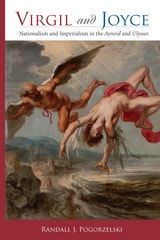
Virgil and Joyce
Nationalism and Imperialism in the <i>Aeneid</i> and <i>Ulysses</i>Randall J. Pogorzelski
University of Wisconsin Press, 2016
Joyce wrote Ulysses during the Irish War of Independence, when militants, politicians, and intellectuals were attempting to create a new Irish nation. Virgil wrote the Aeneid when, in the wake of decades of civil war, Augustus was founding what we now call the Roman Empire. Randall Pogorzelski applies modern theories of nationalism, intertextuality, and reception studies to illuminate how both writers confronted issues of nationalism, colonialism, political violence, and freedom during times of crisis.
Who Paid for Modernism?
Art, Money, and the Fiction of Conrad, Joyce and LawrenceJoyce Piell Wexler
University of Arkansas Press, 1997
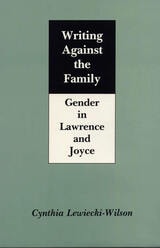
Writing Against the Family
Gender in Lawrence and JoyceCynthia Lewiecki-Wilson
Southern Illinois University Press, 1994
This first feminist book-length comparison of D. H. Lawrence and James Joyce offers striking new readings of a number of the novelists’ most important works, including Lawrence’s Man Who Died and Joyce’s Finnegans Wake.
Cynthia Lewiecki-Wilson argues that a feminist reader must necessarily read with and against theories of psychoanalysis to examine the assumptions about gender embedded within family relations and psychologies of gender found in the two authors’ works. She challenges the belief that Lawrence and Joyce are opposites, inhabiting contrary modernist camps; instead they are on a continuum, with both engaged in a reimagination of gender relations.
Lewiecki-Wilson demonstrates that both Lawrence and Joyce write against a background of family material using family plots and family settings. While previous discussions of family relations in literature have not questioned assumptions about the family and about sex roles within it, Lewiecki-Wilson submits the systems of meaning by which gender is construed to a feminist analysis. She reexamines Lawrence and Joyce from the point of view of feminist psychoanalysis, which, she argues, is not a set of beliefs or a single theory but a feminist practice that analyzes how systems of meaning construe gender and produce a psychology of gender.
Lewiecki-Wilson argues against a theory of representation based on gender, however, concluding that Lawrence’s and Joyce’s texts, in different ways, test the idea of a female aesthetic. She analyzes Lawrence’s portrait of family relations in Sonsand Lovers, The Rainbow, and Women in Love and compares Joyce’s Portrait of the Artist as a Young Man with Lawrence’s autobiographical text. She then shows that Portrait begins a deconstruction of systems of meaning that continues and increases in Joyce’s later work, including Ulysses.
Lewiecki-Wilson concludes by showing that Lawrence, Joyce, and Freud relate family material to Egyptian myth in their writings. She identifies Freud’s essay "Leonardo da Vinci and a Memory of Childhood" as an important source for Joyce’s Finnegans Wake, which portrays beneath the gendered individual a root androgyny and asserts an unfixed, evolutionary view of family relations.