Results by title
8 books match the query 'Libraries and minorities'
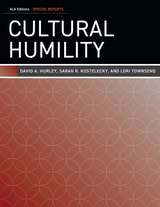
Cultural Humility
David A. Hurley, Sarah R. Kostelecky, and Lori Townsend
American Library Association, 2022
Cultural humility is emerging as a preferred approach to diversity, equity, and inclusion (DEI) efforts within librarianship. At a time when library workers are critically examining their professional practices, cultural humility offers a potentially transformative framework of compassionate accountability; it asks us to recognize the limits to our knowledge, reckon with our ongoing fallibility, educate ourselves about the power imbalances in our organizations, and commit to making change. This Special Report introduces the concept and outlines its core tenets. As relevant to those currently studying librarianship as it is to long-time professionals, and applicable across multiple settings including archives and museums, from this book readers will
- learn why cultural humility offers an ideal approach for navigating the spontaneous interpersonal interactions in libraries, whether between patrons and staff or amongst staff members themselves;
- understand how it intersects with cultural competence models and critical race theory;
- see the ways in which cultural humility’s awareness of and commitment to challenging inequitable structures of power can act as a powerful catalyst for community engagement;
- come to recognize how a culturally humble approach supports DEI work by acknowledging the need for mindfulness in day-to-day interactions;
- reflect upon cultural humility’s limitations and the criticisms that some have leveled against it; and
- take away concrete tools for undertaking and continuing such work with patience and hope.
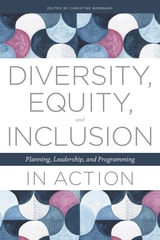
Diversity, Equity, and Inclusion in Action
Planning, Leadership, and ProgrammingChristine Bombaro
American Library Association, 2020
All too often, in a hurried attempt to “catch up,” diversity training can create division among staff or place undue burdens on a handful of employees. Instead, academic libraries need approaches to diversity, equity, and inclusion (DEI) that position these priorities as ongoing institutional and professional goals. This book’s model programs will help academic libraries do exactly that, sharing a variety of initiatives that possess clear goals, demonstrable outcomes, and reproducible strategies. Librarians, administrators, and directors will all benefit from the programs detailed inside, which include such topics as
- a university library’s community of practice for interactions and learning around DEI;
- cultural competency training to create more welcoming instruction spaces;
- student workshops on literature searches that mitigate bias;
- overcoming the historic tendency to marginalize LGBTQ+ representation in archives;
- a curriculum and design workshop that moved from discussing social values to embedding them in actions;
- the founding of a library-led LGBT club for students at a rural community college;
- a liberal arts college’s retention-boosting program for first-generation students;
- tailoring a collection and library services to the unique needs of student veterans; and
- a framework for moving from diversity to equity and inclusion, toward a goal of social justice.
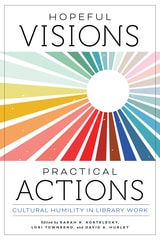
Hopeful Visions, Practical Actions
Cultural Humility in Library WorkEdited by Sarah R. Kostelecky, Lori Townsend, and David A. Hurley
American Library Association, 2023
- how Indigenous adages can be tools for reflection and guidance in developing cultural humility;
- the experiences of two Black librarians who are using cultural humility to change the profession;
- new perspectives on core concepts of customer service;
- rethinking policies and practices in libraries both large and small;
- using cultural humility in approaching collection development and creating resource guides;
- what cultural humility can look like for a tribal librarian working in a tribal college library; and
- reflecting on cultural humility itself and where it is going.
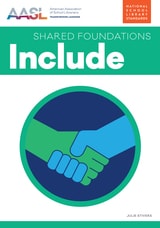
Include
Julie Stivers
American Library Association, 2022
Include, part of a six-volume series on the Shared Foundations in AASL’s National School Library Standards, brings together a chorus of school librarians, scholars, and students representing a wide range of races, ethnicities, experiences, and identities. This book offers
- an understanding of why the concept of Include is paramount to school librarian practice, supported by key research to share and inspire the inclusion of learner and educator voices and experiences;
- an explanation of what it looks like to successfully integrate the Include Shared Foundation in terms of collection, space, and instruction;
- useable guidance that school librarians can confidently incorporate in their settings , including easy-to-implement ideas, inspiring stories, events, and transformation; and
- reflections, questions, and action steps to help readers move their practice forward.
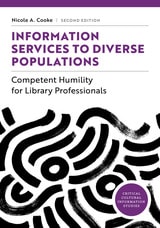
Information Services to Diverse Populations
Competent Humility for Library ProfessionalsNicole A. Cooke
American Library Association, 2026
Foreword by Cynthia Sturgis Landrum
The development of cultural competency skills and social awareness benefits LIS students, their future employers, and the library profession at large―not to mention library customers and society as a whole. Cooke's freshly updated text introduces readers to the contexts and situations that promote the development of empathy and build cultural competence. It marshals cutting edge research and relevant best practices to give readers a strong grasp of the political, social, economic, and technological divides among library patrons. It also covers outreach and library services to diverse populations, how to evaluate such services, and many other key topics. Complete with an updated syllabus, lesson plans, and exercises ready-made for course use, Cooke’s text
- demonstrates why social responsibility is a foundational value of librarianship;
- considers library services to members of marginalized racial or ethnic groups, older adults, people with mental health or physical disabilities, neurodiverse library users, refugees and immigrants, people experiencing homelessness or hunger, those growing up in or experiencing poverty, members of the LGBTQIA+ communities, and people who are incarcerated;
- features a myriad of testimonials drawn from a wide variety of settings that highlight the experiences of library and museum practitioners who are working with diverse populations;
- introduces a new model of cultural competence and cultural humility;
- authoritatively covers such essential concepts as intersectionality, privilege, marginalization, cultural competence, cultural humility, and counter-storytelling along with discussions of how they interplay in the communities that libraries serve;
- explores the impact of overwhelming whiteness of the library profession and what can be done to recruit, welcome, mentor, and retain racially and ethnically diverse library workers; and
- identifies potential employment and networking opportunities related to diversity and social justice in librarianship.
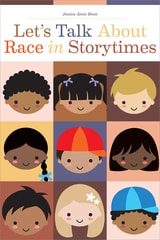
Let’s Talk About Race in Storytimes
Jessica Anne Bratt
American Library Association, 2021
Foreword by Kirby McCurtis
With the help of this book’s adaptable storytime activities, tools for self-reflection, and discussion starters, children’s librarians will learn how to put anti-racism work into their professional practice while fostering an environment that celebrates all identities.As the weekly lists of best-sellers demonstrate, many people want to engage with racial issues. But when it comes to talking about race, they often don’t know how or are hesitant to take the first steps. This includes children's librarians, who are taking seriously our profession’s calls for diversity, equity, and inclusion. They already know that popular storytimes can be an effective way to increase community representation and belonging at the library. Incorporating race into storytimes is an ideal way to foster inclusion by normalizing conversations about these issues. This book will help public and school librarians face their own biases, showing them how to have honest discussions with children, their caregivers, and storytime attendees, as well as their colleagues. In this book, you will discover
- several ready-to-use library storytimes that incorporate racial themes, complete with sample activities and booklists;
- an anti-oppression framework, based on the author’s own real-world practice, that is customizable for different settings and situations;
- concrete suggestions for overcoming fears and awkwardness when it comes to talking about race, with advice on practicing new language, making space to connect around appropriate cultural books for read alouds, and evaluating books for storytime;
- interactive self-reflecting worksheets which explore planning picture book introductions and songs for inclusive storytimes, providing age-appropriate glimpses into history, and suggested affirmations in describing skin tone, hair, and language;
- advocacy talking points centered on social justice that will encourage discussion with co-workers and other library staff; and
- guidance on community engagement, relationship building, and intentionally trying to diversify your world in order to truly become an anti-bias practitioner.

Librarians Serving Diverse Populations
Challenges AndLori Mestre
Assoc of College & Research Libraries, 2011
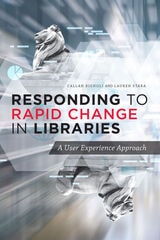
Responding to Rapid Change in Libraries
A User Experience ApproachLauren Stara and Callan Bignoli
American Library Association, 2020
In the face of rapid change and an ever-widening constellation of challenges, it’s crucial for library leaders to pull back to the question of “why?” Plotting a sustainable way forward depends upon recommitting ourselves to our underlying values, such as customer service and community-building, while fostering the improvements that change makes possible. With passion, patience, and fortitude, libraries can stride confidently into the future. In this book, noted speakers and consultants Bignoli and Stara speak directly to library directors, managers, administrators, and technology staff, offering concrete guidance on setting or resetting strategic priorities. Taking an interconnected and specific approach to planning for and strengthening the library environment as a whole, their book
- discusses why libraries should embrace change as a fundamental part of library life;
- explores how to harness rapid change to provide more responsive, user-centered library service;
- addresses the ways in which libraries straddle the physical and the digital, in areas such as service provision and collections, illuminating how they overlap and can be improved using similar philosophies;
- presents both a comprehensive overview of library technologies as well as related team and change management advice, all grounded in user experience principles;
- shows how the concepts of sustainability and flexibility apply to physical space planning and design, from furniture selection and arrangement to infrastructure; and
- provides sound guidance on project management, problem solving, preparing for future challenges, personal reflection and self-care, and other leadership topics.