Results by title
15 books match the query 'Library employees'

Core Tech Competencies for Librarians and Library Staff
American Library Association, 2009

Cultivating Civility
Practical Ways to Improve a Dysfunctional LibraryJo Henry
American Library Association, 2020
Like other workplaces, libraries can sometimes be stressful, with library workers bearing the brunt of such problems as uncivil patrons, poor communication, inadequate leadership, and toxic behaviors by fellow employees. But there’s hope. Following up their acclaimed examination of the dysfunctional library ("should be essential reading for library leaders" raves Journal of the Australian Library and Information Association), here the authors present a book of proactive solutions and guidance culled from their own research, including interviews with library administrators and staff. Sharing valuable insights that will stimulate thought and discussion towards the goal of a healthier and more harmonious workplace, this book
- addresses the subject from four viewpoints—individual, team, leader, and organization—focusing on solutions and practical steps in each area;
- shows how self-reflection and self-awareness can be key starting points for exploring workplace issues;
- offers numerous suggestions for wellness and self-care;
- provides tips for improving interpersonal communication and conversations in ways that prevent silos and span boundaries;
- sheds light on forming and sustaining cohesive library teams, then provides solutions for misaligned teams and dissenters;
- discusses why effectively conveying vision, role modeling, and demonstrating empathy are all crucial behaviors of library leaders;
- shares actions library leaders can take to engage employees in the change process;
- examines how organizational structures can either detract or contribute to a library’s success; and
- details types of training that can be utilized to minimize dysfunction, including training for bias, empathy, conflict management, and diversity.
Filled with beneficial advice on every page, this resource will help libraries be better workplaces for everyone.
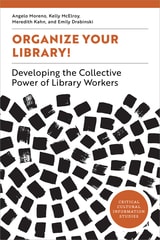
Organize Your Library!
Developing the Collective Power of Library WorkersAngelo Moreno, Kelly McElroy, Meredith Kahn, and Emily Drabinski
American Library Association, 2025
Interest in unions and the real, day-to-day benefits they secure for employees is on the rise—including among library workers, who are beginning to realize that on their own they have little leverage. But with a union they have the power of numbers, and their working conditions are decided by a collectively negotiated agreement rather than by the malleable judgement of an individual administrator or library board. This handbook will equip readers with the knowledge, skills, and strategies necessary for organizing and maintaining a union at their library. Peppered throughout by illuminating stories from successful library union leaders and members, this book
- discusses why library workers need unions and explores some of the benefits that a collective bargaining agreement can assure, such as job security, increased salaries, codification of the rules for overtime pay and time off, and protection from harassment by patrons;
- explains why a contract won't limit employees' autonomy;
- walks readers through how to launch a union drive, including the basics of talking with co-workers, combating apathy and fear, and running a campaign;
- offers an overview of the steps involved in building a new union, from forming an organizing committee to getting recognition and setting up a governance structure;
- sketches out the key issues relating to contracts, the details of bargaining and negotiation, and arbitration;
- lays out approaches and strategies for dealing with supervisors and administrators in the context of your union work, including effective communication between labor and management, contract enforcement, and handling bad behavior such as unfair labor practices and retaliation;
- gives advice on pursuing changes in your workplace in a right-to-work state;
- explores the constructive roles that bosses can play to support the union efforts of the workers who organize them; and
- provides an Action Plan at the end of each chapter with suggested readings, questions for reflection, and activities designed to help deepen your knowledge, broaden your network, and practice important skills.
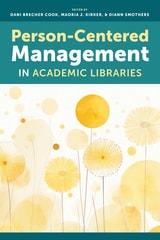
Person-Centered Management in Academic Libraries
Edited by Dani Brecher Cook, Maoria J. Kirker, and Diann Smothers
American Library Association, 2024
A recent study published in the Journal of Library Administration draws a sobering conclusion: the accelerated exodus of library workers from the profession in the last several years is partially due to strained relationships between staff and their managers. Often, administrators and managers operate within structures that may encourage or enable poor managerial practices. This volume shines a light on a different path forward for the field, one that focuses on the people who work in libraries and how their managers can support them with empathy and skill. Stemming from insights presented at the Conference on Academic Library Management (CALM), the contributors illustrate what person-centered management looks like in practice and point the way toward implementing this approach at readers’ institutions. This book
- incorporates a variety of institutional perspectives, including community colleges, technical and special colleges, liberal arts institutions, and large research universities;
- defines the concept of person-centered management in the context of libraries and explains why it offers such a valuable framework for improving workplace conditions;
- demonstrates why lack of workplace satisfaction and the low morale experience of library staff is often tied to the culture created by management;
- discusses building person-centered systems, interacting with student employees, setting healthy boundaries, and practicing reflection and self-care;
- shares positive, proactive management practices that create space for criticism, sharing of lived experiences, and a willingness to investigate and, if needed, make changes to the status quo; and
- explores such key topics as communication, working virtually, mentorship, intellectual humility, shared leadership, and many others.
Reflective Teaching, Effective Learning
Instructional Literacy for Library EducatorsChar Booth
American Library Association, 2011
Staff Development Strategies That Work!
Stories and Strategies from New LibrariansAmerican Library Association, 2009
Staff Development on a Shoestring
A How-To-Do-It Manual for LibrariansAmerican Library Association, 2011
Staff Development
A Practical GuideCarol Zsulya
American Library Association, 2013
Technology Training in Libraries
American Library Association, 2010
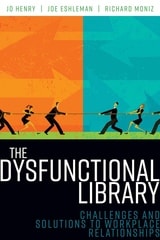
The Dysfunctional Library
Challenges and Solutions to Workplace RelationshipsJo Henry
American Library Association, 2017
The Library Workplace Idea Book
Proactive Steps for Positive ChangeAmanda H. McLellan
American Library Association, 2020
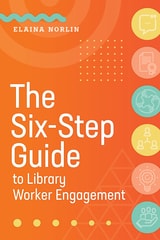
The Six-Step Guide to Library Worker Engagement
Elaina Norlin
American Library Association, 2021
Gallup’s 2019 State of the American Workplace Report found that 70 percent of employees are disengaged at work. Why is worker engagement so important? Engaged workers lead to engaged libraries — vibrant institutions that nurture their workers’ dedication, creativity, and innovation so they can serve their communities most effectively. This guide walks library managers and administrators through concrete steps to change their organization’s culture so that it fosters worker engagement, using first-hand accounts from library staff to illustrate both successes and failures. Readers will discover
- why libraries often fall short at hiring good leadership and ways to develop better recruitment strategies moving forward;
- how lack of trust pushes workplace culture towards incivility, hostility, and lower morale, and what library leaders can do to rebuild it;
- methods for using recognition and praise as tools for sustaining a positive work environment;
- the rationale for eliminating annual performance reviews in favor of less formal one-on-one conversations and “just in time” continuous feedback;
- the secrets behind high performing teams, strategies to support dysfunctional teams, and tips on how to develop remote teamwork; and
- why viewing diversity, equity, and inclusion (DEI) as separate from workplace culture is counterproductive, since it is actually the positive result of a strong foundation, with advice on combating the factors that contribute to low retention rates of BIPOC librarians.
The Top Technologies Every Librarian Needs to Know
Kenneth J. Varnum
American Library Association, 2014
Well-Being in the Library Workplace
A Handbook for ManagersBobbi L. Newman
American Library Association, 2025
- navigating the pitfalls of vocational awe, which can lead to unrealistic expectations and self-neglect;
- setting and recalibrating healthy boundaries;
- approaching difficult conversations by creating spaces for positive staff communication;
- overcoming limited budgets;
- the proper mindset for encouraging realistic performance expectations among employees;
- using recognition, appreciation, and staff professional development as tools for wellness;
- nurturing social connections and collaboration to combat loneliness;
- effective techniques for addressing sensitive issues such as disabilities, confronting anti-fat bias, and moral injury;
- emotional and invisible labor mitigation; and
- self-care methods for library leaders at risk of burnout.
Workplace Learning and Leadership
Paul Signorelli
American Library Association, 2011
The best kind of learning is that which never ends—and a culture of training means that staff will be more flexible and responsive to new ideas and strategies, imperative in today's libraries. In this practical resource, leading workplace trainers Reed and Signorelli offer guidance on improving the effectiveness of training programs. Their book takes readers through the entire process of developing, implementing, and sustaining training programs and communities of learning, in order to
- Empower individuals to become leaders and teachers by cultivating a culture of ongoing learning
- Connect library staff and users to information resources so they can effectively use them to their benefit
- Develop skills among both managers and workers for practicing continuous formal and informal training