Results by title

8 books match the query 'Literature and morals'
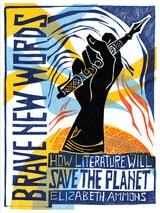
cover of Brave New Words: How Literature Will Save the Planet

Brave New Words

How Literature Will Save the Planet

Ammons, Elizabeth

University of Iowa Press, 2010

The activist tradition in American literature has long testified to the power of words to change people and the power of people to change the world, yet in recent years many professional humanists have chosen to distract themselves with a postmodern fundamentalism of indeterminacy and instability rather than engage with social and political issues. Throughout her bold and provocative call to action, Elizabeth Ammons argues that the responsibility now facing humanists is urgent: inside and outside academic settings, they need to revive the liberal arts as a progressive cultural force that offers workable ideas and inspiration in the real-world struggle to achieve social and environmental justice.
      Brave New Words challenges present and future literary scholars and teachers to look beyond mere literary critique toward the concrete issue of social change and how to achieve it. Calling for a profound realignment of thought and spirit in the service of positive social change, Ammons argues for the continued importance of multiculturalism in the twenty-first century despite attacks on the concept from both right and left. Concentrating on activist U.S. writers—from ecocritics to feminists to those dedicated to exposing race and class biases, from Jim Wallis and Cornel West to Winona LaDuke and Paula Moya and many others—she calls for all humanists to link their work to the progressive literature of the last half century, to insist on activism in the service of positive change as part of their mission, and to teach the power of hope and action to their students.
      As Ammons clearly demonstrates, much of American literature was written to expose injustice and motivate readers to work for social transformation. She challenges today’s academic humanists to address the issues of hope and purpose by creating a practical activist pedagogy that gives students the knowledge to connect their theoretical learning to the outside world. By relying on the transformative power of literature and replacing nihilism and powerlessness with conviction and faith, the liberal arts can offer practical, useful inspiration to everyone seeking to create a better world.
[more]
cover of Corrupting Luxury in Ancient Greek Literature

Corrupting Luxury in Ancient Greek Literature

Robert J. Gorman and Vanessa B. Gorman

University of Michigan Press, 2014
A widely accepted truism says that luxury corrupts, and in both popular and scholarly treatments, the ancient city of Sybaris remains the model for destructive opulence. This volume demonstrates the scarcity of evidence for Sybarite luxury, and examines the vocabulary of luxury used by the Hellenic world. Focus on the word truphe reveals it means an attitude of entitlement: not necessarily a bad trait, unless in extreme form. This pattern holds for all Classical evidence, even the historian Herodotus, where the idea of pernicious luxury is commonly thought to be thematic.

Advancing a new method to evaluate this fragmentary evidence, the authors argue that almost all relevant ancient testimony is liable to have been distorted during transmission. They present two conclusions: first, that there exists no principle of pernicious luxury as a force of historical causation in Hellenic or Hellenistic literature. Rather, that idea is derived from early Latin prose historiography and introduced from that genre into the Greek writers of the Roman period, who in turn project the process back in time to explain events such as the fall of Sybaris. The second conclusion is methodological. The authors lay down a strategy to determine the content and extent of fragments of earlier authors found in cover texts such as Athenaeus, by examining the diction along synchronic and diachronic lines.

This book will appeal to scholars of intellectual history, the history of morality, and historiographical methodology.
[more]
cover of Dostoevsky and the Ethics of Narrative Form: Suspense, Closure, Minor Characters

Dostoevsky and the Ethics of Narrative Form

Suspense, Closure, Minor Characters

Greta Matzner-Gore

Northwestern University Press, 2020
Three questions of novelistic form preoccupied Fyodor Dostoevsky throughout his career: how to build suspense, how to end a narrative effectively, and how to distribute attention among major and minor characters. For Dostoevsky, these were much more than practical questions about novelistic craft; they were ethical questions as well. Dostoevsky and the Ethics of Narrative Form traces Dostoevsky’s indefatigable investigations into the ethical implications of his own formal choices. Drawing on his drafts, notebooks, and writings on aesthetics, Greta Matzner-Gore argues that Dostoevsky wove the moral and formal questions that obsessed him into the fabric of his last three novels: Demons, The Adolescent, and The Brothers Karamazov. In so doing, he anticipated some of the most pressing debates taking place in the study of narrative ethics today.
[more]
cover of Ethics through Literature: Ascetic and Aesthetic Reading in Western Culture

Ethics through Literature

Ascetic and Aesthetic Reading in Western Culture

Brian Stock

Brandeis University Press, 2008
Why do we read? Drawing from a series of lectures delivered at the Historical Society of Israel in 2005, Brian Stock presents a model for relating ascetic and aesthetic principles in Western reading practices. He begins by establishing the primacy of the ethical objective in the ascetic approach to literature in Western classical thought from Plato to Augustine. This is understood in contrast to the aesthetic appreciation of literature that finds pleasure in the reading of the text in and of itself. Examples of this long-standing tension as displayed in a literary topos, first outlined in these lectures, which describes “scenes of reading,” are found in the works of Peter Abelard, Dante, and Virginia Woolf, among others. But, as this original and often surprising work shows, the distinction between the ascetic and aesthetic impulse in reading, while necessary, is often misleading. As he writes, “All Western reading, it would appear, has an ethical component, and the value placed on this component does not change much over time.” Tracing the ascetic component of reading from Late Antiquity through the Renaissance and beyond, to Coleridge and Schopenhauer, Stock reveals the ascetic or ethical as a constant with the aesthetic serving as opposition, parallel force, and handmaiden, underscoring the historical consistency of the reading experience through the ages and across various media.
[more]
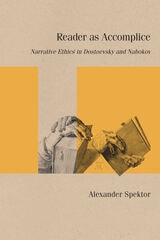
cover of Reader as Accomplice: Narrative Ethics in Dostoevsky and Nabokov

Reader as Accomplice

Narrative Ethics in Dostoevsky and Nabokov

Alexander Spektor

Northwestern University Press, 2021

Reader as Accomplice: Narrative Ethics in Dostoevsky and Nabokov argues that Fyodor Dostoevsky and Vladimir Nabokov seek to affect the moral imagination of their readers by linking morally laden plots to the ethical questions raised by narrative fiction at the formal level. By doing so, these two authors ask us to consider and respond to the ethical demands that narrative acts of representation and interpretation place on authors and readers.

Using the lens of narrative ethics, Alexander Spektor brings to light the important, previously unexplored correspondences between Dostoevsky and Nabokov. Ultimately, he argues for a productive comparison of how each writer investigates the ethical costs of narrating oneself and others. He also explores the power dynamics between author, character, narrator, and reader. In his readings of such texts as “The Meek One” and The Idiot by Dostoevsky and Bend Sinister and Despair by Nabokov, Spektor demonstrates that these authors incite the reader’s sense of ethics by exposing the risks but also the possibilities of narrative fiction.
[more]
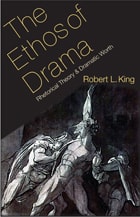
cover of The Ethos of Drama: Rhetorical Theory and Dramatic Worth

The Ethos of Drama

Rhetorical Theory and Dramatic Worth

Robert L. King

Catholic University of America Press, 2010

For the first time in the history of drama criticism this book uses traditional rhetorical theory to evaluate moral values in plays from Shakespeare's time to the present
[more]
cover of The Moral Imagination: Essays On Literature Ethics

The Moral Imagination

Essays On Literature Ethics

Christopher Clausen

University of Iowa Press, 1986
[more]
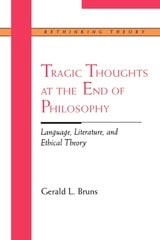
cover of Tragic Thoughts at the End of Philosophy: Language, Literature, and Ethical Theory

Tragic Thoughts at the End of Philosophy

Language, Literature, and Ethical Theory

Gerald L. Bruns

Northwestern University Press, 1999

Recently, a number of Anglo-American philosophers of very different sorts--pragmatists, metaphysicians, philosophers of language, philosophers of law, moral philosophers—have taken a reflective rather than merely recreational interest in literature. Does this literary turn mean that philosophy is coming to an end or merely down to earth? In this collection of essays, one of the most insightful of contemporary literary theorists investigates the intersection of literature and philosophy, analyzing the emerging preferences for practice over theory, particulars over universals, events over structures, inhabitants over spectators, an ethics of responsibility over a morality of rules, and a desire for intimacy with the world instead of simply a disengaged knowledge of it.
[more]