Results by title

26 books match the query 'Longitudinal studies'

cover of Beyond the Barricades: The Sixties Generation Grows Up

Beyond the Barricades

The Sixties Generation Grows Up

Jack Whalen

Temple University Press, 1990
"'The Big Chill' told only half the story of where Sixties activists ended up. Whalen and Flacks... honestly chronicle the other half." --Abbie Hoffman "What happens to youthful idealism as people leave their youth behind? ...Where do young revolutionaries go when the revolution doesn't happen?" Amid the social and political turmoil of the late 1960s, student demonstrations on college campuses and in nearby communities looked like a prelude to apocalypse. By 1970 radical students at the University of California, Santa Barbara (UCSB), were involved in burning the Bank of America branch in Isla Vista and a series of riots and demonstrations that culminated in hundreds of arrests, numerous injuries, and one student death. To some campus observers, the violence and property damage were nothing more than a meaningless rampage--privileged students running amok. To those actively involved in the student movement and the Radical Union, the second American revolution was at hand. The disparate views of these events persist some twenty years later. In Beyond the Barricades, Whalen and Flacks challenge the conventional wisdom, which holds that the Sixties Generation soon outgrew their political ideals and channeled their energies into building lucrative careers and accumulating material goods. For nine years, the authors have maintained contact with eighteen men and women who participated in the UCSB student movement, asking probing questions about the long-term significance of political commitment to individual lives. They have also tracked fourteen former students who were part of the sorority/fraternity subculture in an attempt to discern whether the paths of the two student groups tend to converge as they grow older. This study grows out of the student activists' own assessments of the events at UCSB and the lives they have shaped in subsequent years. It demonstrates that student activists did not abandon their beliefs or become disillusioned with the prospects for social change as they left the university and ventured into the adult world. Indeed, their present political convictions and vocational commitments are largely consistent with their past views--even as they have had to adapt to changes in their personal needs and in the social climate. In asking where the students are now, the authors illuminate something about how our society has been affected--culturally, institutionally, psychologically--by the movements and conflicts of the sixties. Whalen and Flacks "offer these stories in the same spirit that apparently guided [the] respondents: as contributions to the ongoing discourse on how we might live according to our dreams!" "Whalen and Flacks are true Sixties sociologists--hip white knights who ride out to slay the ideal-crushing dragon of ‘The Big Chill.' In all, a heart-on-the-sleeve, hopeful study that should appeal to social psychologists and Sixties sympathizers." --Kirkus Reviews "In the first systematic study of the sequels to New Left radicalism, Whalen and Flacks bring alive the real choices of real activists. This is a lucid and enlightening book, full of stimulating ideas about continuities and fragilities in American radicalism." --Todd Gitlin, author of The Sixties: Years of Hope, Days of Rage "As Whalen and Flacks know, ‘The Big Chill' was a lie. The earthquake called the Sixties changed lives--and this pioneering study explains why, showing how the generation schooled in activism has been struggling to keep faith with the ideal of social justice and democracy." --James Miller, author of Democracy is in the Streets "Beyond the Barricades...is, in short, very good sociology of the intimate close-up sort. And it helps us to understand that most of the so-called yuppies are not (as we have cynically been led to believe) ex-hippies or student radicals, but rather very probably come from that majority of 1960s students who were never either." --Bennett M. Berger, University of California, San Diego
[more]
cover of Does Business Learn?: Tax Breaks, Uncertainty, and Political Strategies

Does Business Learn?

Tax Breaks, Uncertainty, and Political Strategies

Sandra L. Suarez

University of Michigan Press, 2000
Firms in the United States have many political advantages when compared to other groups in society. They are the best-represented group in our nation's capital; they operate more Political Action Committees; and their lobbyists are among the most experienced political operatives. Yet firms are uncertain about their political power and hence about the effectiveness of their political strategies. This book deals with how firms decide which strategy to pursue among the existing alternatives when it comes to defending policies that play to their interests.
Sandra Suárez looks at the efforts of business to influence government policy in a detailed study of the efforts of major American corporations to protect the tax credit applicable to profits from investments in Puerto Rico. This rare longitudinal case-study explores the abilities of U.S. pharmaceutical and electronics companies to adapt their political strategies to a fluid and uncertain political environment. Drawing on interviews with tax lawyers, corporate lobbyists and government officials, the author follows the behavior of the same group of companies over the past twenty years.
This book advances a learning-based explanation of business political behavior, which argues that past political experience accounts for patterns of political behavior that government structures and salient issues alone cannot explain. Centered on attempts to protect an important tax break for business, the possessions tax battles provide an appropriate case for examining the value of the business learning approach.
Although written with a political science audience in mind, this book addresses issues that will resonate widely with sociologists, management researchers and students alike.
Sandra L. Suárez is Assistant Professor in the Department of Political Science, Temple University.
[more]
cover of Generations of Exclusion: Mexican-Americans, Assimilation, and Race

Generations of Exclusion

Mexican-Americans, Assimilation, and Race

Edward E. Telles

Russell Sage Foundation, 2008

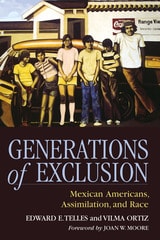
Foreword by Joan W. Moore When boxes of original files from a 1965 survey of Mexican Americans were discovered behind a dusty bookshelf at UCLA, sociologists Edward Telles and Vilma Ortiz recognized a unique opportunity to examine how the Mexican American experience has evolved over the past four decades.  Telles and Ortiz located and re-interviewed most of the original respondents and many of their children.  Then, they combined the findings of both studies to construct a thirty-five year analysis of Mexican American integration into American society.  Generations of Exclusion is the result of this extraordinary project. Generations of Exclusion measures Mexican American integration across a wide number of dimensions: education, English and Spanish language use, socioeconomic status, intermarriage, residential segregation, ethnic identity, and political participation. The study contains some encouraging findings, but many more that are troubling. Linguistically, Mexican Americans assimilate into mainstream America quite well—by the second generation, nearly all Mexican Americans achieve English proficiency. In many domains, however, the Mexican American story doesn't fit with traditional models of assimilation. The majority of fourth generation Mexican Americans continue to live in Hispanic neighborhoods, marry other Hispanics, and think of themselves as Mexican. And while Mexican Americans make financial strides from the first to the second generation, economic progress halts at the second generation, and poverty rates remain high for later generations. Similarly, educational attainment peaks among second generation children of immigrants, but declines for the third and fourth generations. Telles and Ortiz identify institutional barriers as a major source of Mexican American disadvantage. Chronic under-funding in school systems predominately serving Mexican Americans severely restrains progress. Persistent discrimination, punitive immigration policies, and reliance on cheap Mexican labor in the southwestern states all make integration more difficult. The authors call for providing Mexican American children with the educational opportunities that European immigrants in previous generations enjoyed. The Mexican American trajectory is distinct—but so is the extent to which this group has been excluded from the American mainstream. Most immigration literature today focuses either on the immediate impact of immigration or what is happening to the children of newcomers to this country. Generations of Exclusion shows what has happened to Mexican Americans over four decades. In opening this window onto the past and linking it to recent outcomes, Telles and Ortiz provide a troubling glimpse of what other new immigrant groups may experience in the future.
[more]
cover of Living Class in Urban India

Living Class in Urban India

Dickey, Sara

Rutgers University Press, 2016

Honorable mention, 2018 Ananda Kentish Coomaraswamy Book Prize from the South Asia Council of the Association for Asian Studies

Many Americans still envision India as rigidly caste-bound, locked in traditions that inhibit social mobility. In reality, class mobility has long been an ideal, and today globalization is radically transforming how India’s citizens perceive class. Living Class in Urban India examines a nation in flux, bombarded with media images of middle-class consumers, while navigating the currents of late capitalism and the surges of inequality they can produce. 
 
Anthropologist Sara Dickey puts a human face on the issue of class in India, introducing four people who live in the “second-tier” city of Madurai: an auto-rickshaw driver, a graphic designer, a teacher of high-status English, and a domestic worker. Drawing from over thirty years of fieldwork, she considers how class is determined by both subjective perceptions and objective conditions, documenting Madurai residents’ palpable day-to-day experiences of class while also tracking their long-term impacts. By analyzing the intertwined symbolic and economic importance of phenomena like wedding ceremonies, religious practices, philanthropy, and loan arrangements, Dickey’s study reveals the material consequences of local class identities. Simultaneously, this gracefully written book highlights the poignant drive for dignity in the face of moralizing class stereotypes.  
 
Through extensive interviews, Dickey scrutinizes the idioms and commonplaces used by residents to justify class inequality and, occasionally, to subvert it. Along the way, Living Class in Urban India reveals the myriad ways that class status is interpreted and performed, embedded in everything from cell phone usage to religious worship.  

This book is also freely available online as an open-access digital edition, published with the support of the National Endowment for the Humanities.
 
[more]
cover of Living on the Edge: An American Generation’s Journey through the Twentieth Century

Living on the Edge

An American Generation’s Journey through the Twentieth Century

Richard A. Settersten Jr., Glen H. Elder Jr., and Lisa D. Pearce

University of Chicago Press, 2021

History carves its imprint on human lives for generations after. When we think of the radical changes that transformed America during the twentieth century, our minds most often snap to the fifties and sixties: the Civil Rights Movement, changing gender roles, and new economic opportunities all point to a decisive turning point. But these were not the only changes that shaped our world, and in Living on the Edge, we learn that rapid social change and uncertainty also defined the lives of Americans born at the turn of the twentieth century. The changes they cultivated and witnessed affect our world as we understand it today.
 
Drawing from the iconic longitudinal Berkeley Guidance Study, Living on the Edge reveals the hopes, struggles, and daily lives of the 1900 generation. Most surprising is how relevant and relatable the lives and experiences of this generation are today, despite the gap of a century. From the reorganization of marriage and family roles and relationships to strategies for adapting to a dramatically changing economy, the challenges faced by this earlier generation echo our own time. Living on the Edge offers an intimate glimpse into not just the history of our country, but the feelings, dreams, and fears of a generation remarkably kindred to the present day.

[more]
cover of Long-Term Care around the World

Long-Term Care around the World

Edited by Jonathan Gruber and Kathleen McGarry

University of Chicago Press, 2025

A comparative analysis of both formal and informal long-term care in ten of the world’s wealthiest countries.

Nations throughout the world are in the midst of an enormous demographic transition, with life expectancy increasing and fertility falling, leading to a rapidly aging population and critical implications for long-term care around the world. This volume documents and compares long-term care programs in ten wealthy countries.

Analyses of survey data and government statistics show that the costs of long-term care are beyond the financial means of a large fraction of the elderly population in most countries, particularly the oldest and most disabled. As a result, public systems bear most of the cost of formal long-term care, such as care in an institution or paid home care. Most countries spend more on nursing homes than on home care, but this relationship varies widely as does the mix of care needs and resources used to define eligibility for public funding. At the same time, most care is provided informally through family or unpaid caregivers. The costs of informal care, including the foregone earnings of caregivers, are estimated to account for at least one-third of all long-term care spending in every country. Thus, any estimate of the social costs of long-term care must account for the implicit costs of informal care.
[more]
cover of Looking at Lives: American Longitudinal Studies of the Twentieth Century

Looking at Lives

American Longitudinal Studies of the Twentieth Century

Erin Phelps

Russell Sage Foundation, 2002
The impact of long-term longitudinal studies on the landscape of twentieth century social and behavioral science cannot be overstated. The field of life course studies has grown exponentially since its inception in the 1950s, and now influences methodologies as well as expectations for all academic research. Looking at Lives offers an unprecedented "insider's view" into the intentions, methods, and findings of researchers engaged in some of the 20th century's landmark studies. In this volume, eminent American scholars—many of them pioneers in longitudinal studies—provide frank and illuminating insights into the difficulties and the unique scientific benefits of mounting studies that track people's lives over a long period of time. Looking at Lives includes studies from a range of disciplines, including psychology, sociology, and education, which together cover a span of more than fifty years. The contributors pay particular attention to the changing historical, cultural, and scientific context of their work, as well as the theoretical and methodological changes that have occurred in their fields over decades. What emerges is a clear indication of the often unexpected effects these studies have had on public policies and public opinion—especially as they relate to such issues as the connection between poverty and criminal behavior, or the consequences of teen-age pregnancy and drug use for inner-city youth. For example, David Weikart reveals how his long-term research on preschool intervention projects, begun in 1959, permitted him to show how surprisingly effective preschool education can be in improving the lives of disadvantaged children. In another study, John Laub and Robert Sampson build on findings from a groundbreaking study begun by Sheldon and Eleanor Glueck in the 1950s to reveal the myriad ways in which juvenile delinquency can predict criminal behavior in adults. And Arland Thornton, Ronald Freedman, and William Axinn employ an intergenerational study of women and their children begun in 1962 to examine the substantial relaxation of social mores for family and individual behavior in the latter decades of the 20th century. Looking at Lives is full of striking testimony to the importance of long-term, longitudinal studies. As a unique chronicle of the origins and development of longitudinal studies in America, this collection will be an invaluable aid to 21st century investigators who seek to build on the successes and the experiences of the pioneers in life-course studies.
[more]
cover of Making It Work: Low-Wage Employment, Family Life, and Child Development

Making It Work

Low-Wage Employment, Family Life, and Child Development

Hirokazu Yoshikawa

Russell Sage Foundation, 2006
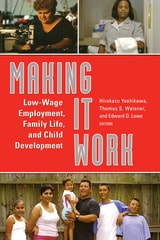
Low-skilled women in the 1990s took widely different paths in trying to support their children. Some held good jobs with growth potential, some cycled in and out of low-paying jobs, some worked part time, and others stayed out of the labor force entirely. Scholars have closely analyzed the economic consequences of these varied trajectories, but little research has focused on the consequences of a mother's career path on her children's development. Making It Work, edited by Hirokazu Yoshikawa, Thomas Weisner, and Edward Lowe, looks past the economic statistics to illustrate how different employment trajectories affect the social and emotional lives of poor women and their children. Making It Work examines Milwaukee's New Hope program, an experiment testing the effectiveness of an anti-poverty initiative that provided health and child care subsidies, wage supplements, and other services to full-time low-wage workers. Employing parent surveys, teacher reports, child assessment measures, ethnographic studies, and state administrative records, Making It Work provides a detailed picture of how a mother's work trajectory affects her, her family, and her children's school performance, social behavior, and expectations for the future. Rashmita Mistry and Edward D. Lowe find that increases in a mother's income were linked to higher school performance in her children. Without large financial worries, mothers gained extra confidence in their ability to parent, which translated into better test scores and higher teacher appraisals for their children. JoAnn Hsueh finds that the children of women with erratic work schedules and non-standard hours—conditions endemic to the low-skilled labor market—exhibited higher levels of anxiety and depression. Conversely, Noemi Enchautegui-de-Jesus, Hirokazu Yoshikawa, and Vonnie McLoyd discover that better job quality predicted lower levels of acting-out and withdrawal among children. Perhaps most surprisingly, Anna Gassman-Pines, Hirokazu Yoshikawa, and Sandra Nay note that as wages for these workers rose, so did their marriage rates, suggesting that those worried about family values should also be concerned with alleviating poverty in America. It is too simplistic to say that parental work is either "good" or "bad" for children. Making It Work gives a nuanced view of how job quality, flexibility, and wages are of the utmost importance for the well-being of low-income parents and children.
[more]
cover of Making Politics Work: Practical Lessons on Politics for Would-Be Education Reformers

Making Politics Work

Practical Lessons on Politics for Would-Be Education Reformers

Paul T. Hill and Ashley E. Jochim

University of Chicago Press, 2025

An expansive study shows how politics can work for, not just against, efforts to improve America’s schools.
 
The education reform project has always been about making America’s schools more effective for the children who attend them. In Making Politics Work, authors Paul T. Hill and Ashley E. Jochim show that this project cannot succeed without mastering what is the single largest constraint on its success: politics.

Drawing upon more than a decade of work with dozens of school systems, Hill and Jochim show how failures to secure political support or mitigate inevitable opposition dooms the education reform project from the start. But this outcome is not inevitable. By tracing the evolution of the “portfolio strategy” across 27 localities that implemented it, they uncover practical lessons that superintendents, state leaders, and foundation officials can use to increase the likelihood that their ideas for improving public education don’t join the list of once-promising initiatives that could not be sustained in the face of intractable political conflict.

 
[more]
cover of Managing to Make It: Urban Families and Adolescent Success

Managing to Make It

Urban Families and Adolescent Success

Frank F. Furstenberg, Thomas D. Cook, Jacquelynne Eccles, Glen H. Elder Jr.,

University of Chicago Press, 1999

One of the myths about families in inner-city neighborhoods is that they are characterized by poor parenting. Sociologist Frank Furstenberg and his colleagues explode this and other misconceptions about success, parenting, and socioeconomic advantage in Managing to Make It. This unique study—the first in the MacArthur Foundation Studies on Successful Adolescent Development series—focuses on how and why youth are able to overcome social disadvantages.
Based on nearly 500 interviews and case studies of families in inner-city Philadelphia, Managing to Make It lays out in detail the creative means parents use to manage risks and opportunities in their communities. More importantly, it also depicts the strategies parents develop to steer their children away from risk and toward resources that foster positive development and lead to success.

"Indispensible to anyone concerned about breaking the cycle of poverty and helplessness among at-risk adolescents, this book has a readable, graphic style easily grasped by those unfamiliar with statistical techniques." —Library Journal
[more]
cover of Marriage In A Culture Of Divorce

Marriage In A Culture Of Divorce

Karla B. Hackstaff

Temple University Press, 1999

Today, when fifty percent of  couples who marry eventually get divorced, it's clear that we have moved from a culture in which "marriage is forever" to one in which "marriage is contingent." Author Karla Hackstaff looks at intact marriages to examine the impact of new expectations in a culture of divorce.

Marriage in a Culture of Divorce examines the shifting meanings of divorce and gender for  two generations of  middle-class, married couples. Hackstaff finds that new social and economic conditions both support and undermine the efforts of spouses to redefine the meaning of marriage in a culture of divorce. The definitions of marriage, divorce, and gender have changed for all, but more for the young than the old, and more for women than for men. While some spouses in both generations believe that marriage is for life and that men should dominate in marriage, the younger generation of spouses increasingly construct marriage as contingent rather than forever.

Hackstaff presents this evidence in archival case studies of couples married in the 1950s, which she then contrasts with her own case studies of people married during the 1970s, finding evidence of a significant shift in who does the emotional work of maintaining the relationship. It is primarily the woman in the '50s couples who "monitors" the marriage, whereas in the '70s couples both husband and wife support a "marital work ethic," including couples therapy in some cases.

The words and actions of the couples Hackstaff follows in depth - the '50s Stones, Dominicks, Hamptons, and  McIntyres, and the '70s Turners, Clement-Leonettis, Greens, Kason-Morrises, and Nakatos -- reveal the changes and contradictory tendencies of married life in the U.S. There are traditional relationships characterized by male dominance, there are couples striving for gender equality, there are partners pulling together, and partners pulling apart.

Those debating "family values" should not forget, Hackstaff contends, that there are costs associated with marriage culture as well as divorce culture, and they should view divorce as a transitional means for defining marriage in an egalitarian direction. She convincingly illustrates her controversial position, that although divorce has its cost to society, the divorce culture empowers wives and challenges the legacy of male dominance that previously set the conditions for marriage endurance.
[more]
cover of Middletown families: fifty years of change and continuity

Middletown families

fifty years of change and continuity

Theodore. Caplow

University of Minnesota Press, 1982

[more]
cover of Normal Aging III: Reports from the Duke Longitudinal Studies, 1975–1984

Normal Aging III

Reports from the Duke Longitudinal Studies, 1975–1984

Erdman Palmore, Ewald Busse, George Maddox, John Nowlin, and Ilene Siegler, eds.

Duke University Press, 1985
Since they began in 1955, the Duke Longitudinal Studies have aging have been regarded as landmark investigations, amassing invaluable data on the typical physical changes that accompany aging, typical patterns of mental health and mental illness, psychological aging, and the normal social roles, self-concepts, satisfactions, and adjustments to retirement of the aged. Comprising information on more than 750 aged and middle-aged persons, these studies have contributed enormously to our ability to distinguish normal and inevitable processes of aging from those that may accompany aging because of accident, stress, maladjustment, or disuse.
[more]
cover of Persistence, Privilege, and Parenting: The Comparative Study of Intergenerational Mobility

Persistence, Privilege, and Parenting

The Comparative Study of Intergenerational Mobility

Timothy Smeeding

Russell Sage Foundation, 2012
Americans like to believe that theirs is the land of opportunity, but the hard facts are that children born into poor families in the United States tend to stay poor and children born into wealthy families generally stay rich. Other countries have shown more success at lessening the effects of inequality on mobility—possibly by making public investments in education, health, and family well-being that offset the private advantages of the wealthy. What can the United States learn from these other countries about how to provide children from disadvantaged backgrounds an equal chance in life? Making comparisons across ten countries, Persistence, Privilege, and Parenting brings together a team of eminent international scholars to examine why advantage and disadvantage persist across generations. The book sheds light on how the social and economic mobility of children differs within and across countries and the impact private family resources, public policies, and social institutions may have on mobility. In what ways do parents pass advantage or disadvantage on to their children? Persistence, Privilege, and Parenting is an expansive exploration of the relationship between parental socioeconomic status and background and the outcomes of their grown children. The authors also address the impact of education and parental financial assistance on mobility. Contributors Miles Corak, Lori Curtis, and Shelley Phipps look at how family economic background influences the outcomes of adult children in the United States and Canada. They find that, despite many cultural similarities between the two countries, Canada has three times the rate of intergenerational mobility as the United States—possibly because Canada makes more public investments in its labor market, health care, and family programs. Jo Blanden and her colleagues explore a number of factors affecting how advantage is transmitted between parents and children in the United States and the United Kingdom, including education, occupation, marriage, and health. They find that despite the two nations having similar rates of intergenerational mobility and social inequality, lack of educational opportunity plays a greater role in limiting U.S. mobility, while the United Kingdom’s deeply rooted social class structure makes it difficult for the disadvantaged to transcend their circumstances. Jane Waldfogel and Elizabeth Washbrook examine cognitive and behavioral school readiness across income groups and find that pre-school age children in both the United States and Britain show substantial income-related gaps in school readiness—driven in part by poorly developed parenting skills among overburdened, low-income families. The authors suggest that the most encouraging policies focus on both school and home interventions, including such measures as increases in federal funding for Head Start programs in the United States, raising pre-school staff qualifications in Britain, and parenting programs in both countries. A significant step forward in the study of intergenerational mobility, Persistence, Privilege, and Parenting demonstrates that the transmission of advantage or disadvantage from one generation to the next varies widely from country to country. This striking finding is a particular cause for concern in the United States, where the persistence of disadvantage remains stubbornly high. But, it provides a reason to hope that by better understanding mobility across the generations abroad, we can find ways to do better at home.
[more]
cover of Political Attitudes over the Life Span: The Bennington Women after Fifty Years

Political Attitudes over the Life Span

The Bennington Women after Fifty Years

Duane F. Alwin

University of Wisconsin Press, 1992

The culmination of one of the most famous long-term studies in American sociology, this examination of political attitudes among women who attended Bennington College in the 1930s and 1940s now spans five decades, from late adolescence to old age.  Theodore Newcomb’s 1930s interviews at Bennington, where the faculty held progressive views that contrasted with those of the conservative families of the students, showed that political orientations are still quite malleable in early adulthood.  The studies in 1959-60 and 1984 show the persistence of political attitudes over the adult life span:  the Bennington women, raised in conservative homes, were liberalized in their college years and have remained politically involved and liberal in their views, even in their sixties and seventies.
    Here the authors analyze the earlier studies and then introduce the 1984 data.  Using data from National Election Studies for comparison, they show that the Bennington group is more liberal and hold its opinions more intensely than both older and younger Americans, with the exception of the generation that achieved political maturity in the 1960s.  The authors point out that the majority of the Bennington women’s children are of this 1945–54 generation and suggest that this factor played an important role in the stability of the women’s political views.  Within their own generation, the Bennington women also appear to hold stronger political views than other college-educated women.
    Innovative in its methodology and extremely rich in its data, this work will contribute to developmental and social psychology, sociology, political science, women’s studies, and gerontology.
[more]
cover of Redefining Success in America: A New Theory of Happiness and Human Development

Redefining Success in America

A New Theory of Happiness and Human Development

Michael Kaufman

University of Chicago Press, 2019

Work hard in school, graduate from a top college, establish a high-paying professional career, enjoy the long-lasting reward of happiness. This is the American Dream—and yet basic questions at the heart of this competitive journey remain unanswered. Does competitive success, even rarified entry into the Ivy League and the top one percent of earners in America, deliver on its promise? Does realizing the American Dream deliver a good life? In Redefining Success in America, psychologist and human development scholar Michael Kaufman develops a fundamentally new understanding of how elite undergraduate educations and careers play out in lives, and of what shapes happiness among the prizewinners in America. In so doing, he exposes the myth at the heart of the American Dream.

Returning to the legendary Harvard Student Study of undergraduates from the 1960s and interviewing participants almost fifty years later, Kaufman shows that formative experiences in family, school, and community largely shape a future adult’s worldview and well-being by late adolescence, and that fundamental change in adulthood, when it occurs, is shaped by adult family experiences, not by ever-greater competitive success. Published research on general samples shows that these patterns, and the book’s findings generally, are broadly applicable to demographically varied populations in the United States.

Leveraging biography-length clinical interviews and quantitative evidence unmatched even by earlier landmark studies of human development, Redefining Success in America redefines the conversation about the nature and origins of happiness, and about how adults develop. This longitudinal study pioneers a new paradigm in happiness research, developmental science, and personality psychology that will appeal to scholars and students in the social sciences, psychotherapy professionals, and serious readers navigating the competitive journey.

[more]
cover of Social Patterns in Normal Aging: Findings from the Duke Longitudinal Studies

Social Patterns in Normal Aging

Findings from the Duke Longitudinal Studies

Erdman Palmore

Duke University Press, 1981
Erdman Palmore has written a comprehensive, systematic summary of all extant findings on social patterns in normal aging learned from the landmark Duke Longitudinal Studies in aging. Palmore discusses the implications of these findings for major issues in gerontology and answers such questions as: Do elderly people reduce their social activity? Do they come to resemble one another or become more different as they age? Do major events in later life produce stress resulting in physical and/or mental illnesses? Does sexual activity maintain or reduce life satisfaction and longevity? Palmore's conclusions challenge many current ideas and prejudices widely held about people over the age of 65.
[more]
cover of Teaching Expertise in Three Countries: Japan, China, and the United States

Teaching Expertise in Three Countries

Japan, China, and the United States

Akiko Hayashi

University of Chicago Press, 2022

A comparison of the development of expertise in preschool teaching in China, Japan, and the United States.

In Teaching Expertise in Three Countries, Akiko Hayashi shows how teachers from  Japan, China, and the United States think about what it means to be an expert teacher. Based on interviews with teachers conducted over the span of fifteen years and videos taken in their classrooms, Hayashi gives us a valuable portrait of expert teachers in the making. While Hayashi’s research uncovered cultural variations in the different national contexts, her analysis of how teachers adapted their pedagogy throughout their careers also revealed many cross-national similarities. Younger teachers often describe themselves as being in a rush, following scripts, and “talking too much,” while experienced teachers describe themselves as being quieter, knowing children better, and being more present.
 
Including a foreword by scholar of early childhood education Joseph Tobin, Teaching Expertise in Three Countries provides a foundation for understanding the sequence and pathways of development over the first decade of teaching in three national contexts, demonstrating the value of the field of comparative education in the process.  
 
[more]
cover of Telling Stories: Perspectives on Longitudinal Writing Research

Telling Stories

Perspectives on Longitudinal Writing Research

Jenn Fishman

Utah State University Press, 2023

In Telling Stories, more than a dozen longitudinal writing researchers look beyond conventional project findings to story their work and, in doing so, offer otherwise unavailable glimpses into the logics and logistics of long-range studies of writing. The result is a volume that centers interrelations among people, places, and politics across two decades of praxis and an array of educational sites: two-year colleges, a senior military college, an adult literacy center, a small liberal arts college, and both public and private four-year universities.

Contributors share direct knowledge of longitudinal writing research, citing project data (e.g., interview transcripts, research notes, and journals), descriptions drawn from memory, and extended personal reflections. The resulting stories, tempered by the research and scholarship of others, convey a sense of longitudinal research as a lived activity as well as a prominent and consequential approach to inquiry. Yet Telling Stories is not a how-to guide, nor is it written for longitudinal researchers alone. Instead, this volume addresses issues about writing research that are germane to all who conduct or count on it. Such topics include building and sustaining good interpersonal research relations, ethically negotiating the institutional power dynamics that undergird writing research, effectively using knowledge from longitudinal studies to advocate for writers and writing educators, and improving both conceptual and concrete resources for long-range research in writing studies.
[more]
cover of The Ecology of Place: Contributions of Place-Based Research to Ecological Understanding

The Ecology of Place

Contributions of Place-Based Research to Ecological Understanding

Edited by Ian Billick and Mary V. Price

University of Chicago Press, 2010

Ecologists can spend a lifetime researching a small patch of the earth, studying the interactions between organisms and the environment, and exploring the roles those interactions play in determining distribution, abundance, and evolutionary change. With so few ecologists and so many systems to study, generalizations are essential. But how do you extrapolate knowledge about a well-studied area and apply it elsewhere?

Through a range of original essays written by eminent ecologists and naturalists, The Ecology of Place explores how place-focused research yields exportable general knowledge as well as practical local knowledge, and how society can facilitate ecological understanding by investing in field sites, place-centered databases, interdisciplinary collaborations, and field-oriented education programs that emphasize natural history. This unique patchwork of case-study narratives, philosophical musings, and historical analyses is tied together with commentaries from editors Ian Billick and Mary Price that develop and synthesize common threads. The result is a unique volume rich with all-too-rare insights into how science is actually done, as told by scientists themselves.

[more]
cover of The Ex-Prisoner's Dilemma: How Women Negotiate Competing Narratives of Reentry and Desistance

The Ex-Prisoner's Dilemma

How Women Negotiate Competing Narratives of Reentry and Desistance

Leverentz, Andrea M

Rutgers University Press, 2014

2014 Choice Outstanding Academic Title

When a woman leaves prison, she enters a world of competing messages and conflicting advice.  Staff from prison, friends, family members, workers at halfway houses and treatment programs all have something to say about who she is, who she should be, and what she should do.  The Ex-Prisoner’s Dilemma offers an in-depth, firsthand look at how the former prisoner manages messages about returning to the community. 

Over the course of a year, Andrea Leverentz conducted repeated interviews with forty-nine women as they adjusted to life outside of prison and worked to construct new ideas of themselves as former prisoners and as mothers, daughters, sisters, romantic partners, friends, students, and workers.  Listening to these women, along with their family members, friends, and co-workers, Leverentz pieces together the narratives they have created to explain their past records and guide their future behavior.  She traces where these narratives came from and how they were shaped by factors such as gender, race, maternal status, age, and experiences in prison, halfway houses, and twelve-step programs—factors that in turn shaped the women’s expectations for themselves, and others’ expectations of them.  The women’s stories form a powerful picture of the complex, complicated human experience behind dry statistics and policy statements regarding prisoner reentry into society for women, how the experience is different for men and the influence society plays.

With its unique view of how society’s mixed messages play out in ex-prisoners’ lived realities, The Ex-Prisoner’s Dilemma shows the complexity of these women’s experiences within the broad context of the war on drugs and mass incarceration in America. It offers invaluable lessons for helping such women successfully rejoin society.
[more]
cover of The Impact of College Diversity: Struggles and Successes at Age 30

The Impact of College Diversity

Struggles and Successes at Age 30

Elizabeth Aries

Temple University Press, 2023

In 2005, Elizabeth Aries chronicled what 58 Amherst College freshman—Black and white, affluent and lower-income—learned from racial and class diversity. Her study emphasized the value of campus diversity at elite colleges. Four years later, Aries interviewed the same students about their diversity experiences as they graduated. Now, eight years later, she re-interviews her participants to see how and to what extent race and class continue to play a role as they move into adulthood.  

The Impact of College Diversity details how exposure to diversity in college helped shape Black and white graduates process issues of economic and racial privilege and inequality at age 30. She investigates how college diversity experiences also facilitate the attainment of upward social mobility in lower-income students and the role that mobility played in their relationships with family and friends in their home communities. Aries further examines how interactions with peers of another race and class influenced development of citizenship skills and civic engagement, as well as Black students’ ability to cope with the challenges they faced in the professional world.  

Aries concludes her study with a discussion of why elite colleges have been beneficial in promoting upward mobility in lower-income students, and the importance of achieving equity and inclusion in making diversity initiatives successful.
 
[more]
cover of The Politics of Social Change: From the Sixties to the Present Through the Eyes of a Generation

The Politics of Social Change

From the Sixties to the Present Through the Eyes of a Generation

Larry M. Bartels and Katherine J. Cramer

University of Chicago Press, 2026

How did we get to this point in American politics? Drawing on insights from an unprecedented decades-long study of ordinary Americans’ political lives, this book tells the story of how, why, and when our politics fractured.

Few time periods have been as defined by waves of monumental social change as the United States during the 1960s. Even today, almost sixty years later, the era is often depicted as a triumph of social progress. Yet, as Larry M. Bartels and Katherine J. Cramer show in The Politics of Social Change, it was Americans’ diverse reactions to the milestone events of the time—from the welcoming, to the fiercely resistant, to the largely oblivious—that planted the seeds of our current political turmoil.

Their masterful analysis draws on a unique historical resource: the longest-running systematic tracking of individual Americans’ political attitudes and behavior ever attempted. The study began in 1965 when researchers interviewed hundreds of high school students across the country and then periodically reinterviewed them over the next three decades. Bartels and Cramer supplement this historical record with in-depth interviews with dozens of the original students, painting a detailed picture of the generation’s individual and collective political development. By tracing the responses of the Class of ’65 to major events of their political lifetimes—including the Civil Rights and Women’s Rights movements, the Vietnam War, the shifting role of religion, escalating economic inequality, immigration, and the rise of Donald Trump—Bartels and Cramer shed new light on the evolution of public opinion and the unsteady progress of American democracy.
[more]
cover of We Are All Equal: Student Culture and Identity at a Mexican Secondary School, 1988–1998

We Are All Equal

Student Culture and Identity at a Mexican Secondary School, 1988–1998

Bradley A. U. Levinson

Duke University Press, 2001

We Are All Equal is the first full-length ethnography of a Mexican secondary school available in English. Bradley A. U. Levinson observes student life at a provincial Mexican junior high, often drawing on poignant and illuminating interviews, to study how the the school’s powerful emphasis on equality, solidarity, and group unity dissuades the formation of polarized peer groups and affects students’ eventual life trajectories.
Exploring how students develop a cultural “game of equality” that enables them to identify—across typical class and social boundaries—with their peers, the school, and the nation, Levinson considers such issues as the organizational and discursive resources that students draw on to maintain this culture. He also engages cultural studies, media studies, and globalization theory to examine the impact of television, music, and homelife on the students and thereby better comprehend—and problematize—the educational project of the state. Finding that an ethic of solidarity is sometimes used to condemn students defined as different or uncooperative and that little attention is paid to accommodating the varied backgrounds of the students—including their connection to indigenous, peasant, or working class identities—Levinson reveals that their “schooled identity” often collapses in the context of migration to the United States or economic crisis in Mexico. Finally, he extends his study to trace whether the cultural game is reinforced or eroded after graduation as well as its influence relative to the forces of family, traditional gender roles, church, and global youth culture.
We Are All Equal will be of particular interest to educators, sociologists, Latin Americanists, and anthropologists.

[more]
cover of Why Afterschool Matters

Why Afterschool Matters

Nelson, Ingrid A.

Rutgers University Press, 2017

Increasingly, educational researchers and policy-makers are finding that extracurricular programs make a major difference in the lives of disadvantaged youth, helping to reduce the infamous academic attainment gap between white students and their black and Latino peers. Yet studies of these programs typically focus on how they improve the average academic performance of their participants, paying little attention to individual variation.
 
Why Afterschool Matters takes a different approach, closely following ten Mexican American students who attended the same extracurricular program in California, then chronicling its long-term effects on their lives, from eighth grade to early adulthood. Discovering that participation in the program was life-changing for some students, yet had only a minimal impact on others, sociologist Ingrid A. Nelson investigates the factors behind these very different outcomes. Her research reveals that while afterschool initiatives are important, they are only one component in a complex network of school, family, community, and peer interactions that influence the educational achievement of disadvantaged students.
 
Through its detailed case studies of individual students, this book brings to life the challenges marginalized youth en route to college face when navigating the intersections of various home, school, and community spheres. Why Afterschool Matters may focus on a single program, but its findings have major implications for education policy nationwide.
[more]
cover of Writing on the Social Network: Digital Literacy Practices in Social Media's First Decade

Writing on the Social Network

Digital Literacy Practices in Social Media's First Decade

Amber M. Buck

Utah State University Press, 2023

Writing on the Social Network builds upon traditions in longitudinal writing research to present a longer view of the impact of social media technologies on individuals’ literacy practices. Amber M. Buck considers user experiences and digital literacy practices that developed on these platforms in the first decade of social media and calls for a larger acknowledgment of social network sites as locations where individuals engage in sophisticated and literate activity.
 
Through qualitative case study research, Buck explores how literate activities on social network sites coalesced around three areas crucial for writing in digital environments: (1) a heightened awareness of audience and an ability to tailor messages to specific audiences; (2) an understanding of how personal data is collected and circulated in online spaces; and (3) a means through which to use the first two skills for self-promotion and self-presentation in both personal and professional settings. She identifies several distinct literacy practices and strategies used by participants to communicate effectively and addresses how these strategies can help writing researchers and internet scholars understand the impact of social media’s first decade and can inform the ways they will research and understand social media’s second decade.
 
Social media platforms represent important locations where the different influences on writing become visible. Writing on the Social Network is a close study of the rich literate practices individuals have engaged in on social network sites over the last ten years that allows for a better understanding of the role social media plays in shaping digital literacy.
 
[more]