Results by title
6 books match the query 'Machado de Assis'
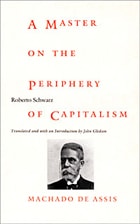
A Master on the Periphery of Capitalism
Machado de AssisRoberto Schwarz
Duke University Press, 2001
Widely acknowledged as the most important novelist to have written in Latin America before 1940, Machado had a surprisingly modern style. Schwarz notes that the unprecedented wit, sarcasm, structural inventiveness, and mercurial changes of tone and subject matter found in The Posthumous Memoirs of Brás Cubas marked a crucial moment in the history of Latin American literature. He argues that Machado’s vanguard narrative reflects the Brazilian owner class and its peculiar status in both national and international contexts, and shows why this novel’s success was no accident. The author was able to confront some of the most prestigious ideologies of the nineteenth century with some uncomfortable truths, not the least of which was that slavery remained the basis of the Brazilian economy.
A Master on the Periphery of Capitalism will appeal to those with interests in Latin American literature, nineteenth century history, and Marxist literary theory.
Machado de Assis and Narrative Theory
Language, Imitation, Art, and Verisimilitude in the Last Six NovelsEarl E. Fitz
Bucknell University Press, 2019
Published by Bucknell University Press. Distributed worldwide by Rutgers University Press.
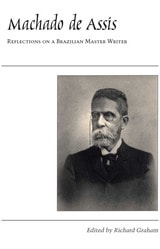
Machado de Assis
Reflections on a Brazilian Master WriterBy Richard Graham
University of Texas Press, 1999
Joaquim Maria Machado de Assis (1839-1908) never left Brazil and rarely traveled outside his native city of Rio de Janeiro, yet he is widely acknowledged by those who have read him as one of the major authors of the nineteenth century. His works are full of subtle irony, relentless psychological insights, and brilliant literary innovations. Yet, because he wrote in Portuguese, a language outside the mainstream of Western culture, those with access to his writings are relatively few.
This book is designed not only to call new attention to this master but also to raise questions about the nature of literature itself and current alternative views on how it can be approached. Four essays address the question of Machado's "realism" in the five masterpiece novels of his maturity, especially Dom Casmurro. The noted contributors include John Gledson (University of Liverpool), João Adolfo Hansen (Universidade de São Paulo), Sidney Chalhoub (Universidade de Campinas), and Daphne Patai (University of Massachusetts at Amherst).
Dain Borges of the University of California at San Diego says, "[This is the] only collection explicitly debating the question that polarizes contemporary Brazilian criticism of Machado de Assis: was he a sophisticated late realist, or was he a pioneering anti-realist, even a postmodernist? The [essayists] marshal their evidence and argument with virtuosity and arrive at sharply opposing conclusions."
Machado de Assis
Toward a Poetics of EmulationJoão Cezar de Castro Rocha
Michigan State University Press, 2015
At the center of this alternative explanation, Castro Rocha situates the fallout from the success enjoyed by Eça de Queirós with the publication of Cousin Basílio and Machado’s two long texts condemning the author and his work. Literary and aesthetic rivalries come to the fore, allowing for a new theoretical framework based on a literary appropriation of “thick description,” the method proposed by anthropologist Clifford Geertz. From this method, Castro Rocha derives his key hypothesis: an unforeseen consequence of Machado’s reaction to Eça’s novel was a return to the classical notion of aemulatio, which led Machado to develop a “poetics of emulation.”
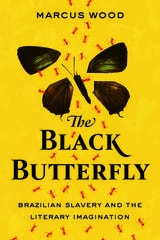
The Black Butterfly
Brazilian Slavery and the Literary ImaginationMarcus Wood
West Virginia University Press, 2019
The Black Butterfly focuses on the slavery writings of three of Brazil’s literary giants—Machado de Assis, Castro Alves, and Euclides da Cunha. These authors wrote in the late nineteenth and early twentieth centuries, as Brazil moved into and then through the 1888 abolition of slavery. Assis was Brazil’s most experimental novelist; Alves was a Romantic poet with passionate liberationist politics, popularly known as “the poet of the slaves”; and da Cunha is known for the masterpiece Os Sertões (The Backlands), a work of genius that remains strangely neglected in the scholarship of transatlantic slavery.
Wood finds that all three writers responded to the memory of slavery in ways that departed from their counterparts in Europe and North America, where emancipation has typically been depicted as a moment of closure. He ends by setting up a wider literary context for his core authors by introducing a comparative study of their great literary abolitionist predecessors Luís Gonzaga Pinto da Gama and Joaquim Nabuco. The Black Butterfly is a revolutionary text that insists Brazilian culture has always refused a clean break between slavery and its aftermath. Brazilian slavery thus emerges as a living legacy subject to continual renegotiation and reinvention.
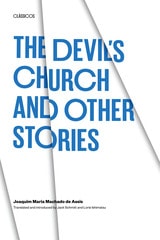
The Devil's Church and Other Stories
By Joaquim Maria Machado de Assis
University of Texas Press, 1977
The modem Brazilian short story begins with the mature work of Joaquim Maria Machado de Assis (1839-1908), acclaimed almost unanimously as Brazil's greatest writer. Collectively, these nineteen stories are representative of Machado's unique style and world view, and this translation doubles the number of his stories previously available in English.
The stories in this volume reflect Machado's post-1880 emphasis on social satire and experimentation in psychological realism. If he had continued to produce the moralistic love stories and parlor intrigues of his earlier fiction, Machado's legacy would have been an entertaining but inconsequent body of work. However, by 1880 he had begun a devastating satirical assault on society through his fiction. In spite of his ruthlessness, Machado does at times reveal an ironic sympathy for his characters. He is not indifferent to human conflict but uses humor and irony to stress the absurdity of these conflicts, acted out against the backdrop of an indifferent universe. Such a spectacle creates a sense of helplessness that can only inspire wistful amusement.
In his technical mastery of the short story. Machado was decades ahead of his contemporaries and can still be considered more modern than most of the modernists themselves. That his stories elicit such strong and diverse reactions today is a tribute to their richness, complexity, and significance.