Results by title
24 books match the query 'Madagascar'
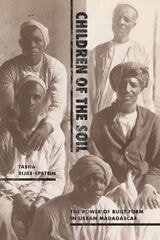
Children of the Soil
The Power of Built Form in Urban MadagascarTasha Rijke-Epstein
Duke University Press, 2023

Contingency in Madagascar
Text by Stephen Muecke, Photographs by Max Pam
Intellect Books, 2012
As they set off for Madagascar in 2003, photographer Max Pam and writer Stephen Muecke adopted as their guiding principle the idea of contingency—central to which is the conscious embrace of risk and chance. In doing so, they established a new aesthetic in which image and text are inextricably linked to the notion of possibility. This stunning collection of photos and essays is the result of their vision, collectively illustrating the beauty and wisdom on offer in one of the world’s poorest nations. A contribution to the wave of new ethnography exemplified by Michael Taussig and Kathleen Stewart, these encounters with events, images, and experimental writing dramatize thoughts and feelings in the ongoing construction of place.
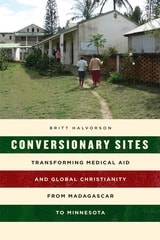
Conversionary Sites
Transforming Medical Aid and Global Christianity from Madagascar to MinnesotaBritt Halvorson
University of Chicago Press, 2018
A nuanced critique of the ambivalent relationships among religion, capitalism, and humanitarian aid, Conversionary Sites draws important connections between religion and science, capitalism and charity, and the US and the Global South.

Early State Formation in Central Madagascar
An Archaeological Survey of Western AvaradranoEdited by Henry T. Wright
University of Michigan Press, 2007
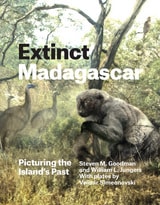
Extinct Madagascar
Picturing the Island's PastSteven M. Goodman and William L. Jungers
University of Chicago Press, 2014
In Extinct Madagascar, noted scientists Steven M. Goodman and William L. Jungers explore the recent past of these land animal extinctions. Beginning with an introduction to the geologic and ecological history of Madagascar that provides context for the evolution, diversification, and, in some cases, rapid decline of the Malagasy fauna, Goodman and Jungers then seek to recapture these extinct mammals in their environs. Aided in their quest by artist Velizar Simeonovski’s beautiful and haunting digital paintings—images of both individual species and ecosystem assemblages reproduced here in full color—Goodman and Jungers reconstruct the lives of these lost animals and trace their relationships to those still living.
Published in conjunction with an exhibition of Simeonovski’s artwork set to open at the Field Museum, Chicago, in the fall of 2014, Goodman and Jungers’s awe-inspiring book will serve not only as a sobering reminder of the very real threat of extinction, but also as a stunning tribute to Madagascar’s biodiversity and a catalyst for further research and conservation.
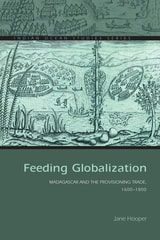
Feeding Globalization
Madagascar and the Provisioning Trade, 1600–1800Jane Hooper
Ohio University Press, 2017
Between 1600 and 1800, the promise of fresh food attracted more than seven hundred English, French, and Dutch vessels to Madagascar. Throughout this period, European ships spent months at sea in the Atlantic and Indian Oceans, but until now scholars have not fully examined how crews were fed during these long voyages. Without sustenance from Madagascar, European traders would have struggled to transport silver to Asia and spices back to Europe. Colonies in Mozambique, Mauritius, and at the Cape relied upon frequent imports from Madagascar to feed settlers and slaves.
In Feeding Globalization, Jane Hooper draws on challenging and previously untapped sources to analyze Madagascar’s role in provisioning European trading networks within and ultimately beyond the Indian Ocean. The sale of food from the island not only shaped trade routes and colonial efforts but also encouraged political centralization and the slave trade in Madagascar. Malagasy people played an essential role in supporting European global commerce, with far-reaching effects on their communities.
Feeding Globalization reshapes our understanding of Indian Ocean and global history by insisting historians should pay attention to the role that food played in supporting other exchanges.
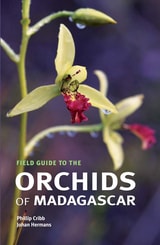
Field Guide to the Orchids of Madagascar
Phillip Cribb and Johan Hermans
Royal Botanic Gardens, Kew, 2009
As is the case with many other rare and sought-after species of plant and animal, Madagascar is one of the world’s prime locations for orchids, which make up the largest family of flowering plants on the island. Madagascar is home to nearly one thousand different species of orchids—which make up nearly ten percent of the island’s flora—nearly nine hundred of them endemic. Orchids are found in almost every habitat on the island, from the mountains to the coasts, and this field guide—the first of its kind, fully illustrated with color photographs and packed with details to aid identification—is an invaluable tool for researchers and ecotourists visiting the island.
Generic Tree Flora of Madagascar
George E. Schatz
Royal Botanic Gardens, Kew, 2001
Hottest of the Hotspots
The Rise of Eco-precarious Conservation Labor in MadagascarBenjamin Neimark
University of Arizona Press, 2023
This book details the rollout of market conservation programs, including the finding of drugs from nature—or “bioprospecting”—biodiversity offsetting, and the selling of blue carbon credits from mangroves. It documents the tensions that exist at the local level, as many of these programs incorporate populations highly dependent on the same biodiversity now turned into global commodities for purposes of saving it. Proponents of market conservation mobilize groups of ecologically precarious workers, or the local “eco-precariat,” who do the hidden work of collecting and counting species, monitoring and enforcing the vital biodiversity used in everything from drug discovery to carbon sequestration and large mining company offsets.
Providing a voice for those community workers many times left out of environmental policy discussions, this volume proposes critiques that aim to build better conservation interventions with perspectives of the local eco-precariat.
Identification Guide to Grasses and Bamboos in Madagascar
Maria Vorontsova
Royal Botanic Gardens, Kew, 2018
Isle of Fire
The Political Ecology of Landscape Burning in MadagascarChristian A. Kull
University of Chicago Press, 2004
Madagascar
A Short HistorySolofo Randrianja and Stephen Ellis
University of Chicago Press, 2009
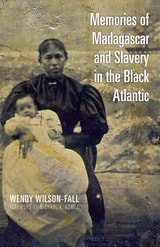
Memories of Madagascar and Slavery in the Black Atlantic
Wendy Wilson-Fall
Ohio University Press, 2015
From the seventeenth century into the nineteenth, thousands of Madagascar’s people were brought to American ports as slaves. In Memories of Madagascar and Slavery in the Black Atlantic, Wendy Wilson-Fall shows that the descendants of these Malagasy slaves in the United States maintained an ethnic identity in ways that those from the areas more commonly feeding the Atlantic slave trade did not. Generations later, hundreds, if not thousands, of African Americans maintain strong identities as Malagasy descendants, yet the histories of Malagasy slaves, sailors, and their descendants have been little explored.
Wilson-Fall examines how and why the stories that underlie this identity have been handed down through families—and what this says about broader issues of ethnicity and meaning-making for those whose family origins, if documented at all, have been willfully obscured by history.
By analyzing contemporary oral histories as well as historical records and examining the conflicts between the two, Wilson-Fall carefully probes the tensions between the official and the personal, the written and the lived. She suggests that historically, the black community has been a melting pot to which generations of immigrants—enslaved and free—have been socially assigned, often in spite of their wish to retain far more complex identities. Innovative in its methodology and poetic in its articulation, this book bridges history and ethnography to take studies of diaspora, ethnicity, and identity into new territory.
Prospero and Caliban
The Psychology of ColonizationO. Mannoni
University of Michigan Press, 1990
Noted anthropologist Maurice Bloch has written a powerful and critical new foreword to the English translation, which allows the reader to view Mannoni’s unique work in its historical and intellectual context.
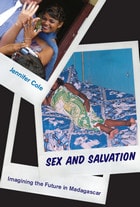
Sex and Salvation
Imagining the Future in MadagascarJennifer Cole
University of Chicago Press, 2010
Sex and Salvation chronicles the coming of age of a generation of women in Tamatave in the years that followed Madagascar’s economic liberalization. Eager to forge a viable future amid poverty and rising consumerism, many young women have entered the sexual economy in hope of finding a European husband. Just as many Westerners believe that young people break with the past as they enter adulthood, Malagasy citizens fear that these women have severed the connection to their history and culture.
Jennifer Cole’s elegant analysis shows how this notion of generational change is both wrong and consequential. It obscures the ways young people draw on long-standing ideas of gender and sexuality, it ignores how urbanites relate to their rural counterparts, and it neglects the relationship between these husband-seeking women and their elders who join Pentecostal churches. And yet, as talk about the women circulates through the city’s neighborhoods, bars, Internet cafes, and churches, it teaches others new ways of being.
Cole’s sophisticated depiction of how a generation’s coming of age contributes to social change eschews a narrow focus on crisis. Instead, she reveals how fantasies of rupture and conceptions of the changing life course shape the everyday ways that people create the future.
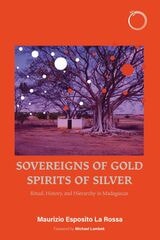
Sovereigns of Gold, Spirits of Silver
Ritual, History, and Hierarchy in MadagascarMaurizio Esposito La Rossa
HAU, 2026
How the inhabitants of Western Madagascar reshape their collective identity and negotiate their place within contemporary society through royal rituals and the reinterpretation of the past.
In a postcolonial republic marked by recurrent crises, royal hierarchy continues to frame social inequalities. Within this context, both the descendants of slaves and the newly rich seek to claim or legitimize new hierarchical positions by reformulating historical narratives and establishing them through royal rituals. Focusing on a cult dedicated to the spirits of the ancestors of the Silver Dynasty, Maurizio Esposito La Rossa investigates the categories of “silver” and “gold” that structure the hierarchy of the Sakalava monarchy and are also mobilized by politicians to legitimize their power.
Through multi-sited ethnography, the book offers a broader reflection on the link between narratives and places and on contrasting ways of conceiving history. Whereas Western historiography—and the rise of the nation-state—tends to produce unified historical narratives, the Sakalava monarchies conceive of history as rooted in specific places and social groups, where multiple versions coexist and contend. Combining the divergent demands of a historical anthropology and an anthropology of history, this book endeavors to recount another history of the Sakalava monarchy, without neglecting the polyphony that characterizes it. By tracing how the past is mobilized, transformed, and contested in the present, the book speaks to anthropologists, historians, and readers interested in the intricate entanglements of history, ritual, and political power in postcolonial settings.

The Business of Professional Sports
Edited by Paul D. Staudohar and James A. Mangan
University of Illinois Press, 1991
Beyond the highly publicized heroics and foibles of players and teams, when the grandstands are empty and the scoreboards dark, there is a world of sport about which little is known by even the most ardent fan. It is the business world of sport; it is characterized by a thirst for power and money, and its players are just as active as those on the professional teams they oversee. In this collection, some of the best scholars in the field use examples from baseball, football, basketball, and hockey to illuminate the significant economic, legal, social, and historic aspects of the business of professional sports.
Contributors: Dennis A. Ahlburg, Rob B. Beamish, Joan M. Chandler, James B. Dworkin, Lawrence M. Kahn, Charles P. Korr, John J. MacAloon, David Mills, Roger G. Noll, Steven A. Reiss, Gary R. Roberts, Stephen F. Ross, Peter D. Sherer, Leigh Steinberg, and David G. Voigt,
The Evolution of Settlement Systems in the Region of Vohémar, Northeast Madagascar
Henry T. Wright, Robert E. Dewar, Chantal Radimilahy, and Lucien Marie Aimé Rakotozafy
University of Michigan Press, 2021
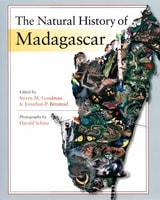
The Natural History of Madagascar
Edited by Steven M. Goodman and Jonathan P. Benstead
University of Chicago Press, 2003
The Natural History of Madagascar provides the most comprehensive, up-to-date synthesis available of this island nation's priceless biological treasures. Contributions by nearly three hundred world-renowned experts cover the history of scientific exploration in Madagascar, its geology and soils, climate, forest ecology, human ecology, marine and coastal ecosystems, plants, invertebrates, fishes, amphibians, reptiles, birds, and mammals. Detailed discussions of conservation efforts in Madagascar highlight several successful park reserve programs that could serve as models for other areas. Beautifully illustrated throughout, the book includes over one hundred color illustrations, with fifty color photos by nature photographer Harald Schütz, as well as more than three hundred black-and-white photographs and line drawings.
The Natural History of Madagascar will be the invaluable reference for anyone interested in the Malagasy environment, from biologists and conservationists to policymakers and ecotourists.
The Politics of Design in French Colonial Urbanism
Gwendolyn Wright
University of Chicago Press, 1991
Gwendolyn Wright focuses on three French colonies—Indochina, Morocco, and Madagascar—that were the most discussed, most often photographed, and most admired showpieces of the French empire in the early twentieth century. She explores how urban policy and design fit into the French colonial policy of "association," a strategy that accepted, even encouraged, cultural differences while it promoted modern urban improvements that would foster economic development for Western investors. Wright shows how these colonial cities evolved, tracing the distinctive nature of each locale under French imperialism. She also relates these cities to the larger category of French architecture and urbanism, showing how consistently the French tried to resolve certain stylistic and policy problems they faced at home and abroad.
With the advice of architects and sociologists, art historians and geographers, colonial administrators sought to exert greater control over such matters as family life and working conditions, industrial growth and cultural memory. The issues Wright confronts—the potent implications of traditional norms, cultural continuity, modernization, and radical urban experiments—still challenge us today.

The Sloth Lemur's Song
Madagascar from the Deep Past to the Uncertain PresentAlison Richard
University of Chicago Press, 2022
Madagascar is a place of change. A biodiversity hotspot and the fourth largest island on the planet, it has been home to a spectacular parade of animals, from giant flightless birds and giant tortoises on the ground to agile lemurs leaping through the treetops. Some species live on; many have vanished in the distant or recent past. Over vast stretches of time, Madagascar’s forests have expanded and contracted in response to shifting climates, and the hand of people is clear in changes during the last thousand years or so. Today, Madagascar is a microcosm of global trends. What happens there in the decades ahead can, perhaps, suggest ways to help turn the tide on the environmental crisis now sweeping the world.
The Sloth Lemur’s Song is a far-reaching account of Madagascar’s past and present, led by an expert guide who has immersed herself in research and conservation activities with village communities on the island for nearly fifty years. Alison Richard accompanies the reader on a journey through space and time—from Madagascar’s ancient origins as a landlocked region of Gondwana and its emergence as an island to the modern-day developments that make the survival of its array of plants and animals increasingly uncertain. Weaving together scientific evidence with Richard’s own experiences and exploring the power of stories to shape our understanding of events, this book captures the magic as well as the tensions that swirl around this island nation.
The Terrestrial Protected Areas of Madagascar
Their History, Description, and BiotaEdited by Steven M. Goodman, Marie Jeanne Raherilalao, and Sébastien Wohlhause
Association Vahatra, 2018
The purpose of The Terrestrial Protected Areas of Madagascar is to present a large-scale update of information available from 98 terrestrial protected areas, various analyses to understand general trends in the conservation of these sites, and a synthesis to assess the needs for future scientific programs. Beautifully illustrated throughout with color maps, graphs, and photos, these three volumes will be an important reference for students, researchers, protected area managers, conservationists, and visiting ecotourists. Volume one provides a comprehensive introduction.
The Terrestrial Protected Areas of Madagascar
Their History, Description, and Biota, Volume 2: Northern and eastern MadagascarEdited by Steven M. Goodman, Marie Jeanne Raherilalao, and Sébastien Wohlhauser
Association Vahatra, 2020
The purpose of The Terrestrial Protected Areas of Madagascar is to present a large-scale update of information available from 98 terrestrial protected areas, various analyses to understand general trends in the conservation of these sites, and a synthesis to assess the needs for future scientific programs. Beautifully illustrated throughout with color maps, graphs, and photos, these three volumes will be an important reference for students, researchers, protected area managers, conservationists, and visiting ecotourists. Volume two covers northern and eastern Madagascar.
The Terrestrial Protected Areas of Madagascar
Their History, Description, and Biota, Volume 3: Western and southwestern Madagascar - SynthesisEdited by Steven M. Goodman, Marie Jeanne Raherilalao, and Sébastien Wohlhauser
Association Vahatra, 2020
The purpose of The Terrestrial Protected Areas of Madagascar is to present a large-scale update of information available from 98 terrestrial protected areas, various analyses to understand general trends in the conservation of these sites, and a synthesis to assess the needs for future scientific programs. Beautifully illustrated throughout with color maps, graphs, and photos, these three volumes will be an important reference for students, researchers, protected area managers, conservationists, and visiting ecotourists. Volume three covers western and southwestern Madagascar, as well as provides a valuable synthesis.