Results by title
31 books match the query 'Magical Realism'
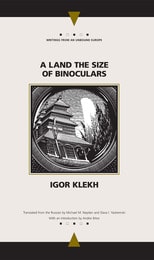
A Land the Size of Binoculars
Igor Klekh
Northwestern University Press, 2004
Throughout, Klekh studies landscapes as intimate as the terrain between fathers and sons and as broad as the wild, mysterious Carpathian Mountains. His work has been compared to that of Borges, Eco, and the magical realists, and celebrated for its synthesis of numerous literary traditions, its use of esoteric knowledge, and its breathtaking prose.
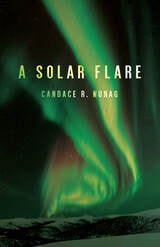
A Solar Flare
Candace R. Nunag
University of Alabama Press, 2025
A hybrid of short works exploring the 1859 Carrington solar flare
A flood of illumination, a cosmic cataclysm frozen in time—the Carrington Event of 1859 was the most disruptive solar flare in recorded history, an electromagnetic storm that wiped out telegraph systems across the world and which, if it were to occur today, might well destroy anything on the planet with an electrical circuit.
Candace Nunag’s A Solar Flare is a hybrid of short essays, research notes, poems, graphite rubbings, and instant photographs, as well as bits of flash fiction, all simultaneously contemplating technology and memory, while preoccupied with the 1859 solar flare. The ghost of the Carrington Event haunts A Solar Flare with the promise of definitive answers about the narrator’s many severed connections: her digital, supernatural, eastern, western, and analog past. It is an attempt to illuminate the path of thought, wending its way through the tangles of rumination and irreconcilable spaces of wonder.
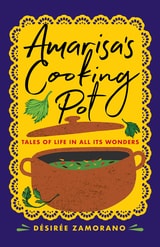
Amarisa's Cooking Pot
Tales of Life in All Its WondersDésirée Zamorano
University of Nevada Press, 2026
Each story is dedicated to capturing something ineffable, an emotional truth, a moment of beauty or realization, a moment of calm, or a spark of fury. What does it mean to be alive in a capricious world? Désirée Zamorano allows readers to explore this question beautifully, and memorably, long after the last page is turned.
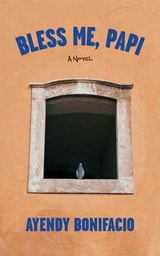
Bless Me, Papi
A NovelAyendy Bonifacio
Northwestern University Press, 2026
A coming-of-age tale of a young Dominican American boy facing a grave loss and a feathered phantom
Between the looming buildings of Brooklyn, a young Dominican American boy only ever called mijo by his family has just lost his father to brain cancer. In the wake of his grief, he begins to see his deceased father take the form of a pigeon and ghost, acting as protector and advisor in moments of duress and confusion. Determined to find out the truth behind his father’s appearances, he sets out on the streets of Brooklyn with his outspoken friend Naño, and in the hills of the Dominican Republic with his cousin Matias, in search of answers, only to discover more ghostly apparitions and inexplicable occurrences. In a world of lost things and in-betweens, the grief-stricken son must choose whether he can bear to let go of his father or accept the consequences of what we let haunt us.
Bride of the Mountains
František Švantner
Karolinum Press, 2026
A classic work of twentieth-century Slovak literature that blends naturalism and depictions of rural life with the supernatural.
After many years, Libor returns to his native village, where he has been appointed gamekeeper. His childhood sweetheart, Zuna, is waiting for him there. But his homecoming is far from idyllic. He has “tasted city life” and soon becomes an outsider to the villagers. According to them, Zuna has become a local prostitute who sleeps with anyone who pays her. Zuna’s father, an old miller, has gone blind because he made a pact with the devil. The mill where Libor and Zuna used to play as children has fallen into disrepair and ruin. The more Libor gets to know the world that he has returned to, the more confused he becomes. The village is full of superstitions, secrets, and hostility. He meets the charcoal burner Tavo, who lives high in the mountains, and learns from him the mysterious and bloody story of Zuna’s birth. He also learns what matters most to him: Zuna is pure and innocent. Libor starts a relationship with her from scratch. But just when their forgotten love might finally come to fruition, He appears—a vagabond who can transform into a wolf—and Libor discovers that Zuna is meeting with him. Is it a monster that gouges people’s eyes out? The devil, or our immaterial, dark alter ego? Reality, dreams, and fantasy blend in Libor’s mind as his hopes seem crushed beyond redemption.
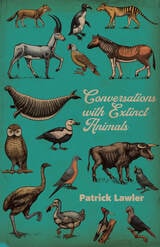
Conversations with Extinct Animals
A NovelPatrick Lawler
University of Alabama Press, 2024
An experimental narrative by eco-fiction author and poet Patrick Lawler evolves out of the interactions between twenty-four extinct animals and those characters who struggle for significance in the face of their own extinction.
Patrick Lawler’s second novel, Conversations with Extinct Animal, is a dialogue between psychology and ecology—between poetry and story. A suicide note masquerading as a love letter, the novel transcends genres and keeps kaleidoscopically shifting: sometimes it is an elegy, and sometimes it is a therapy session—but always these are the field notes for the end of the world.
As a collection of characters associated with The Facility come to terms with an individual’s death, they must confront their own losses amid the colossal absence of the twenty-four extinct animals. All the characters float between various inexplicable, mystifying “syndromes” that call into question their identities and, ultimately, call into question the elements of story itself. “Looking at pictures of the Extinct Animals, I can’t help but wonder if it is too late to save the world—especially since there are so many different worlds,” observes the narrator of the novel in his efforts to save the unsavable.
Dry Land
B. Pladek
University of Wisconsin Press, 2023
While at camp, Rand also realizes the true price of his gift: everything he grows withers and dies, leaving the soil empty of all living matter. Horrified, he throws himself into ever more self-destructive trials, buckling under the pressure of so many secrets. In order to survive, he must confront the terrifying possibility that his gift is actually a curse, upending everything he believes about nature, love, and himself.
In Other Lifetimes All I've Lost Comes Back to Me
StoriesCourtney Sender
West Virginia University Press, 2023
“A deep and howling portrait of longing and loneliness.” —Boston Globe
“A distinctive debut from a promising author.” —Kirkus Reviews
“A stunner from the very first page.” —Deesha Philyaw, author of The Secret Lives of Church Ladies, in the Millions
And praise from Ann Patchett, Alice McDermott, Danielle Evans, Elisa Albert, and Aimee Bender
Populated with lovers who leave and return, with ghosts of the Holocaust and messages from the dead, Courtney Sender’s debut collection speaks in a singular new voice about the longings and loneliness of contemporary love. The world of these fourteen interlocking stories is fiercely real but suffused with magic and myth, dark wit, and distinct humor. Here, ancient loss works its way deep into the psyche of modern characters, stirring their unrelenting lust for life.
In “To Do With the Body,” the Museum of Period Clothes becomes the perfect setting for a bloody crime. In “Lilith in God’s Hands,” Adam’s first wife has an affair in the Garden of Eden. And in the title story, a woman spends her life waiting for any of the men who have left her to come back, only to find them all at her doorstep at once.
For readers of Elena Ferrante, Nicole Krauss, and Carmen Maria Machado, and for anyone who has known love and loneliness, In Other Lifetimes All I’ve Lost Comes Back to Me is a wise and sensual collection of old hauntings, new longings, and unexpected returns, with a finale that is a rousing call to the strength we each have, together or alone.
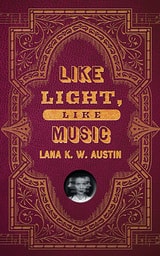
Like Light, Like Music
Lana K. W. Austin
West Virginia University Press, 2020
But to help her hometown’s haunted women, Emme must also face the things that haunt her, things she thought she had lost when she chose to move away: the majestic music of her family’s beloved hills and hollows, the mysterious old ways of her Appalachian kin, and the memory of her remarkable first love, Evan. Through it all, she must reckon with her magical “mountain gift”—is it real, or merely a unique synesthesia? And can she trust it to help heal her family and her town, a place still plagued by the social injustice that first drove her away? Can she trust it to help heal herself?

Magical Realism and the History of the Emotions in Latin America
Jerónimo Arellano
Bucknell University Press, 2026
Published by Bucknell University Press. Distributed worldwide by Rutgers University Press.
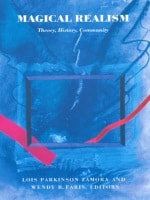
Magical Realism
Theory, History, CommunityLois Parkinson Zamora and Wendy B. Faris, eds.
Duke University Press, 1995
Presenting the first English translation of Franz Roh’s 1925 essay in which the term magical realism was coined, as well as Alejo Carpentier’s classic 1949 essay that introduced the concept of lo real maravilloso to the Americas, this anthology begins by tracing the foundations of magical realism from its origins in the art world to its current literary contexts. It offers a broad range of critical perspectives and theoretical approaches to this movement, as well as intensive analyses of various cultural traditions and individual texts from Eastern Europe, Asia, North America, Africa, the Caribbean, and Australia, in addition to those from Latin America. In situating magical realism within the expanse of literary and cultural history, this collection describes a mode of writing that has been a catalyst in the development of new regional literatures and a revitalizing force for more established narrative traditions—writing particularly alive in postcolonial contexts and a major component of postmodernist fiction.
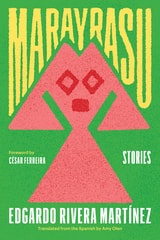
Marayrasu
StoriesEdgardo Rivera Martínez, Amy Olen
Northwestern University Press, 2026
The stories in Marayrasu stage fantastical, mysterious encounters that belie the characters’ often harsh economic and political realities as they seek belonging in modern Peru through art, music, and relationships. Depicted in poetic prose, these characters are loners, orphans, and outcasts experiencing quiet, tender encounters with other people and animals, the creative arts, and the land they find themselves depending on. Living vibrantly within these stories, the leviathan of Inca lore considers its own form, a young boy moves to a mining town and gets involved with a local union leader’s fight for worker rights while feeling the powerful pull of a large mountain overlooking the town, and a Persian cat captures the attention of a family down on its luck. Amy Olen’s translation smoothly captures Rivera Martínez’s impressive stories, offering a unique lens into the region at the heart of this canonical author’s inimitable work.
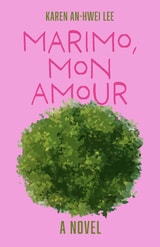
Marimo, Mon Amour
A NovelKaren An-hwei Lee
University of Alabama Press, 2026
WINNER OF THE CATHERINE DOCTOROW INNOVATIVE FICTION PRIZE
A technocratic collapse erases an obscure poet from existence, she and her pet moss ball refuse to disappear
Marimo, Mon Amour is a surreal, contemplative novel set in the quarantined borough of Alphabet City, where a botched data migration leaves obscure poet Zinger Zingiber effectively erased from the record. Furloughed from her jobs as a dumpling-maker and asylum specialist, she withdraws to her apartment with only her pet moss ball, Marimo, for company. As the Bureau of Misidentification bans forbidden words and controls identity, Zinger appoints herself the “Minister of Loneliness,” observing a world suspended in time.
From this quiet refuge, Zinger meditates on solitude, the fragility of memory, and the small, ephemeral moments that become acts of meaning. Her narration drifts between dream and reality, blending whimsy with philosophical inquiry. Lyrical and recursive, the novel draws on the psychological depth of Dostoevsky and the surreal sensibilities of Italo Calvino and Yoko Ogawa as it explores agency a plague of absentia. Marimo, Mon Amour will appeal to readers of literary and speculative fiction, fans of surreal or philosophical narratives, and anyone drawn to meditations on isolation, resistance, and the endurance of the human spirit.
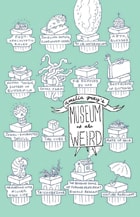
Museum of the Weird
Amelia Gray
University of Alabama Press, 2010
WINNER OF FC2’s AMERICAN BOOK REVIEW/RONALD SUKENICK INNOVATE FICTION PRIZE
Step inside a gallery where the strange feels familiar.
A monogrammed cube appears in your town. Your landlord cheats you out of first place in the annual Christmas decorating contest. You need to learn how to love and care for your mate—a paring knife. These situations and more reveal the wondrous play and surreal humor that make up the stories in Amelia Gray’s stunning collection of stories: Museum of the Weird.
Acerbic wit and luminous prose mark these shorts, while sickness and death lurk amidst the humor. Characters find their footing in these bizarre scenarios and manage to fall into redemption and rebirth. Museum of the Weird invites you into its hallways, then beguiles, bewitches, and reveals a writer who has discovered a manner of storytelling all her own.
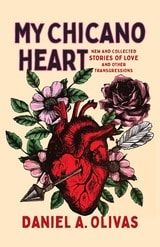
My Chicano Heart
New and Collected Stories of Love and Other TransgressionsDaniel A. Olivas
University of Nevada Press, 2024
Each story is drawn from Olivas’s nearly twenty-five years of experience writing fiction deeply steeped in Chicano and Mexican culture. Some of the stories are fanciful and full of magic, while others are more realistic, and still others border on noir. All touch upon that most ephemeral and confounding of human emotions: love in all its wondrous forms.
Ordinary Enchantments
Magical Realism and the Remystification of NarrativeWendy B. Faris
Vanderbilt University Press, 2004
Faris argues that by combining realistic representation with fantastic elements so that the marvelous seems to grow organically out of the ordinary, magical realism destabilizes the dominant form of realism based on empirical definitions of reality, gives it visionary power, and thus constitutes what might be called a "remystification" of narrative in the West. Noting the radical narrative heterogeneity of magical realism, the author compares its cultural role to that of traditional shamanic performance, which joins the worlds of daily life and that of the spirits. Because of that capacity to bridge different worlds, magical realism has served as an effective decolonizing agent, providing the ground for marginal voices, submerged traditions, and emergent literatures to develop and create masterpieces. At the same time, this process is not limited to postcolonial situations but constitutes a global trend that replenishes realism from within.
In addition to describing what many consider to be the progressive cultural work of magical realism, Faris also confronts the recent accusation that magical realism and its study as a global phenomenon can be seen as a form of commodification and an imposition of cultural homogeneity. And finally, drawing on the narrative innovations and cultural scenarios that magical realism enacts, she extends those principles toward issues of gender and the possibility of a female element within magical realism.
Softie
StoriesMegan Howell
West Virginia University Press, 2024
2025 PEN America Finalist, Robert W. Bingham Prize for Debut Short Story Collection
2025 National Book Award Honoree, "5 Under 35"
2025 Gold Medal, Independent Publishing Book Awards (IPPY): Short Fiction
In beautifully melancholy stories of magical realism, the women and girls in Softie transform their bodies and test their sanity, trying to find meaning in the loneliest of places.A former child star haunted by a past she can't remember. An Afro-French girl with an obsession for ear lobes. A loner whose only friend is hiding a terrible, otherworldly secret. Each of these stories shares situations that are sometimes fantastical, sometimes commonplace, but always strange. From a Corsican vacation town in its off-season to hospital rooms and a seedy hotel suite in Chicago, experience the every day come fully untethered from reality.
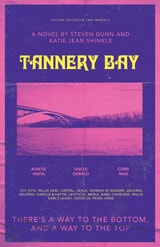
Tannery Bay
A NovelSteven Dunn and Katie Jean Shinkle
University of Alabama Press, 2024
In a town trapped in endless July, love, resistance, and imagination break the loop
Enter a world where time stands still and summer never ends. In the enchanted town of Tannery Bay, it’s July 37, and then July 2 again, but the year is a mystery. Trapped in an eternal loop, the residents embark on an extraordinary journey of self-discovery, unity, and defiance against the forces that seek to divide them.
Otis and Joy, intrepid siblings, work with their family and friends to oppose a formidable adversary: The Owners. These cunning and ruthless old men, driven by insatiable greed, hold the town hostage, exploiting its resources and dividing its people. In this powerful #OwnVoices narrative, Tannery Bay is a captivating tale of Black Joy and Queer Joy and the ways in which family is both biological and chosen, where love transcends boundaries, and where art is a vehicle for change.
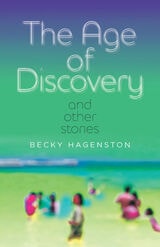
The Age of Discovery and Other Stories
Becky Hagenston
The Ohio State University Press, 2021
“These ingenious stories are so funny and sparkling and slyly inventive that their pain catches you by surprise, like a sunburn after a day at the beach.”—Eric Puchner
Winner, 2022 Mississippi Institute for Arts and Letters Prize for Best Fiction
In Becky Hagenston’s fourth collection, the real and the fantastic collide in stories that span from Mississippi to Europe, and from the recent past to the near future. The characters are sex-toy sellers, internet trolls, parents, students, and babysitters—all trying to make sense of a world where nothing is quite what it appears to be. A service robot makes increasingly disturbing requests. A middle school teacher is accused of witchcraft—and realizes the accusations might be true. Two college students devise a way to avoid getting hit on in bars. A baker finds bizarre anomalies in his sourdough. A librarian follows her dead ex-husband through the Atlanta airport. In these stories, men and women confront grief, danger, loneliness, and sometimes—the strangest discovery of all—unexpected joy. Hagenston delivers a collection that is, at its weird and shining heart, about people discovering what—for better or worse—they are capable of.
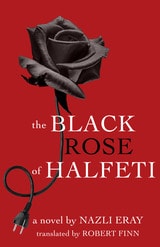
The Black Rose of Halfeti
By Nazli Eray, translated by Robert Finn
University of Texas Press, 2017
The Black Rose of Halfeti opens with a letter delivered at midnight in Ankara, Turkey. In this letter, an elderly doctor who has begun to experience the first signs of dementia professes his love and desire for a relationship with the narrator, a woman in middle age beginning to contemplate her own mortality. From there, the novel moves between Mardin, Izmir, and Ankara; the past and the present; and the real and the imagined as the narrator seeks to know the doctor both in his prime and in his struggle to hold senility at bay. In these dreamlike landscapes, the author effortlessly introduces King Darius, the Spanish director Luis Buñuel, the actress Silvia Pinal, and the archetypal dream woman as the narrator’s guides in her efforts to understand the human psyche.
Nazli Eray has established herself as a master of magical realism, the perfect tool to bring to life this poignant meditation on love, aging, and the role of memory. And, as in her earlier novels, she paints vivid images of the urban landscapes of Turkey, capturing both the present and the past.
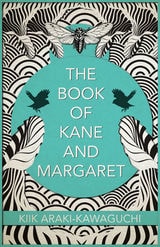
The Book of Kane and Margaret
A NovelKiik Araki-Kawaguchi, Illustrations by Gautam Rangan
University of Alabama Press, 2020
WINNER OF FC2’S RONALD SUKENICK INNOVATIVE FICTION PRIZE
A novel about two teenage lovers who disrupt a World War II internment camp in Arizona
Kane Araki and Margaret Morri are not only the names of teenage lovers living in a World War II Japanese relocation camp. Kane Araki is also the name of a man who, mysteriously, sprouts a pair of black raven’s wings overnight. Margaret Morri is the name of the aging healer who treats embarrassing conditions (smelly feet and excessive flatulence). It’s also the name of an eleven-year-old girl who communes with the devil, trading human teeth for divine wishes.
In The Book of Kane and Margaret, dozens of Kane Arakis and Margaret Morris populate the Canal and Butte camp divisions in Gila River. Amidst their daily rituals and family dramas, they find ways to stage quiet revolutions against a domestic colonial experience. Some internees slip through barbed wire fences to meet for love affairs. Others attempt to smuggle whiskey, pornography, birds, dogs, horses, and unearthly insects into their family barracks. And another seeks a way to submerge the internment camp in Pacific seawater.
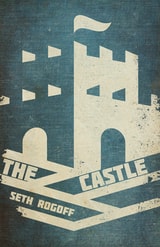
The Castle
A NovelSeth Rogoff
University of Alabama Press, 2024
A fictional return to the unsettling world of Franz Kafka’s iconic unfinished novel, The Castle.
Seth Rogoff's masterful and mesmerizing novel, The Castle, draws inspiration from the enigmatic and incomplete final sentence of Franz Kafka's influential work of the same title. Follow renowned translator Sy Kirschbaum as he finds his way into the deserted landscape of Kafka’s world where the village of Z. lies eerily silent. The inhabitants vanished like phantoms leaving only remnants of their lives.
From these fragments, Kirschbaum pieces together a vision of a world in crisis triggered by the arrival of a stranger named K. To unravel this mystery, not just for the sake of the vanished village of Z. but for the world beyond, Kirschbaum is compelled to venture where K. could not—the deepest core of the castle.
The Castle is built upon lost documents, forgotten stories, and imagined histories. Unbound by the constraints of an authoritarian and doomed reality, Kirschbaum embarks on an extraordinary journey, seeking meaning through the fertile ground of imagination and embracing the inherent paradox of existence.
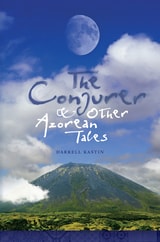
The Conjurer and Other Azorean Tales
Darrell Kastin
Tagus Press, 2012
Born from the fertile volcanic soil and the sea and mists surrounding the Azorean islands, the characters who inhabit these stories blend realism with magic. Like the nine Muses, each island has its own special attributes. Whether searching for love, power, or meaning, these characters are subject to the whims of Fate and Fortune. Here the commonplace present confronts forces both natural and supernatural. In the Azorean microcosm, they come to represent a far larger sphere, embodying the foibles and idiosyncrasies of humanity the world over.
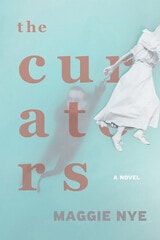
The Curators
A NovelMaggie Nye
Northwestern University Press, 2024
A dark, lyrical blend of historical fiction and magical realism, The Curators examines a critically underexplored event in American history through unlikely eyes. All of Atlanta is obsessed with the two-year-long trial and subsequent lynching of Jewish factory superintendent Leo Frank in 1915. None more so than thirteen-year-old Ana Wulff and her friends, who take history into their own hands—quite literally—when they use dirt from Ana’s garden to build and animate a golem in Frank’s image. They’ll do anything to keep his story alive, but when their scheme gets out of hand, they must decide what responsibility requires of them. The Curators tells the story of five zealous girls and the cyclonic power of their friendship as they come of age in a country riven by white supremacy.

The Flat Woman
A NovelVanessa Saunders
University of Alabama Press, 2025
Asks who gets the right to call themselves a good person in a morally bankrupt world
In The Flat Woman, women exclusively are blamed for the climate crisis. Seagulls drop dead from the sky, and the government, instead of taking responsibility, scapegoats a group of female ecoterrorists. When a girl’s mother is incarcerated for climate crimes, she is forced to raise herself alone. As a young woman, she begins a romance with an environmental activist whose passion makes her question her own role in the world. By turns hilarious, deadly serious, and completely absurd, The Flat Woman asks who gets the right to call themselves a good person in a world ripe with disaster.
Driven by complex academic and moral questions, The Flat Woman is certain to appeal to fans of feminist and experimental literature, as well as fans of Margaret Atwood, Renee Gladman, Bhanu Kapil, Maggie Nelson, Kelly Link, and Anne Carson.
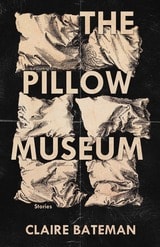
The Pillow Museum
StoriesClaire Bateman
University of Alabama Press, 2025
A collection of 56 flash fictions, micro-essays, and contemporary fables about the burden on women and families.
The Pillow Museum is a collection of 56 flash fictions, micro-essays, and contemporary fables set in various simulacra of our world. Claire Bateman’s gorgeous prose captures the imagination with closely observed details of people and places that are startlingly familiar yet unreal, where nothing can be taken for granted, including narrative logic: "It was snowing the night they had the fight about the glass piano whose music provided all the light in the house."
In an authoritative voice that offers no apologies or justifications, The Pillow Museum evokes a closely observed slipstream strangeness that refuses to take any moment or detail for granted—a fruitful, delirious disruption.
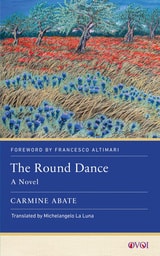
The Round Dance
A NovelCarmine Abate
Rutgers University Press, 2024
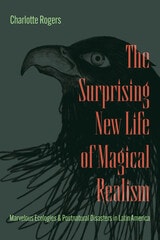
The Surprising New Life of Magical Realism
Marvelous Ecologies and Postnatural Disasters in Latin AmericaCharlotte Rogers
University of Chicago Press, 2027
An exploration of magical realism’s contemporary resurgence, as writers attempt to capture the realities of climate change.
What literary mode could possibly convey the extent of today’s climate catastrophes? In The Surprising New Life of Magical Realism, Charlotte Rogers argues that the answer is magical realism, a genre whose defining characteristic is to make the unbelievable an unremarkable part of everyday life. She pairs classic works by Alejo Carpentier, Gabriel García Márquez, and Rosario Ferré with contemporary novels by Carlos Fonseca, Fernanda Melchor, and Rita Indiana to show how the techniques of magical realism enable new approaches to scenes of environmental collapse and social injustice. Challenging widespread accounts of the genre’s decline, Rogers shows that the signature aesthetics of magical realism—the marvelous, the amazing, the strange—are integral to twenty-first-century fiction.
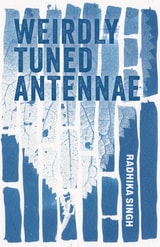
Weirdly Tuned Antennae
A NovelRadhika Singh
University of Alabama Press, 2026
WINNER OF THE SUKENICK INNOVATIVE FICTION PRIZE
A postimperialist future shaped by revolutionary struggle and healing, where plant-based technology reshapes sovereignty and intimacy
Weirdly Tuned Antennae is a coming-of-age adventure story that hums with sensory detail, political force, and the uncanny beauty of nature in a profoundly transformed world. This speculative tale traces one person’s attempt to explore how freedom is embodied, shared, and fought for, and how love can emerge from networks far older and stranger than the self.
Set in the monsoon-soaked Himalayan foothills in a near future, the story follows Navi on their quest to reconnect with their estranged mother, a freedom fighter in the ongoing battles for self-determination. Navi quickly gets entangled with a lineage of healer-witches who possess mastery over the spirit world and over the cell; a ubiquitous plant-based technology that channels energy and information, revolutionizing both political and bodily sovereignty. Navi’s journey is soon distracted by a mysterious lover driven by an interplanetary longing for home that mirrors Navi’s own search for belonging.
Rejecting the familiar arc of Western dystopia, Weirdly Tuned Antennae imagines a postimperialist future rooted in collective struggle, internationalism, and the liberation of human potential. Lush, moody, and deeply character-driven, it will resonate with readers who admire the speculative ethics of Octavia Butler and the quiet emotional force of Kazuo Ishiguro.
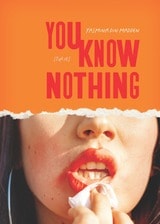
You Know Nothing
StoriesYasmina Din Madden
Northwestern University Press, 2026
Following women and girls as they navigate everyday life in contemporary America, You Know Nothing explores the experiences of mothers, daughters, sisters, wives, and lovers whose inner worlds are animated by a tangle of emotion—from desire to rage and everything in between. Yasmina Din Madden’s characters inhabit the margins of their cultures, their diverse backgrounds united by their profound unease and the female bodies in which each resides. Madden takes us into the lives of a ravenous mother who devours her own son, a woman who sands away parts of her body, a Vietnamese mother facing her too-American children, and a fiercely protective dog owner who wanders a dog park with Satan’s master. In this debut collection, Madden brings these characters to life in bite-size stories of surreal revelation and inquisitive long-form explorations alike, leaving newfound clarity and hypnotizing carnage in her wake.
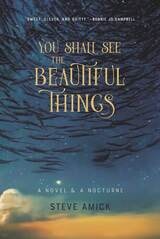
You Shall See the Beautiful Things
A Novel & A NocturneSteve Amick
Acre Books, 2023
In the fishing village of Scheveningen in 1889, three men build and secretly launch an unorthodox fishing vessel, departing from the long tradition of netting herring using massive boats and large crews. Collaborating in this venture are Wyn van Winkel, a cavalier joker and opium addict currently AWOL from the Aceh War in Sumatra; Ned Nodder, a seasoned fisherman trying to support his family while plagued by narcolepsy and prophetic dreams; and Luuk Blenkin, a scattered young troubadour failing at love and searching for his place in the world.
As formally innovative as the “picarooner” this mismatched trio construct, the narrative lifts off into the fantastical, flitting between reality and irreality. Sparked by lines of the “Dutch lullaby,” the inexplicable adventure unfolds—and along the way, we learn of Wyn’s romantic recklessness, his broken relationship with his father, and the tragedies of war that scarred and changed him. We witness Ned’s unconventional path toward matrimony, as well as the painful loss that made his marriage a true union. We follow Luuk’s fumblings for purpose and fulfillment beyond the disgrace that befell his family and marred both his outlook and his prospects.
In the spirit of a nocturne, Steve Amick envelops his characters in the world of night and dreams. Lyrical, historical, surprising, magical, heartwarming, and heartbreaking, You Shall See the Beautiful Things will make readers look at the stars—and herring—in a new light.