Results by title
15 books match the query 'Marriage & Long-Term Relationships'
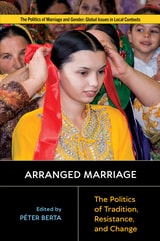
Arranged Marriage
The Politics of Tradition, Resistance, and ChangePéter Berta
Rutgers University Press, 2023
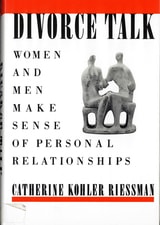
Divorce Talk
Women and Men Make Sense of Personal RelationshipsCatherine Kohler Riessman
Rutgers University Press, 1990
Riessman looks at the ideology of the companionate marriage: husband and wife should be each other's closest companion, and in marriage one should achieve emotial intimacy and sexual fulfillment. These beliefs imply a level of equality that rarely exists. In reality, most wives are subordinate to their husbands, most husbands want neither "deep talk" nor small talk that women want, and many husbands resent their wife's ties to kin and friends. To explain divorce, women and men construct gendered visions of what marriage should provide, and at the same time they mourn gender divisions and blame their divorces on them. Riessman examines the stories people tell about their marriages--the protagonists, inciting conditions, and culminating events--and how these narrative structures provide ways to persuade both teller and listener that divorce was justified.
Although divorce is invariably stressful, many people believe that men suffer less than women. This is an artifact of what Riessman calls the "feminization of psychological distress"--traditional ways of measuring distress reflect women's idioms, not men's. Departing from a literature that casts divorce in only negative terms, she finds paradoxically that women sense rewards, even as they report hardship. There is a shakeup in gender roles, and women more than men feel they gain a fuller idea of who they are. The author allows us to enter the points of view of her subjects, while her analytic approach makes links between the self and society.
Divorce Talk
Women and Men Make Sense of Personal RelationshipsCatherine Kohler Riessman
Rutgers University Press, 1990
Riessman looks at the ideology of the companionate marriage: husband and wife should be each other's closest companion, and in marriage one should achieve emotial intimacy and sexual fulfillment. These beliefs imply a level of equality that rarely exists. In reality, most wives are subordinate to their husbands, most husbands want neither "deep talk" nor small talk that women want, and many husbands resent their wife's ties to kin and friends. To explain divorce, women and men construct gendered visions of what marriage should provide, and at the same time they mourn gender divisions and blame their divorces on them. Riessman examines the stories people tell about their marriages--the protagonists, inciting conditions, and culminating events--and how these narrative structures provide ways to persuade both teller and listener that divorce was justified.
Although divorce is invariably stressful, many people believe that men suffer less than women. This is an artifact of what Riessman calls the "feminization of psychological distress"--traditional ways of measuring distress reflect women's idioms, not men's. Departing from a literature that casts divorce in only negative terms, she finds paradoxically that women sense rewards, even as they report hardship. There is a shakeup in gender roles, and women more than men feel they gain a fuller idea of who they are. The author allows us to enter the points of view of her subjects, while her analytic approach makes links between the self and society.
Great Expectations
Marriage and Divorce in Post-Victorian AmericaElaine Tyler May
University of Chicago Press, 1983
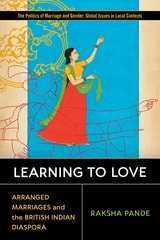
Learning to Love
Arranged Marriages and the British Indian DiasporaRaksha Pande
Rutgers University Press, 2021
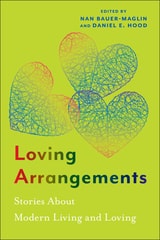
Loving Arrangements
Stories About Modern Living and LovingRutgers University Press, 2026
Love songs and Hollywood romances make it all sound so simple: You find your soul mate, move in together, get married, never stray from the path of monogamy, and live happily ever after. But real life tends to be more complicated. Many couples pursue alternative living arrangements, and some even pursue alternative loving arrangements.
The twenty-nine personal essays in this collection offer a variety of perspectives and experiences with nontraditional relationships and forms of cohabitation. The contributors include married couples who live in separate cities and single people who find companionship through communes and cohousing. These essays also present varied outlooks on the practice and ethics of having multiple partners, with some embracing large polycules while others opt for “monogamish” relationships. Everyone has a different story to tell, from close friends living together to form a chosen family to couples navigating the shifting boundaries of their relationship as one partner begins a gender transition. With contributors across generations and representing the full ethnic and cultural diversity of the United States, Loving Arrangements demonstrates the myriad ways that we live and love today.
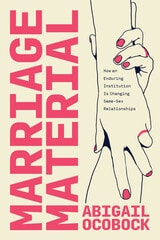
Marriage Material
How an Enduring Institution Is Changing Same-Sex RelationshipsAbigail Ocobock
University of Chicago Press, 2024
It is no secret that marriage rates in the United States are at an all-time low. Despite this significant decline, the institution of marriage endures in our society amid historic changes to its meaning and practice. How does the continuing strength of marriage impact the relationships of same-sex couples after the legalization of same-sex marriage?
Drawing on over one hundred interviews with LGBTQ+ people, Marriage Material reveals the transformative impact marriage equality has had on same-sex relationships. Sociologist Abigail Ocobock looks to same-sex couples across a wide age range to illuminate the complex ways institutional mechanisms work in tandem to govern the choices and behaviors of individuals with different marriage experiences. Ocobock examines both the influence of marriage on the dynamics of same-sex relationships and how LGBTQ+ people challenge heteronormative assumptions about marriage, highlighting the complex interplay between institutional constraint and individual agency.
Marriage Material presents a bold challenge to dominant scholarly and popular ideas about the decline of marriage, making clear that gaining access to legal marriage has transformed same-sex relationships, both for better and for worse.
Marriage Material
How an Enduring Institution Is Changing Same-Sex RelationshipsAbigail Ocobock
University of Chicago Press, 2024
A cutting-edge study of marriage’s transformative effects on same-sex relationships.
It is no secret that marriage rates in the United States are at an all-time low. Despite this significant decline, the institution of marriage endures in our society amid historic changes to its meaning and practice. How does the continuing strength of marriage impact the relationships of same-sex couples after the legalization of same-sex marriage?
Drawing on over one hundred interviews with LGBTQ+ people, Marriage Material reveals the transformative impact marriage equality has had on same-sex relationships. Sociologist Abigail Ocobock looks to same-sex couples across a wide age range to illuminate the complex ways institutional mechanisms work in tandem to govern the choices and behaviors of individuals with different marriage experiences. Ocobock examines both the influence of marriage on the dynamics of same-sex relationships and how LGBTQ+ people challenge heteronormative assumptions about marriage, highlighting the complex interplay between institutional constraint and individual agency.
Marriage Material presents a bold challenge to dominant scholarly and popular ideas about the decline of marriage, making clear that gaining access to legal marriage has transformed same-sex relationships, both for better and for worse.
Marriage Vows and Racial Choices
Jessica Vasquez-Tokos
Russell Sage Foundation, 2017
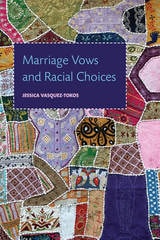
Vasquez-Tokos finds that their experiences in childhood, adolescence, and young adulthood shape their perceptions of race, which in turn influence their romantic expectations. Most Latinos marry other Latinos, but those who intermarry tend to marry whites. She finds that some Latina women who had domineering fathers assumed that most Latino men shared this trait and gravitated toward white men who differed from their fathers. Other Latina respondents who married white men fused ideas of race and class and perceived whites as higher status and considered themselves to be “marrying up.” Latinos who married non-Latino minorities—African Americans, Asian Americans, and Native Americans—often sought out non-white partners because they shared similar experiences of racial marginalization. Latinos who married Latinos of a different national origin expressed a desire for shared cultural commonalities with their partners, but—like those who married whites—often associated their own national-origin groups with oppressive gender roles.
Vasquez-Tokos also investigates how racial and cultural identities are maintained or altered for the respondents’ children. Within Latino-white marriages, biculturalism—in contrast with Latinos adopting a white “American” identity—is likely to emerge. For instance, white women who married Latino men often embraced aspects of Latino culture and passed it along to their children. Yet, for these children, upholding Latino cultural ties depended on their proximity to other Latinos, particularly extended family members. Both location and family relationships shape how parents and children from interracial families understand themselves culturally.
As interracial marriages become more common, Marriage Vows and Racial Choices shows how race, gender, and class influence our marital choices and personal lives.
Marriage in Past, Present and Future Tense
Edited by Janet Carsten, Hsiao-Chiao Chiu, Siobhan Magee, Eirini Papadaki, and Koreen M. Reece
University College London, 2021
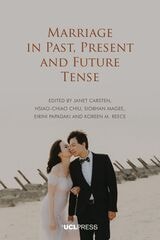
A series of global case studies, Marriage in Past, Present and Future Tense unravels the ever-changing intimate and institutional questions united by marriage. Traversing politics, economics, and religion, the authors explore how marital practices both react to and produce broader social transformation. In particular, the authors contend that contexts marked by violent sociopolitical ruptures such as civil war or colonization illuminate the links between the personal and political. What emerges is a complex portrait of marriage as a site of cultural memory, embodied experience, and active imagination.
Post-Racial No More
Race, Realities, and Resources of Ethnic Minority Families: Groves Monographs on Marriage and Family (Volume 7)Helyne Frederick
Michigan Publishing Services, 2022

Sexual Bargaining
Power Politics in the American MarriageJohn Scanzoni
University of Chicago Press, 1982
In this updated edition of his fundamental study of modern marriage, John Scanzoni challenges the widespread assumption that marriage is a dying institution. By analyzing the "reward seeking" which generates conflicts between males and females, he shows that marriage indeed has a future but that its form will continue to change as sex-role equality emerges both within and outside of marriage.
The Company We Keep
Interracial Friendships and Romantic Relationships from Adolescence to AdulthoodGrace Kao
Russell Sage Foundation, 2019
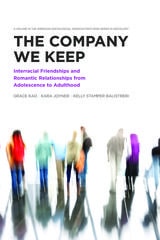
While research on interracial social ties has often focused on whites and blacks, Hispanics are the largest minority group and Asian Americans are the fastest growing racial group in the United States. The Company We Keep examines friendships and romantic relationships among blacks, whites, Hispanics, and Asian Americans to better understand the full spectrum of contemporary race relations. Using data from the National Longitudinal Study of Adolescent to Adult Health, the authors explore the social ties of more than 15,000 individuals from their first survey responses as middle and high school students in the mid-1990s through young adulthood nearly fifteen years later. They find that while approval for interracial marriages has increased and is nearly universal among young people, interracial friendships and romantic relationships remain relatively rare, especially for whites and blacks. Black women are particularly disadvantaged in forming interracial romantic relationships, while Asian men are disadvantaged in the formation of any romantic relationships, both as adolescents and as young adults. They also find that people in same-sex romantic relationships are more likely to have partners from a different racial group than are people in different-sex relationships. The authors pay close attention to how the formation of interracial friendships and romantic relationships depends on opportunities for interracial contact. They find that the number of students choosing different-race friends and romantic partners is greater in schools that are more racially diverse, indicating that school segregation has a profound impact on young people’s social ties.
Kao, Joyner, and Balistreri analyze the ways school diversity and adolescent interracial contact intersect to lay the groundwork for interracial relationships in young adulthood. The Company We Keep provides compelling insights and hope for the future of living and loving across racial divides.
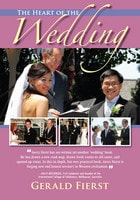
The Heart of the Wedding
Gerald Fierst
Parkhurst Brothers, Inc., 2011
“The Heart of Wedding reconnects the marriage ritual to our twenty-first century lives. Gerald Fierst, celebrant, poet, and storyteller, fills chapter after chapter with examples of ceremonies showing that weddings need not be Victorian relics, but can be filled with a sense of fun and adventure, as well as common sense. Acknowledging our multi-cultural nation where people of every race, Faith, and heritage meet and marry, this book celebrates the new America, respecting tradition while finding a contemporary voice to say ‘I do.’ Gerry brings to this book the same care, precision and artistry I have seen him bring to all of his projects. By connecting life’s passages with a larger vision of humanity – past, present and future – Gerry shows us a way to celebrate our families and ourselves.” --Susan O’Halloran, Director, RaceBridges, Chicago Illinois
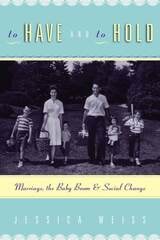
To Have and to Hold
Marriage, the Baby Boom, and Social ChangeJessica Weiss
University of Chicago Press, 2000
Jessica Weiss delves beneath these mythic images and paints a far more complex picture that reveals strong continuities between the baby boomers and their parents. Drawing on interviews with American couples from the 1950s to the 1980s, Weiss creates a dynamic portrait of family and social change in the postwar era. She pairs these firsthand accounts with a deft analysis of movies, television shows, magazines, and advice books from each decade, providing an unprecedented and intimate look at ordinary marriages in a time of sweeping cultural change.
Weiss shows how young couples in the 1950s attempted to combine egalitarian hopes with traditional gender roles. Middle-class women encouraged their husbands to become involved fathers. Midlife wives and mothers reshaped the labor force and the home by returning to work in the 1960s. And couples strove for fulfilling marriages as they dealt with the pressures of childrearing in the midst of the sexual and divorce revolutions of the 1960s and 1970s. By the 1980s, they were far more welcoming to the ideas of the women's movement than has often been assumed. More than simply changing with the times, the parents of the baby boom contributed to changing times themselves.
Weiss's excellent use of family interviews that span three decades, her imaginative examination of popular culture, and her incisive conclusions make her book an invaluable contribution not only to our understanding of the past but also to our understanding of men's and women's roles in today's family.
"Weiss has written an enlightening book that examines the dynamics of American families past and present. . . . Since Weiss is a historian, she provides analyses of her arguments that are factual rather than emotive, and her use of family interviews further contributes to a strong presentation. Overall, this is a unique works because its multidisciplinary approach informs but never preaches on the emotionally charged topic of the American family.—Sheila Devaney, Library Journal