Results by title
1488 books match the query 'Media Studies' and 98 start with a
A Century of Repression
The Espionage Act and Freedom of the PressRalph Engelman and Carey Shenkman
University of Illinois Press, 2022
A Democratic Enlightenment
The Reconciliation Image, Aesthetic Education, Possible PoliticsMorton Schoolman
Duke University Press, 2020
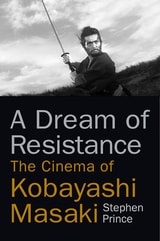
A Dream of Resistance
The Cinema of Kobayashi MasakiPrince, Stephen
Rutgers University Press, 2017
A Dream of Resistance is the first book in English to explore Kobayashi’s entire career, from the early films he made at Shochiku studio, to internationally-acclaimed masterpieces like The Human Condition, Harakiri, and Samurai Rebellion, and on to his final work for NHK Television. Closely examining how Kobayashi’s upbringing and intellectual history shaped the values of his work, Stephen Prince illuminates the political and religious dimensions of Kobayashi’s films, interpreting them as a prayer for peace in troubled times. Prince draws from a wealth of rare archives, including previously untranslated interviews, material that Kobayashi wrote about his films, and even the young director’s wartime diary. The result is an unprecedented portrait of this singular filmmaker.
A Fan Studies Primer
Method, Research, EthicsPaul Booth
University of Iowa Press, 2021
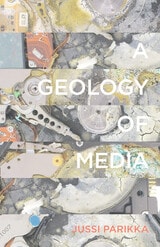
A Geology of Media
Jussi Parikka
University of Minnesota Press, 2015
Media history is millions, even billions, of years old. That is the premise of this pioneering and provocative book, which argues that to adequately understand contemporary media culture we must set out from material realities that precede media themselves—Earth’s history, geological formations, minerals, and energy. And to do so, writes Jussi Parikka, is to confront the profound environmental and social implications of this ubiquitous, but hardly ephemeral, realm of modern-day life.
Exploring the resource depletion and material resourcing required for us to use our devices to live networked lives, Parikka grounds his analysis in Siegfried Zielinski’s widely discussed notion of deep time—but takes it back millennia. Not only are rare earth minerals and many other materials needed to make our digital media machines work, he observes, but used and obsolete media technologies return to the earth as residue of digital culture, contributing to growing layers of toxic waste for future archaeologists to ponder. He shows that these materials must be considered alongside the often dangerous and exploitative labor processes that refine them into the devices underlying our seemingly virtual or immaterial practices.
A Geology of Media demonstrates that the environment does not just surround our media cultural world—it runs through it, enables it, and hosts it in an era of unprecedented climate change. While looking backward to Earth’s distant past, it also looks forward to a more expansive media theory—and, implicitly, media activism—to come.

A Guerrilla Guide to Refusal
Andrew Culp
University of Minnesota Press, 2022
A field guide to a nonfascist life at the end of the world as we know it
A Guerrilla Guide to Refusal is an unexpected approach to philosophy from a guerrilla-logic point of view. Harnessing critical theory to creatively reimagine counterinsurgency, guerrilla warfare, and interventions beyond the political mainstream, it takes us on a journey through anarchist infowar, queer outlaws, and black insurgency—through a subterranean network of communiques, military documents, contemporary art, political slogans, adversarial blogs, and captive media. In doing so, it provides powerful new insight into contemporary political movements that pose no demands, refuse labels, and offer no solutions.
Written to both inspire and provoke, A Guerrilla Guide to Refusal urges us to think through the refusal to participate in politics as usual. Author Andrew Culp demonstrates how evasion can combatively deny the existing order its power. Focusing on punk cinema, anarchist pamphlets, feminist art projects, hacker manifestos, and guerrilla manuals, he foregrounds invisibility as a novel force of disruption. He draws on concepts of criminality, fugitivity, and anonymity to bring a more nuanced understanding of how power makes things—and people—visible.
The book’s unique format is that of a theoretical manual, comprising freestanding segments instead of blueprints. Poised to reach beyond the academy into activist circles, this potent theory-in-action intervention forces us to reconsider the terrain upon which our struggles against patriarchy, anti-Blackness, capitalism, and the state operate.
A History of American Literary Journalism
The Emergence of a Modern Narrative FormJohn C. Hartsock
University of Massachusetts Press, 2000
During the 1960s, such works as Truman Capote's In Cold Blood and Joan Didion's Slouching Towards Bethlehem were cited as examples of the “new journalism.” True stories that read like novels, they combined the journalist's task of factual reporting with the art of fictional narration.
Yet as John C. Hartsock shows in this revealing study, the roots of this distinctive form of writing—whether called new journalism, literary journalism, or creative nonfiction—can be traced at least as far back as the late nineteenth century. In the decades following the American Civil War, Stephen Crane, Lafcadio Hearn, and other journalists challenged the notion, then just emerging, that the reporter's job was to offer a concise statement of the “objective truth.” Drawing on the techniques of the realistic novel, these writers developed a new narrative style of reporting aimed at lessening the distance between observer and observed, subject and object.
By the 1890s, Hartsock argues, literary journalism had achieved critical recognition as a new form of writing, different not only from “objective” reporting but also from the sensationalistic “yellow press” and at times the socially engaged “muckrakers.” In the twentieth century, the form has continued to evolve and maintain its vitality, despite being marginalized by the academic establishment.
A former journalist who covered Capitol Hill for UPI and reported on the collapse of the Soviet Union for the San Francisco Examiner, Hartsock brings a fresh and informed perspective to the issues he examines. The result is a concise introduction to the genesis and development of a significant literary genre.
A History of Horror, 2nd Edition
Wheeler Winston Dixon
Rutgers University Press, 2023
Ever since horror leapt from popular fiction to the silver screen in the late 1890s, viewers have experienced fear and pleasure in exquisite combination. Wheeler Winston Dixon's fully revised and updated A History of Horror is still the only book to offer a comprehensive survey of this ever-popular film genre.
Arranged by decades, with outliers and franchise films overlapping some years, this one-stop sourcebook unearths the historical origins of characters such as Dracula, Frankenstein, and the Wolfman and their various incarnations in film from the silent era to comedic sequels. In covering the last decade, this new edition includes coverage of the resurgence of the genre, covering the swath of new groundbreaking horror films directed by women, Black and queer horror films, and a new international wave in body horror films.
A History of Horror explores how the horror film fits into the Hollywood studio system, how the distribution and exhibition of horror films have changed in a post-COVID world, and how its enormous success in American and European culture expanded globally over time.
Dixon examines key periods in the horror film-in which the basic precepts of the genre were established, then banished into conveniently reliable and malleable forms, and then, after collapsing into parody, rose again and again to create new levels of intensity and menace. A History of Horror, supported by rare stills from classic films, brings over sixty timeless horror films into frightfully clear focus, zooms in on today's top horror Web sites, and champions the stars, directors, and subgenres that make the horror film so exciting and popular with contemporary audiences.
A History of Reading in the West
Guglielmo Cavallo
University of Massachusetts Press, 1999
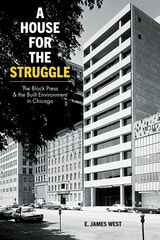
A House for the Struggle
The Black Press and the Built Environment in ChicagoE. James West
University of Illinois Press, 2022
- Winner of the 2023 Michael Nelson Prize of International Association for Media and History (IAMHIST)
- Recipient of the 2022 Jane Jacobs Urban Communication Book Award
- Winner of the 2023 American Journalism Historians Association Book of the Year
- Winner of the 2023 ULCC’s (Union League Club of Chicago) Outstanding Book on the History of Chicago Award
- Recipient of a 2023 Best of Illinois History Superior Achievement award from the Illinois State Historical Society
- Winner of the 2023 BAAS Book Prize (British Association for American Studies)
- Winner of a 2023 The Brinck Book Award and Lecture series (University of New Mexico School of Architecture + Planning)
- Honorable Mention for the 2021-22 RSAP Book Prize (Research Society for American Periodicals)
Buildings once symbolized Chicago's place as the business capital of Black America and a thriving hub for Black media. In this groundbreaking work, E. James West examines the city's Black press through its relationship with the built environment. As a house for the struggle, the buildings of publications like Ebony and the Chicago Defender embodied narratives of racial uplift and community resistance. As political hubs, gallery spaces, and public squares, they served as key sites in the ongoing Black quest for self-respect, independence, and civic identity. At the same time, factors ranging from discriminatory business practices to editorial and corporate ideology prescribed their location, use, and appearance, positioning Black press buildings as sites of both Black possibility and racial constraint.
Engaging and innovative, A House for the Struggle reconsiders the Black press's place at the crossroads where aspiration collided with life in one of America's most segregated cities.
A Little Solitaire
John Frankenheimer and American FilmPomerance, Murray
Rutgers University Press, 2011
Think about some commercially successful film masterpieces--The Manchurian Candidate. Seven Days in May. Seconds. Then consider some lesser known, yet equally compelling cinematic achievements--The Fixer. The Gypsy Moths. Path to War. These triumphs are the work of the best known and most highly regarded Hollywood director to emerge from live TV drama in the 1950s--five-time Emmy-award-winner John Frankenheimer.
Although Frankenheimer was a pioneer in the genre of political thrillers who embraced the antimodernist critique of contemporary society, some of his later films did not receive the attention they deserved. Many claimed that at a midpoint in his career he had lost his touch. World-renowned film scholars put this myth to rest in A Little Solitaire, which offers the only multidisciplinary critical account of Frankenheimer's oeuvre. Especially emphasized is his deep and passionate engagement with national politics and the irrepressible need of human beings to assert their rights and individuality in the face of organizations that would reduce them to silence and anonymity.
A Mexican State of Mind
New York City and the New Borderlands of CultureMelissa Castillo-Garsow
Rutgers University Press, 2020
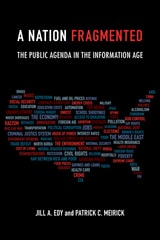
A Nation Fragmented
The Public Agenda in the Information AgeJill Edy
Temple University Press, 2019
The transformation from an undifferentiated public to a surfeit of interest groups has become yet another distinguishing feature of the increasing polarization of American politics. Jill Edy and Patrick Meirick contend that the media has played a key role in this splintering. A Nation Fragmented reveals how the content and character of the public agenda has transformed as the media environment evolved from network television and daily newspapers in the late 1960s to today’s saturated social media world with 200 cable channels.
The authors seek to understand what happened as the public’s sense of shared priorities deteriorated. They consider to what extent our public agenda has “fallen apart” as attention to news has declined, and to what extent we have been “driven apart” by changes in the issue agendas of news. Edy and Meirick also show how public attention is limited and spread too thin except in cases where a highly consistent news agenda can provoke a more focused public agenda.
A Nation Fragmented explores the media’s influence and political power and, ultimately, how contemporary democracy works.
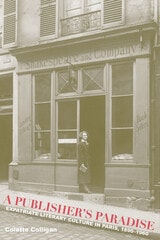
A Publisher's Paradise
Expatriate Literary Culture in Paris, 1890-1960Colette Colligan
University of Massachusetts Press, 2014
From 1890 to 1960, some of Anglo-America's most heated cultural contests over books, sex, and censorship were staged not at home, but abroad in the City of Light. Paris, with its extraordinary liberties of expression, became a special place for interrogating the margins of sexual culture and literary censorship, and a wide variety of English language “dirty books” circulated through loose expatriate publishing and distribution networks.
A Publisher's Paradise explores the political and literary dynamics that gave rise to this expatriate cultural flourishing, which included everything from Victorian pornography to the most daring and controversial modernist classics. Colette Colligan tracks the British and French politicians and diplomats who policed Paris editions of banned books and uncovers offshore networks of publishers, booksellers, authors, and readers. She looks closely at the stories the “dirty books” told about this publishing haven and the smut peddlers and literary giants it brought together in transnational cultural formations. The book profiles an eclectic group of expatriates living and publishing in Paris, from relatively obscure figures such as Charles Carrington, whose list included both The Picture of Dorian Gray and the pornographic novel Randiana, to bookshop owner Sylvia Beach, famous for publishing James Joyce's Ulysses in 1922.
A Publisher's Paradise is a compelling exploration of the little-known history of foreign pornography in Paris and the central role it played in turning the city into a modernist outpost for literary and sexual vanguardism, a reputation that still lingers today in our cultural myths of midnight in Paris.
A Short History of Film
Dixon, Wheeler Winston
Rutgers University Press, 2013
Wheeler Winston Dixon and Gwendolyn Audrey Foster present new and amended coverage of the industry in addition to updating the birth and death dates and final works of notable directors. Their expanded focus on key films brings the book firmly into the digital era and chronicles the death of film as a production medium.
The book takes readers through the invention of the kinetoscope, the introduction of sound and color between the two world wars, and ultimately the computer-generated imagery of the present day. It details significant periods in world cinema, including the early major industries in Europe, the dominance of the Hollywood studio system in the 1930s and 1940s, and the French New Wave of the 1960s. Attention is given to small independent efforts in developing nations and the more personal independent film movement that briefly flourished in the United States, the significant filmmakers of all nations, and the effects of censorship and regulation on production everywhere. In addition, the authors incorporate the stories of women and other minority filmmakers who have often been overlooked in other texts.
Engaging and accessible, this is the best one-stop source for the history of world film available for students, teachers, and general audiences alike.
A Short History of Film, Third Edition
Dixon, Wheeler Winston
Rutgers University Press, 2018

A Theory of Assembly
From Museums to MemesKyle Parry
University of Minnesota Press, 2022
A vital reckoning with how we understand the basic categories of cultural expression in the digital era
Digital and social media have transformed how much and how fast we communicate, but they have also altered the palette of expressive strategies: the cultural forms that shape how citizens, activists, and artists speak and interact. Most familiar among these strategies are storytelling and representation. In A Theory of Assembly, Kyle Parry argues that one of the most powerful and pervasive cultural forms in the digital era is assembly.
Whether as subtle photographic sequences, satirical Venn diagrams, or networked archives, projects based in assembly do not so much narrate or represent the world as rearrange it. This work of rearranging can take place at any scale, from a simple pairing of images, undertaken by one person, to the entire history of internet memes, undertaken by millions. With examples ranging from GIFs and paintings to museum exhibitions and social movement hashtags, Parry shows how, in the internet age, assembly has come to equal narrative and representation in its reach and influence, particularly as a response to ecological and social violence. He also emphasizes the ambivalence of assembly—the way it can be both emancipatory and antidemocratic.
As the world becomes ever hotter, more connected, and more algorithmic, the need to map—and remake—assembly’s powers and perils becomes all the more pressing. Interdisciplinary, engaging, and experimental, A Theory of Assembly serves as a playbook of strategies and critical frameworks for artists, activists, and content creators committed to social and environmental justice, ultimately arguing for a collective reenvisioning of which cultural forms matter.
Cover alt text: Letters from the title appear in a jumble, each colored in a blue-orange gradient. Readable title and author sits below the jumble.
A Theory of Regret
Brian Price
Duke University Press, 2017
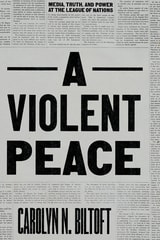
A Violent Peace
Media, Truth, and Power at the League of NationsCarolyn N. Biltoft
University of Chicago Press, 2021
An exploration of instability in information systems, the allure of fascism, and the contradictions at the heart of a global modernity, A Violent Peace paints a rich portrait of the emergence of the age of information—and all its attendant problems.
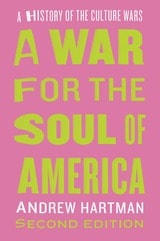
A War for the Soul of America, Second Edition
A History of the Culture WarsAndrew Hartman
University of Chicago Press, 2019
“As a guide to the late twentieth-century culture wars, Hartman is unrivalled. . . . Incisive portraits of individual players in the culture wars dramas. . . . Reading Hartman sometimes feels like debriefing with friends after a raucous night out, an experience punctuated by laughter, head-scratching, and moments of regret for the excesses involved.”—New Republic
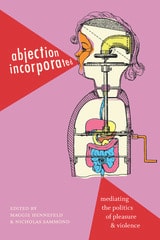
Abjection Incorporated
Mediating the Politics of Pleasure and ViolenceMargaret Hennefeld and Nicholas Sammond, editors
Duke University Press, 2019
Contributors. Meredith Bak, Eugenie Brinkema, James Leo Cahill, Michelle Cho, Maggie Hennefeld, Rob King, Thomas Lamarre, Sylvère Lotringer, Rijuta Mehta, Mark Mulroney, Nicholas Sammond, Yiman Wang, Rebecca Wanzo
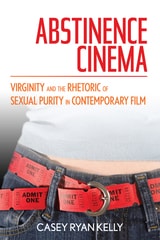
Abstinence Cinema
Virginity and the Rhetoric of Sexual Purity in Contemporary FilmCasey Ryan Kelly
Rutgers University Press, 2016
From the perspective of cultural conservatives, Hollywood movies are cesspools of vice, exposing impressionable viewers to pernicious sexually-permissive messages. Offering a groundbreaking study of Hollywood films produced since 2000, Abstinence Cinema comes to a very different conclusion, finding echoes of the evangelical movement’s abstinence-only rhetoric in everything from Easy A to Taken.
Accumulation
The Art, Architecture, and Media of Climate ChangeNick Axel
University of Minnesota Press, 2022
Examines how images of accumulation help open up the climate to political mobilization
The current epoch is one of accumulation: not only of capital but also of raw, often unruly material, from plastic in the ocean and carbon in the atmosphere to people, buildings, and cities. Alongside this material growth, image-making practices embedded within the fields of art and architecture have proven to be fertile, mobile, and capacious. Images of accumulation help open up the climate to cultural inquiry and political mobilization and have formed a cultural infrastructure focused on the relationships between humans, other species, and their environments.
The essays in Accumulation address this cultural infrastructure and the methodological challenges of its analysis. They offer a response to the relative invisibility of the climate now seen as material manifestations of social behavior. Contributors outline opportunities and ambitions of visual scholarship as a means to encounter the challenges emergent in the current moment: how can climate become visible, culturally and politically? Knowledge of climatic instability can change collective behavior and offer other trajectories, counteraccumulations that draw the present into a different, more livable, future.
Contributors: Emily Apter, New York U; Hans Baumann; Amanda Boeztkes, U of Guelph; Dominic Boyer, Rice U; Lindsay Bremner, U of Westminster; Nerea Calvillo, U of Warwick; Beth Cullen, U of Westminster; T. J. Demos, U of California, Santa Cruz; Jeff Diamanti, U of Amsterdam; Jennifer Ferng, U of Sydney; Jennifer Gabrys, U of Cambridge; Ian Gray, U of California, Los Angeles; Gökçe Günel, Rice U; Orit Halpern, Concordia U; Gabrielle Hecht, Stanford U; Cymene Howe, Rice U; Wendy Hui Kyong Chun, Simon Fraser U; Robin Kelsey, Harvard U; Bruno Latour, Sciences Po, Paris; Hannah le Roux, U of the Witwatersrand, Johannesburg; Stephanie LeMenager, U of Oregon; Nashin Mahtani; Kiel Moe, McGill U; Karen Pinkus, Cornell U; Stephanie Wakefield, Life U; McKenzie Wark, The New School; Kathryn Yusoff, Queen Mary U of London.
Achieving Viability for Public Service Media in Challenging Settings
A Holistic ApproachJames Deane, Pierre François Docquir, Winston Mano, Tarik Sabry and Naomi Sakr
University of Westminster Press, 2020
In the face of challenges posed by a shifting digital media landscape, an array of international bodies continue to endorse public service media (PSM) as an essential component of democratisation. Yet how can PSM achieve viability in settings where models of media independence and credibility are unfamiliar or rejected by political leaders?
The answer lies in a holistic approach that is neither media-centric nor defeatist about PSM’s place in a landscape marked by younger generations’ widespread preference for social media platforms. There are more ways of working towards PSM than are often recognized. Wide-ranging research from media NGOs and academics demonstrates the potential of diverse, incremental approaches to embedding the values and mechanisms of PSM. These are as likely to involve regulatory and licensing institutions, unions of media practitioners, audiences, advocacy groups or social media platforms as content producers themselves.
This Policy Brief considers the issues, research and policy options around achieving viability for PSM. It concludes with six recommendations that are relevant to policymakers, practitioners and media studies specialists.
Acid Hype
American News Media and the Psychedelic ExperienceSteven Siff
University of Illinois Press, 2015
Acid Hype offers the untold tale of LSD's wild journey from Brylcreem and Ivory soap to incense and peppermints. As Stephen Siff shows, the early attention lavished on the drug by the news media glorified its use in treatments for mental illness but also its status as a mystical--yet legitimate--gateway to exploring the unconscious mind. Siff's history takes readers to the center of how popular media hyped psychedelic drugs in a constantly shifting legal and social environment, producing an intricate relationship between drugs and media experience that came to define contemporary pop culture. It also traces how the breathless coverage of LSD gave way to a textbook moral panic, transforming yesterday's refined seeker of truths into an acid casualty splayed out beyond the fringe of polite society.
Acoustic Properties
Radio, Narrative, and the New Neighborhood of the AmericasTom McEnaney
Northwestern University Press, 2017
Based on original archival research in Buenos Aires, Havana, Paris, and the United States, the book develops a literary media theory that understands sound as a transmedial phenomenon and radio as a transnational medium. Analyzing the construction of new social and political relations in the wake of the United States’ 1930s Good Neighbor Policy, Acoustic Properties challenges standard narratives of hemispheric influence through new readings of Richard Wright’s cinematic work in Argentina, Severo Sarduy’s radio plays in France, and novels by John Dos Passos, Manuel Puig, Raymond Chandler, and Carson McCullers. Alongside these writers, the book also explores Che Guevara and Fidel Castro’s Radio Rebelde, FDR’s fireside chats, Félix Caignet’s invention of the radionovela in Cuba, Evita Perón’s populist melodramas in Argentina, Orson Welles’s experimental New Deal radio, Cuban and U.S. “radio wars,” and the 1960s African American activist Robert F. Williams’s proto–black power Radio Free Dixie.
From the doldrums of the Great Depression to the tumult of the Cuban Revolution, Acoustic Properties illuminates how novelists in the radio age converted writing into a practice of listening, transforming realism as they struggled to channel and shape popular power.

Acquiring Fan Lifestyles
Elizabeth Affuso and Avi Santo (eds.)
University of Michigan Press, 2027
Through essays that critically engage with fan participation within consumer, material, and brand cultures, Acquiring Fan Lifestyles explores how fandom is increasingly imagined by brand owners and consumers as a lifestyle. The authors highlight a range of often overlooked fan practices and sites of engagement, including home decor, health and wellness, sustainable fashion, luxury goods, and other lifestyle categories, looking to brands such as Target and Ruggable as well as fandoms such as Twin Peaks and LEGO. They examine how individuals who claim the identity of “fan” engage in acquisition practices that are intended to demonstrate said fandom, as well as how individuals come to discover their fandoms through acquisition. In so doing, they seek to complicate the ways people participate in fandoms via acquisition; practices that are neither inauthentic nor co-opted, but rather blur the boundaries between fandom as subculture and fandom as lifestyle. Acquiring Fan Lifestyles takes seriously what acquisition and lifestyle affords fandoms and fan agency, decision making, and labor without dismissing the possibility of fan activity being constrained by and reshaped within market and class-based ideologies.
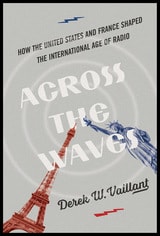
Across the Waves
How the United States and France Shaped the International Age of RadioDerek Vaillant
University of Illinois Press, 2017
Drawing on a broad range of American and French archives, Derek Vaillant joins textual and aural materials with original data analytics and maps to illuminate U.S.-French broadcasting's political and cultural development. Vaillant focuses on the period from 1931 until France dismantled its state media system in 1974. His analysis examines mobile actors, circulating programs, and shifting institutions that shaped international radio's use in times of war and peace. He explores the extraordinary achievements, the miscommunications and failures, and the limits of cooperation between America and France as they shaped a new media environment. Throughout, Vaillant explains how radio's power as an instantaneous mass communications tool produced, legitimized, and circulated various notions of states, cultures, ideologies, and peoples as superior or inferior.
A first comparative history of its subject, Across the Waves provocatively examines how different strategic agendas, aesthetic aims and technical systems shaped U.S.-French broadcasting and the cultural politics linking the United States and France.
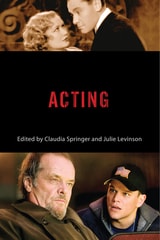
Acting
Springer, Claudia
Rutgers University Press, 2015
The chapters in Acting provide a fascinating, in-depth look at the history of film acting, from its inception in 1895 when spectators thrilled at the sight of vaudeville performers, Wild West stars, and athletes captured in motion, to the present when audiences marvel at the seamless blend of human actors with CGI. Experts in the field take readers behind the silver screen to learn about the craft of film acting in six eras: the silent screen (1895–1928), classical Hollywood (1928–1946), postwar Hollywood (1947–1967), the auteur renaissance (1968–1980), the New Hollywood (1981–1999), and the modern entertainment marketplace (2000–present). The contributors pay special attention to definitive performances by notable film stars, including Lillian Gish, Dick Powell, Ginger Rogers, Beulah Bondi, Marilyn Monroe, Marlon Brando, Jack Nicholson, Robert De Niro, Nicholas Cage, Denzel Washington, and Andy Serkis.
Acting Out In Groups
Laurence A. Rickels
University of Minnesota Press, 1999
Examines outrageous public behavior and what it can tell us about cultural and political change.
The International Psychoanalytic Congress gathered in 1967 to define the clinical concept of “acting out.” Thirty years later, our society, which once labeled those who exhibited excessive aggression as delinquent, celebrates outrageous public behavior. In Acting Out in Groups, writers, literary theorists, and cultural critics explore therapeutic descriptions of acting out in relation to the conduct condoned, even encouraged, on daytime TV talk shows, at political rallies, and in performance.
Through a deconstruction of “acting out,” this collection seeks a new, performative style of critical discourse that incorporates the exuberance and intensity of acting out for analytical ends. Topics include the Jenny Jones murder trial; the response of psychoanalysts to the acclaimed documentary Crumb; the place of the Berlin Wall and other national symbols in German life; and the roles of aggression and discipline in childhood development.Contributors: Kathy Acker; Peter Canning; Julie Carlson, U of California, Santa Barbara; Susan Derwin, U of California, Santa Barbara; Andrew Hewitt, SUNY Buffalo; Gary Indiana; Rhonda Lieberman; Catherine Liu, U of Minnesota; Fred Moten, NYU; John Mowitt, U of Minnesota; Klaus Theweleit; Elisabeth Weber, U of California, Santa Barbara.
Acting the Part
Audience Participation in PerformanceE. B. Hunter
University of Michigan Press, 2025

Action at a Distance
John Durham Peters
University of Minnesota Press, 2020
How are human actions shaped by the materiality of media?
Contemporary media leads us more than ever to an ‘acting at a distance,’ an acting entangled with the materiality of communication and the mediality of transmission. This book explores this crucial phenomenon thereby introducing urgent questions of human interaction, the binding and breaking of time and space, and the entanglement of the material and the immaterial.
Three vivid inquiries deal with histories and theories of mediality and materiality: John Durham Peters looks at episodes of simultaneity and synchronization. Christina Vagt discusses the agency of computer models against the backdrop of aesthetic theories by Henri Bergson and Hans Blumenberg, and Florian Sprenger discusses early electrical transmissions through copper wire and the temporality of instantaneity.
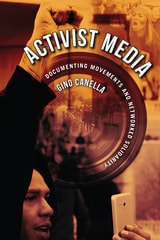
Activist Media
Documenting Movements and Networked SolidarityGino Canella
Rutgers University Press, 2022
Now more than ever, activists are using media to document injustice and promote social and political change. Yet with so many media platforms available, activists sometimes fail to have a coherent media and communication strategy.
Drawing from his experiences as a documentary filmmaker with Black Lives Matter 5280 and Service Employees International Union (SEIU) Local 105 in Denver, Colorado, Gino Canella argues that activist media create opportunities for activists to navigate conflict and embrace their political and ideological differences. Canella details how activist media practices—interviewing organizers, script writing, video editing, posting on social media, and hosting community screenings—foster solidarity among grassroots organizers.
Informed by media theory, this book explores how activists are using media to mobilize supporters, communicate their values, and reject anti-union rhetoric. Furthermore, it demonstrates how collaborative media projects can help activists build broad-based coalitions and amplify their vision for a more equitable and just society.

Adoption Fantasies
The Fetishization of Asian Adoptees from Girlhood to WomanhoodKimberly D. McKee
The Ohio State University Press, 2023

Advertising and Identity in Europe
The I of the BeholderRobin Warner
Intellect Books, 2013
Aesthetic Journalism
How to Inform Without InformingAlfredo Cramerotti
Intellect Books, 2009
Addressing a growing area of focus in contemporary art, Aesthetic Journalism investigates why contemporary art exhibitions often consist of interviews, documentaries, and reportage. Art theorist and critic Alfredo Cramerotti traces the shift in the production of truth from the domain of the news media to that of art and aestheticism—a change that questions the very foundations of journalism and the nature of art. This volume challenges the way we understand art and journalism in contemporary culture and suggests future developments of this new relationship.
Aesthetics of the Commons
Edited by Cornelia Sollfrank, Felix Stalder, and Shusha Niederberger
Diaphanes, 2021
Aesthetics of the Commons examines a series of artistic and cultural projects—drawn from what can loosely be called the (post)digital—that take up this challenge in different ways. What unites them, however, is that they all have a double character. They are art in the sense that they place themselves in relation to (Western) cultural and art systems, developing discursive and aesthetic positions, but, at the same time, they are operational in that they create recursive environments and freely available resources whose uses exceed these systems. The first aspect raises questions about the kind of aesthetics that are being embodied, the second creates a relation to the larger concept of the commons. In Aesthetics of the Commons, the commons are understood not as a fixed set of principles that need to be adhered to in order to fit a definition, but instead as a thinking tool—in other words, the book’s interest lies in what can be made visible by applying the framework of the commons as a heuristic device.
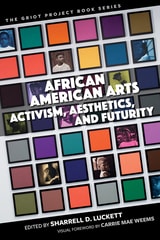
African American Arts
Activism, Aesthetics, and Futurityweems, carrie mae
Bucknell University Press, 2020
Contributors: Carrie Mae Weems, Carmen Gillespie, Rikki Byrd, Amber Lauren Johnson, Doria E. Charlson, Florencia V. Cornet, Daniel McNeil, Lucy Caplan, Genevieve Hyacinthe, Sammantha McCalla, Nettrice R. Gaskins, Abby Dobson, J. Michael Kinsey, Shondrika Moss-Bouldin, Julie B. Johnson, Sharrell D. Luckett, Jasmine Eileen Coles, Tawnya Pettiford-Wates, Rickerby Hinds.
Published by Bucknell University Press. Distributed worldwide by Rutgers University Press.

African Animation
History, Culture, and IndustryBoukary Sawadogo
Rutgers University Press, 2027
Against the backdrop of the rising interest in African stories in mainstream media, African Animation looks at a more than century-old animation practice that remains largely unknown. Carefully organized, this book offers a comprehensive treatment that canvases animation from all over the continent, analyzing its history, socio-political contexts, artistic and technological development, visual cultures, and economic market conditions. African animation also contributes to the broader landscape of animation studies: how does our view of the history of animation change when we add an African perspective to the otherwise dominating perspectives of Hollywood, Japanese, and Korean animation? What does animation look and feel like in other parts of the world? African animation has always been there; this book helps us pay attention to it. This is a must-read for those interested in African animation, including artists, industry insiders, and fans.
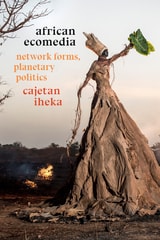
African Ecomedia
Network Forms, Planetary PoliticsCajetan Iheka
Duke University Press, 2021
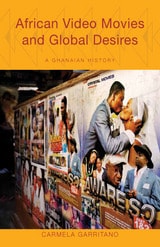
African Video Movies and Global Desires
A Ghanaian HistoryCarmela Garritano
Ohio University Press, 2013
AfroSwedish Places of Belonging
Nana Osei-Kofi
Northwestern University Press, 2024
After Authority
Global Art Cinema and Political TransitionKalling Heck
Rutgers University Press, 2020
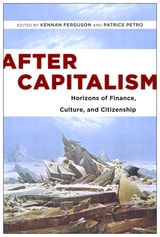
After Capitalism
Horizons of Finance, Culture, and CitizenshipFerguson, Kennan
Rutgers University Press, 2016
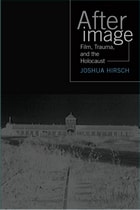
Afterimage
Film, Trauma And The HolocaustJoshua Hirsch
Temple University Press, 2003
Joshua Hirsch explores the changes in documentary brought about by cinema verite, culminating in Shoah. He then turns to teh appearance of a fictional posttraumatic cinema, tracing its development through the vivid flashbacks in Resnais' Hiroshima, mon amour to the portrayal of pain and memory in Pawnbroker. He excavates a posttraumatic autobiography in three early films by the Hungarian Istvan Szabo. Finally, Hirsch examines the effects of postmodernism on posttraumatic cinema, looking at Schindler's List and a work about a different form of historical trauma, History and Memory, a videotape dealing with the internment of Japanese Americans during the Second World War.
Sweeping in its scope, Afterimage presents a new way of thinking about film and history, trauma and its representation.
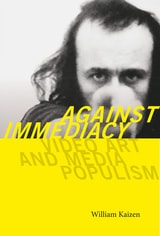
Against Immediacy
Video Art and Media PopulismWilliam Kaizen
Dartmouth College Press, 2016

Ageing with Smartphones in Japan
Care in a Visual Digital AgeLaura Haapio-Kirk
University College London, 2024
Ageing with Smartphones in Japan examines sixteen months of ethnographic research following older adults, age fifty and up, in urban Kyoto and rural Kochi Prefecture, Japan as they navigate social and personal shifts post-retirement in the age of the smartphone. It attempts to answer what this transition means for friendship, gendered labor, multigenerational living, internal migration, health, as well as life purpose for older adults. This book closely investigates how the smartphone challenges gender-based norms and how older adults creatively navigate them. Using comics, drawings, and fieldwork sketches it also explores how they use digital visual communication to socialize with friends and family.

Ageing with Smartphones in Uganda
Togetherness in the Dotcom AgeCharlotte Hawkins
University College London, 2023
Ageing with Smartphones in Uganda is based on a sixteen-month ethnography about experiences of aging in a neighborhood in central Kampala, Uganda. Taking a convivial approach, which celebrates multiple ways of knowing about social life, Charlotte Hawkins draws from these expressions about cooperative morality and modernity to consider the everyday mitigation of profound social change. “Dotcom” is understood to encompass everything from the influence of information and communications technologies to urban migration and lifestyles in the city to shifts in ways of knowing and relating. At the same time, dotcom tools such as mobile phones and smartphones facilitate elder care through, for example, regular mobile money remittances.
This book explores how dotcom relates to older people’s health, their care norms, their social standing, their values of respect and relatedness, and their intergenerational relationships—both political and personal. It also re-frames the youth-centricity of research on the city and work, new media and technology, and politics and service provision in Uganda. Through ethnographic consideration of everyday life and self-formation in this context, this monograph seeks to contribute to an ever-incomplete understanding of how we relate to each other and to the world around us.
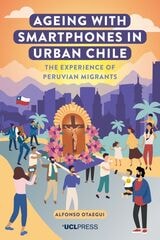
Ageing with Smartphones in Urban Chile
The Experience of Peruvian MigrantsAlfonso Otaegui
University College London, 2023
What does it mean to be aging in Chile as a migrant? Drawing on extensive ethnographic fieldwork, Ageing with Smartphones in Urban Chile analyzes the experience of aging for Peruvian migrants aged around sixty who have lived in Chile for more than twenty years. Their lives, we discover, are informed by a series of experiences of being ‘in between’. They live between two countries, two generations, and two different stages in life, between giving care and not wanting care, and between a continuing legacy and not transmitting legacy. By focusing on the entanglement of aging, migration, and technology, this book is an ethnographic contribution to an unexplored subject in the vast literature on migration studies in Chile.
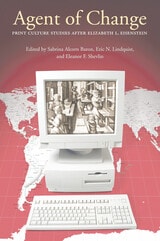
Agent of Change
Print Culture Studies after Elizabeth L. EisensteinSabrina Alcorn Baron
University of Massachusetts Press, 2007
Inspiring debate since the early days of its publication, Elizabeth L. Eisenstein's The Printing Press as an Agent of Change: Communications and Cultural Transformations in Early-Modern Europe (1979) has exercised its own force as an agent of change in the world of scholarship. Its path-breaking agenda has played a central role in shaping the study of print culture and “book history”—fields of inquiry that rank among the most exciting and vital areas of scholarly endeavor in recent years.
Joining together leading voices in the field of print scholarship, this collection of twenty essays affirms the catalytic properties of Eisenstein's study as a stimulus to further inquiry across geographic, temporal, and disciplinary boundaries. From early modern marginalia to the use of architectural title pages in Renaissance books, from the press in Spanish colonial America to print in the Islamic world, from the role of the printed word in nation-building to changing histories of reading in the electronic age, this book addresses the legacy of Eisenstein's work in print culture studies today as it suggests future directions for the field.
In addition to a conversation with Elizabeth L. Eisenstein, the book includes contributions by Peng Hwa Ang, Margaret Aston, Tony Ballantyne, Vivek Bhandari, Ann Blair, Barbara A. Brannon, Roger Chartier, Kai-wing Chow, James A. Dewar, Robert A. Gross, David Scott Kastan, Harold Love, Paula McDowell, Jane McRae, Jean-Dominique Mellot, Antonio Rodriguez-Buckingham, Geoffrey Roper, William H. Sherman, Peter Stallybrass, H. Arthur Williamson, and Calhoun Winton.