Results by title
33 books match the query 'Medical ethics'
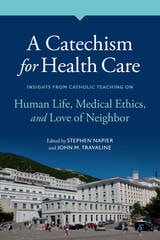
A Catechism for Health Care
Insights from Catholic Teaching on Human Life, Medical Ethics, and Love of NeighborStephen Napier
Catholic University of America Press, 2024
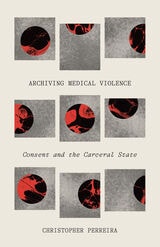
Archiving Medical Violence
Consent and the Carceral StateChristopher Perreira
University of Minnesota Press, 2023
A major new reading of a U.S. public health system shaped by fraught perceptions of culture, race, and criminality
At the heart of Archiving Medical Violence is an interrogation of the notions of national and scientific progress, marking an advance in scholarship that shows how such violence is both an engine of medical progress and, more broadly, the production of empire. It reads the medical archive through a lens that centers how it is produced, remembered, and contested within cultural production and critical memory.
In this innovative and interdisciplinary book, Christopher Perreira argues that it is in the contradictions of settler colonialism and racial capitalism that we find how medical violence is narrated as a public good. He presents case studies from across a range of locations—Hawai‘i, California, Louisiana, Guatemala—and historical periods from the nineteenth century on. Examining national and scientific conceptions of progress through the lens of medicine and public health, he places official archives in dialogue with visual and literary works, patient writing, and more.
Archiving Medical Violence explores the contested public terrains for narrating value and vulnerabilities, bodies and geographical locations. Ultimately, Perreira reveals for us a medical imaginary built on racialized criminality driving contemporary politics of citizenship, memory, and identity.
Retail e-book files for this title are screen-reader friendly with images accompanied by short alt text and/or extended descriptions.
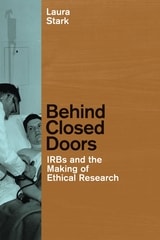
Behind Closed Doors
IRBs and the Making of Ethical ResearchLaura Stark
University of Chicago Press, 2011
Bioethics In Social Context
edited by Barry Hoffmaster
Temple University Press, 2001
The original essays in this volume use qualitative research methods to expose the multiple contexts within which the problems of bioethics arise, are defined and debated, and ultimately resolved. In a provocative concluding essay, one contributor asks his fellow ethnographers to reflect on the ethical problems of ethnography.
Bioethics Mediation
A Guide to Shaping Shared Solutions, Revised and Expanded EditionNancy Neveloff Dubler
Vanderbilt University Press, 2011
Conflicts come in different guises, and the key to successful resolution is early identification and intervention. Every bioethics mediator needs to be prepared with skills to listen, "level the playing field," identify individual interests, explore options, and help craft a "principled resolution" -- a consensus that identifies a plan aligned with accepted ethical principles, legal stipulations, and moral rules and that charts a clear course of future intervention.
The organization of the book makes it ideal for teaching or as a handbook for the practitioner. It includes actual cases, modified to protect the privacy of patients, providers, and institutions; detailed case analyses; tools for step-by-step mediation; techniques for the mediator; sample chart notes; and a set of actual role plays with expert mediator and bioethics commentaries. The role plays include:
- discharge planning for a dying patient
- an at-risk pregnancy
- HIV and postsurgical complications in the ICU
- treatment for a dying adolescent
- dialysis and multiple systems failure
Expanded by two-thirds from the 2004 edition, the new edition features two new role plays, a new chapter on how to write chart notes, and a discussion of new understandings of the role of the clinical ethics consultant.
Bishops and Bodies
Reproductive Care in American Catholic HospitalsLori Freedman
Rutgers University Press, 2023
One out of every six patients in the United States is treated in a Catholic hospital that follows the policies of the U.S. Conference of Catholic Bishops. These policies prohibit abortion, sterilization, contraception, some treatments for miscarriage and gender confirmation, and other reproductive care, undermining hard-won patients’ rights to bodily autonomy and informed decision-making. Drawing on rich interviews with patients and providers, this book reveals both how the bishops’ directives operate and how people inside Catholic hospitals navigate the resulting restrictions on medical practice. In doing so, Bishops and Bodies fleshes out a vivid picture of how The Church’s stance on sex, reproduction, and “life” itself manifests in institutions that affect us all.
Catastrophic Diseases
Who Decides What?Jay Katz
Russell Sage Foundation, 1975
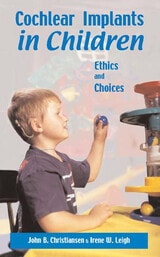
Cochlear Implants in Children
Ethics and ChoicesJohn B. Christiansen
Gallaudet University Press, 2002
Cochlear Implants in Children: Ethics and Choices addresses every facet of the ongoing controversy about implanting cochlear hearing devices in children as young as 12 months old and in some cases, younger. Authors John B. Christiansen and Irene W. Leigh and contributors Jay Lucker and Patricia Elizabeth Spencer analyzed the sensitive issues connected with the procedure by reviewing 439 responses to a survey of parents with children who have cochlear implants. They followed up with interviews of the parents of children who have had a year's experience using their implants, and also the children themselves. Their findings shape the core of this useful and telling study.
Cochlear Implants begins with a history of their development and an explanation of how implants convert sound into electric impulses that stimulate the brain. The second section focuses on pediatric implants, starting with the ways parents coped with the discovery that their child was deaf. Parents share how they learned about cochlear implants and how they chose an implant center. They also detail their children's experiences with the implants after surgery, and their progress with language acquisition and in school.
The final part treats the controversy associated with cochlear implants, particularly the reaction of the Deaf community and the ethics of implanting young children without their consent. Cochlear Implants concludes with sage observations and recommendations for parents and professionals that complete it as the essential book on the pros and cons of this burgeoning technology.
Ethics by Committee
A History of Reasoning Together about Medicine, Science, Society, and the StateNoortje Jacobs
University of Chicago Press, 2022
Ethics boards have become obligatory passage points in today’s medical science, and we forget how novel they really are. The use of humans in experiments is an age-old practice that records show goes back to at least the third century BC, and it has been popular as a practice since the early modern period. Yet in most countries around the world, hardly any formal checks and balances existed to govern the communal oversight of experiments involving human subjects until at least the 1960s. Ethics by Committee traces the rise of ethics boards for human experimentation in the second half of the twentieth century.
Using the Netherlands as a case study, historian Noortje Jacobs shows how the authority of physicians to make decisions about clinical research in this period gave way in most developed nations to formal mechanisms of communal decision-making that served to regiment the behavior of individual researchers. This historically unprecedented change in scientific governance came out of the growing international wariness of medical research in the decades after World War II and was meant to solidify a new way of reasoning together in liberal democracies about medicine and science. But what reasoning together meant, and who was invited to participate, changed drastically over time. In detailing this history, Jacobs shows that research ethics committees were originally intended not only to make human experimentation more ethical but also to raise its epistemic quality and intensify the use of new clinical research methods. By examining complex negotiations over the appropriate governance of human subjects research, Ethics by Committee is an important contribution to our understanding of the randomized controlled trial and the history of research ethics and bioethics more generally.
Global Bioethics
Building on the Leopold LegacyVan Rensselaer Potter
Michigan State University Press, 1988
Van Rensselaer Potter created and defined the term "bioethics" in 1970, to describe a new philosophy that sought to integrate biology, ecology, medicine, and human values. Bioethics is often linked to environmental ethics and stands in sharp contrast to biomedical ethics. Because of this confusion (and appropriation of the term in medicine), Potter chose to use the term "Global Bioethics" in 1988. Potter's definition of bioethics from Global Bioethics is, "Biology combined with diverse humanistic knowledge forging a science that sets a system of medical and environmental priorities for acceptable survival."
Handbook for Rural Health Care Ethics
A Practical Guide for ProfessionalsEdited by William A. Nelson
Dartmouth College Press, 2010

In Search of the Modern Hippocrates
Roger J. Bulger
University of Iowa Press, 1987
The ancient Hippocratic oath that every doctor pledges upon graduation from medical school is a code based on genuine devotion to people and a desire to serve them. It is also a code in urgent need of updating to reflect the technological and moral changes of modern society and the complicated dilemmas facing every practicing physician.
This collection of essays by some of the wisest observers of modern medicine probes the various forces affecting health care today: the power of the new technology in diagnosing and treating illnesses, the growing appreciation of mind/body interactions, the emergence of corporate hospitals and health care centers, and, most importantly, the essence of physicianhood—what makes a doctor want to practice medicine.
In considering these issues, the essayists question whether the medical-industrial complex will destroy physicians as we know them, making doctors employees of large profit-making institutions and more responsible to their companies than to their patients. Will increasing versatility in technological medicine remove doctors even further from the patient's bedside, weakening the diminishing bond between patient and doctor? Are there points of contact between western "scientific" medicine and holistic practices? Is there a place in modern medicine for work therapy and the placebo effect?
Each of these issues prevalent in medicine today has, in its own particular way, an effect upon the core relationship between doctor and patient. In Search of the Modern Hippocrates is dedicated to the premise that current changes in medicine can produce an altered and strengthened medical profession resolved to preserve the inextricable link between commitment and care. Ending with the development of a modern oath of ethics, it provides an important guide to medicine in the complex world we now face.
Integrity in Health Care Institutions
Humane Environments for Teaching, Inquiry, and HealingRuth Ellen Bulger
University of Iowa Press, 1990
The twelve essays in this stimulating volume, written by health care professionals and others working with the important issue of institutional ethics, focus on the world of academic health centers and provide rich, informed commentaries on significant problems integral to the character and work of those centers. Daniel Steiner demonstrates how the viability of independent research may be threatened by university liaisons with industry. Donald Frederickson traces the history of the National Institutes of Health response to the ethical challenges in clinical investigation and fetal research. Edmund Pellegrino recommends ways in which health-related institutions may translate their concern into action. Robert Coles examines the tensions between institutional and personal values in a very provocative way. Other directions are explored by essayists Roger Bulger, Stephen Toulmin, H. Tristram Engelhardt, Kim Dunn, Mitchell Rabkin, James Haughton, Lawrence Green, and the editors themselves.
Every essay in this wide-ranging collection reveals the implications and effects of institutional values. The end result is a clear picture of conflicts of values: ethical, social, economic, ethnic, cultural, and pedagogic. Integrity in Health Care Institutions points out the need for a deliberate attempt to sort out the values of institutions and, when they are fully and clearly displayed, to use priorities as a guide to satisfying the obligations of academic health centers to those who work within their walls; to the patients, students, scientists, and teachers they serve; and to society in general.
Physicians and nurses, hospital and university administrators, attorneys, sociologists, and everyone concerned about the moral interaction between institutions and individuals will want to read this book.
Intensive Care
Medical Ethics and the Medical ProfessionRobert Zussman
University of Chicago Press, 1992
His book is a portrait of the way careful planning is undermined by the unpredictability of illness and the persistence of self-interest, by high principle and curious compromise.
Intuition in Medicine
A Philosophical Defense of Clinical ReasoningHillel D. Braude
University of Chicago Press, 2012
Intuition is central to discussions about the nature of scientific and philosophical reasoning and what it means to be human. In this bold and timely book, Hillel D. Braude marshals his dual training as a physician and philosopher to examine the place of intuition in medicine.
Liminal Lives
Imagining the Human at the Frontiers of BiomedicineSusan Merrill Squier
Duke University Press, 2004
Drawing on archival materials of twentieth-century biology; little-known works of fiction and science fiction; and twentieth- and twenty-first century U.S. and U.K. government reports by the National Institutes of Health, the Parliamentary Advisory Group on the Ethics of Xenotransplantation, and the President’s Council on Bioethics, she examines a number of biomedical changes as each was portrayed by scientists, social scientists, and authors of fiction and poetry. Among the scientific developments she considers are the cultured cell, the hybrid embryo, the engineered intrauterine fetus, the child treated with human growth hormone, the process of organ transplantation, and the elderly person rejuvenated by hormone replacement therapy or other artificial means. Squier shows that in the midst of new phenomena such as these, literature helps us imagine new ways of living. It allows us to reflect on the possibilities and perils of our liminal lives.
Listening to the Whispers
Re-thinking Ethics in HealthcareEdited by Christine Sorrell Dinkins and Jeanne Merkle Sorrell
University of Wisconsin Press, 2006
Listening to the Whispers gives voice to scholars in philosophy, medical anthropology, physical therapy, and nursing, helping readers re-think ethics across the disciplines in the context of today's healthcare system. Diverse voices, often unheard, challenge readers to enlarge the circle of their ethical concerns and look for hidden pathways toward new understandings of ethics. Essays range from a focus on the context of corporatization and managed care environments to a call for questioning the fundamental values of society as these values silently affect many others in healthcare. Each chapter is followed by a brief essay that highlights issues useful for scholarly research and classroom discussion. The conversations of interpretive research in healthcare contained in this volume encourage readers to re-think ethics in ways that will help to create an ethical healthcare system with a future of new possibilities.
Outstanding Academic Title, Choice Magazine
Materia Medica
Black Women, White Doctors, and Spectacular GynecologyNicole N. Ivy
Duke University Press, 2026
Medicine, Health Care, & Ethics
Catholic VoicesJohn F. Morris
Catholic University of America Press, 2007

No Longer Patient
Feminist Ethics and Health CareSusan Sherwin
Temple University Press, 1992
Ordinary Medicine
Extraordinary Treatments, Longer Lives, and Where to Draw the LineSharon R. Kaufman
Duke University Press, 2015
Osler's A Way of Life and Other Addresses, with Commentary and Annotations
Sir William Osler. Edited by Shigeaki Hinohara and Hisae Niki.
Duke University Press, 2001
While Osler’s talks were frequently published during his lifetime and they have been published individually and in different compilations since his death, none contain the over 1500 annotations that appear here, notes that serve to explain the many philosophical, biblical, historical, and literary allusions contained in Osler’s writings.
This thoroughly explicated selection of Sir William Osler’s writings will be cherished by physicians, medical students, nurses, philosophers, theologians, and ethicists in this—and future—generations.
Private Bodies, Public Texts
Race, Gender, and a Cultural BioethicsKarla FC Holloway
Duke University Press, 2011
Professional Ethics and Primary Care Medicine
Beyond Dilemmas and DecorumHarmon L. Smith and Larry R. Churchill
Duke University Press, 1986

Sex in an Age of Technological Reproduction
<i>ICSI<i/> and <i>Taboos<i/>Carl Djerassi
University of Wisconsin Press, 2008
Slow Cures and Bad Philosophers
Essays on Wittgenstein, Medicine, and BioethicsCarl Elliott, ed.
Duke University Press, 2001
As Elliott explains in his introduction, Wittgenstein’s philosophy runs against the grain of most contemporary bioethics scholarship, which all too often ignores the context in which moral problems are situated and pays little attention to narrative, ethnography, and clinical case studies in rendering bioethical judgments. Such anonymous, impersonal, rule-writing directives in which health care workers are advised how to behave is what this volume intends to counteract. Instead, contributors stress the value of focusing on the concrete particulars of moral problems and write in the spirit of Wittgenstein’s belief that philosophy should be useful. Specific topics include the concept of “good dying,” the nature of clinical decision making, the treatment of neurologically damaged patients, the moral treatment of animals, and the challenges of moral particularism.
Inspired by a philosopher who deplored “professional philosophy,” this work brings some startling insights and clarifications to contemporary ethical problems posed by the realities of modern medicine.
Contributors. Larry Churchill, David DeGrazia, Cora Diamond, James Edwards, Carl Elliott, Grant Gillett, Paul Johnston, Margaret Olivia Little, James Lindemann Nelson, Knut Erik Tranoy

Speaking for the Dying
Life-and-Death Decisions in Intensive CareSusan P. Shapiro
University of Chicago Press, 2019
Speaking for the Dying tells their story, drawing on daily observations over more than two years in two intensive care units in a diverse urban hospital. From bedsides, hallways, and conference rooms, you will hear, in their own words, how physicians really talk to families and how they respond. You will see how decision makers are selected, the interventions they weigh in on, the information they seek and evaluate, the values and memories they draw on, the criteria they weigh, the outcomes they choose, the conflicts they become embroiled in, and the challenges they face. Observations also provide insight into why some decision makers authorize one aggressive intervention after the next while others do not—even on behalf of patients with similar problems and prospects. And they expose the limited role of advance directives in structuring the process decision makers follow or the outcomes that result.
Research has consistently found that choosing life or death for another is one of the most difficult decisions anyone can face, sometimes haunting families for decades. This book shines a bright light on a role few of us will escape and offers steps that patients and loved ones, health care providers, lawyers, and policymakers could undertake before it is too late.
The Doctor Who Would Be King
Guillaume Lachenal
Duke University Press, 2022
The Ethics of Organ Transplantation
Steven J. Jensen
Catholic University of America Press, 2011

The Last Physician
Walker Percy and the Moral Life of MedicineCarl Elliott and John Lantos, eds.
Duke University Press, 1999
The contributors—physicians, philosophers, and literary critics—examine the relevance of Percy’s work to current dilemmas in medical education and health policy. They reflect upon the role doctors and patients play in his novels, his family legacy of depression, how his medical background influenced his writing style, and his philosophy of psychiatry. They contemplate the private ways in which Percy’s work affected their own lives and analyze the author’s tendency to contrast the medical-scientific worldview with a more spiritual one. Assessing Percy’s stature as an author and elucidating the many ways that reading and writing can combine with diagnosing and treating to offer an antidote to despair, they ask what it means to be a doctor, a writer, and a seeker of cures and truths—not just for the body but for the malaise and diseased spirituality of modern times.
This collection will appeal to lovers of literature as well as medical professionals—indeed, anyone concerned with medical ethics and the human side of doctoring.
Contributors. Robert Coles, Brock Eide, Carl Elliott, John D. Lantos, Ross McElwee, Richard Martinez, Martha Montello, David Schiedermayer, Jay Tolson, Bertram Wyatt-Brown, Laurie Zoloth-Dorfman
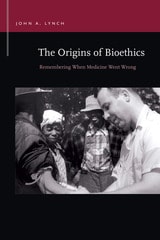
The Origins of Bioethics
Remembering When Medicine Went WrongJohn A. Lynch
Michigan State University Press, 2019
Troubled Bodies
Critical Perspectives on Postmodernism, Medical Ethics, and the BodyPaul A. Komesaroff
Duke University Press, 1995
These essays examine the ways in which the consideration of ethical questions is shaped by the structures of knowledge and communication at work in clinical practice, by current assumptions regarding the concept of the body, and by the social and political implications of both. Representing various perspectives including medicine, nursing, philosophy, and sociology, these essays look anew at issues of abortion, reproductive technologies, the doctor-patient relationship, the social construction of illness, the cultural assumptions and consequences of medicine, and the theoretical presuppositions underlying modern psychiatry. Diverging from the tenets of mainstream bioethics, Troubled Bodies suggests that, rather than searching for the correct "coherent perspective" from which to draw ethical principles, we must apprehend the complexity and diversity of the discursive systems within which we dwell.
Vital Conflicts in Medical Ethics
A Virtue Approach to Craniotomy and Tubal PregnanciesMartin Rhonheimer
Catholic University of America Press, 2009