Results by title
273 books match the query 'Memoir' and 28 start with a
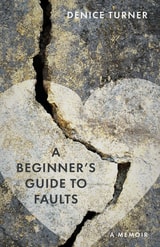
A Beginner's Guide to Faults
A MemoirDenice Turner
University of Nevada Press, 2026
A bighearted memoir of fidelity and forgiveness, A Beginner’s Guide to Faults draws on the language of geology to explore fault lines in a long marriage—deep fractures formed by unmet needs, quiet betrayals, and the human longing for connection and freedom.
After twenty-five years of marriage, Denice is blindsided when her husband reveals his romance with a Las Vegas stripper. This latest move in their tit-for-tat game of infidelity is too much for her. She files for divorce and heads to South Dakota, where she hopes to fulfill her wildest fantasies. Instead, plagued by guilt about her own faults, she wrecks each new relationship, convinced that she is unforgivable.
Through fleeting romances and soul-deep self-reflection, Denice rebuilds a life and a family on her own terms. A Beginner’s Guide to Faults is a memoir of transformation—one that shows how love can change without ever being lost.
A Beginner's Guide to Faults
A MemoirDenice Turner
University of Nevada Press, 2026
A bighearted memoir of fidelity and forgiveness, A Beginner’s Guide to Faults draws on the language of geology to explore fault lines in a long marriage—deep fractures formed by unmet needs, quiet betrayals, and the human longing for connection and freedom.
After twenty-five years of marriage, Denice is blindsided when her husband reveals his romance with a Las Vegas stripper. This latest move in their tit-for-tat game of infidelity is too much for her. She files for divorce and heads to South Dakota, where she hopes to fulfill her wildest fantasies. Instead, plagued by guilt about her own faults, she wrecks each new relationship, convinced that she is unforgivable.
Through fleeting romances and soul-deep self-reflection, Denice rebuilds a life and a family on her own terms. A Beginner’s Guide to Faults is a memoir of transformation—one that shows how love can change without ever being lost.
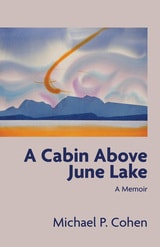
A Cabin Above June Lake
A MemoirMichael P. Cohen
University of Nevada Press, 2027
What does it mean to belong to a place that can never belong to you?
Set in the high country above June Lake on the eastern slope of the Sierra Nevada, this reflective narrative explores the enduring relationship between people and landscape. From their modest cabin near the headwaters of Reversed Creek, Michael and Valerie Cohen look across June Lake toward the vast expanse of the Great Basin. They are drawn to the region by its beauty and solitude, and the conviction that they are exactly where they ought to be.
Yet living in a place also means witnessing its transformation. Over nearly fifty years, the Cohens observe changes that reshape the Mono Basin and surrounding mountains: shifting economies, expanding development, record-breaking winters, wildfire threats, and the gradual erosion of community traditions.
Part memoir, part environmental reflection, part cultural history, this meditative narrative draws on writers and thinkers such as Ralph Waldo Emerson, Aldo Leopold, and Lew Welch. The Cohens’ efforts to maintain an aging cabin and a life together become a lens through which to examine stewardship, memory, resilience, and loss. This meditation on place returns to a question that has occupied generations of writers and naturalists: As the world continually reinvents itself, how must those who live within it respond?
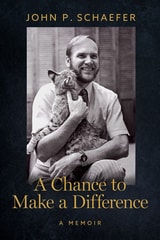
A Chance to Make a Difference
A MemoirJohn P. Schaefer
University of Arizona Press, 2025
Southwest Books of the Year Top Pick
John P. Schaefer was only thirty-six years old when he assumed the role of fifteenth president of the University of Arizona in 1971. The son of hardworking German immigrants, Schaefer grew up in Queens, New York, where childhood centered on sports, academics, and the great outdoors.
Earning a PhD in chemistry in 1958, Dr. Schaefer’s career skyrocketed through the ranks of academia, moving him from junior faculty to university president in a mere decade. As president, he led the University of Arizona through a transformational period of growth and is credited with securing the university’s status as a top-tier research institution.
A Chance to Make a Difference recounts poignant, eye-opening, and often humorous stories from childhood to presidency, revealing the characteristics of an inspiring university leader.
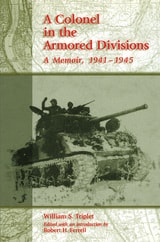
A Colonel in the Armored Divisions
A Memoir, 1941-1945William S. Triplet, Edited by Robert H. Ferrell
University of Missouri Press, 2001
In this fascinating memoir William S. Triplet continues the saga begun in his earlier book, A Youth in the Meuse-Argonne: A Memoir, 1917-1918. After serving in World War I, Triplet chose to become a career military man and entered West Point. Upon graduation in 1924, his assignments were routine—to regiments in the Southwest and in Panama or as an officer in charge of Reserve Officers' Training Corps units or of men sent to a tank school. All this changed, however, when a new war opened in Europe.
From 1940 to1942, Triplet was assigned to the Infantry Board at Fort Benning, Georgia, where he engaged in testing new weapons and machines for the expanding army. He became a full colonel in December 1942. After leaving Benning he received posts with four armored forces: the Thirteenth Armored Division forming in the United States, an amphibious tank and troop carrier group training at Fort Ord, California, and the Second and Seventh Armored Divisions in Europe. His extraordinary abilities as a tank commander became evident in the Seventh Armored, where he took over a four-thousand-man unit known as Combat Command A. He was soon moving from triumph to triumph as he led his unit into Germany. Here was much room for professional judgment and decision, and the colonel was in his element. In the war's last days Triplet and his men fought their way to the Baltic, preventing many German troops from joining in the defense of Berlin against the advancing Soviet army.
Although Triplet was recommended for brigadier general, Dwight D. Eisenhower believed the U.S. Army had enough generals to finish the war; thus, the indomitable Triplet served out the few remaining years of his career as a colonel. After retiring in 1954, Triplet moved to Leesburg, Virginia, where he soon began to mull over his military experiences. Fascinated by the history he had witnessed, engaged by the attraction of writing about it, he recorded his memories with a combination of verve, thoughtfulness, and harsh judgments concerning ranking officers he considered incompetent— generals not excluded.
Through his annotations, Robert H. Ferrell provides the historical context for Triplet's experiences. Well written and completely absorbing, A Colonel in the Armored Divisions provides readers the rare opportunity to see firsthand what a real professional in the U.S. Army thought about America's preparation for and participation in the war against Germany and Japan.
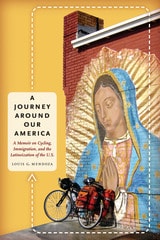
A Journey Around Our America
A Memoir on Cycling, Immigration, and the Latinoization of the U.S.By Louis G. Mendoza
University of Texas Press, 2012
Immigration and the growing Latino population of the United States have become such contentious issues that it can be hard to have a civil conversation about how Latinoization is changing the face of America. So in the summer of 2007, Louis Mendoza set out to do just that. Starting from Santa Cruz, California, he bicycled 8,500 miles around the entire perimeter of the country, talking to people in large cities and small towns about their experiences either as immigrants or as residents who have welcomed—or not—Latino immigrants into their communities. He presented their enlightening, sometimes surprising, firsthand accounts in Conversations Across Our America: Talking About Immigration and the Latinoization of the United States.
Now, in A Journey Around Our America, Mendoza offers his own account of the visceral, emotional, intellectual, and spiritual dimensions of traveling the country in search of a deeper, broader understanding of what it means to be Latino in the United States in the twenty-first century. With a blend of first- and second-person narratives, blog entries, poetry, and excerpts from conversations he had along the way, Mendoza presents his own aspirations for and critique of social relations, political ruminations, personal experiences, and emotional vulnerability alongside the stories of people from all walks of life, including students, activists, manual laborers, and intellectuals. His conversations and his experiences as a Latino on the road reveal the multilayered complexity of Latino life today as no academic study or newspaper report ever could.
A Life Teaching Languages
A Memoir from Mississippi to the BronxLinda Watkins-Goffman
University of Michigan Press, 2015
In this memoir of an educator, Watkins-Goffman offers insights she has gained from her years of traveling, teaching, and writing and shares how her experiences have shaped her teaching philosophy. According to Watkins-Goffman, teachers must communicate authentically to teach effectively and, to accomplish this, they must connect their own experiences in some way with those of their students. The stories she tells are sure to resonate with pre-service and practicing teachers alike. Her reflections about her own experiences will be useful to readers who plan to become ESL educators, or those who simply seek inspiration about teaching.

A Memoir
John A. Hannah
Michigan State University Press, 1980
This is a very personal look at the growth and evolution of Michigan State University, as seen from the eyes of its dynamic president. As twelfth president of Michigan State University, John Alfred Hannah served from July 1, 1941, to April 1, 1969. His tenure was characterized by extensive growth of the University, in both size and enrollments. President Hannah's activities were not limited to the University, as he filled a variety of positions in both the federal government and private industry.
A Mother's Cry
A Memoir of Politics, Prison, and Torture under the Brazilian Military DictatorshipLina Penna Sattamini
Duke University Press, 2010
Lina Penna Sattamini describes her son’s tribulations through letters exchanged among family members, including Marcos, during the year that he was imprisoned. Her narrative is enhanced by Marcos’s account of his arrest, imprisonment, and torture. James N. Green’s introduction provides an overview of the political situation in Brazil, and Latin America more broadly, during that tumultuous era. In the 1990s, some Brazilians began to suggest that it would be best to forget the trauma of that era and move on. Lina Penna Sattamini wrote her memoir as a protest against historical amnesia. First published in Brazil in 2000, A Mother’s Cry is testimonial literature at its best. It conveys the experiences of a family united by love and determination during years of political repression.
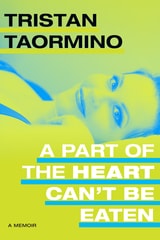
A Part of the Heart Can't Be Eaten
A MemoirTristan Taormino
Duke University Press, 2023
Tristan’s world began to fall apart when her dad was diagnosed with AIDS. After a series of devastating events, she moved to the messy, glorious world of 1990s New York City. In the midst of grief and depression, she helped change queer sexual subculture with her zine Pucker Up, her infamous The Village Voice column, and her editorship of legendary lesbian porn magazine On Our Backs. After the publication of her first book, The Ultimate Guide to Anal Sex for Women, Tristan followed her own path that marked the beginning of her work as a trailblazing feminist pornographer.
After a lifetime of outrageous adventures, Tristan reflects on the bonds, loss, and mental-health struggles that shaped her. She weaves together history from her father’s unpublished memoir, exploring the surprising ways their personal patterns converge and diverge. Bracingly emotional and erotically charged, A Part of the Heart Can’t Be Eaten reveals the transformative power of queer pleasure and defiance.
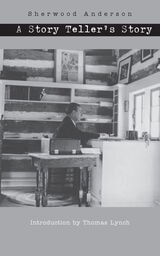
A Story Teller's Story
A MemoirSherwood Anderson
University of Michigan Press, 2005
"The voice of the soliloquist . . . amplifies the drama of A Story Teller's Story, as does the persistent theme of escape, from an America of fact and factories, marketing and manufacturing, to the borderless Ohios of imagination and creation."
—From the introduction by Thomas Lynch
A Thrilling Narrative
The Memoir of a Southern UnionistDennis E. Haynes
University of Arkansas Press, 2006
A Youth in the Meuse-Argonne
A Memoir, 1917-1918William S. Triplet, Edited & Intro by Robert H. Ferrell
University of Missouri Press, 2027
A Youth in the Meuse-Argonne is a firsthand account of World War I through the eyes of an enlisted soldier. William S. Triplet was a seventeen-year-old junior in high school when, on April 2, 1917, President Woodrow Wilson asked for a declaration of war. Passed by Congress and signed by the nation's chief executive four days later, this declaration stirred the superintendent of schools in Triplet's hometown of Sedalia, Missouri, to make an emotional plea to all eligible students to join the armed forces. "Any student who felt called upon to fight, bleed, and die for his country could receive his graduation diploma upon his return from the war." Triplet was eighteen months short of being of legal enlistment age, but the army didn't check birth certificates. The appeal of military benefits—room and board, travel, adventure, and fifteen dollars a month, plus knowing he would receive his high school diploma—was too much for the young Triplet to pass up. Thus began William S. Triplet's remarkable career in the U.S. Army, in which he served until his retirement as a full colonel in 1954.
In A Youth in the Meuse-Argonne, Triplet covers the early years of his service in Company D, 140th Infantry Regiment, 35th Division, from shortly after the time of his enlistment in 1917 to his honorable discharge in 1919. During those months he participated in several actions, most notably the battle of the Meuse-Argonne. With both elegance and a touch of humor, he masterfully portrays the everyday life of the soldier, humanizing the men with whom he served. His vivid depictions of how soldiers fought give the reader a much clearer view of the terrifying experiences of combat. He also touches on the special problems he encountered as a sergeant with an infantry platoon composed of soldiers from many different walks of life.
In writing this memoir, Triplet relied heavily on a detailed diary that he kept while he was in France in 1918. Through his annotations, Robert H. Ferrell provides the historical context for Triplet's firsthand experiences. The result is a compelling memoir that offers insight into the lives of the soldiers who served during World War I. Anyone with an interest in World War I or military history in general will find A Youth in the Meuse-Argonne of great interest.
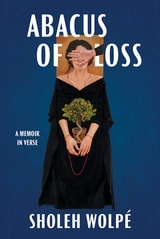
Abacus of Loss
A Memoir in VerseSholeh Wolpé
University of Arkansas Press, 2022
lbert Einstein said, “Not everything that can be counted counts, and not everything that counts can be counted.” It is in this vein that Sholeh Wolpé’s mesmerizing memoir in verse unfolds. In this lyrical and candid work, her fifth collection of poems, Wolpé invokes the abacus as an instrument of remembering. Through different countries and cultures, she carries us bead by bead on a journey of loss and triumph, love and exile. In the end, the tally is insight, not numbers, and we arrive at a place where nothing is too small for gratitude.
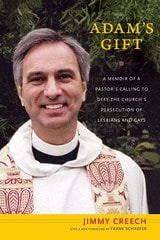
Adam's Gift
A Memoir of a Pastor's Calling to Defy the Church's Persecution of Lesbians and GaysJimmy Creech
Duke University Press, 2011
Adam’s visit prompted Creech to re-evaluate his belief that homosexuality was a sin, and to research the scriptural basis for the church’s position. He determined that the church was mistaken, that scriptural translations and interpretations had been botched and dangerously distorted. As a Christian, Creech came to believe that discriminating against lesbian, gay, bisexual, and transgender people was morally wrong. This understanding compelled him to perform same-gender commitment ceremonies, which conflicted with church directives. Creech was tried twice by The United Methodist Church, and, after the second trial, his ordination credentials were revoked. Adam’s Gift is a moving story and an important chapter in the unfinished struggle for lesbian, gay, bisexual, and transgender civil and human rights.
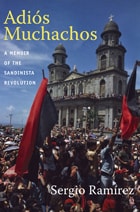
Adiós Muchachos
A Memoir of the Sandinista RevolutionSergio Ramírez
Duke University Press, 2012
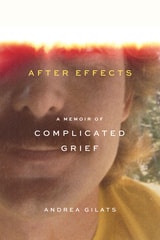
After Effects
A Memoir of Complicated GriefAndrea Gilats
University of Minnesota Press, 2021
An intensely moving and revelatory memoir of enduring and emerging from exceptional grief
To grieve after a profound loss is perfectly natural and healthy. To be debilitated by grief for more than a decade, as Andrea Gilats was, is something else. In her candid, deeply moving, and ultimately helpful memoir of breaking free of death’s relentless grip on her life, Gilats tells her story of living with prolonged, or “complicated,” grief and offers insight, hope, and guidance to others who suffer as she did.
Thomas Dayton, Andrea Gilats’s husband of twenty years, died at 52 after a five-month battle with cancer. In After Effects Gilats describes the desolation that followed and the slow and torturous twenty-year journey that brought her back to life. In the two years immediately following his death, Gilats wrote Tom daily letters, desperately trying to maintain the twenty-year conversation of their marriage. Excerpts from these letters reveal the depth of her despair but also the glimmer of an awakening as they also trace a different, more typical course of the grief experienced by one of Gilats's colleagues, also widowed. Gilats’s struggle to rescue herself takes her through the temptation of suicide, the threat of deadly illness, the overwhelming challenges of work, and the rigor of learning and eventually teaching yoga, to a moment of reckoning and, finally, reconciliation to a life without her beloved partner. Her story is informed by the lessons she learned about complicated grief as a disorder that, while intensely personal, can be defined, grappled with, and overcome.
Though complicated grief affects as many as one in seven of those stricken by the loss of a close loved one, it is little known outside professional circles. After Effects points toward a path of recuperation and provides solace along the way—a service and a comfort that is all the more timely and necessary in our pandemic-ravaged world of loss and isolation.
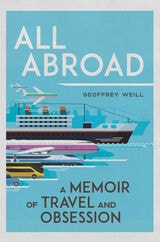
All Abroad
A Memoir of Travel and ObsessionGeoffrey Weill
University of Wisconsin Press, 2021
All Abroad is the memoir of a man hungry for the logistics of travel: getting there, staying there, and feeling at home on any continent. Woven into his entertaining anecdotes is an informative account of a lost era in travel. As a witness to compelling and monumental changes in the industry, Weill offers a unique view into how our vacations have been shaped deeply by human trends, tragedies, and technologies. While some long for the grandeur of tourism from decades ago, Weill insists that travel—the conveyances and hotels that await journey’s end—remains as glamorous as ever.
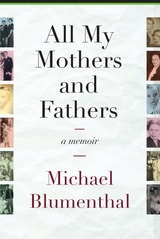
All My Mothers and Fathers
A MemoirMichael Blumenthal
West Virginia University Press, 2016
As fate would have it, his adoptive father, a German-Jewish refugee raised by a loveless and embittered stepmother after his own mother died in childbirth, has inflicted on his stepson a fate uncannily—and terrifyingly—similar to his own: Having first adopted Michael, in part, to help his dying wife, he then imposes on him the same sort of penurious and loveless stepmother whom he himself had had to survive. With these revelations, the "mysteries" that seem to have permeated Michael's childhood are laid bare, triggering a quest for belonging that will infiltrate the author's entire adult life.
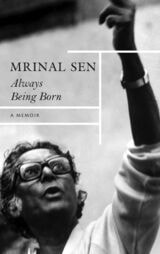
Always Being Born
A MemoirMrinal Sen
Seagull Books, 2004
“I am a filmmaker by accident and an author by compulsion,” claims Mrinal Sen, who became part of the great triumvirate of Bengali cinema—along with Satyajit Ray and Ritwik Ghatak—in the 1950s and ’60s when he founded the rebellious Indian New Wave. Throughout his career, he kept that fire of protest burning, his acute political awareness and left-wing orientation spurring his creativity. Over decades, the themes that pervaded his cinema mirrored the spectrum of human suffering and experience, and in turn crystallized the anger of a restive mind against social injustice, economic deprivation, and communal divide. In this memoir, a celebrated ambassador of Indian cinema on the global stage, for whom cinema became a lexicon that gave voice to the times, reflects on encounters with the legends of the world of images as well as his inspirations and obsessions—not least among them, the city of Calcutta. Always Being Born is a fascinating memoir of a great artist and a buoyant social commentator who continued to confront, fight, and survive on the very challenges that propelled him to look beyond and dream.
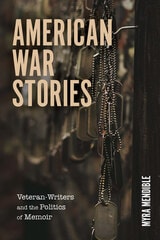
American War Stories
Veteran-Writers and the Politics of MemoirMyra Mendible
University of Massachusetts Press, 2021
American War Stories centers on an extensive selection of memoirs written by veterans of the Vietnam, Iraq, and Afghanistan conflicts—including Brian Turner's My Life as a Foreign Country, Marcus Luttrell's Lone Survivor, and Camilo Mejia's Road from ar Ramadi—to explore the complex relationship between memory and politics in the context of postmodern war. Placing veterans' stories in conversation with broader cultural and political discourses, Myra Mendible analyzes the volatile mix of agendas, identities, and issues informing veteran-writers' narrative choices to argue that their work plays an important, though underexamined, political function in how Americans remember and judge their wars.
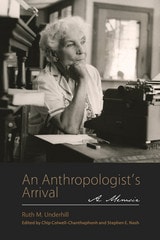
An Anthropologist's Arrival
A MemoirRuth M. Underhill, Edited by Chip Colwell-Chanthaphonh and Stephen E. Nash
University of Arizona Press, 2014
In brutally honest words, Underhill describes her uneven passage through life, beginning with a searing portrait of the Victorian restraints on women and her struggle to break free from her Quaker family’s privileged but tightly laced control. Tenderly and with humor she describes her transformation from a struggling “sweet girl” to wife and then divorcée. Professionally she became a welfare worker, a novelist, a frustrated bureaucrat at the Bureau of Indian Affairs, a professor at the University of Denver, and finally an anthropologist of distinction.
Her witty memoir reveals the creativity and tenacity that pushed the bounds of ethnography, particularly through her focus on the lives of women, for whom she served as a role model, entering a working retirement that lasted until she was nearly 101 years old.
No quotation serves to express Ruth Underhill’s adventurous view better than a line from her own poetry: “Life is not paid for. Life is lived. Now come.”
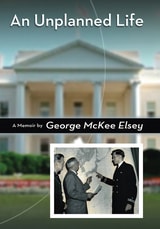
An Unplanned Life
A MemoirGeorge McKee Elsey
University of Missouri Press, 2005
Elsey’s duties continued with Harry Truman’s succession to the presidency. He decoded the famous message from Secretary of War Henry Stimson reporting the dropping of the atomic bomb on Hiroshima and carried it to President Truman. In 1947, he shed his Naval Reserve uniform and joined the White House’s civilian staff as assistant to the special counsel to the president. In 1949, he became administrative assistant to the president, and, in 1952, he became a member of the Mutual Security Agency staff. During those years, he grew very close to Harry Truman, and thus, a major portion of An Unplanned Life relates to his experiences then.
In the first postwar winter, Elsey was frequently the only staff member who accompanied President Truman on the USS Williamsburg. In September 1946, Elsey submitted a report to Truman on U.S.-Soviet relations, which came to be well known as the “Clifford-Elsey Report.” Providing Truman with notes for some two hundred of his “back-of-the-train” informal talks, Elsey played a part in the best remembered feature of the “Whistle-Stop Campaign” that resulted in “the political upset of the century.” In addition to his years at the White House, Elsey also touches on his post–White House years—his time in private industry, his months with Clark Clifford when Clifford was trying unsuccessfully to extricate America from Vietnam, and his long association with the American Red Cross.
An Unplanned Life is a fascinating look at the life of an extraordinary individual who played an important and unprecedented part in two different presidents’ decisions and affected the course of our nation. Anyone with an interest in history will find this memoir fascinating and invaluable.
Appalachia North
A MemoirMatthew Ferrence
West Virginia University Press, 2018
Appalachia North is the first book-length treatment of the cultural position of northern Appalachia—roughly the portion of the official Appalachian Regional Commission zone that lies above the Mason-Dixon line. For Matthew Ferrence this region fits into a tight space of not-quite: not quite “regular” America and yet not quite Appalachia.
Ferrence’s sense of geographic ambiguity is compounded when he learns that his birthplace in western Pennsylvania is technically not a mountain but, instead, a dissected plateau shaped by the slow, deep cuts of erosion. That discovery is followed by the diagnosis of a brain tumor, setting Ferrence on a journey that is part memoir, part exploration of geology and place. Appalachia North is an investigation of how the labels of Appalachia have been drawn and written, and also a reckoning with how a body always in recovery can, like a region viewed always as a site of extraction, find new territories of growth.

Archive Activism
Memoir of a "Uniquely Nasty" JourneyCharles Francis
University of North Texas Press, 2023
Artful Truths
The Philosophy of MemoirHelena de Bres
University of Chicago Press, 2021
Artful Truths offers a concise guide to the fundamental philosophical questions that arise when writing a literary work about your own life. Bringing a philosopher’s perspective to a general audience, Helena de Bres addresses what a memoir is, how the genre relates to fiction, memoirists’ responsibilities to their readers and subjects, and the question of why to write a memoir at all. Along the way, she delves into a wide range of philosophical issues, including the nature of the self, the limits of knowledge, the idea of truth, the obligations of friendship, the relationship between morality and art, and the question of what makes a life meaningful.
Written in a clear and conversational style, it offers a resource for those who write, teach, and study memoirs, as well as those who love to read them. With a combination of literary and philosophical knowledge, de Bres takes the many challenges directed at memoirists seriously, while ultimately standing in defense of a genre that, for all its perplexities—and maybe partly because of them—continually proves to be both beloved and valuable.
Artful Truths
The Philosophy of MemoirHelena de Bres
University of Chicago Press, 2021
Offers a philosophical perspective on the nature and value of writing a memoir.
Artful Truths offers a concise guide to the fundamental philosophical questions that arise when writing a literary work about your own life. Bringing a philosopher’s perspective to a general audience, Helena de Bres addresses what a memoir is, how the genre relates to fiction, memoirists’ responsibilities to their readers and subjects, and the question of why to write a memoir at all. Along the way, she delves into a wide range of philosophical issues, including the nature of the self, the limits of knowledge, the idea of truth, the obligations of friendship, the relationship between morality and art, and the question of what makes a life meaningful.
Written in a clear and conversational style, it offers a resource for those who write, teach, and study memoirs, as well as those who love to read them. With a combination of literary and philosophical knowledge, de Bres takes the many challenges directed at memoirists seriously, while ultimately standing in defense of a genre that, for all its perplexities—and maybe partly because of them—continually proves to be both beloved and valuable.
As the Twig Is Bent
A MemoirWallace Byron Grange, Edited by Joseph L. Breitenstein and Richard P. Thiel
University of Wisconsin Press, 2020
Written when Grange was in his sixties, As the Twig Is Bent conveys how a leading conservationist was formed through his early relationship to nature. In beautifully composed vignettes, he details encounters both profound and minute, from the white-footed mice attracted by cookie crumbs in his boyhood clubhouse to the sounds of great horned owls echoing through the wintry woods. As he develops his own understanding of the natural world, he comes to an awareness of the dramatic and devastating role of humankind on ecosystems. Grange’s poignant observations still resonate today amid global conversations about the fate of our natural resources and climate change.