Results by title
18 books match the query 'Metropolis'
Berlin
Culture and MetropolisCharles Haxthausen
University of Minnesota Press, 1991
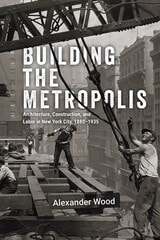
Building the Metropolis
Architecture, Construction, and Labor in New York City, 1880–1935Alexander Wood
University of Chicago Press, 2025
Between the 1880s and the 1930s, New York City experienced explosive growth as nearly a million buildings, dozens of bridges and tunnels, hundreds of miles of subway lines, and thousands of miles of streets were erected to meet the needs of an ever-swelling population. This landscape—jagged with skyscrapers, rattling with the sound of mass transit, alive with people—made the city world-famous.
Building the Metropolis offers a revelatory look at this era of urban development by asking, “Who built New York, and how?” Focusing on the work of architects, builders, and construction workers, Alexander Wood chronicles the physical process of the city’s rapid expansion. New York’s towering buildings and busy thoroughfares aren’t just stylish or structural marvels, Wood shows, but the direct result of the many colorful personalities who worked in one of the city’s largest industries. This development boom drew on the resources of the whole community and required money, political will, creative vision, entrepreneurial drive, skilled workmanship, and hard physical labor. Wood shows this to be an even larger story as well. As cities became nodes in a regional, national, and global economy, the business of construction became an important motor of economic, political, and social development. While they held drastically different views on the course of urban growth, machine politicians, reformers, and radicals alike were all committed to city building on an epic scale.
Drawing on resources that include city archives and the records of architecture firms, construction companies, and labor unions, Building the Metropolis tells the story of New York in a way that’s epic, lively, and utterly original.
Building the Metropolis
Architecture, Construction, and Labor in New York City, 1880–1935Alexander Wood
University of Chicago Press, 2025
A sweeping history of New York that chronicles the construction of one of the world’s great cities.
Between the 1880s and the 1930s, New York City experienced explosive growth as nearly a million buildings, dozens of bridges and tunnels, hundreds of miles of subway lines, and thousands of miles of streets were erected to meet the needs of an ever-swelling population. This landscape—jagged with skyscrapers, rattling with the sound of mass transit, alive with people—made the city world-famous.
Building the Metropolis offers a revelatory look at this era of urban development by asking, “Who built New York, and how?” Focusing on the work of architects, builders, and construction workers, Alexander Wood chronicles the physical process of the city’s rapid expansion. New York’s towering buildings and busy thoroughfares aren’t just stylish or structural marvels, Wood shows, but the direct result of the many colorful personalities who worked in one of the city’s largest industries. This development boom drew on the resources of the whole community and required money, political will, creative vision, entrepreneurial drive, skilled workmanship, and hard physical labor. Wood shows this to be an even larger story as well. As cities became nodes in a regional, national, and global economy, the business of construction became an important motor of economic, political, and social development. While they held drastically different views on the course of urban growth, machine politicians, reformers, and radicals alike were all committed to city building on an epic scale.
Drawing on resources that include city archives and the records of architecture firms, construction companies, and labor unions, Building the Metropolis tells the story of New York in a way that’s epic, lively, and utterly original.

Chicago
Growth of a MetropolisHarold M. Mayer and Richard C. Wade
University of Chicago Press, 1969
This volume, however, which comprises over 1,000 pictures and 50 maps, tries to do more than show physical development—it attempts to suggest how the city expanded and why it looks the way it does. Because it asks different questions, this book differs markedly from other "pictorial histories" of American cities. Instead of emphasizing society and customs, this volume deals with the physical conditions of life. In place of the conventional interest in "founding fathers" and leading families, it is more concerned with street scenes and ordinary people. Without neglecting downtown, it also reaches into the residential areas and neighborhood shopping centers. Moreover, this volume is concerned with suburbs and "satellite" towns as well as the historic city.
"Chicago: Growth of a Metropolis is an incredible book. Like its subject it is excessive, and nothing succeeds like excess. It is handsomely designed, with a thousand photographs that document the physical growth and the spatial patterns of the city. . . . A dimensionalism comes through that no other city has. Carl Sandburg sang it in his poetry, and the book does more to grasp it . . . than any other book I have seen."—Hugh Newell Jacobson, New Republic
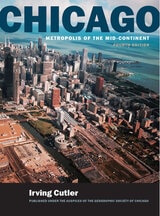
Chicago
Metropolis of the Mid-Continent, 4th EditionIrving Cutler. Foreword by James F. Marran
Southern Illinois University Press, 2006
Chicago: Metropolis of the Mid-Continent provides a comprehensive portrayal of the growth and development of Chicago from the mudhole of the prairie to today’s world-class city. This completely revised fourth edition skillfully weaves together the geography, history, economy, and culture of the city and its suburbs with a special emphasis on the role of the many ethnic and racial groups that comprise the “real Chicago” of its neighborhoods. Cutler demonstrates how the geography of “Chicagoland” and the influx of a diverse population spurred transportation, industrial technology, the economy, and sporadic planning to foster rapid urban growth, which brought both great progress and severe problems.
Through insightful analysis, Cutler also traces the demographic and societal changes to Chicago, critically examining such problems as the environment, education, racial tension, crime, welfare, housing, employment, and transportation. Richly illustrated with nearly three hundred drawings, photos, maps, and tables, the volume includes six appendices with sections dedicated to Chicago facts, population growth and income data, weather and climate, significant dates, and historic sites.
Denver
Mining Camp to MetropolisStephen J. Leonard
University Press of Colorado, 1990
In retelling the tale of conquest and city building, the authors explore the role of previously neglected peoples--notably women, ethnic minorities, and the working class--while weaving several key themes throughout the book: Denver's persistent reliance on natural resources, the important role of transportation to overcome the city's isolation, and the city's emphasis on privatization rather than on the public, common good. Denver: Mining Camp to Metropolis will fascinate and educated students and scholars, as well as all readers curious about the boom-and-bust metropolis of the Rockies.
Dwelling on the Future
Architecture of the Seaside, Middle England and the MetropolisPierre d'Avoine
University College London, 2020
D’Avoine covers a wide range of examples, including proposals for luxury housing and designs for low-cost dwellings, which all address the needs and desires of their potential inhabitants. The book explores an inclusive approach to the design of settlements—and not just in cities—that recognizes difference, an approach that demands a fresh political vision to resolve humanity’s increasing inequality, for the benefit of all. Simultaneously practical and aspirational, Dwelling on The Future casts a much needed light on our thoughts and aspirations, and on our definitions of home.
Errands into the Metropolis
New England Dissidents in Revolutionary LondonJonathan Beecher Field
Dartmouth College Press, 2012
Governing New York City
Politics in the MetropolisWallace Sayre
Russell Sage Foundation, 1960
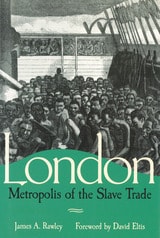
London, Metropolis of the Slave Trade
James A. Rawley & Foreword by David Eltis
University of Missouri Press, 2003
"The recognition that ordinary people could and did trade in slaves, as well as the fact that ordinary people became slaves, is, indeed, the beginning of comprehending the enormity of the forced migration of eleven million people and the attendant deaths of many more."
Rawley draws on material from the year 1700 to the American Civil War as he explores the role of London in the trade. He covers its activity as a port of departure for ships bound for Africa; its continuing large volume after the trade extended to Bristol and Liverpool; and the controversy between London’s parliamentary representatives, who defended the trade, and the abolitionist movement that was quartered there.
Sweeping in scope and thorough in its analysis, this collection of essays from a seasoned scholar will be welcomed by historians concerned with slavery and the slave trade, as well as by students just beginning their exploration of this subject.
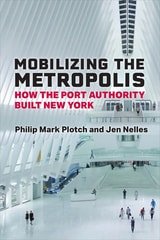
Mobilizing the Metropolis
How the Port Authority Built New YorkPhilip Mark Plotch and Jen Nelles
University of Michigan Press, 2023
The Port Authority of New York and New Jersey has morphed in ways that would be unrecognizable to its founders. Its mission evolved from improving rail freight to building motor vehicle crossings, airports, office towers, and industrial parks and taking control of a failing commuter rail line. In its early years, the agency was often viewed with admiration; however as it drew up plans, negotiated to take control of airfields and marine terminals, and constructed large bridges and tunnels, the Port Authority became the object of less favorable attention. It was attacked as a “super-government” that must be reined in, while the mayors of New York and Newark argued that it should be broken up with its pieces given to local governments for their own use.
Despite its criticisms and travails, for over half a century the Port Authority overcame hurdles that had frustrated other public and private efforts, built the world's longest suspension bridge, and took a leading role in creating an organization to reduce traffic delays in the New York-New Jersey region. How did the Port Authority achieve these successes? And what lessons does its history offer to other cities and regions in the United States and beyond? In a time when public agencies are often condemned as inefficient and corrupt, this history should provide some positive lessons for governmental officials and social reformers.
In 2021, the Port Authority marked its 100th birthday. Its history reveals a struggle between the public and private sectors, the challenges of balancing democratic accountability and efficiency, and the tension between regional and local needs. From selected Port Authority successes and failures, Philip Mark Plotch and Jen Nelles produce a significant and engaging account of a powerful governmental entity that offers durable lessons on collaboration, leadership, and the challenge of overcoming complex political challenges in modern America.
Mosques in the Metropolis
Incivility, Caste, and Contention in EuropeElisabeth Becker
University of Chicago Press, 2021
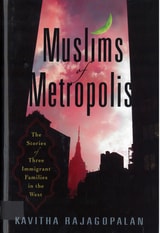
Muslims of Metropolis
The Stories of Three Immigrant Families in the WestRajagopalan, Kavitha
Rutgers University Press, 2008
The Muslim population globally is comprised of hundreds of ethnic, linguistic, and religious sub-communities. Yet, more often than not, the public conflates these diverse and unrelated communities, branding Muslim immigrants as a single, suspicious, and culturally antagonistic group of people. Generalizations like these have compromised many Muslim immigrants' sense of belonging and acceptance in places where they have lived, in some cases, for three or four generations.
In Muslims of Metropolis, Kavitha Rajagopalan takes a much needed step in personalizing and humanizing our understanding of the Muslim diaspora. Tracing the stories of three very different families-a Palestinian family moving to London, a Kurdish family moving to Berlin, and a Bangladeshi family moving to New York-she reveals a level of complexity and nuance that is seldom considered. Through their voices and in their words, Rajagopalan describes what prompted these families to leave home, what challenges they faced in adjusting to their new lives, and how they came to view their place in society. Interviews with community leaders, social justice organizations, and with academics and political experts in each of the countries add additional layers of insight to how broad political issues, like nationalist conflict, immigration reform, and antiterrorism strategies affect the lives of Muslims who have migrated in search of economic stability and personal happiness.
Although recent thinking about immigration policy in the United States and Europe emphasizes the importance of long-term integration, a global attitude that continues to sensationalize divisions between Muslim and other communities thwarts this possibility. Integration cannot occur with policy solutions alone-people must feel that they belong to a larger society. Whether read as simple stories or broader narratives, the voices in this revealing book are among the many speaking against generalization, prejudice, and fear that has so far surrounded Muslims living in the West.
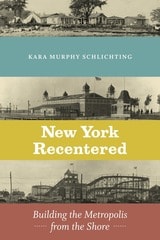
New York Recentered
Building the Metropolis from the ShoreKara Murphy Schlichting
University of Chicago Press, 2019
The history of New York City’s urban development often centers on titanic municipal figures like Robert Moses and on prominent inner Manhattan sites like Central Park. New York Recentered boldly shifts the focus to the city’s geographic edges—the coastlines and waterways—and to the small-time unelected locals who quietly shaped the modern city. Kara Murphy Schlichting details how the vernacular planning done by small businessmen and real estate operators, performed independently of large scale governmental efforts, refigured marginal locales like Flushing Meadows and the shores of Long Island Sound and the East River in the late nineteenth and early twentieth centuries. The result is a synthesis of planning history, environmental history, and urban history that recasts the story of New York as we know it.
Second Tier Cities
Rapid Growth beyond the MetropolisAnn Markusen
University of Minnesota Press, 1999
Analyzes and compares the rapid growth of medium-sized cities.
Over the past thirty years, transnational investment, trade, and government policies have encouraged the decentralization of national economies, disrupting traditional patterns of urban and regional growth. Many smaller cities-such as Seattle, Washington; Campinas, Brazil; Oita, Japan; and Kumi, Korea-have grown markedly faster than the largest metropolitan regions. These “second tier cities” are home to specialized industrial complexes that have taken root, provided significant job growth, and attracted mobile capital and labor.
The culmination of an ambitious five-year, fourteen-city research project conducted by an international team of economists and geographers, Second Tier Cities examines the potential of these new regions to balance uneven regional development, create good, stable jobs, and moderate hyper-urbanization. Comparing across national borders, the contributors describe four types of second tier cities: Marshallian industrial districts, hub-and-spoke cities, satellite platforms, and government-anchored complexes. They find that both industrial and regional policies have been important contributors to the rise of second tier cities, though the former often trump the latter. Lessons for local, national, and international policymakers are drawn. The authors are critical of devolution and argue that it must be accompanied by strong labor and environmental standards and mechanisms to overcome differential regional resource endowments.Contributors: Clelio Campolina Diniz, U Federal de Minas Gerais, Brazil; Masatomi Funaba, Kobe U of Commerce, Japan; Elyse Golob, NYC Economic Development Goup; Mia Gray, Cambridge U; Jun Ho Jeong, Oxford U; Sam Ock Park, Seoul National U; Mohammad Razavi; Fabiana Borges T. Santos, U Federal de Minas Gerais, Brazil; and Masayuki Sasaki, Kanzawa U, Japan.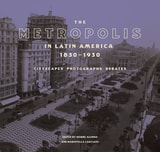
The Metropolis in Latin America, 1830-1930
Cityscapes, Photographs, DebatesIdurre Alonso
J. Paul Getty Trust, The, 2021
In the century between 1830 and 1930, following independence from Spain and Portugal, major cities in Latin America experienced large-scale growth, with the development of a new urban bourgeois elite interested in projects of modernization and rapid industrialization. At the same time, the lower classes were eradicated from old city districts and deported to the outskirts. The Metropolis in Latin America, 1830–1930 surveys this expansion, focusing on six capital cities—Havana, Mexico City, Rio de Janeiro, Buenos Aires, Santiago de Chile, and Lima—as it examines sociopolitical histories, town planning, art and architecture, photography, and film in relation to the metropolis.
Drawing from the Getty Research Institute’s vast collection of books, prints, and photographs from this period, largely unpublished until now, this volume reveals the cities’ changes through urban panoramas, plans depicting new neighborhoods, and photographs of novel transportation systems, public amenities, civic spaces, and more. It illustrates the transformation of colonial cities into the monumental modern metropolises that, by the end of the 1920s, provided fertile ground for the emergence of today’s Latin American megalopolis.
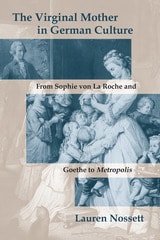
The Virginal Mother in German Culture
From Sophie von La Roche and Goethe to MetropolisLauren Nossett
Northwestern University Press, 2019
Examining the virginal mother in the first novel by a German woman (Sophie von La Roche), canonical texts by Goethe, nineteenth-century popular fiction, autobiographical works, and Thea von Harbou’s novel Metropolis and Fritz Lang’s film by the same name, this book highlights the virginal mother at pivotal moments in German history and cultural development: the entrance of women into the literary market, the Goethezeit, the foundation of the German Empire, and the volatile Weimar Republic. The Virginal Mother in German Culture will be of interest to students and scholars of German literature, history, cultural and social studies, and women’s studies.
Tourism and the Metropolis
Exploring Conceptual and Geographical FrontiersEdited by Maria Gravari-Barbas, Sébastien Jacquot, Maja Jovic, and Johannes Novy
University of Westminster Press, 2026
What forms does tourism take in today’s metropolises and metropolitan regions? How do these forms differ from tourism in other urban contexts? Are these differences significant enough to warrant the classification of ‘metropolitan tourism’ as a distinct type of urban tourism? What are their implications for policy and planning processes? How do policy and planning processes in different metropolises and metropolitan regions differ from each other, and what can they learn from each other? And finally, how could tourism in metropolises and metropolitan regions be made more sustainable, resilient, and inclusive?
Given the importance widely attributed to major metropolises and metropolitan regions as contemporary engines of economic development, innovation, and change, the widespread portrayal of tourism as a leading economic and social force of the 21st century, and the fact that the world's large metropolitan areas are key recipients of tourism flows, it is surprising how little systematic attention is paid to tourism in metropolitan contexts. This book aims to fill these gaps.