Results by title
18 books match the query 'Midwives'

A Pleasing Birth
Midwives And Maternity CareRaymond De Vries
Temple University Press, 2005
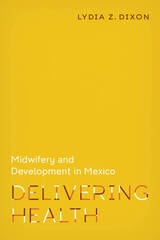
Delivering Health
Midwifery and Development in MexicoLydia Z. Dixon
Vanderbilt University Press, 2020
Maternal health outcomes are a key focus of global health initiatives. In Delivering Health, author Lydia Z. Dixon uncovers the ways such outcomes have been shaped by broader historical, political, and social factors in Mexico, through the perspectives of those who are at the front lines fighting for change: midwives.
Midwives have long been marginalized in Mexico as remnants of the country's precolonial past, yet Dixon shows how they are now strategically positioning themselves as agents of modernity and development. Midwifery education programs have popped up across Mexico, each with their own critique of the health care system and vision for how midwifery can help. Delivering Health ethnographically examines three such schools with very different educational approaches and professional goals. From San Miguel de Allende to Oaxaca to Michoacán and points between, Dixon takes us into the classrooms, clinics, and conferences where questions of what it means to provide good reproductive health care are being taught, challenged, and implemented. Through interviews, observational data, and even student artwork, we are shown how underlying inequality manifests in poor care for many Mexican women. The midwives in this book argue that they can improve care while also addressing this inequality. Ultimately, Delivering Health asks us to consider the possibility that marginalized actors like midwives may hold the solution to widespread concerns in health.

Desert Birthright
A Midwife's MemoirLori Wrankle
University of Utah Press, 2025
Lori Wrankle was sixteen when she helped deliver her first baby. “I witnessed the entire universe unfold at my feet,” she writes in Desert Birthright. Later, working as a hospital doula, Wrankle observed firsthand the suffering inflicted upon birthing women by male-dominated Western childbirth practices, from casual racism to unnecessary and nonconsensual procedures, including the dreaded “husband stitch.” After a traumatic labor and delivery of her own, she decided to take back woman-centered childbirth and start a homebirth midwifery practice.
Desert Birthright traverses twenty-five years of midwifery, often in fundamentalist polygamist circles, weaving together birth stories with childhood memories as Wrankle grapples with her shifting Mormon faith. Her poetic voice shines—a placenta becomes the tree of life, the folds in a baby’s arm layers of sand in the desert. Desert Birthright is a deeply personal story of life, death, and modern womanhood in the rural Southwest, and of one midwife’s journey of faith, self-discovery, and liberation in the face of adversity.
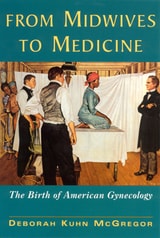
From Midwives to Medicine
The Birth of American GynecologyMcGregor, Deborah K
Rutgers University Press, 1998
Using patient records and archival material from the female governors and administrators at the hospital, From Midwives to Medicine shows how a new medical practice developed out of the changing patterns and historical experiences of childbirth, as well as out of the context of the social relations f the sexes. Sim's patients were slave women in the antebellum South, poor Irish immigrants in the industrial North, and upper-class white. Protestant, Manhattan socialites who sought help for their "hysterical" symptoms. During his career, which began in the South and flourished at the Women's Hospital in New York. Sims performed and perfected his technique to "cure" vesico-vaginal fistulas, the tears of childbirth, from which so many women suffered. But Sims achieved these successes on the operating table only after years of practicing his "silver suture" technique on unanesthetized slave women, who he believed "by the nature of their race... had a specific physiological tolerance for pain unknown to whites."
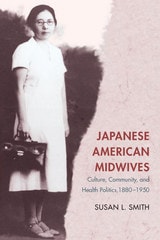
Japanese American Midwives
Culture, Community, and Health Politics, 1880-1950Susan L. Smith
University of Illinois Press, 2005
In the late nineteenth century, Japan's modernizing quest for empire transformed midwifery into a new woman's profession. With the rise of Japanese immigration to the United States, Japanese midwives (sanba) served as cultural brokers as well as birth attendants for Issei women. They actively participated in the creation of Japanese American community and culture as preservers of Japanese birthing customs and agents of cultural change.
Japanese American Midwives reveals the dynamic relationship between this welfare state and the history of women and health. Susan L. Smith blends midwives' individual stories with astute analysis to demonstrate the impossibility of clearly separating domestic policy from foreign policy, public health from racial politics, medical care from women's caregiving, and the history of women and health from national and international politics. By setting the history of Japanese American midwives in this larger context, Smith reveals little-known ethnic, racial, and regional aspects of women's history and the history of medicine.

La Partera
Story of a MidwifeFran Leeper Buss
University of Michigan Press, 2001
This is Jesusita's story, told in her own words. She describes her early training as a midwife, her forced departure from home due to two unmarried pregnancies, and her solitary struggle to support her children. La Partera tells how she gradually emerged as a leader in her community, painstakingly building by hand a small maternity center for her patients while gaining the respect of the Anglo medical community.
As Jesusita's story unfolds, so too does the story of the women of the region. Supplemental sections by the author illuminate Jesusita's culture and past, along with a historical account of the network of medical care provided by Hispanic and Anglo female healers. Illustrated with photographs of both people and places, La Partera reflects the culture of an era through the prism of Jesusita's hard and useful life.
Fran Leeper Buss lives and teaches in Tucson, Arizona.

La Partera
Story of a MidwifeFran Leeper Buss
University of Michigan Press, 1980

MAKING MIDWIVES LEGAL
Childbirth, Medicine, and the Law, Second EditionRaymond G. DeVries
The Ohio State University Press, 1996
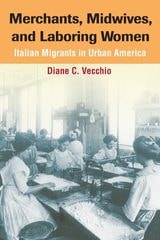
Merchants, Midwives, and Laboring Women
ITALIAN MIGRANTS IN URBAN AMERICADiane C. Vecchio
University of Illinois Press, 2006

Mesoamerican Healers
Edited by Brad R. Huber and Alan R. Sandstrom
University of Texas Press, 2001
Healing practices in Mesoamerica span a wide range, from traditional folk medicine with roots reaching back into the prehispanic era to westernized biomedicine. These sometimes cooperating, sometimes competing practices have attracted attention from researchers and the public alike, as interest in alternative medicine and holistic healing continues to grow.
Responding to this interest, the essays in this book offer a comprehensive, state-of-the-art survey of Mesoamerican healers and medical practices in Mexico and Guatemala. The first two essays describe the work of prehispanic and colonial healers and show how their roles changed over time. The remaining essays look at contemporary healers, including bonesetters, curers, midwives, nurses, physicians, social workers, and spiritualists. Using a variety of theoretical approaches, the authors examine such topics as the intersection of gender and curing, the recruitment of healers and their training, healers' compensation and workload, types of illnesses treated and recommended treatments, conceptual models used in diagnosis and treatment, and the relationships among healers and between indigenous healers and medical and political authorities.

Midwife to the Queen of France
Diverse ObservationsLouise Bourgeois
Iter Press, 2017
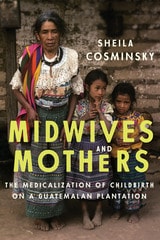
Midwives and Mothers
The Medicalization of Childbirth on a Guatemalan PlantationBy Sheila Cosminsky
University of Texas Press, 2016
The World Health Organization is currently promoting a policy of replacing traditional or lay midwives in countries around the world. As part of an effort to record the knowledge of local midwives before it is lost, Midwives and Mothers explores birth, illness, death, and survival on a Guatemalan sugar and coffee plantation, or finca, through the lives of two local midwives, Doña Maria and her daughter Doña Siriaca, and the women they have served over a forty-year period.
By comparing the practices and beliefs of the mother and daughter, Sheila Cosminsky shows the dynamics of the medicalization process and the contestation between the midwives and biomedical personnel, as the latter try to impose their system as the authoritative one. She discusses how the midwives syncretize, integrate, or reject elements from Mayan, Spanish, and biomedical systems. The midwives’ story becomes a lens for understanding the impact of medicalization on people’s lives and the ways in which women’s bodies have become contested terrain between traditional and contemporary medical practices. Cosminsky also makes recommendations for how ethno-obstetric and biomedical systems may be accommodated, articulated, or integrated. Finally, she places the changes in the birthing system in the larger context of changes in the plantation system, including the elimination of coffee growing, which has made women, traditionally the primary harvesters of coffee beans, more economically dependent on men.
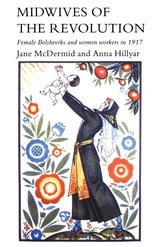
Midwives of the Revolution
Female Bolsheviks and Women Workers in 1917Jane McDermid
Ohio University Press, 1999
The Bolshevik seizure of power in 1917 and the ensuing communist regime have often been portrayed as a man’s revolution, with women as bystanders or even victims. Midwives of the Revolution examines the powerful contribution made by women to the overthrow of tsarism in 1917 and their importance in the formative years of communism in Russia.
Focusing on the masses as well as the high-ranking intelligentsia, Midwives of the Revolution is the first sustained analysis of female involvement in the revolutionary era of Russian history. The authors investigate the role of Bolshevik women and the various forms their participation took. Drawing on the experiences of representative individuals, the authors discuss the important relationship between Bolshevik women and the workers in the turbulent months of 1917.
The authors demonstrate that women were an integral part of the revolutionary process and challenge assumptions that they served merely to ignite an essentially masculine revolt. By placing women center stage, without exaggerating their roles, this study enriches our understanding of a momentous event in twentieth-century history.

Mormon Midwife
edited by Donna Toland Smart
Utah State University Press, 1999
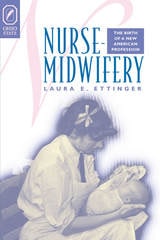
NURSE-MIDWIFERY
THE BIRTH OF A NEW AMERICAN PROFESSIONLaura E. Ettinger
The Ohio State University Press, 2006
Today, nurse-midwives have assumed a larger role in mainstream health care than before, yet they are still marginalized. As in the past, nurse-midwives’ futures will depend on continuing changes in American attitudes about childbirth, health care, and women professionals as well as on their own ability to adapt to the changes. The history of the profession suggests that nurse-midwives will continue to navigate in difficult waters in a middle space between the mainstream and the margins of medicine and between the nursing profession and midwifery traditions.

No Alternative
Childbirth, Citizenship, and Indigenous Culture in MexicoBy Rosalynn A. Vega
University of Texas Press, 2018
Recent anthropological scholarship on “new midwifery” centers on how professional midwives in various countries are helping women reconnect with “nature,” teaching them to trust in their bodies, respecting women’s “choices,” and fighting for women’s right to birth as naturally as possible. In No Alternative, Rosalynn A. Vega uses ethnographic accounts of natural birth practices in Mexico to complicate these narratives about new midwifery and illuminate larger questions of female empowerment, citizenship, and the commodification of indigenous culture, by showing how alternative birth actually reinscribes traditional racial and gender hierarchies.
Vega contrasts the vastly different birthing experiences of upper-class and indigenous Mexican women. Upper-class women often travel to birthing centers to be delivered by professional midwives whose methods are adopted from and represented as indigenous culture, while indigenous women from those same cultures are often forced by lack of resources to use government hospitals regardless of their preferred birthing method. Vega demonstrates that women’s empowerment, having a “choice,” is a privilege of those capable of paying for private medical services—albeit a dubious privilege, as it puts the burden of correctly producing future members of society on women’s shoulders. Vega’s research thus also reveals the limits of citizenship in a neoliberal world, as indigeneity becomes an object of consumption within a transnational racialized economy.
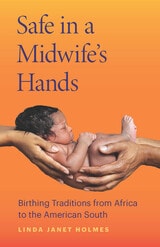
Safe in a Midwife's Hands
Birthing Traditions from Africa to the American SouthLinda Janet Holmes
The Ohio State University Press, 2023
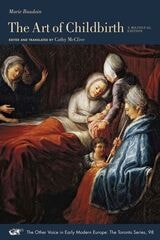
The Art of Childbirth
A Seventeenth-Century Midwife’s Epistolary Treatise to Doctor Vallant: A Bilingual EditionMarie Baudoin
Iter Press, 2022
In 1671, Marie Baudoin (1625–1700), head midwife and governor of the Hôtel-Dieu of Clermont-Ferrand, sent a treatise on the art of childbirth to her powerful Parisian patron, Dr. Vallant. The story of how Baudoin’s knowledge and expertise as a midwife came to be expressed, recorded, and archived raises the question: Was Baudoin exceptional because she was herself extraordinary, or because her voice has reached us through Vallant’s careful archival practices? Either way, Baudoin’s treatise invites us to reconsider the limits of what we thought we knew midwives “could be and do” in seventeenth-century France. Grounding Marie Baudoin’s text in a microanalysis of her life, work, and the Jansenist network between Paris and Clermont-Ferrand, this book connects historiographies of midwifery, Jansenism, hospital administration, public health, knowledge and record-keeping, and women’s work, underscoring both Baudoin’s capabilities and the archival accidents and intentions behind the preservation of her treatise in a letter.