Results by title
8 books match the query 'Nation Building'

Activist Biology
The National Museum, Politics, and Nation Building in BrazilRegina Horta Duarte
University of Arizona Press, 2016
For the first time in English, Brazil’s leading environmental historian, Regina Horta Duarte, brings us a nuanced analysis of the National Museum of Brazil’s contribution to that country’s formation and history. In Activist Biology, Duarte explores the careers of three of these scientists as they leveraged biology as a strategy for change. Devoted to educational initiatives, they organized exhibits, promoted educational film and radio, wrote books, published science communication magazines, fostered school museums, and authored textbooks for young people. Their approach was transdisciplinary, and their reliance on multimedia formats was pioneering.
Capturing a crucial period in Brazil’s history, this portrait of science as a creative and potentially transformative pathway will intrigue anyone fascinated by environmental history, museums, and the history of science. Duarte skillfully shows how Brazilian science furthered global scientific knowledge in ways that are relevant now more than ever.

Early Puerto Rican Cinema and Nation Building
National Sentiments, Transnational Realities, 1897-1940Naida García-Crespo
Bucknell University Press, 2019
Published by Bucknell University Press. Distributed worldwide by Rutgers University Press.
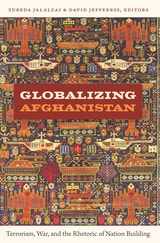
Globalizing Afghanistan
Terrorism, War, and the Rhetoric of Nation BuildingZubeda Jalalzai and David Jefferess, eds.
Duke University Press, 2011
Contributors. Gwen Bergner, Maliha Chishti, Cheshmak Farhoumand-Sims, Nigel C. Gibson, Zubeda Jalalzai, David Jefferess, Altaf Ullah Khan, Kamran Rastegar, Rodney J. Steward, Imre Szeman
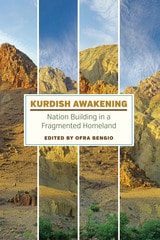
Kurdish Awakening
Nation Building in a Fragmented HomelandEdited by Ofra Bengio
University of Texas Press, 2014
Kurdish Awakening examines key questions related to Kurdish nationalism and identity formation in Syria, Iraq, Iran, and Turkey. The world’s largest stateless ethnic group, Kurds have steadily grown in importance as a political power in the Middle East, particularly in light of the “Arab Spring.” As a result, Kurdish issues—political, cultural, and historical alike—have emerged as the subject of intense scholarly interest. This book provides fresh ways of understanding the historical and sociopolitical underpinnings of the ongoing Kurdish awakening and its already significant impact on the region.
Rather than focusing on one state or angle, this anthology fills a gap in the literature on the Kurds by providing a panoramic view of the Kurdish homeland’s various parts. The volume focuses on aspects of Kurdish nationalism and identity formation not addressed elsewhere, including perspectives on literature, gender, and constitution making. Further, broad thematic essays include a discussion of the historical experiences of the Kurds from the time of their Islamization more than a millennium ago up until the modern era, a comparison of the Kurdish experience with other ethno-national movements, and a treatment of the role of tribalism in modern nation building. This collection is unique in its use of original sources in various languages. The result is an analytically rich portrayal that sheds light on the Kurds’ prospects and the challenges they confront in a region undergoing sweeping upheavals.
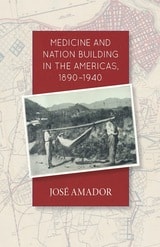
Medicine and Nation Building in the Americas, 1890-1940
Jose Amador
Vanderbilt University Press, 2015
Drawing on sources in Cuba, Puerto Rico, Brazil, and the United States, Amador shows that initiatives launched in colonial settings laid the foundation for the rise of public health programs in the hemisphere and transformed debates about the formation of national culture. Writers rethought theories of environmental and racial danger, while Cuban reformers invoked the yellow fever campaign to exclude nonwhite immigrants. Puerto Rican peasants flooded hookworm treatment stations, and Brazilian sanitarians embraced regionalist and imperialist ideologies. Together, these groups illustrated that public health campaigns developed in the shadow of empire propelled new conflicts and conversations about achieving modernity and progress in the tropics.
This book is a recipient of the annual Norman L. and Roselea J. Goldberg Prize for the best project in the area of medicine.

Pirate Novels
Fictions of Nation Building in Spanish AmericaNina Gerassi-Navarro
Duke University Press, 1999
Beginning with an overview of the history of piracy, Gerassi-Navarro traces the historical icon of the pirate through colonial-era chronicles before exploring a group of nineteenth-century Mexican, Colombian, and Argentine novels. She argues that the authors of these novels, in their reconstructions of the past, were less interested in accurate representations than in using their narratives to discuss the future of their own countries. In reading these pirate narratives as metaphors for the process of nation building in Spanish America, Gerassi-Navarro exposes the conflicting strains of a complex culture attempting to shape that future. She shows how these pirate stories reflect the on-going debates that marked the consolidation of nationhood, as well as the extent to which the narratives of national identity in Spanish America are structured in relation to European cultures, and the ways in which questions of race and gender were addressed.
Providing new readings of the cultural and political paradigms that marked the literary production of nineteenth-century Spanish America, Pirate Novels uniquely expands the range of texts usually examined in the study of nation-building. It will interest literary scholars generally as well as those engaged in Latin American, colonial, and postcolonial studies.
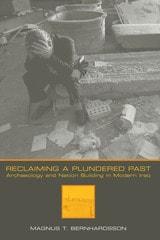
Reclaiming a Plundered Past
Archaeology and Nation Building in Modern IraqBy Magnus T. Bernhardsson
University of Texas Press, 2006
The looting of the Iraqi National Museum in April of 2003 provoked a world outcry at the loss of artifacts regarded as part of humanity's shared cultural patrimony. But though the losses were unprecedented in scale, the museum looting was hardly the first time that Iraqi heirlooms had been plundered or put to political uses. From the beginning of archaeology as a modern science in the nineteenth century, Europeans excavated and appropriated Iraqi antiquities as relics of the birth of Western civilization. Since Iraq was created in 1921, the modern state has used archaeology to forge a connection to the ancient civilizations of Mesopotamia and/or Islamic empires and so build a sense of nationhood among Iraqis of differing religious traditions and ethnicities.
This book delves into the ways that archaeology and politics intertwined in Iraq during the British Mandate and the first years of nationhood before World War II. Magnus Bernhardsson begins with the work of British archaeologists who conducted extensive excavations in Iraq and sent their finds to the museums of Europe. He then traces how Iraqis' growing sense of nationhood led them to confront the British over antiquities law and the division of archaeological finds between Iraq and foreign excavators. He shows how Iraq's control over its archaeological patrimony was directly tied to the balance of political power and how it increased as power shifted to the Iraqi government. Finally he examines how Iraqi leaders, including Saddam Hussein, have used archaeology and history to legitimize the state and its political actions.
Revivalism and Cultural Change
Christianity, Nation Building, and the Market in the Nineteenth-Century United StatesGeorge M. Thomas
University of Chicago Press, 1989
"Subtle and complex. . . . Fascinating."—Randolph Roth, Pennsylvania History
"[Revivalism and Cultural Change] should be read with interest by those interested in religious movements as well as the connections among religion, economics, and politics."—Charles L. Harper, Contemporary Sociology
"Readers old and new stand to gain much from Thomas's sophisticated study of the macrosociology of religion in the United States during the nineteenth century. . . . He has given the sociology of religion its best quantitative study of revivalism since the close of the 1970s."—Journal for the Scientific Study of Religion