Results by title
35 books match the query 'Non-governmental organizations'
Above the Fray
The Red Cross and the Making of the Humanitarian NGO SectorShai M. Dromi
University of Chicago Press, 2020
Drawing on archival research, Dromi traces the genesis of the Red Cross to a Calvinist movement working in mid-nineteenth-century Geneva. He shows how global humanitarian policies emerged from the Red Cross founding members’ faith that an international volunteer program not beholden to the state was the only ethical way to provide relief to victims of armed conflict. By illustrating how Calvinism shaped the humanitarian field, Dromi argues for the key role belief systems play in establishing social fields and institutions. Ultimately, Dromi shows the immeasurable social good that NGOs have achieved, but also points to their limitations and suggests that alternative models of humanitarian relief need to be considered.
Beyond the Boomerang
From Transnational Advocacy Networks to Transcalar Advocacy in International PoliticsEdited by Christopher L. Pallas and Elizabeth A. Bloodgood
University of Alabama Press, 2022
From Networks to Scales: Rethinking Advocacy Power in Global Politics.
Margaret E. Keck and Kathryn Sikkink introduced the boomerang theory in their 1998 book, Activists beyond Borders: Advocacy Networks in International Politics. It remains one of the first broadly applicable theories for why groups of NGOs and interested individuals form transnational advocacy networks. Since its publication, however, the empirical conditions that prompted their theory have changed. The types of actors involved in transnational advocacy have diversified. Northern NGOs have lost power and influence and have been restricted in their access to southern states. Southern NGOs have developed the capacity to undertake advocacy on their own and often built closer relationships with their own governments. The architecture of global governance has likewise changed, providing new avenues of access and influence for southern voices.
In Beyond the Boomerang: From Transnational Advocacy Networks to Transcalar Advocacy in International Politics, editors Christopher L. Pallas and Elizabeth A. Bloodgood offer cutting-edge scholarship that synthesizes a new theoretical framework to develop a coherent, integrated picture of the current dynamics in global advocacy. This new theory of transcalar advocacy focuses on advocacy activities and policy impacts that transcend different levels or scales of political action. In transcalar advocacy, all NGOs–northern and southern–are treated as strategic actors, choosing the targets, scales of advocacy, and partnerships that best suit their capacities and goals. The case studies in the volume develop the empirical grounding of this theory using data from Latin America, Africa, Europe, and Asia, with several chapters featuring cross-national comparison. The chapters highlight the wide variety of actors involved in advocacy work, including NGOs, social movements, international institutions, governments, and businesses. Contributors use both qualitative and quantitative methodologies and bring to bear insights from political science, international relations, and sociology. The case studies also include diverse issue areas, from women’s rights to environmental protection, sustainable agriculture, health policy, and democracy promotion.

Blue Hours
A NovelDaphne Kalotay
Northwestern University Press, 2019
A mystery linking Manhattan circa 1991 to eastern Afghanistan in 2012, Blue Hours tells of a life-changing friendship between two memorable heroines. When we first meet Mim, she is a recent college graduate who has disavowed her lower middle class roots to befriend Kyra, a dancer and daughter of privilege, until calamity causes their estrangement. Twenty years later, Kyra has gone missing from her NGO’s headquarters in Jalalabad, and Mim—now a recluse in rural New England—embarks on a journey to find her. In its nuance, originality, and moral complexity, Blue Hours becomes an unexpected page-turner.

Born Again
The Christian Right GlobalizedJennifer S. Butler
Pluto Press, 2006
This book reveals how Christian conservative groups are able to shape policy in every corner of the world. Drawing on interviews with religious leaders, it reveals how today's most powerful Christian Right organisations are building interfaith coalitions, connecting Catholic, Mormon and Muslim allies to advance a conservative agenda.
The US under Bush Jr. has given them a significant voice in shaping US policy on issues including women's rights, reproductive health, human cloning, children's rights and AIDS.
In short, the Christian Right is globalising -- a phenomenon that promises to challenge progressive social policy on a world-wide scale - as well as transform the Christian Right itself.
Bridging State and Civil Society
Informal Organizations in Tajik/Afghan BadakhshanSuzanne Levi-Sanchez
University of Michigan Press, 2021
Bridging State and Civil Society provides an in-depth study of parts of Central Asia and Afghanistan that remain marginalized from the larger region. As such, the people have developed distinct ways of governing and surviving, sometimes in spite of the state and in part because of informal organizations. Suzanne Levi-Sanchez provides eight case studies, each an independent look at a particular informal organization, but each also part of a larger picture that helps the reader understand the importance and key role that informal organizations play for civil society and the state. Each case explores how informal organizations operate and investigates their structures and interactions with official state institutions, civil society, familial networks, and development organizations. As such, each chapter explores the concepts through a different lens while asking a deceptively simple question: What is the relationship between informal organizations and the state?
Building Back Better in India
Development, NGOs, and Artisanal Fishers after the 2004 TsunamiRaja Swamy
University of Alabama Press, 2021
Disaster, development, and the struggle for coastal livelihoods in post-tsunami India.
Building Back Better in India: Development, NGOs, and Artisanal Fishers after the 2004 Tsunami addresses the ways in which natural disasters impact the strategies and priorities of neoliberalizing states in the contemporary era. In the light of growing scholarly and public concern over “disaster capitalism” and the tendency of states and powerful international financial institutions to view disasters as “opportunities” to “build back better,” Raja Swamy offers an ethnographically rich account of post-disaster reconstruction, its contested aims, and the mixed outcomes of state policy, humanitarian aid, and local resistance. Using the 2004 Indian Ocean tsunami as a case study, Swamy investigates the planning and implementation of a reconstruction process that sought to radically transform the geography of a coastal district in the Indian state of Tamil Nadu.
Drawing on an ethnographic study conducted in Tamil Nadu’s Nagapattinam District, Swamy shows how and why the state-led, multilaterally financed, and NGO-mediated reconstruction prioritized the displacement of coastal fisher populations. Exploring the substantive differences shaping NGO action, specifically in response to core political questions affecting the well-being of their ostensible beneficiaries, this account also centers the political agency of disaster survivors and their allies among NGOs in contesting the meanings of recovery while navigating the process of reconstruction.
If humanitarian aid brought together NGOs and fishers as givers and recipients of aid, it also revealed in its workings competing and sometimes contradictory assumptions, goals, interests, and strategies driving the fraught historical relationship between artisanal fishers and the state. Importantly, this research foregrounds the ambiguous role of NGOs involved in the distribution of aid, as well as the agency and strategic actions of the primary recipients of aid—the fishers of Nagapattinam—as they struggled with a reconstruction process that made receipt of the humanitarian gift of housing conditional on the formal abandonment of all claims to the coast. Building Back Better in India thus bridges scholarly concerns with disasters, humanitarianism, and economic development with those focused on power, agency, and resistance.
Changing the Subject
Feminist and Queer Politics in Neoliberal IndiaSrila Roy
Duke University Press, 2022
Civil Becomings
Performative Politics in the Amazon and the MediterraneanRaúl Acosta
University of Alabama Press, 2020
An anthropological approach to an emerging form of transnational political engagement by independent civil society organizations
Activism and advocacy have drawn academic interest as alternative ways of achieving collective ends outside established political institutions. However, there has been very little theoretical attention aimed at the interconnections between the two spheres. In Civil Becomings: Performative Politics in the Amazon and the Mediterranean, Raúl Acosta examines the manner in which progressive nongovernmental organizations (NGOs) and activists act in a more intermingled and processual way than scholars have previously acknowledged.
Acosta focuses on networks from the vantage point of two NGOs: one in Brazil that concentrated on environmental issues in the Amazon and another in Barcelona called the Mediterranean Social Forum. The focus of this research is not on organizational aspects of collaboration, but rather on the practices and contexts in which such cooperation occurs. Three major aspects of activist and advocacy networks are analyzed: their communicative characters, their collective performances of the political, and the negotiations they engage in between vernacular and cosmopolitan values.
This volume theorizes the cooperative actions of activist and advocacy networks as legitimating processes for the work of participating groups. In doing so, Acosta argues, they address the issues that justify a joint campaign or effort and also crucially underpin each participating collective as a worthy organization of civil society.
Corporate Nature
An Insider's Ethnography of Global ConservationSarah Milne
University of Arizona Press, 2022
Sarah Milne spent more than a decade working for and observing global conservation projects in Cambodia. During this time, she saw how big environmental NGOs can operate rather like corporations. Their core practice involves rolling out appealing and deceptively simple policy ideas, like Payments for Ecosystem Services (PES). Yet, as policy ideas prove hard to implement, NGOs must also carefully curate evidence from the field to give the impression of success and effectiveness.
In Corporate Nature, Milne delves inside the black box of mainstream global conservation. She reveals how big international NGOs struggle in the face of complexity—especially in settings where corruption and political violence prevail. She uses the case of Conservation International’s work in Cambodia to illustrate how apparently powerful NGOs can stumble in practice: policy ideas are transformed on the ground, while perverse side effects arise, like augmented authoritarian power, illegal logging, and Indigenous dispossession.
The real power of global conservation NGOs is therefore not in their capacity to control what happens in the field but in their capacity to ignore or conceal failings. Milne argues that this produces an undesirable form of socionature, called corporate nature, that values organizational success over diverse knowledges and ethical conduct.
Cultures of Doing Good
Anthropologists and NGOsEdited by Amanda Lashaw, Christian Vannier, and Steven Sampson
University of Alabama Press, 2018
Cultures of Doing Good: Anthropologists and NGOs serves as a foundational text to advance a growing subfield of social science inquiry: the anthropology of nongovernmental organizations (NGOs). Thorough introductory chapters provide a short history of NGO anthropology, address how the study of NGOs contributes to anthropology more broadly, and examine ways that anthropological studies of NGOs expand research agendas spawned by other disciplines. In addition, the theoretical concepts and debates that have anchored the analysis of NGOs since they entered scholarly discourse after World War II are explained.
The wide-ranging volume is organized into thematic parts: “Changing Landscapes of Power,” “Doing Good Work,” and “Methodological Challenges of NGO Anthropology.” Each part is introduced by an original, reflective essay that contextualizes and links the themes of each chapter to broader bodies of research and to theoretical and methodological debates. A concluding chapter synthesizes how current lines of inquiry consolidate and advance the first generation of anthropological NGO studies, highlighting new and promising directions in this field.
In contrast to studies about surveys of NGOs that cover a single issue or region, this book offers a survey of NGO dynamics in varied cultural and political settings. The chapters herein cover NGO life in Tanzania, Serbia, the Czech Republic, Egypt, Peru, the United States, and India. The diverse institutional worlds and networks include feminist activism, international aid donors, USAID democracy experts, Romani housing activism, academic gender studies, volunteer tourism, Jewish philanthropy, Islamic faith-based development, child welfare, women’s legal arbitration, and environmental conservation.
The collection explores issues such as normative democratic civic engagement, elitism and professionalization, the governance of feminist advocacy, disciplining religion, the politics of philanthropic neutrality, NGO tourism and consumption, blurred boundaries between anthropologists as researchers and activists, and barriers to producing critical NGO ethnographies.
Domesticating Democracy
The Politics of Conflict Resolution in BoliviaSusan Helen Ellison
Duke University Press, 2018
Governing the Global Polity
Practice, Mentality, RationalityIver B. Neumann and Ole Jacob Sending
University of Michigan Press, 2010
"There have been many attempts to adapt Foucault's arguments to the study of international relations, but this powerful and provocative book is the most sustained, and arguably the most successful in showing how the governmentality approach can be adapted to the analysis of global politics."
---Barry Hindess, Research School of Social Sciences, The Australian National University
A highly welcome and original contribution to contemporary debates on the shape and future of the international system and on the possibility of reconfiguring IR theory as social theory."
---Mathias Albert, Bielefeld University, Germany
"Iver Neumann and Ole Jacob Sending have put meat on the bones of Michel Foucault's notion of governmentality, fulfilling the hopes of long-famished students and scholars of global governance. Through their focus on specific case studies, the authors have provided a much-needed contribution to the international relations literature, one that is sure to become a staple of courses and seminars throughout the world."
---Ronnie D. Lipschutz, University of California, Santa Cruz
What does globalization mean for the principle of state sovereignty and for the power and functioning of states? Whereas realists assert the continued importance of states, constructivists contend that various political entities as well as the logic of globalization itself undermine state sovereignty.
Drawing on the state formation literature and on social theory, particularly the works of Weber and Foucault, Iver B. Neumann and Ole Jacob Sending question the terms of the realist-constructionist debate. Through detailed case studies, they demonstrate that states use nongovernmental organizations and international organizations indirectly to enforce social order and, ultimately, to increase their own power. At the same time, global politics is dominated by a liberal political rationality that states ignore at their peril. While states remain as strong as ever, they operate within a global polity of new hierarchies among states and between states and other actors.
Iver B. Neumann is Director of Research at the Norwegian Institute of International Affairs and Professor of Russian Studies at the University of Oslo.
Ole Jacob Sending is Senior Researcher at the Norwegian Institute of International Affairs, where he heads the Research Programme on Global Governance and International Organizations.
Cover art credit: © iStockphoto.com/Will Evans
Also available as an e-book.
Having People, Having Heart
Charity, Sustainable Development, and Problems of Dependence in Central UgandaChina Scherz
University of Chicago Press, 2014
Through detailed studies of two different orphan support organizations in Uganda, Scherz shows how many Ugandans view material forms of Catholic charity as deeply intertwined with their own ethics of care and exchange. With a detailed examination of this overlooked relationship in hand, she reassesses the generally assumed paradox of material aid as both promising independence and preventing it. The result is a sophisticated demonstration of the powerful role that anthropological concepts of exchange, value, personhood, and religion play in the politics of international aid and development.
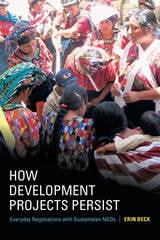
How Development Projects Persist
Everyday Negotiations with Guatemalan NGOsErin Beck
Duke University Press, 2017
Humanitarian Aftershocks in Haiti
Schuller, Mark
Rutgers University Press, 2016
The 2010 earthquake in Haiti was one of the deadliest disasters in modern history, sparking an international aid response—with pledges and donations of $16 billion—that was exceedingly generous. But now, five years later, that generous aid has clearly failed. In Humanitarian Aftershocks in Haiti, anthropologist Mark Schuller captures the voices of those involved in the earthquake aid response, and they paint a sharp, unflattering view of the humanitarian enterprise.
Schuller led an independent study of eight displaced-persons camps in Haiti, compiling more than 150 interviews ranging from Haitian front-line workers and camp directors to foreign humanitarians and many displaced Haitian people. The result is an insightful account of why the multi-billion-dollar aid response not only did little to help but also did much harm, triggering a range of unintended consequences, rupturing Haitian social and cultural institutions, and actually increasing violence, especially against women. The book shows how Haitian people were removed from any real decision-making, replaced by a top-down, NGO-dominated system of humanitarian aid, led by an army of often young, inexperienced foreign workers. Ignorant of Haitian culture, these aid workers unwittingly enacted policies that triggered a range of negative results. Haitian interviewees also note that the NGOs “planted the flag,” and often tended to “just do something,” always with an eye to the “photo op” (in no small part due to the competition over funding). Worse yet, they blindly supported the eviction of displaced people from the camps, forcing earthquake victims to relocate in vast shantytowns that were hotbeds of violence.
Humanitarian Aftershocks in Haiti concludes with suggestions to help improve humanitarian aid in the future, perhaps most notably, that aid workers listen to—and respect the culture of—the victims of catastrophe.

Mano Dura
The Politics of Gang Control in El SalvadorBy Sonja Wolf
University of Texas Press, 2017
In 1992, at the end of a twelve-year civil war, El Salvador was poised for a transition to democracy. Yet, after longstanding dominance by a small oligarchy that continually used violence to repress popular resistance, El Salvador’s democracy has proven to be a fragile one, as social ills (poverty chief among them) have given rise to neighborhoods where gang activity now thrives. Mano Dura examines the ways in which the ruling ARENA party used gang violence to solidify political power in the hands of the elite—culminating in draconian “iron fist” antigang policies that undermine human rights while ultimately doing little to address the roots of gang membership.
Drawing on extensive ethnographic fieldwork and policy analysis, Mano Dura examines the activities of three nongovernmental organizations (NGOs) that have advocated for more nuanced policies to eradicate gangs and the societal issues that are both a cause and an effect of gang proliferation. While other studies of street gangs have focused on relatively distant countries such as Colombia, Argentina, and Jamaica, Sonja Wolf’s research takes us to a country closer to the United States, where forced deportation has brought with it US gang culture. Charting the limited success of NGOs in influencing El Salvador’s security policies, the book brings to light key contextual aspects—including myopic media coverage and the ironic populist support for ARENA, despite the party’s protection of the elite at the expense of the greater society.
Markets of Dispossession
NGOs, Economic Development, and the State in CairoJulia Elyachar
Duke University Press, 2005
Julia Elyachar studied the efforts of bankers, social scientists, ngo members, development workers, and state officials to turn the craftsmen and unemployed youth of Cairo into the vanguard of a new market society based on microenterprise. She considers these efforts in relation to the alternative notions of economic success held by craftsmen in Cairo, in which short-term financial profit is not always highly valued. Through her careful ethnography of workshop life, Elyachar explains how the traditional market practices of craftsmen are among the most vibrant modes of market life in Egypt. Long condemned as backward, these existing market practices have been seized on by social scientists and development institutions as the raw materials for experiments in “free market” expansion. Elyachar argues that the new economic value accorded to the cultural resources and social networks of the poor has fueled a broader process leading to their economic, social, and cultural dispossession.
Medicine in the Meantime
The Work of Care in MozambiqueRamah McKay
Duke University Press, 2018
Microfinance and Its Discontents
Women in Debt in BangladeshLamia Karim
University of Minnesota Press, 2010
In 2006 the Grameen Bank of Bangladesh won the Nobel Peace Prize for its innovative microfinancing operations. This path-breaking study of gender, grassroots globalization, and neoliberalism in Bangladesh looks critically at the Grameen Bank and three of the leading NGOs in the country. Amid euphoria over the benefits of microfinance, Lamia Karim offers a timely and sobering perspective on the practical, and possibly detrimental, realities for poor women inducted into microfinance operations.
In a series of ethnographic cases, Karim shows how NGOs use social codes of honor and shame to shape the conduct of women and to further an agenda of capitalist expansion. These unwritten policies subordinate poor women to multiple levels of debt that often lead to increased violence at the household and community levels, thereby weakening women’s ability to resist the onslaught of market forces.
A compelling critique of the relationship between powerful NGOs and the financially strapped women beholden to them for capital, this book cautions us to be vigilant about the social realities within which women and loans circulate—realities that often have adverse effects on the lives of the very women these operations are meant to help.
Multilateral Institutions
A Critical IntroductionMorten Boas and Desmond McNeill
Pluto Press, 2003
The emphasis is on politics within and also between multilateral institutions, analysing the relations – both competitive and collaborative – between, for example, the World Bank and UNDP. NGOs are also shown to be important actors, and the role they have played in recent years is critically assessed. The book concludes with some emerging trends: the ‘privatisation’ of the system, regionalisation, and ‘the politics of protest’.
Bøås and McNeill do not simply take the policies of multilateral institutions at face value, but ask how and why these policies came into existence. They seek to promote critical, but informed, engagement both with the member states of multilateral institutions and the institutions themselves.
NGOs and Transnational Networks
Wild Cards in World PoliticsWilliam E. DeMars
Pluto Press, 2005
Nonprofits and Their Networks
Cleaning the Waters along Mexico’s Northern BorderDaniel M. Sabet
University of Arizona Press, 2008
Finding that these organizations do have a positive impact, Daniel Sabet seeks to understand how autonomous nonprofit organizations have emerged and developed along the border. He employs data from more than 250 interviews with members of civil society organizations and public officials, surveys of neighborhood association leaders, observations at public meetings, and many secondary sources. His research compares the experiences of third-sector organizations in four prominent Mexican border cities: Tijuana, Nogales, Ciudad Juárez, and Nuevo Laredo.
Sabet finds that political change is a necessary precondition for the establishment of an independent third sector. The demise of one-party rule in Mexico has given nonprofit organizations greater opportunities to flourish, he finds, but persistent informal rules still obstruct their emergence and development. Sabet concludes that the success of the third sector will depend on the organizations’ networks. He examines organizational ties to three key groups—U.S. nonprofits, the business community, and government-created methods for public participation—and evaluates the importance of these connections for the future.

Proper Women
Feminism and the Politics of Respectability in IranFae Chubin
Temple University Press, 2024
Chubin brings attention to the varying class, ethnic, religious, and national identities of NGO staff and clients that shaped their differing understandings of oppression and justice. Her examination of the tensions within the organization reveals why the efforts of the NGO workers failed to gain purchase among the intended beneficiaries.
Proper Women concludes by encouraging feminist activists to not only examine the role of local politics and transnational connections in shaping their definitions of empowerment, but also consider the advantages of a justice-enhancing practice as opposed to justice monism for their target populations.
Redefining Sustainable Development
Neil Middleton and Phil O'Keefe
Pluto Press, 2001
Social Enterprise
A Global ComparisonEdited by Janelle A. Kerlin
University Press of New England, 2009
The Center Cannot Hold
Decolonial Possibility in the Collapse of a Tanzanian NGOJenna N. Hanchey
Duke University Press, 2023

The Chicken and the Quetzal
Incommensurate Ontologies and Portable Values in Guatemala's Cloud ForestPaul Kockelman
Duke University Press, 2016
The Good Project
Humanitarian Relief NGOs and the Fragmentation of ReasonMonika Krause
University of Chicago Press, 2014
In The Good Project, Monika Krause dives into the intricacies of the decision-making process at NGOs and uncovers a basic truth: It may be the case that relief agencies try to help people but, in practical terms, the main focus of their work is to produce projects. Agencies sell projects to key institutional donors, and in the process the project and its beneficiaries become commodities. In an effort to guarantee a successful project, organizations are incentivized to help those who are easy to help, while those who are hardest to help often receive no assistance at all. The poorest of the world are made to compete against each other to become projects—and in exchange they offer legitimacy to aid agencies and donor governments. Sure to be controversial, The Good Project offers a provocative new perspective on how NGOs succeed and fail on a local and global level.
The Political Economy of NGOs
State Formation in Sri Lanka and BangladeshJude L. Fernando
Pluto Press, 2011
Jude L. Fernando explores the paradoxical relationship between NGOs and capitalism, showing that supposedly progressive organisations often promote essentially the same policies and ideas as existing governments.
The book examines how a diverse group of NGOs have shaped state formation in Bangladesh and Sri Lanka. It argues that, rather than influencing state formation for the better, NGOs have been integrated into the capitalist system and their language adopted to give traditional exploitative social relations a transformative appearance.
This enlightening study will give pause to those who see NGOs as drivers of true social change and will encourage students of development studies to make a deeper analysis of state formation.
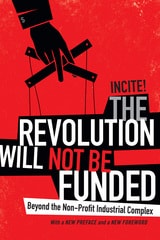
The Revolution Will Not Be Funded
Beyond the Non-Profit Industrial ComplexINCITE! Women of Color Against Violence
Duke University Press, 2017
Contributors. Christine E. Ahn, Robert L. Allen, Alisa Bierria, Nicole Burrowes, Communities Against Rape and Abuse (CARA), William Cordery, Morgan Cousins, Ruth Wilson Gilmore, Stephanie Guilloud, Adjoa Florência Jones de Almeida, Tiffany Lethabo King, Paul Kivel, Soniya Munshi, Ewuare Osayande, Amara H. Pérez, Project South: Institute for the Elimination of Poverty and Genocide, Dylan Rodríguez, Paula X. Rojas, Ana Clarissa Rojas Durazo, Sisters in Action for Power, Andrea Smith, Eric Tang, Madonna Thunder Hawk, Ije Ude, Craig Willse
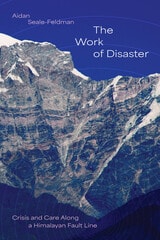
The Work of Disaster
Crisis and Care Along a Himalayan Fault LineAidan Seale-Feldman
University of Chicago Press, 2025
In a world marked by escalating disasters, the forms that care takes are increasingly fraught. In this powerful book, anthropologist Aidan Seale-Feldman focuses on Nepal, where in 2015 a 7.8-magnitude earthquake and equally powerful aftershock struck the country’s central region. The disaster claimed more than nine thousand lives and inspired a surge of humanitarian concern for the mental health of Nepali people. Based on extensive ethnographic fieldwork, The Work of Disaster examines the possibilities generated by disaster, as well as the vexed relationship between crisis and care.
Moving between NGO offices, mountain trails, therapeutic interventions, and affected villages, Seale-Feldman tells the story of an emergent “mental health crisis” and the forms of care that followed in the disaster’s wake. She also analyzes the changes emergency services bring about in the places they seek to assist, the challenges of psychiatric support provided by international organizations, and the place of mental health counseling in a modern biopolitical reality. The Work of Disaster reveals the simultaneous violence and gentleness of humanitarian encounters, engaging along the way with broader debates about world making and the ethics of care.
Theorizing NGOs
States, Feminisms, and NeoliberalismVictoria Bernal and Inderpal Grewal, eds.
Duke University Press, 2014
Contributors. Sonia E. Alvarez, Victoria Bernal, LeeRay M. Costa, Inderpal Grewal, Laura Grünberg, Elissa Helms, Julie Hemment, Saida Hodžic, Lamia Karim, Sabine Lang, Lauren Leve, Kathleen O'Reilly, Aradhana Sharma
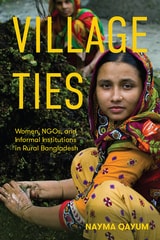
Village Ties
Women, NGOs, and Informal Institutions in Rural BangladeshNayma Qayum
Rutgers University Press, 2022

When Women Have Wings
Feminism and Development in Medellin, ColombiaDonna F. Murdock
University of Michigan Press, 2008
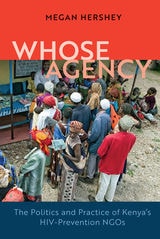
Whose Agency
The Politics and Practice of Kenya's HIV-Prevention NGOsMegan Hershey
University of Wisconsin Press, 2019
By focusing on one particular type of NGO—those organized to help prevent the spread and transmission of HIV in Kenya—Megan Hershey interrogates the ways these organizations achieve (or fail to achieve) their planned outcomes. Along the way, she examines the slippery slope that is often used to define “success” based on meeting donor-set goals versus locally identified needs. She also explores the complex network of bureaucratic requirements at both the national and local levels that affect the delicate relationships NGOs have with the state. Drawing on extensive, original quantitative and qualitative research, Whose Agency serves as a much-needed case study for understanding the strengths and shortcomings of participatory development and community engagement.