Results by title
13 books match the query 'Off'
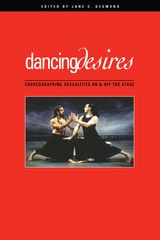
Dancing Desires
Choreographing Sexualities On And Off The StageJane C. Desmond
University of Wisconsin Press, 2001
What happens to the writing of dance history when issues of sexuality and sexual identity are made central? What happens to queer theory, and to other theoretical constructs of gender and sexuality, when a dancing body takes center stage? Dancing Desires asks these questions, exploring the relationship between dancing bodies and sexual identity on the concert stage, in nightclubs, in film, in the courts, and on the streets. From Nijinsky’s balletic prowess to Charlie Chaplin's lightfooted "Little Tramp," from lesbian go-go dancers to the swans of Swan Lake, from the postmodern works of Bill T. Jones to the dangers of same-sex social dancing at Disneyland and the ecstatic Mardi Gras dance parties of Sydney, Australia, this book tracks the intersections of dance and human sexuality in the twentieth century as the definition of each has shifted and expanded.
The contributors come from a number of fields (literature, history, theater, dance, film studies, legal studies, critical race studies) and employ methodologies ranging from textual analysis and film theory to ethnography. By embracing dance, and bodily movement more generally, as a crucial focus for investigation, together they initiate a new agenda for tracking the historical kinesthetics of sexuality.
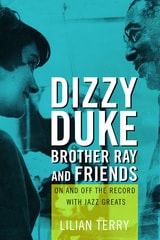
Dizzy, Duke, Brother Ray, and Friends
On and Off the Record with Jazz GreatsLillian Terry
University of Illinois Press, 2017
Drawing on Terry’s long friendships and professional associations, Dizzy, Duke, Brother Ray, and Friends offers readers a rare opportunity to hear intimate conversations with some of the world’s greatest musical figures. Dizzy Gillespie offers his thoughts on playing with “sanctified” rhythm and the all-important personal touch in performance. Duke Ellington discourses on jazz history and concludes an interview to sing a self-written ditty in Italian. Ray Charles gives candid thoughts on race and politics while taking charge of Terry’s tape recorder. Abbey Lincoln, Max Roach, Horace Silver, Bill Evans—all provide Terry and her readers with unforgettable encounters. The result is a collection of profiles, some stretching over a decade or more, that reveal these performers in ways that illuminate their humanity and expand our appreciation of their art.
Off the Network
Disrupting the Digital WorldUlises Ali Mejias
University of Minnesota Press, 2013
The digital world profoundly shapes how we work and consume and also how we play, socialize, create identities, and engage in politics and civic life. Indeed, we are so enmeshed in digital networks—from social media to cell phones—that it is hard to conceive of them from the outside or to imagine an alternative, let alone defy their seemingly inescapable power and logic. Yes, it is (sort of) possible to quit Facebook. But is it possible to disconnect from the digital network—and why might we want to?
Off the Network is a fresh and authoritative examination of how the hidden logic of the Internet, social media, and the digital network is changing users’ understanding of the world—and why that should worry us. Ulises Ali Mejias also suggests how we might begin to rethink the logic of the network and question its ascendancy. Touted as consensual, inclusive, and pleasurable, the digital network is also, Mejias says, monopolizing and threatening in its capacity to determine, commodify, and commercialize so many aspects of our lives. He shows how the network broadens participation yet also exacerbates disparity—and how it excludes more of society than it includes.
Uniquely, Mejias makes the case that it is not only necessary to challenge the privatized and commercialized modes of social and civic life offered by corporate-controlled spaces such as Facebook and Twitter, but that such confrontations can be mounted from both within and outside the network. The result is an uncompromising, sophisticated, and accessible critique of the digital world that increasingly dominates our lives.
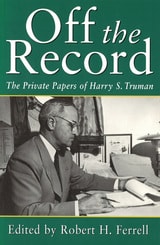
Off the Record
The Private Papers of Harry S. TrumanEdited by Robert H. Ferrell
University of Missouri Press, 1997
Gathered for the first time, Truman's private papers--diaries, letters, and memoranda--cover the period from his occupancy of the White House in 1945 to shortly before his death in 1972. Students and scholars will find valuable material on major events of the Truman years, from the Potsdam Conference to the Korean War.
Off the Record
The Technology and Culture of Sound Recording in AmericaMorton, David
Rutgers University Press, 1999
David L. Morton examines the process of invention, innovation, and diffusion of communications technology, using the history of sound recording as the focus. Off the Record demonstrates how the history of both the hardware and the ways people used it is essential for understanding why any particular technology became a fixture in everyday life or faded into obscurity. Morton’s approach to the topic differs from most previous works, which have examined the technology’s social impact, but not the reasons for its existence. Recording culture in America emerged, Morton writes, not through the dictates of the technology itself but in complex ways that were contingent upon the actions of users.
Each of the case studies in the book emphasizes one of five aspects of the culture of recording and its relationship to new technology, at the same time telling the story of sound recording history. One of the misconceptions that Morton hopes to dispel is that the only important category of sound recording involves music. Unique in his broad-based approach to sound technology, the five case studies that Morton investigates are :- The phonograph record
- Recording in the radio business
- The dictation machine
- The telephone answering machine, and
- Home taping
Off the Rim
Basketball and Other Religions in a Carolina ChildhoodFred Hobson
University of Missouri Press, 2006
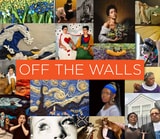
Off the Walls
Inspired Re-Creations of Iconic ArtworksSarah Waldorf
J. Paul Getty Trust, The, 2020
Van Gogh’s Starry Night made out of spaghetti? Cat with a Pearl Earring? Frida Kahlo self-portraits with pets and toilet paper? While the world reeled from the rapid spread of the novel coronavirus (COVID-19), thousands of people around the globe, inspired by challenges from Getty and other museums, raided toy chests, repurposed pantry items, and enlisted family, roommates, and animals to re-create famous works of art at home. Astonishing in their creativity, wit, and ingenuity, these creations remind us of the power of art to unite us and bring joy during troubled times. Off the Walls: Inspired Re-Creations of Iconic Artworks celebrates these imaginative re-creations, bringing highlights from this challenge together in one whimsical, irresistible volume. Getty Publications will donate all profits from the sale of this book to a charity supporting art and artists.
Off to College
A Guide for ParentsRoger H. Martin
University of Chicago Press, 2015
With Off to College, Roger H. Martin helps parents understand this important period of transition by providing the perfect tour of the first year on today’s campus. Martin, a twenty-year college president and former Harvard dean, spent a year visiting five very different colleges and universities across the United States—public and private, large and small, elite and non-elite—to get an insider’s view of modern college life. He observes an advising session as a student sorts out her schedule, unravels the mysteries of roommate assignments with a residence life director, and patrols campus with a safety officer on a rowdy Saturday night. He gets pointers in freshman English and tips on athletics and physical fitness from coaches. He talks with financial aid officers and health service providers. And he listens to the voices of the first–year students themselves. Martin packs Off to College with the insights and advice he gained and bolsters them with data from a wide variety of sources to deliver a unique and personal view of the current student experience.
The first year is not just the beginning of a student’s college education but also the first big step in becoming an adult. Off to College will help parents understand what to expect whether they’re new to the college experience or reconciling modern campus life with memories of their own college days.
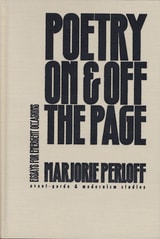
Poetry On and Off the Page
Essays for Emergent OccasionsMarjorie Perloff
Northwestern University Press, 1998
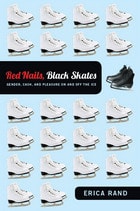
Red Nails, Black Skates
Gender, Cash, and Pleasure on and off the IceErica Rand
Duke University Press, 2012
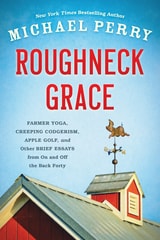
Roughneck Grace
Farmer Yoga, Creeping Codgerism, Apple Golf, and Other Brief Essays from on and off the Back FortyMichael Perry
Wisconsin Historical Society Press, 2016
New York Times bestselling author, humorist, and newspaper columnist Michael Perry returns with a new collection of bite-sized essays from his Sunday Wisconsin State Journal column, “Roughneck Grace.” Perry’s perspectives on everything from cleaning the chicken coop to sharing a New York City elevator with supermodels will have you snorting with laughter on one page, blinking back tears on the next, and--no matter your zip code--nodding in recognition throughout.
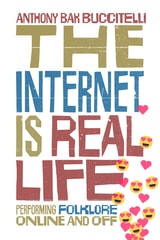
The Internet Is Real Life
Performing Folklore Online and OffAnthony Bak Buccitelli
University of Wisconsin Press, 2026
We often speak of a divide between online and offline cultures, despite growing recognition that the two are intertwined. Here, folklorist Anthony Bak Buccitelli challenges the idea of any divide at all in contemporary American culture. He argues that digital communications and behaviors are already deeply embedded in everyday expressive life and therefore are also already implicated in a variety of ways in the embodied performance and transmission of folklore. In other words, in contemporary American society, the internet truly is “real life.”
By treating the digital interface as a site at which embodied performance can take shape rather than just a point of contact with the online, Buccitelli argues for a critical renewal of core folkloristic concepts to meet the challenges of understanding modern networked life. The result is a folklore book for the current age.
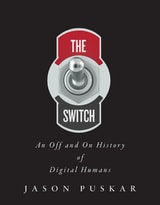
The Switch
An Off and On History of Digital HumansJason Puskar
University of Minnesota Press, 2024
From the telegraph to the touchscreen, how the development of binary switching transformed everyday life and changed the shape of human agency
The Switch traces the sudden rise of a technology that has transformed everyday life for billions of people: the binary switch. By chronicling the rapid growth of binary switching since the mid-nineteenth century, Jason Puskar contends that there is no human activity as common today as pushing a button or flipping a switch—the deceptively simple act of turning something on or off. More than a technical history, The Switch offers a cultural and political analysis of how reducing so much human action to binary alternatives has profoundly reshaped modern society.
Analyzing this history, Puskar charts the rapid shift from analog to digital across a range of devices—keyboards, cameras, guns, light switches, computers, game controls, even the “nuclear button”—to understand how nineteenth-century techniques continue to influence today’s pervasive digital technologies. In contexts that include musical performance, finger counting, machine writing, voting methods, and immersive play, Puskar shows how the switch to switching led to radically new forms of action and thought.
The innovative analysis in The Switch makes clear that binary inputs have altered human agency by making choice instantaneous, effort minimal, and effects more far-reaching than ever. In the process, it concludes, switching also fosters forms of individualism that, though empowering for many, also preserve a legacy of inequality and even domination.