Results by title
37 books match the query 'Organizations & Institutions'
A History of Physical Education and Athletics at Oberlin College
Lee C. Drickamer with Fredrick D. Shults
The Ohio State University Press, 2022

A History of the University of Wisconsin System
Patricia A. Brady
University of Wisconsin Press, 2020
The UW System serves as a powerful case study for how broad, national trends in higher education take shape on the ground. Brady illustrates the ways culture wars have played out on campuses and the pressures that have mounted as universities have shifted to a student-as-consumer approach. This is the essential, unvarnished story of the unique collection of institutions that serve Wisconsin and the world—and a convincing argument for why recognizing and reinvesting in the System is critically important for the economic and civic future of the state and its citizens.
A Pictorial History of the University of Iowa
An Expanded EditionJohn C. Gerber
University of Iowa Press, 1988
A Place of Our Own
The Rise of Reform Jewish CampingEdited by Michael M. Lorge and Gary P. Zola
University of Alabama Press, 2006
The history of educational summer camps in American Reform Judaism. Reform Judaism is not the only religious community in America to make the summer camp experience a vital part of a faith community's effort to impart its values and beliefs to its adolescents, but perhaps no group relied more on summer camp as an adjunct to home and community for this purpose. Summer camp became an important part of Reform group identity, a bulwark against the attraction of assimilation into the greater society and mere nominal Judaism.
These essays, which commemorate the fiftieth anniversary of the founding of the first Reform Jewish educational camp in the United States (Olin-Sang-Ruby Union Institute [OSRUI], in Oconomowoc, Wisconsin) cover a wide range of topics related to both the Reform Judaism movement and the development of the Reform Jewish camping system in the United States. Donald M. Splansky’s chapter on “Prayer at Reform Jewish Camps” documents changes in prayer services that took place both at OSRUI and in the Reform movement in general; Michael Zeldin’s “Making the Magic in Reform Jewish Summer Camps” describes the educational philosophies employed at many camps and analyzes their effectiveness; and Jonathan D. Sarna’s “The Crucial Decade in Jewish
Activity-Based Teaching in the Art Museum
Movement, Embodiment, EmotionElliott Kai-Kee
J. Paul Getty Trust, The, 2020
An essential resource for museum professionals, teachers, and students, the award winning Teaching in the Art Museum (Getty Publications, 2011) set a new standard in the field of gallery education. This follow-up book blends theory and practice to help educators—from teachers and docents to curators and parents—create meaningful interpretive activities for children and adults.
Written by a team of veteran museum educators, Activity-Based Teaching in the Art Museum offers diverse perspectives on embodiment, emotions, empathy, and mindfulness to inspire imaginative, spontaneous interactions that are firmly grounded in history and theory. The authors begin by surveying the emergence of activity-based teaching in the 1960s and 1970s and move on to articulate a theory of play as the cornerstone of their innovative methodology. The volume is replete with sidebars describing activities facilitated with museum visitors of all ages.
Table of Contents
Introduction
Part I History
1 The Modern History of Presence and Meaning
A philosophical shift from a language-based understanding of the world to direct, physical interaction with it.
2 A New Age in Museum Education: The 1960s and 1970s
A brief history of some of the innovative museum education programs developed in the United States in the late 1960s and 1970s. The sudden and widespread adoption of nondiscursive gallery activities during this period, especially but not exclusively in programs designed for younger students and school groups, expressed the spirit of the times.
Part II Theory
3 Starts and Stops
Two attempts by American museum educators to articulate a theory for their new, nondiscursive programs: the first deriving from the early work of Project Zero, the Harvard Graduate School of Education program founded by the philosopher Nelson Goodman to study arts learning as a cognitive activity; the second stemming from the work of Viola Spolin, the acclaimed theater educator and coach whose teaching methods, embodied in a series of “theater games,” were detailed in her well-known book Improvisation for the Theater (1963).
4 A Theory of Play in the Museum
A theory of play that posits activities in the museum as forms of play that take place in spaces (or “playgrounds”) temporarily designated as such by educators and their adult visitors or students. Play is defined essentially as movement—both physical and imaginary (metaphorical)—toward and away from, around, and inside and outside the works of art that are foregrounded within those spaces. Gallery activities conceived in this way respond to the possibilities that the objects themselves offer for the visitor to explore and engage with them. The particular movements characterizing an activity are crucially conditioned by the object in question; they constitute a process of discovery and learning conceptually distinct from, but supportive of, traditional dialogue-based modes of museum education, which they supplement rather than supplant.
Part III Aspects of Play
5 Embodiment, Affordances
The idea of embodiment adopted here recognizes that both mind and body are joined in their interactions with things. Investigating works of art thus involves apprehending them physically as well as intellectually—in the sense of responding to the ways in which a particular work allows and even solicits the viewer’s physical grasp of it.
6 Skills
Ways in which objects present themselves to us, as viewers, and what we might do in response as they fit with the bodily skills we have developed over the course of our lives. Such skills might be as simple as getting dressed, washing, or eating; or as specialized as doing one’s hair, dancing, playing an instrument, or acting—all of which may allow us to “grasp” and even feel that we inhabit particular works of art.
7 Movement
Embodied looking is always looking from somewhere. We apprehend objects as we physically move around and in front of them; they reveal themselves differently as we approach them from different viewpoints. Viewers orient themselves spatially to both the surfaces of objects and to the things and spaces depicte4d in or suggested by representational works of art. Activity-based teaching gets visitors and students to move among the objects—away from them, close to them, and even into them.
8 The Senses
Both adult visitors and younger students come to the museum expecting to use their eyes, yet “visual” art appeals to several of the senses at once, though rarely to the same degree. Sculpture, for example, almost always appeals to touch (whether or not that is actually possible or allowed) as well as sight. A painting depicting a scene in which people appear to be talking may induce viewers to not only look but also “listen” to what the figures might be saying.
9 Drawing in the Museum
Looking at art with a pencil in hand amplifies viewers’ ability to imaginatively touch and feel their way across and around an artwork. Contour drawing by its nature requires participants to imagine that they are touching the contours of an object beneath the tips of their pencils. Other types of drawing allow viewers to feel their way around objects through observation and movement.
10 Emotion
Visitors’ emotional responses to art represent a complex process with many components, from physiological to cognitive, and a particular work of art may elicit a wide range of emotional reactions. This chapter describes specific ways in which museum educators can go well beyond merely asking visitors how a work of art makes them feel.
11 Empathy and Intersubjectivity
One aspect of viewers’ emotional responses to art that is often taken for granted, if not neglected altogether: the empathetic connections that human beings make to images of other people. This chapter advocates an approach that prompts viewers to physically engage with the representations of people they see.
12 Mindful Looking
Mindfulness involves awareness and attention, both as a conscious practice and as an attitude that gallery teachers can encourage in museum visitors. This is not solely a matter of cultivating the mind, however; it is also a matter of cultivating the body, since mindfulness is only possible when mind and body are in a state of harmonious, relaxed attentiveness. Mindfulness practice in the art museum actively directs the viewer’s focus on the object itself and insists on returning to it over and over; yet it also balances activity with conscious stillness.
Afterword
Acknowledgments
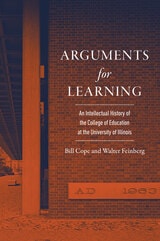
Arguments for Learning
An Intellectual History of the College of Education at the University of IllinoisBill Cope and Walter Feinberg
University of Illinois Press, 2025
Cope and Feinberg draw on conversations, narratives, and archival research that reveal how different generations explored their role in defining and carrying out the College’s multifaceted mission. Their account raises critical questions about the character of learning, the aims of teaching, and the nature of teaching as a profession. At the same time, the authors address issues that range from the role of schools in fostering individual and collective identity to the introduction of computer-mediated and online learning. Cope and Feinberg examine changes in self-understanding about fundamental ideas and chart how the College evolved from its original narrow mission of training children’s schoolteachers to embracing global perspectives.
A wide-ranging portrait of an institution, Arguments for Learning uses the School of Education to tell the stories of thinkers dedicated to the idea that education can change the world for the better.
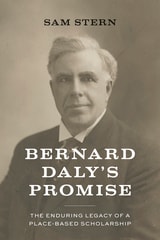
Bernard Daly's Promise
The Enduring Legacy of a Place-based ScholarshipSam Stern
Oregon State University Press, 2022
Bernard Daly escaped the Irish Famine and with his family emigrated to America, where he became the town doctor in Lakeview, Oregon, and then a state legislator, Oregon Agricultural College regent, county judge, rancher, and banker. When he died in 1920, his estate, valued at about a million dollars, established a college scholarship for the youth of Lake County, ensuring that most of them could attend college.
It’s hard to imagine a place more distant from higher education than Lake County in south central Oregon, a county about the size of New Jersey with a population under eight thousand. When the Bernard Daly scholarship was first awarded in 1922, less than two percent of America’s youth went to college, and the percentage was even lower in Lake County.
Today, Lake County students are much more likely to go to college, graduate in four years without debt, go on to graduate school, have successful careers, and contribute to the larger community—all because of a scholarship established a hundred years ago by an immigrant who sought a better life, not only for himself but also for others.
Drawing on more than a hundred personal interviews, an extensive web-based survey, and archival materials, Bernard Daly’s Promise offers unique insights into the benefits of higher education and how it might best be supported—questions that we are struggling with today.
Called to Reckon
Replacing History and Reclaiming Mission at a Midwestern CollegeEdited by Jane E. Simonsen
Southern Illinois University Press, 2025
Civic Labors
Scholar Activism and Working-Class StudiesEdited by Dennis Deslippe, Eric Fure-Slocum, and John W. McKerley
University of Illinois Press, 2016
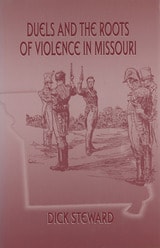
Duels and the Roots of Violence in Missouri
Dick Steward
University of Missouri Press, 2000
In early-nineteenth-century Missouri, the duel was a rite of passage for many young gentlemen seeking prestige and power. In time, however, other social groups, influenced by the ruling class, engaged in a variety of violent acts and symbolic challenges under the rubric of the code duello. In Duels and the Roots of Violence in Missouri, Dick Steward takes an in-depth look at the evolution of dueling, tracing the origins, course, consequences, and ultimate demise of one of the most deadly art forms in Missouri history. By focusing on the history of dueling in Missouri, Steward details an important part of our culture and the long-reaching impact this form of violence has had on our society.
Drawing upon accounts of at least a hundred duels—from little-known encounters to those involving celebrated figures such as Senator Thomas Hart Benton, Charles Lucas, Thomas Biddle, Spencer Pettis, and John Smith T—Steward shows how the roots of violence have penetrated our modern culture. He traces the social and cultural changes in the nature of the duel from its earliest form as a defense of honor to its use as a means of revenge. By the latter part of the nineteenth century, the formal southern duel had for the most part given way to the improvised western duel, better known as the gunfight. Involving such gunslingers as Wild Bill Hickok and Jesse James, these violent acts captivated people not only in the state but also across the nation. Although the violence entailed different methods of killing, its allure remained as strong as ever.
Steward re-creates the human drama and tragedy in many of these hostile encounters, revealing how different groups operating under the code duello justified family and clan feuds, vigilante justice, and revenge killings. This often-glamorized violence, Steward argues, was viewed as a symbol of honor and courage throughout the century and greatly influenced behavior and attitudes toward violence well into the twentieth century.
While this work centers mainly on Missouri and the history of dueling in the state, its inferences extend well past the region itself. Well-written and thoroughly researched, Duels and the Roots of Violence in Missouri provides valuable insight into the violent social climate of yesterday.
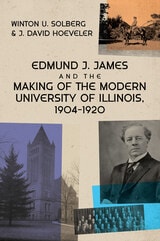
Edmund J. James and the Making of the Modern University of Illinois, 1904-1920
Winton U. Solberg and J. David Hoeveler
University of Illinois Press, 2024
In 1904, Edmund J. James inherited the leadership of an educational institution in search of an identity. His sixteen-year tenure transformed the University of Illinois from an industrial college to a major state university that fulfilled his vision of a center for scientific investigation.
Winton U. Solberg and J. David Hoeveler provide an account of a pivotal time in the university’s evolution. A gifted intellectual and dedicated academic reformer, James began his tenure facing budget battles and antagonists on the Board of Trustees. But as time passed, he successfully campaigned to address the problems faced by women students, expand graduate programs, solidify finances, create a university press, reshape the library and faculty, and unify the colleges of liberal arts and sciences. Combining narrative force with exhaustive research, the authors illuminate the political milieu and personalities around James to draw a vivid portrait of his life and times.
The authoritative conclusion to a four-part history, Edmund J. James and the Making of the Modern University of Illinois, 1904–1920 tells the story of one man’s mission to create a university worthy of the state of Illinois.
Education Behind the Wall
Why and How We Teach College in PrisonEdited by Mneesha Gellman
Brandeis University Press, 2022
An edited volume reflecting on different aspects of teaching in prison and different points of view.
This book seeks to address some of the major issues faced by faculty who are teaching college classes for incarcerated students. Composed of a series of case studies meant to showcase the strengths and challenges of teaching a range of different disciplines in prison, this volume brings together scholars who articulate some of the best practices for teaching their expertise inside alongside honest reflections on the reality of educational implementation in a constrained environment. The book not only provides essential guidance for faculty interested in developing their own courses to teach in prisons, but also places the work of higher education in prisons in philosophical context with regards to racial, economic, social, and gender-based issues. Rather than solely a how-to handbook, this volume also helps readers think through the trade-offs that happen when teaching inside, and about how to ensure the full integrity of college access for incarcerated students.
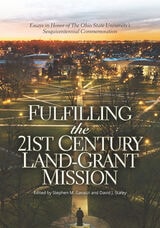
Fulfilling the 21st Century Land-Grant Mission
Essays in Honor of The Ohio State University’s Sesquicentennial CommemorationEdited by Stephen M. Gavazzi and David J. Staley
The Ohio State University Press, 2020
Gathered in honor of The Ohio State University’s sesquicentennial celebration, this collection of essays highlights the significant contributions that Ohio State continues to make as part of its twenty-first-century land-grant mission. Authors from across the university—representing fields as various as agriculture, dance, English, engineering, family science, geography, medicine, social work, and veterinary science—provide contributions that highlight the preeminent status of The Ohio State University. In addition, the perspectives of alumni, staff members, and senior administrators (both present and former) round out the picture of Ohio State as the first among equals regarding its land-grant peers. Overall, contributors draw on rich and varied institutional backgrounds to offer invaluable insights for higher education administrators and scholars across the US.
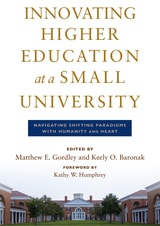
Innovating Higher Education at a Small University
Navigating Shifting Paradigms with Humanity and HeartMatthew E. Gordley
Rutgers University Press, 2027
Higher education is at a moment of real uncertainty. Colleges and universities are being asked to respond to changing student needs, financial pressure, and growing questions about value and purpose. Innovating Higher Education at a Small University offers a grounded and hopeful response to these challenges. Through a series of real, lived case studies, the book shows how one small, mission driven institution is rethinking how it teaches, partners, and serves its community. Spanning interdisciplinary work across teacher preparation, literacy, healthcare, and the arts, the chapters highlight what becomes possible when faculty and leaders are trusted to innovate with intention and care. Each chapter shares not only what was built, but also what was learned along the way, offering clear insights that others can adapt to their own contexts. Not a book about abstract trends or emerging technologies, it is grounded in program design, relationships, and project implementation. It is a book about people doing the work, and a reminder that meaningful change in higher education is already happening in places willing to lead with both humanity and purpose.
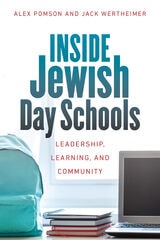
Inside Jewish Day Schools
Leadership, Learning, and CommunityAlex Pomson and Jack Wertheimer
Brandeis University Press, 2021
This book takes readers inside Jewish day schools to observe what happens day to day, as well as what the schools mean to their students, families, and communities. Many different types of Jewish day schools exist, and the variations are not well understood, nor is much information available about how day schools function. Inside Jewish Day Schools proves a vital guide to understanding both these distinctions and the everyday operations of these contemporary schools.
Not Alone
LGB Teachers Organizations from 1970 to 1985Jason Mayernick
Rutgers University Press, 2024
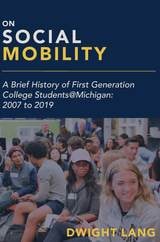
On Social Mobility
A Brief History of First-Generation College Students@Michigan: 2007 to 2019Dwight Lang
Michigan Publishing Services, 2019
Lang describes how working and lower class students openly acknowledge and struggle with challenging experiences on a predominantly middle and upper middle class campus. We appreciate how first generation students are risk takers, boundary crosser, and successful social class immigrants. Resourceful first-gen efforts become the basis of connection and community as students begin their social mobility journeys. Overtime a public story emerges: stories making the invisible visible; stories of courage and persistence; stories of structural changes; a thoughtful student movement that is hard to ignore. We come to better understand the power of shared determination.
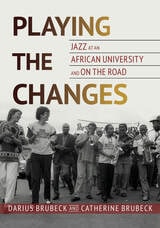
Playing the Changes
Jazz at an African University and on the RoadDarius Brubeck and Catherine Brubeck
University of Illinois Press, 2024
Catherine and Darius Brubeck’s 1983 move to South Africa launched them on a journey that helped transform jazz education. Blending biography with storytelling, the pair recount their time at the University of KwaZulu-Natal, where they built a pioneering academic program in jazz music and managed and organized bands, concerts, and tours around the world.
The Brubecks and the musicians faced innumerable obstacles, from the intensification of apartheid and a lack of resources to the hardscrabble lives that forced even the most talented artists to the margins. Building a program grounded in multi-culturalism, Catherine and Darius encouraged black and white musicians to explore and expand the landscape of South African jazz together Their story details the sometimes wily, sometimes hilarious problem-solving necessary to move the institution forward while offering insightful portraits of South African jazz players at work, on stage, and providing a soundtrack to the freedom struggle and its aftermath.
Frank and richly detailed, Playing the Changes provides insiders’ accounts of how jazz intertwined with struggle and both expressed and resisted the bitter unfairness of apartheid-era South Africa.
Potential on the Periphery
College Access from the Ground UpOmari Scott Simmons
Rutgers University Press, 2019
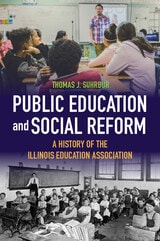
Public Education and Social Reform
A History of the Illinois Education AssociationThomas J. Suhrbur
University of Illinois Press, 2025
Suhrbur pays particular attention to the impact of race, gender, religion, and tax policy on the IEA and public schools. He also examines the IEA’s evolution from a professional organization controlled by administrations and officials through its radical transformation into a teacher-led independent labor union. As a workers’ organization, the IEA successfully fought for collective bargaining and organized K–12 and higher education while continually standing against right-wing efforts to privatize education and undermine public schools with vouchers, for-profit institutions, and tax credits.
Multifaceted and up to date, Public Education and Social Reform tells the story of the organization and figures dedicated to sustaining and advancing Illinois public education.

Pursuing Opportunitites Through Partnerships
Higher Education and CommunitiesBRUCE A. BEHRINGER
West Virginia University Press, 2004
In 1998, the W.W. Kellogg Foundation provided funding for four universities to collaborate with surrounding communities on mutually beneficial projects, through the Expanding Community Partnerships Program. In a series of innovative learning collaborations, East Tennessee University, the University of Texas at El Paso, West Virginia University, and Northeastern University established strong, sustainable partnerships with organizations in their local communities. Although each university approached its partnering differently, they all shared the goal of benefiting the underserved communities where they are located and transforming their institutions by enhancing students’ educational experiences and strengthening faculty, student, administration, and staff relationships with local residents. This book shares those relationship-building experiences of the four universities and communities. Highly recommended for all public and higher education administrators; for students and teachers of education, business, and sociology; and for those interested in innovative business and social-service models.
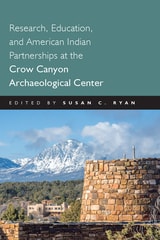
Research, Education and American Indian Partnerships at the Crow Canyon Archaeological Center
Susan C. Ryan
University Press of Colorado, 2024
Research, Education, and American Indian Partnerships at the Crow Canyon Archaeological Center guides Southwestern archaeology and public education beyond current practices—particularly regarding Indigenous partnerships—and provides a strategic handbook for readers into and through the mid-twenty-first century.
Open access edition supported by the Crow Canyon Archaeological Center King Family Fund and subvention supported in part by the Crow Canyon Archaeological Center and the Arizona Archaeological and Historical Society.

Rumors of Indiscretion
The University of Missouri's "Sex Questionnaire" Scandal in the Jazz AgeLawrence J. Nelson
University of Missouri Press, 2003

Social Research for our Times
Thomas Coram Research Unit past, Present and FutureEdited by Claire Cameron, Alison Koslowski, Alison Lamont, and Peter Moss
University College London, 2023
For fifty years, researchers at UCL’s Thomas Coram Research Unit have been undertaking ground-breaking policy-relevant social research. Their main focus has been social issues affecting children, young people, and families and the services provided for them. Social Research for our Times brings together different generations of researchers from the Unit to share some of the most important results of their studies.
Two sections focus on the main findings and conclusions from research into children and children services and on family life, minoritized groups, and gender. A third section is devoted to the innovative methods that have been developed and used to undertake research in these complex areas. Running through the book is a key strategic question: what should be the relationship between research and policy? Or put another way, what does “policy-relevant research” mean? This perennial question has gained new importance in the post-COVID, post-Brexit world that we have entered, making this text a timely intervention for sharing decades of experience. Taking a unique opportunity to reflect on the research context as well as research findings, this book will be of interest to researchers, teachers, students, and those involved in policy-making both in and beyond dedicated research units, and it can be read as a whole or sampled for individual standalone chapters.
Sustaining Interdisciplinary Collaboration
A Guide for the AcademyRegina Bendix
University of Illinois Press, 2017
The Art, Science, and Magic of the Data Curation Network
A Retrospective on Cross-Institutional CollaborationJake Carlson
Michigan Publishing Services, 2023
The Art, Science, and Magic of the Data Curation Network: A Retrospective on Cross Institutional Collaboration captures the results of a project retrospective meeting and describes the necessary components of the DCN’s sustained collaboration in the hopes that the insights will be of use to other collaborative efforts. In particular, the authors describe the successes of the community and challenges of launching a cross-institutional network. Additionally, this publication details the administrative, tool-based, and trust-based structures necessary for establishing this community, the “radical collaboration” that is the cornerstone of the DCN, and potential future collaborations to address shared challenges in libraries and research data management. This in-depth case study provides an overview of the critical work of launching a collaborative network and transitioning to sustainability. This publication will be of special interest to research librarians, data curators, and anyone interested in academic community building.
The Community-Based PhD
Complexities and Triumphs of Conducting CBPREdited by Sonya Atalay and Alexandra McCleary
University of Arizona Press, 2022
The Community-Based PhD brings together the experiences of PhD students from a range of disciplines discussing CBPR in the arts, humanities, social sciences, public health, and STEM fields. They write honestly about what worked, what didn’t, and what they learned. Essays address the impacts of extended research time frames, why specialized skill sets may be needed to develop community-driven research priorities, the value of effective relationship building with community partners, and how to understand and navigate inter- and intra-community politics.
This volume provides frameworks for approaching dilemmas that graduate student CBPR researchers face. They discuss their mistakes, document their successes, and also share painful failures and missteps, viewing them as valuable opportunities for learning and pushing the field forward. Several chapters are co-authored by community partners and provide insights from diverse community perspectives. The Community-Based PhD is essential reading for graduate students, scholars, and the faculty who mentor them in a way that truly crosses disciplinary boundaries.
Contributors: Anna S. Antoniou, Amy Argenal, Sonya Atalay, Stacey Michelle Chimimba Ault, Victoria Bochniak, Megan Butler, Elias Capello, Ashley Collier-Oxandale, Samantha Cornelius, Annie Danis, Earl Davis, John Doyle, Margaret J. Eggers, Cyndy Margarita García-Weyandt, R. Neil Greene, D. Kalani Heinz, Nicole Kaechele, Myra J. Lefthand, Emily Jean Leischner, Christopher B. Lowman, Geraldine Low-Sabado, Alexandra G. Martin, Christine Martin, Alexandra McCleary, Chelsea Meloche, Bonnie Newsom, Katherine L. Nichols, Claire Novotny, Nunanta (Iris Siwallace), Reidunn H. Nygård, Francesco Ripanti, Elena Sesma, Eric Simons, Cassie Lynn Smith, Tanupreet Suri, Emery Three Irons, Arianna Trott, Cecilia I. Vasquez, Kelly D. Wiltshire, Julie Woods, Sara L. Young
The Evolution of Investing at the University of Michigan
1817–2016Rafael E. Castilla and William P. Hodgeson
Michigan Publishing Services, 2017
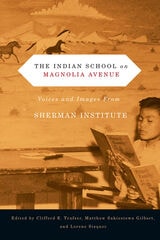
The Indian School on Magnolia Avenue
Voices and Images from Sherman InstituteEdited by Clifford E. Trafzer, Matthew Sakiestewa, and Lorene Sisquoc
Oregon State University Press, 2012
In 1902, the federal government opened Sherman Institute in Riverside, California, to transform American Indian students into productive farmers, carpenters, homemakers, nurses, cooks, and seamstresses. Indian students helped build the school and worked daily at Sherman; teachers provided vocational education and placed them in employment through the Outing Program.
Contributors to The Indian School on Magnolia Avenue have drawn on documents held at the Sherman Indian Museum to explore topics such as the building of Sherman, the school’s Mission architecture, the nursing program, the Special Five-Year Navajo Program, the Sherman cemetery, and a photo essay depicting life at the school.
Despite the fact that Indian boarding schools—with their agenda of cultural genocide— prevented students from speaking their languages, singing their songs, and practicing their religions, most students learned to read, write, and speak English, and most survived to benefit themselves and contribute to the well-being of Indian people.
Scholars and general readers in the fields of Native American studies, history, education, public policy, and historical photography will find
The Indian School on Magnolia Avenue an indispensable volume.
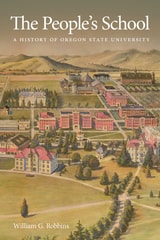
The People's School
A History of Oregon State UniversityWilliam Robbins
Oregon State University Press, 2017
This contextual approach is not to suggest that university presidents are unimportant. Benjamin Arnold (1872-1892), appointed president of Corvallis College by the Methodist Episcopal Church, South, served well beyond the date (1885) when the State of Oregon assumed control of the agricultural college. Robbins uses central administration records and grassroots sources—local and state newspapers, student publications (The Barometer, The Beaver), and multiple and wide-ranging materials published in the university’s digitized ScholarsArchive@OSU, a source for the scholarly work of faculty, students, and materials related to the institution’s mission and research activities. Other voices—extracurricular developments, local and state politics, campus reactions to national crises—provide intriguing and striking addendums to the university’s rich history.
The Reluctant Supervisor
Recognizing and Rethinking Power in Writing Center Supervisory PracticesRachel Azima
Utah State University Press, 2026
The discipline of writing center studies has long emphasized collaboration in every context, including leadership. But what does this emphasis mean for supervision, which is inherently hierarchical? The Reluctant Supervisor attends to how power—institutional, racial, and otherwise—operates in work relationships, staff policies, and administrative decisions.
Giving sustained attention to writing center administrators as supervisors (in addition to their roles as leaders, directors, mentors, and teachers), contributors write from the specificities of their local contexts, institutional positions, and embodied histories in ways that deepen our understanding of writing center supervisory practice.
The Reluctant Supervisor wrestles with the tensions, contradictions, and challenges necessary to name, own, and recognize supervision as a fundamental part of writing center work. It provides valuable perspectives for aspiring, new, and experienced writing center professionals and others in higher education looking to develop a more reflective supervisory practice—especially those who want to center equity and justice in their workplaces.
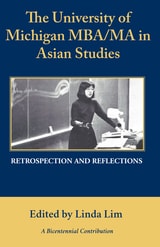
The University of Michigan MBA/MA in Asian Studies Retrospection and Reflections
A Bicentennial ContributionLinda Lim
Michigan Publishing Services, 2020
The Vulnerability of Public Higher Education
Michael Bernard-Donals
The Ohio State University Press, 2023
Reduced state funding to public institutions. The removal of tenure from state statutes. Attempts to silence faculty. Michael Bernard-Donals takes on these issues and other crises in higher education in The Vulnerability of Public Higher Education, exploring how values once used to justify higher education—the democratization of knowledge, the fostering of expertise, the creation of well-informed citizens, and critical engagement with issues—have been called into question.
Bernard-Donals argues that public higher education, especially the work of faculty, has become vulnerable—socially, politically, professionally—and this book takes seriously the idea of vulnerability, suggesting that university faculty see it not as an encumbrance to their work but as an opportunity to form relations of solidarity with one another through mutual recognition and shared, albeit different forms of, precarity. Through a series of case studies on faculty rights and responsibilities, the efficacy of diversity initiatives, and tenure and academic freedom, Bernard-Donals employs a rhetorical perspective to show how vulnerability can reshape faculty work and provide ways to shift the relations of materiality and power while opening up new forms of deliberation, engagement, and knowledge production.
Time and Change
150 Years of The Ohio State UniversityTamar Chute with a Letter by President Michael V. Drake and an Afterword by Provost Bruce A. McPheron
The Ohio State University Press, 2019
Gain a visually stunning new perspective on iconic landmarks such as Mirror Lake, the Oval, Ohio Stadium, and the neighborhoods surrounding the Columbus and regional campuses. From beloved teams, symbols, and traditions to scenes from academic and campus life, reflect on time and change and rediscover the extraordinary connection that unites generations of Buckeyes.
To Raise Up the Man Farthest Down
Tuskegee University’s Advancements in Human Health, 1881–1987Dana R. Chandler and Edith Powell
University of Alabama Press, 2018
An important historical account of Tuskegee University’s significant advances in health care, which affected millions of lives worldwide.
Alabama’s celebrated, historically black Tuskegee University is most commonly associated with its founding president, Booker T. Washington, the scientific innovator George Washington Carver, or the renowned Tuskegee Airmen. Although the university’s accomplishments and devotion to social issues are well known, its work in medical research and health care has received little acknowledgment. Tuskegee has been fulfilling Washington’s vision of “healthy minds and bodies” since its inception in 1881. In To Raise Up the Man Farthest Down, Dana R. Chandler and Edith Powell document Tuskegee University’s medical and public health history with rich archival data and never-before-published photographs. Chandler and Powell especially highlight the important but largely unsung role that Tuskegee University researchers played in the eradication of polio, and they add new dimension and context to the fascinating story of the HeLa cell line that has been brought to the public’s attention by popular media.
Tuskegee University was on the forefront in providing local farmers the benefits of agrarian research. The university helped create the massive Agricultural Extension System managed today by land grant universities throughout the United States. Tuskegee established the first baccalaureate nursing program in the state and was also home to Alabama’s first hospital for African Americans. Washington hired Alabama’s first female licensed physician as a resident physician at Tuskegee. Most notably, Tuskegee was the site of a remarkable development in American biochemistry history: its microbiology laboratory was the only one relied upon by the National Foundation for Infantile Paralysis (the organization known today as the March of Dimes) to produce the HeLa cell cultures employed in the national field trials for the Salk and Sabin polio vaccines. Chandler and Powell are also interested in correcting a long-held but false historical perception that Tuskegee University was the location for the shameful and infamous US Public Health Service study of untreated syphilis.
Meticulously researched, this book is filled with previously undocumented information taken directly from the vast Tuskegee University archives. Readers will gain a new appreciation for how Tuskegee’s people and institutions have influenced community health, food science, and national medical life throughout the twentieth century.
Transforming a Business School
Entrepreneurial Leadership in an Era of DisruptionPorat, M. Moshe
Rutgers University Press, 2019
Under New Management
Universities, Administrative Labor, and the Professional TurnAuthored by Randy Martin
Temple University Press, 2012
Faculty members who care about the institutions of higher education where they work are often at odds with university management. In his forceful book, Under New Management, Randy Martin takes a novel, evenhanded approach to this gulf between professors, who feel a loss of autonomy, and administrators.
Martin imagines a political future for academic labor based on a critical understanding of the administrative work that faculty already undertake. He considers the differences between self-rule and specialized expertise and provides a case study of a New York City public school to show how kids and families respond to the demands of managerial productivity that is part of preparing students for college. Under New Management also considers changes faced by students, faculty, and administrators in light of this reworked social compact of professionals.