Results by title
45 books match the query 'Pacific Area'
A Primer for Teaching Pacific Histories
Ten Design PrinciplesMatt K.Matsuda
Duke University Press, 2020
Across The Pacific
Asian Americans and GlobalizationEvelyn Hu-Dehart, E
Temple University Press, 2000
Members of the Asian American community have always been trans-Pacific, but are now more than ever, since the 1965 change in U.S. immigration law. Entering the U.S. at the culmination of the Civil Rights movement, Asians becoming Asian Americans have joined a self-consciously multicultural society. Asian economies roared onto the world stage, creating new markets while circulating capital and labor at an unprecedented scale and intensity, thereby helping drive the forces of modern globalization. These essays by well-known scholars in the field of Asian American studies consider such topics as the impact of new migrations on Asian American subjectivity and politics, Asian American activism and U.S. foreign policy, and the role of Asian Americans in Pacific Rim economies.
Considering issues of diaspora, transmigrancy, assimilation, institutionalized racism, and community, Across the Pacific covers such cutting-edge subjects as the cultural expressions of dislocation among contemporary Asian American writers, as well as the impact of the new migrations on Asian American subjectivity and politics.
American Studies as Transnational Practice
Turning toward the TranspacificEdited by Yuan Shu and Donald E. Pease
Dartmouth College Press, 2016
Archives of the Anthropocene
Visual Grammars of Deep TimeYuriko Furuhata
Duke University Press, 2026
Asia/Pacific as Space of Cultural Production
Rob Wilson and Arif Dirlik, eds.
Duke University Press, 1995
From New Zealand to Japan, Taiwan to Hawaii, this innovative volume presents essays, poems, and memoirs by prominent Asia/Pacific writers that resist appropriation by transnational capitalism through the articulation of autonomous local identities and counter-histories of place and community. In addition, cultural critics spanning several locations and disciplines deconstruct representations—particularly those on film and in novels—that perpetuate Asia/Pacific as a realm of EuroAmerican fantasy.
This collection, a much expanded edition of boundary 2, offers a new perception of the Asia/Pacific region by presenting the Pacific not as a paradise or vast emptiness, but as a place where living, struggling peoples have constructed contemporary identities out of a long history of hegemony and resistance. Asia/Pacific as Space of Cultural Production will prove stimulating to readers with an interest in the Asia/Pacific region, and to scholars in the fields of Asian, American, Pacific, postcolonial, and cultural studies.
Contributors. Joseph P. Balaz, Chris Bongie, William A. Callahan, Thomas Carmichael, Leo Ching, Chiu Yen Liang (Fred), Chungmoo Choi, Christopher L. Connery, Arif Dirlik, John Fielder, Miriam Fuchs, Epeli Hau`ofa, Lawson Fusao Inada, M. Consuelo León W., Katharyne Mitchell, Masao Miyoshi, Steve Olive, Theophil Saret Reuney, Peter Schwenger, Subramani, Terese Svoboda, Jeffrey Tobin, Haunani-Kay Trask, John Whittier Treat, Tsushima Yuko, Albert Wendt, Rob Wilson
Asserting Native Resilience
Pacific Rim Indigenous Nations Face the Climate CrisisEdited by Zoltán Grossman and Alan Parker
Oregon State University Press, 2012
Native American tribes in the Pacific Northwest and Indigenous peoples around the Pacific Rim have already been deeply affected by droughts, flooding, reduced glaciers and snowmelts, seasonal shifts in winds and storms, and the northward movement of species on the land and in the ocean. Using tools of resilience, Native peoples are creating defenses to strengthen their communities, mitigate losses, and adapt where possible.
Asserting Native Resilience presents a rich variety of perspectives on Indigenous responses to the climate crisis, reflecting the voices of more than twenty contributors, including tribal leaders, scientists, scholars, and activists from the Pacific Northwest, British Columbia, Alaska, and Aotearoa / New Zealand, and beyond. Also included is a resource directory of Indigenous governments, NGOs, and communities and a community organizing booklet for use by Northwest tribes.

Between Tedium and Terror
A Soldier's World War II Diary, 1943-45Sy M. KahnForeword by Ronald Spector
University of Illinois Press, 1993
Often writing in tents by candlelight, in foxholes, or on board ships, Kahn documents life during four campaigns and over three hundred air attacks. He describes the 244th Port Company's backbreaking work of loading and unloading ships, the suffocating heat, the debilitating tropical diseases, and the relentless, sometimes terrifying bombings, accidents, casualties, and deaths.
His wartime odyssey also includes encounters with civilians in Australia, in the Philippines, and, as among the earliest occupation troops, in Japan. A detailed record of the daily cost of war, Kahn's journal reflects his increasing maturity and his personal coming of age, representative of thousands of young Americans who served in World War II.

Caring for Life
A Postdevelopment Politics of Infant HygieneKelly Dombroski
University of Minnesota Press, 2024
The transformational possibilities of everyday hygiene and care practices
In order to mitigate the worst forecasts of climate change, many of us need to make drastic adjustments to how we live and what we consume. For Kelly Dombroski, these changes must also happen in the home: in rethinking routines of care and hygiene that still rely on disposable and plastic products. Caring for Life examines the remarkable evolution in Asia-Pacific hygiene practices and amplifies the creative work of ordinary people guarding human and more-than-human life in their everyday practices of care.
Dombroski develops the concept of “guarding life,” a viewpoint that counters homogenous cultural practices and imposed sanitation standards and instead embraces diverse hygiene practices that are networked across varying wisdoms and bodies. She traces how the Chinese diaper-free infant toilet training practice of baniao has traveled to Australia and New Zealand, and she explores the practice of elimination communication, in which babies learn to communicate to their caregivers when they need to eliminate, thus removing the need for diapers. A mother herself, Dombroski conducted ethnographic research while mothering to examine how collectives of mothers draw on Chinese knowledge and their own embodied practices of childcare to create new hybrid forms of infant care.
Caring for Life is a call to action, a theory of change, and a fascinating account of the transformational possibilities of care practices. It shows how experiments in personal care can lead to collective, widespread change, ultimately providing a practical and hopeful vision for environmental action.
Retail e-book files for this title are screen-reader friendly with images accompanied by short alt text and/or extended descriptions.

Changing Pacific Forests
Historical Perspectives on the Pacific Basin Forest EconomyJohn Dargavel and Richard P. Tucker, eds.
Duke University Press, 1992
Drawing on a 1991 conference sponsored by the Forest History Society and the International Union of Forestry Research Organizations held in Honolulu, these papers address a range of topics related to the changing Pacific forests, including the remnants of colonialism, the emergence of the Third World, people and resources caught in the middle of policy decisions, land management, national forests, and subsistence use of the forest by indigenous peoples. Essays also explore macroeconomic theories of international trade and the interests of the United States and the former Soviet Union in the economic health of the region. Changing Pacific Forests will be of interest to scholars of the economy and environment of the Pacific Basin as well as of land management and the history of land use in general.
Contributors. Charles S. Backman, Thomas R. Cox, John Dargavel, Elizabeth Flint, Lim Hin Fui, G. R. Henning, Kenneth E. Jackson, Hiroaki Kakizawa, Nicholas K. Menzies, Andrew Price, John F. Richards, Jr., M. M. Roche, I. Gustin M. Tantra, Conrad Totman, Richard P. Tucker, Thomas R. Waggener
China Marine
E. B. Sledge
University of Alabama Press, 2002
From the respected author of one of the best books on World War II combat, comes an equally captivating saga of battle recovery, healing, and homecoming.
China Marine is the long-awaited sequel to E. B. Sledge’s critically acclaimed memoir, With the Old Breed at Peleliu and Okinawa. Picking up where his previous memoir leaves off, Sledge, a young marine in the First Division, traces his company’s movements and charts his own difficult passage to peace following his horrific experiences in the Pacific. He reflects on his duty in the ancient city of Peiping (now Beijing) and recounts the difficulty of returning to his hometown of Mobile, Alabama, and resuming civilian life haunted by the shadows of close combat.
Distinguished historians have praised Sledge’s first book as the definitive rifleman’s account of World War II, ranking it with the Civil War’s Red Badge of Courage and World War I’s All Quiet on the Western Front. Although With the Old Breed ends with the surrender of Japan, marines in the Pacific were still faced with the mission of disarming the immense Japanese forces on the Asian mainland and reestablishing order. For infantrymen so long engaged in the savage and surreal world of close combat, there remained the personal tasks of regaining normalcy and dealing with suppressed memories, fears, and guilt.
In China Marine, E. B. Sledge completes his story and provides emotional closure to the searing events detailed in his first memoir. He speaks frankly about the real costs of war, emotional and psychological as well as physical, and explains the lifetime loyalties that develop between men who face fear, loss, and horror together. That bond becomes one of the newfound treasures of life after battle.
With his hallmark style of simplicity, directness, and lack of sentimentality, "Sledgehammer" has given us yet another great document of war literature.
City for Empire
An Anchorage History, 1914-1941Preston Jones
University of Alaska Press, 2010
First settled in 1915, Anchorage, Alaska, was founded with the American empire in mind. During World War I, it served as a conduit through which coal could be shipped to the Pacific, where the US Navy was engaged with Japan. Decades later, during World War II, Anchorage became an equally important site for the defense of the mainland and the projection of American power. City for Empire tells the story of Anchorage's development in that period, focusing in particular on the international context of the city's early decades and its surprisingly diverse inhabitants. A thorough yet accessible read, City for Empire captures the history of this remarkable city.

Evans Carlson, Marine Raider
The Man Who Commanded America's First Special ForcesDuane Schultz
Westholme Publishing, 2014
In Evans Carlson, Marine Raider: The Man Who Commanded America’s First Special Forces, psychologist and acclaimed history writer Duane Schultz presents a fascinating and absorbing portrait of this complex officer. Son of a Congregational preacher, Carlson left home at an early age, and when he was just seventeen, the tall, lanky underage teenager bluffed his way into the army. He began his eventful military career against Pancho Villa, and continued through World War I and the unrest in Central America and in China. Despite Carlson’s personal bravery, loyalty, and long service, Schultz reveals that his active career was cut short by the Marine command who were envious of the attention he and his men received from the press and public; foreshadowing the paranoia of the McCarthy era, he was also rumored to be a communist. His raiders remained staunchly loyal to their former commander, and when he died in 1947, they ensured he would be buried in Arlington National Cemetery. Famed army and political cartoonist Bill Mauldin said, “There were only two brass hats whom ordinary GIs respected: Dwight Eisenhower and Evans Carlson.” This is Carlson’s story.
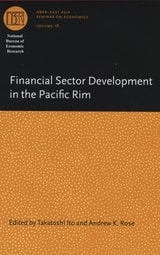
Financial Sector Development in the Pacific Rim
Edited by Takatoshi Ito and Andrew K. Rose
University of Chicago Press, 2009
The reform in Asian financial sectors—especially in banking and stock markets—has been remarkable since the currency crisis of 1997–98. East Asia is now a major player in international finance, providing serious competition to the more traditional financial centers of London and New York. Financial Sector Development in the Pacific Rim provides a rich collection of theoretical and empirical analyses of the growing capital markets in the region.
Bringing together authors from various East Asian and Pacific nations, this volume examines the institutional factors influencing financial innovation, the consequences of financial development, widespread consolidation occurring through mergers and acquisitions, and the implementation of policy reform. Financial Sector Development in the Pacific Rim offers the comparative analysis necessary to answer broad questions about economic development and the future of Asia.
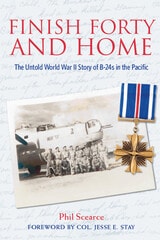
Finish Forty and Home
The Untold World War II Story of B-24s in the PacificPhil Scearce
University of North Texas Press, 2011
Global Production
The Apparel Industry in the Pacific Rimedited by Edna Bonacich, Lucie Cheng, Norma Chinchilla, Nora Hamilton and Paul Ong
Temple University Press, 1994
Global/Local
Cultural Production and the Transnational ImaginaryRob Wilson and Wimal Dissanayake, eds.
Duke University Press, 1996
Ranging across issues involving film, literature, and theory, as well as history, politics, economics, sociology, and anthropology, these deeply interdisciplinary essays explore the interwoven forces of globalism and localism in a variety of cultural settings, with a particular emphasis on the Asia-Pacific region. Powerful readings of the new image culture, transnational film genre, and the politics of spectacle are offered as is a critique of globalization as the latest guise of colonization. Articles that unravel the complex links between the global and local in terms of the unfolding narrative of capital are joined by work that illuminates phenomena as diverse as "yellow cab" interracial sex in Japan, machinic desire in Robocop movies, and the Pacific Rim city. An interview with Fredric Jameson by Paik Nak-Chung on globalization and Pacific Rim responses is also featured, as is a critical afterword by Paul Bové.
Positioned at the crossroads of an altered global terrain, this volume, the first of its kind, analyzes the evolving transnational imaginary—the full scope of contemporary cultural production by which national identities of political allegiance and economic regulation are being undone, and in which imagined communities are being reshaped at both the global and local levels of everyday existence.

Into the Field
A Foreign Correspondent's NotebookBy Tracy Dahlby
University of Texas Press, 2014
Tracy Dahlby is an award-winning journalist who has reported internationally as a contributor to National Geographic magazine and served as a staff correspondent for Newsweek and the Washington Post. In this memoir of covering a far-flung swath of Asia, he takes readers behind the scenes to reveal “the stories behind the stories”—the legwork and (mis)adventures of a foreign correspondent on a mission to be the eyes and ears of people back home, helping them understand the forces and events that shape our world.
Into the Field centers on the travel and reporting Dahlby did for a half-dozen pieces that ran in National Geographic. The book tours the South China Sea during China’s rise as a global power, visits Japan in a time of national midlife crisis, and explores Southeast Asia during periods of political transition and tumult. Dahlby’s vivid anecdotes of jousting with hardboiled sea captains, communing with rebellious tribal chieftains, enduring a spectacular shipboard insect attack, and talking his way into a far place or out of a tight spot offer aspiring foreign correspondents a realistic introduction to the challenges of the profession. Along the way, he provides practical advice about everything from successful travel planning to managing headstrong local fixers and dealing with circumstances that can range from friendly to formidable. A knowledgeable, entertaining how-to book for observing the world and making sense of events, Into the Field is a must-read for student journalists and armchair travelers alike.
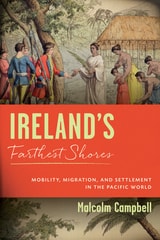
Ireland's Farthest Shores
Mobility, Migration, and Settlement in the Pacific WorldMalcolm Campbell
University of Wisconsin Press, 2022
Malcolm Campbell examines the rich history of Irish experiences on land and at sea, offering new perspectives on migration and mobility in the Pacific world and of the Irish role in the establishment and maintenance of the British Empire. This volume investigates the extensive transnational connections that developed among Irish immigrants and their descendants across this vast and unique oceanic space, ties that illuminate how the Irish participated in the making of the Pacific world and how the Pacific world made them.
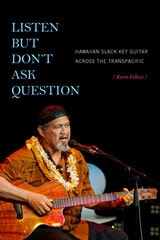
Listen but Don't Ask Question
Hawaiian Slack Key Guitar across the TransPacificKevin Fellezs
Duke University Press, 2019

Militarized Currents
Toward a Decolonized Future in Asia and the PacificSetsu Shigematsu
University of Minnesota Press, 2010
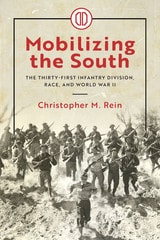
Mobilizing the South
The Thirty-First Infantry Division, Race, and World War IIChristopher M. Rein
University of Alabama Press, 2022
A richly researched account of the social, racial, and political history of a major Deep South infantry division at home and in the Pacific
Chris Rein’s study of the Thirty-First Infantry Division, known officially as the “Dixie Division,” illuminates the complexities in mobilizing American reserve units to meet the global emergency during World War II. Citizen soldiers from Alabama, Florida, Louisiana, and Mississippi formed the core of one of the ninety infantry divisions the Army successfully activated, trained, equipped, and deployed to defeat fascism in Europe and race-based imperialism in the Pacific. But the Army mobilized ideas along with manpower, and soldiers from across the Jim Crow South brought their racial ideas and views with them into the ranks and then exported these across the South Pacific. If the American victory in World War II represents a “double victory” over racism abroad and at home, the division’s service is a cogent reminder that the same powerful force could pull in opposite directions.
While focused on the division’s operational service during the war years, Mobilizing the South: The Thirty-First Infantry Division, Race, and World War II spans the division’s entire service from 1917 to 1967, from an interwar period highlighted by responses to natural disasters and facing down lynch mobs through a postwar service that included protecting activists in the most important struggles of the civil rights era. But the division’s extended service as a training establishment highlights lingering resentments and tensions within the American military system between the active and reserve components. Despite this, the division performed well in General Douglas MacArthur’s island-hopping campaign across the South Pacific. Using official records as well as details drawn from correspondence and oral histories, Rein captures how individual soldiers framed their exposure to a larger world, and how service alongside African American, New Guinean, and Filipino units both reinforced and modified views on race and postwar American society.
Monetary Policy with Very Low Inflation in the Pacific Rim
Edited by Takatoshi Ito and Andrew K. Rose
University of Chicago Press, 2006
The editors of this volume attribute low inflation and deflation in the region to a number of recent phenomena. Some of these episodes, they argue, may be linked to rapid growth on the supply side of economies. Here, inadequate demand policy can produce what is referred to as a "liquidity trap" in which the expectation of falling prices encourages agents to defer costly purchases, thereby discouraging growth. Low inflation rates can also be traced to the presence of a "zero-lower bound" on interest rates, as well as the inflation-targeting phenomenon. Targets have been set so low, the editors argue, that in some cases a few bad shocks lead to deflation.
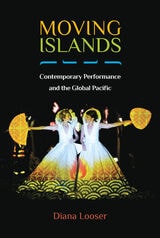
Moving Islands
Contemporary Performance and the Global PacificDiana Looser
University of Michigan Press, 2021
Moving Islands reveals the international and intercultural connections within contemporary performance from Oceania, focusing on theater, performance art, art installations, dance, film, and activist performance in sites throughout Oceania and in Australia, Asia, North America, and Europe. Diana Looser’s study moves beyond a predictable country-specific or island-specific focus to encompass an entire region defined by diversity and global exchange, showing how performance operates to frame social, artistic, and political relationships across widely dispersed locations. The study also demonstrates how Oceanian performance contributes to international debates about diaspora, indigeneity, urbanization, and environmental sustainability. The author considers the region’s unique cultural and geographic dynamics as she brings forth the paradigm of transpasifika to suggest a way of understanding these intercultural exchanges and connections, with the aim to “rework the cartographic and disciplinary priorities of transpacific studies to privilege the activities of Islander peoples.”
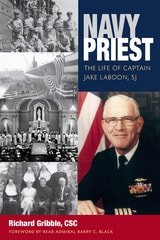
Navy Priest
Richard Gribble
Catholic University of America Press, 2015

Nightmare in the Pacific
The World War II Saga of Artie Shaw and His Navy BandMichael Doyle
University of North Texas Press, 2025
Oceanic Becoming
The Pacific beneath the PavementsRob Wilson
Duke University Press, 2025
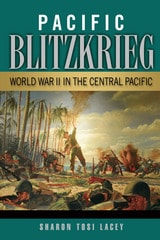
Pacific Blitzkrieg
World War II in the Central PacificSharon Tosi Lacey
University of North Texas Press, 2013
Postcolonial Grief
The Afterlives of the Pacific Wars in the AmericasJinah Kim
Duke University Press, 2019
Promises Kept
A MemoirSidney S. McMath
University of Arkansas Press, 2003
Winner of the 2006 Booker Worthen Literary Prize and the 2004 Ragsdale Award
A dominating spirit of public service animated the life of Sidney Sanders McMath (1912–2003), the thirty-fourth governor of Arkansas. Promises Kept, completed and published when McMath was in his nineties, tells his story in his own words—from the piney hills of South Arkansas to the battlefields of World War II; through the human dramas of the courtroom to the marbled corridors of the State Capitol.
In Promises Kept, McMath recounts a rural upbringing that grounded him in the concerns of everyday Arkansans. He tells his life story through key milestones, including distinguished military service and a dramatic political rise to governor of Arkansas. During his four years in office, he pursued reform and modernization by expanding roads and electricity to rural areas, fighting the poll tax, building the state’s first medical center, opening Democratic primaries to Black voters, and standing with President Harry Truman in resisting the segregationist Dixiecrats. McMath’s political career ended amid unproven allegations tied to the highway program—charges he addresses directly here—and concludes with his return to the law, where landmark cases earned him honors.
Throughout, McMath reveals the excitement and the hard choices of real democracy, offering compelling human stories and a crucial perspective of a pivotal time in Arkansas history.
Red Arrow across the Pacific
The Thirty-Second Infantry Division during World War IIMark D. Van Ells
Wisconsin Historical Society Press, 2024
Red Arrow across the Pacific reveals the long-overdue story of the renowned Thirty-Second "Red Arrow" Infantry Division. Discover how this National Guard unit—which originated in Wisconsin and Michigan but soon evolved to include soldiers from California to New England—became one of the first US military units deployed overseas in World War II, eventually logging more combat hours than any other US Army division.
Far more than a traditional battle narrative, Red Arrow across the Pacific offers a cultural history of the Red Arrow's wartime experience, from its mobilization in 1940, to its deployment across New Guinea, Australia, and the Philippines, to its postwar occupation of Japan. Drawing from letters, memoirs, and interviews, author Mark D. Van Ells lets the soldiers speak for themselves, describing in their own words the terror of combat, their impressions of foreign lands, the struggle to maintain their own humanity, and the many ways the war profoundly changed them.
Nuanced and remarkably thorough, this book explores the dramatic evolution of the Thirty-Second Infantry Division and reveals how the story of the Red Arrow reflects the experience of the US military during World War II.
“Exceptionally well researched and engagingly written. This book is a must read for any student of military history.”
—Capt. Florian L. Waitl, Command Historian, Wisconsin Army National Guard
“A superb divisional history. . . . Highly recommended for a general audience, as well as readers interested in the Second World War.”
—Mary Louise Roberts, Lucie Aubrac Distinguished Professor Emerita of History, University of Wisconsin–Madison, and author of Sheer Misery: Soldiers in Battle in WWII
Reimagining the American Pacific
From South Pacific to Bamboo Ridge and BeyondRob Wilson
Duke University Press, 2000
Wilson begins by tracing the arrival of American commerce and culture in the Pacific through missionary and imperial forces in the nineteenth century and the parallel development of Asia/Pacific as an idea. Using an impressive range of texts—from works by Herman Melville, James Michener, Maori and Western Samoan novelists, and Bamboo Ridge poets to Baywatch, films and musicals such as South Pacific and Blue Hawaii, and native Hawaiian shark god poetry—Wilson illustrates what it means for a space to be “regionalized.” Claiming that such places become more open to transnational flows of information, labor, finance, media, and global commodities, he explains how they then become isolated, their borders simultaneously crossed and fixed. In the case of Hawai’i, Wilson argues that culturally innovative, risky forms of symbol making and a broader—more global—vision of local plight are needed to counterbalance the racism and increasing imbalance of cultural capital and goods in the emerging postplantation and tourist-centered economy.
Reimagining the American Pacific leaves the reader with a new understanding of the complex interactions of global and local economies and cultures in a region that, since the 1970s, has been a leading trading partner of the United States. It is an engaging and provocative contribution to the fields of Asian and American studies, as well as those of cultural studies and theory, literary criticism, and popular culture.
Richard Bong
World War II Flying AcePete Barnes
Wisconsin Historical Society Press, 2009
Settler Garrison
Debt Imperialism, Militarism, and Transpacific ImaginariesJodi Kim
Duke University Press, 2022

Sites of Desire/Economies of Pleasure
Sexualities in Asia and the PacificEdited by Lenore Manderson and Margaret Jolly
University of Chicago Press, 1997
A unique and important contribution to the study of sexuality, this book also suggests that the history of sexuality in the West was shaped by myths of the legendary Orient and the exotic "Other."
Steel Helmet and Mortarboard
An Academic in Uncle Sam's ArmyFrancis H. Heller
University of Missouri Press, 2009
The Black Pacific Narrative
Geographic Imaginings of Race and Empire between the World WarsEtsuko Taketani
Dartmouth College Press, 2014
The Diplomacy of Involvement
American Economic Expansion across the Pacific, 1784-1900David M. Pletcher
University of Missouri Press, 2001
Like its predecessor, this important new work is focused on the connection between trade and investment on the one hand and U.S. foreign policy on the other. David Pletcher describes the trade of the United States with the Far East, the islands of the Pacific, and the northwest coast of North America from 1784 (the year of the first American trading expedition to China) to 1844 (the year of the first trade treaty with China, followed immediately by the U.S. acquisition of Oregon and California). He then traces the growth of trade and investment in Alaska, Hawaii, and the South Pacific from 1844 to 1890 and proceeds to do the same for China, Japan, and Korea. In the ensuing chapters, Pletcher covers the 1890s, including the annexation of Hawaii, the Sino-Japanese War, the acquisition of the Philippines, and the Open Door policy in China.
He concludes that the American expansion across the Pacific and into the Far East was not a deliberate, consistent drive for economic hegemony but a halting, experimental, improvised movement, carried out against determined opposition and indifference and dotted with setbacks and failures. Providing his own judgments about the wisdom and effectiveness of America's new endeavors, Pletcher summarizes the problems and handicaps involved, demonstrating that errors of the twentieth century were at least partly the result of poor preparation in the 1880s and 1890s.
Touching on every place where Americans undertook significant economic activity, The Diplomacy of Involvement will be an important aid for seasoned scholars, as well as an excellent introduction for the novice.
The History of Cartography, Volume Two, Book Three
Cartography in the Traditional African, American, Arctic, Australian, and Pacific SocietiesEdited by David Woodward and G. Malcolm Lewis
University of Chicago Press, 1998
"The maps in this book provide an evocative picture of how indigenous peoples view and represent their worlds. They illuminate not only questions of material culture but also the cognitive systems and social motivations that underpin them" (from the introduction).
Although they are often rendered in forms unfamiliar to Western eyes, maps have existed in most cultures. In this latest book of the acclaimed History of Cartography, contributors from a broad variety of disciplines collaborate to describe and address the significance of traditional cartographies. Whether painted on rock walls in South Africa, chanted in a Melanesian ritual, or fashioned from palm fronds and shells in the Marshall Islands, all indigenous maps share a crucial role in representing and codifying the spatial knowledge of their various cultures. Some also serve as repositories of a group's sacred or historical traditions, while others are exquisite art objects.
The indigenous maps discussed in this book offer a rich resource for disciplines such as anthropology, archaeology, art history, ethnology, geography, history, psychology, and sociology. Copious illustrations and carefully researched bibliographies enhance the scholarly value of this definitive reference.
The Imperialist Imaginary
Visions of Asia and the Pacific in American CultureJohn Eperjesi
Dartmouth College Press, 2014
The Indies of the Setting Sun
How Early Modern Spain Mapped the Far East as the Transpacific WestRicardo Padrón
University of Chicago Press, 2020
Narratives of Europe’s westward expansion often tell of how the Americas came to be known as a distinct landmass, separate from Asia and uniquely positioned as new ground ripe for transatlantic colonialism. But this geographic vision of the Americas was not shared by all Europeans. While some imperialists imagined North and Central America as undiscovered land, the Spanish pushed to define the New World as part of a larger and eminently flexible geography that they called las Indias, and that by right, belonged to the Crown of Castile and León. Las Indias included all of the New World as well as East and Southeast Asia, although Spain’s understanding of the relationship between the two areas changed as the realities of the Pacific Rim came into sharper focus. At first, the Spanish insisted that North and Central America were an extension of the continent of Asia. Eventually, they came to understand East and Southeast Asia as a transpacific extension of their empire in America called las Indias del poniente, or the Indies of the Setting Sun.
The Indies of the Setting Sun charts the Spanish vision of a transpacific imperial expanse, beginning with Balboa’s discovery of the South Sea and ending almost a hundred years later with Spain’s final push for control of the Pacific. Padrón traces a series of attempts—both cartographic and discursive—to map the space from Mexico to Malacca, revealing the geopolitical imaginations at play in the quest for control of the New World and Asia.

The Non-Independent Territories of the Caribbean and Pacific
Continuity or Change?Edited by Peter Clegg and David Killingray
University of London Press, 2012
Trade in Services in the Asia-Pacific Region
Edited by Takatoshi Ito and Anne O. Krueger
University of Chicago Press, 2002
This volume is the first book-length attempt to analyze trade in services in the Asia-Pacific region. Contributors provide overviews of basic issues involved in studying the service sector; investigate the impact of increasing trade in services on the economies of Taiwan, Korea, and Hong Kong; present detailed analyses of specific service sectors (telecommunications, financial services, international tourism, and accounting); and extend our understanding of trade in services beyond the usual concept (measured in balance of payment statistics) to include indirect services and services undertaken abroad by subsidiaries and affiliates.
Transitive Cultures
Anglophone Literature of the TranspacificPatterson, Christopher B
Rutgers University Press, 2018
Texts written by Southeast Asian migrants have often been read, taught, and studied under the label of multicultural literature. But what if the ideology of multiculturalism—with its emphasis on authenticity and identifiable cultural difference—is precisely what this literature resists?
Transitive Cultures offers a new perspective on transpacific Anglophone literature, revealing how these chameleonic writers enact a variety of hybrid, transnational identities and intimacies. Examining literature from Malaysia, Singapore, and the Philippines, as well as from Southeast Asian migrants in Canada, Hawaii, and the U.S. mainland, this book considers how these authors use English strategically, as a means for building interethnic alliances and critiquing ruling power structures in both Southeast Asia and North America. Uncovering a wealth of texts from queer migrants, those who resist ethnic stereotypes, and those who feel few ties to their ostensible homelands, Transitive Cultures challenges conventional expectations regarding diaspora and minority writers.
Transnational Asia Pacific
Gender, Culture, and the Public SphereEdited by Shirley Geok-lin Lim, Larry E. Smith, and Wimal Dissanayake
University of Illinois Press, 1999
The most complete survey to date of the vibrant strands of this music and its colorful practitioners, Mountains of Music delineates a unique culture where music and music making are part of an ancient and treasured heritage. The sly humor, strong faith, clear regional identity, and musical convictions of these performers draw the reader into families and communities bound by music from one generation to another. For devotees as well as newcomers to this infectiously joyous and heartfelt music, Mountains of Music captures the strength of tradition and the spontaneous power of living artistry.
Waves Across the South
A New History of Revolution and EmpireSujit Sivasundaram
University of Chicago Press, 2020