Results by title
12 books match the query 'Parapsychology'
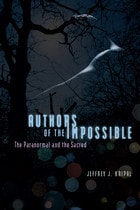
Authors of the Impossible
The Paranormal and the SacredJeffrey J. Kripal
University of Chicago Press, 2010
Most scholars dismiss research into the paranormal as pseudoscience, a frivolous pursuit for the paranoid or gullible. Even historians of religion, whose work naturally attends to events beyond the realm of empirical science, have shown scant interest in the subject. But the history of psychical phenomena, Jeffrey J. Kripal contends, is an untapped source of insight into the sacred and by tracing that history through the last two centuries of Western thought we can see its potential centrality to the critical study of religion.
Kripal grounds his study in the work of four major figures in the history of paranormal research: psychical researcher Frederic Myers; writer and humorist Charles Fort; astronomer, computer scientist, and ufologist Jacques Vallee; and philosopher and sociologist Bertrand Méheust. Through incisive analyses of these thinkers, Kripal ushers the reader into a beguiling world somewhere between fact, fiction, and fraud. The cultural history of telepathy, teleportation, and UFOs; a ghostly love story; the occult dimensions of science fiction; cold war psychic espionage; galactic colonialism; and the intimate relationship between consciousness and culture all come together in Authors of the Impossible, a dazzling and profound look at how the paranormal bridges the sacred and the scientific.
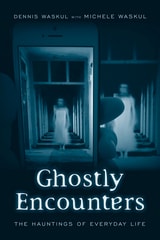
Ghostly Encounters
The Hauntings of Everyday LifeDennis Waskul
Temple University Press, 2016
“In the top corner of the window a pale, milky-white wisp is rising almost to the top of our ten-foot ceiling…. I am startled but not afraid…. Mostly, I am engrossed; I have never seen anything like this before (or since) and it fascinates me.”
Dennis Waskul writes these lines—about his first-hand experience with the supernatural—in the introduction to his beguiling book Ghostly Encounters. Based on two years of fieldwork and interviews with 71 midwestern Americans, the Waskuls’ book is a reflexive ethnography that examines how people experience ghosts and hauntings in everyday life. The authors explore how uncanny happenings become ghosts, and the reasons people struggle with or against a will to believe. They present the variety and character of hauntings and ghostly encounters, outcomes of people telling haunted legends, and the nested consequences of ghostly experiences.
Through these stories, Ghostly Encounters seeks to understand the persistence of uncanny experiences and beliefs in ghosts in an age of reason, science, education, and technology—as well as how those beliefs and experiences both reflect and serve important social and cultural functions.
Grace in the Cabin
Based on a True Ghost StoryAntoinette "Tiyi" Schippers
Parkhurst Brothers, Inc., 2025
Through her mediumship, the spirits reveal to the author the events that sparked the haunting, ultimately leading to resolution and freedom for both the living and the dead.
Haunted Heartland
Michael Norman
University of Wisconsin Press, 2017
For decades, journalist Michael Norman has been tracking down spine-tingling tales that seem to arise from authentic incidents in Illinois, Indiana, Iowa, Kansas, Michigan, Minnesota, Missouri, Nebraska, Ohio, and Wisconsin. In Haunted Heartland he offers more than eighty entertaining, eerie stories. Are they true in the world that we know, or only in a dark vale of twilight?
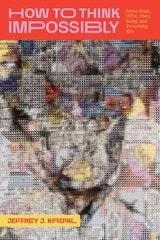
How to Think Impossibly
About Souls, UFOs, Time, Belief, and Everything ElseJeffrey J. Kripal
University of Chicago Press, 2024
Now in paperback, a mind-bending invitation to experience the impossible as fundamentally human.
From precognitive dreams and telepathic visions to near-death experiences, UFO encounters, and beyond, so-called impossible phenomena are not supposed to happen. But they do happen—all the time. Jeffrey J. Kripal asserts that the impossible is a function not of reality but of our everchanging assumptions about what is real. How to Think Impossibly invites us to think about these fantastic (yet commonplace) experiences as an essential part of being human, expressive of a deeply shared reality that is neither mental nor material but gives rise to both. Thinking with specific individuals and their extraordinary experiences in vulnerable, open, and often humorous ways, Kripal interweaves humanistic and scientific inquiry to foster an awareness that the fantastic is real, the supernatural is super natural, and the impossible is possible.

Lives of the Psychics
The Shared Worlds of Science and MysticismFred M. Frohock
University of Chicago Press, 2000
Lives of the Psychics, a journey through the terrain of psychic phenomena, tries to answer these questions through interviews with practicing psychics, a survey of the heroic attempts of researchers to test psychic abilities in controlled experiments, and an exploration of out-of-body, near-death, and mystical experiences. Fred M. Frohock brings together a wide variety of psychic claims and examines them with a rich set of materials—interviews, critical anecdotes, history, multiple theories of the paranormal—that allows him to use whatever tools are necessary to illuminate beliefs in the supernatural. He relates real-life events to scientific studies, so the reader is a party not only to fantastic experiences and first-hand stories of the paranormal but also to the rationales for these experiences proposed by scientists. There is no more rewarding guide to the limits and powers of science in explaining psychic phenomena.
To a field filled with uncertainty and suspicion, Frohock brings a discerning eye, a critical sensibility, and a fundamental sense of curiosity about the role of mysticism in science. Even skeptics will be intrigued.
Number and Time
Reflections Leading Toward a Unification of Depth Psychology and PhysicsMarie-Louise von Franz
Northwestern University Press, 1986
A classic on mind, matter, and the unified world model
C. G. Jung's work in his later years suggested that the seemingly divergent sciences of psychology and modern physics might, in fact, be approaching a unified world model in which the dualism of matter and psyche would be resolved into “one world” or Unus Mundus. Jung believed that the natural integers are the archetypal patterns that regulate the unitary realm of psyche and matter, and that number serves as a special instrument for man's becoming conscious of this unity.
Written in a clear style and replete with illustrations which help make the mathematical ideas visible, Number and Time is a piece of original scholarship which introduces a view of how "mind" connects with "matter" at the most fundamental level.
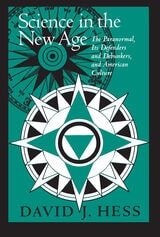
Science In The New Age
The Paranormal, Its Defenders & Debunkers,David J. Hess
University of Wisconsin Press, 1993
Hess begins by looking at each group’s unique version of knowledge, science, and religion and at its story about the other groups. Comparing the various discourses, texts, writers, and groups as cultures, he shows how skeptics, parapsychologists, and New Agers may disagree vehemently with each other, but end up sharing many rhetorical strategies, metaphors, models, values, and cultural categories. Furthermore, he argues, their shared “paraculture” has a great deal in common with the larger culture of the United States. The dialogue on the paranormal, Hess concludes, has as much to do with gender, power, and cultural values as it does with spirits, extrasensory perception, and crystal healing.
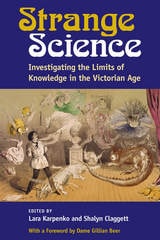
Strange Science
Investigating the Limits of Knowledge in the Victorian AgeEdited by Lara Karpenko and Shalyn Claggett
University of Michigan Press, 2017
The Gold Leaf Lady and Other Parapsychological Investigations
Stephen E. Braude
University of Chicago Press, 2007
The New Prometheans
Faith, Science, and the Supernatural Mind in the Victorian Fin de SiècleCourtenay Raia
University of Chicago Press, 2019
The New Prometheans traces the evolution of psychical research through the intertwining biographies of four men: chemist Sir William Crookes, depth psychologist Frederic Myers, ether physicist Sir Oliver Lodge, and anthropologist Andrew Lang. All past presidents of the society, these men brought psychical research beyond academic circles and into the public square, making it part of a shared, far-reaching examination of science and society. By layering their papers, textbooks, and lectures with more intimate texts like diaries, letters, and literary compositions, Courtenay Raia returns us to a critical juncture in the history of secularization, the last great gesture of reconciliation between science and sacred truths.
Unruly Spirits
The Science of Psychic Phenomena in Modern FranceM. Brady Brower
University of Illinois Press, 2010