Results by title
18 books match the query 'People's History'
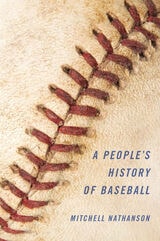
A People's History of Baseball
Mitchell Nathanson
University of Illinois Press, 2012
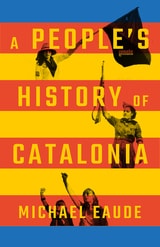
A People's History of Catalonia
Michael Eaude
Pluto Press, 2022
The fight of an oppressed nation for its sovereignty has often dovetailed with that of a militant working class for social justice.
At every home game of FC Barcelona, at 17 minutes and 14 seconds of play, the 100,000-capacity Camp Nou stadium is filled by the roar of “IN-DE-PEN-DÈN-CI-A!” Time stops for a second. History lives in the present...
Catalonia's national consciousness has deep roots. There are countries twice the size with histories half as interesting. A People's History of Catalonia tells that history, from below, in all its richness and complexity. The region's struggle for independence has, for centuries, been violently resisted, the Catalan language suppressed and its leaders jailed.
From the peasant revolts of the 15th century and the siege of Barcelona in 1714, to defeat in the Spanish Civil War, and the slow re-emergence of the workers' movement and anti-Francoist resistance in the years that followed, Michael Eaude tells a compelling story whose ending has yet to be written.
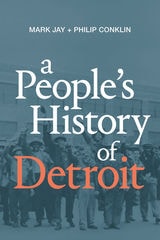
A People's History of Detroit
Mark Jay and Philip Conklin
Duke University Press, 2020
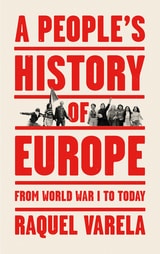
A People's History of Europe
From World War I to TodayRaquel Varela
Pluto Press, 2020
From the Russian Revolution, through May '68 and the Prague Spring, to the present day, we hear from feminists, trade unionists, conscientious objectors and activists and learn of immigration struggles, anti-colonial conflicts and labour movements. Cutting against the grain of mainstream histories, this is a history of Europe told from below.
Containing new and fascinating insights, Raquel Varela paints a different picture of the European story; one where ordinary Europeans are active agents of their own history.
A People's History of Modern Europe
William A. Pelz
Pluto Press, 2016
Along the way, William A. Pelz examines the German peasant wars of Thomas Müntzer, the bourgeoisie revolutions of the eighteenth century, the rise of the industrial worker in England, the turbulent journey of the Russian Soviets, the role of the European working class throughout the Cold War, and the revolutionary students in 1968. He then brings his story to the present day, where we continue to fight to forge an alternative to a heartless and often barbaric economic system.
As Germany and Greece argue over who owes what, with the very idea of Europe crumbling around them, Pelz’s accessible, provocative history could not be timelier. Sure to resonate with fans of books like Howard Zinn’s A People’s History of the United States, this people’s history sweeps away the tired platitudes of the privileged and provides an opportunity to understand the story of Europe from the ground up.

A People's History of Tennis
David Berry
Pluto Press, 2020
From the birth of modern tennis in Victorian Britain to the present day, we bear witness to struggles around sexuality, gender, race and class that have transformed the nature of tennis and sport itself. A People's History of Tennis is populated by diverse voices, recounting the sport's gay origins, 'Workers' Wimbledon', battles for gender equality and more.
Going beyond center court, this book reveals the hidden history of the game, providing a rich account of the challenges faced and victories won.
A People's History of the European Court of Human Rights
A People's History of the European Court of Human Rights, First Paperback EditionGoldhaber, Michael
Rutgers University Press, 2007
The exceptionality of America’s Supreme Court has long been conventional wisdom. But the United States Supreme Court is no longer the only one changing the landscape of public rights and values. Over the past thirty years, the European Court of Human Rights has developed an ambitious, American-style body of law. Unheralded by the mass press, this obscure tribunal in Strasbourg, France has become, in many ways, the Supreme Court of Europe.
Michael Goldhaber introduces American audiences to the judicial arm of the Council of Europe—a group distinct from the European Union, and much larger—whose mission is centered on interpreting the European Convention on Human Rights. The Council routinely confronts nations over their most culturally-sensitive, hot-button issues. It has stared down France on the issue of Muslim immigration; Ireland on abortion; Greece on Greek Orthodoxy; Turkey on Kurdish separatism; Austria on Nazism; and Britain on gay rights and corporal punishment. And what is most extraordinary is that nations commonly comply.
In the battle for the world’s conscience, Goldhaber shows how the court in Strasbourg may be pulling ahead.
A People's History of the German Revolution
William A. Pelz
Pluto Press, 2018
A People's History of the New Boston
Jim Vrabel
University of Massachusetts Press, 2014
Credit for the city's turnaround since that time is often given to a select group of people, all of them men, all of them white, and most of them well off. In fact, a large group of community activists, many of them women, people of color, and not very well off, were also responsible for creating the Boston so many enjoy today. This book provides a grassroots perspective on the tumultuous 1960s and 1970s, when residents of the city's neighborhoods engaged in an era of activism and protest unprecedented in Boston since the American Revolution.
Using interviews with many of those activists, contemporary news accounts, and historical sources, Jim Vrabel describes the demonstrations, sit-ins, picket lines, boycotts, and contentious negotiations through which residents exerted their influence on the city that was being rebuilt around them. He includes case histories of the fights against urban renewal, highway construction, and airport expansion; for civil rights, school desegregation, and welfare reform; and over Vietnam and busing. He also profiles a diverse group of activists from all over the city, including Ruth Batson, Anna DeFronzo, Moe Gillen, Mel King, Henry Lee, and Paula Oyola. Vrabel tallies the wins and losses of these neighborhood Davids as they took on the Goliaths of the time, including Boston's mayors. He shows how much of the legacy of that activism remains in Boston today.
A People's History of the Portuguese Revolution
Raquel Cardeira Varela
Pluto Press, 2018
This became the Carnation Revolution - an international coalition of working class and social movements, which also incited struggles for independence in Portugal’s African colonies, the rebellion of the young military captains in the national armed forces and the uprising of Portugal’s long-oppressed working classes. It was through the organising power of these diverse movements that a popular-front government was instituted and Portugal withdrew from its overseas colonies.
Cutting against the grain of mainstream accounts, Raquel Cardeira Varela explores the role of trade unions, artists and women in the revolution, providing a rich account of the challenges faced and the victories gained through revolutionary means.
A People's History of the Russian Revolution
Neil Faulkner
Pluto Press, 2017
Faulkner rejects caricatures of Lenin and the Bolsheviks as authoritarian conspirators or the progenitors of Stalinist dictatorship, and forcefully argues that the Russian Revolution was an explosion of democracy and creativity—and that it was crushed by bloody counter-revolution and replaced with a form of bureaucratic state-capitalism.
Grounded by powerful first-hand testimony, this history marks the centenary of the Revolution by restoring the democratic essence of the revolution, offering a perfect primer for the modern reader.

A People's History of the Second World War
Resistance Versus EmpireDonny Gluckstein
Pluto Press, 2012
A People's History of the Second World War unearths the fascinating history of the war as fought 'from below'. Until now, the vast majority of historical accounts have focussed on the conflict between the Allied and Axis powers for imperialist mastery. Donny Gluckstein shows that in fact between 1939 and 1945 two distinct wars were fought – one ‘from above’ and one ‘from below’.
Using examples from countries under the Nazi heel, in the colonies and within the Axis and Allied camps, Gluckstein brings to life the very different struggle of the people's and resistance movements which proliferated during the war. He shows how they fought not just fascism, but colonialism and empire, and were betrayed by the Allies at the war’s end.
This book will fundamentally challenge our understanding of the Second World War – both about the people who fought it and the reasons for which it was fought.
Ephemeral City
A People's History of Chicago's Century of Progress World's FairLindsay Fullerton
University of Illinois Press, 2025
Less celebrated than the 1893 Chicago World’s Fair, the 1933–1934 Century of Progress Exposition brought visitors face-to-face with gleaming American consumerism in the midst of the Great Depression. Lindsay Fullerton draws on a wealth of personal photographs, scrapbooks, oral histories, and writings to illuminate the wildly different experiences of fairgoers against the backdrop of a city steeped in poverty and segregation.
The Exposition took place amidst massive changes sparked by expansion of mass media, Franklin Roosevelt’s election, the repeal of Prohibition, and the Great Migration. A diverse cross-section of Chicagoans informs Fullerton’s history of the event in the context of the fast-changing America of the interwar era. These personal accounts tell stories of how attendees interpreted their own experiences while being surrounded by whiz-bang products and full-throated evangelism on the benefits of progress.
A colorful people’s history, Ephemeral City takes readers inside the other Chicago World’s Fair and how visitors interacted with a pivotal moment in American history.
The Normals
A People’s History of Modern America in Five Human ExperimentsLaura Stark
University of Chicago Press, 2027
How healthy control subjects in clinical research transformed the practice and labor of science, as told by the Normals themselves.
In the 1950s, the National Institutes of Health were in search of a large, replenishing stream of healthy people to participate in clinical studies. To establish legal sources of test subjects, the NIH signed unprecedented contracts with American colleges, church organizations, and other government agencies, and in the process gave rise to a new type of test subject: the “normal patient.” Thousands of them eventually moved into the NIH Clinical Center to live in hospital rooms, eat food prepared in a metabolic kitchen, and follow—or flout—the rules.
The Normals is a groundbreaking account of the NIH Normal Volunteer Patient Program, which has lasted into the twenty-first century. This program harnessed outside organizations in all areas of postwar American life—colleges and universities, labor unions, civic groups, federal prisons, and churches—to recruit research subjects for human experiments. Drawing on thousands of pages of unearthed government documents, oral histories, and personal materials shared by the patients themselves (collected in a new archive), Laura Stark follows five experiments and the people involved, delving into their biographies, their time at the Clinical Center, and the thorny problem of determining who counts as “normal.” The “Normals” were not passive objects of study, Stark shows, but active research participants who collaborated with scientists, maintained the laboratories where they served, informed official ethics policies, and bargained to meet their needs.
By taking seriously the pillow fights and the first kisses, the bible clubs and the movie nights that animated the Clinical Center as much as the medical experiments, The Normals brings to life a surprising true story of the origins of our present-day system of human experiment, one that at once explores what it means to work, to serve, to volunteer.
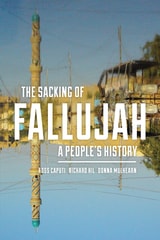
The Sacking of Fallujah
A People's HistoryRoss Caputi
University of Massachusetts Press, 2019
The Iraqi city of Fallujah has become an epicenter of geopolitical conflict, where foreign powers and non-state actors have repeatedly waged war in residential neighborhoods with staggering humanitarian consequences. The Sacking of Fallujah is the first comprehensive study of the three recent sieges of this city, including those by the United States in 2004 and the Iraqi-led operation to defeat ISIS in 2016.
Unlike dominant military accounts that focus on American soldiers and U.S. leaders and perpetuate the myth that the United States “liberated” the city, this book argues that Fallujah was destroyed by coalition forces, leaving public health crises, political destabilization, and mass civilian casualties in their wake. This meticulously researched account cuts through the propaganda to uncover the lived experiences of Fallujans under siege and occupation, and contextualizes these events within a broader history of U.S. policy in the Middle East. Relying on testimony from Iraqi civilians, the work of independent journalists, and documentation from human rights organizations, Ross Caputi, Richard Hil, and Donna Mulhearn place the experiences of Fallujah's residents at the center of this city's recent history.
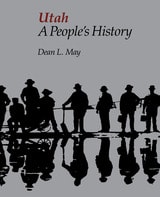
Utah A People's History
Dean L May
University of Utah Press, 2002
History belongs to the people, Dean May reminds us, and must ultimately be accessible all. Based on his award-winning television series, Utah: A People's History provides a sweeping view of the state's past. From prehistory to present, May explains Utah as it is today and its promise for the future. The video series upon which this book is based is no longer available for sale.
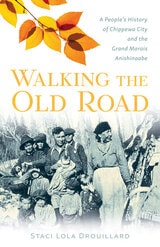
Walking the Old Road
A People's History of Chippewa City and the Grand Marais AnishinaabeStaci Lola Drouillard
University of Minnesota Press, 2019
The story of a once vibrant, now vanished off-reservation Ojibwe village—and a vital chapter of the history of the North Shore
“We do this because telling where you are from is just as important as your name. It helps tie us together and gives us a strong and solid place to speak from. It is my hope that the stories of Chippewa City will be heard, shared, and remembered, and that the story of Chippewa City and the Grand Marais Chippewa will continue to grow. By being a part of the living narrative, Bimaadizi Aadizookaan, together we can create a new story about what was, what is, and, ultimately, what will be.” —from the Prologue
At the turn of the nineteenth century, one mile east of Grand Marais, Minnesota, you would have found Chippewa City, a village that as many as 200 Anishinaabe families called home. Today you will find only Highway 61, private lakeshore property, and the one remaining village building: St. Francis Xavier Church. In Walking the Old Road, Staci Lola Drouillard guides readers through the story of that lost community, reclaiming for history the Ojibwe voices that have for so long, and so unceremoniously, been silenced.
Blending memoir, oral history, and narrative, Walking the Old Road reaches back to a time when Chippewa City, then called Nishkwakwansing (at the edge of the forest), was home to generations of Ojibwe ancestors. Drouillard, whose own family once lived in Chippewa City, draws on memories, family history, historical analysis, and testimony passed from one generation to the next to conduct us through the ages of early European contact, government land allotment, family relocation, and assimilation.
Documenting a story too often told by non-Natives, whether historians or travelers, archaeologists or settlers, Walking the Old Road gives an authentic voice to the Native American history of the North Shore. This history, infused with a powerful sense of place, connects the Ojibwe of today with the traditions of their ancestors and their descendants, recreating the narrative of Chippewa City as it was—and is and forever will be—lived.
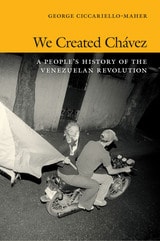
We Created Chávez
A People's History of the Venezuelan RevolutionGeo Maher
Duke University Press, 2013
Based on interviews with grassroots organizers, former guerrillas, members of neighborhood militias, and government officials, Ciccariello-Maher presents a new history of Venezuelan political activism, one told from below. Led by leftist guerrillas, women, Afro-Venezuelans, indigenous people, and students, the social movements he discusses have been struggling against corruption and repression since 1958. Ciccariello-Maher pays particular attention to the dynamic interplay between the Chávez government, revolutionary social movements, and the Venezuelan people, recasting the Bolivarian Revolution as a long-term and multifaceted process of political transformation.