Results by title
10 books match the query 'Personal History'
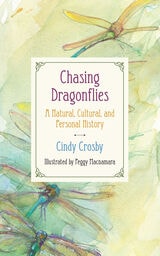
Chasing Dragonflies
A Natural, Cultural, and Personal HistoryCindy Crosby; Illustrations by Peggy Macnamara
Northwestern University Press, 2020
Chasing Dragonflies: A Natural, Cultural, and Personal History is an engaging, beautifully illustrated introduction to these remarkable insects. Drawing on her experiences as a natural history instructor, dragonfly monitor, cancer survivor, grandmother, and steward, Crosby tells the stories of dragonflies: their roles in poetry and art, their fascinating sex life—unique within the animal kingdom—and their evolution from dark-water dwellers to denizens of the air. We follow Crosby and other citizen-scientists into the prairies, wetlands, and woodlands of the Midwest, where they observe the environment and chronicle dragonfly populations and migration to decipher critical clues about our changing waterways and climate.
Woven throughout are personal stories: reflections on the author’s cancer diagnosis and recovery, change, loss, aging, family, joy, and discovering what it means to be at home in the natural world. Crosby draws an intimate portrait of a landscape teeming with variety and mystery, one that deserves our attention and conservation. As warm as it is informative, this book will interest gardeners, readers of literary nonfiction, and anyone intrigued by transformation, whether in nature or our personal lives.
China's Quest for Liberty
A Personal History of FreedomPromise Hsu
St. Augustine's Press, 2014
It is about a world whose dimensions have been basically obscured not only in China but also in the global public square, and walk with this young journalist, step by step, to find, paradoxically, the hope in the depth of hopelessness, the strength in acknowledging weakness, the change in substance by, among other things, keeping the form unchanged for at least a while, the youth in growing up despite growing old, the invisible in the visible, the imperishable in the perishable, the reality in the shadow of numerous fake realities, and the freedom gained not mainly through human efforts but as mercy and grace from the one who created humans and other beings.
As well as digging out the overlooked Christian background in the rise of the sanctity of human life, creative culture, constitutionalism, work as a vocation, modern management, servant leadership, and catchphrases like “the global village” and “The medium is the message”, the author tells of insider observations about the rise of Christianity in China generally and about Shouwang Church in particular. Through sharing these findings, this book aims to show how the one who made the universe rules the world and how this creator sets his creatures free by himself.
China’s Quest for Liberty is a fascinating work of nuance and surprise.
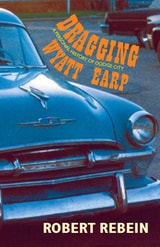
Dragging Wyatt Earp
A Personal History of Dodge CityRobert Rebein
Ohio University Press, 2013
In Dragging Wyatt Earp essayist Robert Rebein explores what it means to grow up in, leave, and ultimately return to the iconic Western town of Dodge City, Kansas. In chapters ranging from memoir to reportage to revisionist history, Rebein contrasts his hometown’s Old West heritage with a New West reality that includes salvage yards, beefpacking plants, and bored teenagers cruising up and down Wyatt Earp Boulevard.
Along the way, Rebein covers a vast expanse of place and time and revisits a number of Western myths, including those surrounding Francisco Vasquez de Coronado, the Cheyenne chief Black Kettle, George Armstrong Custer, and of course Wyatt Earp himself. Rebein rides a bronc in a rodeo, spends a day as a pen rider at a local feedlot, and attempts to “buck the tiger” at Dodge City’s new Boot Hill Casino and Resort.
Funny and incisive, Dragging Wyatt Earp is an exciting new entry in what is sometimes called the nonfiction of place. It is a must- read for anyone interested in Western history, contemporary memoir, or the collision of Old and New West on the High Plains of Kansas.
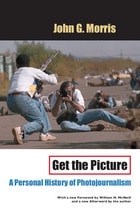
Get the Picture
A Personal History of PhotojournalismJohn G. Morris
University of Chicago Press, 2002
Find out in Get the Picture, a personal history of fifty years of photojournalism by one of the top journalists of the twentieth century. John G. Morris brought us many of the images that defined our era, from photos of the London air raids and the D-Day landing during World War II to the assassination of Robert Kennedy. He tells us the inside stories behind dozens of famous pictures like these, which are reproduced in this book, and provides intimate and revealing portraits of the men and women who shot them, including Robert Capa, Henri Cartier-Bresson, and W. Eugene Smith. A firm believer in the power of images to educate and persuade, Morris nevertheless warns of the tremendous threats posed to photojournalists today by increasingly chaotic wars and the growing commercialism in publishing, the siren song of money that leads editors to seek pictures that sell copies rather than those that can change the way we see the world.
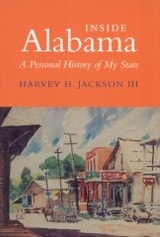
Inside Alabama
A Personal History of My StateHarvey H. Jackson, III
University of Alabama Press, 2003
This book tells Alabama’s history in a conversational style with an unapologetically subjective approach. Accessible to general readers and students alike, it recounts the history and politics of a state known for its colorful past, told by one of the state’s most noted historians and educators, whose family came to the territory before statehood. A native and resident Alabamian, Harvey Jackson has spent a lifetime discovering and trying to understand his state. Expressing deep love for its people and culture, he is no less critical of its shortcomings.
Inside Alabama, as the title implies, gives Jackson’s insider perspective on the events and conditions that shaped modern-day Alabama. With humor and candor, he explores the state’s cultural, political, and economic development from prehistoric times to the dawning of the new millennium. Mound-builders, Hernando de Soto, William Bartram, Red Sticks, Andy Jackson, Bourbon Democrats, suffragettes, New Dealers, Hugo Black, Martin Luther King Jr., George Wallace, Rosa Parks all play colorful parts in this popular history. By focusing on state politics as the most accessible and tangible expression of these shaping forces, Jackson organizes the fourteen chapters chronologically, artfully explaining why the past is so important today.
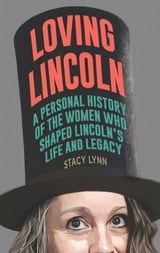
Loving Lincoln
A Personal History of the Women Who Shaped Lincoln's Life and LegacyStacy Lynn
Southern Illinois University Press, 2025
WINNER, 2026 Illinois State Historical Society Russell P. Strange Book of the Year Award!
Rediscovering Lincoln through the female gaze
Abraham Lincoln belongs to everybody. The women he interacted with helped forge the outstanding moral character of America's greatest president. This unique Abraham Lincoln biography features thirty historical and personal essays, and within them, the stories of more than ninety women, each with their own mini biographies in an appendix. Among them are Lincoln’s friends, clients, and extended family, as well as writers, artists, and—blurring the lines between history and memoir—author Stacy Lynn herself.
As a professional Lincoln scholar and editor, Lynn was often frustrated that male historians often overlooked Lincoln’s love for and friendship with women. Here, she posits a new paradigm—one that, instead of downplaying women, lifts up their interactions with Lincoln.
Lincoln understood the importance of the women in his life, and he put women’s wellbeing at the center of his personal, professional, and political ethos. He was loved by two strong pioneer mothers as well as sisters, friends, nieces, friends’ daughters, and his wife. He served women clients during his long legal career. As president, he met with women, dedicating time to hear their concerns despite the burdens of office. He replied to letters women wrote him. He believed in their capabilities and revolutionized the role of women in the workforce. After Lincoln’s death, women continued to shape his legacy. Mary Lincoln ensured his burial among friends, artist Vinnie Ream sculpted his statue in the US Capitol, and biographer Ida Tarbell provided a nuanced portrayal of his life. Harriet Monroe and Ruth Painter Randall further cemented his place in literature and history.
Lynn presents a fresh perspective on Lincoln, connecting his story to the stories of women and showcasing his kindness, sensitivity, and moral center. She explores how women shaped Lincoln’s inspirational legacy and pays homage to all the women who gave Lincoln to the world. Lynn’s unique blending of history, biography, and her own story reveals the ways in which an emotional connection to the historical figures one studies opens the door to richer human and historical understanding. By inviting readers to feel the past as well as read it, Lynn demonstrates that history matters most when it engages our minds and hearts.
Right to the Juke Joint
A Personal History of American MusicPatrick B Mullen
University of Illinois Press, 2018
Taking Society's Measure
A Personal History of Survey ResearchHerbert Hyman
Russell Sage Foundation, 1991
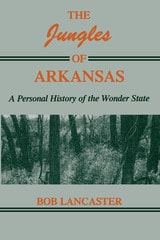
The Jungles of Arkansas
A Personal History of the Wonder StateRobert Lancaster
University of Arkansas Press, 1989
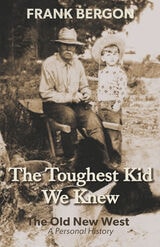
The Toughest Kid We Knew
The Old New West: A Personal HistoryFrank Bergon
University of Nevada Press, 2020